
The Nest: A Vertical Cemetery That Grows From the Dead
Chaoran Fa's shortlisted tower merges columbarium, chapel, and water cremation into a single structure that feeds its own vegetation canopy.


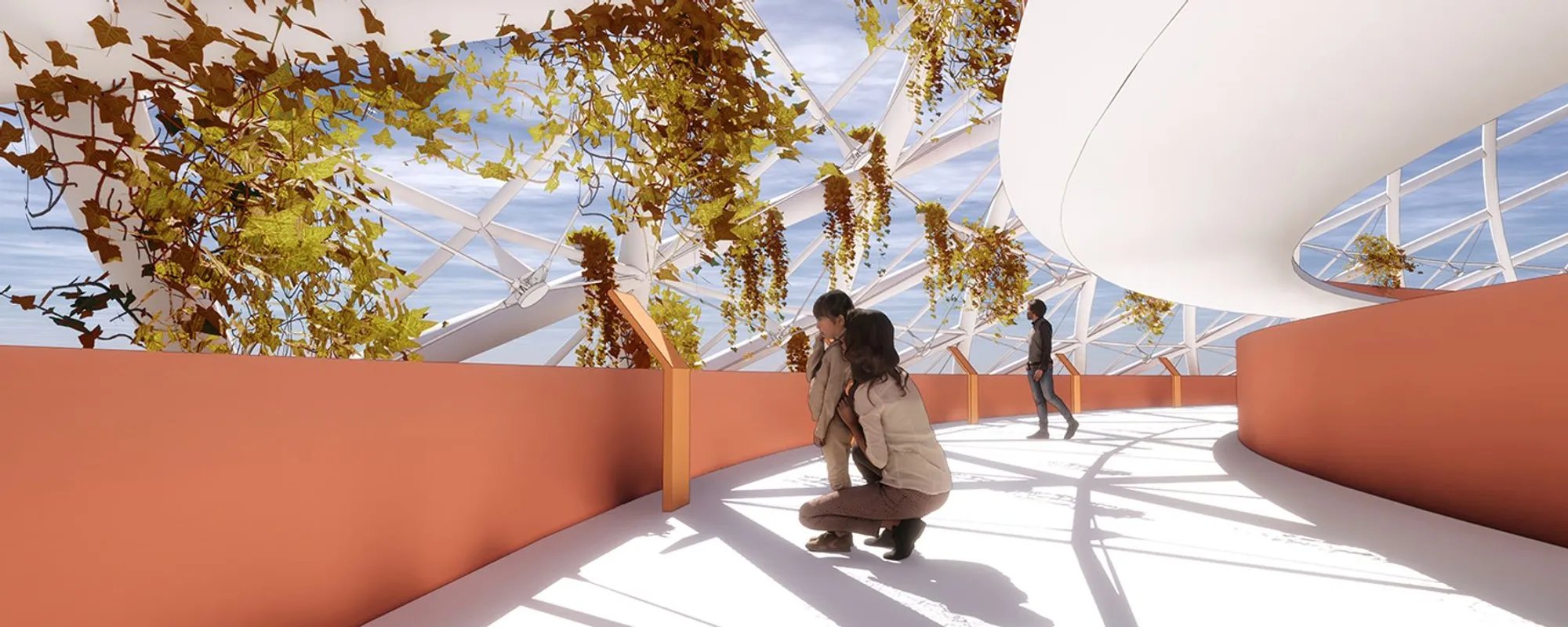
What if a cemetery could grow? Not sprawl outward across scarce urban land, but rise vertically and literally feed itself through the nutrients of its dead. The Nest inverts nearly every convention of memorial architecture. It stacks columbarium and chapel into a single tower, replaces fire cremation with water cremation, and channels the biological byproducts of that process into the vegetation that wraps the structure's canopy. The result is a building where urns, ritual spaces, and living greenery occupy the same vertical gesture, collapsing the boundary between mourning and regeneration.
Designed by Chaoran Fa, The Nest was a shortlisted entry in Circle of Life, the uni.xyz architectural competition exploring new paradigms for death and commemoration. The project situates Earth Chapels and Gallery spaces at the podium level while reserving the upper tower for Sky Chapels and Columbarium, threading the placement of urns directly into the building's structural canopy.
A Canopy of Cables and Memory
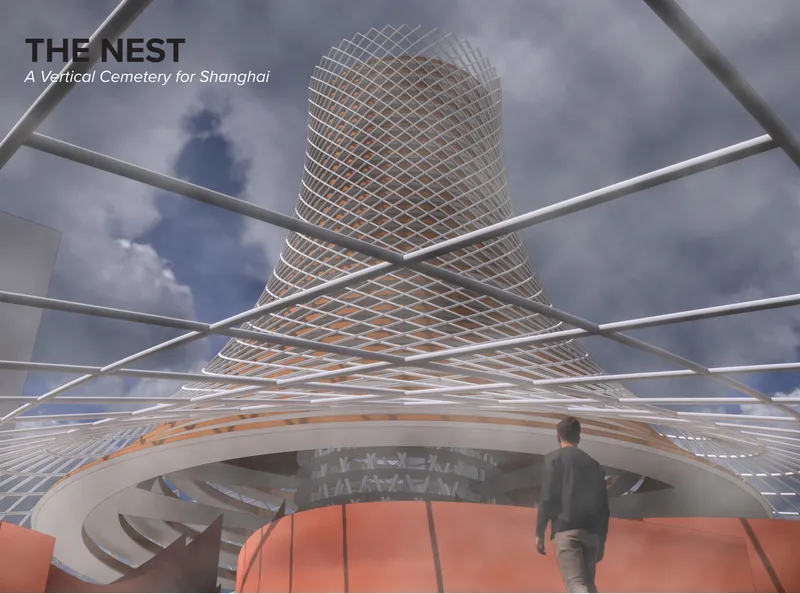
From below, the tower reads as a lattice of radiating white structural cables converging on a diamond-patterned skin. The view is deliberately disorienting: you look up expecting sky and instead find architecture asserting itself as both structure and memorial surface. The cables do double duty, supporting the tower's form while organizing the canopy where urns are woven into the building envelope. It is a bold spatial claim, positioning the remains of the dead not underground or behind walls but overhead, suspended between visitors and the sky.
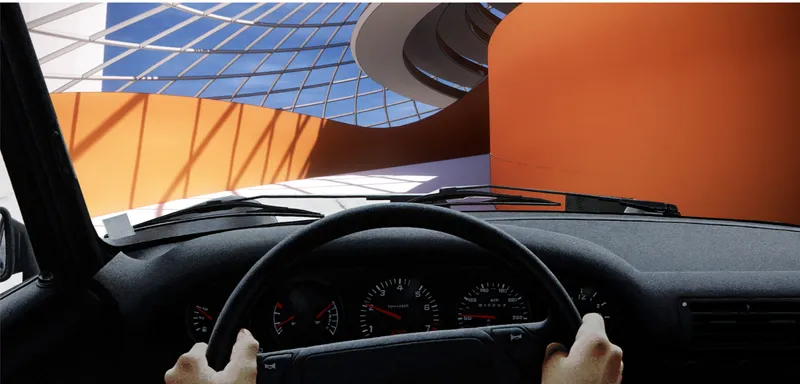
A spiraling interior ramp, visible through warm orange wall panels, provides the circulatory spine of the tower. The ramp connects podium-level Earth Chapels to the upper Sky Chapels and Columbarium, turning the act of ascending into a choreographed ritual passage. The orange cladding filters daylight into the ramp corridor, shifting the emotional register from the solemnity of ground-level arrival to something closer to warmth and openness as visitors climb.
Intimate Chapels Behind the Diamond Lattice
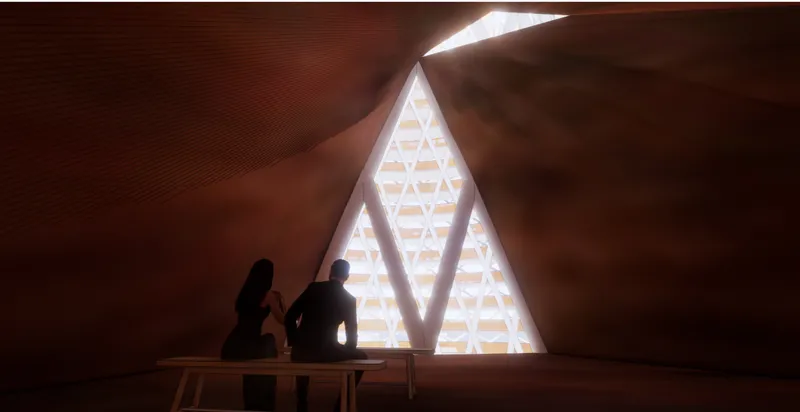
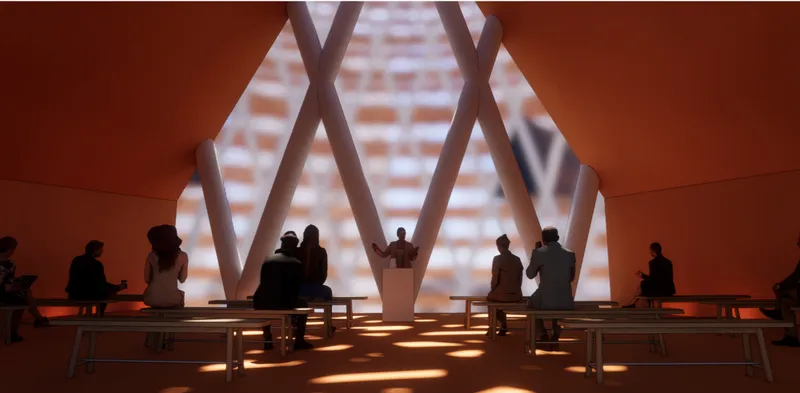
The chapel interiors reveal the diamond-patterned facade from the inside, transforming it into a luminous screen. In one space, two silhouetted figures sit at a table before a glowing latticed window, the geometry of the structure framing their private grief in filtered light. The scale is intimate, almost domestic, a deliberate contrast to the monumental exterior. In another, visitors gather on benches facing a full wall of illuminated lattice, the space functioning as a communal hall for diverse ceremonies and rituals.
This is where the project's claim to inclusivity becomes tangible. Rather than prescribing a single religious or cultural format, the chapels operate as flexible rooms shaped by light and geometry rather than iconography. The warm orange interior surfaces unify the spaces tonally, while the diamond lattice provides a consistent visual language that belongs to no particular tradition. It is architecture doing the work that symbols usually do: creating a sense of the sacred through proportion, light, and enclosure.
The Oculus and the Cycle Above
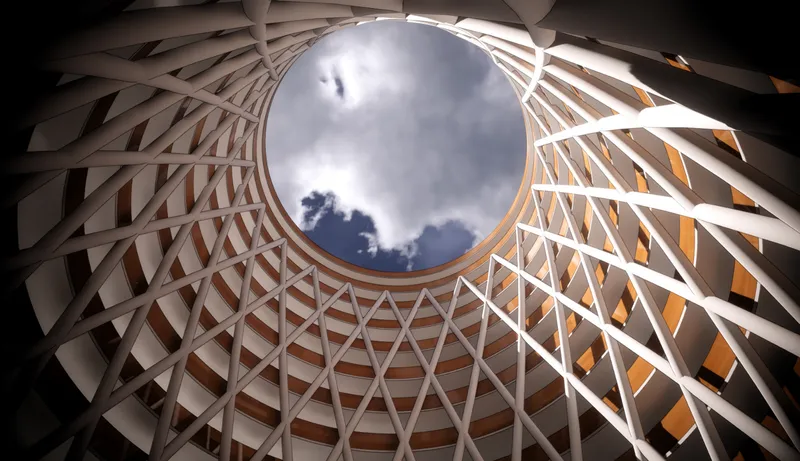
Looking straight up through the tower's circular atrium, a framed oculus opens to the sky. The diamond lattice structure surrounds the void, and clouds drift through the aperture like a slow, natural clock. This is the spatial culmination of the project's central metaphor: life cycling upward, nutrients returning to vegetation, remains held aloft in the canopy while the sky remains visible and reachable. The oculus makes the tower breathe, pulling light and air down through the full height of the columbarium.
Urban Integration and Programmatic Logic
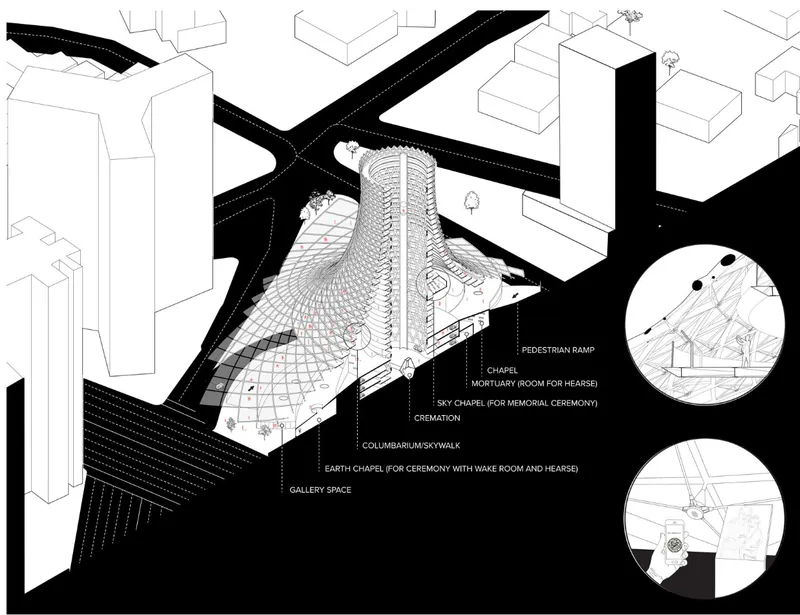
The axonometric drawing clarifies how The Nest sits within an existing street grid, its tower rising from a broader podium base. Detail callouts identify the layered programme: Earth Chapels and Gallery at ground level serving as a public threshold, then the transition to Sky Chapels and Columbarium in the tower above. The drawing also reveals the integration of water cremation facilities, an environmentally responsible alternative that uses alkaline hydrolysis instead of flame. The nutrients generated by this process feed the vegetation growing within the canopy, closing the biological loop that gives the project its name.
By concentrating burial, ceremony, and ecological process into a vertical footprint, The Nest proposes a genuine alternative to the land-hungry horizontal cemetery. It does not hide from the city; it participates in it, offering gallery and public space at grade while reserving the upper levels for the more private acts of remembrance.
Why This Project Matters
Most cemetery designs treat sustainability as a footnote, a material choice or energy calculation appended to an otherwise conventional programme. The Nest makes the ecological argument structural. Water cremation is not an optional feature but the generative engine of the building's green canopy, and the vertical format is not stylistic ambition but a direct response to urban land scarcity. The project asks a necessary question: if we accept that cities must accommodate the dead, why not design buildings that let the dead sustain something living?
Chaoran Fa's shortlisted entry succeeds because it refuses to separate the pragmatic from the poetic. The diamond lattice is simultaneously structural skin, columbarium wall, and light filter for chapels. The ramp is both circulation and ritual procession. The canopy is both ecological system and resting place. In a competition field exploring the circle of life, The Nest delivers that circularity not as metaphor alone but as architecture that literally feeds on death to produce growth.
View the Full Project
About the Designers
Designer: Chaoran Fa
Enter a Design Competition on uni.xyz
uni.xyz runs architecture and design competitions year-round that reward proposals with spatial conviction and real site intelligence.
Project credits: The Nest by Chaoran Fa Circle of Life (uni.xyz).


Popular Articles
Popular articles from the community

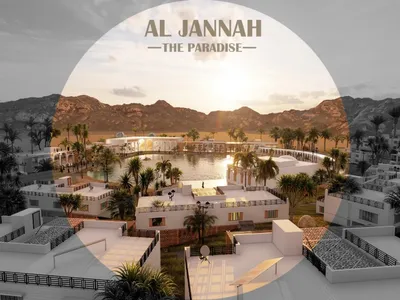
AL-JANNAH: Sustainable Architecture and Permaculture for Afghan Widows
AL-JANNAH uses sustainable architecture and permaculture to create resilient oasis of housing, learning, work and renewal for Afghan widows.

The Earth Pod: 3D Printed Homes for Resilient Refugee Communities
The Earth Pod reimagines refugee housing through 3D printed homes made from clay, combining resilience, self-sufficiency, and rapid shelter.
EW PARK: Sustainable Architecture Reimagines the Future of Urban Parking
EW PARK reimagines city parking as a modular wooden tower combining automation, solar energy, electric mobility, and adaptable urban design.

The Musturak Paradise: Senior Living Architecture for a Connected Future in Temara, Morocco
The Musturak Paradise reimagines senior living architecture in Temara via private homes, social spaces, culture, community, and shared care.

Similar Reads
You might also enjoy these articles

Bao Huynh Watercolor Atelier: A Serene Art Retreat in Hội An
Bao Huynh Watercolor Atelier in Hội An blends multifunctional art spaces, sustainable design, local materials, and family-friendly living in a serene environment.

Atelier Macri Concept Store Interior Design by CASE-REAL
Atelier Macri store features a "ko" counter, walnut wood details, cork displays, blending retail, gallery, and seamless customer experiences.

Manuel Vargas Izquierdo Stadium and High-Performance Sports Center: Architectural Excellence in Jalpa de Méndez
The Manuel Vargas Izquierdo Stadium blends sustainable design, inclusive sports facilities, and cultural-inspired architecture, revitalizing Jalpa de Méndez’s public spaces.

KAKR Buluh Awar Hall: Revitalizing Community and Ecology Through Bamboo Architecture
Community built bamboo hall revitalizes Buluh Awar village, empowering youth, restoring ecology, celebrating vernacular craftsmanship through sustainable architecture and culture.
Explore Vertical Cemetery Competitions
Discover active competitions in this discipline


Challenge to design locus for the upliftment of human rights


Design challenge to reuse E-waste
Comments (0)
Please login or sign up to add comments
No comments yet. Be the first to comment!