

The Octopus
Pavilion Design - Terra x Terra

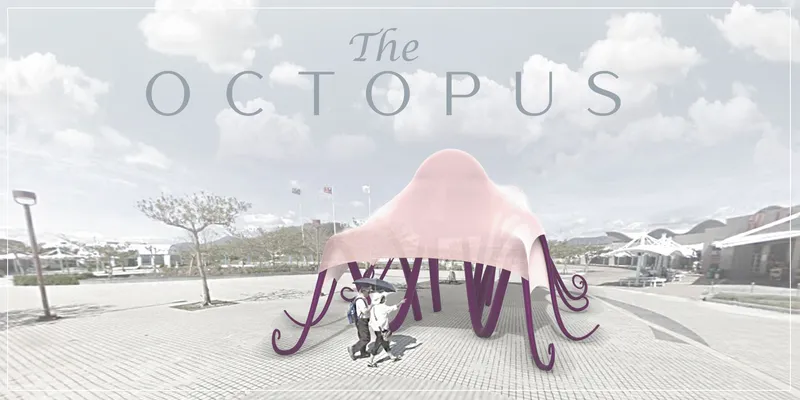
“An approach to innovation that seeks sustainable solutions to human challenges by emulating nature’s time-tested patterns and strategies” The Octopus is a pure outcome of inspiration from biomimicry and innovative spatial design. Finding abode in the process of abstraction of nature-inspired-form and sustainable spatial outcome, The Octopus is designed specifically for the location of Taiwan’s “National Museum of Marine Biology” and pertains to the theme of the site, drawing attention towards the intelligence of this misunderstood creature.
Location
The National Museum of Marine Biology and Aquarium is the most notable museum and research institution for marine biology in Taiwan, which located in Checheng Township, Pingtung County, Taiwan. In 2004, NMMBA cooperated with National Dong Hwa University to jointly establish NDHU College of Marine Sciences and Graduate Institute of Marine Biology, which was the first academic partnership between university and museum in Taiwan.
The Octopus is designed specifically for the location of Taiwan’s “National Museum of Marine Biology” and pertains to the theme of the site, drawing attention towards the intelligence of this misunderstood creature.
Concept
Octopus are soft-bodied, eight - limbed molluscs. Octopuses have a complex nervous system and excellent sight, and are among the most intelligent and behaviourally diverse of all invertebrates.
Octopuses have also been observed in what has been described as play, as well as flexibility in tool use.
To start with, a framework of the pavilion was created, by using the arms of an octopus as an inspiration for biomimicry. Stainless steel sections of small portions are moulded separately off-site and bolted together on site to form the structural framework of the pavilion.
After trying out multilple iterations of enveloping the structural arms to create the form, a decision to employ tensile fabric over them was made. In this manner, it would mimic the webbing certain octopuses have between their arms, furthering the concept of biomimicry.
Material
The framework of the octopus - ie, its arms - are made of stainless steel sections moulded separately and bolted together on site. Two different layers of tensile fabric stretch between the arms providing shelter from weather, while imitating the webbed skin some octopuses have between their arms.
The fabric is suspended between the arms by connecting it to sucker-like projections in the arms.
By minimising the volume of material used for the pavilion, it is ensured the pavilion is easy to install and transport, while maintaining a sustainable appoach towards design.
Script
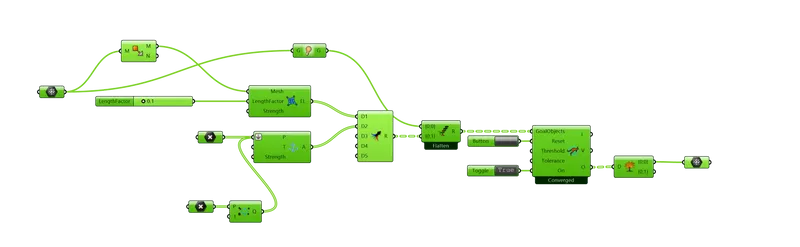
To derive the form of the tensile fabric, the following grasshopper script was used, using Kangaroo2 plugin.


Popular Articles
Popular articles from the community

Opera by the Sea Estonia: Three Shells Dissolving Architecture into Tallinn's Coastline
A winning opera house proposal replaces monumental form with interconnected shells that blur the boundary between building, park and Baltic Sea.
Tsunami Convergenics: Turning Catastrophic Ocean Forces into Underwater Housing Infrastructure
A speculative underwater settlement off the coast of Onagawa, Japan, treats tsunamis and typhoons as energy sources rather than threats.

Singing Woman: An Opera House That Performs Before the Curtain Rises
Ovidiu Cristian Pavel's conceptual opera house translates Estonia's choral identity into a sculpted waterfront landmark facing the Baltic Sea.

The Amber Palace Opera: A Geological Fiction Surfaces on Tallinn's Baltic Waterfront
Pierre Brillard reimagines a Baltic legend as a public landscape, opera house, and waterfront promenade rooted in Tallinn's coastal identity.

Similar Reads
You might also enjoy these articles
The Rhythm of Seasons
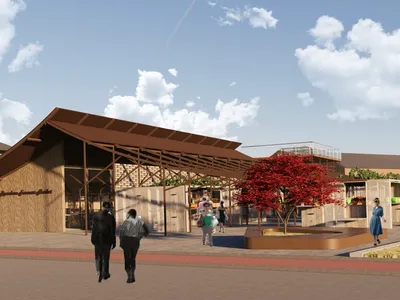
A Farmers' Market Connecting Nature and the City
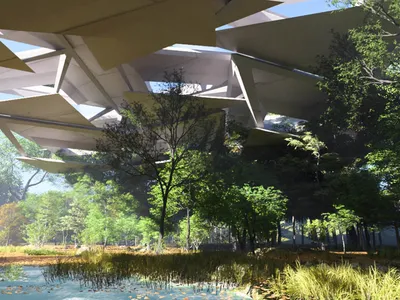

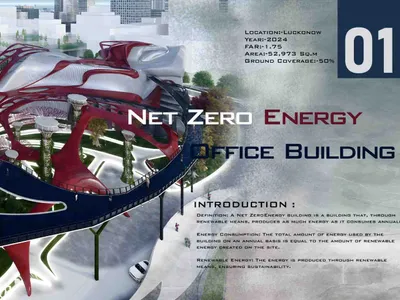
More Than a Building-Designing a Living System
More Than a Building-Designing a Living System
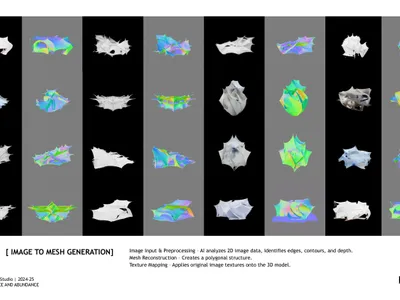
Base Beyond
DESERT COMPOUND ARID: TOURISM OF ABSENCE AND ABUNDANCE

Explore Biomimicry Frontiers Competitions
Discover active competitions in this discipline


From Logic to Configurators


Challenge to design a portable theatre

Challenge to design a portable music platform

Challenge to design an open learning module for the elderly
Comments (0)
Please login or sign up to add comments
No comments yet. Be the first to comment!