
The Parks Housing by Stolon Studio Ltd: A Sustainable Rural Community Reborn in Herefordshire
A sustainable rural housing project transforming historic farm buildings into community-focused homes, blending heritage restoration, modern comfort, biodiversity and sociable living.


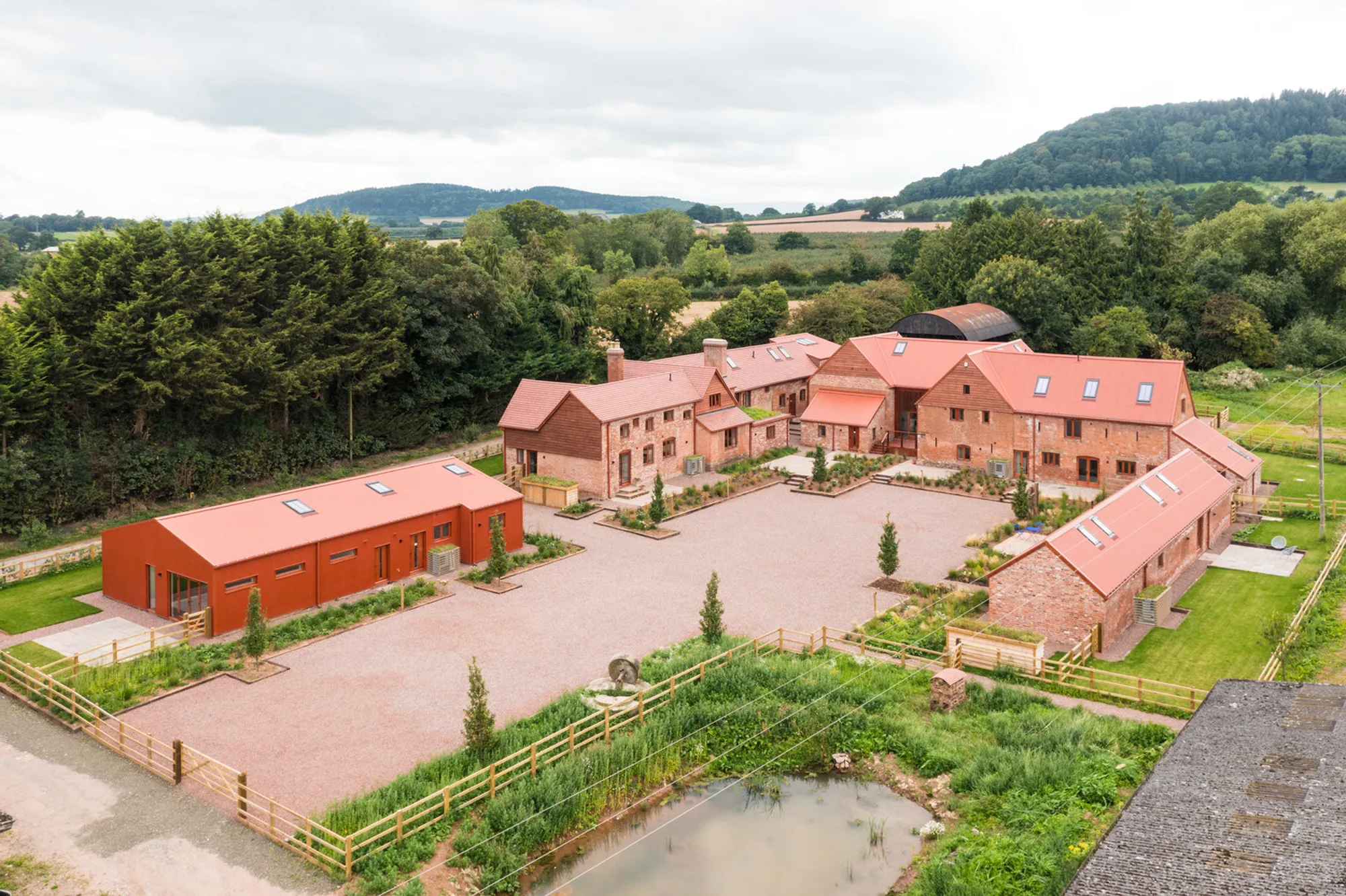
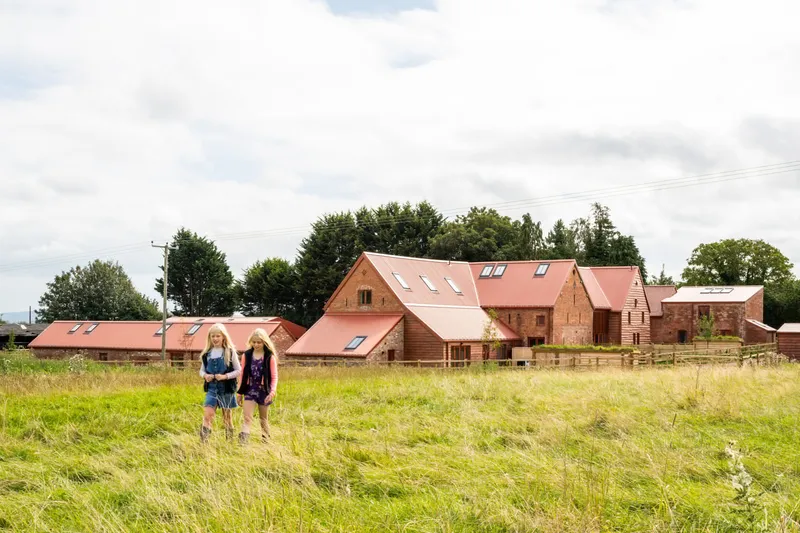
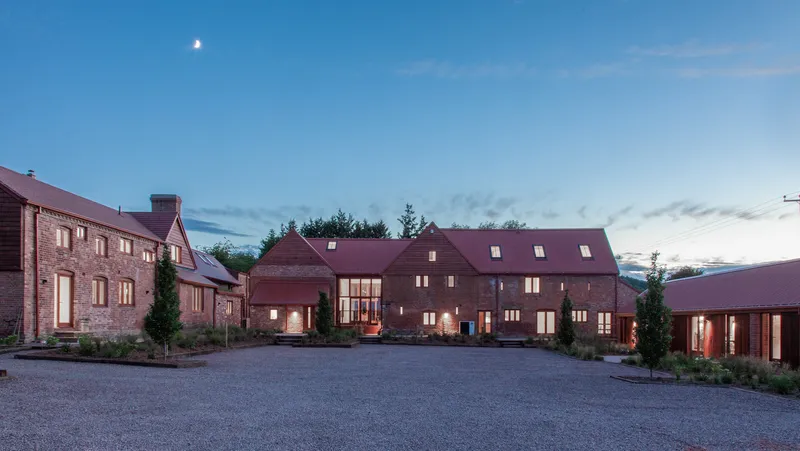
The Parks Housing by Stolon Studio Ltd reimagines a once-neglected dairy farm in Herefordshire as a vibrant, sustainable residential community. The project transforms a cluster of deteriorated 15th- and 16th-century timber-framed agricultural buildings into eight contemporary rural homes set within a carefully landscaped environment. Designed in 2023 for an ethical local developer, the development addresses the growing demand for rural living and offers residents a meaningful alternative to isolated countryside homes.
A Sociable Housing Model Rooted in Community and Connection
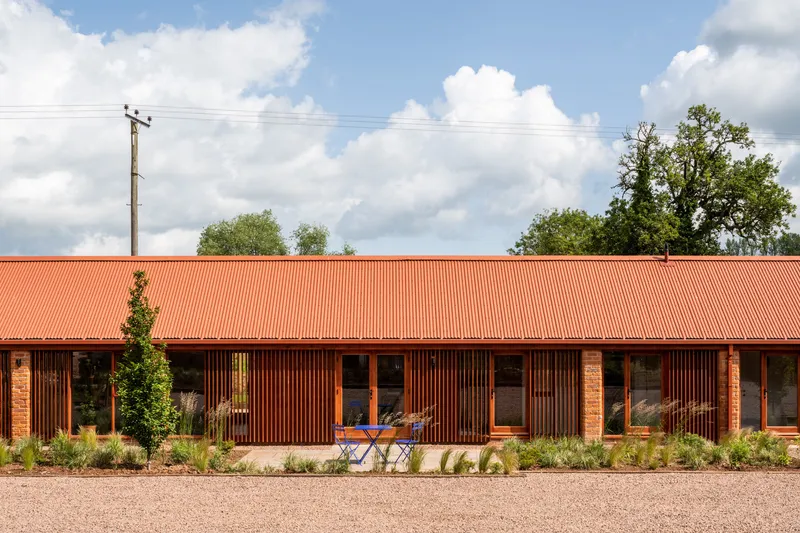
At the heart of The Parks Housing is Stolon Studio’s ongoing commitment to “sociable housing,” a design approach that balances individual privacy with shared amenities and communal engagement. The homes are arranged around the former farmyard, now a central courtyard, creating a sense of place and shared identity. Each residence features its own private garden with terraces, lawns and a shed fitted with a biodiverse green roof, yet residents also benefit from a commune-owned meadow for food growing, collective resources and a Library of Things that encourages material sharing and reduces individual consumption.
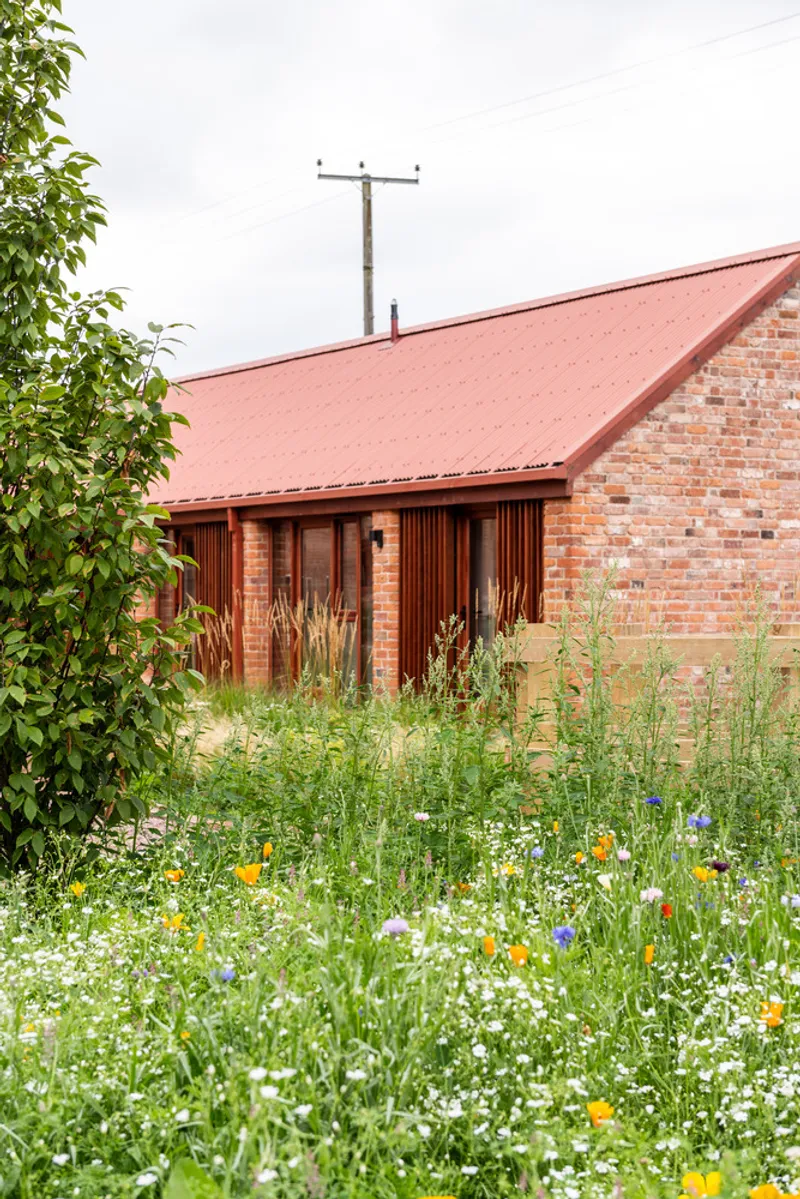
Each home retains the name of its original agricultural function, such as The Farmhouse, The Winnows and The Grain Mill, reinforcing the development’s rural heritage while imbuing distinct character across the community. Offering three- to five-bedroom layouts, the homes support diverse living needs, from growing families to retirees and downsizers seeking peaceful rural surroundings.

Heritage Conservation Through Adaptive Reuse and Sensitive Detailing
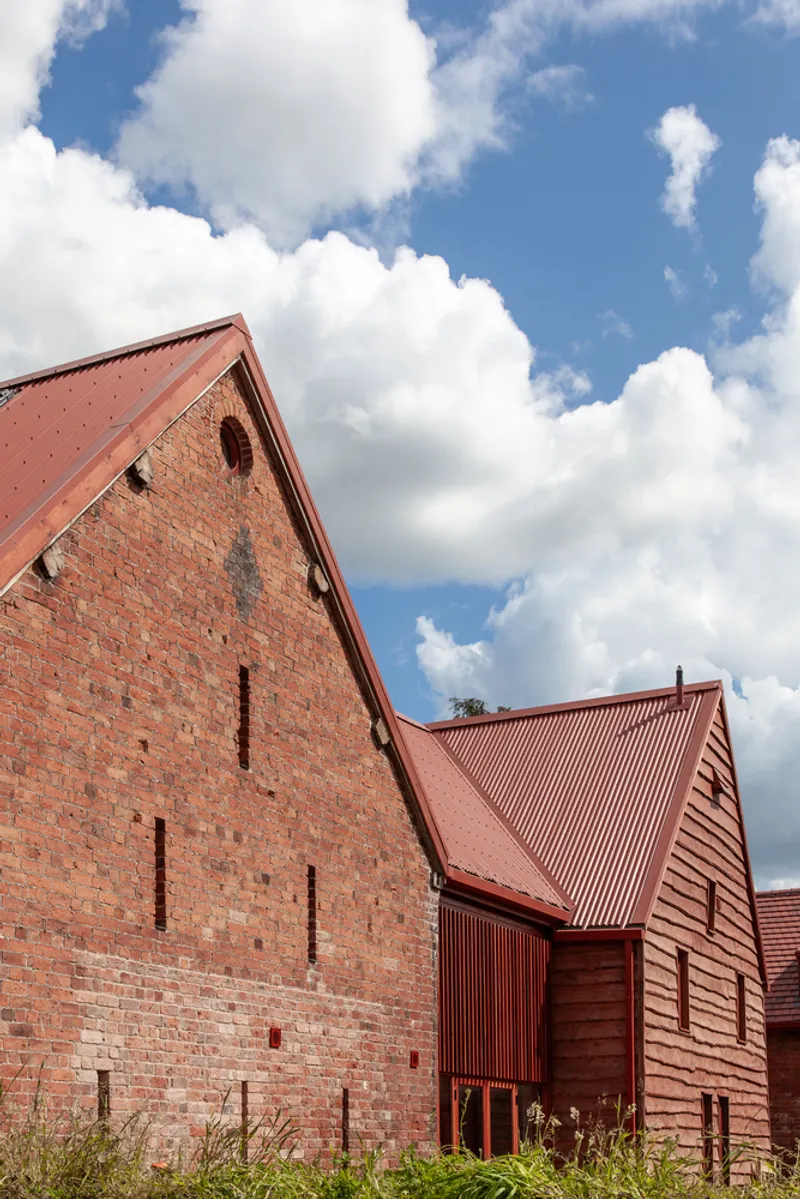
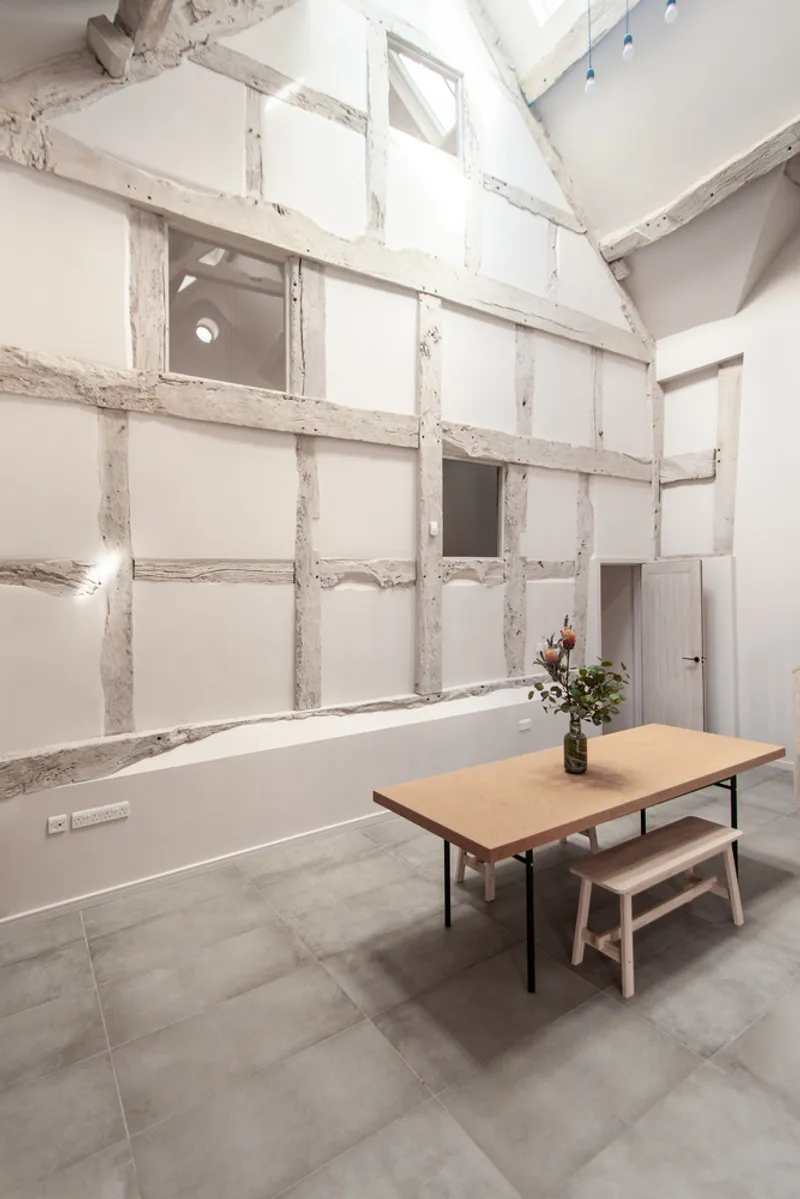
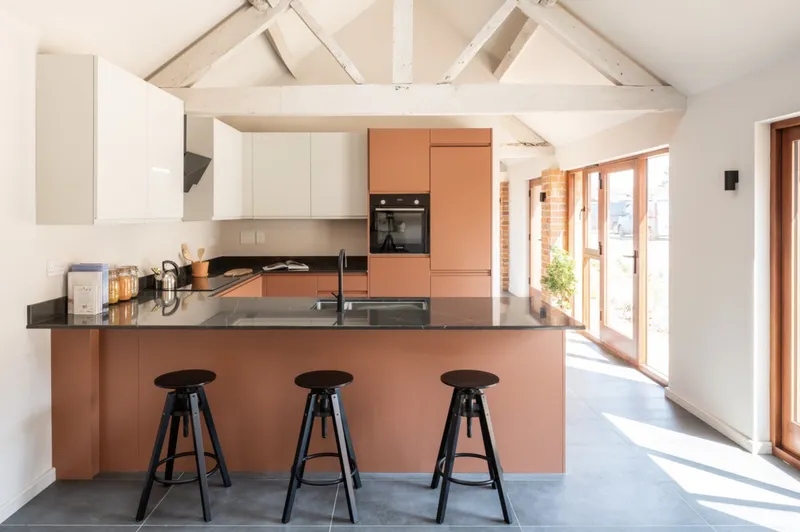
Stolon Studio emphasizes conservation-driven design by restoring and showcasing the original materials and structural elements found on site. Brick and stone surfaces have been carefully exposed, historic fireplaces reopened and repaired, and timber beams strengthened with steel ties rather than replaced. Walls have been straightened and reset to preserve authenticity, reducing waste and retaining the craft character of the original buildings.
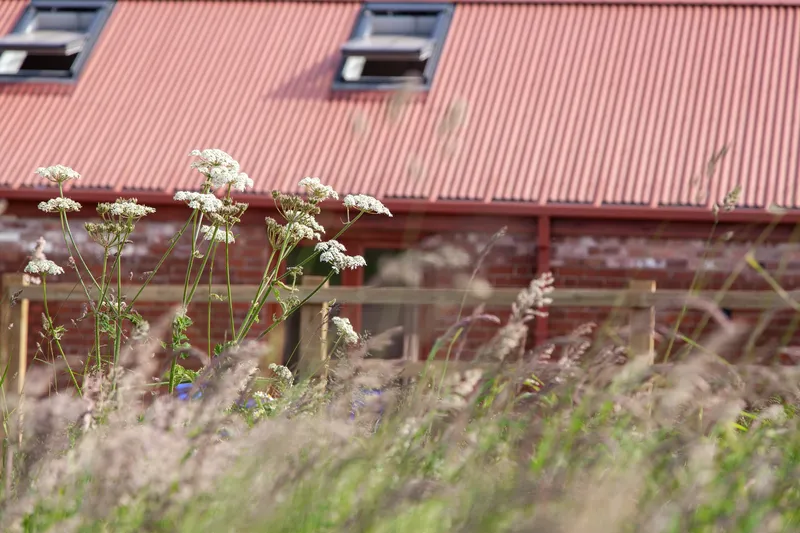
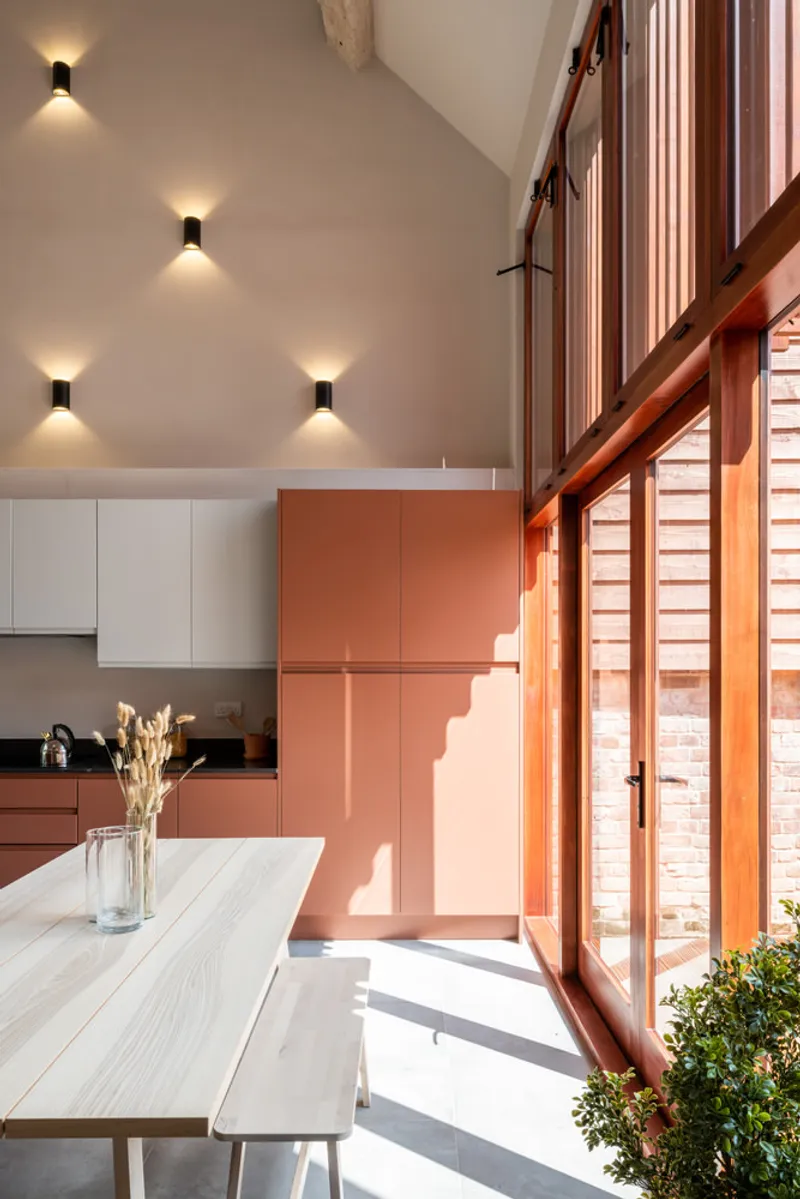
Material choices draw from Herefordshire’s landscape, with red brick, terracotta and clay referencing the region’s reddish gravel and fertile agricultural soils. Metal roofing echoes traditional farm structures, while interior finishes rely on breathable clay paints and untreated natural tones. New and reclaimed oak elements receive a clay-based stain, unifying the many components and maintaining a handcrafted aesthetic.
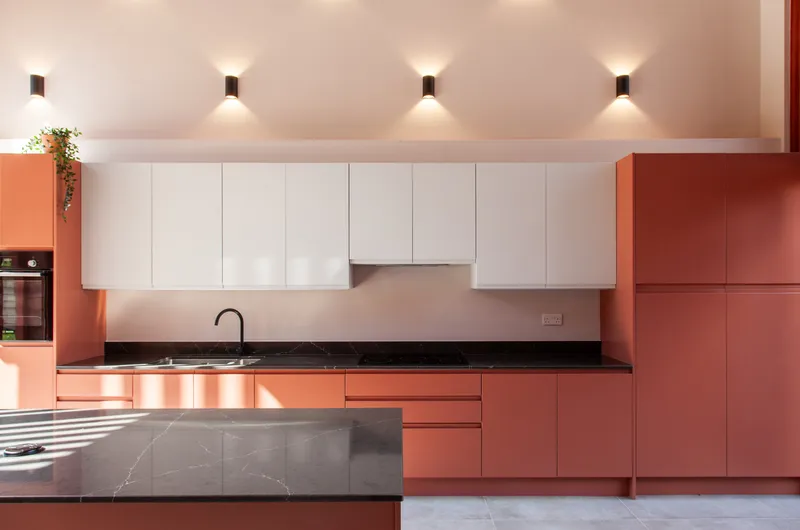
Deep Retrofit for Low-Carbon, Fossil-Fuel-Free Living
The Parks Housing adopts a deep retrofit strategy, enabling energy-efficient homes with significantly reduced operational carbon. New electrics and plumbing systems, air source heat pumps and underfloor heating combine to support fossil-fuel-free living. By enhancing thermal performance and reducing running costs, the development offers modern comfort within a heritage envelope.
Construction processes also prioritized sustainability and local craftsmanship. Stolon Studio collaborated with skilled tradespeople, small family-run businesses and rural specialists, reinforcing community economic resilience. Historic timber, bricks, stone and even old farm machinery were salvaged on site and reused where possible, while demolition waste was crushed to create aggregate for paths and foundations, diverting material from landfill. An original millstone remains embedded in the landscape as a symbolic artefact of the site’s agricultural past.
Land Restoration and Biodiversity Enhancement
The landscape design addresses the environmental degradation caused by years of neglect, reintroducing native planting and wildlife-supportive habitats. Inspired by traditional English hedgerows, the scheme incorporates cow parsley, soft white seasonal flora, a wildflower meadow, bat habitats, new tree planting and a pond. These ecological strategies strengthen biodiversity, create natural buffers around the homes and blend the development seamlessly into its rural setting.

All photographs are works of Robert Barker




Popular Articles
Popular articles from the community


Riyadh For All: Intergenerational Urban Design for Active Aging in Rabat
Riyadh For All reimagines urban design in Rabat with intergenerational co-living, adaptive courtyards, and Moroccan cultural exchange today.

Conexión: Biophilic Design Reimagines High-Rise Living in Hong Kong
Conexión reimagines high-rise living in Hong Kong through biophilic design, green facades, shared spaces, daylight, water and nature within.

Co-life: Sustainable Architecture for Age-Friendly Community Living
Co-life reimagines sustainable architecture for seniors through courtyards, rammed earth, shared gardens, and spaces designed for belonging.

Co-Life: Senior Housing Design That Reconnects Older Adults With the City
Co-Life reimagines senior housing design through healing gardens, shared streets, workshops, and a sustainable community across generations.


Similar Reads
You might also enjoy these articles


Hodi-Mandai Geram
Project Function: Preservation and revitalization of the Intangible heritage and socio-spatial identity of the Hodi by Housing, Cultural Memory Center, Sacred Grove, landscape, local tourism economy


Olio Towers: A Mid-Rise for Performers That Fuses Housing, Rehearsal, and Stage
Located blocks from Houston's Theater District, this modular tower stacks living units around a central performance atrium.

Oasis: Modular Green Housing Carved into Dhaka's Urban Fabric
A shortlisted Plugin Housing entry reclaims unauthorized settlements in Dhaka with stepped concrete volumes, green roofs, and ventilation-driven design.

Black Hole: A Floating Megastructure for the Post-Physical Era
Emiliano Mazzarotto envisions a spherical, self-scaling arena where e-sports, digital hotels, and holographic stadiums replace traditional public space.


Explore Sustainable Farm Competitions
Discover active competitions in this discipline


Challenge to design mud housing for contemporary communities


Challenge to reimagine the Iron Throne


Photograph architecture without architects


Illustrate the lost glory of Angkor Wat - Render Challenge
Comments (0)
Please login or sign up to add comments
No comments yet. Be the first to comment!