
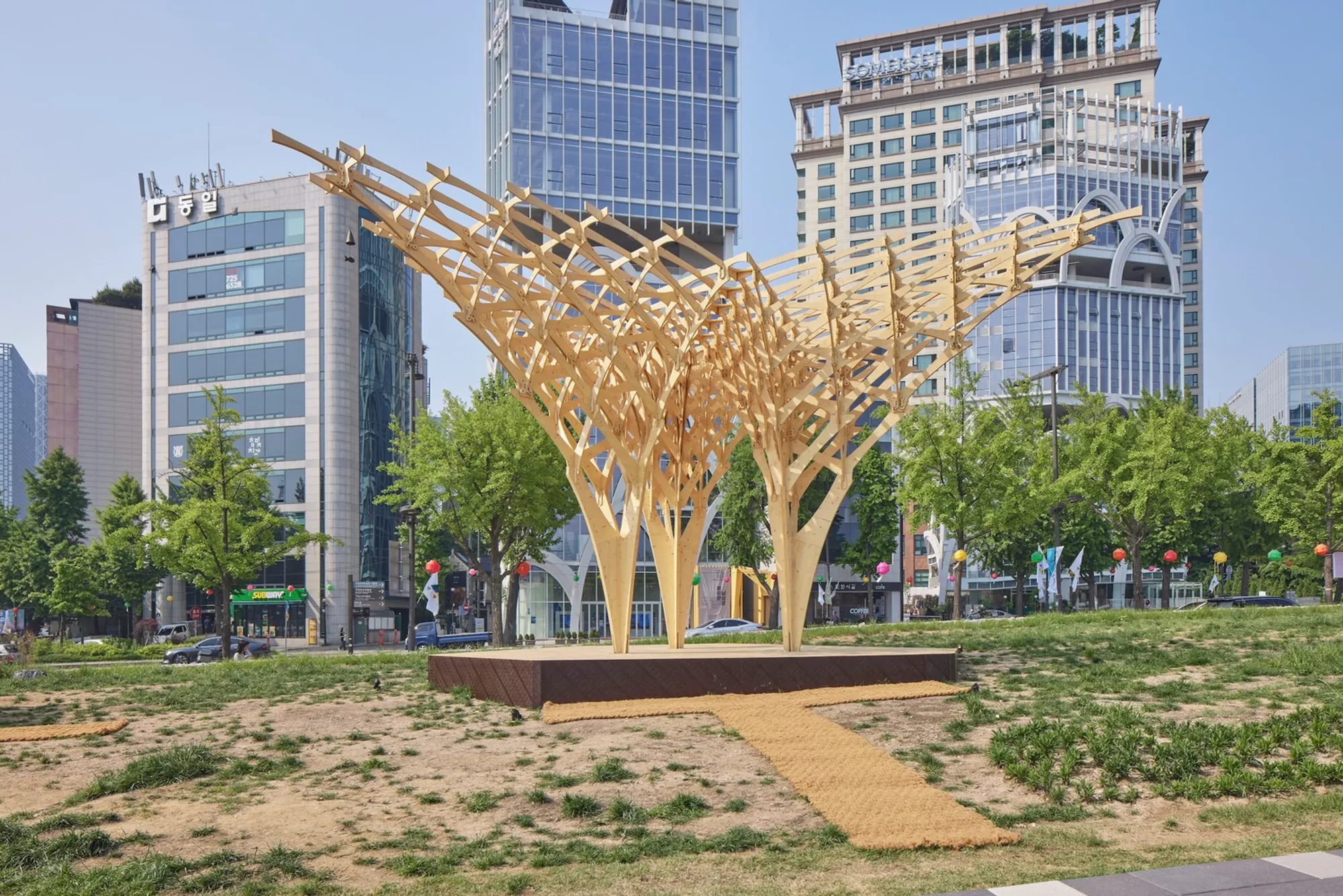
The Pavilion of Contemplation by JK-AR: A Modern Reflection on Traditional East Asian Architecture
A contemporary pavilion in Seoul blending traditional Korean architecture with modern design, offering space for reflection, culture, and community.


Reimagining Traditional Design in a Contemporary Urban Landscape
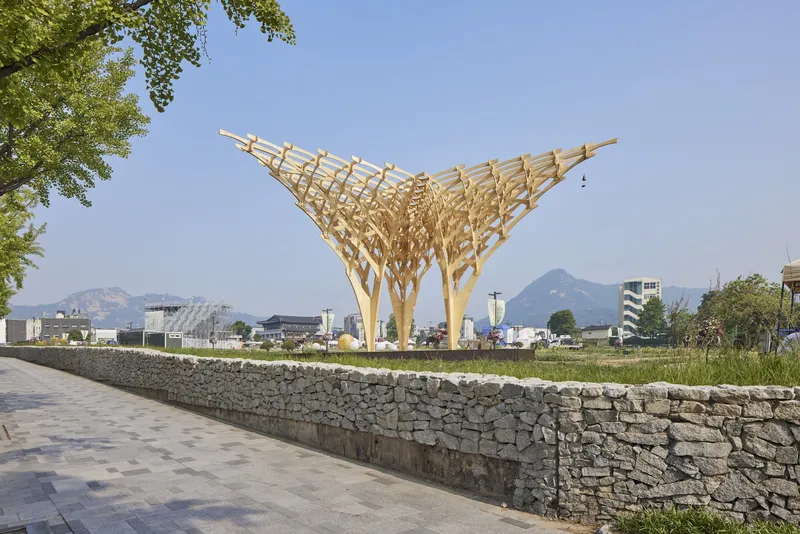
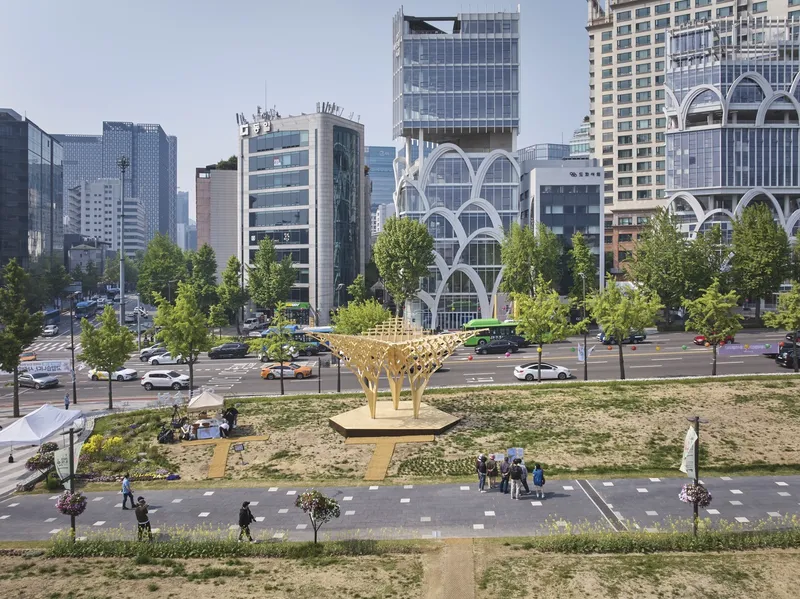
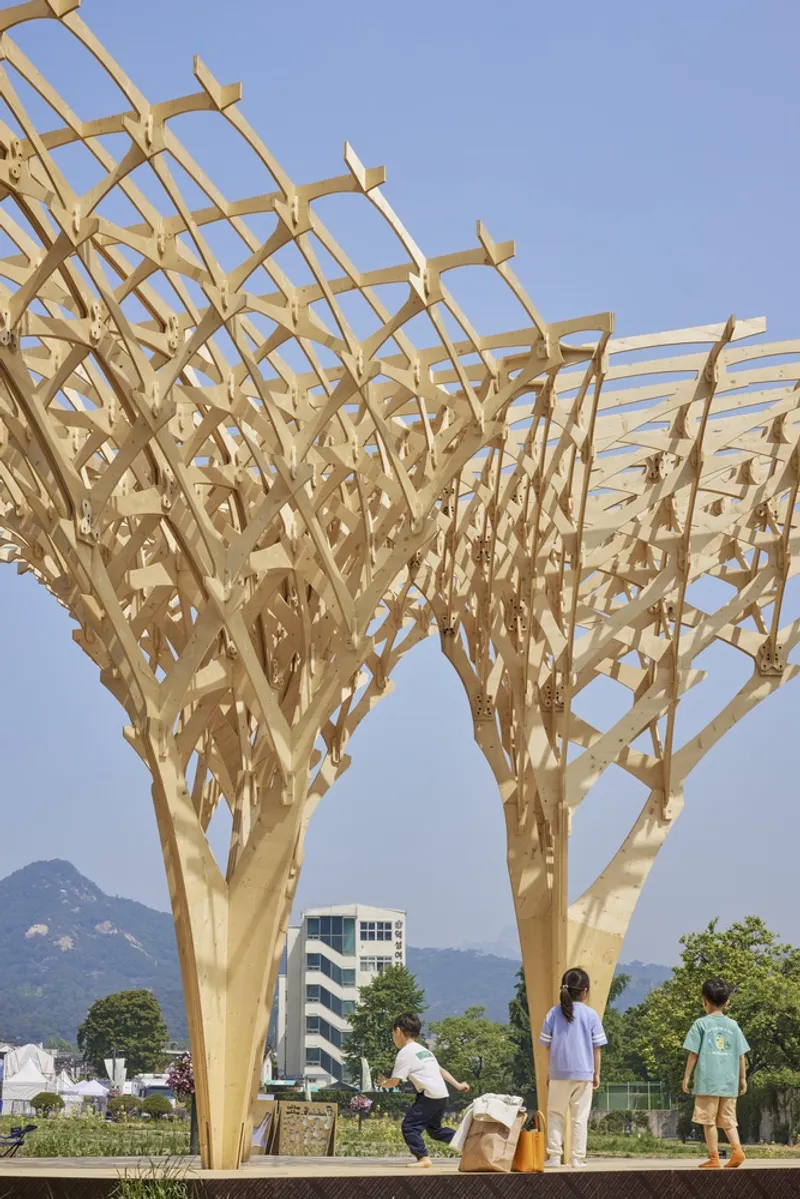
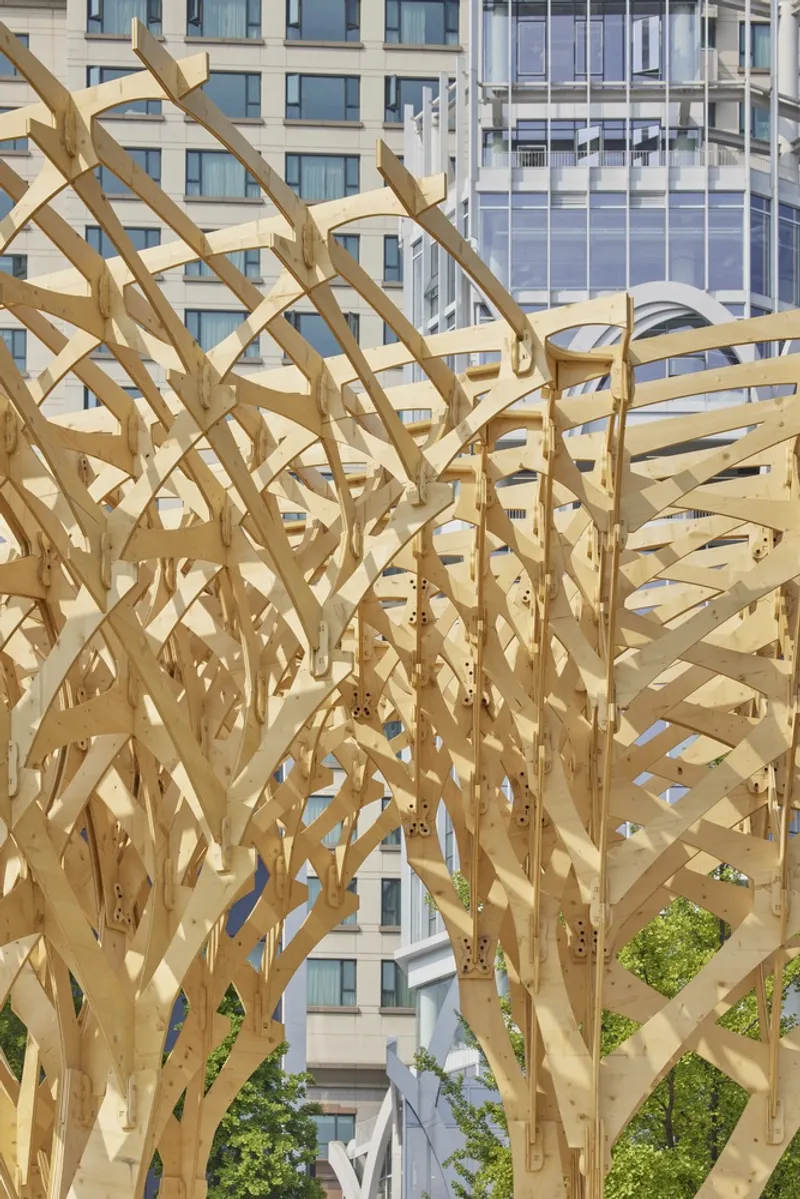
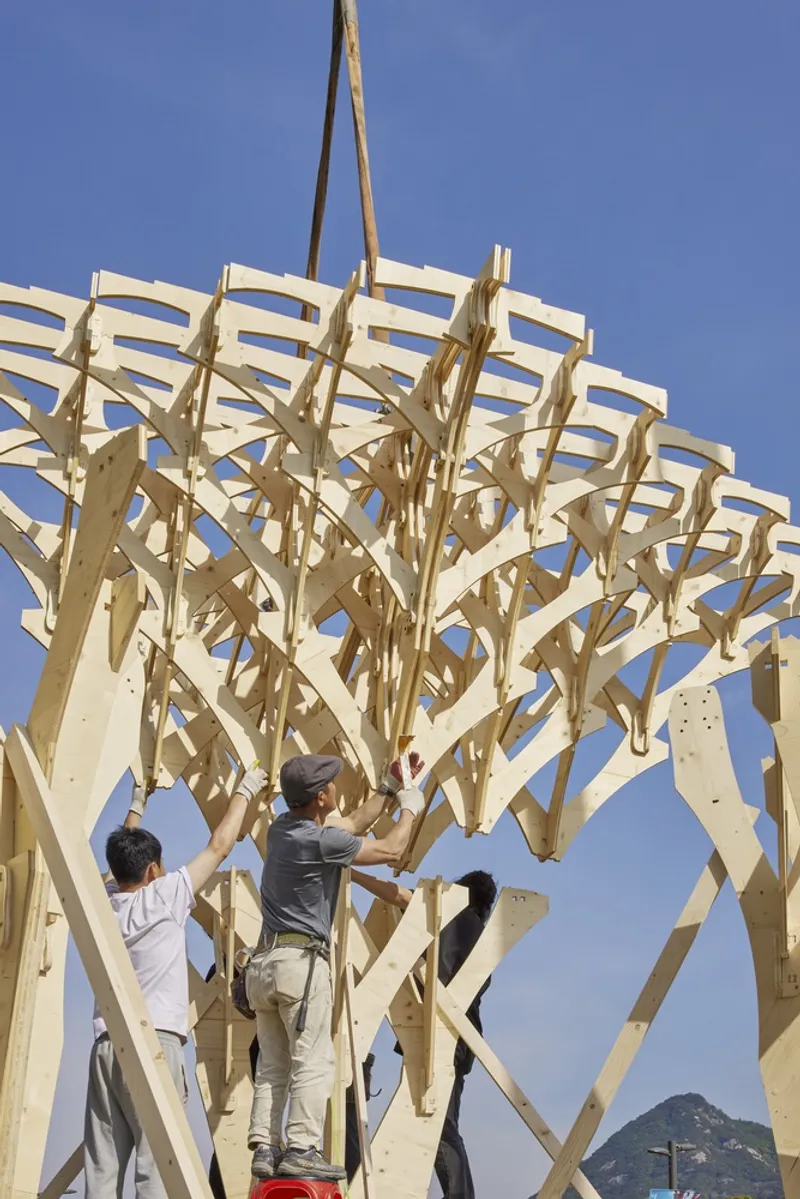
The Pavilion of Contemplation, designed by JK-AR, is a striking architectural intervention located within Songhyeon Park near the historic Gyeongbokgung Palace in Seoul. As part of the ongoing “Tree Series” by the firm, this contemporary pavilion serves as a modern reinterpretation of East Asian timber architecture, specifically the intricate wooden bracket systems that define the region’s historical buildings.
Set against a backdrop of layered history, this lightweight, sculptural structure blends the past and present, offering a contemplative space for rest, performance, and cultural gathering. With its minimalist expression and organic form, the pavilion acts as a cultural node and urban landmark, where architectural experimentation meets tradition.
A Pavilion Rooted in Heritage and Nature
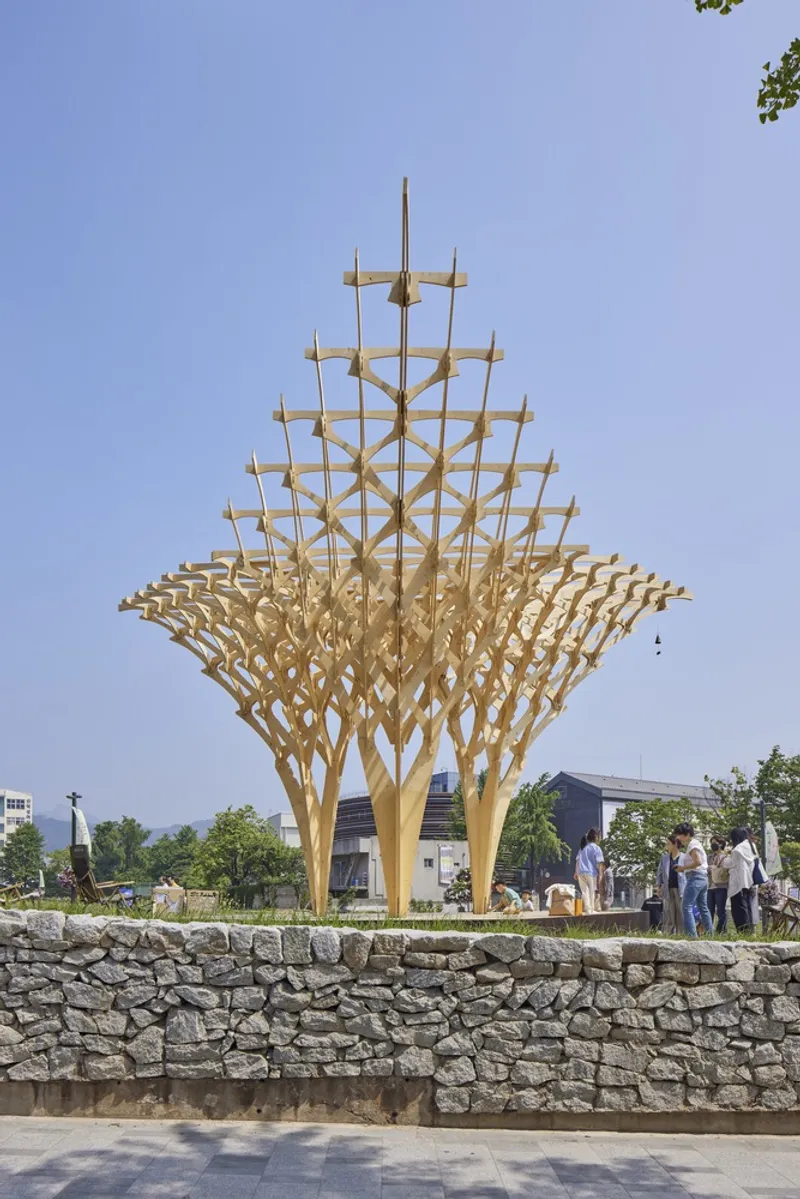
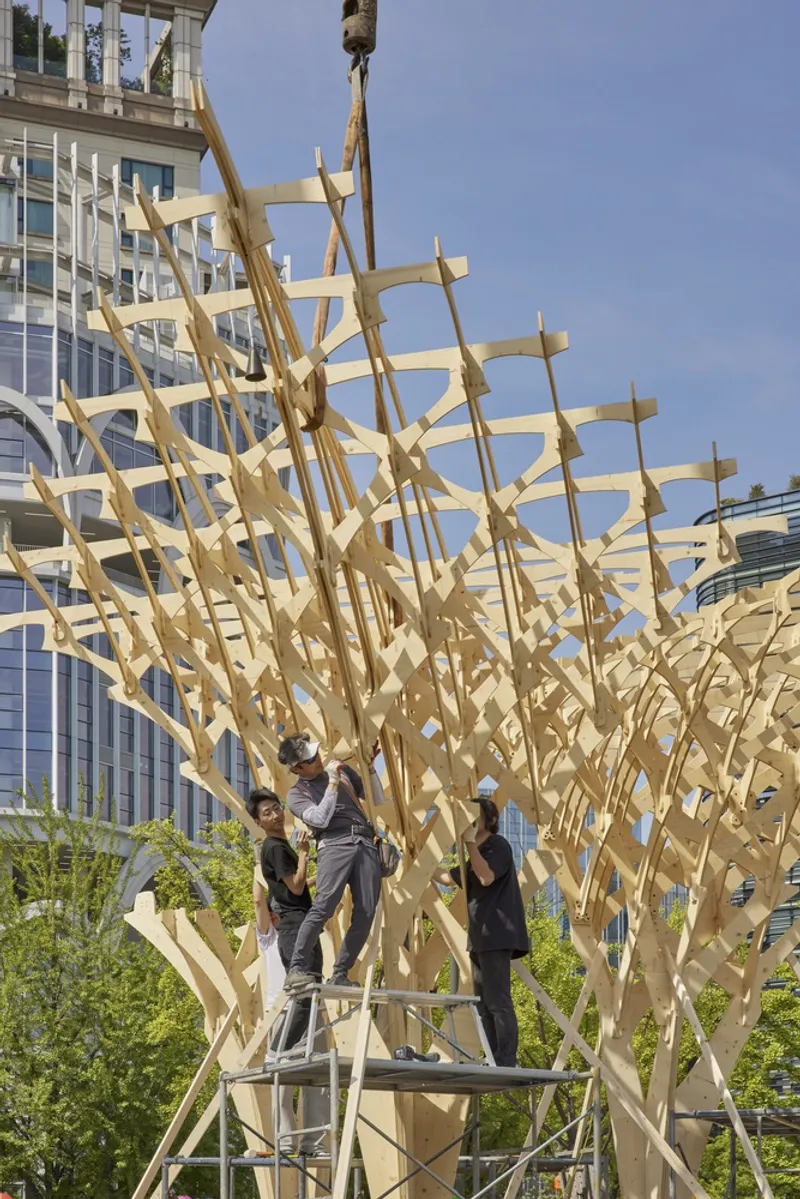
The design draws heavily from the ‘-jeong’ pavilion typology, a traditional Korean architectural element used historically for relaxation, reflection, and scenic enjoyment. At the same time, the Pavilion of Contemplation integrates modern structural techniques, with its construction and engineering handled entirely by the JK-AR studio.
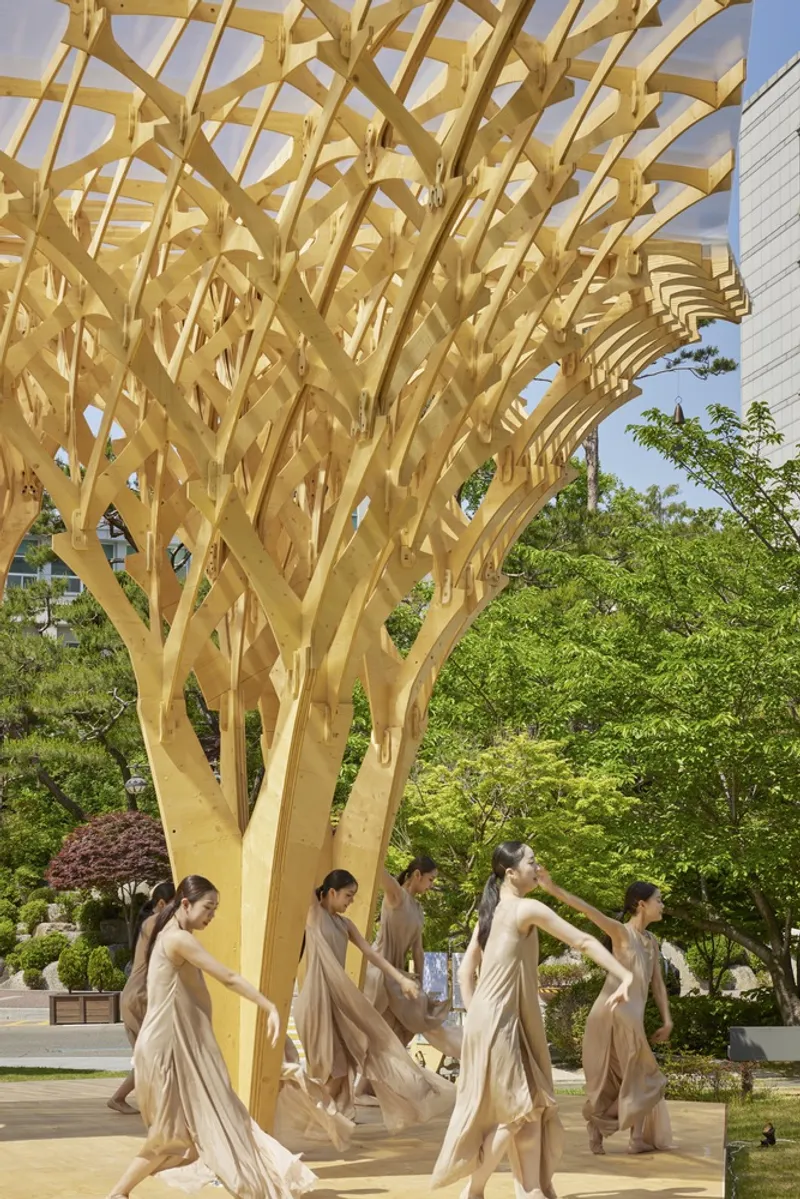
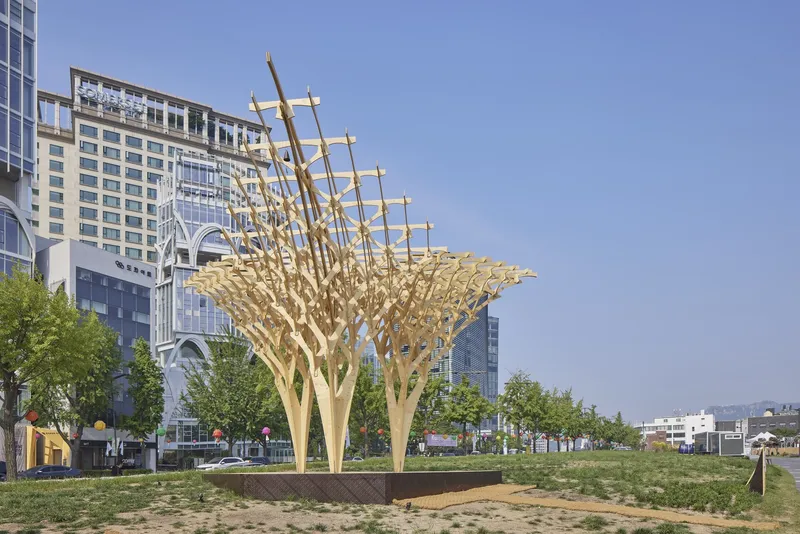
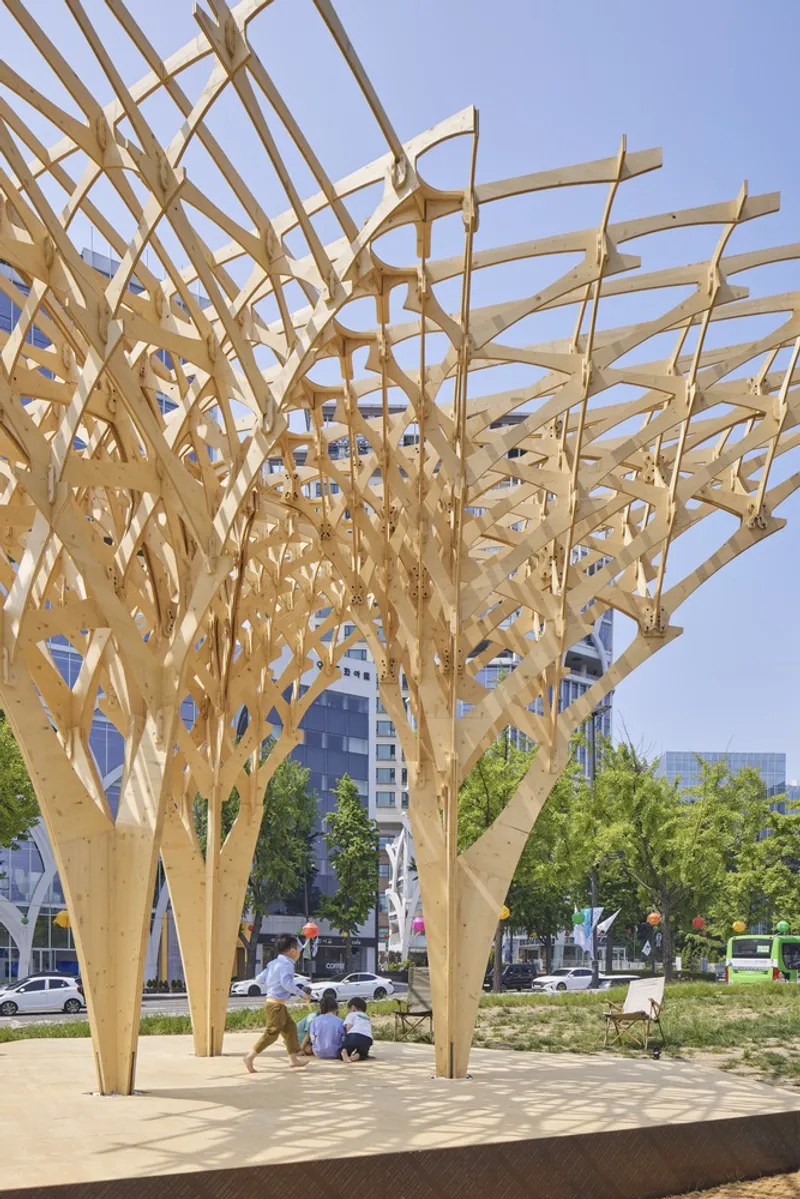
Supported by three tree-like columns, the structure appears to emerge from the earth, echoing natural forms while engaging with vernacular styles seen in Southeast Asian and African architecture. Its semi-open canopy creates an inviting, shaded shelter that feels like a small forest embedded within the dense city fabric.
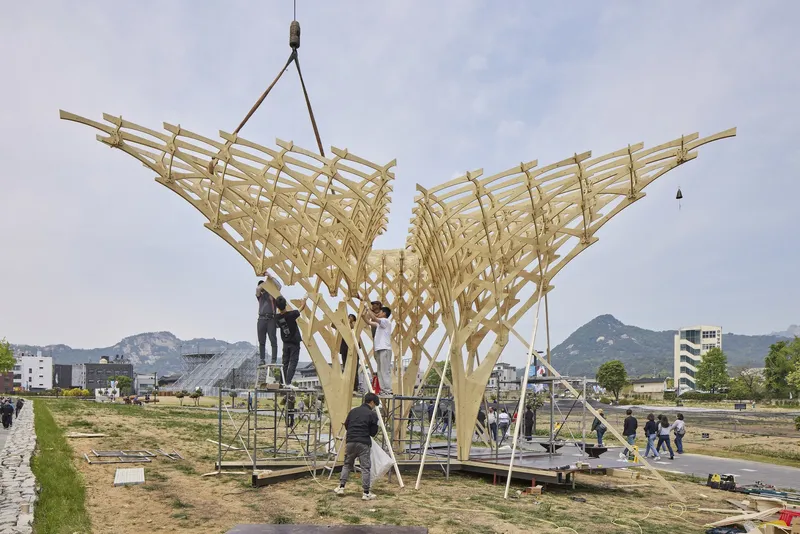
Space for Public Performance and Personal Reflection
Designed not only as an architectural installation but also as a multi-functional public space, the pavilion acts as a temporary stage for dance, music, and community events in Songhyeon Park. However, its spatial narrative invites diverse interpretations—it may resemble an artificial tree, a contemporary ‘jeong’, or simply an abstract sculptural form open to the imagination.
By responding to these multiple meanings, the Pavilion of Contemplation fulfills architecture’s fundamental purpose: to provide a physical and mental refuge. As urban life becomes increasingly fast-paced and detached from nature, this structure proposes a return to architecture as shelter, a quiet space for meditation, connection, and cultural expression.
Architectural Significance and Cultural Impact
At its core, this project addresses the evolving values of contemporary architecture, challenging norms and proposing a return to elemental design—what some might call the rebirth of the primitive hut. Its relevance lies not only in its form but in its intentional ambiguity, allowing users to project meaning and derive personal interpretations.
The Pavilion of Contemplation successfully blurs the line between installation art and functional structure, celebrating biophilic design, cultural memory, and sustainable principles through its tactile materiality and rooted symbolism.
All the photographs are works of Rohspace




Popular Articles
Popular articles from the community


AL-JANNAH: Sustainable Architecture and Permaculture for Afghan Widows
AL-JANNAH uses sustainable architecture and permaculture to create resilient oasis of housing, learning, work and renewal for Afghan widows.

Co-life: Sustainable Architecture for Age-Friendly Community Living
Co-life reimagines sustainable architecture for seniors through courtyards, rammed earth, shared gardens, and spaces designed for belonging.

Conexión: Biophilic Design Reimagines High-Rise Living in Hong Kong
Conexión reimagines high-rise living in Hong Kong through biophilic design, green facades, shared spaces, daylight, water and nature within.

The Earth Pod: 3D Printed Homes for Resilient Refugee Communities
The Earth Pod reimagines refugee housing through 3D printed homes made from clay, combining resilience, self-sufficiency, and rapid shelter.


Similar Reads
You might also enjoy these articles


Hodi-Mandai Geram
Project Function: Preservation and revitalization of the Intangible heritage and socio-spatial identity of the Hodi by Housing, Cultural Memory Center, Sacred Grove, landscape, local tourism economy


Olio Towers: A Mid-Rise for Performers That Fuses Housing, Rehearsal, and Stage
Located blocks from Houston's Theater District, this modular tower stacks living units around a central performance atrium.

Oasis: Modular Green Housing Carved into Dhaka's Urban Fabric
A shortlisted Plugin Housing entry reclaims unauthorized settlements in Dhaka with stepped concrete volumes, green roofs, and ventilation-driven design.

Black Hole: A Floating Megastructure for the Post-Physical Era
Emiliano Mazzarotto envisions a spherical, self-scaling arena where e-sports, digital hotels, and holographic stadiums replace traditional public space.


Explore Remembrance Pavilion Competitions
Discover active competitions in this discipline


Challenge to design a portable theatre


Challenge to design a portable music platform

Challenge to design an open learning module for the elderly


Challenge to reimagine the Iron Throne
Comments (0)
Please login or sign up to add comments
No comments yet. Be the first to comment!