
The Sea Safari: A Vision for Sustainable Marine Architecture
Transforming abandoned oil rigs into sustainable marine architecture that protects sharks, restores reefs, and educates future generations.


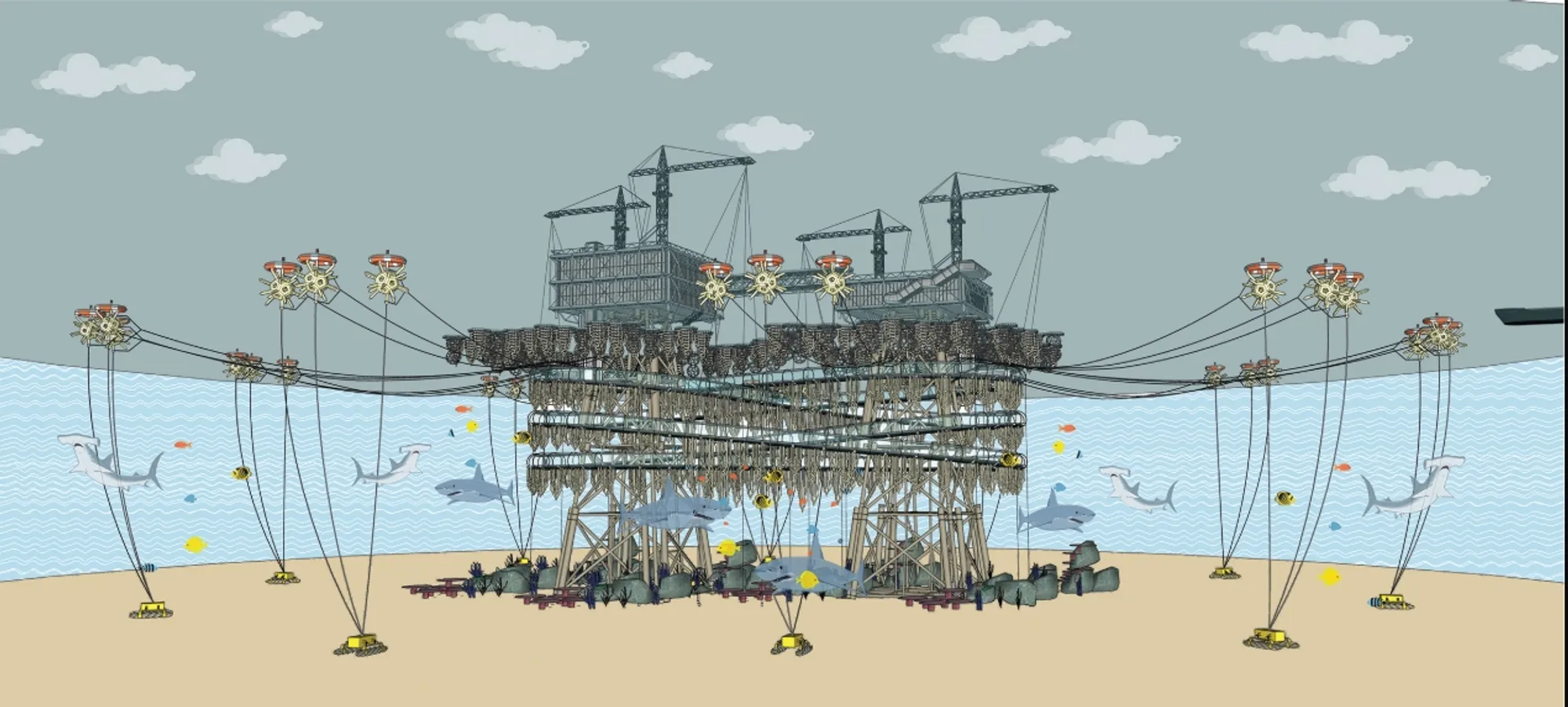
As coastal ecosystems face increasing environmental pressure, architects and designers are exploring innovative ways to transform obsolete industrial infrastructure into ecological assets. The Sea Safari, a shortlisted entry in the Proximity Island 2019 competition by Khalid MS, presents a compelling example of sustainable marine architecture that combines conservation, tourism, research, and education within a repurposed offshore oil rig.
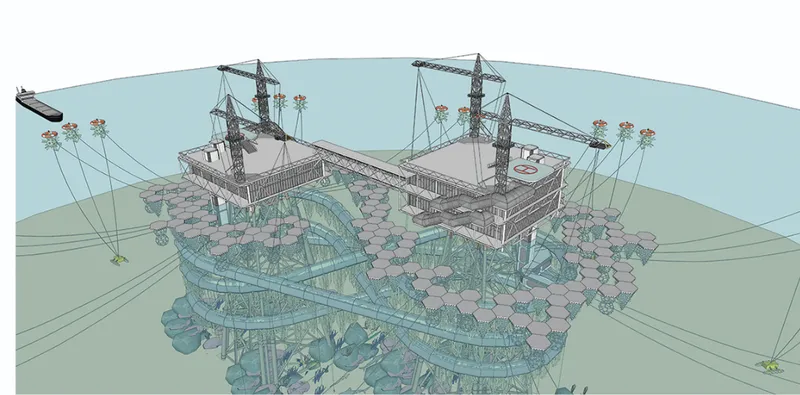
The proposal reimagines the oil platform not as an abandoned industrial relic, but as a thriving marine sanctuary where humans and marine ecosystems coexist. By adapting safari experiences to the ocean environment, the project creates a unique destination focused on protecting marine biodiversity, particularly chondrichthyan species such as sharks, rays, and skates.
Adaptive Reuse of Offshore Infrastructure
The foundation of The Sea Safari lies in the adaptive reuse of an existing offshore oil rig. Rather than demolishing the structure, the proposal leverages its strategic offshore location and robust engineering framework to create a multifunctional marine conservation hub.
This approach significantly reduces the environmental impact associated with new offshore construction while extending the useful life of existing infrastructure. The oil platform becomes an elevated ecosystem where tourism, scientific research, and environmental stewardship intersect.
The project demonstrates how sustainable marine architecture can transform industrial remnants into productive ecological landscapes, contributing to both environmental restoration and economic activity.
Floating Artificial Reefs as Ecological Infrastructure
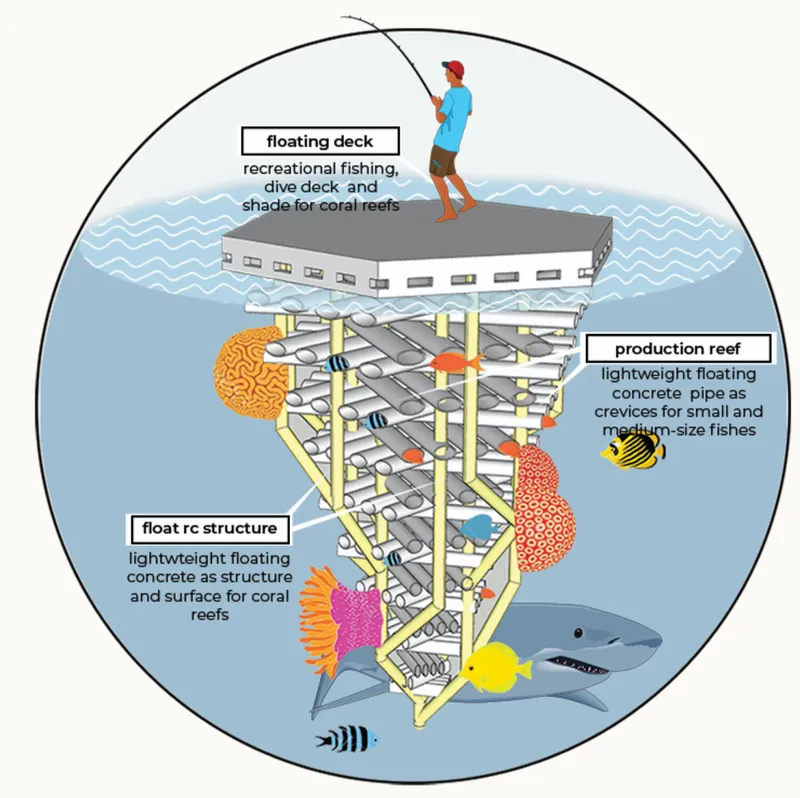
A defining feature of the proposal is its extensive network of floating artificial reefs designed to restore marine habitats and support biodiversity.
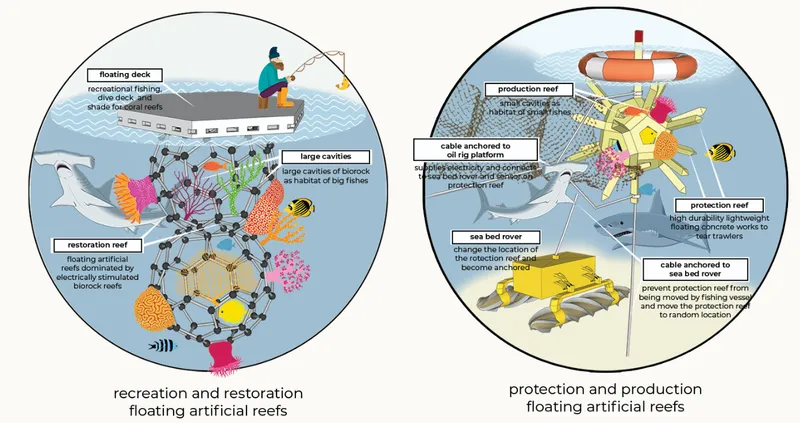
The design introduces three distinct reef typologies, each serving a specific ecological purpose:
Recreation and Restoration Reefs
These floating reefs are designed to rehabilitate damaged marine ecosystems while creating opportunities for environmental education and controlled recreational activities. Their structure encourages coral growth and provides habitat for diverse marine species.
Protection and Production Reefs
These reef systems focus on species protection and habitat enhancement. Lightweight floating concrete structures provide durable surfaces for marine organisms while supporting the growth of healthy underwater ecosystems.
Recreation and Production Reefs
Combining conservation and tourism objectives, these reefs allow visitors to experience marine environments while ensuring ecological regeneration remains a central priority.
Together, the modular reef systems form an interconnected underwater network that gradually develops into a larger reef complex surrounding the platform.
Accelerating Coral Reef Regeneration
One of the project's most innovative components involves the use of electrically stimulated bio-rock reef systems. These structures encourage accelerated coral growth by creating favorable conditions for reef development.
Compared to natural coral recovery rates, the bio-rock technology has the potential to significantly enhance coral regeneration, helping restore damaged ecosystems more efficiently. Once established, these coral communities can be transplanted throughout the wider reef network, expanding ecological benefits across the site.
The proposal recognizes that healthy coral ecosystems form the foundation of marine biodiversity, supporting fish populations, invertebrates, and larger marine species throughout the food chain.
Supporting Chondrichthyan Conservation
The project places particular emphasis on protecting chondrichthyan species, which face increasing threats from habitat loss, overfishing, and environmental degradation.
Artificial reef systems provide shelter, feeding grounds, and nursery habitats that support both juvenile and mature marine life. By improving habitat quality and reducing human disturbance, The Sea Safari creates conditions that encourage long-term species recovery.
Educational programming further strengthens conservation efforts by raising public awareness about the ecological importance of sharks and rays and their role within marine ecosystems.
Marine Tourism as a Conservation Tool
Rather than treating tourism as a separate activity from conservation, the proposal integrates both objectives into a unified experience.
Visitors are invited to explore the offshore sanctuary through carefully designed recreational programs that prioritize environmental responsibility. Educational tours, marine observation opportunities, and interactive exhibits allow guests to engage directly with ocean conservation initiatives.
Revenue generated through tourism helps support ongoing research, habitat restoration, and conservation programs, creating a self-sustaining operational model.
This strategy demonstrates how sustainable marine architecture can generate economic value while actively improving environmental outcomes.
Underwater Observation Without Ecological Disturbance
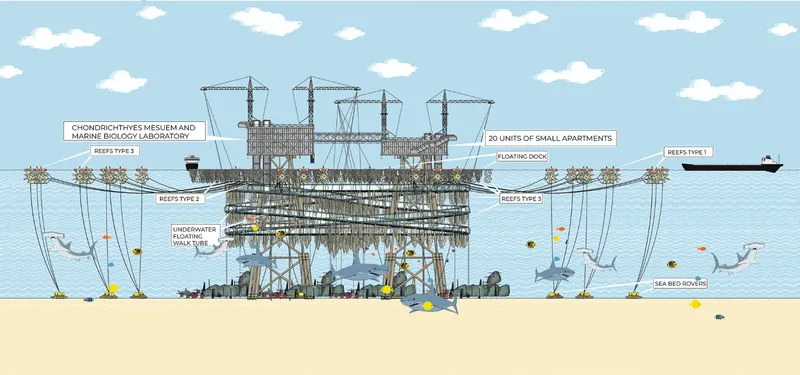
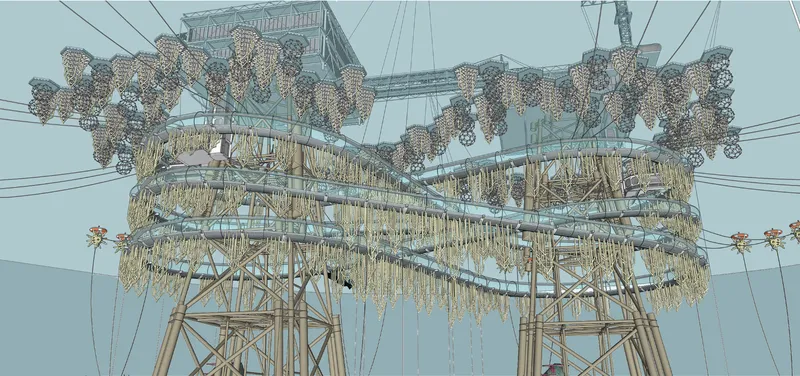
A particularly notable feature is the underwater floating walk tube that encircles portions of the oil rig structure.
Traditional scuba diving activities often bring visitors into close proximity with marine habitats, potentially causing stress and disturbance to sensitive species. The observation tube offers an alternative approach by allowing visitors to experience underwater environments without direct physical interaction.
This controlled viewing system minimizes ecological impact while providing immersive educational opportunities. Visitors can observe marine life, coral development, and reef ecosystems from a protected environment, enhancing awareness while preserving habitat integrity.
Research and Marine Education Facilities
The Sea Safari functions not only as a tourist destination but also as a center for scientific inquiry and environmental education.
Dedicated facilities include:
- Marine biology laboratories
- Research spaces
- Educational exhibition areas
- Conservation monitoring stations
- Community outreach programs
These facilities encourage collaboration between researchers, conservationists, students, and visitors. By integrating scientific research into the public experience, the project helps bridge the gap between academic knowledge and environmental awareness.
Creating a New Model for Ocean-Based Architecture
The Sea Safari challenges conventional perceptions of offshore infrastructure. Instead of viewing oil platforms as obsolete industrial assets, the proposal demonstrates how they can become catalysts for ecological restoration and sustainable development.
The integration of artificial reefs, marine conservation programs, research facilities, tourism infrastructure, and educational spaces creates a comprehensive framework for ocean stewardship.
As global attention increasingly focuses on climate resilience, biodiversity protection, and adaptive reuse strategies, projects such as The Sea Safari illustrate the potential of sustainable marine architecture to address multiple environmental and social challenges simultaneously.
A Future Where Industry and Nature Coexist
The Sea Safari presents a powerful vision for the future of offshore architecture. Through the transformation of an oil rig into a marine conservation sanctuary, the project demonstrates how design can repair ecological damage while creating meaningful human experiences.
By combining habitat restoration, shark conservation, environmental education, scientific research, and responsible tourism, the proposal offers a holistic model for reimagining industrial infrastructure within fragile marine ecosystems.
As a Shortlisted Entry of Proximity Island 2019, The Sea Safari stands as an inspiring example of how architecture can actively contribute to ocean conservation while creating new opportunities for sustainable economic and educational development.




Popular Articles
Popular articles from the community


Conexión: Biophilic Design Reimagines High-Rise Living in Hong Kong
Conexión reimagines high-rise living in Hong Kong through biophilic design, green facades, shared spaces, daylight, water and nature within.

Hill & Cross Opera: Sculptural Opera House Architecture Shaped by Tallinn’s Landscape and Identity
Hill & Cross Opera reimagines opera house architecture in Tallinn through its sculptural hill, civic plaza, glass wave and a luminous cross.

Play: Fragments of Their World
Familiar architecture becomes modular playground design, creating safe spaces where displaced children can learn, connect, imagine and play.

The Earth Pod: 3D Printed Homes for Resilient Refugee Communities
The Earth Pod reimagines refugee housing through 3D printed homes made from clay, combining resilience, self-sufficiency, and rapid shelter.

Similar Reads
You might also enjoy these articles

Eco Chapel: A Green Architecture Pavilion Designed in Symbiosis with the Forest
Eco Chapel uses green architecture to weave prayer, learning and reuse into a forest pavilion shaped by modular hexagonal canopies for life.
Kaffeebühnen: Coffee Shop Architecture Designed as a Civic Stage Between Vienna’s City and Park
Kaffeebühnen turns coffee shop architecture into a civic stage, linking Vienna’s park edge, urban life, warm timber yards, and coffee craft.
Healing Façade: Sustainable Architecture for Reforestation, Community, and Sacred Ecology in Ethiopia
Healing Façade reimagines sustainable architecture as a living wall that restores soil, catches water and renews Ethiopia's forest churches.


Urban Forest: A Vertical Ecosystem for 5,000 Workers in Singapore's Changi Business Park
Radially stacked pods and layered green decks turn a 7-acre plot into 47 acres of ecological workspace projected for 2040.

Comments (0)
Please login or sign up to add comments
No comments yet. Be the first to comment!