
The Silk Bridge: Revitalizing Hangzhou's Waterfront Public Space
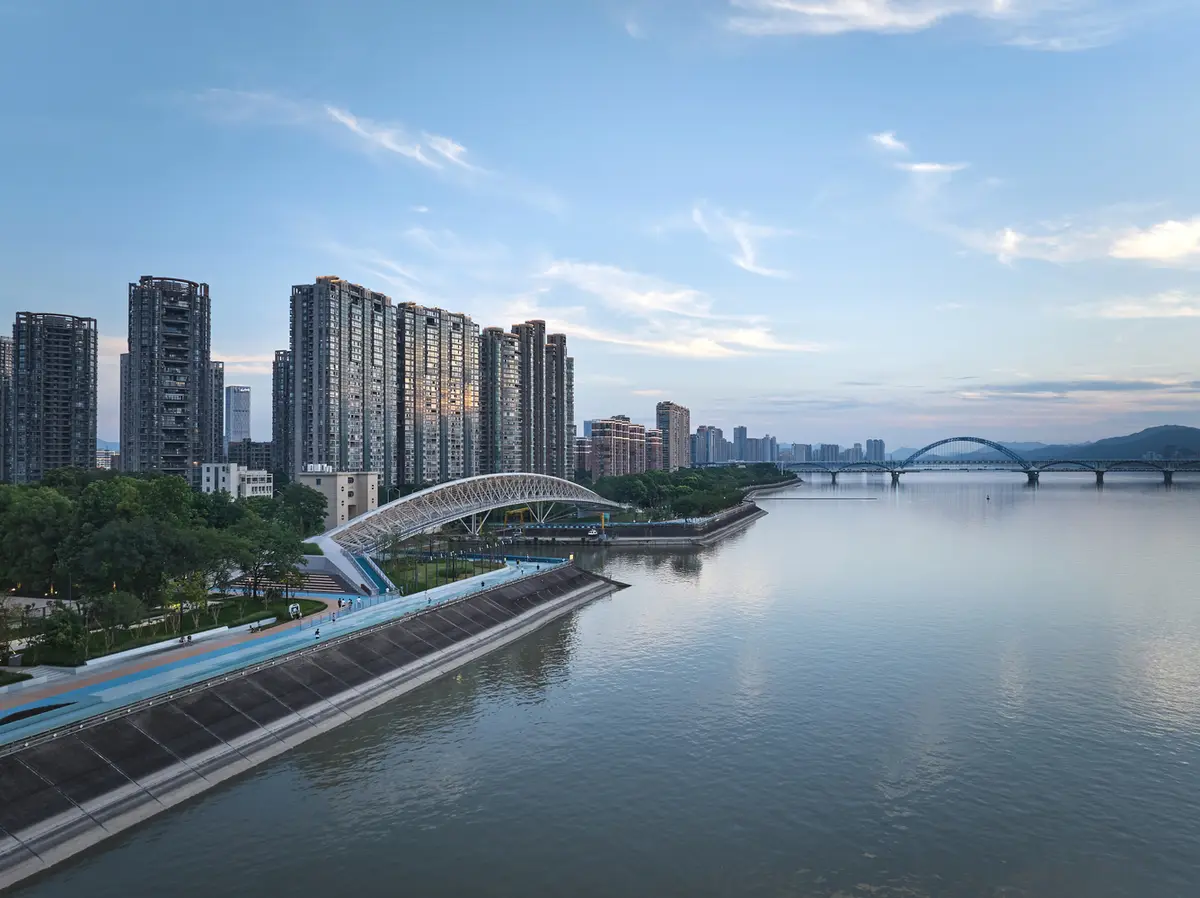
The Silk Bridge in Hangzhou reconnects the waterfront with elegant design, blending architecture, public space, and engineering innovation seamlessly.


By TJAD Original Design Studio – 2023
Located along the scenic south bank of the Qiantang River, the Silk Bridge is a striking piece of pedestrian infrastructure that embodies innovation, elegance, and urban connectivity. Designed by TJAD Original Design Studio, this architectural landmark is a pivotal element in the 12-kilometer waterfront public space renovation project in Binjiang District, Hangzhou, transforming a once fragmented riverside into a continuous, immersive public experience.
Reconnecting the City: From Breakpoint to Bridge
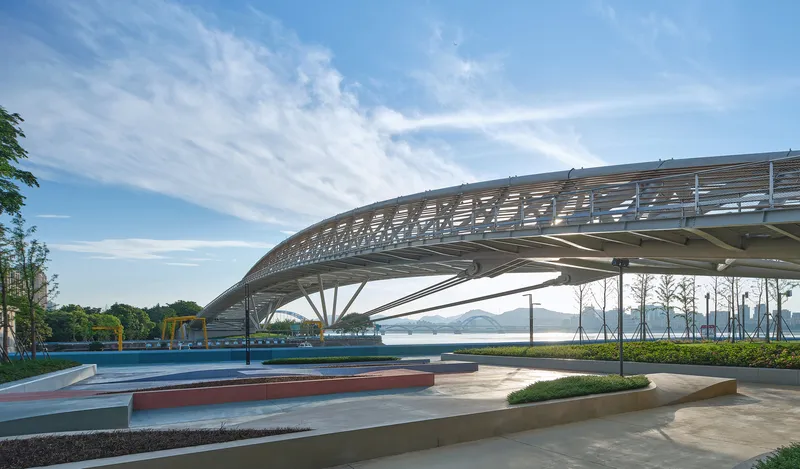
The Silk Bridge was conceived to address a major urban challenge: a disconnection in the waterfront due to the Xiaoshan Shiplock, which forced pedestrians and vehicles to share a congested, narrow path. By introducing a dedicated pedestrian bridge, the project restored the continuity of the riverside sports track, turning what was once a detour into a direct, scenic route along the Qiantang River.
The result is not only a functional crossing but a vibrant public space that invites movement, interaction, and contemplation. The Silk Bridge acts as a linking thread, weaving together the urban fabric and enhancing the walkability and accessibility of Hangzhou’s riverfront.
Architectural Design: Structure, Symbolism, and Space
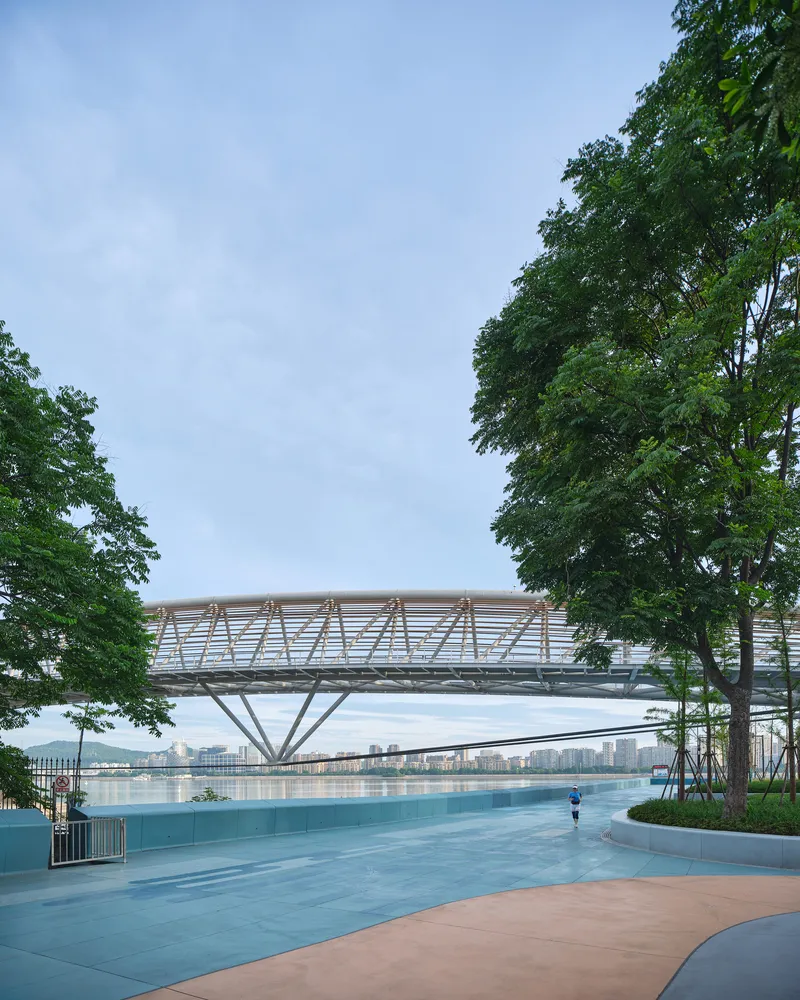
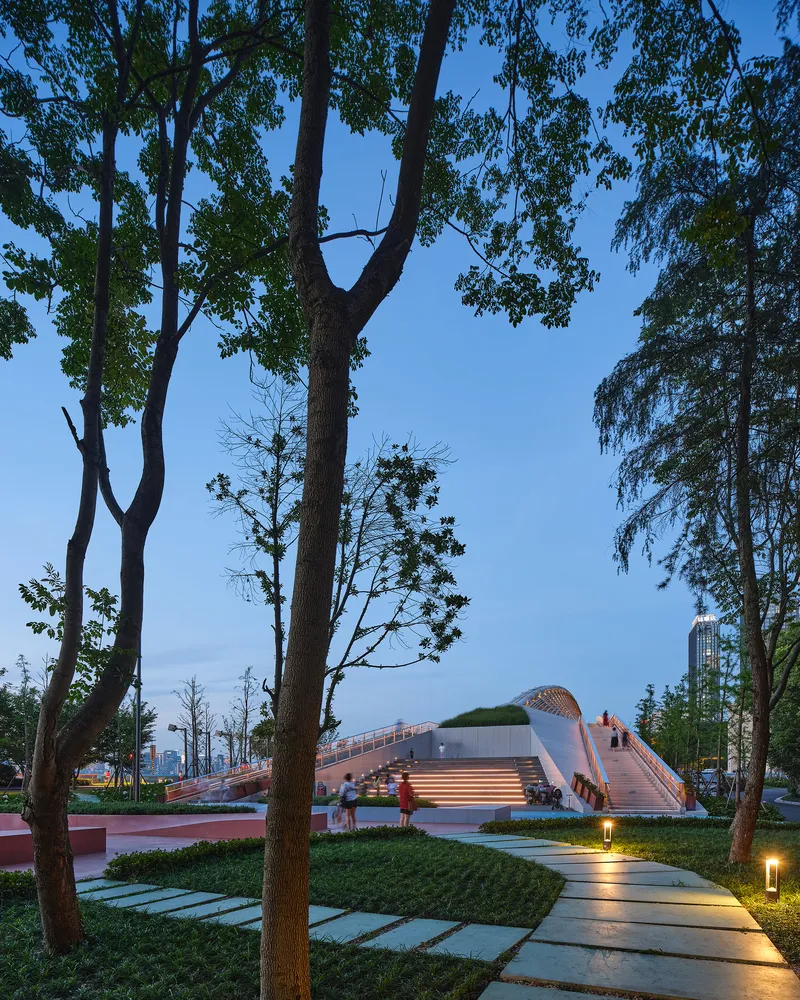
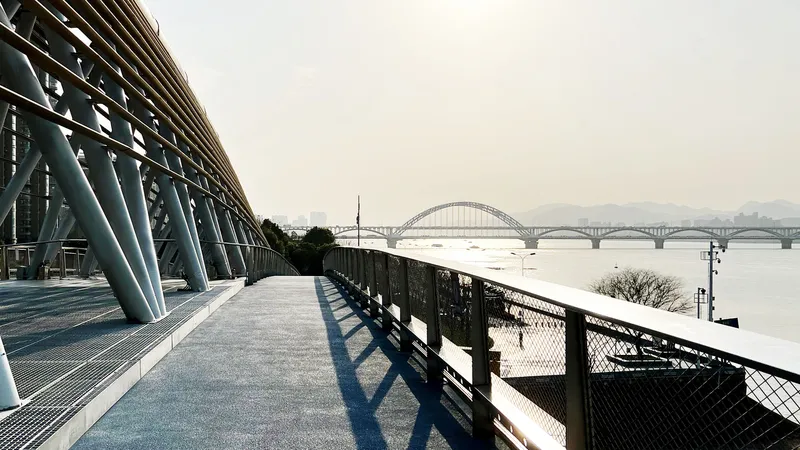
TJAD’s design approach blends technical precision with poetic gesture. The bridge's dual pathways symbolize a dialogue between past and future: one side faces the shiplock, paying homage to the city's industrial history, while the other opens toward the expansive river, evoking a vision of progress and openness. These two paths converge in the middle of the bridge, forming a raised truss structure that immerses pedestrians in a unique spatial experience.
Visitors can pause at the center to enjoy panoramic views through grille-like floor panels, offering glimpses of flowing water and passing vessels. This thoughtful integration of structure and scenery makes the Silk Bridge not just a crossing, but a destination.
Engineering Feat: Fluid Form and Functional Strength
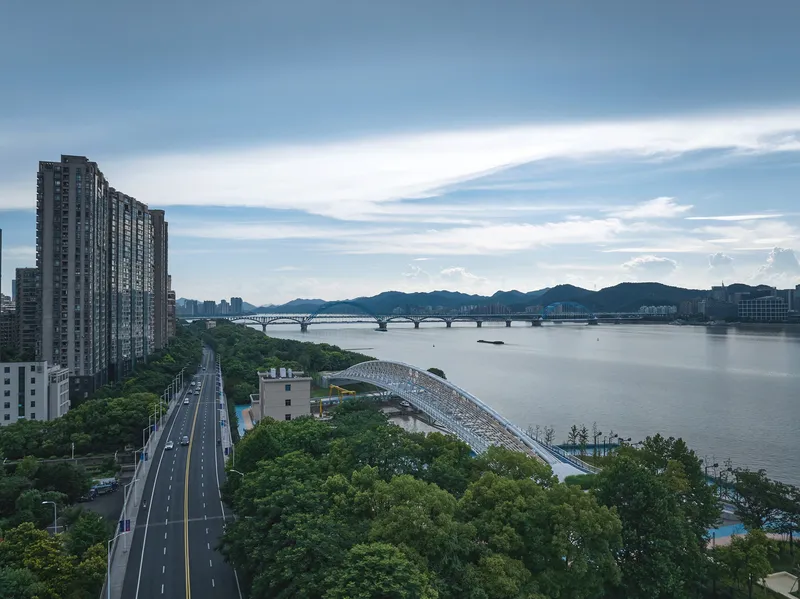
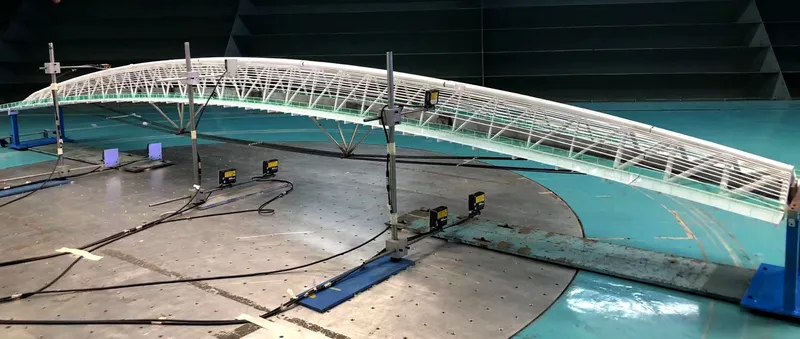
Collaborating closely with structural engineers, the architectural team developed a form where structural height and member dimensions evolve fluidly with load requirements. The bridge truss starts at 3.5 meters high and 12 meters wide, gently rising to 8 meters in height and narrowing to 6 meters at its midpoint—creating a dynamic, wave-like silhouette that echoes the river’s own rhythm.
With a span of 180 meters, the Silk Bridge ranks among the longest pedestrian bridges in China. Its high vanadium-sealed cables, each 140mm in diameter, represent the largest cable diameter and length ever used in a domestic pedestrian bridge project, reinforcing both its technical ambition and national significance.
Construction Innovation: Complex Challenges, Creative Solutions
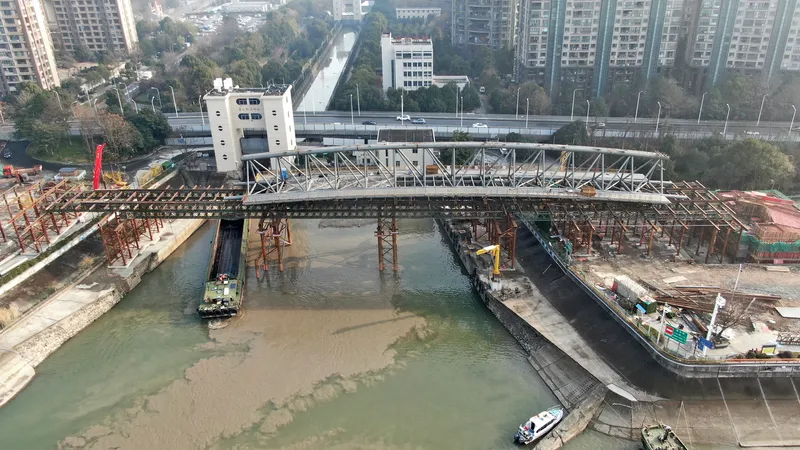
Constructing the Silk Bridge presented a logistical challenge due to the need to maintain navigability of the waterway during installation. The bridge was built in three sections: the central span was temporarily supported and slid into place over the river, while the remaining sections were assembled using an external unbonded prestressed technique along the riverbanks.
This innovative construction method was awarded as a top-rated provincial technique, and is the only recognized method of its kind in Hangzhou’s Binjiang District.
Public Space as Civic Fabric
Beyond its technical achievements, the Silk Bridge is a celebration of public life. At each end, expansive stair plazas invite gatherings, leisure, and social interaction, reinforcing the bridge's role not just as infrastructure, but as civic architecture. It becomes a new cultural landmark—where everyday routines meet exceptional design.


Popular Articles
Popular articles from the community


David Ortega Stacks a Two-Story Mexico City Penthouse Around a Steel Stair and a Pergola-Shaded Roof Terrace
In Colonia Roma, a 300 m² penthouse uses oak joinery, a planted steel stair and a slatted roof pergola to make a new-build apartment feel like a house.

David Macias Steps a Doorless Stone and Plaster House Down a Tropical Colombian Hillside
In the humid hills of Colombia, Threshold House replaces the front door with an open void and terraces its 850 m² down the slope instead of fighting it.

Juan García Correa, John González and Claudia Rueda Sink a Circular Amphitheater into a Manizales Engineering Building
On the La Nubia campus in Manizales, Colombia, the S1 Building folds labs and offices into a hillside of ramped lawns that double as a campus route.

longwave studio Reorganizes a 112 m² Tainan Apartment Around the Daily Routines of a Family and Two Cats
In Tainan, Taiwan, birch plywood, rust-red furniture and a freestanding plaster wall link arrival, storage, work and family life in one apartment.

Similar Reads
You might also enjoy these articles


Hodi-Mandai Geram
Project Function: Preservation and revitalization of the Intangible heritage and socio-spatial identity of the Hodi by Housing, Cultural Memory Center, Sacred Grove, landscape, local tourism economy


Olio Towers: A Mid-Rise for Performers That Fuses Housing, Rehearsal, and Stage
Located blocks from Houston's Theater District, this modular tower stacks living units around a central performance atrium.

Oasis: Modular Green Housing Carved into Dhaka's Urban Fabric
A shortlisted Plugin Housing entry reclaims unauthorized settlements in Dhaka with stepped concrete volumes, green roofs, and ventilation-driven design.

Black Hole: A Floating Megastructure for the Post-Physical Era
Emiliano Mazzarotto envisions a spherical, self-scaling arena where e-sports, digital hotels, and holographic stadiums replace traditional public space.

Explore Riverfront Development Competitions
Discover active competitions in this discipline

Challenge to reimagine the Iron Throne

Photograph architecture without architects

Illustrate the lost glory of Angkor Wat - Render Challenge

Design challenge to reuse E-waste
Comments (0)
Please login or sign up to add comments
No comments yet. Be the first to comment!