
The Stack Offices at Deep Ellum by 5G Studio Collaborative
The Stack Offices in Deep Ellum blends sustainable, wellness-focused office spaces with cultural heritage, flexible amenities, and striking industrial-modern architecture.


A Sustainable Mixed-Use Landmark Redefining Dallas’ Urban Work Culture
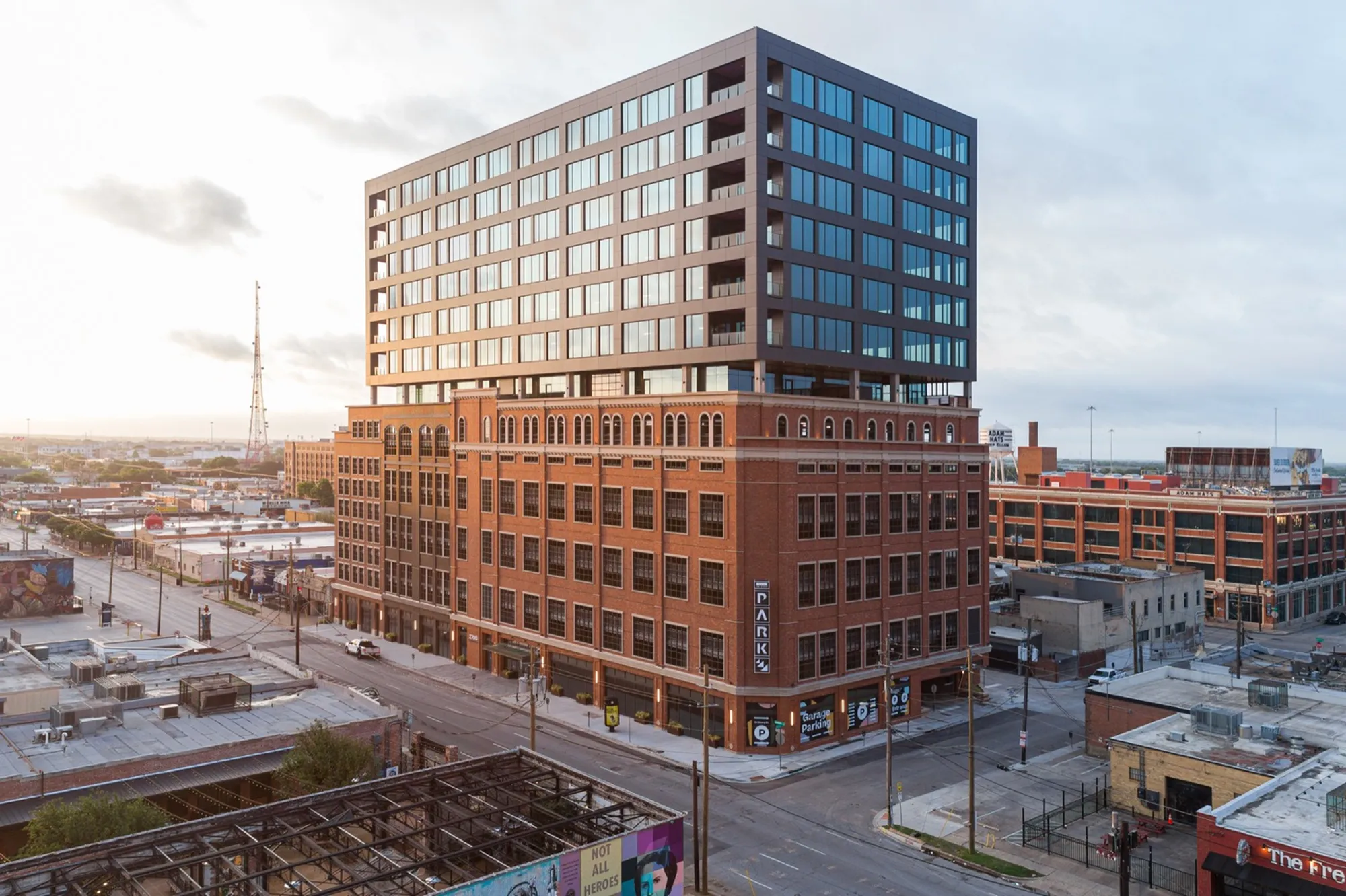
Located in the vibrant and culturally historic district of Deep Ellum, Dallas, The Stack by 5G Studio Collaborative stands as a new benchmark for sustainable and wellness-oriented workplace architecture. Completed in 2021, this 207,000 m² mixed-use development merges contemporary office design with the area’s rich industrial heritage, transforming how people work, connect, and experience urban life.


Context and Concept
Situated along Commerce Street, The Stack revitalizes a key urban site through an architectural composition that juxtaposes old and new. The building’s form is expressed as a metal-clad office tower resting above a masonry podium, creating a striking “box-on-base” visual contrast. The brick façade pays homage to Deep Ellum’s historic warehouses, while the upper metal volume represents progress and innovation—an architectural dialogue between tradition and modernity.
The lower levels house active storefronts, engaging the streetscape and enhancing pedestrian connectivity. Above, the office tower integrates open floor plans and generous balconies that blur the boundaries between interior and exterior, promoting a healthy and flexible work environment.

Design and Materiality
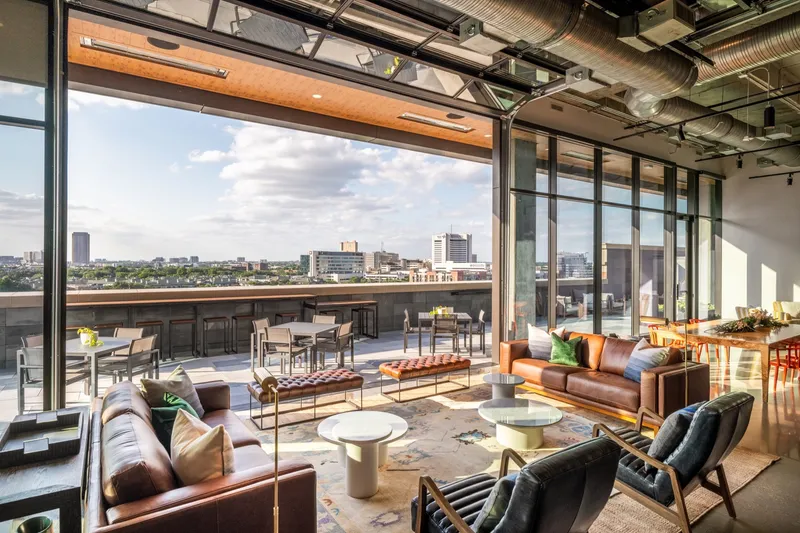
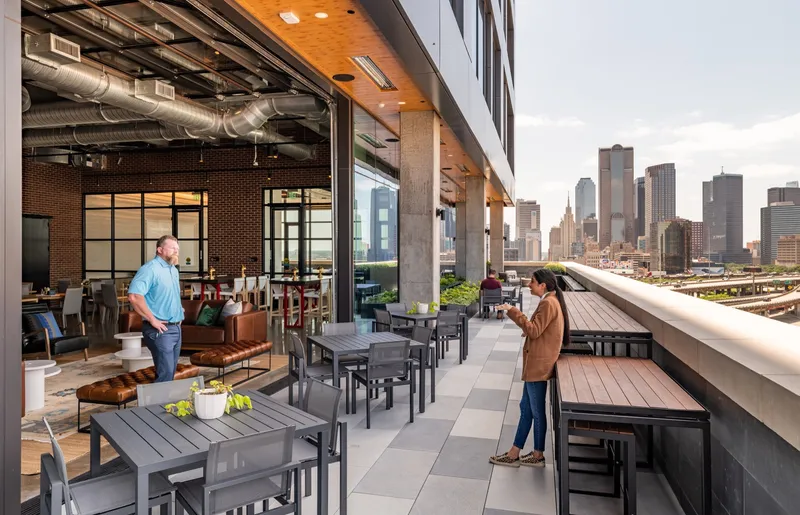
The Stack’s design emphasizes sustainability, transparency, and wellness. The structure utilizes precast concrete, brick, and metal cladding, celebrating the tactile material palette rooted in Deep Ellum’s industrial identity. Inside, expansive glazing and roll-up glass doors allow daylight to flood the interiors, creating seamless transitions between indoor and outdoor spaces.
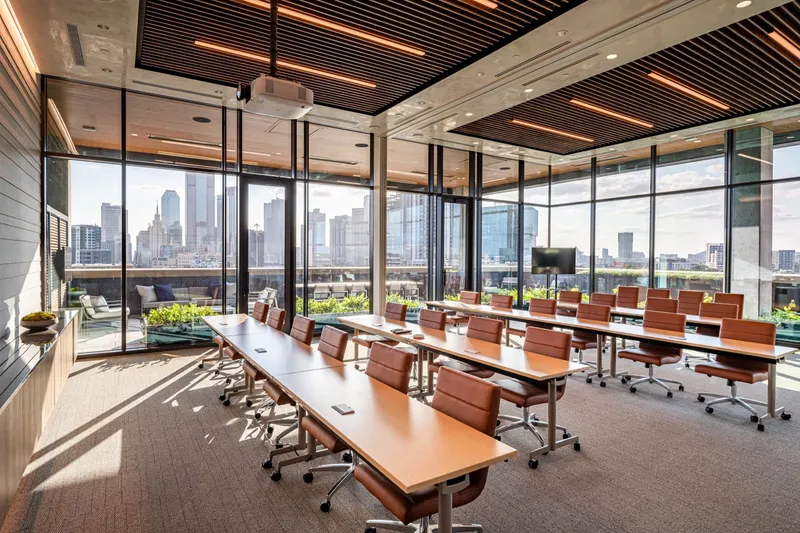
The amenities level is a central feature of the project—hosting communal lounges, meeting areas, fitness facilities, and landscaped terraces with panoramic views of downtown Dallas. These shared zones foster collaboration and well-being, aligning with the project’s goal of promoting a holistic office experience.

Sustainability and Smart Design
Designed to meet LEED Gold, Fitwel Gold, WELL Building, and WiredScore certifications, The Stack integrates high-performance systems and smart technologies that enhance environmental efficiency and occupant health. In response to post-pandemic considerations, motion-sensor and touchless entry systems were incorporated throughout to minimize contact and improve hygiene in shared spaces.
Through a commitment to adaptive sustainability, the project exceeds traditional green benchmarks by tripling the openable façade area, optimizing ventilation, and maximizing access to natural light—creating an environment that supports productivity, creativity, and wellness.
Cultural Connection and Artistic Expression
A defining feature of The Stack is its integration of art and community. The design intentionally reserved a large façade wall for a mural by renowned artist Tristan Eaton, celebrating Deep Ellum’s cultural icons such as Harlem Renaissance artist Aaron Douglas, singer Erykah Badu, and Dallas’ first Black architect William Sidney. This public artwork transforms the building into a living tribute to the district’s creative and social legacy.
Collaborative Excellence
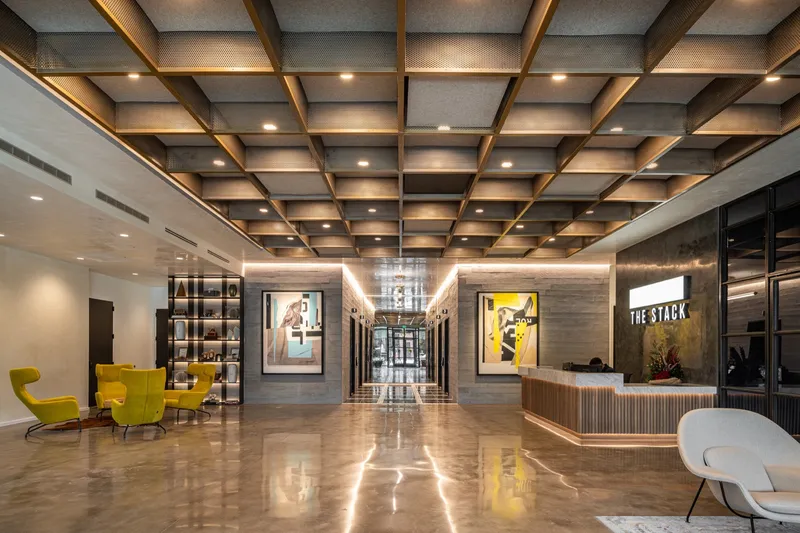
Led by Yen Ong, Hoang Dang, and Christine Robbins Elrod of 5G Studio Collaborative, the project was realized through a multidisciplinary collaboration with experts including Thornton Tomasetti (structural engineer), TBG Partners (landscape architect), and Lang Lighting (lighting consultant). The interiors, designed by Ink + Oro Creatives, reflect the same balance of sophistication and industrial honesty that defines the building’s exterior.


The Future of Urban Workspaces
The Stack at Deep Ellum demonstrates how mixed-use architecture can serve as a catalyst for urban regeneration and cultural continuity. It seamlessly blends commerce, community, and sustainability into a cohesive architectural experience. With its focus on health, flexibility, and context-driven design, The Stack represents the next generation of workplaces—where design enhances both human experience and environmental responsibility.

All Photographs are works of Robert Tsai


Popular Articles
Popular articles from the community


Co-life: Sustainable Architecture for Age-Friendly Community Living
Co-life reimagines sustainable architecture for seniors through courtyards, rammed earth, shared gardens, and spaces designed for belonging.
EW PARK: Sustainable Architecture Reimagines the Future of Urban Parking
EW PARK reimagines city parking as a modular wooden tower combining automation, solar energy, electric mobility, and adaptable urban design.

Co-Life: Senior Housing Design That Reconnects Older Adults With the City
Co-Life reimagines senior housing design through healing gardens, shared streets, workshops, and a sustainable community across generations.

Hill & Cross Opera: Sculptural Opera House Architecture Shaped by Tallinn’s Landscape and Identity
Hill & Cross Opera reimagines opera house architecture in Tallinn through its sculptural hill, civic plaza, glass wave and a luminous cross.


Similar Reads
You might also enjoy these articles


Hodi-Mandai Geram
Project Function: Preservation and revitalization of the Intangible heritage and socio-spatial identity of the Hodi by Housing, Cultural Memory Center, Sacred Grove, landscape, local tourism economy


Olio Towers: A Mid-Rise for Performers That Fuses Housing, Rehearsal, and Stage
Located blocks from Houston's Theater District, this modular tower stacks living units around a central performance atrium.

Oasis: Modular Green Housing Carved into Dhaka's Urban Fabric
A shortlisted Plugin Housing entry reclaims unauthorized settlements in Dhaka with stepped concrete volumes, green roofs, and ventilation-driven design.

Black Hole: A Floating Megastructure for the Post-Physical Era
Emiliano Mazzarotto envisions a spherical, self-scaling arena where e-sports, digital hotels, and holographic stadiums replace traditional public space.


Explore Commercial Buildings Competitions
Discover active competitions in this discipline



Challenge to reimagine the Iron Throne


Photograph architecture without architects


Illustrate the lost glory of Angkor Wat - Render Challenge


Design challenge to reuse E-waste
Comments (0)
Please login or sign up to add comments
No comments yet. Be the first to comment!