
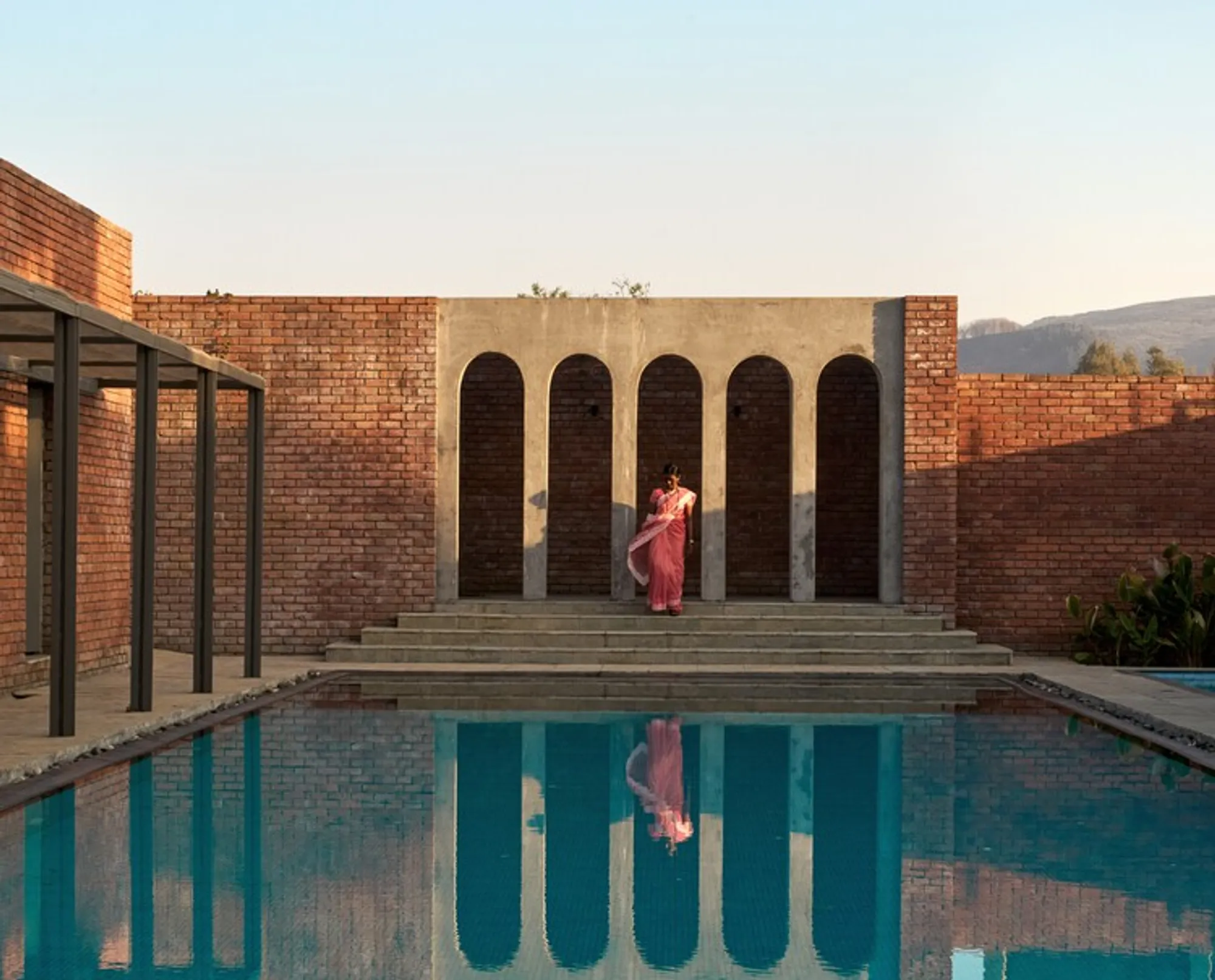
The STREET: Reclaiming Community Spirit in India's Peripheral Developments
Meandering internal street recreates Indian by-lane culture within Pune community center, fostering spontaneous encounters through open, accessible, brick-and-concrete social spaces.


Introduction: Reviving the Soul of Indian Neighborhoods
In the rapidly expanding periphery of Pune, India, where families increasingly migrate to escape soaring urban land prices, a quiet crisis unfolds. As plotted residential developments spread across former agricultural lands, they bring modern housing but often sacrifice the vibrant social fabric that defines traditional Indian neighborhoods. The STREET, completed in 2024 by Studio VDGA under the direction of lead architect Deepak Gugarii, responds to this crisis with a radical proposition: a 1,500-square-meter community center that functions not as a typical amenity block but as the beating heart of neighborhood life—a place where the essence of Indian street culture is preserved, celebrated, and reimagined for contemporary living.
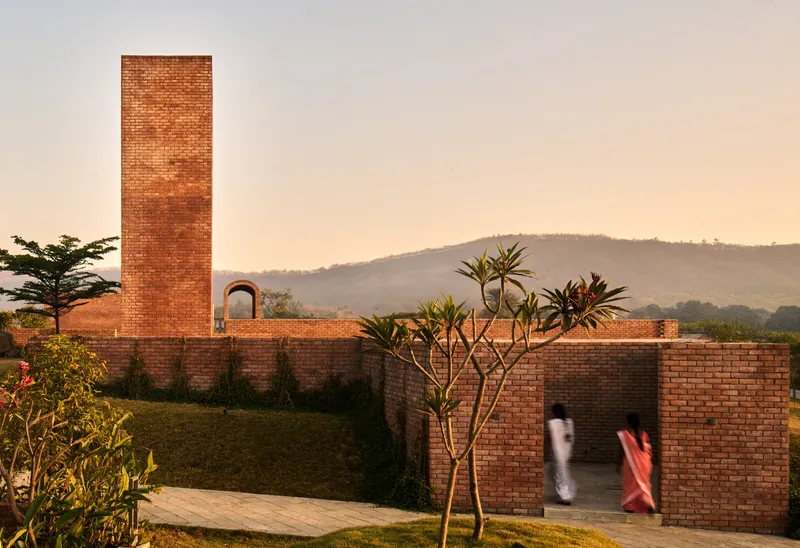
The project's name itself carries profound meaning. Capitalized and preceded by the definite article, "The STREET" elevates the everyday thoroughfare to architectural concept, transforming what is typically considered negative space—the gaps between buildings—into the primary architectural gesture. This is architecture that recognizes the street as India's most vital public space, where life unfolds organically through countless daily interactions, celebrations, and chance encounters.
The Context: Peripheral Development and Social Fragmentation
To understand The STREET's significance, one must first grasp the urban dynamics reshaping Indian cities. As metropolitan centers experience exponential growth, land values in established neighborhoods have become prohibitive for middle-class families seeking to own homes. The result is a massive migration to peripheral areas where developers create plotted residential schemes—parceled land where individual families purchase modest plots (typically around 1,500 square feet) and construct their own homes according to personal vision and budget.
This model offers the dream of homeownership but carries hidden costs. Unlike traditional Indian neighborhoods that evolved organically over generations—with their interconnected lanes, shared courtyards, street-corner gathering spots, and layered social networks—these new peripheral developments often feel sterile and disconnected. Residents occupy individual plots separated by roads designed for vehicular traffic rather than social interaction. The spontaneous encounters, informal conversations, and collective celebrations that characterized traditional neighborhood life become increasingly rare.
Most plotted developments include a "clubhouse"—typically a conventional amenity building with a gym, swimming pool, and banquet hall. However, these facilities often function primarily as sales tools, helping developers market plots by promising lifestyle amenities. Once residents move in, these clubhouses frequently become underutilized, formal spaces that fail to foster genuine community. They are places one visits for specific purposes—a workout, a swim, a booked event—rather than destinations for casual social interaction.
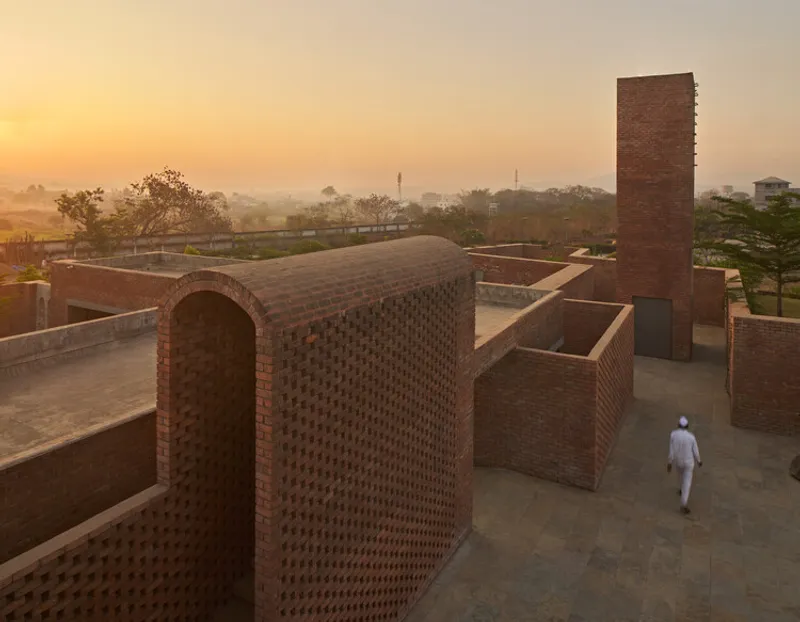
The STREET represents Studio VDGA's attempt to reimagine this typology entirely, creating not just an amenity block but "a living, breathing extension of the neighbourhood"—a place that might restore some of the social vitality lost in peripheral development patterns.
Design Philosophy: The Street as Organizing Principle
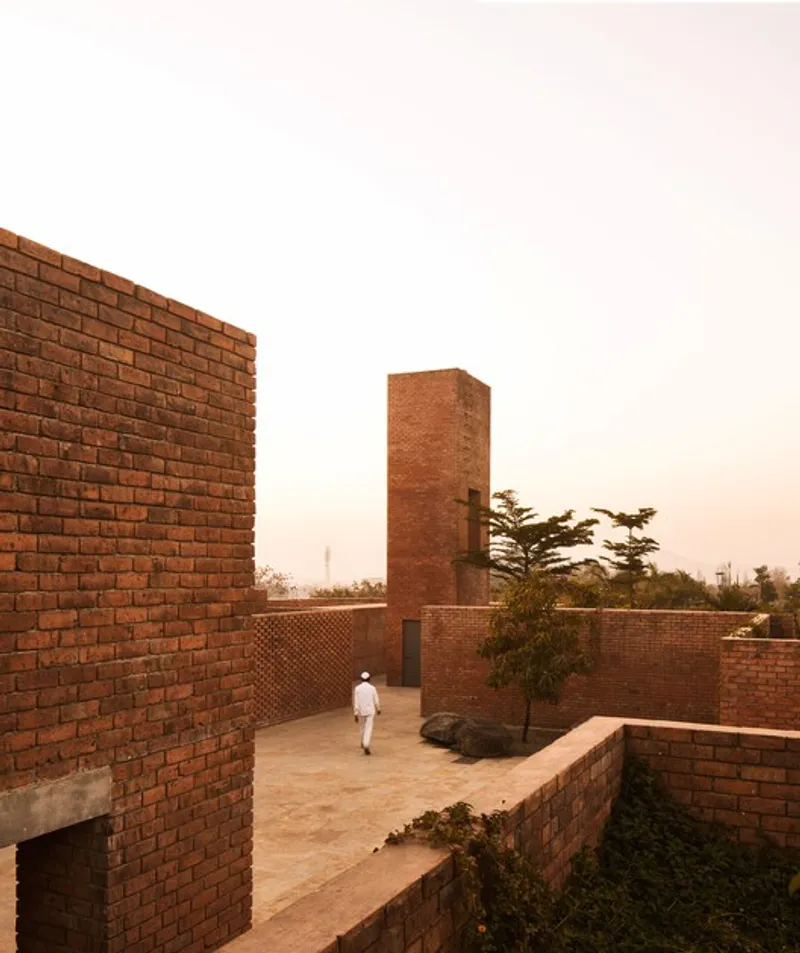
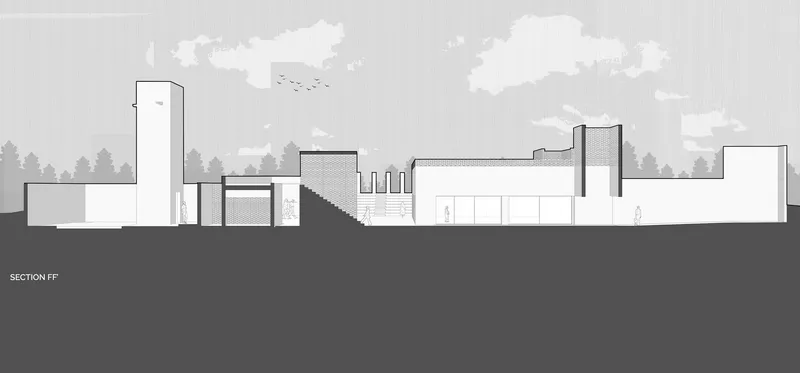
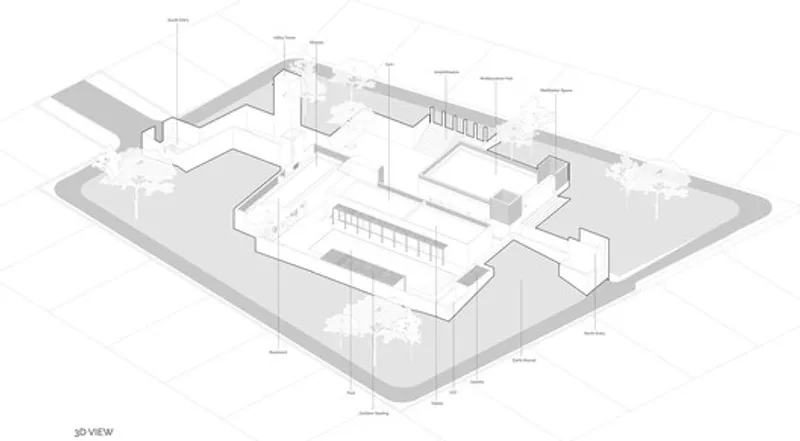
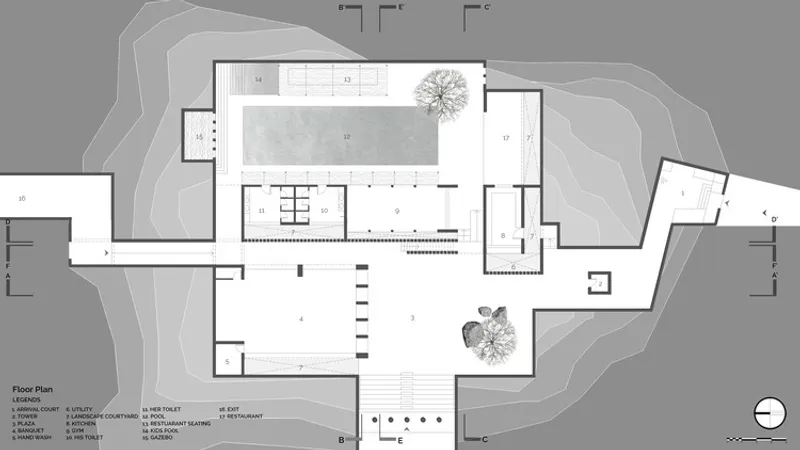
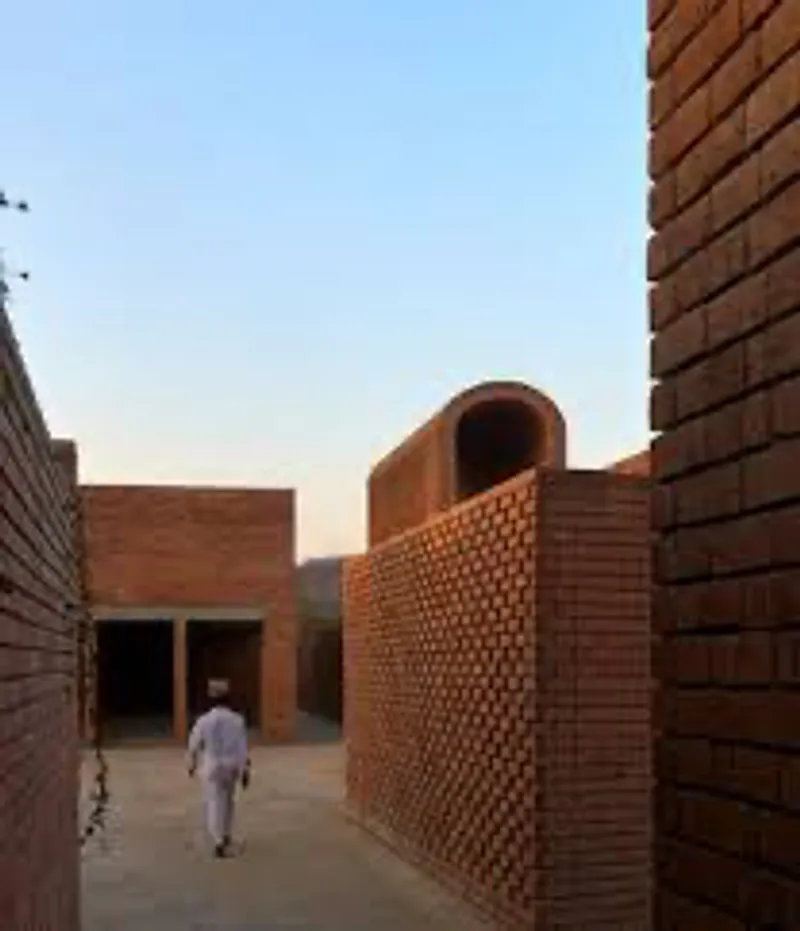
The project's central conceptual gesture is deceptively simple yet profoundly transformative: rather than organizing functions into discrete rooms accessible from corridors or lobbies, The STREET arranges all programmatic elements along a meandering internal street that serves simultaneously as circulation spine, social space, and experiential journey.
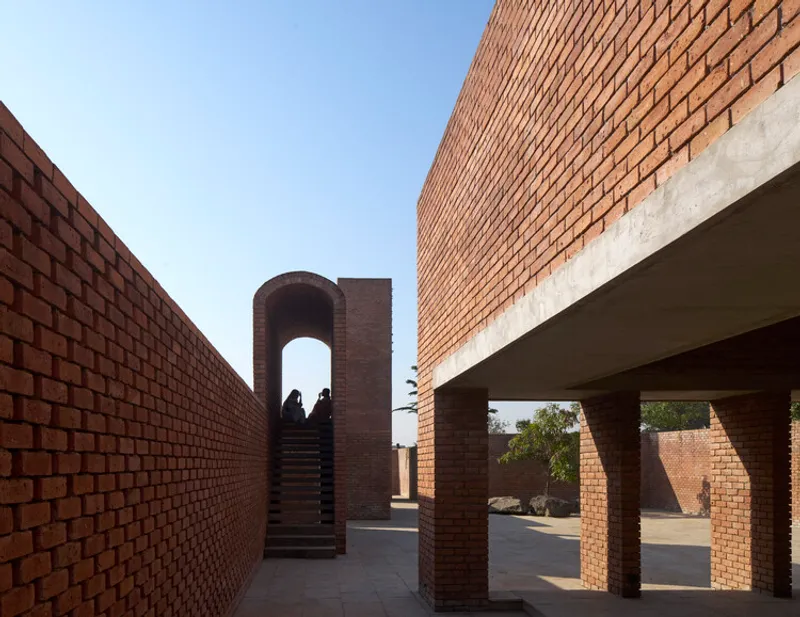
This internal street connects the restaurant, swimming pool, gymnasium, and banquet spaces in a continuous flowing sequence. Unlike a corridor—which exists purely for movement from point A to point B—this street is designed as destination in itself, a place where residents might pause, encounter neighbors, discover unexpected views, and experience the pleasure of wandering without predetermined purpose.
Evoking Curiosity and Discovery
The street's meandering path ensures that the entire complex never reveals itself at once. As one moves through the space, new vistas open, different functions come into view, and the relationship between interior and exterior constantly shifts. This quality of gradual discovery mirrors the experience of walking through traditional Indian neighborhoods, where narrow lanes wind between buildings, occasionally opening into small squares or courtyard glimpses that reward exploratory wandering.
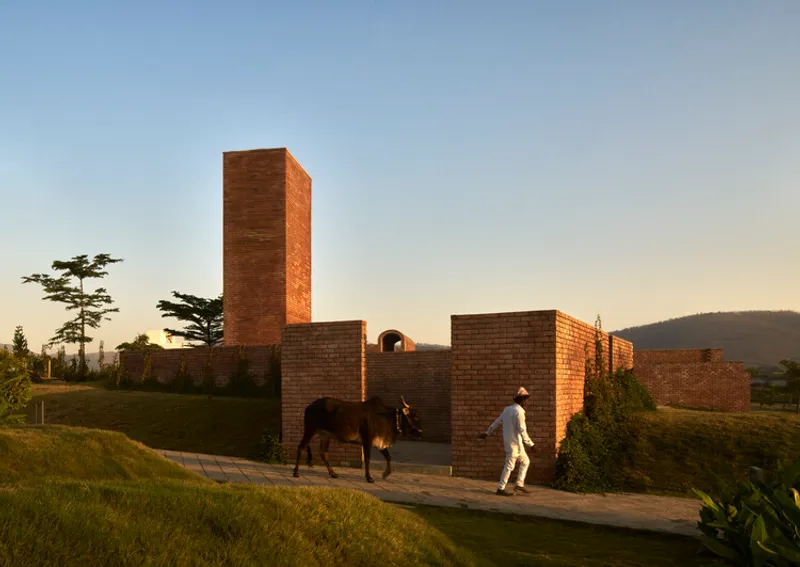
The architects describe designing the street "to evoke curiosity, discovery, and chance encounters"—recognizing that vital community life depends not just on planned interactions but on the unexpected meetings that occur when people share space without specific agenda. The curved path increases the likelihood of such encounters, ensuring that residents using different facilities might cross paths and engage in the casual conversations that gradually build social bonds.
Mirroring Indian Street Life
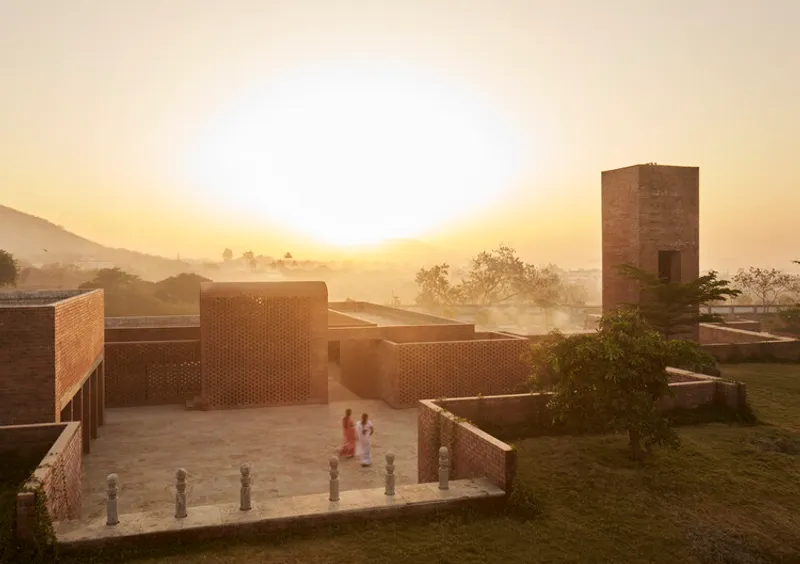
The design consciously references "the informal rhythm of Indian streets where people walk, talk, play, and celebrate side by side." Anyone familiar with Indian urban life recognizes this rhythm—the way streets function as multifunctional public spaces where children play cricket, vendors sell snacks, neighbors chat in clusters, and occasional processions or celebrations transform the street into temporary festival grounds.
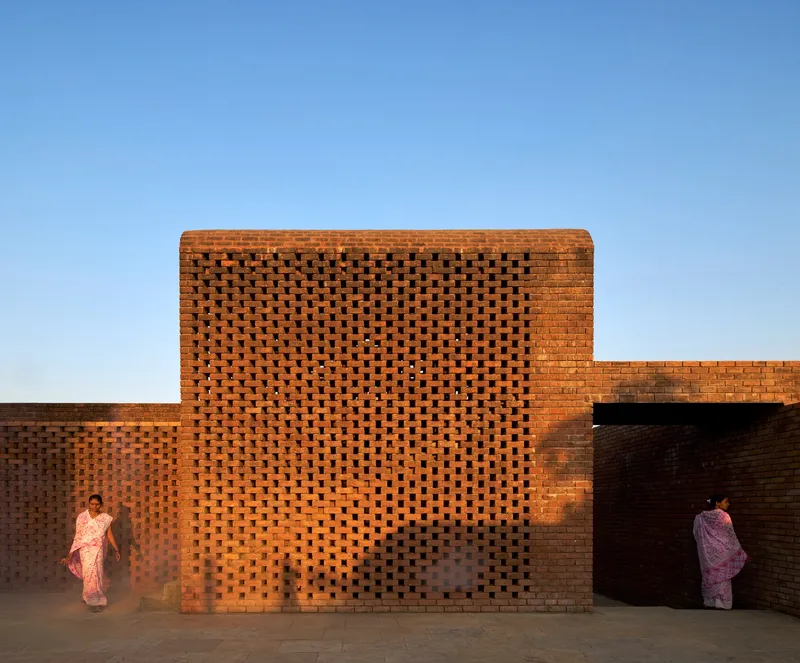
This informal, overlapping use of space contrasts sharply with Western planning principles that typically assign single functions to specific zones. The STREET embraces the Indian model, creating a space elastic enough to accommodate diverse simultaneous activities without conflict. The internal street might host a morning yoga session in one section while other residents walk to the gym, children run past toward the pool, and a group gathers to plan an upcoming celebration.
Accessibility and Seamless Movement
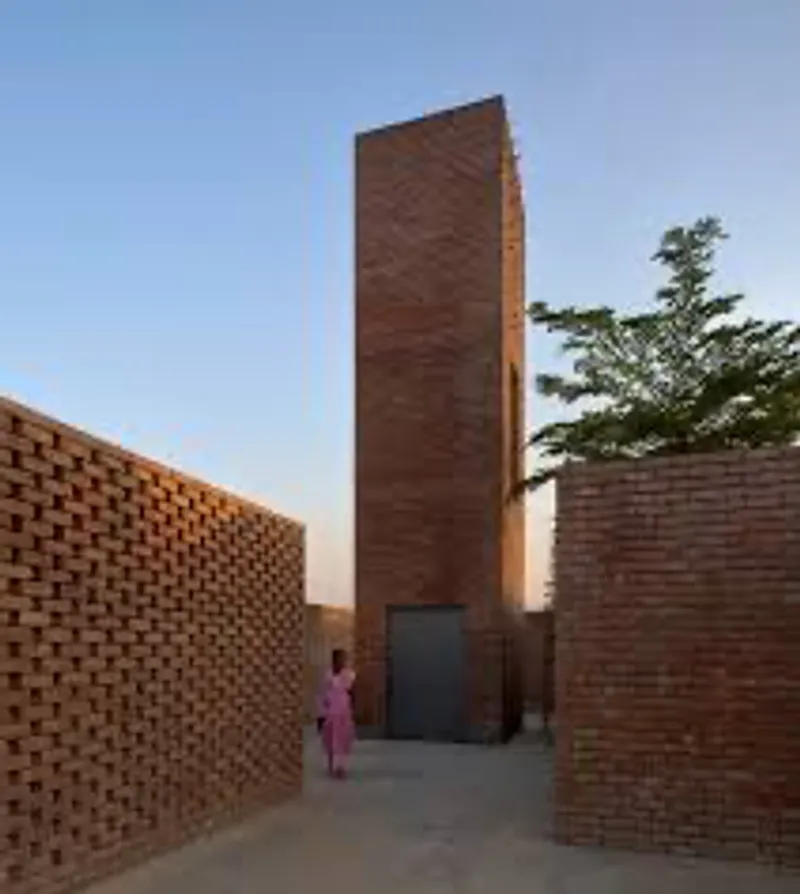
A critical aspect of The STREET's design is its commitment to barrier-free accessibility. The architects deliberately eliminated "rigid transitions and staircases," creating instead a continuously sloping path that allows "fluid movement" throughout the complex. This decision carries multiple implications.
Universal Design
Most obviously, the absence of steps ensures accessibility for elderly residents, those with mobility challenges, parents pushing strollers, and anyone else who might struggle with stairs. This inclusive approach reflects the Indian joint family tradition, where multiple generations often live together or nearby, making universal accessibility particularly important.
Psychological Openness
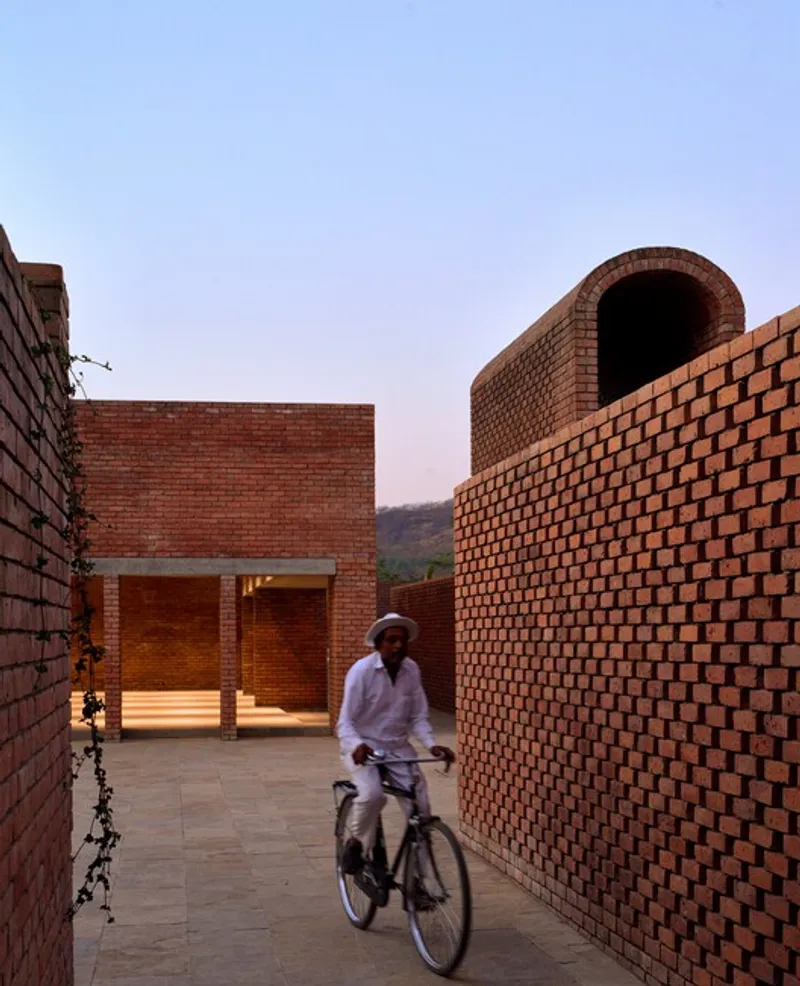
Beyond practical accessibility, the elimination of level changes creates psychological continuity. Stairs create thresholds—moments of transition that subtly signal crossing from one domain to another. By removing these transitions, The STREET suggests that all parts of the complex belong equally to all residents. There are no elevated private club areas or basement service zones; everything exists on a democratic continuum.
Encouraging Casual Use
The seamless sloping path also encourages casual, unplanned use. When a space requires climbing stairs to enter, people tend to visit only with specific purpose. A gently sloping path that feels like a natural extension of the ground plane invites wandering, exploring, and passing through even without specific destination. This quality is essential for generating the spontaneous social encounters the design seeks to foster.
Materiality: Honesty and Regional Identity
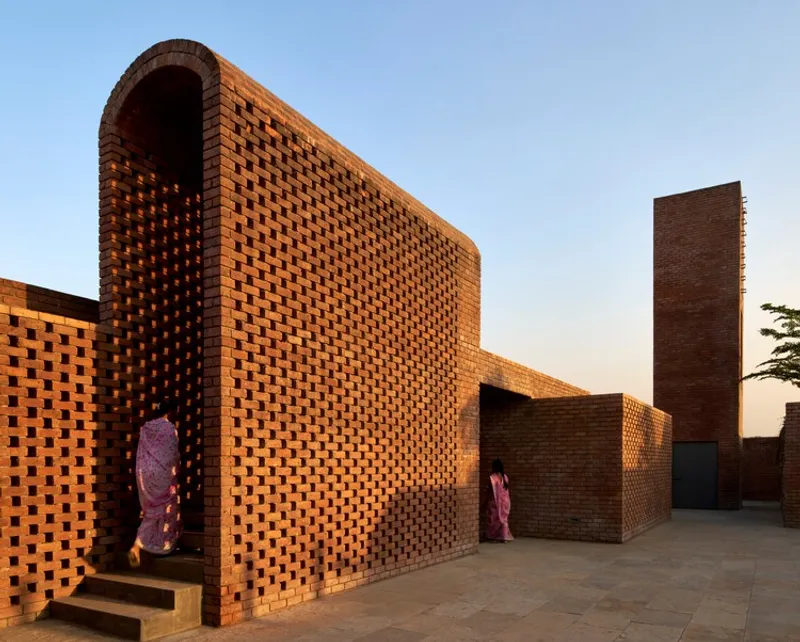
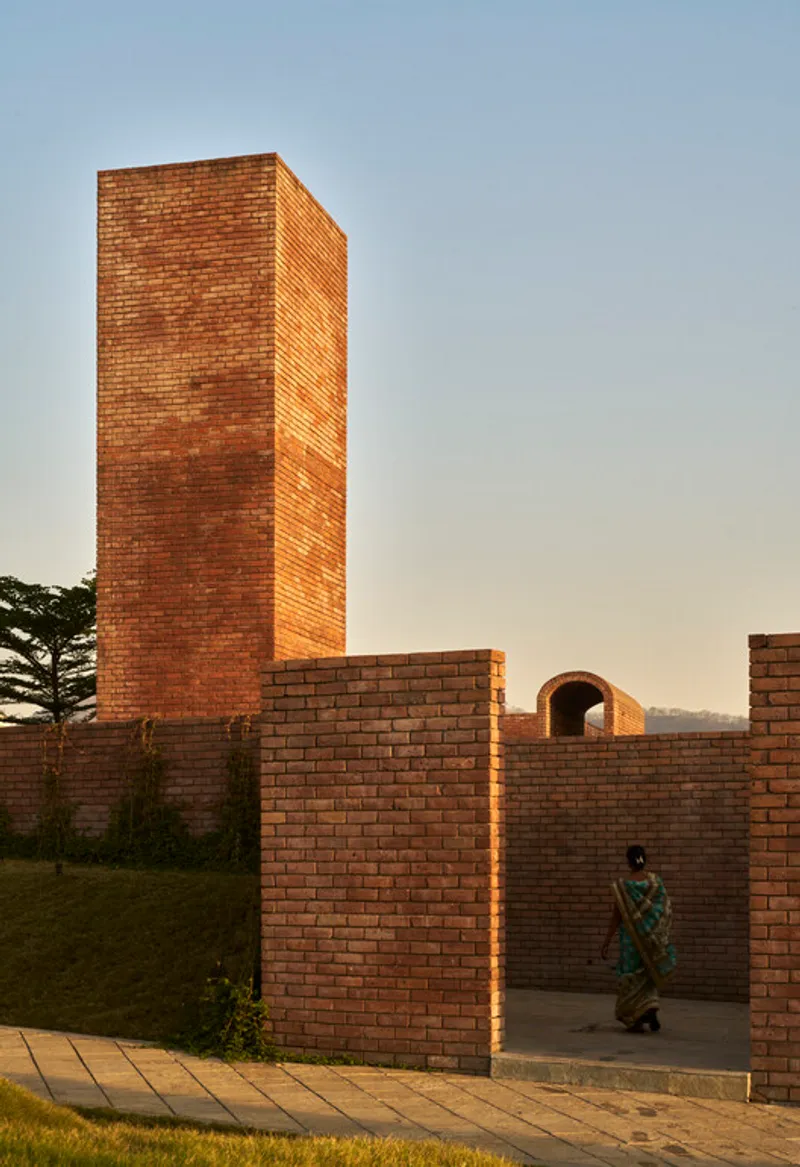
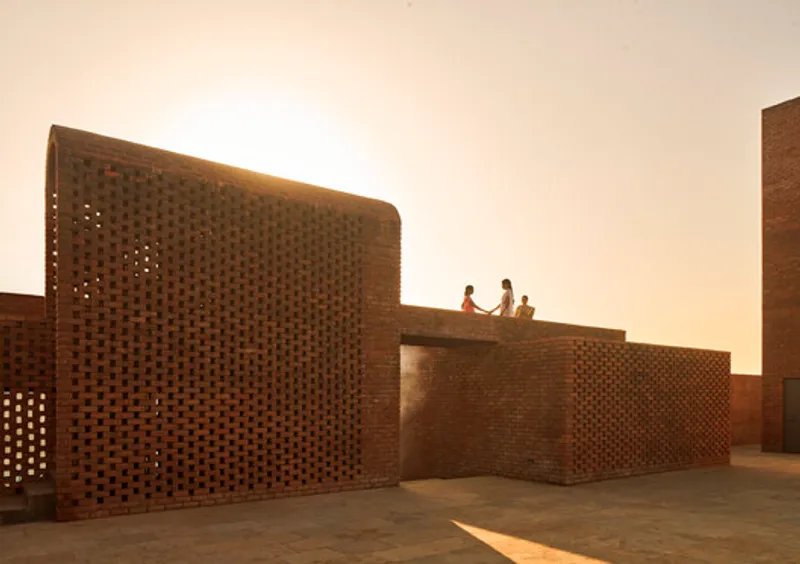
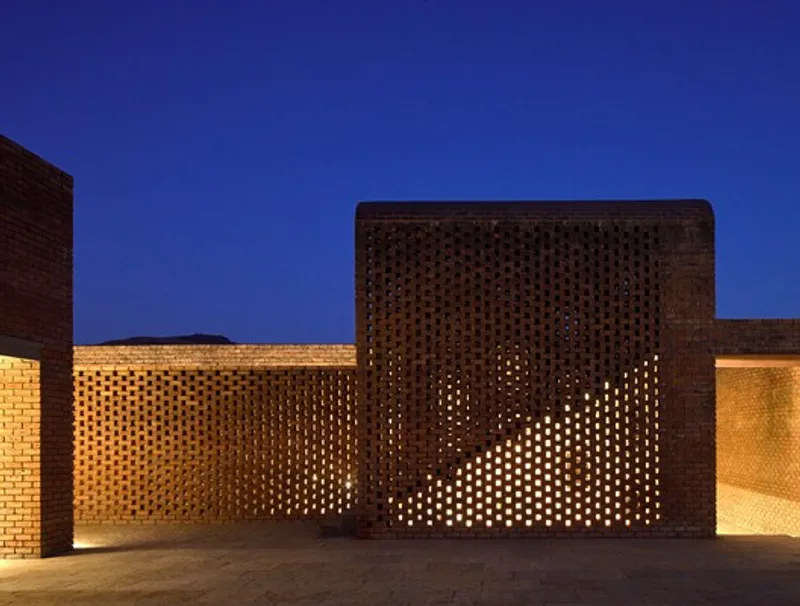
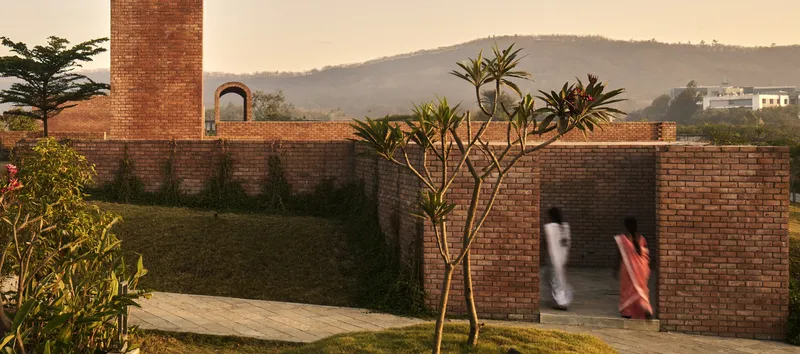
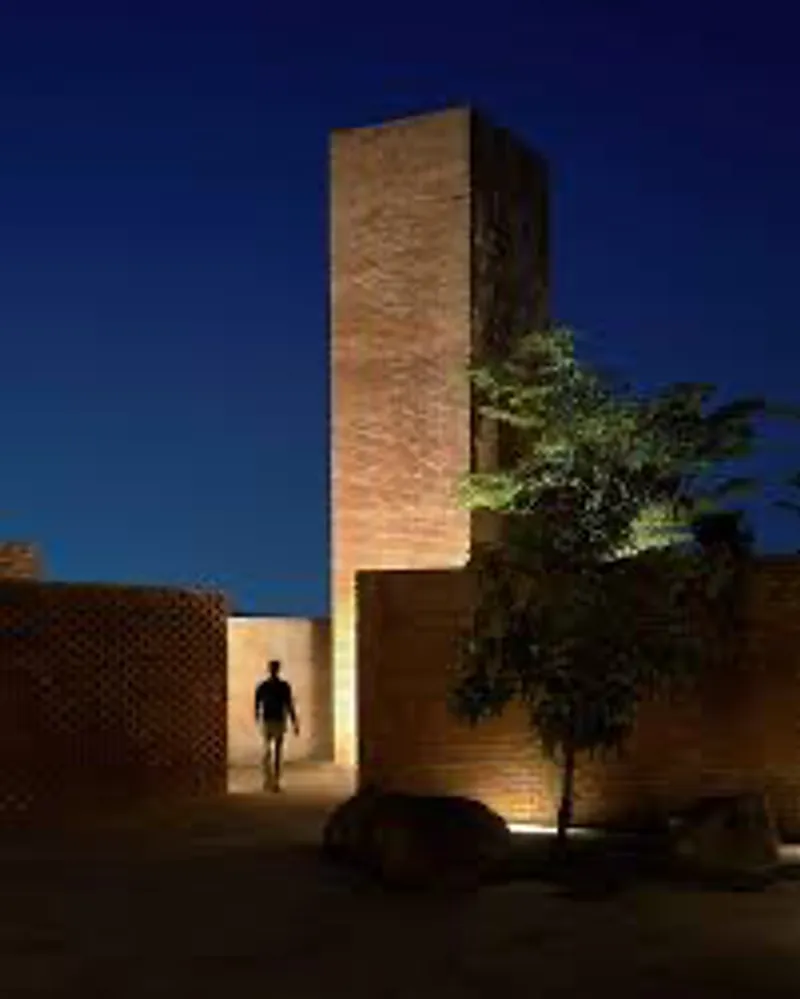
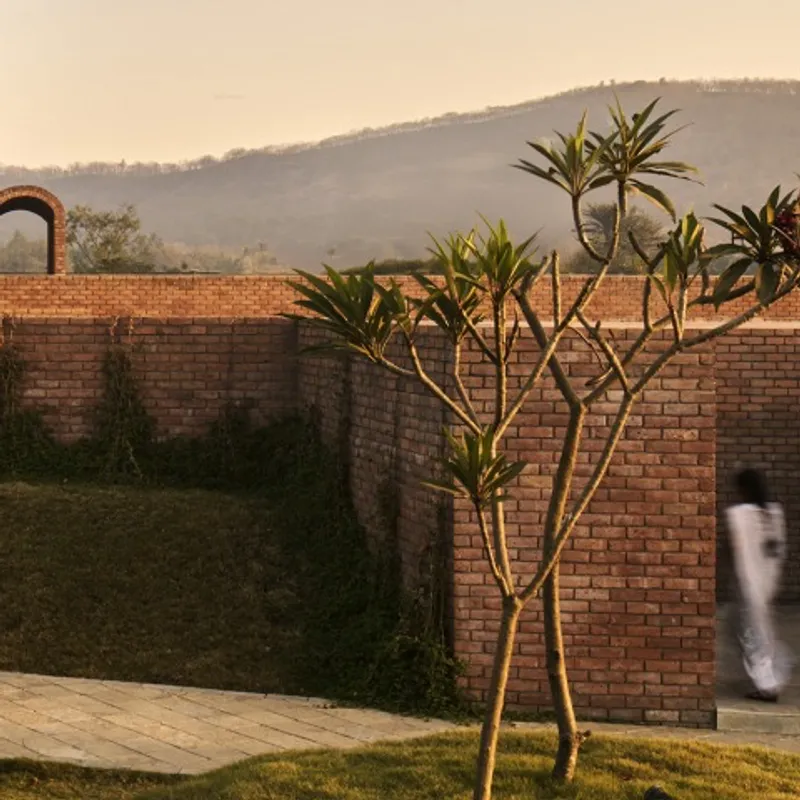
The STREET's material palette expresses what the architects call "honesty," using exposed local red brick and raw concrete finishes that communicate structural truth while grounding the building in regional architectural traditions.
Local Red Brick
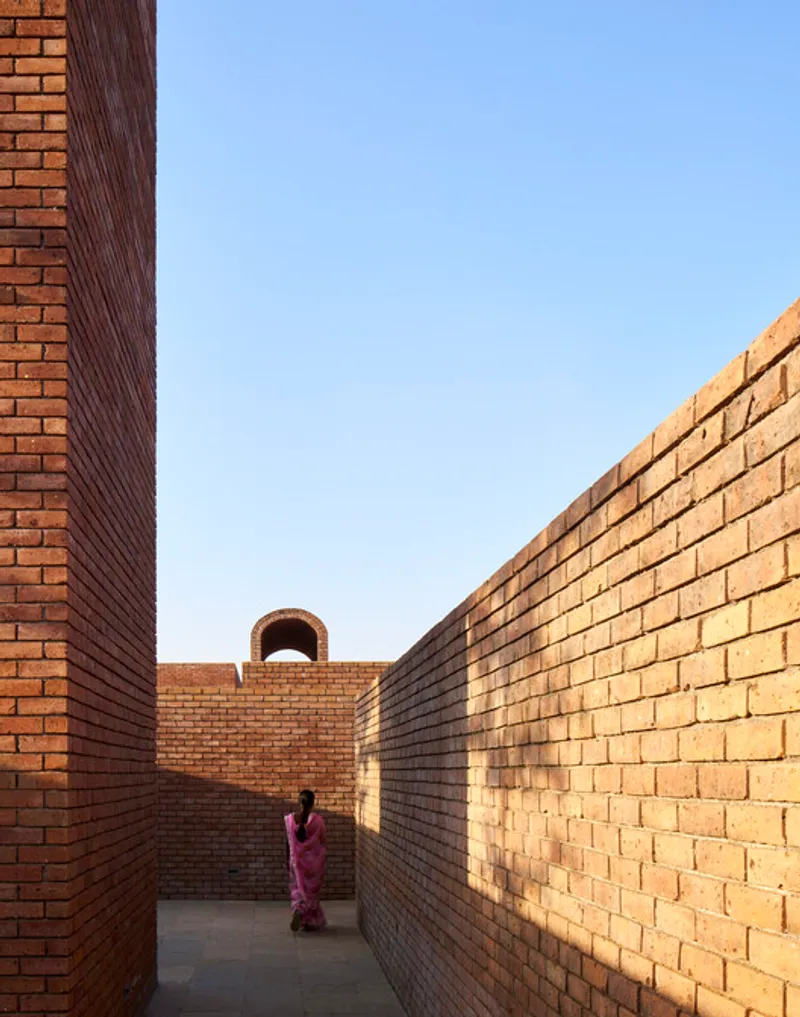
Red brick has long been a primary building material throughout Maharashtra state, where Pune is located. Its use connects The STREET to regional construction practices, local craft knowledge, and the visual character of surrounding neighborhoods. The brick's warm color harmonizes with Pune's characteristic earth tones while providing texture and scale that humanize the building's surfaces.
Leaving the brick exposed rather than rendered demonstrates respect for material and maker. Each brick remains visible as an individual unit, revealing the mason's work and the modular nature of construction. This honesty contrasts with contemporary tendencies toward smooth, seamless surfaces that disguise building methods.
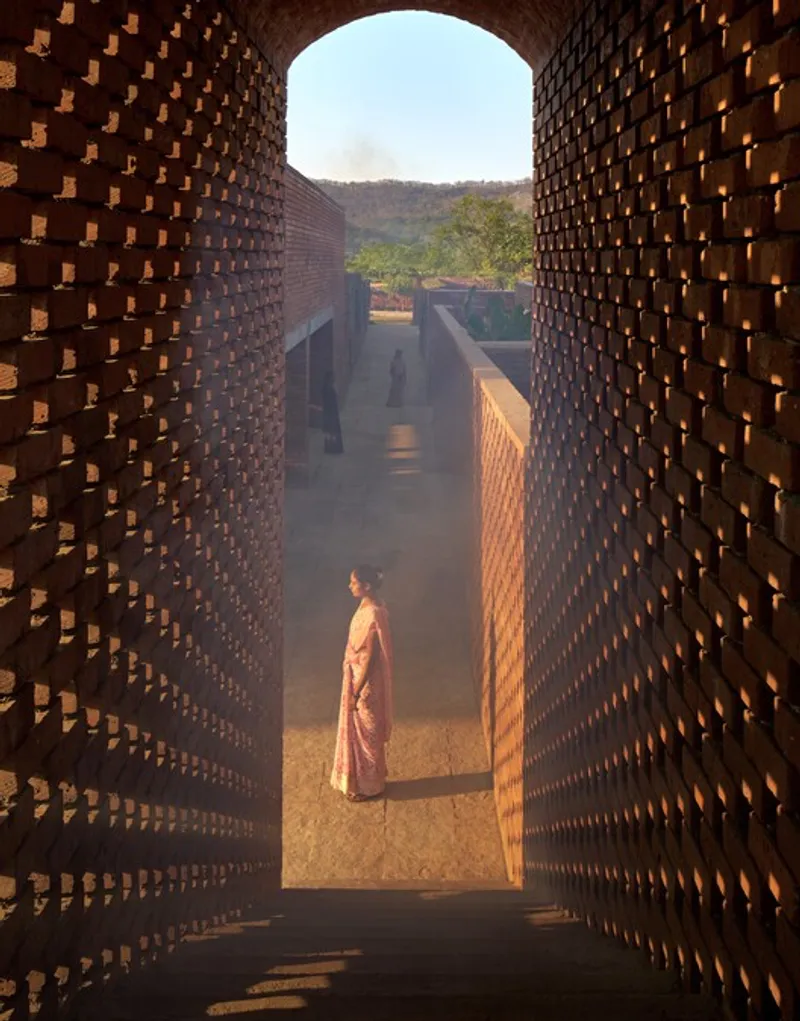
The brick also performs climatically, providing thermal mass that moderates temperature swings while allowing walls to breathe—important in Pune's climate, which combines heat with seasonal monsoon humidity.
Raw Concrete
The raw concrete finishes complement the brick, providing smooth surfaces that contrast with the brick's texture while maintaining the aesthetic of material honesty. The concrete likely appears in structural elements—beams, columns, slabs—where its spanning capabilities and monolithic character serve functional purposes.
Together, brick and concrete create a vocabulary that feels substantial and permanent without pretension. These are materials that age gracefully, developing patina rather than deteriorating, ensuring the building will gain character over time rather than requiring constant maintenance to preserve pristine appearance.
Cultural Symbolism
The choice of materials also carries symbolic weight. In a development where families build individual homes according to varied tastes and budgets—likely resulting in diverse architectural expressions—The STREET's consistent material palette establishes visual coherence that unifies the neighborhood. The community center's honest materials suggest shared values—authenticity, craftsmanship, regional identity—that might inspire surrounding residential construction.
Open Architecture: Rejecting Doors and Barriers
A particularly bold aspect of The STREET's design is its embrace of "open, door-free spaces that nurture organic interaction and collective experience." This decision rejects "the closed-off nature of modern living" in favor of the permeable boundaries characteristic of traditional Indian architecture and urban space.
Cultural Context
In traditional Indian society, particularly in smaller towns and villages, many activities occurred in semi-public spaces with minimal physical barriers between family, neighbor, and community domains. Doors existed primarily for security at night; during the day, spaces remained open, allowing easy flow between household and street, private and public.
Modern urban living has increasingly emphasized barriers—locked gates, closed doors, security systems—reflecting both changing social patterns and genuine security concerns in large cities. However, this fortification comes at cost, reducing spontaneous interaction and creating psychological distance between neighbors.
Fostering Organic Interaction
By eliminating doors throughout the community center, The STREET lowers barriers to entry—both physical and psychological. Residents can see activities occurring inside, making it easier to join spontaneously rather than feeling they're intruding on established groups or private events. The openness suggests that all spaces belong equally to all residents, encouraging broader participation.
This transparency also allows passive surveillance—the "eyes on the street" that urbanist Jane Jacobs identified as crucial for community safety. When spaces are visible and permeable, antisocial behavior is naturally discouraged while children playing remain within adults' sight.
Flexibility and Adaptability
Door-free spaces also prove more adaptable. A room with fixed doors suggests specific uses; an open space can transform according to needs—expanding to accommodate larger groups, flowing seamlessly with adjacent areas, or serving multiple simultaneous activities. This flexibility suits the varied and evolving needs of community life.
Challenges and Considerations
The door-free approach does raise questions about climate control, acoustic separation, and privacy for certain activities. The design likely addresses these through strategic placement of different functions, natural ventilation that reduces cooling needs, and perhaps deployable screens or curtains for occasions requiring temporary separation. The decision suggests Studio VDGA's conviction that social benefits outweigh the inconveniences of reduced spatial control.
Contextual Significance: A Model for Peripheral Development
The STREET's significance extends beyond its specific site to suggest a possible model for peripheral residential developments throughout India and potentially other rapidly urbanizing regions facing similar challenges.
Redefining the Clubhouse Typology
By demonstrating that community facilities can be something more than conventional amenity blocks, the project challenges developers to reconsider how they provide communal spaces. The internal street concept offers a replicable strategy that might adapt to varied site conditions and programmatic requirements while maintaining the core principle of circulation as social space.
Affordable Community Building
The project achieves its social goals through spatial design rather than expensive materials or complex technologies. The material palette—local brick and concrete—remains economical while the passive environmental strategies reduce ongoing operational costs. This suggests that meaningful community architecture doesn't require luxury budgets, making the model potentially accessible for middle-class developments.
Cultural Continuity
Most importantly, The STREET demonstrates that contemporary architecture can maintain cultural continuity without pastiche or theme-park historicism. By identifying essential qualities from traditional urban patterns—permeability, mixed-use, human scale, social space—and translating them into contemporary form, the design creates architecture that feels both rooted and modern.
All the photographs are works of Edmund Sumner




Popular Articles
Popular articles from the community


The Ocean Hive: Sustainable Architecture for a Self-Sufficient Civilization at Sea
The Ocean Hive imagines sustainable architecture at sea, where modular habitats, algae, wave power and ocean waste sustain a growing colony.

Hill & Cross Opera: Sculptural Opera House Architecture Shaped by Tallinn’s Landscape and Identity
Hill & Cross Opera reimagines opera house architecture in Tallinn through its sculptural hill, civic plaza, glass wave and a luminous cross.

Co-Life: Senior Housing Design That Reconnects Older Adults With the City
Co-Life reimagines senior housing design through healing gardens, shared streets, workshops, and a sustainable community across generations.

Lunar Spiral: Space Architecture Shaped by the Mathematics of the Universe
Lunar Spiral reimagines space architecture through Fibonacci geometry, lunar regolith, levitating habitats, and self-sustaining Moon living.


Similar Reads
You might also enjoy these articles


Hodi-Mandai Geram
Project Function: Preservation and revitalization of the Intangible heritage and socio-spatial identity of the Hodi by Housing, Cultural Memory Center, Sacred Grove, landscape, local tourism economy


Olio Towers: A Mid-Rise for Performers That Fuses Housing, Rehearsal, and Stage
Located blocks from Houston's Theater District, this modular tower stacks living units around a central performance atrium.

Oasis: Modular Green Housing Carved into Dhaka's Urban Fabric
A shortlisted Plugin Housing entry reclaims unauthorized settlements in Dhaka with stepped concrete volumes, green roofs, and ventilation-driven design.

Black Hole: A Floating Megastructure for the Post-Physical Era
Emiliano Mazzarotto envisions a spherical, self-scaling arena where e-sports, digital hotels, and holographic stadiums replace traditional public space.

Explore Streetscape Competitions
Discover active competitions in this discipline



Challenge to reimagine the Iron Throne


Photograph architecture without architects


Illustrate the lost glory of Angkor Wat - Render Challenge


Design challenge to reuse E-waste
Comments (0)
Please login or sign up to add comments
No comments yet. Be the first to comment!