

The Veranda House by Studio Espaazo: An Organic Weekend Retreat Merging Architecture with Nature
The Veranda House blends organic architecture with nature, creating a serene, beamless weekend retreat inspired by traditional Indian verandas.


Overview: Redefining the Traditional Indian Veranda
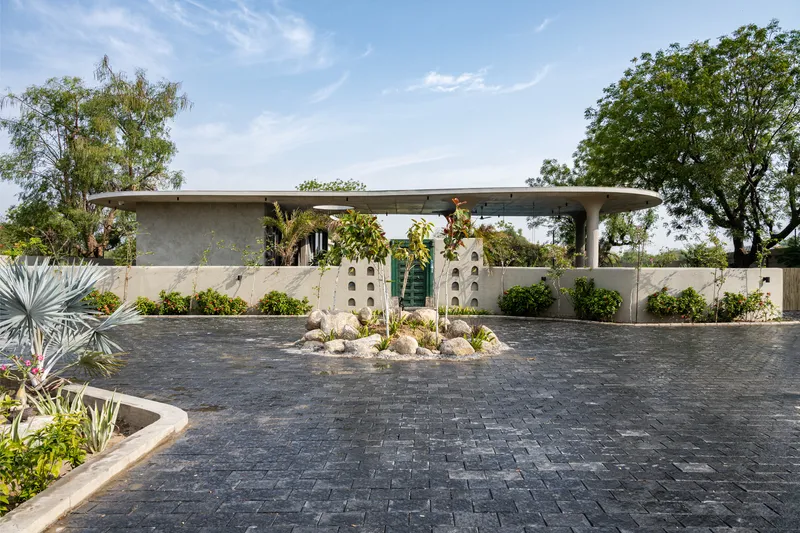
Nestled on the outskirts of Ahmedabad, The Veranda House by Studio Espaazo is a weekend residence that transcends the boundaries between indoor and outdoor living. Set within a plot dominated by a bonsai retail boutique, the home reinterprets the Indian veranda—a cherished space of connection, rest, and nature immersion—into a contemporary, sustainable, and soulful architectural experience.
Design Intent: Integrating Built Form with Nature
The brief from the client emphasized creating a home that celebrates its natural surroundings, eliminating traditional beams while maintaining structural integrity and aesthetic harmony. The design ensures zero tree removal, blending architectural mass with existing green cover to foster a seamless integration with the landscape.
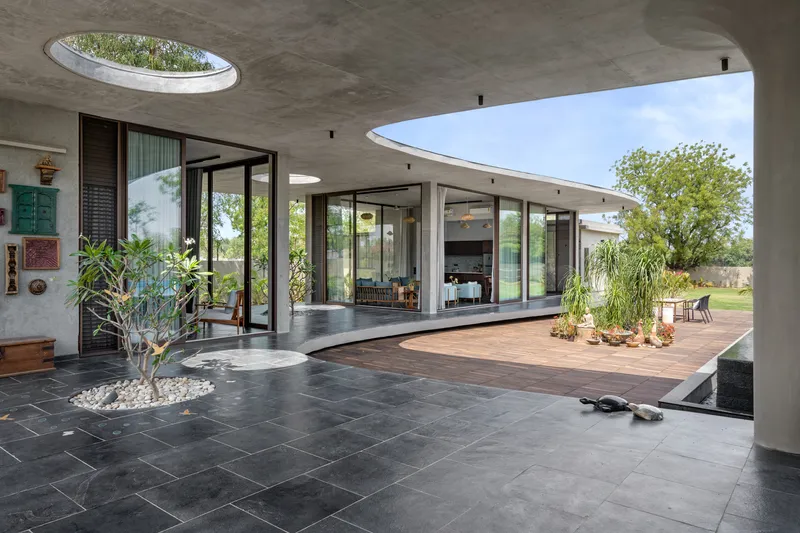
Drawing inspiration from the imperfect, irregular forms of nature, the spatial layout and organic form emphasize fluidity, openness, and a deep-rooted connection to the environment.
Spatial Planning: Curated Experiences Across Every Corner
The home spans a single level, designed as a journey of discovery. With strategically framed views, each space feels immersed in lush greenery, guiding visitors through a narrative of shadow play, reflections, and natural textures.
Highlights include:
- Windows opening into internal courtyards
- Glass doors revealing outdoor sculptures and water features
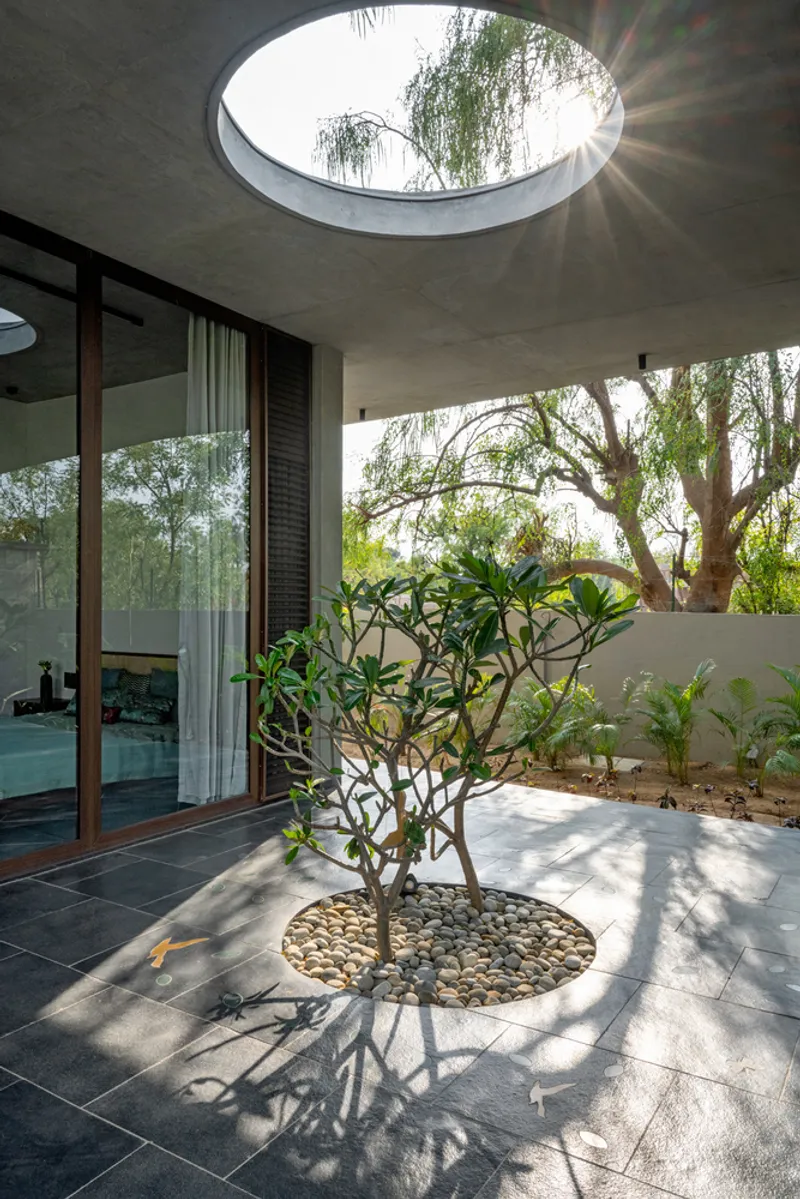
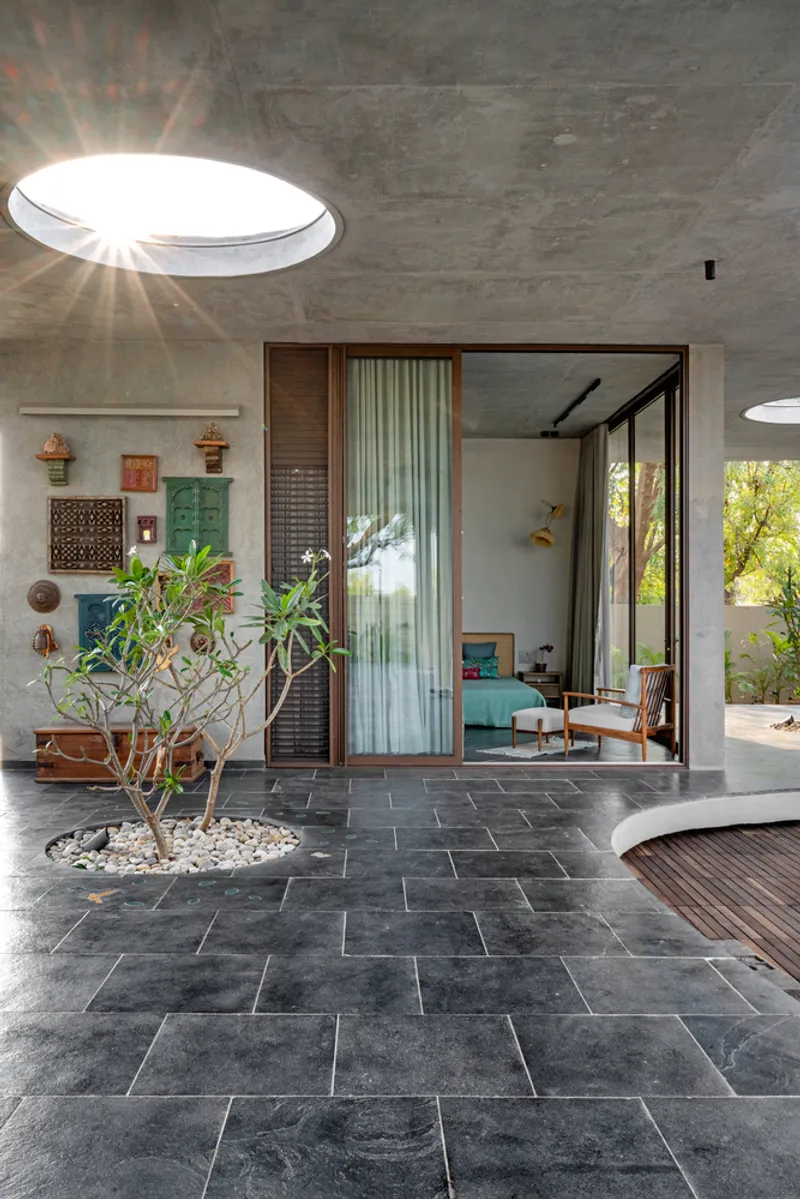
- Bird and leaf inlays in the flooring that narrate the rhythm of natural cycles
- Frangipani shadows dancing across the slabs
The house reflects a veranda-style lifestyle—unbound, fluid, and serene.
Architectural Features: Floating, Light, and Rooted
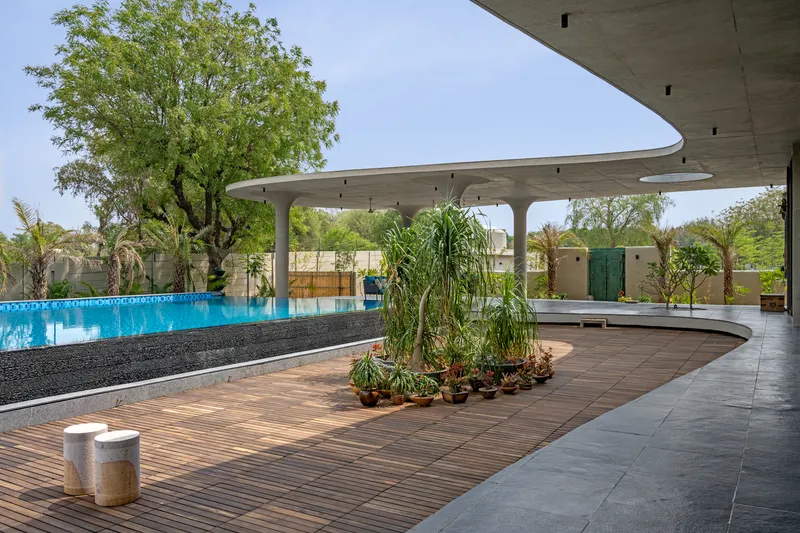
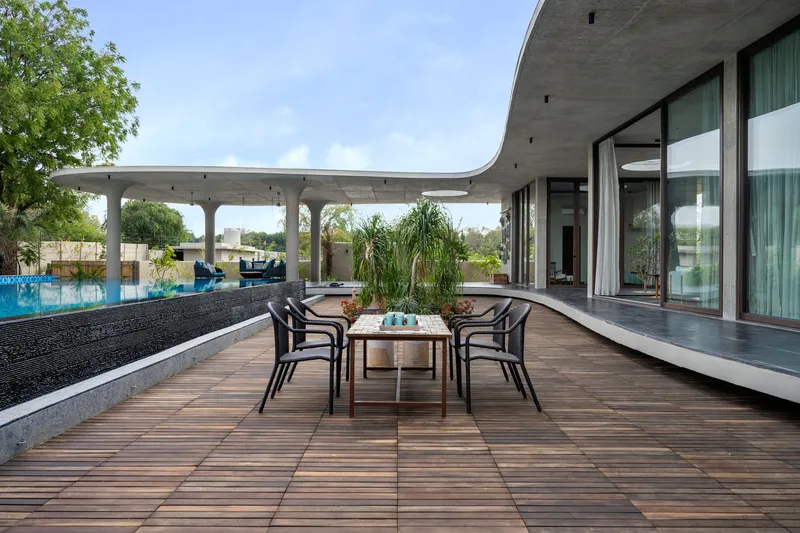
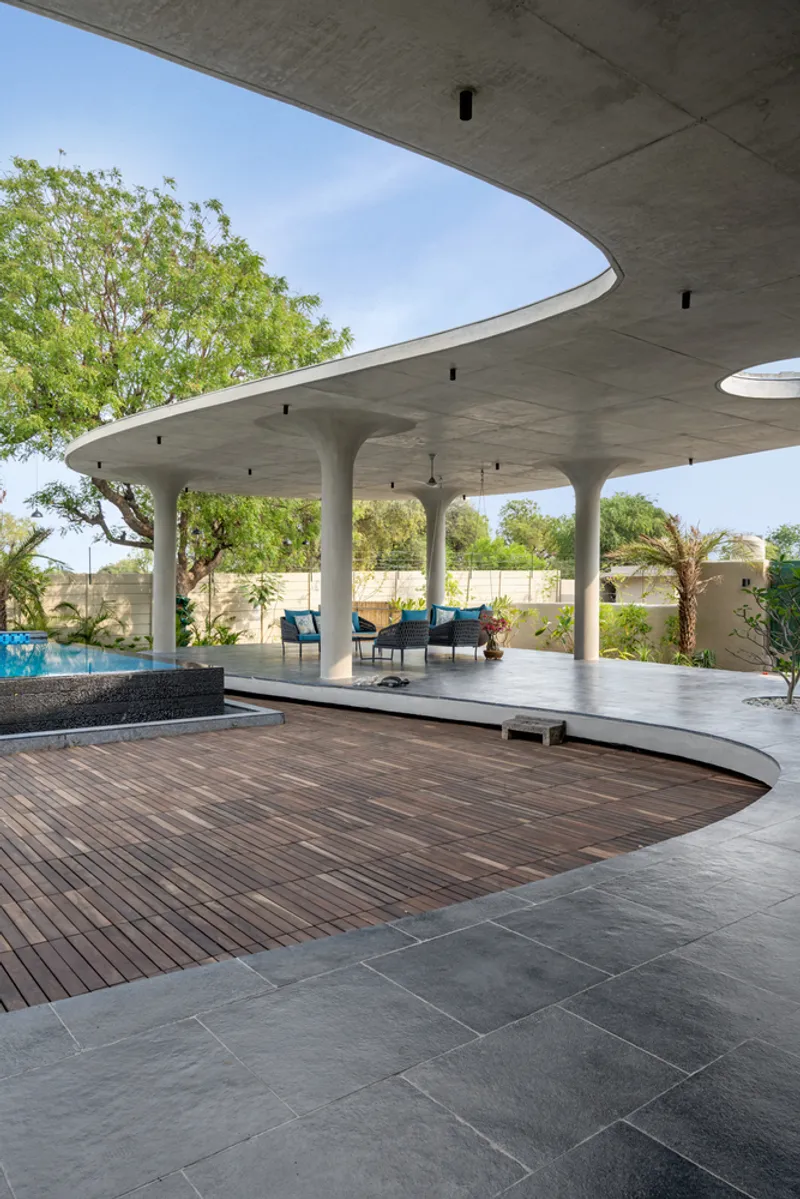
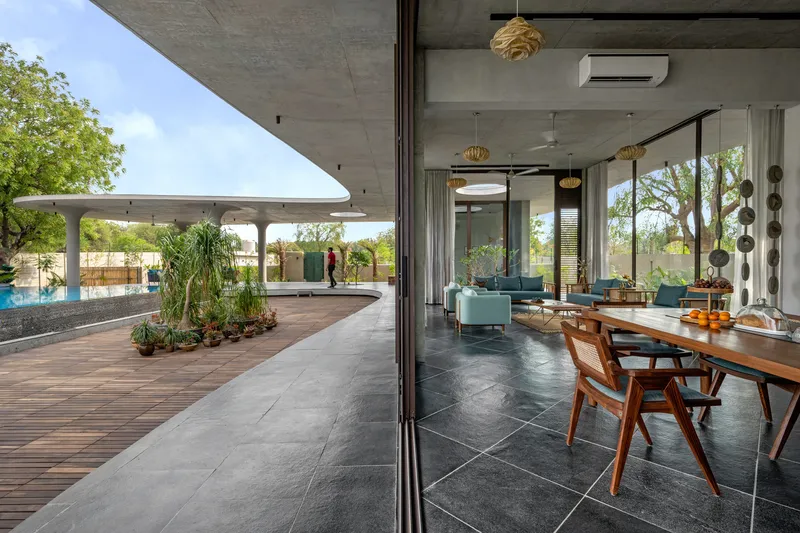
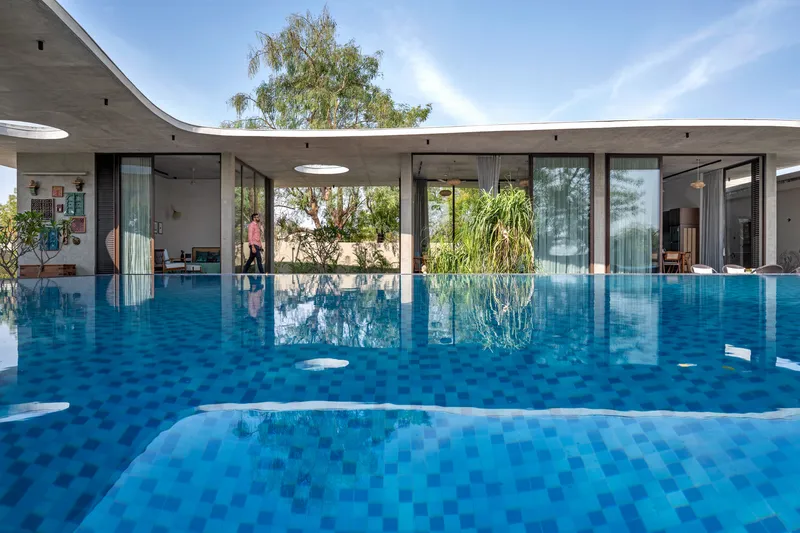
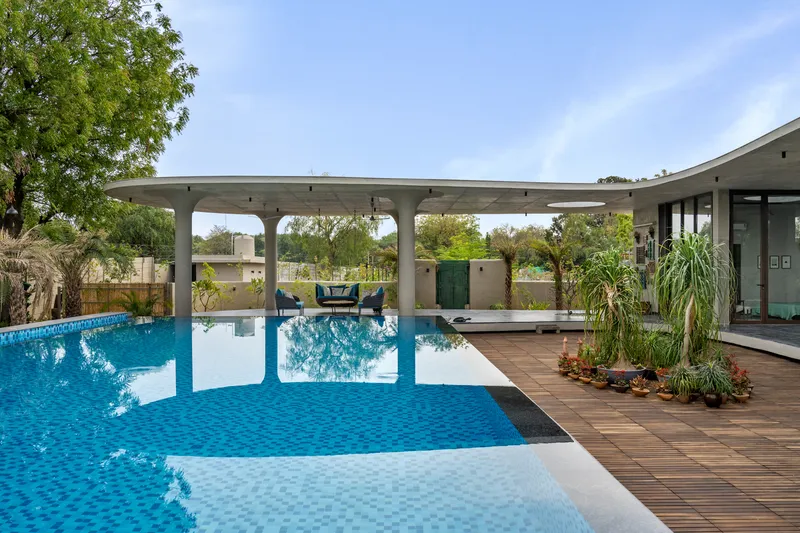
The structure showcases mushroom and rectangular columns, arranged asymmetrically to evoke the layers of the forest floor.A floating plinth gives the impression of the home being gently lifted above ground, supported by:
- 4-ft cantilevers at plinth level
- 10-ft slab overhangs
This beamless architecture enhances openness while ensuring structural strength through smart engineering.
Material Palette: Earthy, Local, and Timeless
The architectural language leans into natural Indian materials and textures:
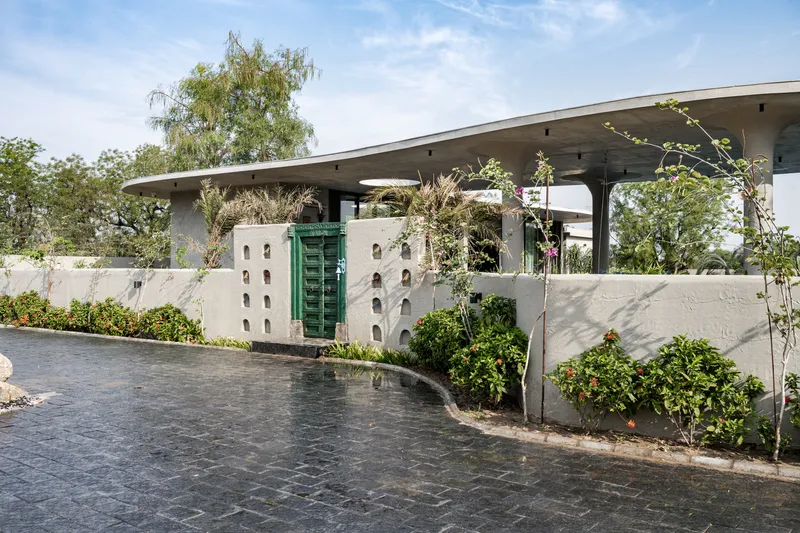
- Exposed concrete structure with lime plaster finishes
- Black Kadappa stone flooring with natural gradients that guide movement
- Locally sourced wood, cane furniture, and natural tiles
These materials ensure low maintenance, thermal comfort, and a visual connection to the earth.
Form & Function: Living Inside and Out
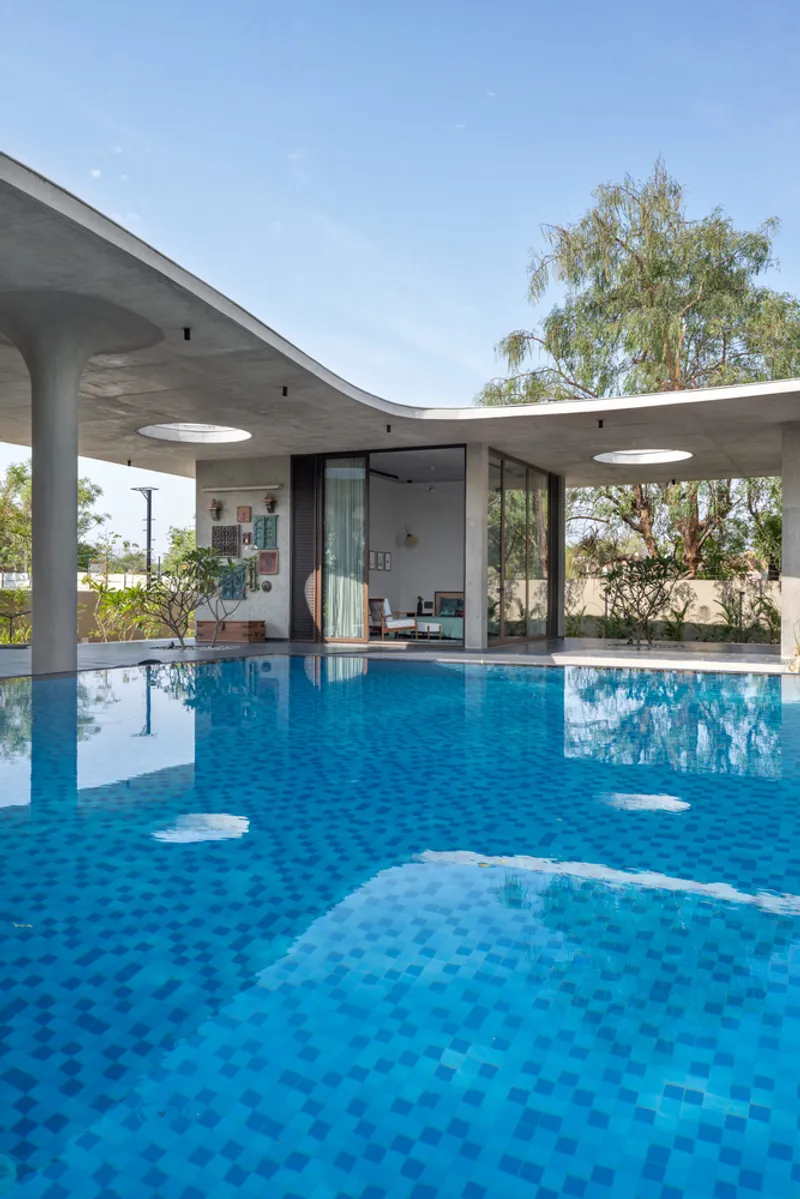
The house comprises two distinct blocks:
- Private spaces (bedrooms)
- Semi-private areas (living, kitchen, dining)
These are connected by transparent glass partitions, which when opened, create a continuous veranda-like space. The 12-foot-high roof with insulated tile layering ensures passive cooling and grandeur.
Interior Language: Storytelling Through Murals and Shadows
Interiors reflect a natural palette—soft earth tones, wood, and handmade elements. Murals of Indian birds flying through different times of day capture the essence of a traditional veranda where nature is always present. Each design element—from the ceiling fans to mosaic inlays—pays homage to organic imperfection and handcrafted artistry.
All the photographs are works of Murtaza Gandhi




Popular Articles
Popular articles from the community


Hill & Cross Opera: Sculptural Opera House Architecture Shaped by Tallinn’s Landscape and Identity
Hill & Cross Opera reimagines opera house architecture in Tallinn through its sculptural hill, civic plaza, glass wave and a luminous cross.

The Earth Pod: 3D Printed Homes for Resilient Refugee Communities
The Earth Pod reimagines refugee housing through 3D printed homes made from clay, combining resilience, self-sufficiency, and rapid shelter.
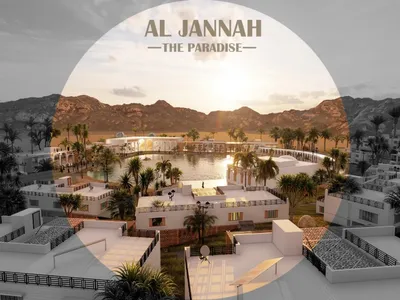
AL-JANNAH: Sustainable Architecture and Permaculture for Afghan Widows
AL-JANNAH uses sustainable architecture and permaculture to create resilient oasis of housing, learning, work and renewal for Afghan widows.
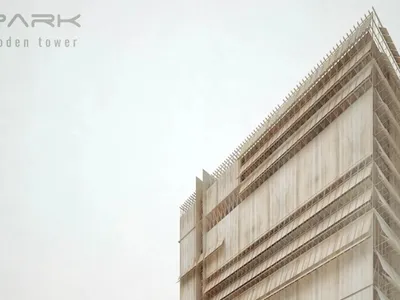
EW PARK: Sustainable Architecture Reimagines the Future of Urban Parking
EW PARK reimagines city parking as a modular wooden tower combining automation, solar energy, electric mobility, and adaptable urban design.


Similar Reads
You might also enjoy these articles


Hodi-Mandai Geram
Project Function: Preservation and revitalization of the Intangible heritage and socio-spatial identity of the Hodi by Housing, Cultural Memory Center, Sacred Grove, landscape, local tourism economy


Olio Towers: A Mid-Rise for Performers That Fuses Housing, Rehearsal, and Stage
Located blocks from Houston's Theater District, this modular tower stacks living units around a central performance atrium.

Oasis: Modular Green Housing Carved into Dhaka's Urban Fabric
A shortlisted Plugin Housing entry reclaims unauthorized settlements in Dhaka with stepped concrete volumes, green roofs, and ventilation-driven design.

Black Hole: A Floating Megastructure for the Post-Physical Era
Emiliano Mazzarotto envisions a spherical, self-scaling arena where e-sports, digital hotels, and holographic stadiums replace traditional public space.


Explore Vinyasa Architecture Competitions
Discover active competitions in this discipline



Challenge to reimagine the Iron Throne


Photograph architecture without architects


Illustrate the lost glory of Angkor Wat - Render Challenge


Design challenge to reuse E-waste
Comments (0)
Please login or sign up to add comments
No comments yet. Be the first to comment!