
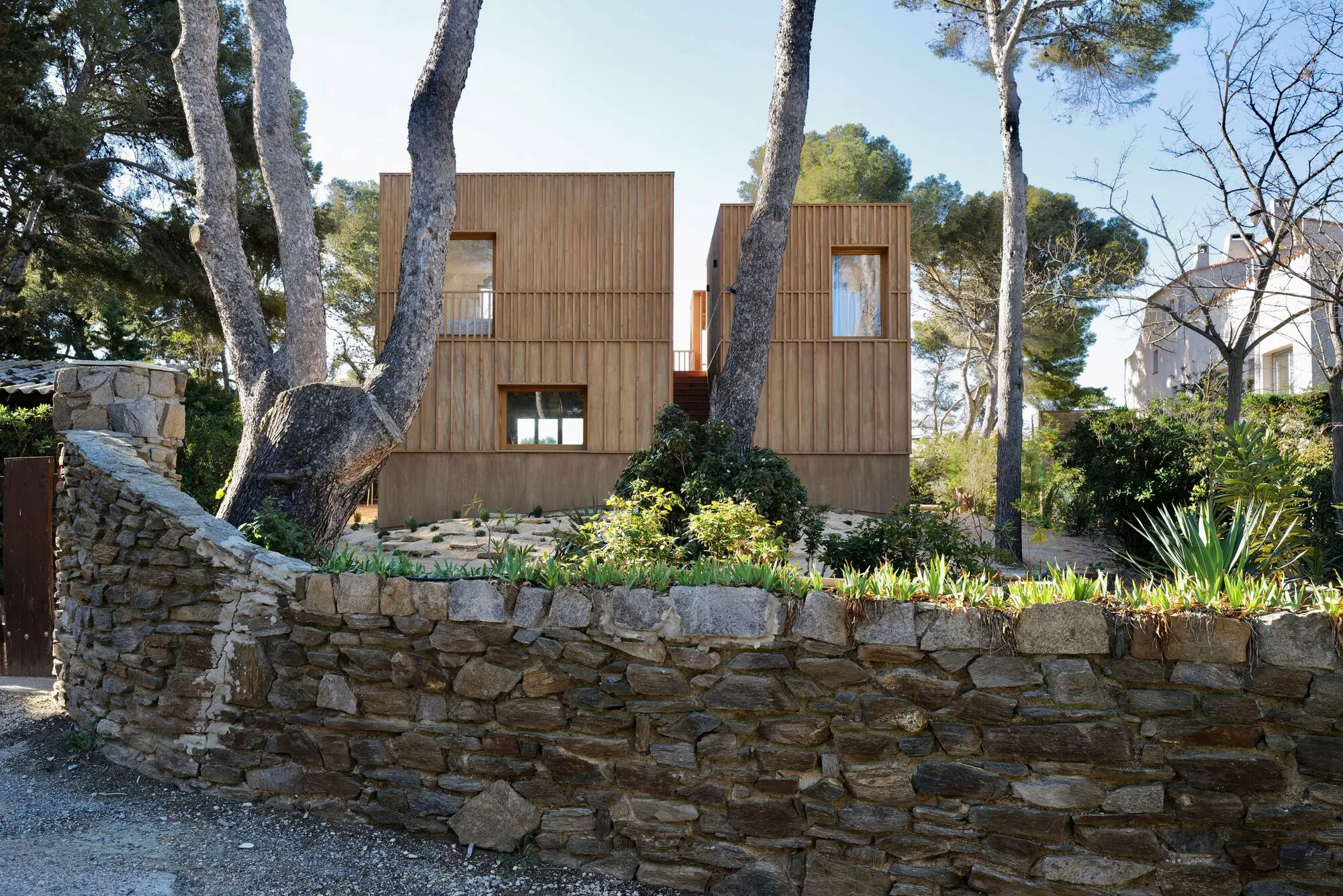
The Very Small Collective by AT architectes
Timber superstructure transforms 1950s suburban house into compact intergenerational collective, enhancing sustainability, flexibility, and Mediterranean living without expanding footprint.


Located in Carry-le-Rouet on the Mediterranean coast near Marseille, The Very Small Collective is a thoughtful renovation and densification project completed in 2024 by AT architectes. Designed by lead architects Céline Teddé and Jérôme Apack, the 140 m² intervention reimagines a modest 1950s suburban house into a compact, intergenerational housing model, without increasing its footprint.
Rethinking Suburban Housing in France
The project is situated within a typical post-war suburban fabric characterized by detached homes and low-density development. In the face of climate change, land scarcity, and evolving family structures, this traditional model of suburban housing is increasingly questioned. Rather than demolishing and rebuilding, AT architectes chose a strategy of adaptive reuse and gentle densification, transforming the existing structure into a flexible, multi-unit collective dwelling.
The client, emotionally connected to the house built with his father, wanted to accommodate shifting family dynamics: welcoming an adult child back home, hosting elderly grandparents nearby, or integrating a workspace. Local planning regulations limiting site coverage further reinforced the need to densify vertically rather than horizontally. The architectural challenge became clear: increase capacity, comfort, and adaptability while preserving the land and the original building.
Lightweight Timber Superstructure: A Vertical Extension Strategy
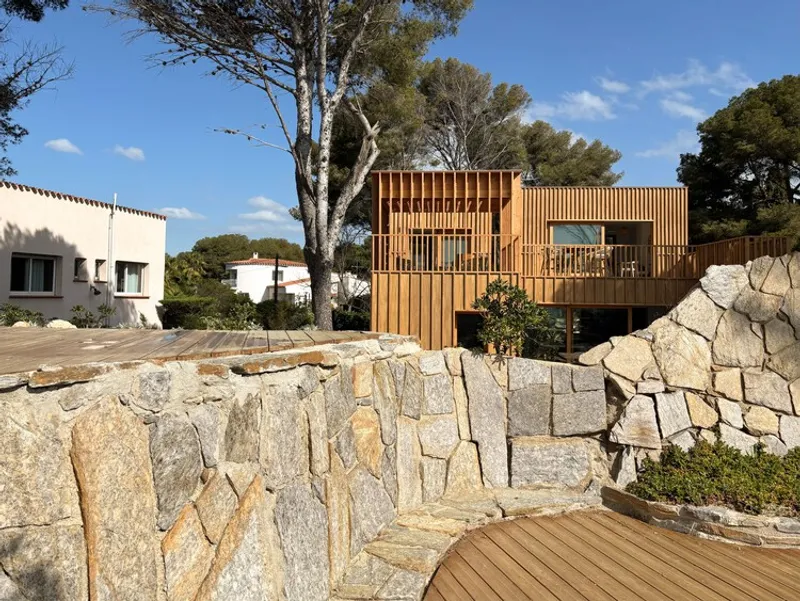
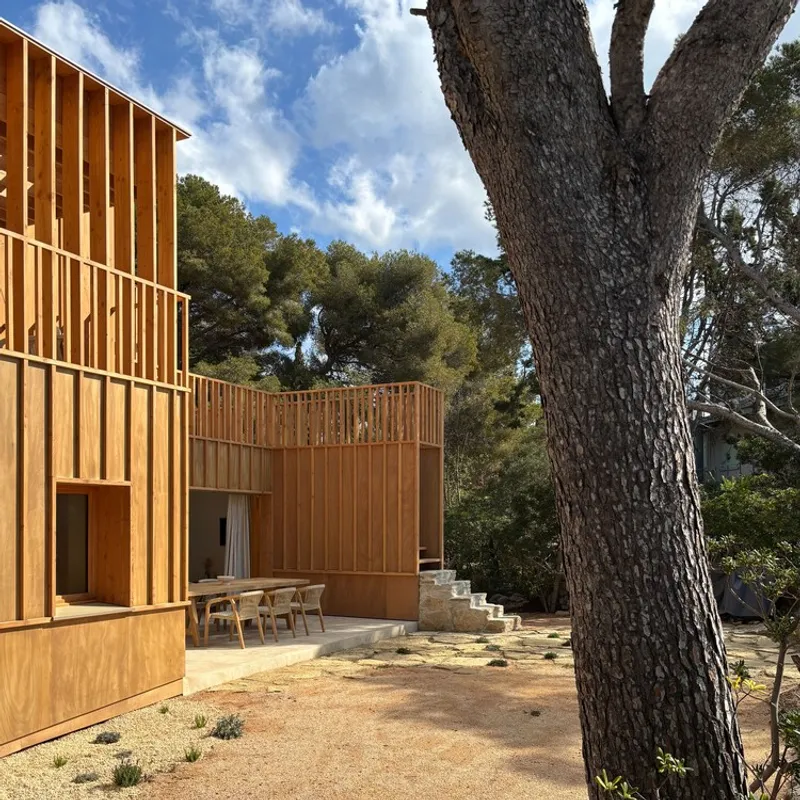
The solution is a precise architectural gesture: a lightweight timber superstructure that wraps around the original house “like a hat.” This vertical extension enhances spatial quality and significantly improves thermal performance while maintaining the existing footprint.
Timber plays a central role in the project’s sustainable construction strategy. It acts simultaneously as structural reinforcement, thermal regulator, and material bridge between old and new. The dry, prefabricated timber system minimized construction time and reduced disruption to the neighborhood, an important consideration in suburban renovation projects.
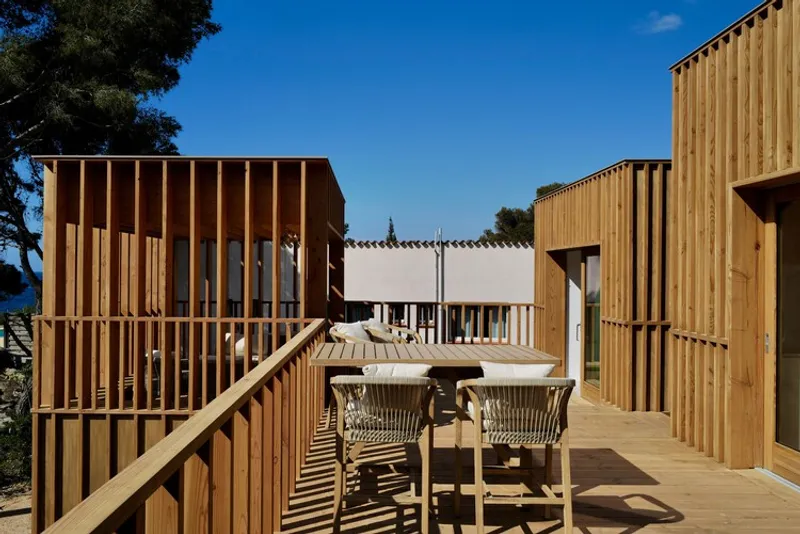
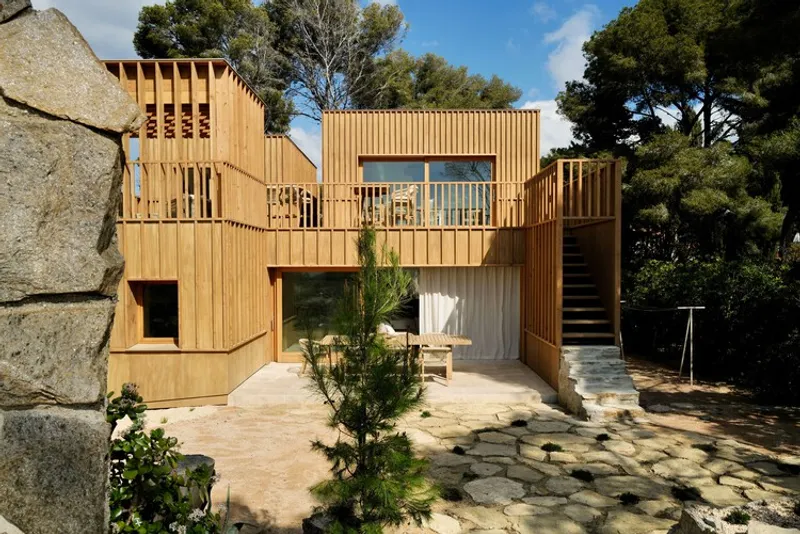
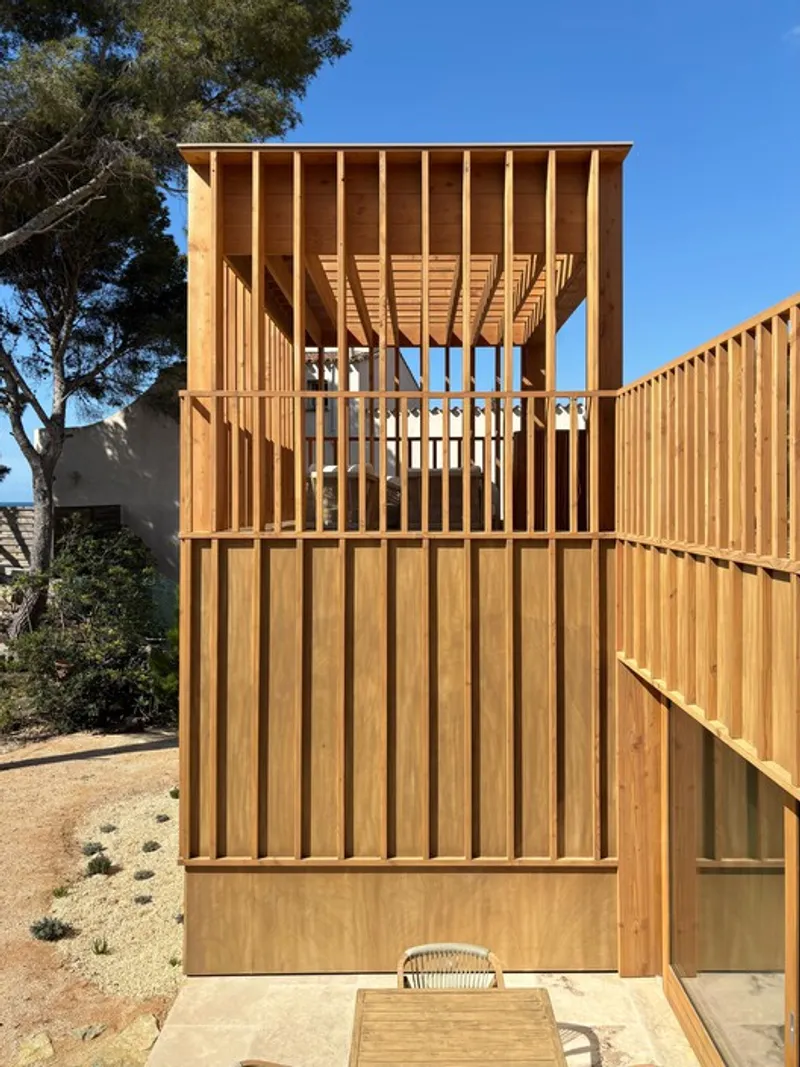
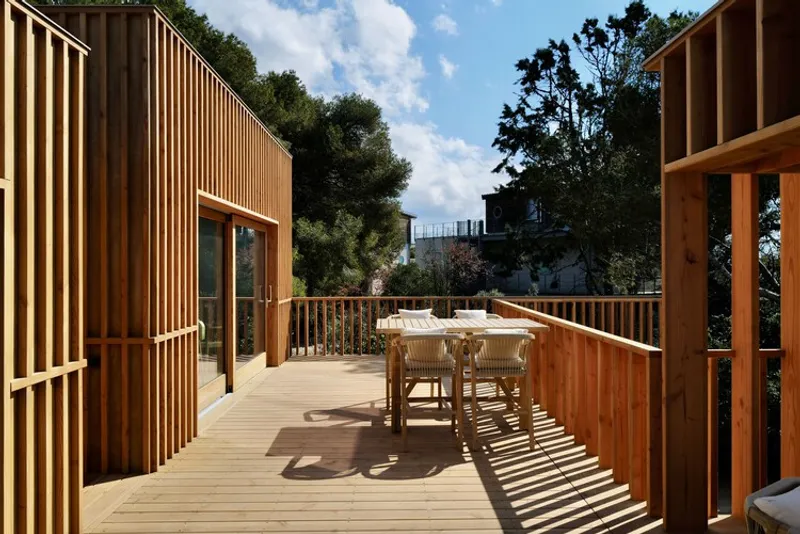
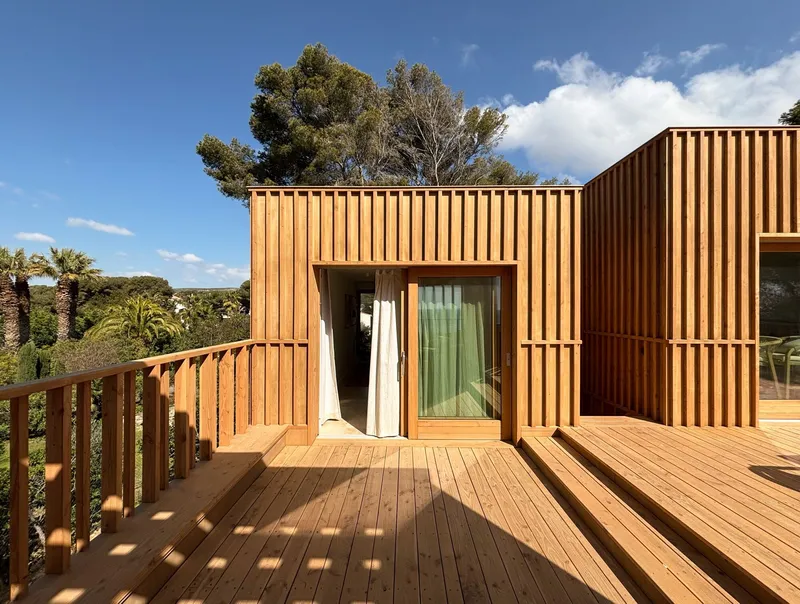
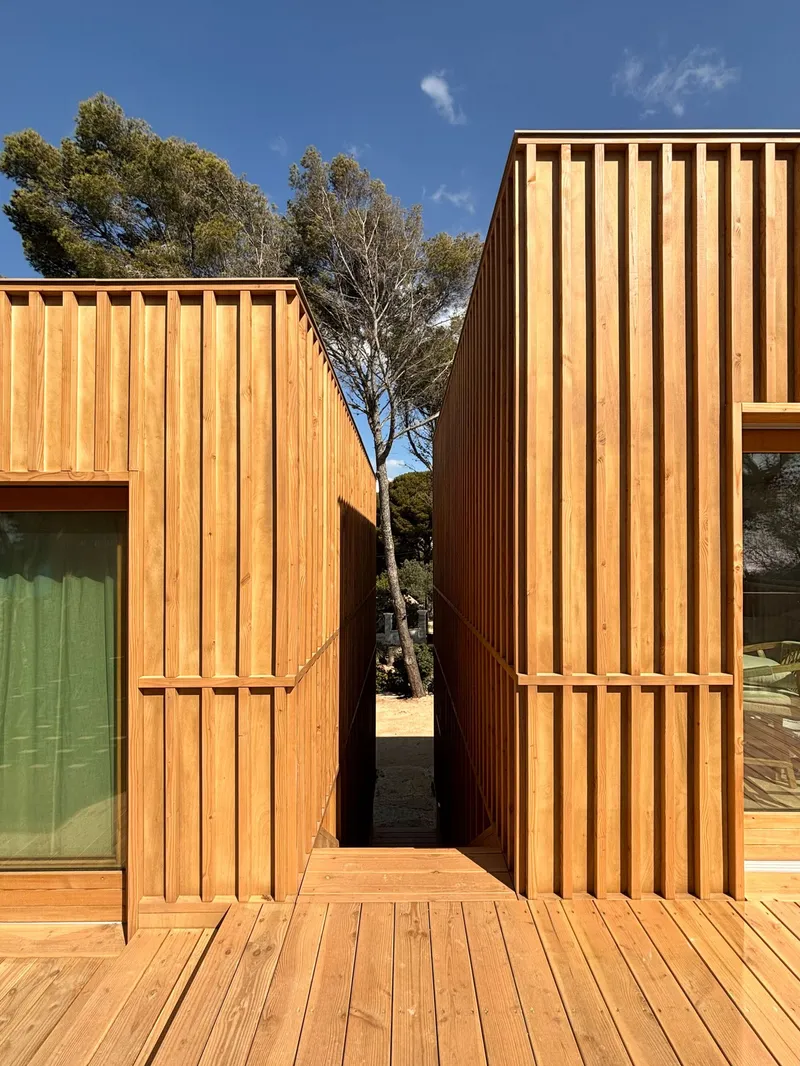
The wooden cladding defines the building’s new identity, introducing warmth and texture while visually unifying the intervention. Offcuts from façade panels were reused in exterior detailing, demonstrating a commitment to low-waste construction and circular building principles.
A Very Small Housing Collective
The architectural transformation results in three autonomous yet interconnected dwellings:
- A main family apartment on the ground floor
- A studio unit
- An independent bedroom with a private bathroom
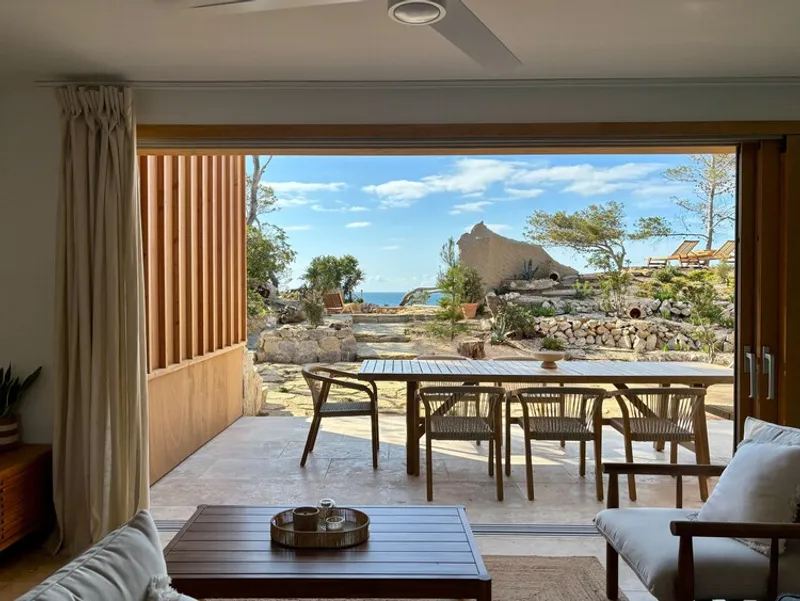
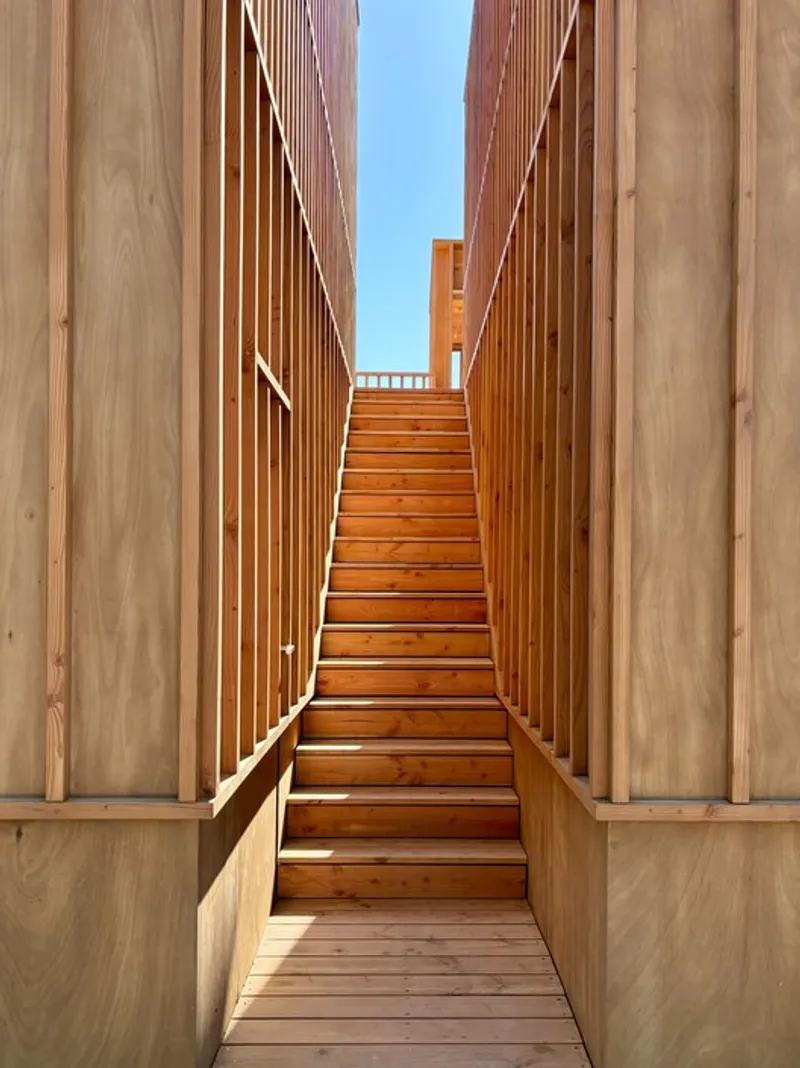
Rather than relying on internal circulation, each unit is accessed via exterior stairs and terraces, reinforcing independence while maintaining proximity. This configuration supports intergenerational living, rental possibilities, or workspace integration, offering a flexible and reversible housing model that can evolve over time.
The design reflects contemporary housing trends in France that prioritize adaptability, shared living, and compact urban solutions without expanding urban sprawl.
Sustainable Renovation and Environmental Responsibility
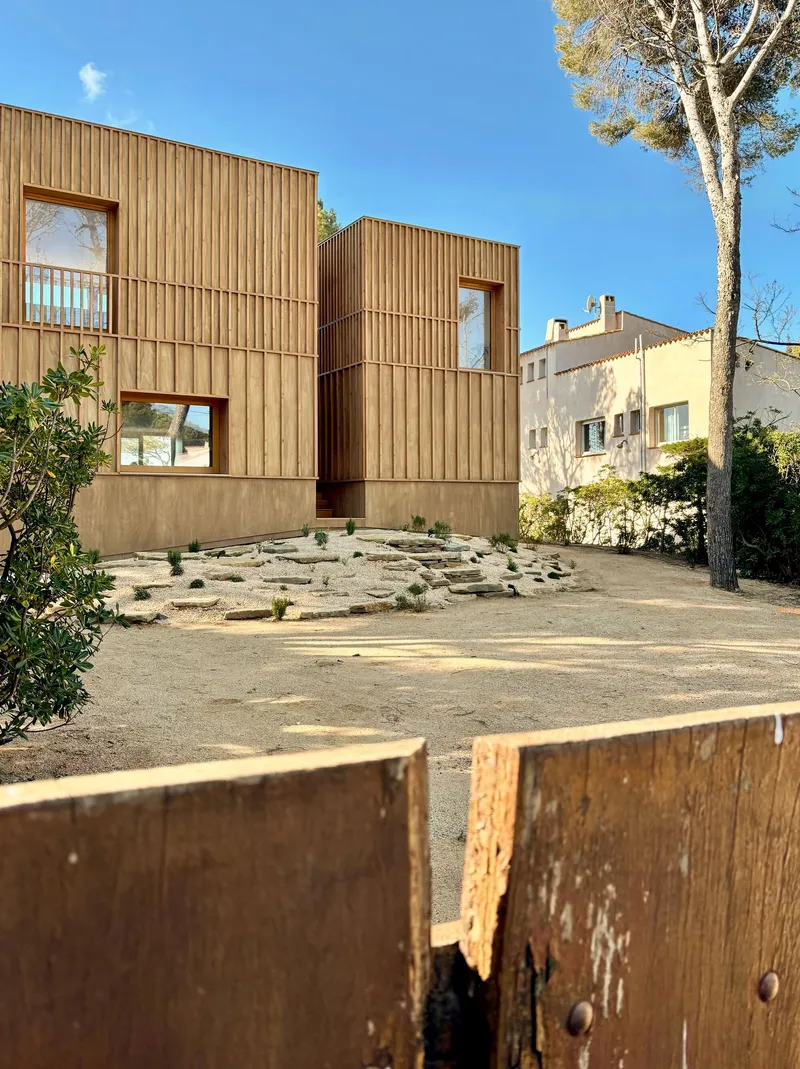
Environmental performance is embedded throughout the project. The site’s soil was partially de-sealed to restore permeability and improve water absorption. All units benefit from natural cross-ventilation, reducing reliance on mechanical cooling systems.
Bio-based materials, primarily timber and locally sourced stone, dominate the material palette, lowering embodied carbon and strengthening the building’s ecological profile. By upgrading the existing structure instead of demolishing it, the project significantly reduces construction waste and preserves the embodied energy of the original house.
A Model for Sustainable Suburban Densification
The Very Small Collective stands as a replicable model for sustainable suburban densification in France. It demonstrates how ordinary post-war homes can be upgraded into energy-efficient, flexible, and socially inclusive housing typologies.
Through careful renovation, vertical extension, and material intelligence, AT architectes transforms a single-family dwelling into a micro-collective housing model, proving that architectural transition does not always require expansion, but rather reinterpretation.
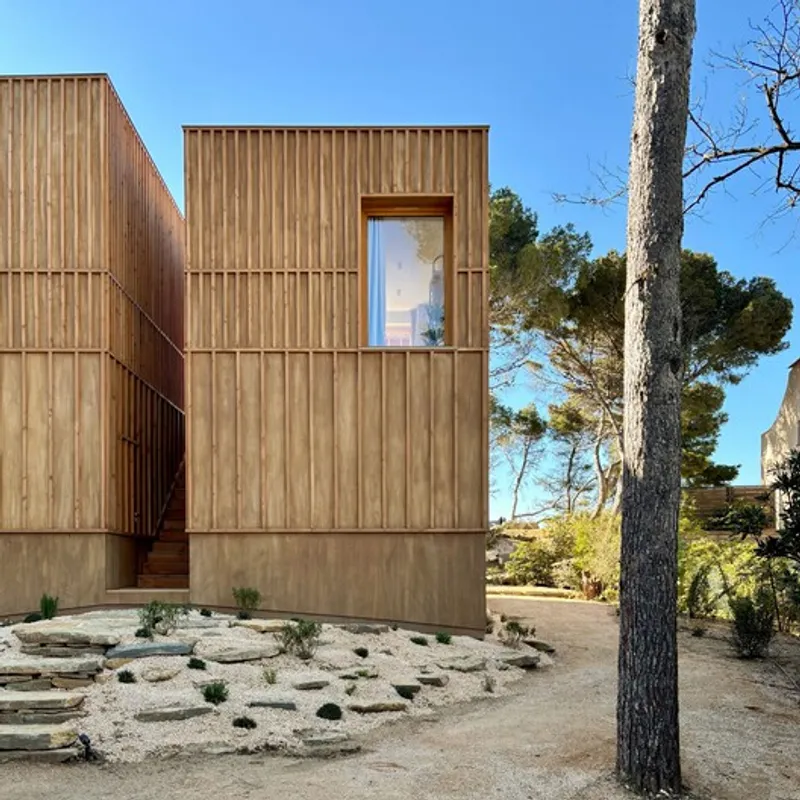
All the photographs are works of
Agence AT




Popular Articles
Popular articles from the community


The Musturak Paradise: Senior Living Architecture for a Connected Future in Temara, Morocco
The Musturak Paradise reimagines senior living architecture in Temara via private homes, social spaces, culture, community, and shared care.

The Ocean Hive: Sustainable Architecture for a Self-Sufficient Civilization at Sea
The Ocean Hive imagines sustainable architecture at sea, where modular habitats, algae, wave power and ocean waste sustain a growing colony.

Conexión: Biophilic Design Reimagines High-Rise Living in Hong Kong
Conexión reimagines high-rise living in Hong Kong through biophilic design, green facades, shared spaces, daylight, water and nature within.

The Earth Pod: 3D Printed Homes for Resilient Refugee Communities
The Earth Pod reimagines refugee housing through 3D printed homes made from clay, combining resilience, self-sufficiency, and rapid shelter.

Similar Reads
You might also enjoy these articles

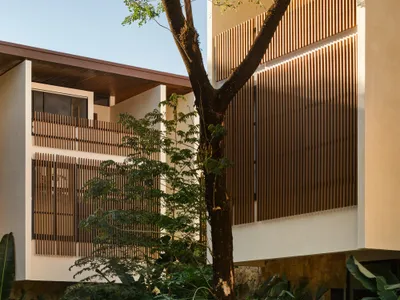
FAMM Arquitectura Organizes Ten Villas Around Courtyards and Jungle in Nosara, Costa Rica
El Molino pairs two elongated volumes with deep overhangs and timber louvers to build a compact coastal community five minutes from the beach.
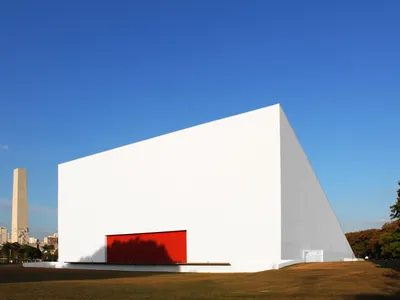
Oscar Niemeyer's Ibirapuera Park Pavilions Define São Paulo's Cultural Identity in Concrete and Curve
A constellation of modernist volumes set within São Paulo's most important urban park, conceived for the city's 400th anniversary in 1954.
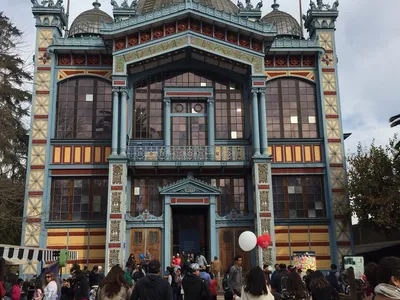
How Henri Picq's 1889 Paris Pavilion Traveled 11,000 Kilometers to Become Santiago's Artequín Museum
A prefabricated iron and glass pavilion built for the Paris Universal Exposition found a second life as a children's art museum in Chile.
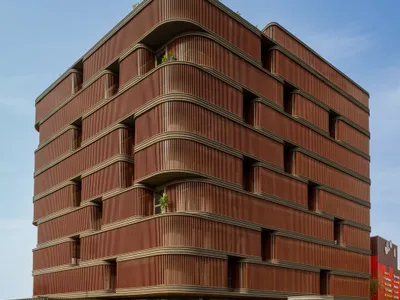
Sanjay Puri Architects Wraps a Jaipur Office Tower in Capsule-Shaped Green Buffers
A nine-level climate-responsive workplace near Jaipur Airport uses stacked planter terraces and aluminium screens to fight 40°C heat.


Explore Architecture Competitions
Discover active competitions in this discipline



Challenge to reimagine the Iron Throne


Photograph architecture without architects


Illustrate the lost glory of Angkor Wat - Render Challenge


Design challenge to reuse E-waste
Comments (0)
Please login or sign up to add comments
No comments yet. Be the first to comment!