
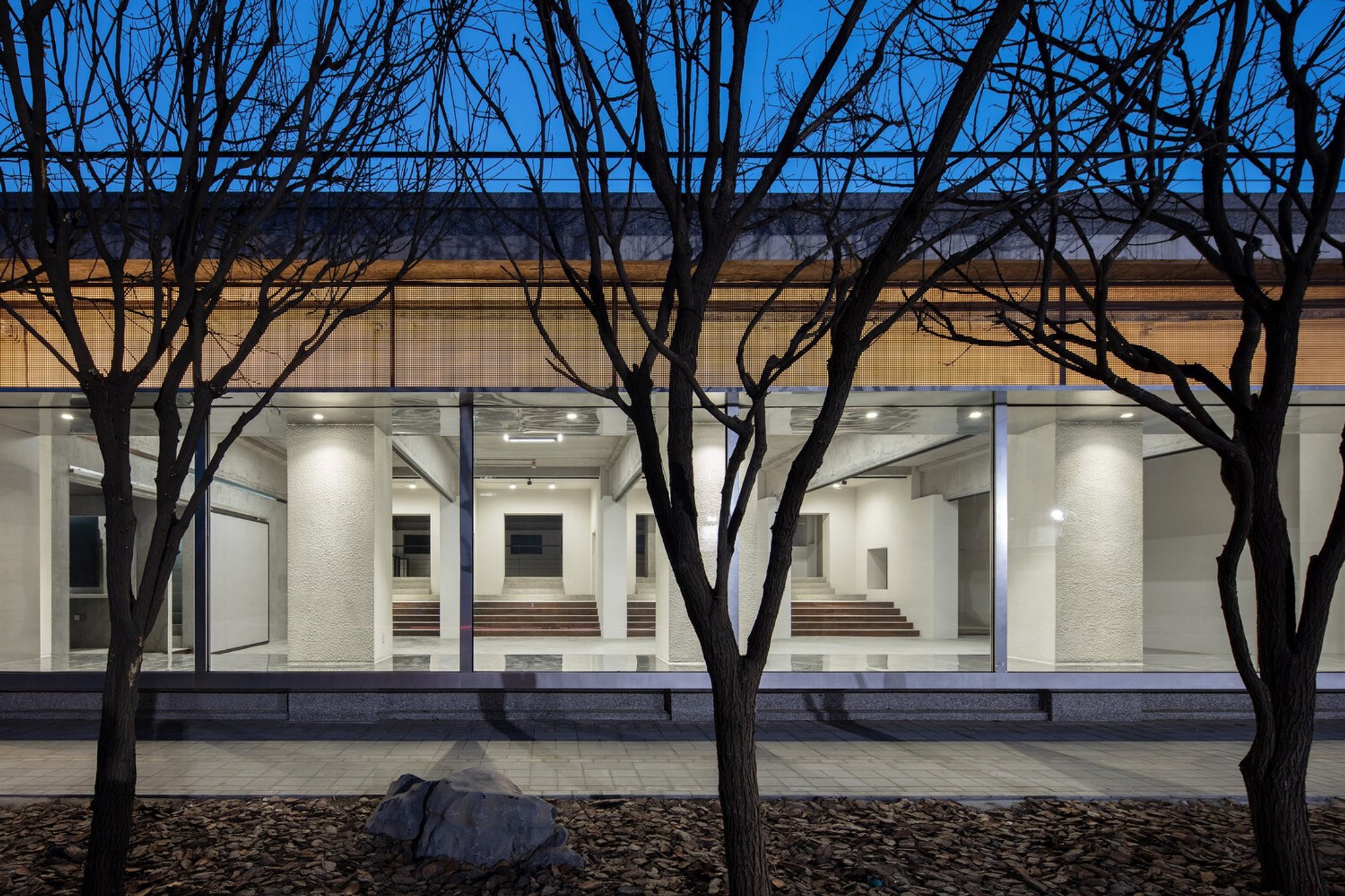
The Wind H Art Center (Phase I) by Jin Qiuye Studio – Adaptive Reuse in Beijing’s 751 District
The Wind H Art Center transforms a 1980s factory into a contemporary art space, blending concrete, light, nature, and adaptive reuse.

The Wind H Art Center (Phase I), located in Beijing’s vibrant 751 Art District, represents a masterful transformation of a former industrial factory and its office extension into a contemporary art hub. Undertaken by Jin Qiuye Studio, this renovation project redefines adaptive reuse, marrying industrial authenticity with contemporary gallery design. The project unfolds in three phases, with Phase I establishing the main exhibition hall and art shop.
The Wind H Art Center (Phase I), located in Beijing’s iconic 751 District, represents a masterful example of adaptive reuse architecture, transforming a former 1980s industrial factory and 1990s office extension into a contemporary art center. Developed in three renovation phases, Phase I focuses on the main exhibition hall and an art shop, creating a unique cultural hub that merges history, modern design, and functional flexibility.
Preserving Industrial Authenticity
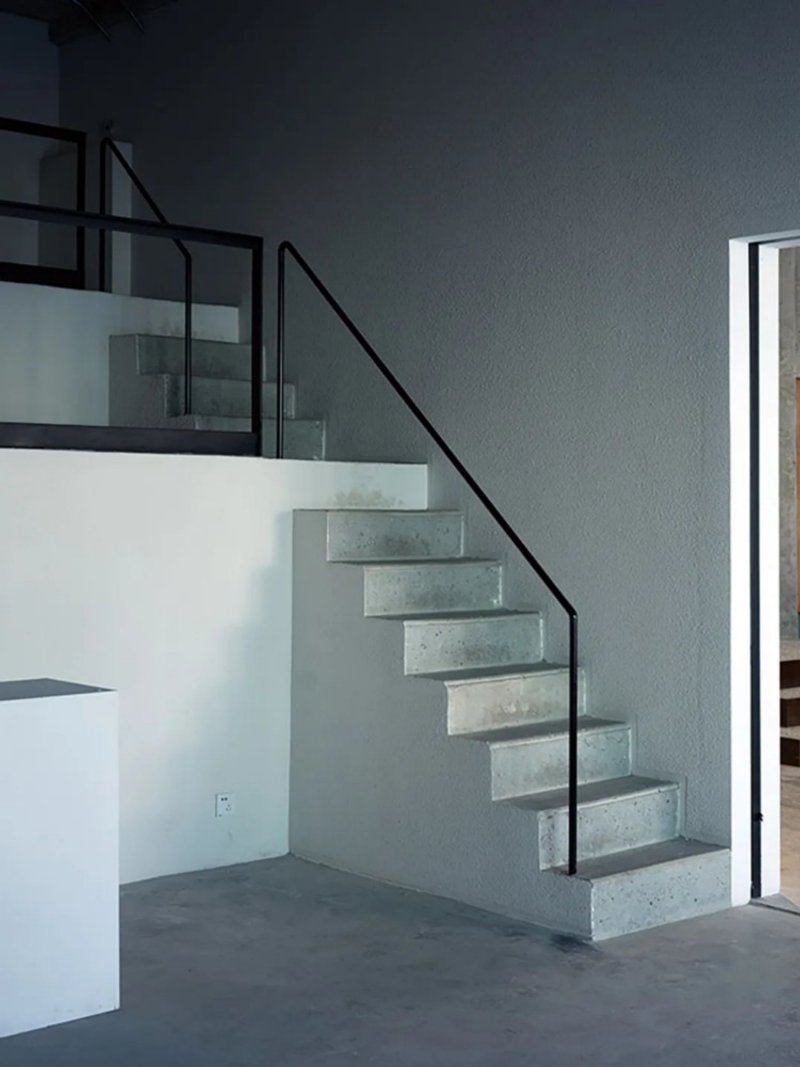
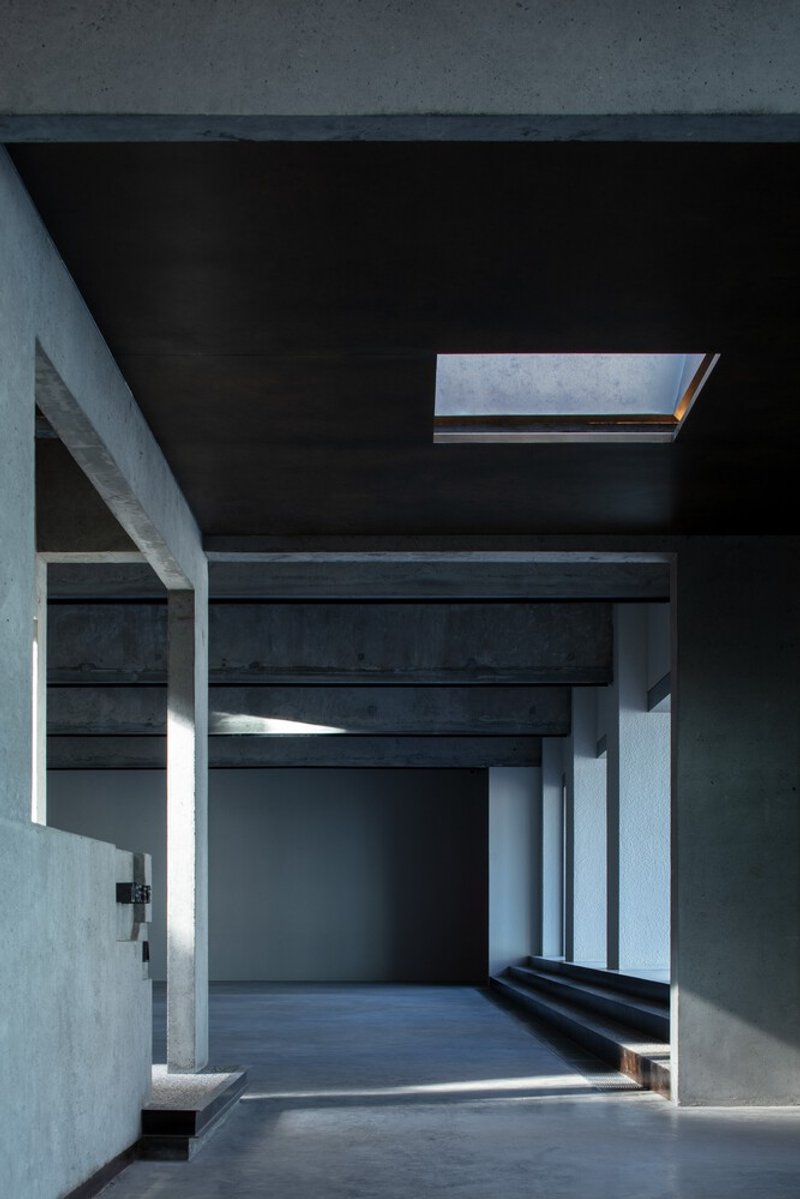
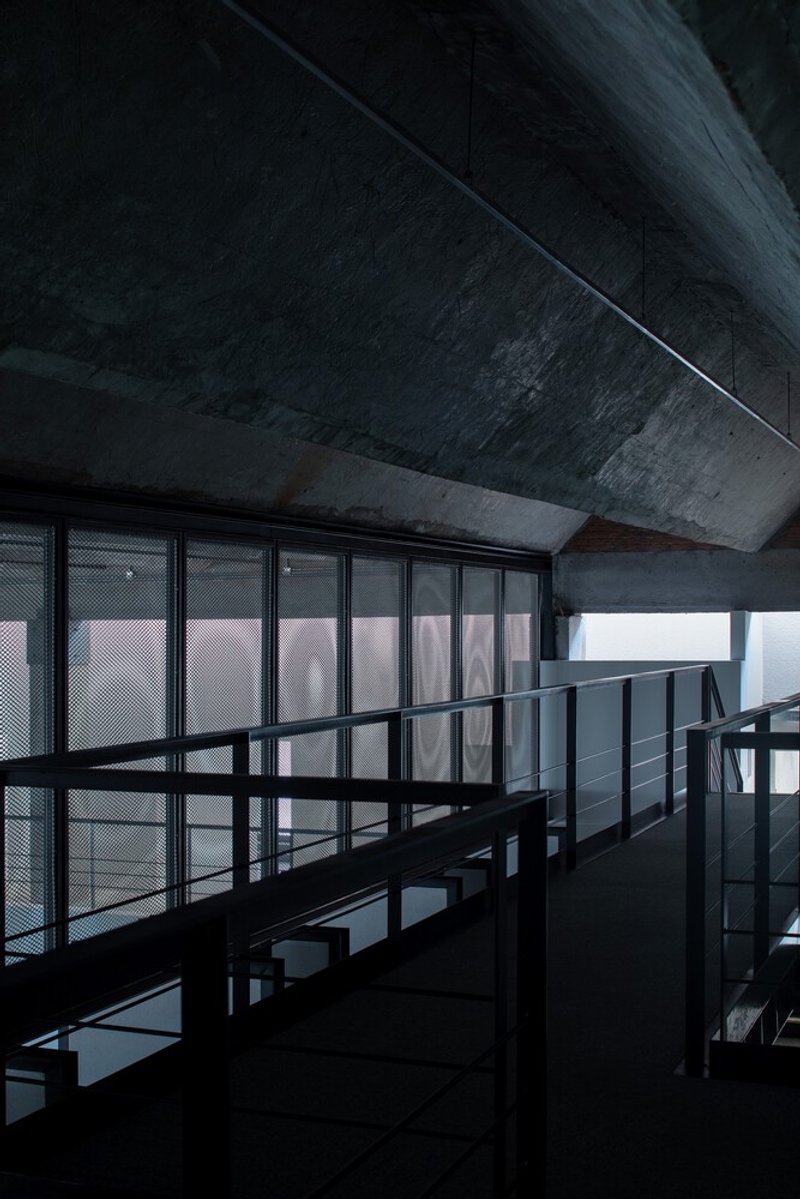
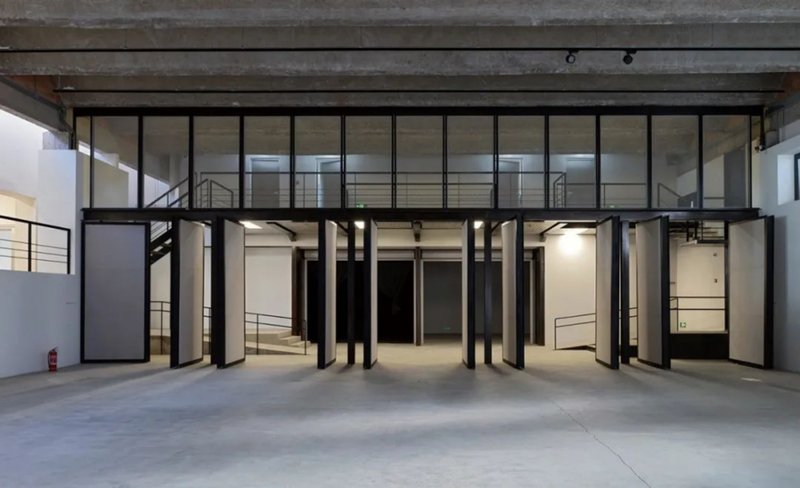
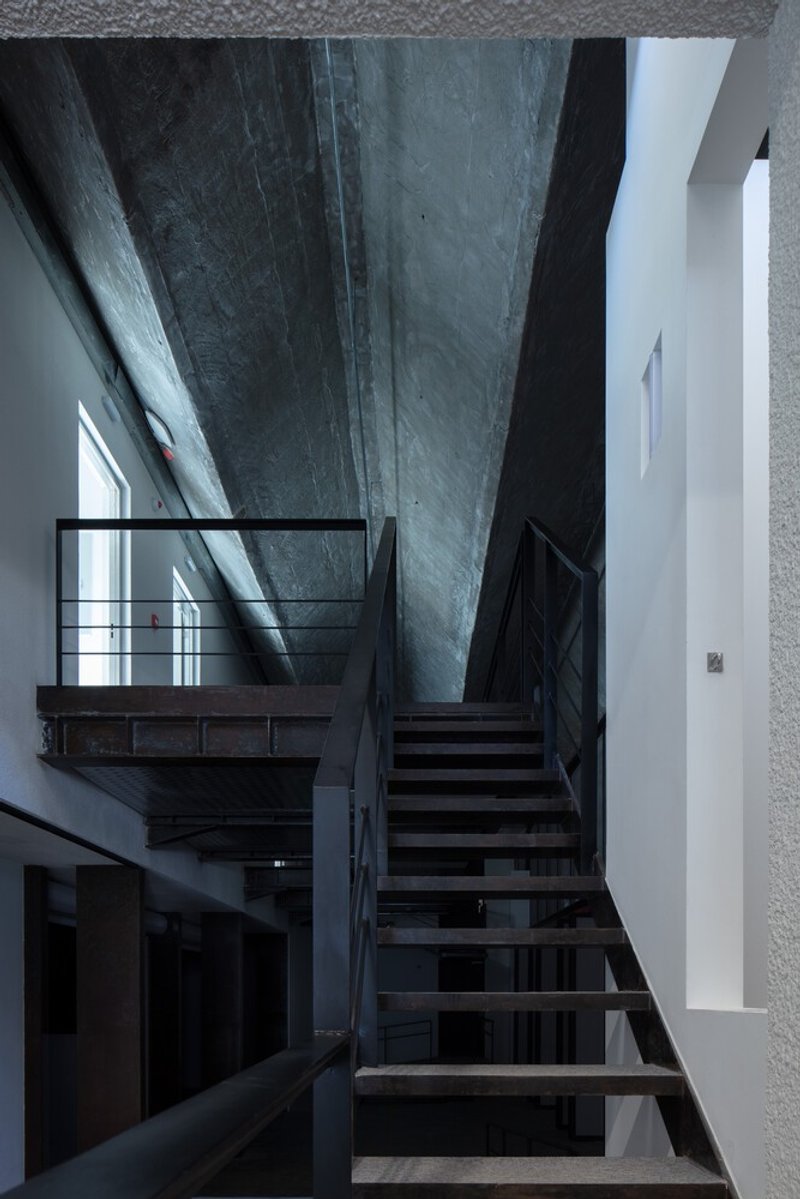
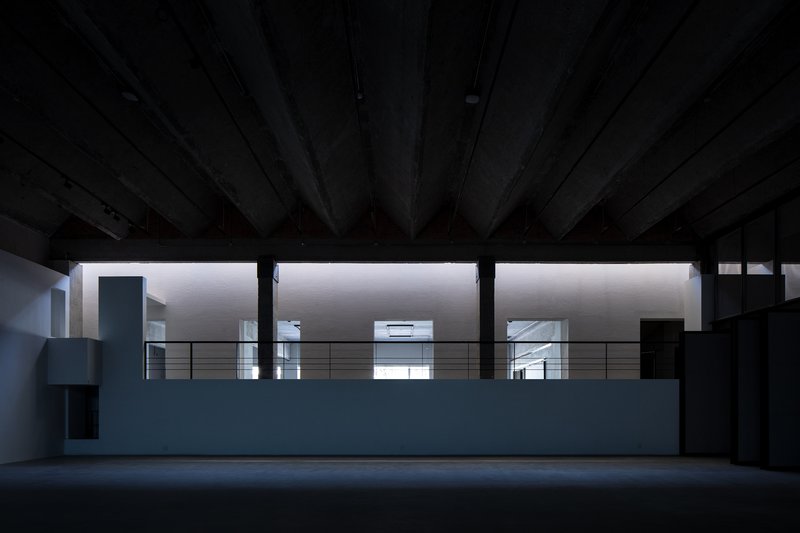
The original structure featured concrete columns on the east and west, supporting a folded concrete roof that allowed a column-free interior space. Before renovation, the building combined a mezzanine on the southern side with open-plan office areas. Jin Qiuye Studio approached the renovation with the philosophy of “Neither New nor Old,” preserving authentic surfaces where possible while enhancing the building’s spatial and material beauty. Different treatment methods were applied to each section, allowing materials to age naturally and harmoniously.
Innovative Spatial Design
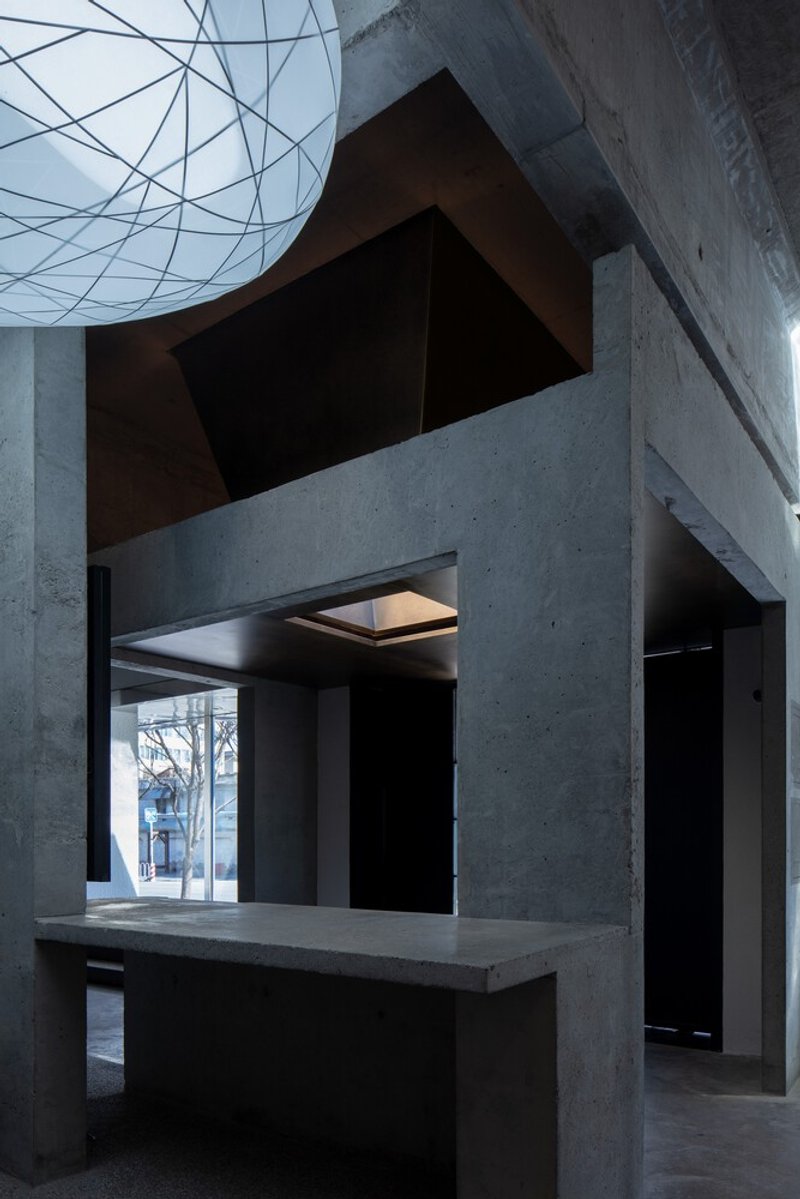
A key highlight of Phase I is the introduction of a central concrete “Giant Stone” installation, which serves as both a functional and sculptural element. Hollow and porous, the structure guides circulation, creates ascending pathways, and incorporates subtle architectural gestures—like steeper stairs, narrow openings, and a higher countertop—that emphasize its fractured, tactile nature. Two openings puncture the load-bearing walls, allowing natural and artificial light to filter through, complemented by the permanent light fixture called the “Pouch.”
The project also features:
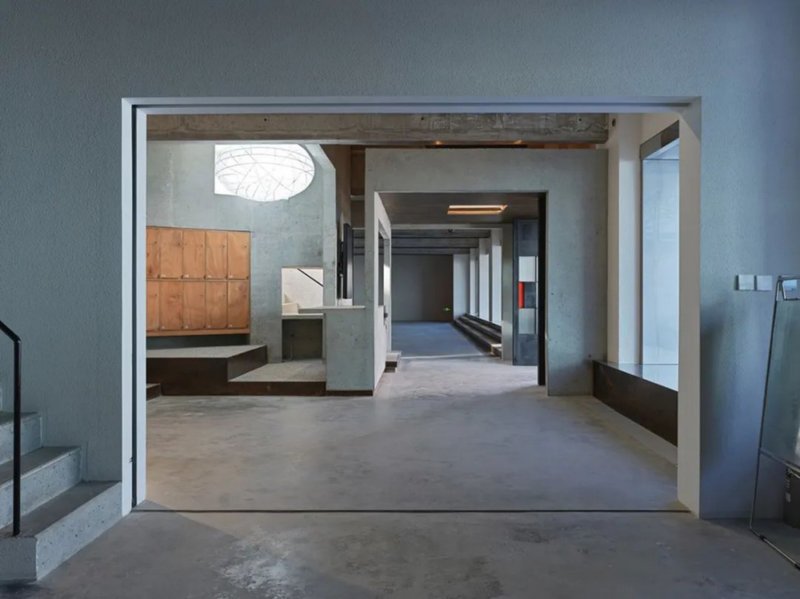
- Corridor Gallery: Formed between parallel load-bearing walls for intimate exhibition spaces.
- Crevice Gallery: Created by enlarging windows into doorways and puncturing larger openings for visual depth.
- Gallery Corridor: Accessible through the Giant Stone, with steel railings replacing conventional exhibition walls.
The architect’s personal residence is strategically located in the southeast corner, connected to the mezzanine via a steel staircase that integrates seamlessly into the gallery flow.
Material Strategy & Sustainable Detailing
The renovation emphasizes material authenticity and sustainable reuse. Steel beams and columns from the original structure were retained, circular ceiling panel openings were added for natural light, and leftover materials were collected for future use. A small staircase enclosure utilizes a framework of H-beams, square steel, and polycarbonate panels, exemplifying the project’s attention to detail and resource efficiency.
Landscape Integration
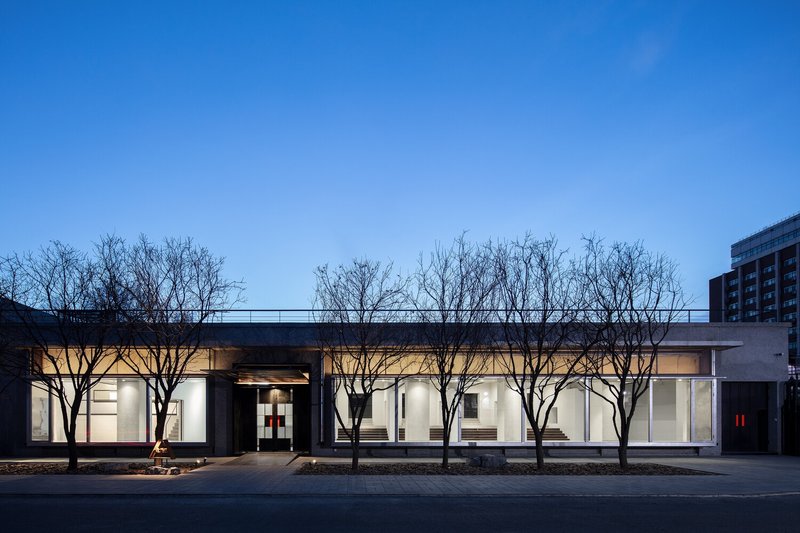
The center’s entrance features a Chinese pistache tree, creating a visual and sensory dialogue between nature and the warm, industrial interior. The mezzanine steel extension is deliberately detached, preserving the building’s historical logic while enabling functional adaptation.
Architectural Vision
The essence of Phase I lies in revitalizing residual spaces and embedding architectural functions within concrete installations to create layered, immersive experiences. The project embodies the idea of “building a garden within a house,” transforming an industrial relic into a vibrant cultural landmark that celebrates both history and contemporary creativity.
All photographs are works of Qiuye Jin




Popular Articles
Popular articles from the community

20 Most Popular Office Building Projects of 2025
From biophilic workspaces in India to net-positive energy offices in New Delhi, 20 office building projects that defined architecture in 2025.

1-1 Architects Builds a Nagoya House and Office from Decades of Stockpiled Timber
A 69-square-meter tower in dense residential Nagoya transforms surplus lumber into a home and workplace for a construction company.
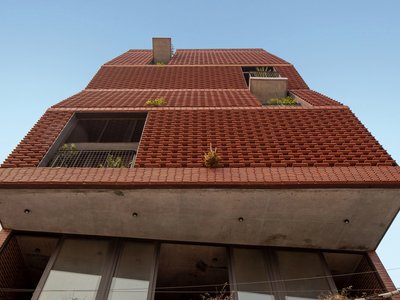
H&P Architects Stack a Vertical River of Brick and Greenery in Hanoi
A perforated terracotta tower in Dong Anh channels water, light, and air through eight staggered levels of domestic life.
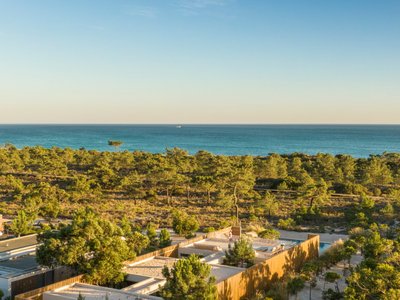
BICA Arquitectos Buries a Coastal Home in a Man-Made Dune on Portugal's Tróia Peninsula
A 300-square-meter house of timber, sand mortar, and travertine dissolves into the dune landscape it helped regenerate on the Alentejo coast.


Similar Reads
You might also enjoy these articles
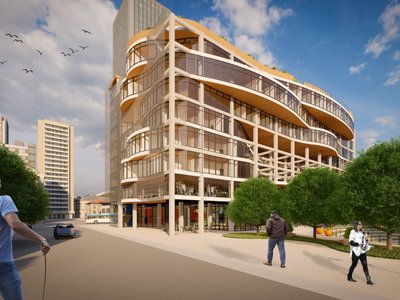
Olio Towers: A Mid-Rise for Performers That Fuses Housing, Rehearsal, and Stage
Located blocks from Houston's Theater District, this modular tower stacks living units around a central performance atrium.
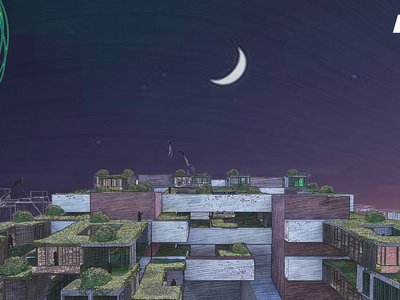
Oasis: Modular Green Housing Carved into Dhaka's Urban Fabric
A shortlisted Plugin Housing entry reclaims unauthorized settlements in Dhaka with stepped concrete volumes, green roofs, and ventilation-driven design.

Black Hole: A Floating Megastructure for the Post-Physical Era
Emiliano Mazzarotto envisions a spherical, self-scaling arena where e-sports, digital hotels, and holographic stadiums replace traditional public space.
Compact & Sustainable Living in Piraeus: A Four-Level Family Home Built Around Light and Air
A narrow townhouse in one of Greece's densest port cities uses a central atrium and passive strategies to house three generations under one roof.


Explore Architecture Competitions
Discover active competitions in this discipline




The International Standard for Design Portfolios


The Global Benchmark for Architecture Dissertation Awards


The Global Benchmark for Graduation Excellence


Challenge to reimagine the Iron Throne
Comments (0)
Please login or sign up to add comments
No comments yet. Be the first to comment!