

Theatre by Cheng Tsung FENG Design Studio: Reviving Taiwan’s Bamboo Stage Tradition
Cheng Tsung FENG’s Theatre revives Taiwan’s bamboo opera tradition, creating an immersive, interactive outdoor installation blending heritage, craftsmanship, and contemporary design.


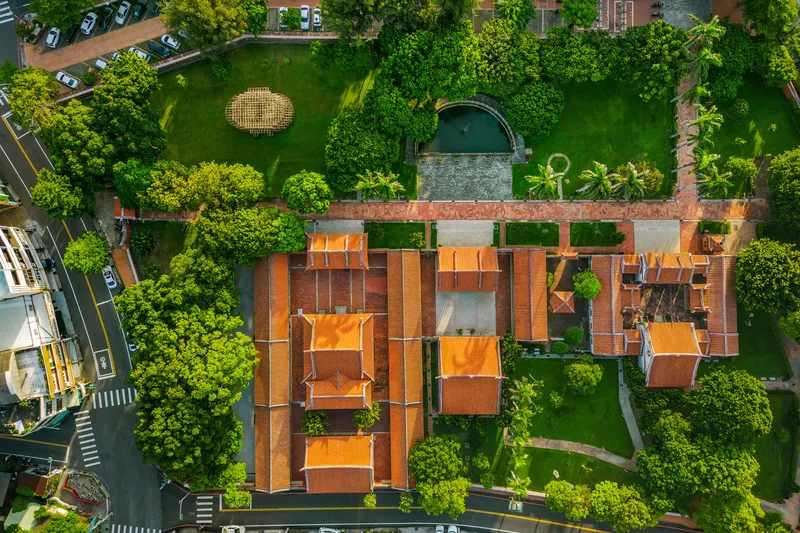
Cheng Tsung FENG Design Studio has masterfully reinterpreted a disappearing Taiwanese cultural heritage with Theater, a monumental bamboo installation situated at the historic Wenwu Temple in Lukang, Changhua. Rooted in the preservation of traditional crafts and collective memories, this project revives the iconic bamboo opera stage, a once-prevalent structure central to temple festivals and communal performances, now rarely seen in contemporary Taiwan.
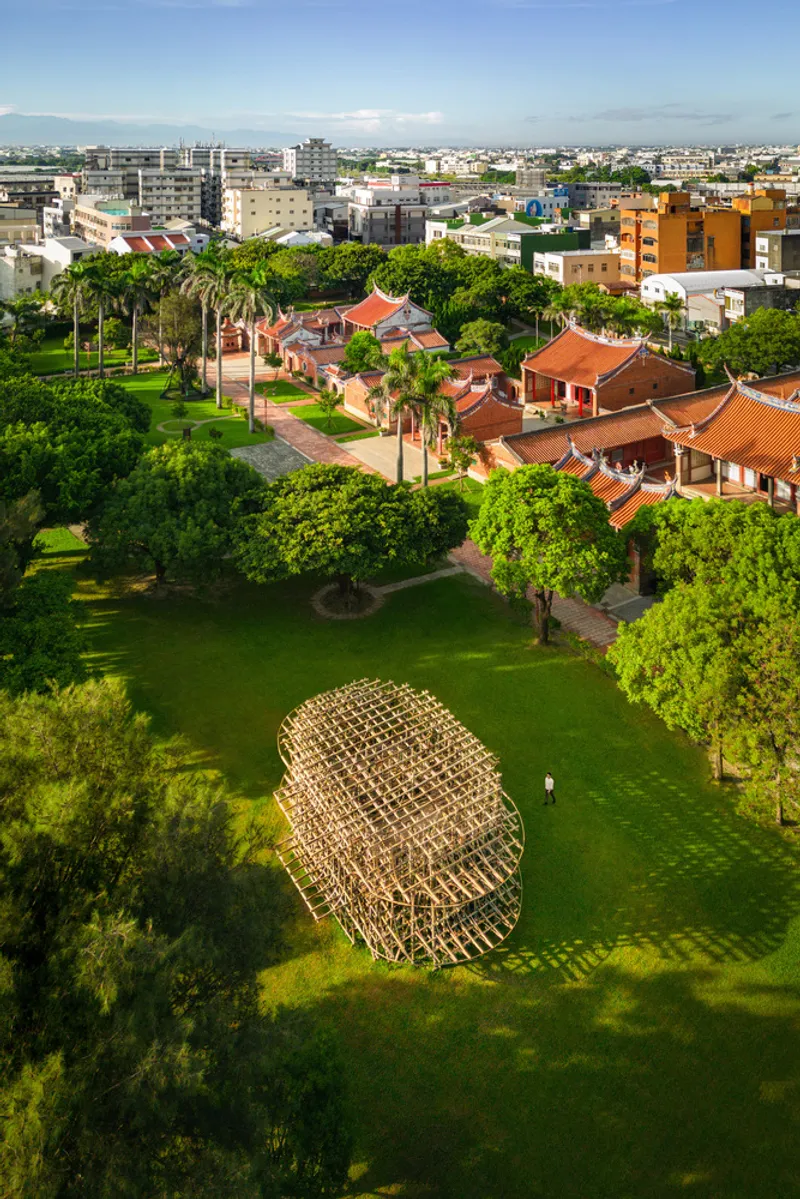
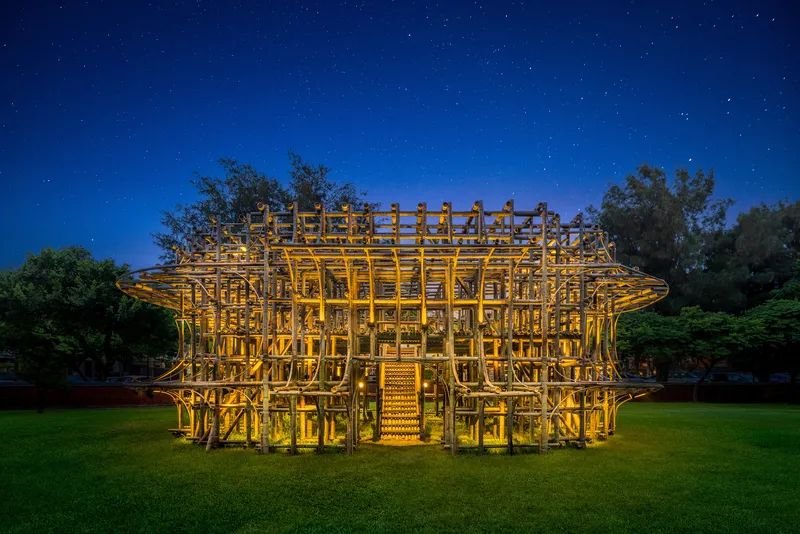
In a remarkable fusion of tradition and contemporary design, Cheng Tsung FENG Design Studio presents Theatre, an outdoor bamboo installation that celebrates Taiwan’s fading cultural heritage. Situated at the historic Wenwu Temple in Lukang—an architectural landmark that has stood for over two centuries—this monumental work revives the grandeur of the bamboo opera stage, once a central feature in temple festivals and communal gatherings.
Reinterpreting Traditional Craft
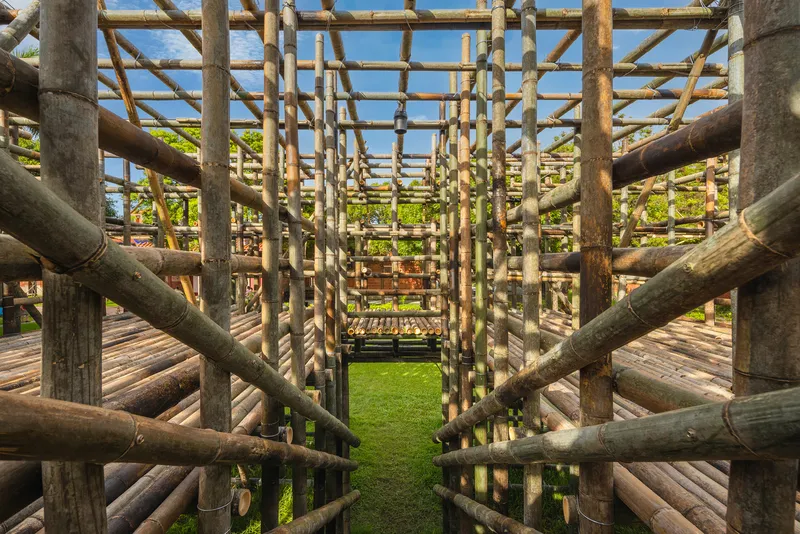
Artist and designer Cheng Tsung FENG is renowned for preserving and reinterpreting traditional crafts through contemporary installations. With Theatre, he draws inspiration from Taiwan’s rich bamboo architecture heritage, meticulously constructing a stage using thousands of bamboo poles. The result is a structure that honors the past while embracing modern aesthetics.
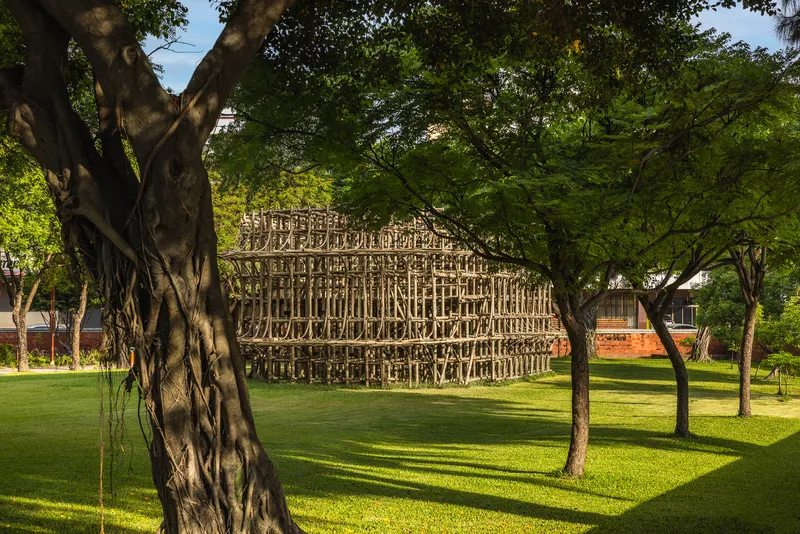
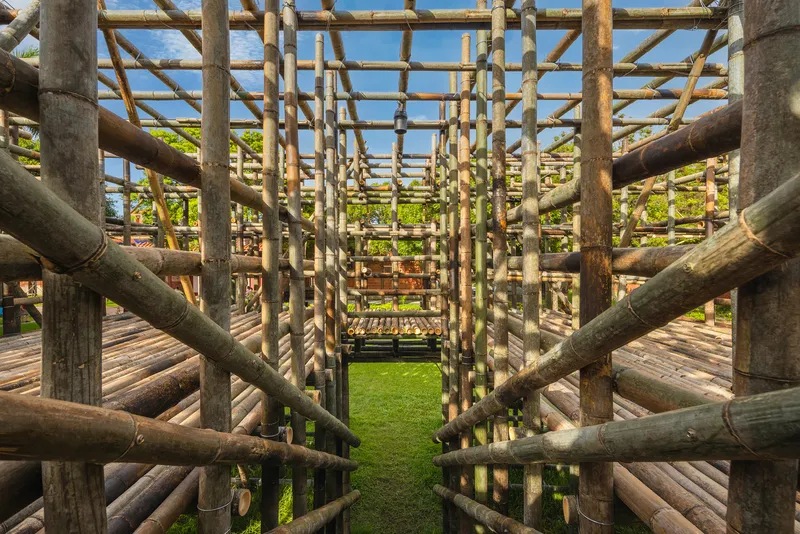
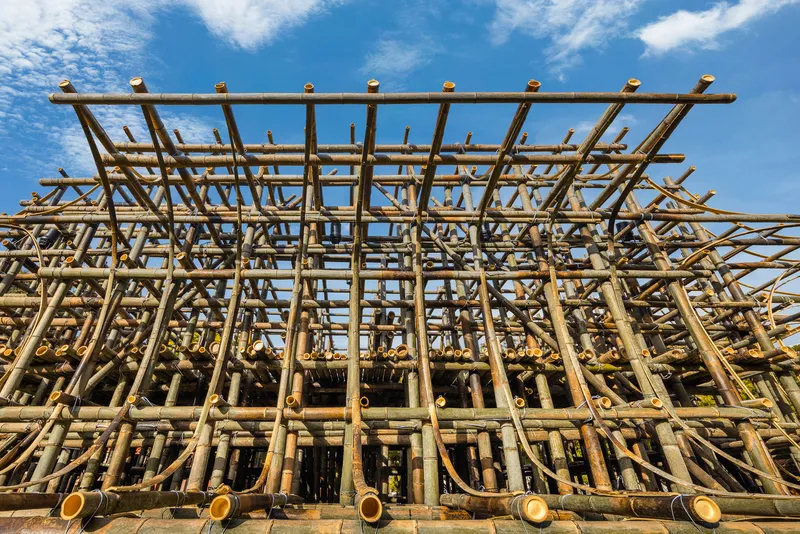
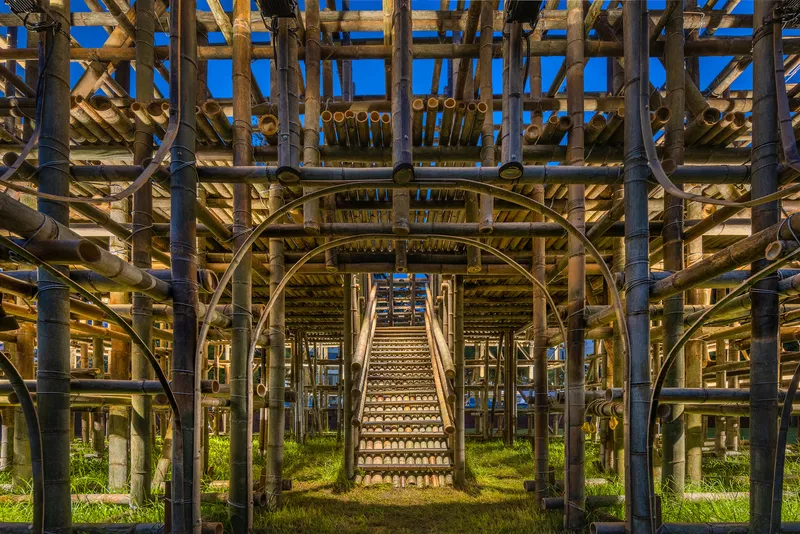
The installation’s design demonstrates careful craftsmanship: bamboo is interwoven both vertically and horizontally, forming a geometric grid that is simultaneously rigid and transparent. Slender split bamboo strips soften the structure’s edges, creating elegant arcs across the façade and stage platform. Visitors ascend bamboo stairways onto the expansive platform, immersing themselves in the tactile and spatial qualities of bamboo architecture. The experience engages the senses—sight, touch, and movement—encouraging audiences to rediscover the materiality and rhythm of traditional bamboo construction.
A Dynamic Cultural Space
By day, Theatre serves as an inviting public space for rest, play, and social gathering. By night, festival lighting transforms the structure into a ceremonial hall, echoing the vibrancy and grandeur of historical opera performances. The stage is not only a place for spectators but also a platform for participation. Passersby and festival attendees are invited to move between stage and audience, sometimes performing, sometimes observing—mirroring the cyclical nature of life itself.
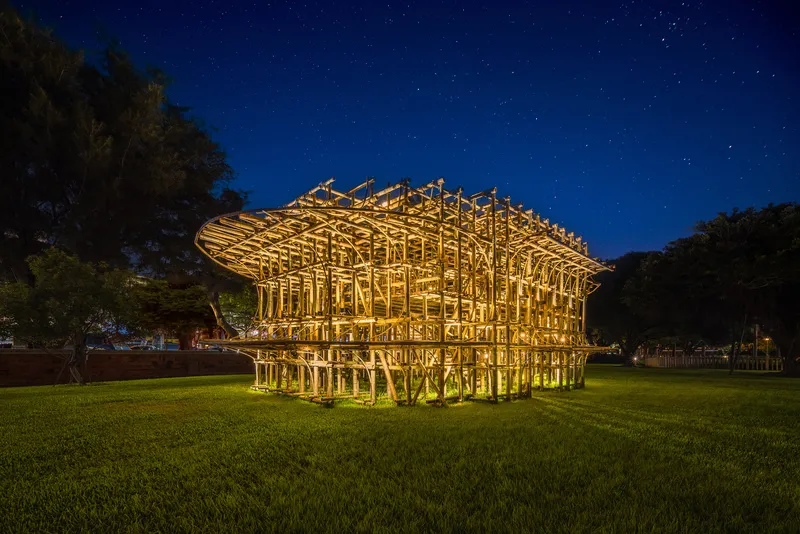
Positioned on the temple’s expansive lawn, Theatre attracts locals and tourists alike, creating a living, communal space where cultural memory and contemporary design intersect. FENG’s installation is a celebration of Taiwan’s heritage, demonstrating how traditional crafts can be preserved, reimagined, and experienced in a modern context.
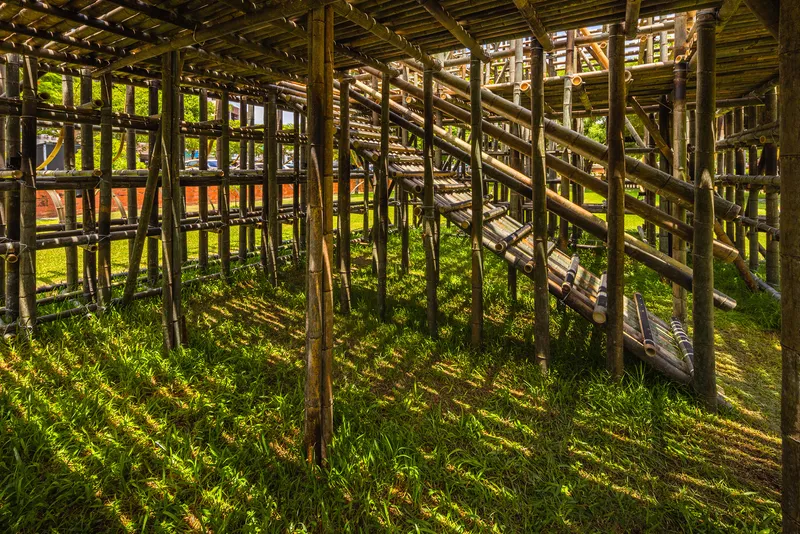
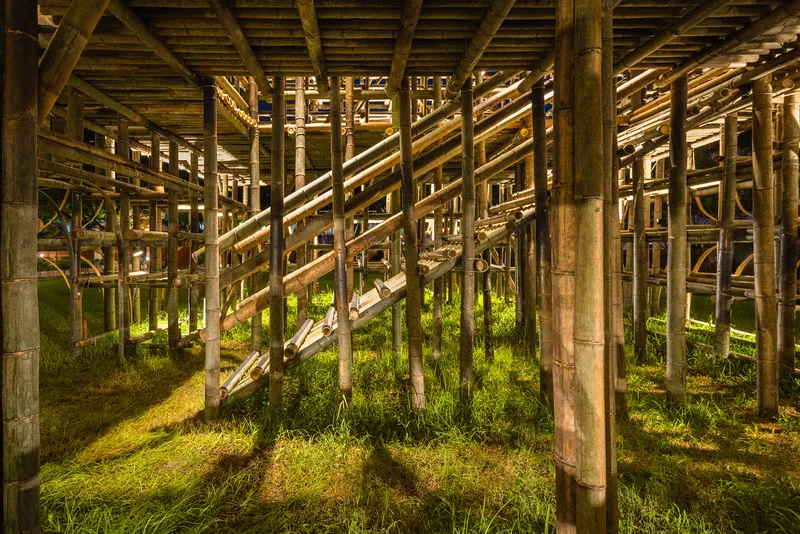
Architectural Highlights:
- Material: Bamboo, showcasing traditional craft and natural tactility
- Design: Vertical and horizontal interlacing, geometric grid, elegant arcs
- Functionality: Daytime social space; nighttime ceremonial stage
- Cultural Impact: Revives the traditional bamboo opera stage as a living community experience
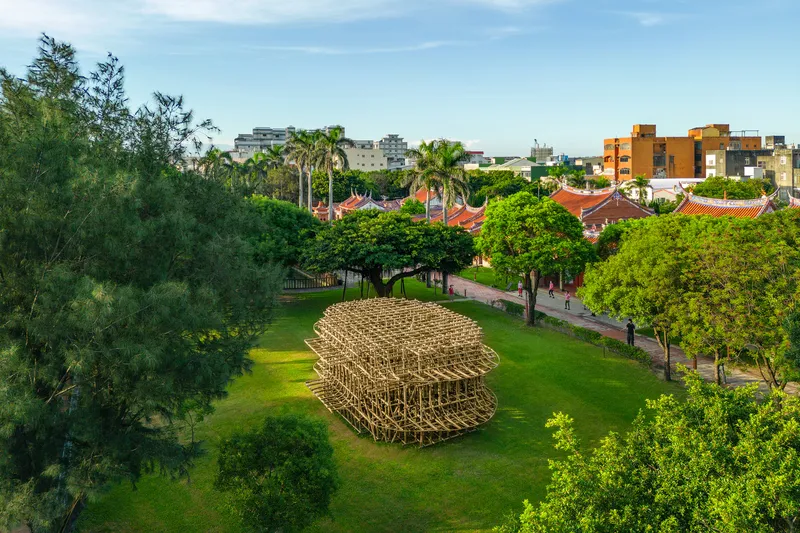

All photographs are works of Fixer Photographic Studio


Popular Articles
Popular articles from the community


Temporary Home for Dogs: A Reversed Zoo Rethinks Animal Shelter Architecture
In Bucharest, a sinuous corridor and freed landscape flip the logic of containment, designing a shelter that works to make itself unnecessary.

Faces of the Soviet Avant-Garde: Turning Moscow's Street Names into an Open-Air Museum
A network of sculptural installations across a Moscow residential district transforms forgotten architect names into spatial encounters with cultural memor

Tsunami Convergenics: Turning Catastrophic Ocean Forces into Underwater Housing Infrastructure
A speculative underwater settlement off the coast of Onagawa, Japan, treats tsunamis and typhoons as energy sources rather than threats.

The Amber Palace Opera: A Geological Fiction Surfaces on Tallinn's Baltic Waterfront
Pierre Brillard reimagines a Baltic legend as a public landscape, opera house, and waterfront promenade rooted in Tallinn's coastal identity.

Similar Reads
You might also enjoy these articles


Hodi-Mandai Geram
Project Function: Preservation and revitalization of the Intangible heritage and socio-spatial identity of the Hodi by Housing, Cultural Memory Center, Sacred Grove, landscape, local tourism economy


Olio Towers: A Mid-Rise for Performers That Fuses Housing, Rehearsal, and Stage
Located blocks from Houston's Theater District, this modular tower stacks living units around a central performance atrium.

Oasis: Modular Green Housing Carved into Dhaka's Urban Fabric
A shortlisted Plugin Housing entry reclaims unauthorized settlements in Dhaka with stepped concrete volumes, green roofs, and ventilation-driven design.

Black Hole: A Floating Megastructure for the Post-Physical Era
Emiliano Mazzarotto envisions a spherical, self-scaling arena where e-sports, digital hotels, and holographic stadiums replace traditional public space.

Explore Open Air Theatre Competitions
Discover active competitions in this discipline

Challenge to design a portable theatre

Challenge to design a portable music platform

Challenge to design an open learning module for the elderly

Challenge to reimagine the Iron Throne
Comments (0)
Please login or sign up to add comments
No comments yet. Be the first to comment!