
Thematic Restaurant Interior Design: Funky Ramen by Kidz Studio
Funky Ramen’s thematic restaurant interior design merges Japanese tradition with urban aesthetics, creating an immersive, storytelling-driven dining experience.


A Bold Fusion of Culture and Architecture in Düsseldorf
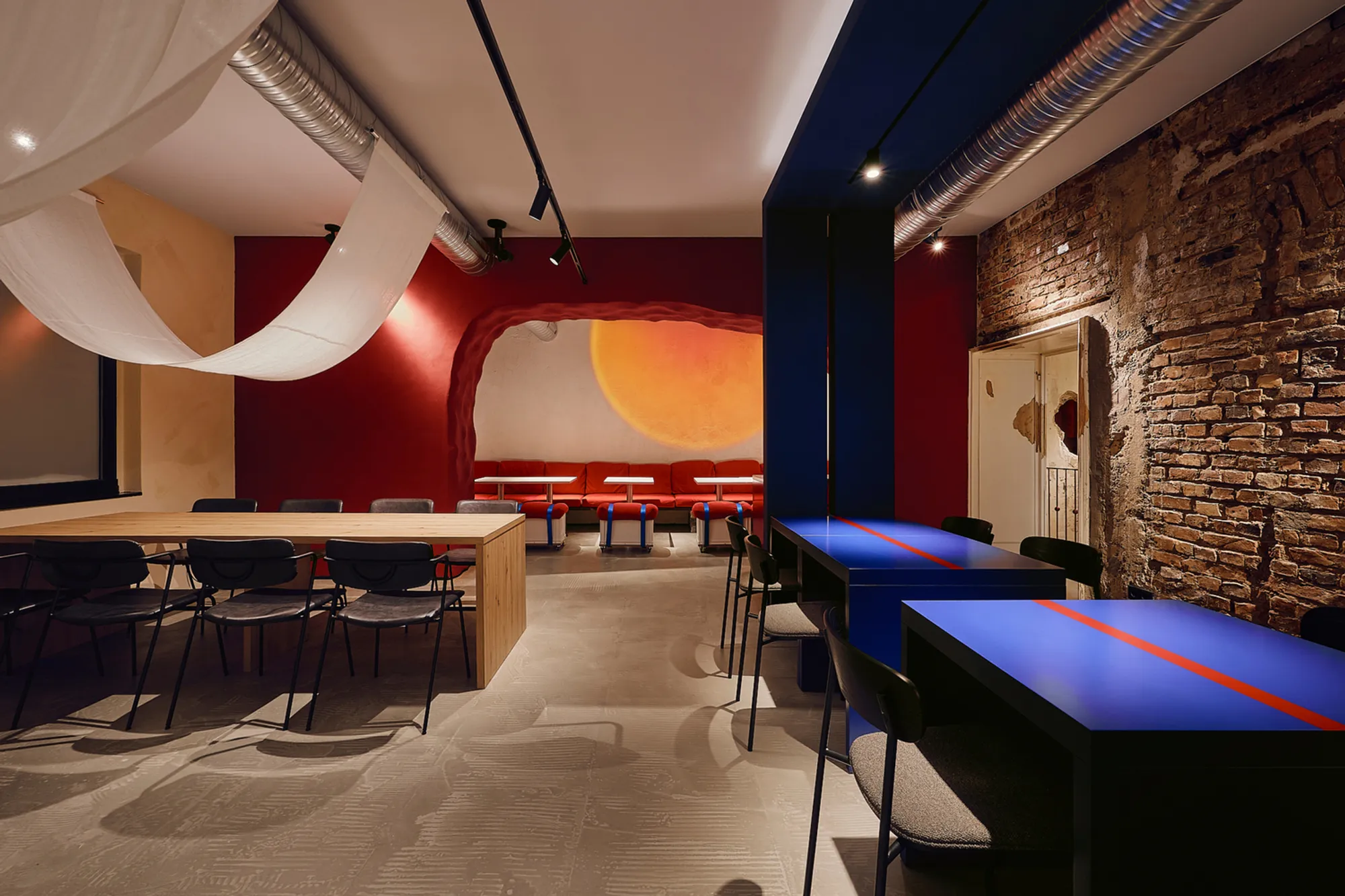
Funky Ramen, designed by Kidz Studio, redefines thematic restaurant interior design by merging Edo-period aesthetics with contemporary street culture. Located in Düsseldorf, this 220-square-meter space brings a distinctive dining experience shaped by the creative vision of an experienced sushi chef and his business partner. Drawing inspiration from the anime Samurai Champloo, the restaurant’s design blends traditional Japanese elements with urban influences such as graffiti and hip-hop, creating an immersive atmosphere for diners.
Zoned Spaces Reflecting Anime Characters
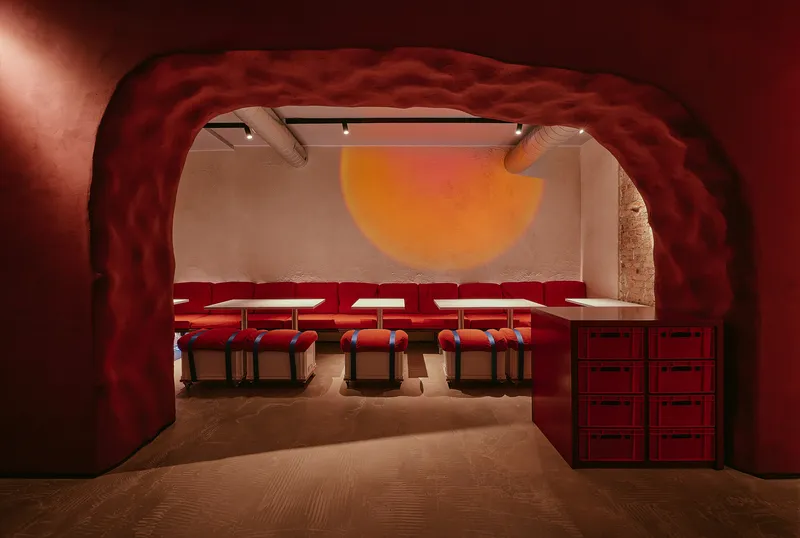
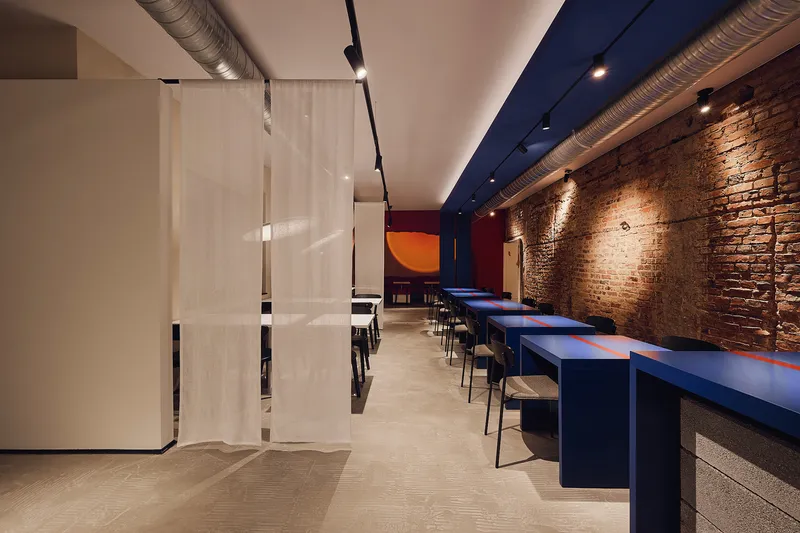
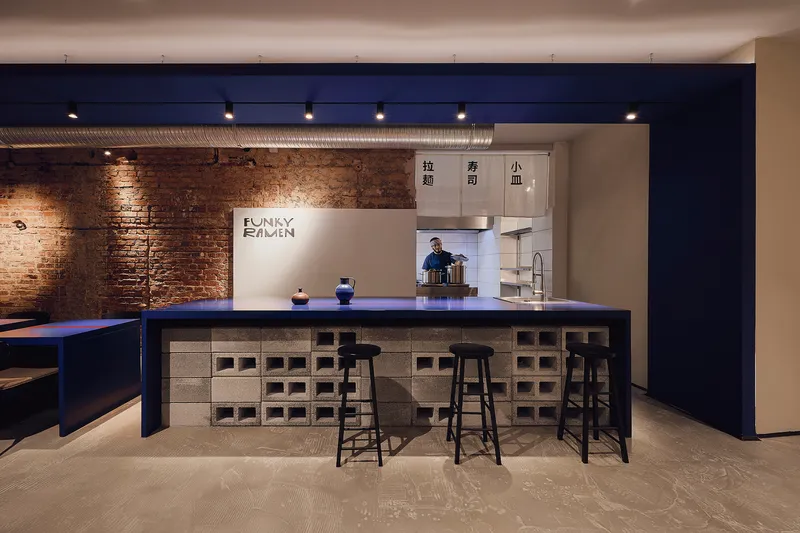
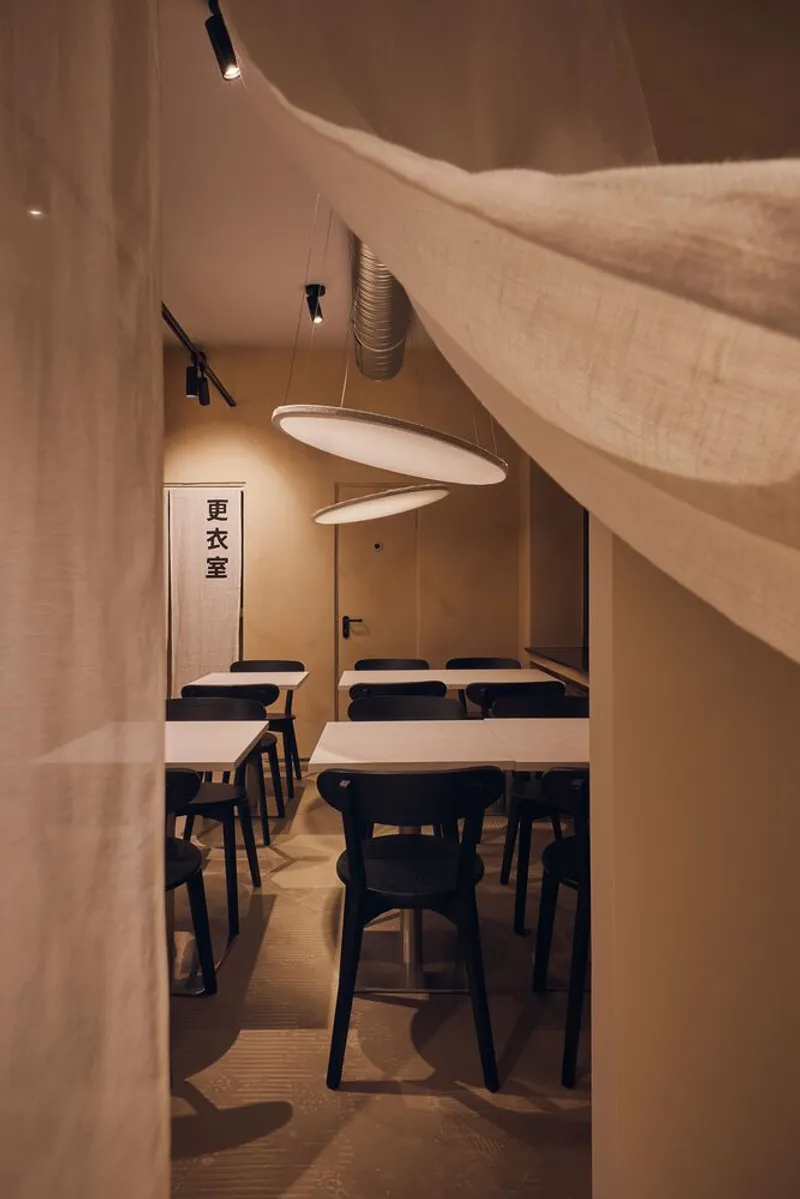
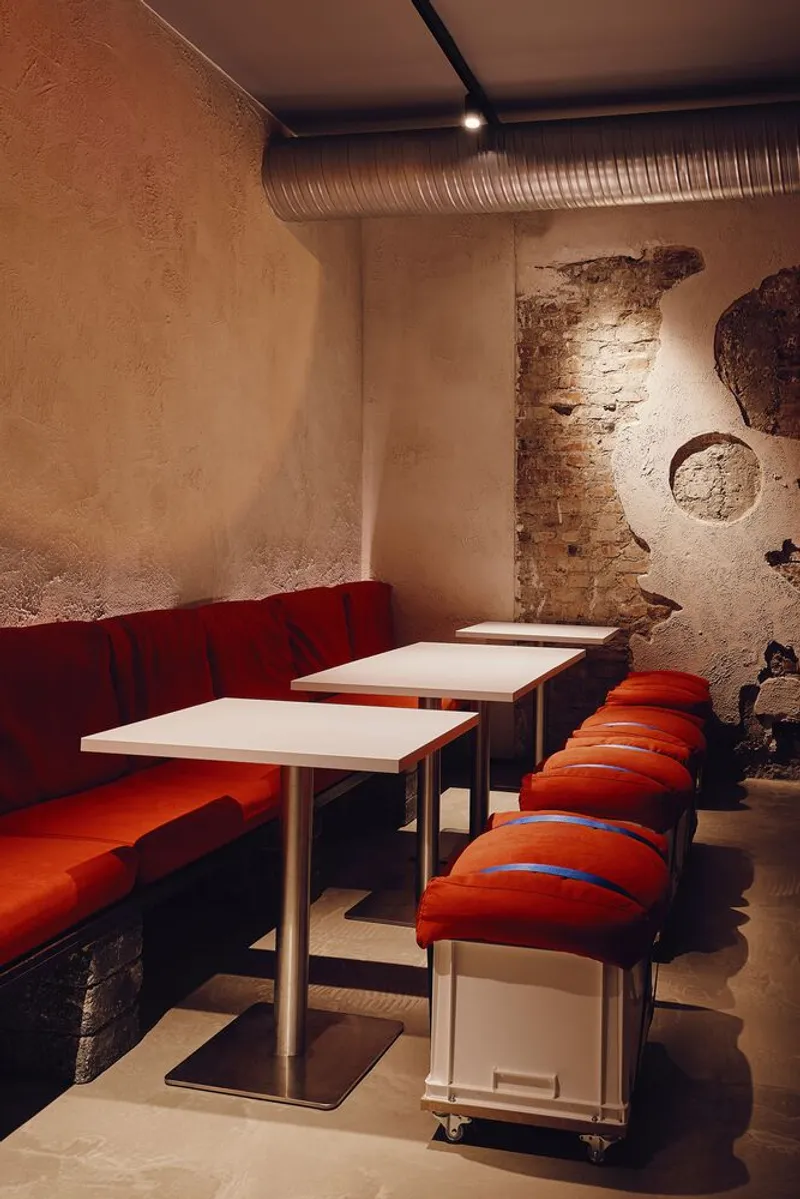
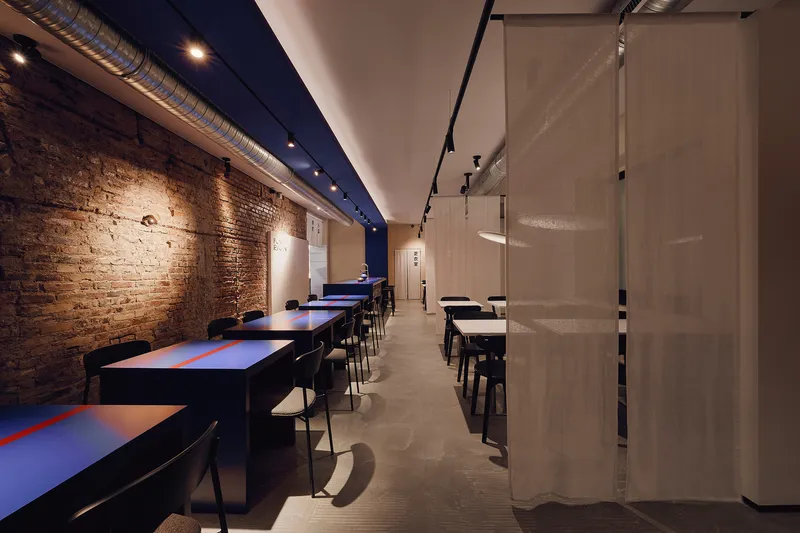
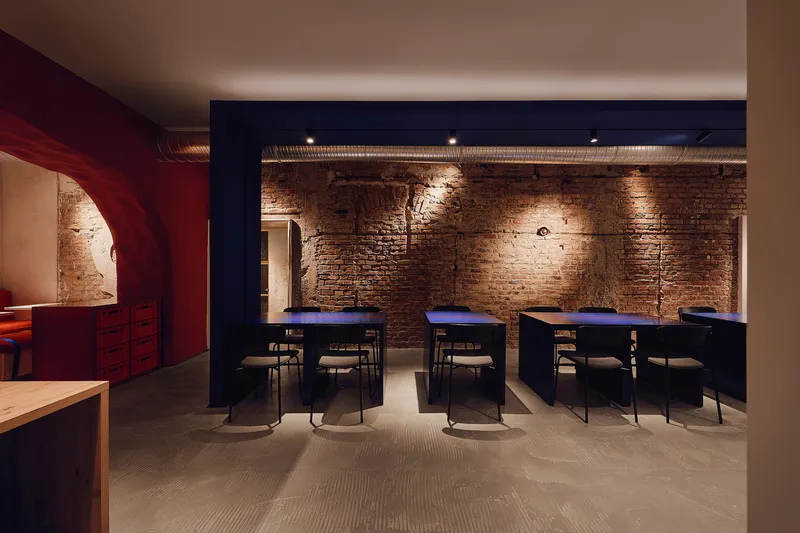
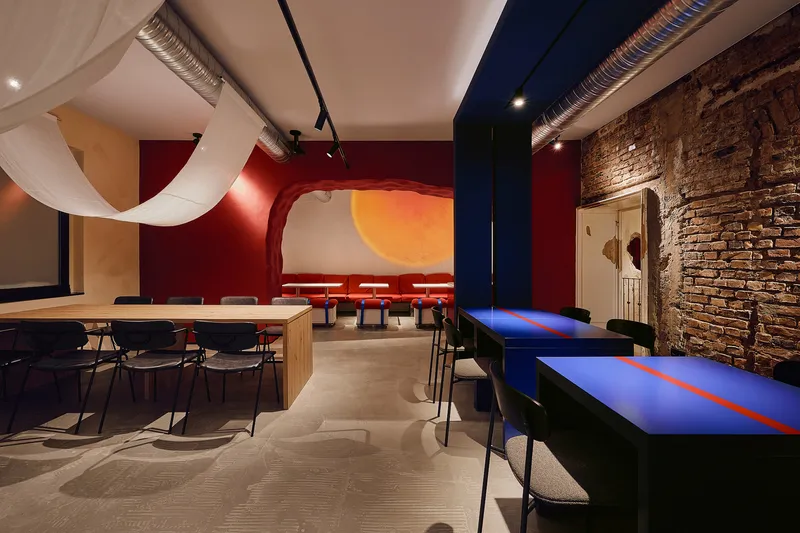
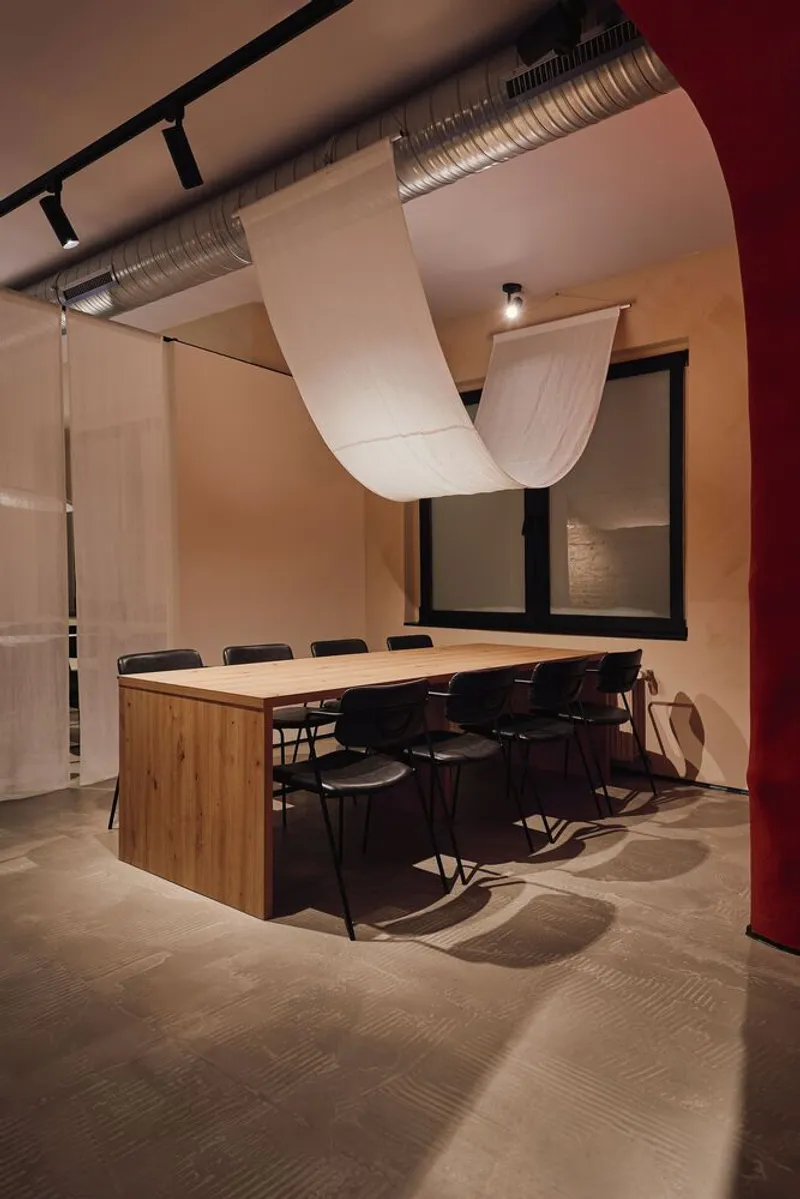
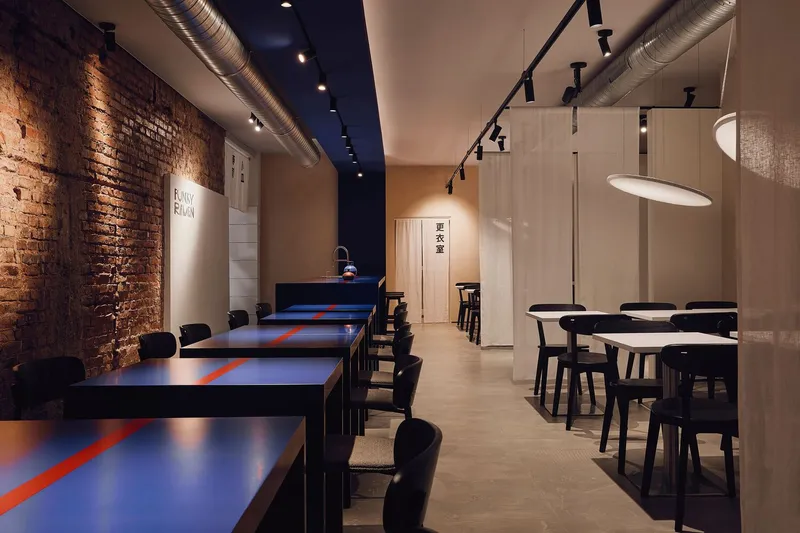
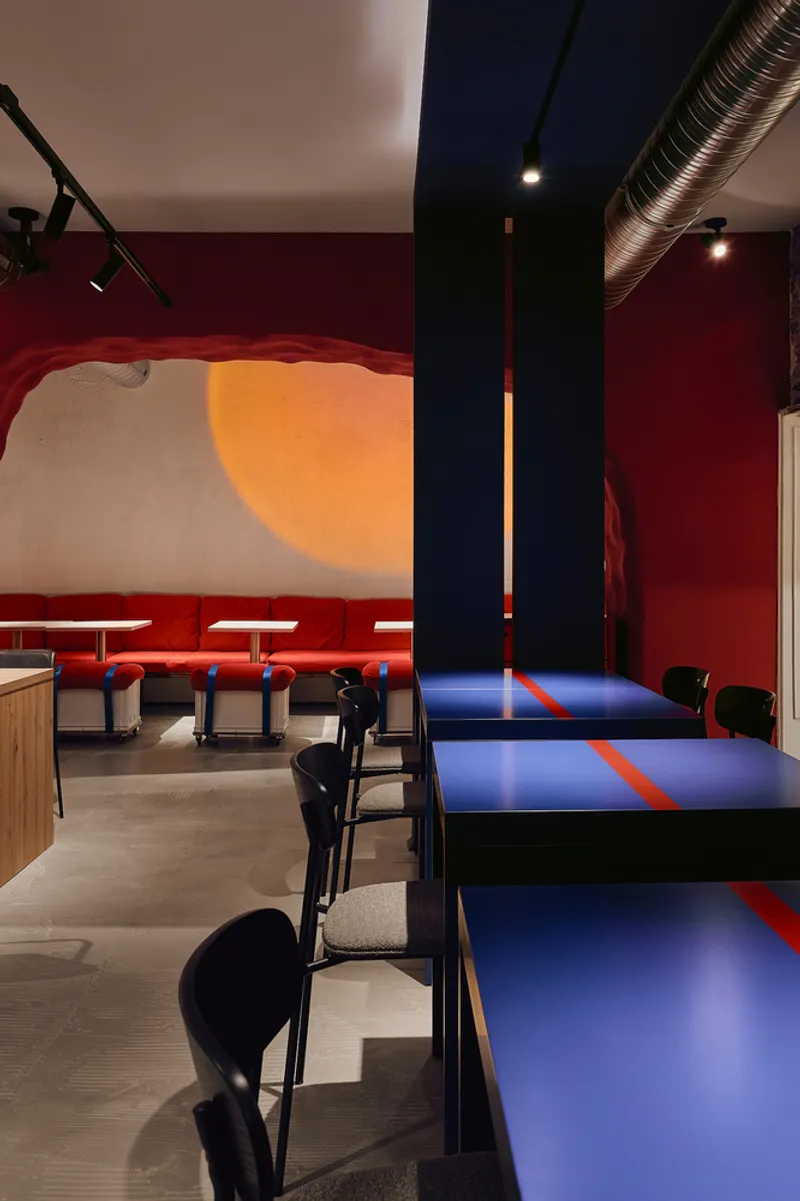
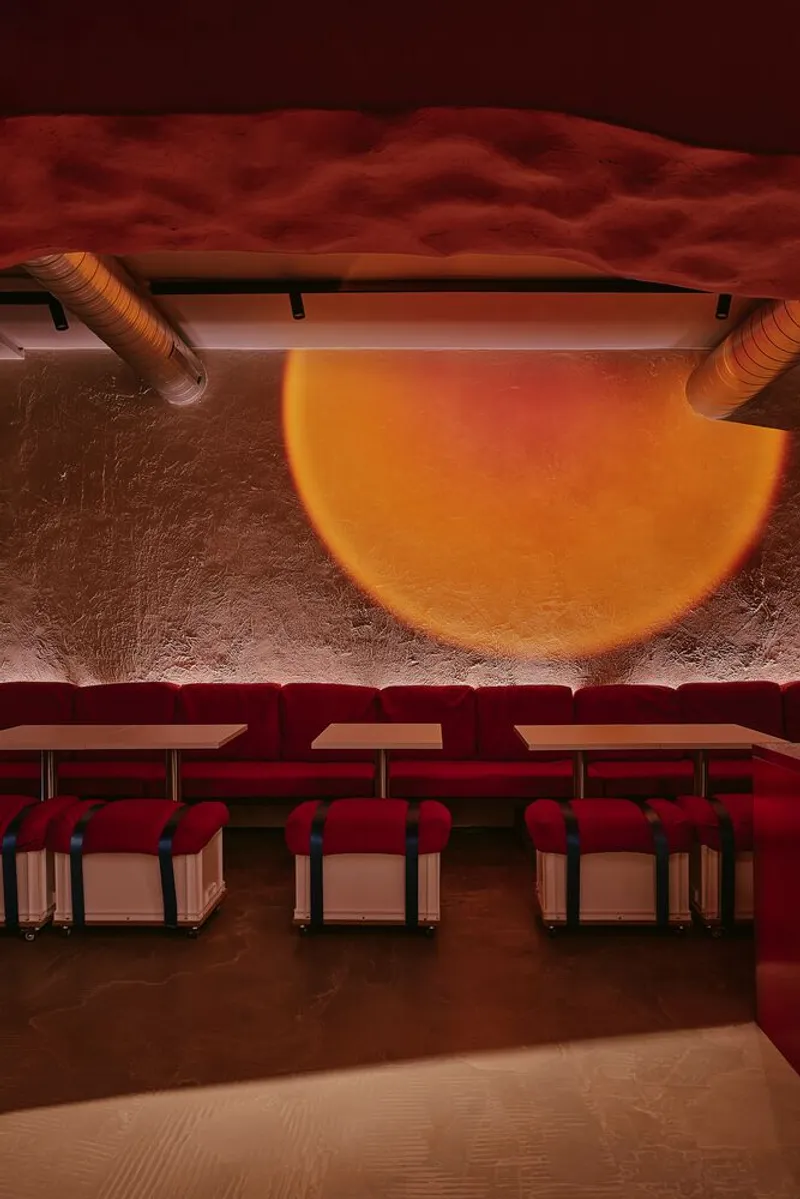
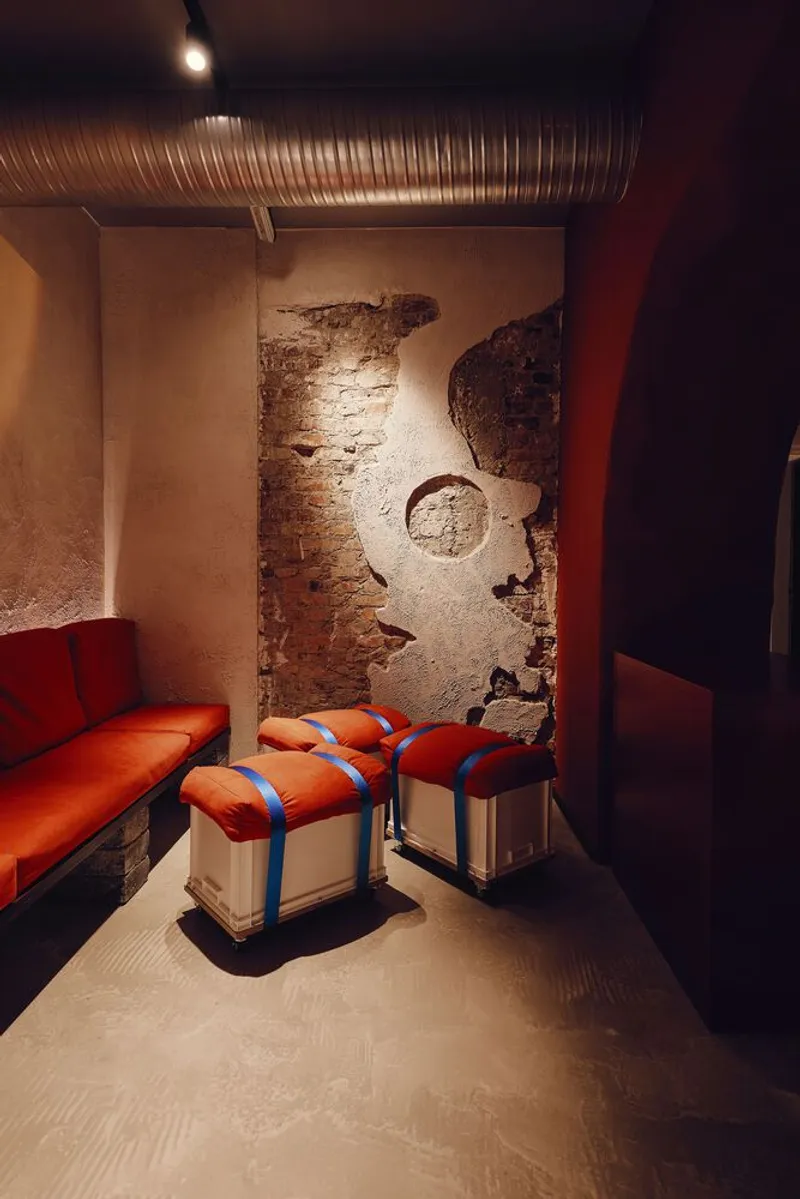
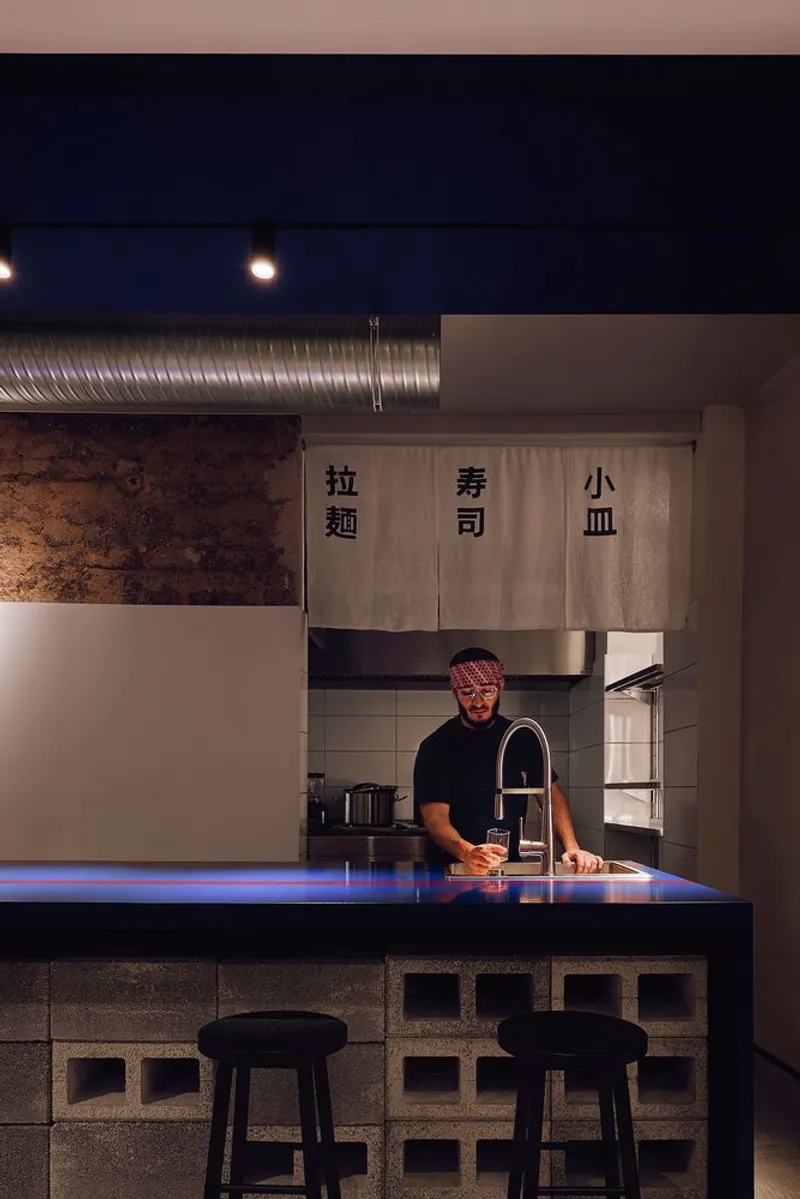
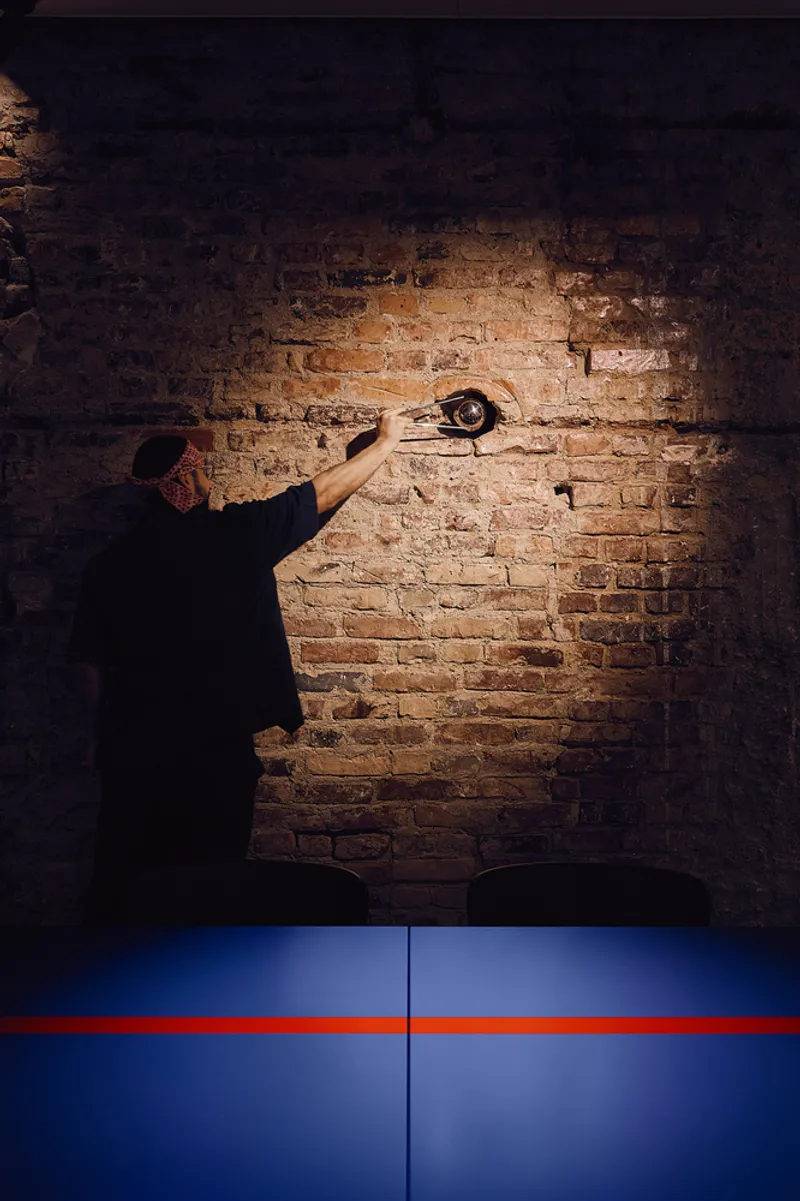
The interior concept of Funky Ramen is divided into three distinct zones, each embodying the personalities of the anime’s main characters. The blue zone, inspired by the disciplined samurai Jin, features exposed brick walls, solid wood furniture, and a refined ambiance suited for sushi dining. The red zone, representing the free-spirited Mugen, incorporates raw materials like concrete blocks and hand-painted cushions, fostering a dynamic setting ideal for enjoying ramen. The neutral zone, reflecting Fuu’s resilience, is characterized by minimalist seating, linen curtains, and a welcoming simplicity that encourages casual, everyday dining.
Preserving Architectural Authenticity
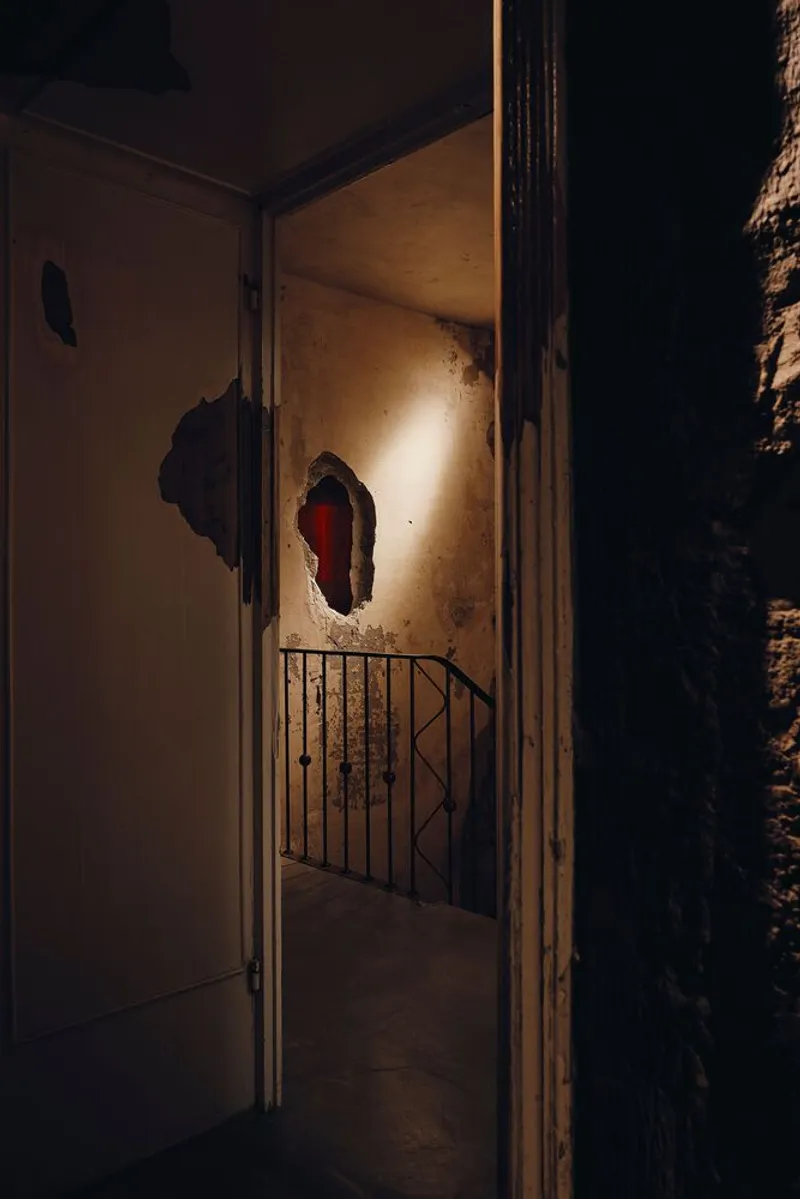
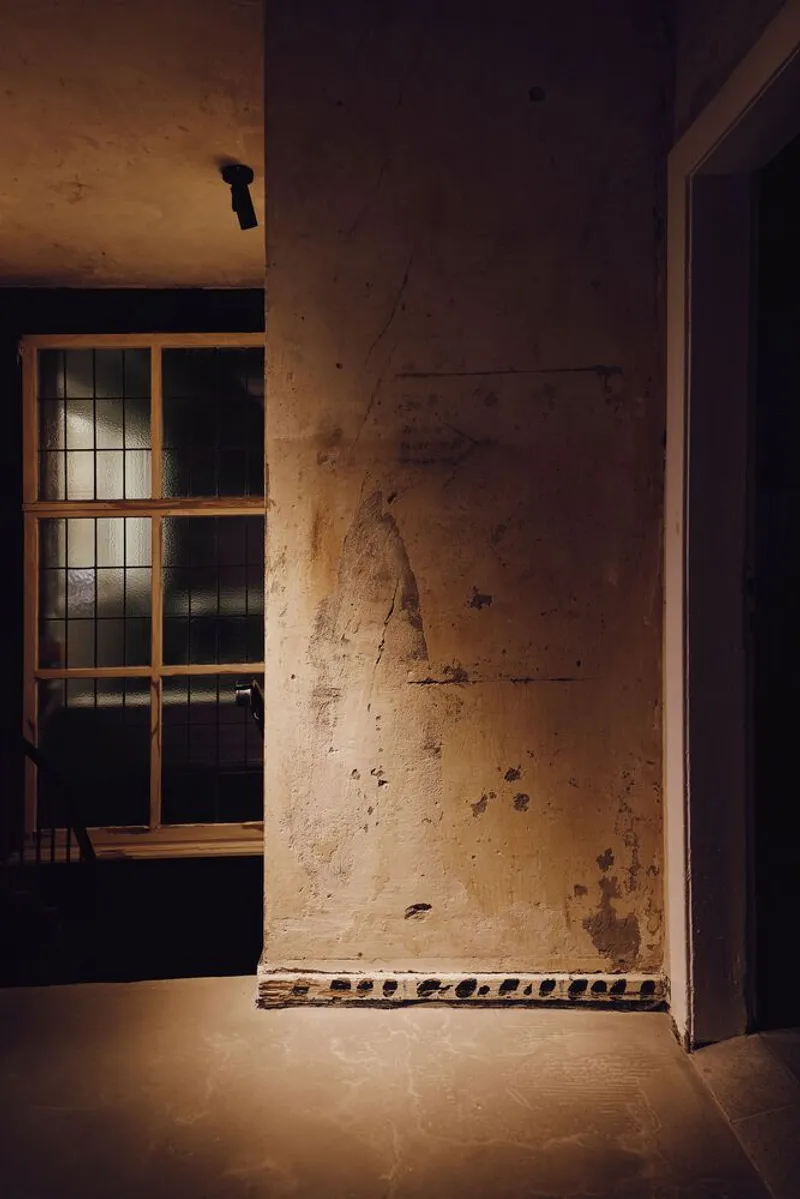
The restaurant’s design philosophy embraces imperfection, integrating historical elements with modern aesthetics. Exposed brick walls with partially removed plaster add depth and authenticity, while uneven textures contribute to the space’s organic appeal. Linen screens project scenes from Samurai Champloo, enhancing the immersive experience. Carefully curated lighting differentiates the zones, with the red zone featuring a dramatic sunset effect created through spotlights and iridescent films.
Enhancing Transparency and Interaction
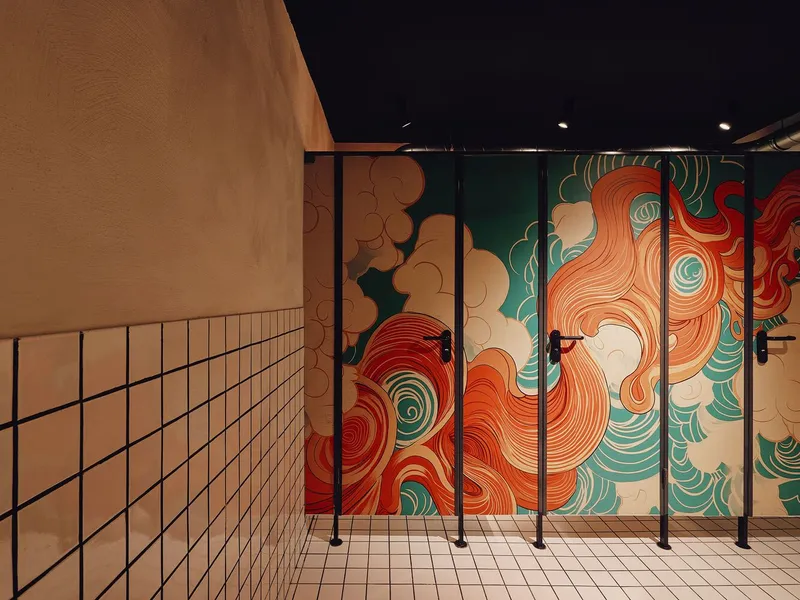
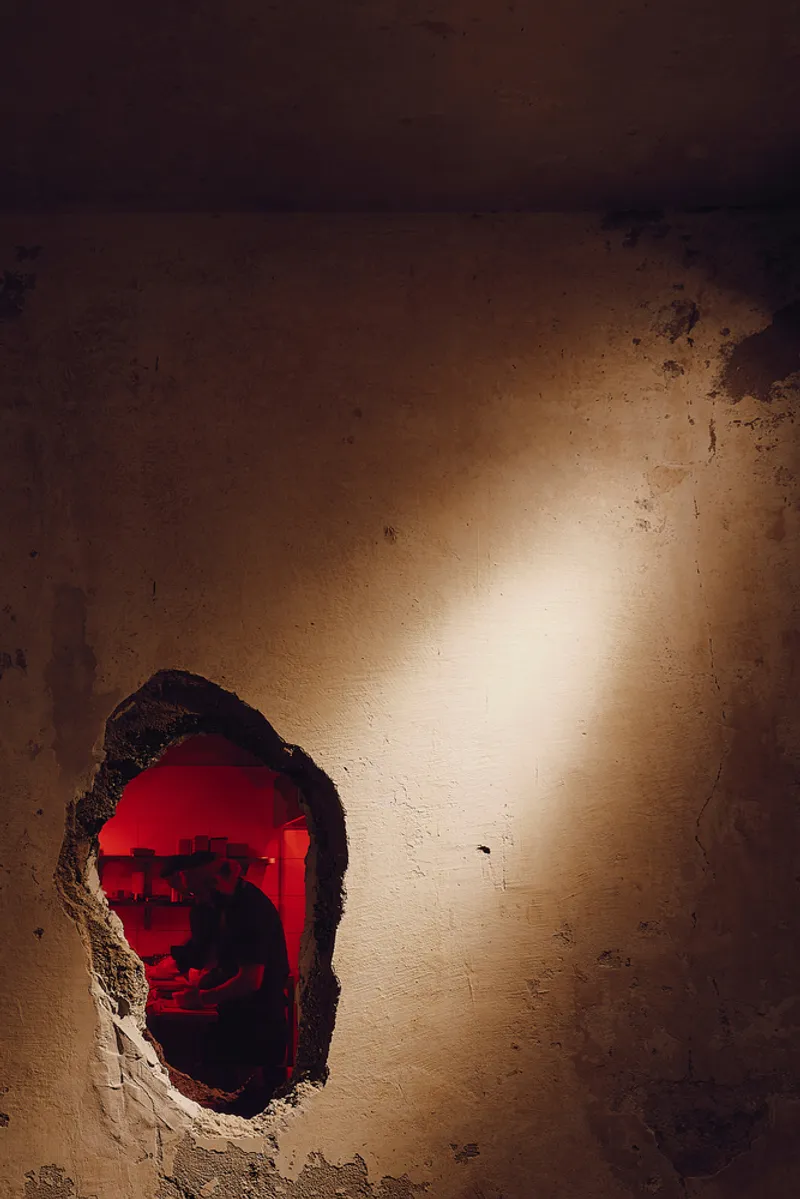
A key feature of the layout is its emphasis on openness and engagement. A large kitchen opening allows guests to observe the ramen-making process, creating a connection between diners and chefs. The staircase, which leads to the restrooms, includes a custom-shaped window framed with red acrylic, offering a theatrical view of the sushi station. These architectural choices celebrate craftsmanship while reinforcing the restaurant’s thematic storytelling.
Symbolism and Narrative in Design
Symbolic elements are integrated throughout Funky Ramen, reinforcing the interplay between tradition and modernity. Red lines traverse the blue zone, and blue ropes interconnect seating in the red zone, visually representing the bond between Jin and Mugen. This thoughtful design approach ensures that every detail contributes to the restaurant’s overarching narrative of contrast and harmony.
A New Standard in Thematic Restaurant Interior Design
Kidz Studio’s work on Funky Ramen demonstrates how thematic restaurant interior design can transform a dining space into a multi-sensory experience. By seamlessly blending cultural heritage with contemporary aesthetics, the project offers an environment where history, storytelling, and gastronomy merge. Funky Ramen stands as a testament to how architecture can create not just spaces, but immersive narratives that elevate the culinary experience.
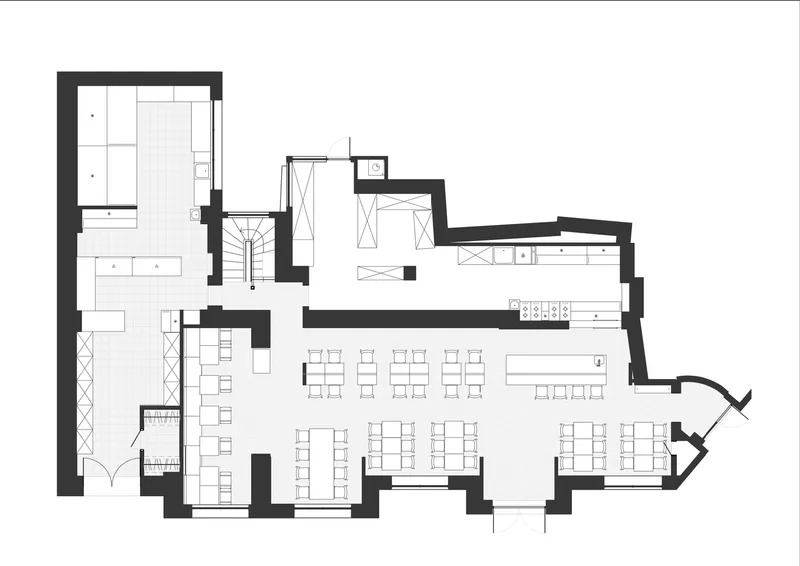
All Photographs are works of Ruben Movsisian



Popular Articles
Popular articles from the community


Conexión: Biophilic Design Reimagines High-Rise Living in Hong Kong
Conexión reimagines high-rise living in Hong Kong through biophilic design, green facades, shared spaces, daylight, water and nature within.

Co-Life: Senior Housing Design That Reconnects Older Adults With the City
Co-Life reimagines senior housing design through healing gardens, shared streets, workshops, and a sustainable community across generations.

Co-life: Sustainable Architecture for Age-Friendly Community Living
Co-life reimagines sustainable architecture for seniors through courtyards, rammed earth, shared gardens, and spaces designed for belonging.

Hill & Cross Opera: Sculptural Opera House Architecture Shaped by Tallinn’s Landscape and Identity
Hill & Cross Opera reimagines opera house architecture in Tallinn through its sculptural hill, civic plaza, glass wave and a luminous cross.

Similar Reads
You might also enjoy these articles


Hodi-Mandai Geram
Project Function: Preservation and revitalization of the Intangible heritage and socio-spatial identity of the Hodi by Housing, Cultural Memory Center, Sacred Grove, landscape, local tourism economy


Olio Towers: A Mid-Rise for Performers That Fuses Housing, Rehearsal, and Stage
Located blocks from Houston's Theater District, this modular tower stacks living units around a central performance atrium.

Oasis: Modular Green Housing Carved into Dhaka's Urban Fabric
A shortlisted Plugin Housing entry reclaims unauthorized settlements in Dhaka with stepped concrete volumes, green roofs, and ventilation-driven design.

Black Hole: A Floating Megastructure for the Post-Physical Era
Emiliano Mazzarotto envisions a spherical, self-scaling arena where e-sports, digital hotels, and holographic stadiums replace traditional public space.

Explore Architecture Competitions
Discover active competitions in this discipline



Challenge to reimagine the Iron Throne


Photograph architecture without architects


Illustrate the lost glory of Angkor Wat - Render Challenge


Design challenge to reuse E-waste
Comments (0)
Please login or sign up to add comments
No comments yet. Be the first to comment!