

This O House
An affordable and sustainable housing prototype for Greater Third Ward Houston

Sustainable Environment, Economy and Social Equity
Photo journalist Natacha Pisarenko published an image of La Cava neighborhood that demonstrating stark contrast at the border of slum and gated neighborhood in San Isidro, Bueno Aires. Besides size of houses and backyard lawn, private pool becomes another vivid element in that image showcasing the gap of wealth. This image reflects the reality that human are born with equal ability to enjoy basic natural elements such as light, air, water and earth, but the ability to harvest and store them is not equally gifted. Architecture as a vessel of light, air, water and earth has helped amplified this inequality.
This O house is an affordable and sustainable housing prototype that aims to challenge this reality by giving equal opportunity for low cost housing to access basic natural elements and to empower its residents to harvest them. It is a design alternative to current gated townhouse developments in historical Third Ward of Houston. It also seeks to address the increasing student housing and parking needs of two major universities in this neighborhood. First of all, this 3 bedrooms and 2 bathrooms house uses retired shipping containers, build-it-yourself option, low energy bills, and partial renting opportunity to lower the cost and promote a more sustainable homeownership. In addition, This O house empowers home owner with adaptive floor plan allowing them to easily convert the house into a duplex for rental. This gives them the ability to sustain their home ownership and potentially generate wealth.
The partial rent-out option also provides much needed rental accommodation to university students and faculties. This hybridized living arrangement revitalizes the neighborhood through increase homeownership, and solves traffic congestion and parking issues for the Universities. As more students live close by, bicycle and public transportation can replace automobile. This will help create a sustainable community. This 1000 square feet house also strife to sustain the identity of the neighborhood as it uses the vernacular porch living that encourages interaction within the community. While the porch encourages community interactions, the internal courtyard provides a private social space for its residents. Lastly, This O House strives to be environmental friendly. Passive ventilation, recycled building material, and energy efficient building system help lower energy consumption.
Sustainable Design Principles
This O House explores design principles addressing sustainability and affordability in housing design. Five design principles provide guidelines in these housing design explorations.
1) Flexible plan layout: Programmatic flexibility improves life cycle of a house. Flexible plan layout that can easily be converted to accommodate different living arrangements allows its owner to customize spaces following their needs.
2) Adaptive façade: The chameleon-like building skin provides a myriad of facade possibilities to adapt this design to different contexts and to a variety of solar/wind orientations. These façade designs are often vernacular inspired as vernacular building practices usually feature sustainable design approaches that successfully react to specific ecology, culture and economy.
3) Affordable construction method: Initial building cost influences the interest and duration of home mortgage. Exploring simple D0-It-Yourself construction method allows home owner to use sweat equity to offset construction cost.
4) Versatile social space: Multipurpose social area such as courtyard, porch or balcony provides a blank canvas for homeowner to create social spaces based on their culture and lifestyle. Versatile social spaces encourage more inclusive and diversify neighborhood.
5) Generative space: Housing as a consumption entity has to be replaced by a productive model. As technology becomes more affordable and available, housing design has to incorporate spaces that generate idea, energy and income. For instance, home sharing and energy harvesting are two elements that should be incorporated in housing design.

Popular Articles
Popular articles from the community

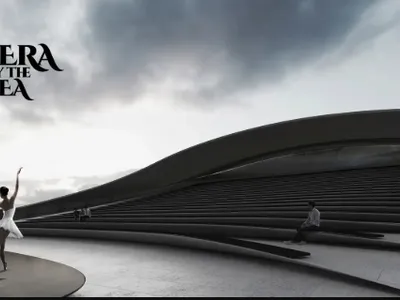
Opera by the Sea Estonia: Three Shells Dissolving Architecture into Tallinn's Coastline
A winning opera house proposal replaces monumental form with interconnected shells that blur the boundary between building, park and Baltic Sea.
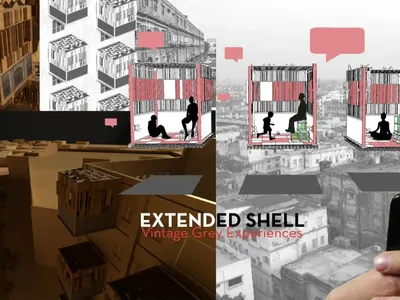
Extended Shell: Retrofitting Kolkata's Balconies as Living Urban Thresholds
A modular retrofit system recovers the social and environmental intelligence of Kolkata's historic verandas for contemporary Park Street residents.
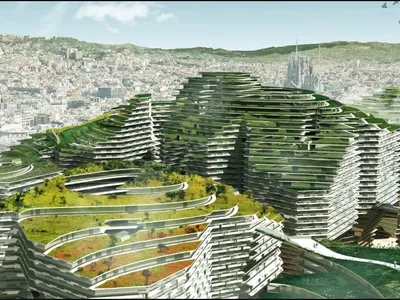
Manzana Morphosis: Stretching Barcelona's Grid into a Living Landscape for 2050
A radical reworking of the Eixample manzana turns density into a tool for generous public space, vertical ecology, and environmental performance.

Tsunami Convergenics: Turning Catastrophic Ocean Forces into Underwater Housing Infrastructure
A speculative underwater settlement off the coast of Onagawa, Japan, treats tsunamis and typhoons as energy sources rather than threats.

Similar Reads
You might also enjoy these articles

Shakur's House: Exposed Brick as an Interior Organiser in a 168 m² Mashhad Residence
Brick moves indoors in this Mashhad residence, where masonry walls, glass partitions and teal planes sequence a compact home without closing it off.

Day and Night Park: A Time-Based Urban Newsstand in Beijing
A temporary urban newsstand in Beijing blending travel, light, and reading through poetic colors, compact form, and community-focused design.

Modernist Patio Renovation in El Masnou, Barcelona by Oliver Segura Arquitectura + Cebrià Arquitectura
Modernist patio renovation blending tradition and innovation with a movable pool, leveled floors, and Catalan materials in El Masnou.
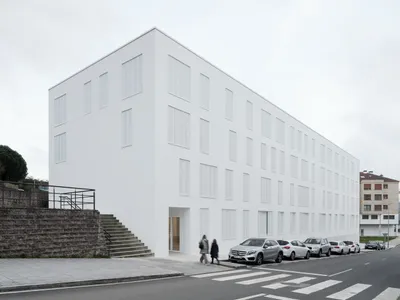
Alto Residencial Coop: Cooperative Housing Development in Santiago de Compostela by Carbajo Barrios Arquitectos
A linear cooperative housing complex blending white volumes and perforated metal façades, enhancing community living, natural light, privacy, and urban integration.


Comments (0)
Please login or sign up to add comments
No comments yet. Be the first to comment!