
Two Firms Crown a 1978 Grain Silo in Tirol with Offices, Art, and a Biomass Power Plant
A 50-meter concrete landmark in Hall in Tirol converts industrial storage into a hybrid of energy production, workspace, and culture.


A grain silo built in 1978 by the Rauch company, later repurposed as gravel storage by construction firm Fröschl, sat in the customs-free industrial zone between Innsbruck and Hall in Tirol for decades. It was 45 meters of unadorned concrete, 24 cylindrical cells designed to hold bulk material, surrounded by rusty tanks and shed roofs. When Gutmann acquired it for pellet storage and energy production, the question was not whether the silo could be saved but whether it could be made to mean something new. The answer, delivered in 2020 by a two-firm collaboration between obermoser + partner architekten and Architekt Hanno Schlögl, is a 50-meter hybrid that stores 10,000 tons of pellets, generates electricity for 1,500 households, heats 430 more, and places an art lounge with a grand piano at the very top.
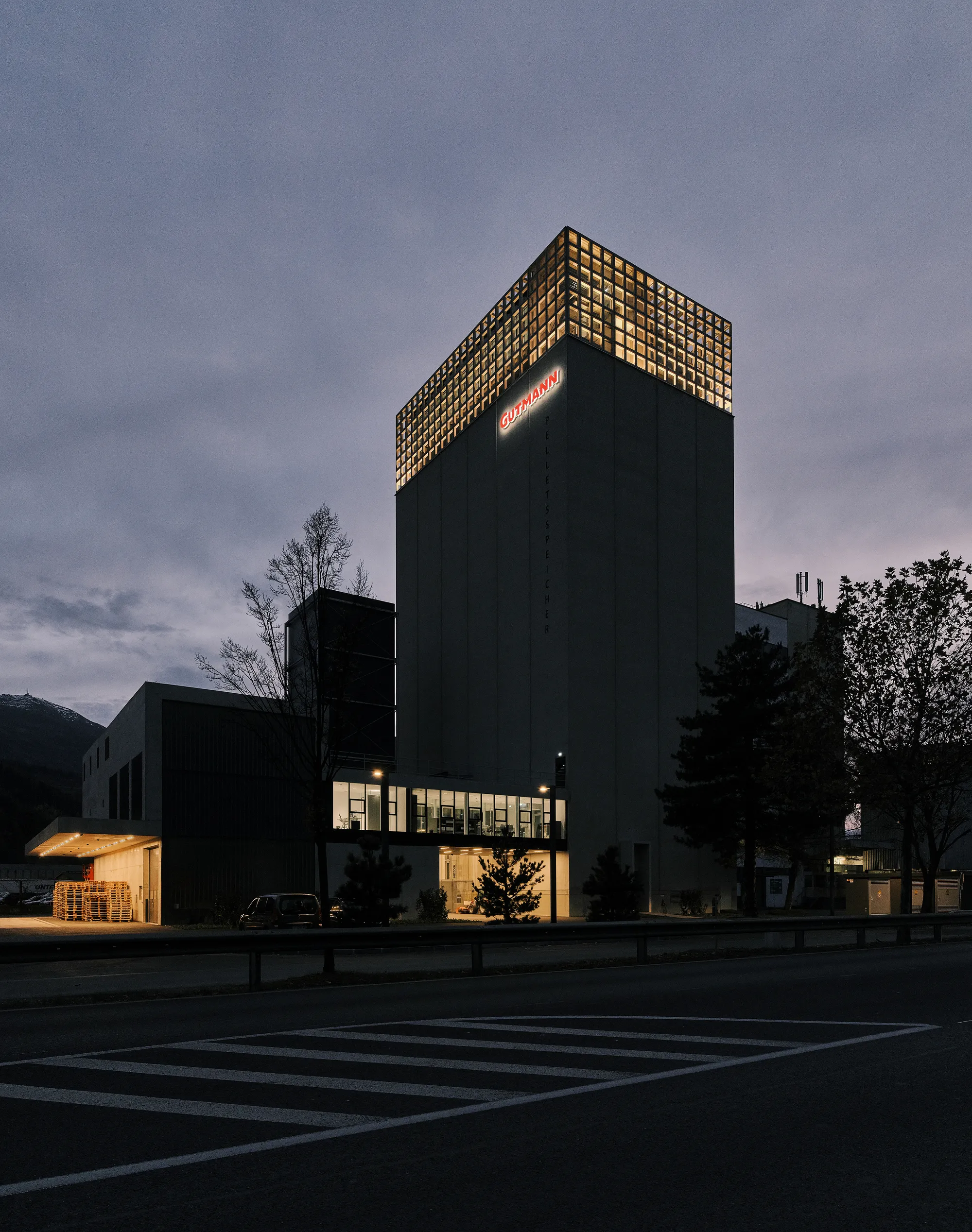
What makes the project genuinely interesting is the refusal to disguise the silo's industrial past while simultaneously layering ambitions that most adaptive reuse projects would never combine. The architects added a prefabricated concrete "crown" that pushes the structure from 45 to nearly 50 meters, inserted a glass box for offices and an art lounge at the summit, and threaded fire stairs and an elevator through the former grain cells. The transformation was completed in a single year. The result reads as a landmark on the highway corridor, powerful without being ostentatious, its gridded crown glowing at night like a lantern set atop a concrete monolith.
A Landmark Calibrated to the Highway
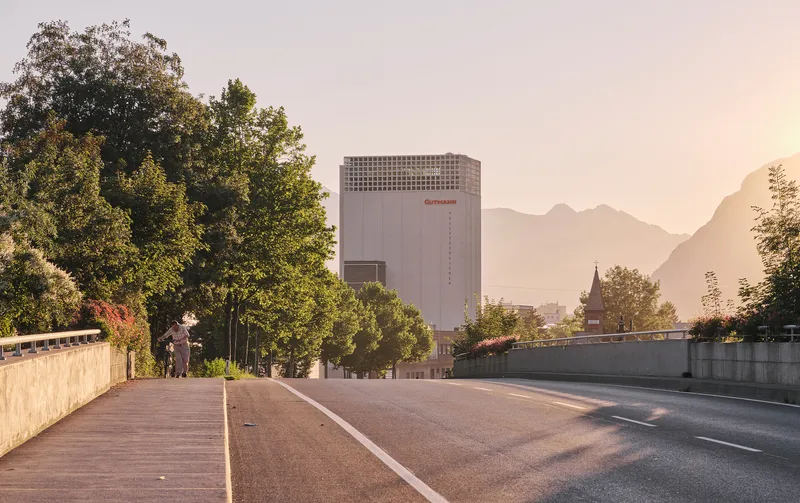
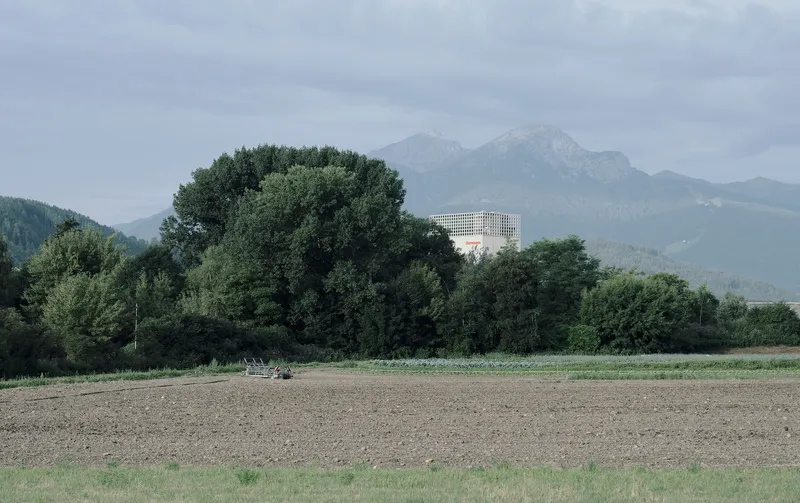
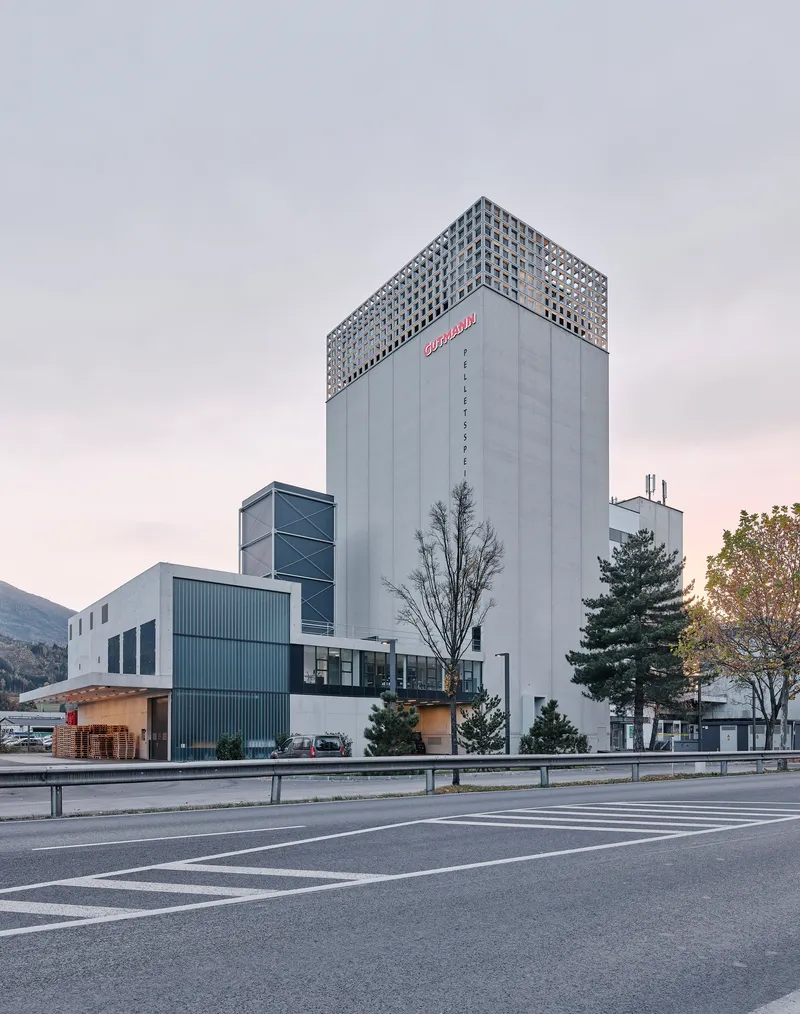
The silo's tall silhouette has always dominated this stretch of valley between Innsbruck and Hall. The architects understood that the building's primary audience is moving at speed: drivers on the adjacent highway, commuters glancing sideways. From a distance, the prefabricated concrete crown reads as a distinct register change, a lighter, more porous cap sitting on the heavy mass below. The proportional shift is deliberate. By adding height and visual weight at the top, the architects accentuate the solidity of the original structure rather than diminishing it.
At dusk and dawn, the tower catches light in ways the original silo never could. The grid of the crown filters and refracts, making the upper volume appear almost translucent against the mountain backdrop. From the fields of Thaur, the building emerges behind dense tree lines as a single vertical mark. The architects kept external interventions minimal so the authentic industrial character would persist. No cladding, no cosmetic resurfacing. Just the concrete, the crown, and the light.
Nighttime Presence

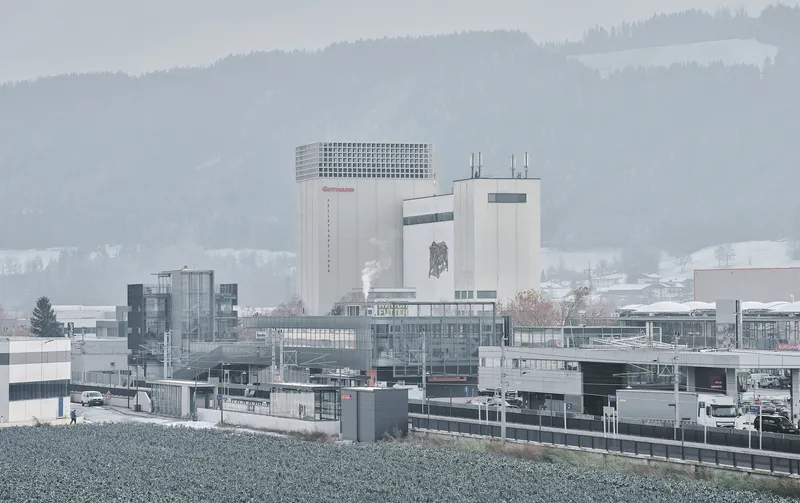
Lighting consultants Bartenbach GmbH collaborated on a scheme that exploits the spatial depth between the crown's precast grid and the glass facade behind it. At night, the crown glows from within, its perforations projecting a soft, structured luminosity against the dark alpine sky. The ground floor openings emit warmer tones, grounding the composition. The effect is of a building that has been switched on, an energy facility that makes its own output visible.
There is a practical argument here too. The building sits in an industrial zone that offers little in the way of urban amenity. Making the silo legible after dark gives it civic presence in a context that otherwise shuts down when the workday ends. It becomes a reference point for the valley, not just a storage facility.
The Crown: Precast Concrete as Identity
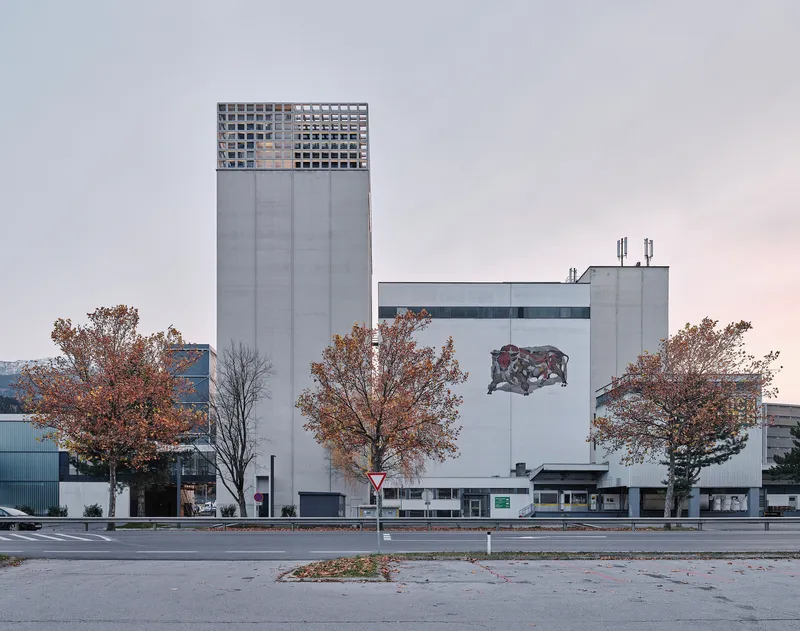
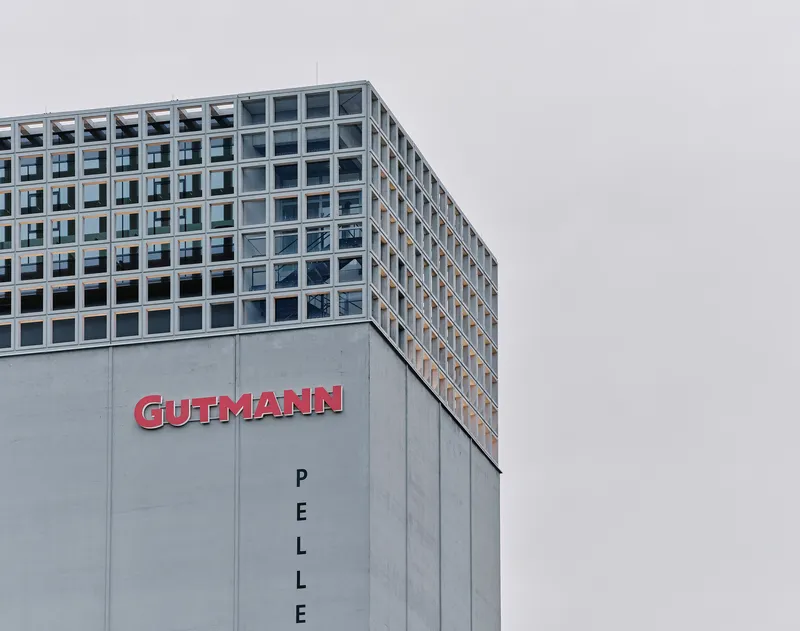
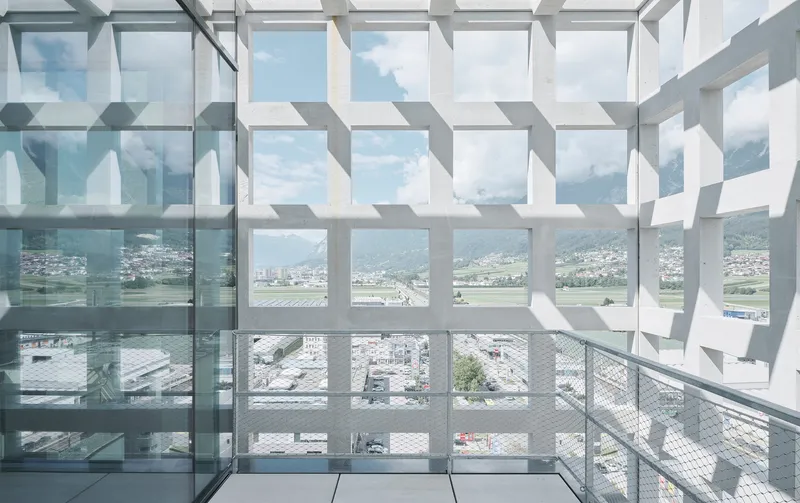
The crown is constructed as a grid of precast concrete elements, fabricated by Ing. Lang GmbH and assembled on top of a steel rooftop structure. Its materialization and modular proportions are derived directly from the historic silo: same concrete language, different density. The grid creates a porous screen that shades the glass offices behind it while admitting light and framing views of the baroque church towers of Hall, the industrial zone below, and the fields stretching toward Thaur.
The separation between the grid facade and the glass body generates spatial depth, a threshold zone visible in the patterned shadows cast across balconies and glass floors. This is not ornament applied to structure. It is structure performing as ornament, as climate screen, and as identity, all at once. The bull mural on the original concrete face, visible in some views, adds a layer of graphic grit that the architects wisely left in place.
Offices and Art Lounge at 45 Meters
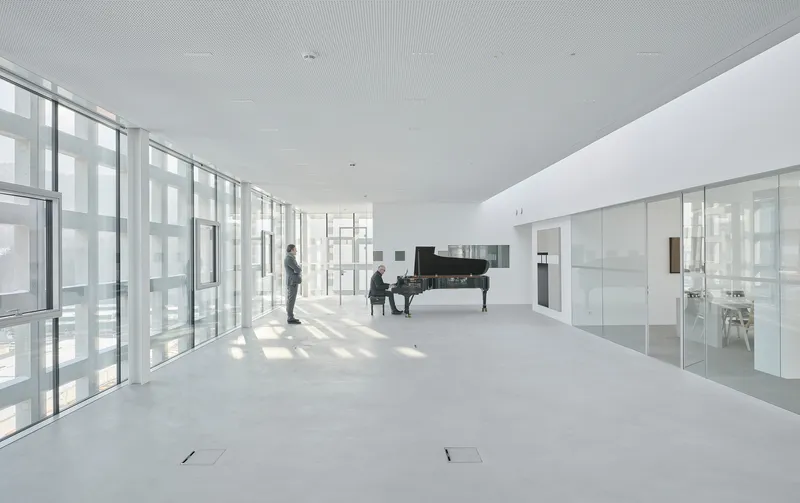
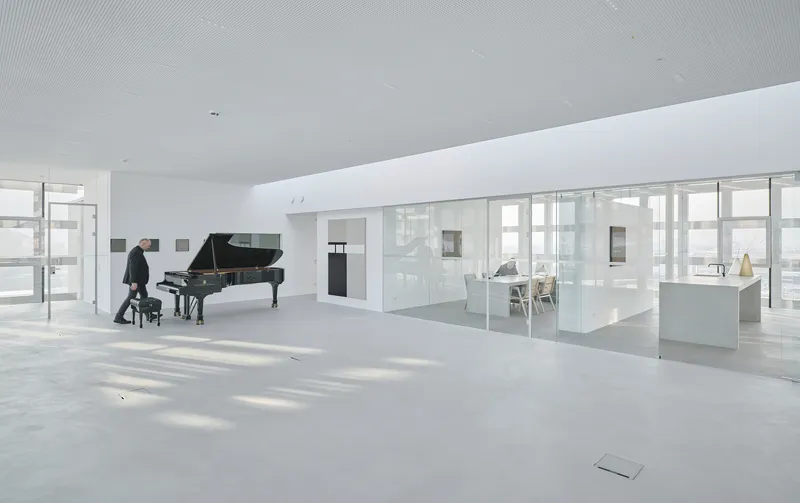
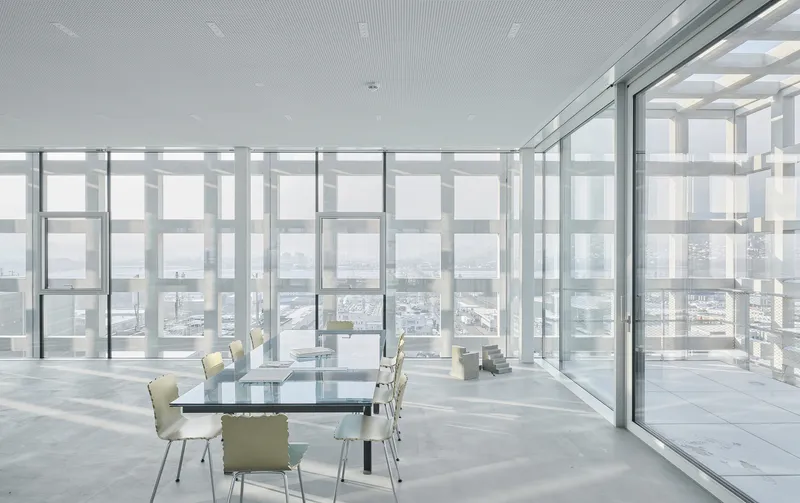
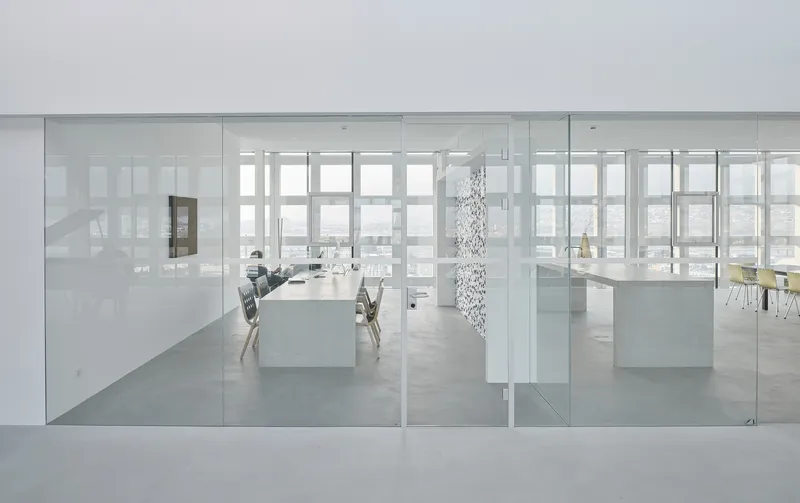
The glass box inserted at the top of the silo houses Gutmann's company headquarters and an art lounge. The interiors are restrained to the point of severity: white terrazzo floors, floor-to-ceiling glazing, minimal partitions. A grand piano sits in the main lounge space, which functions as a reception and event venue with panoramic views of the Inn Valley. The sliding glass doors of the meeting room open onto a terrace framed by the crown's perforated grid, blurring the line between interior workspace and exterior ledge.
There is something almost confrontational about placing a piano and art at the top of a pellet silo. It is a statement about what industrial companies can aspire to, but it also works spatially. The quiet, light-filled rooms at the summit are insulated from the noise and particulate activity of pellet handling below. The vertical separation is not just symbolic; it is functional zoning executed through section.
Vertical Circulation Through Former Grain Cells
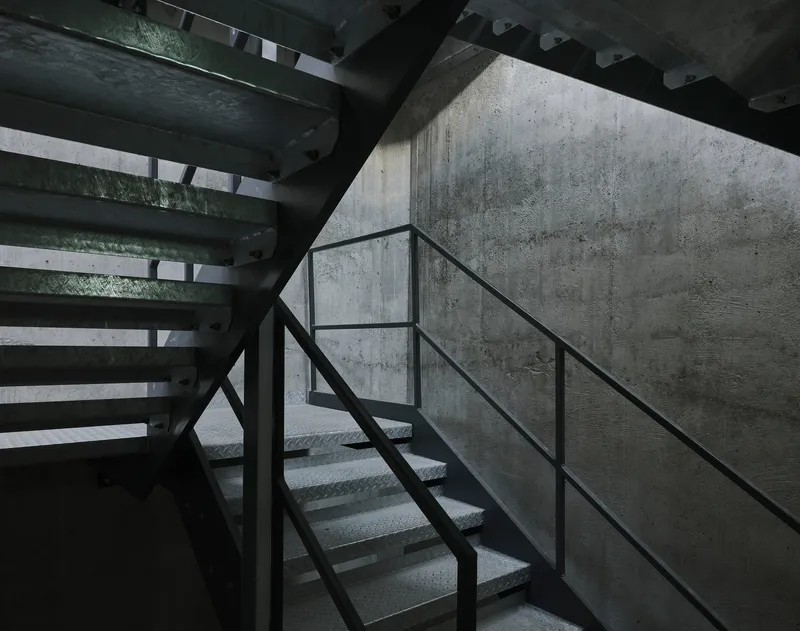
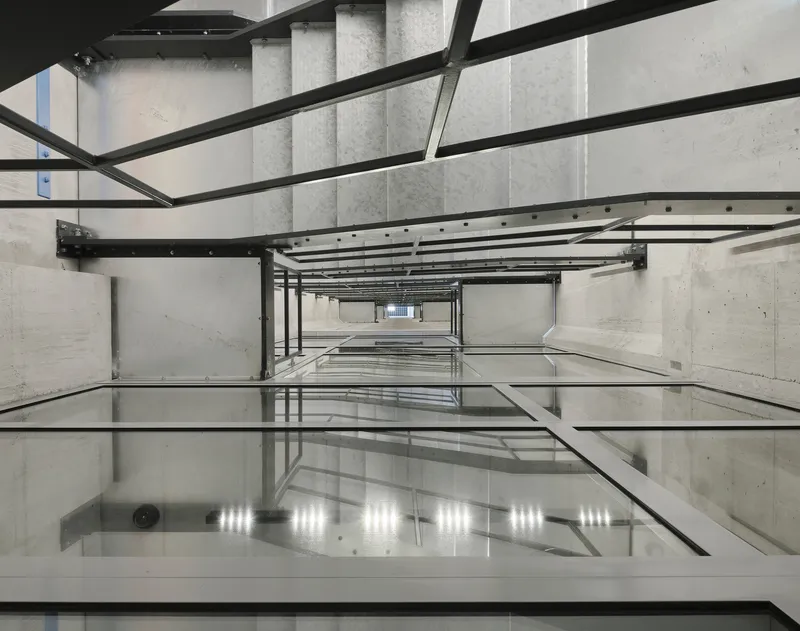
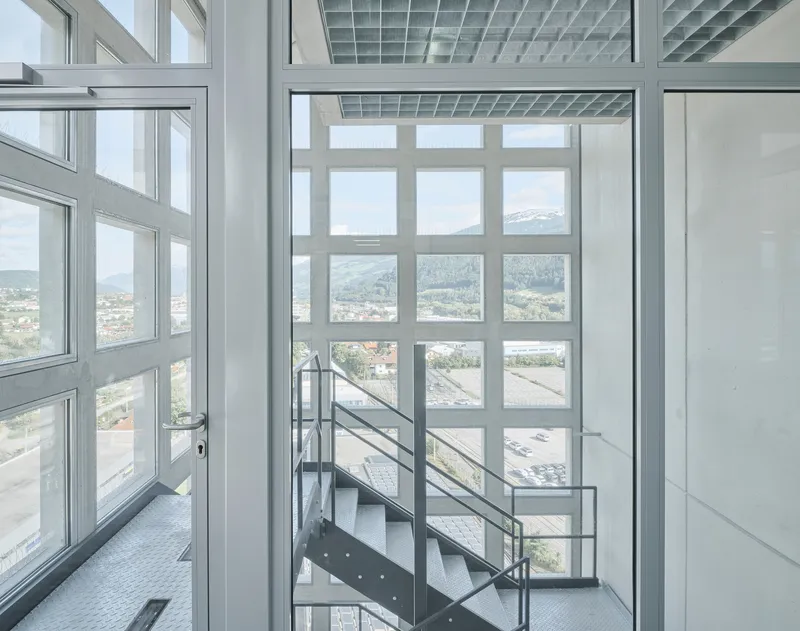
The architects threaded fire staircases and an elevator directly through the former grain container cells. Looking down through the concrete elevator shaft reveals the original board-formed concrete walls, steel beams, and reflective glass floor panels that allow views into the depth of the structure. The metal staircase with perforated treads climbs past raw concrete surfaces that have been left untouched, their formwork imprints still legible.
This is where the project's adaptive reuse credentials are most convincing. Rather than hollowing out the silo and inserting a conventional core, the architects worked within the geometry of the existing cells. The circulation feels excavated rather than built, as if the vertical journey through the silo is a passage through geological strata of industrial use.
The Threshold Between Screen and Sky
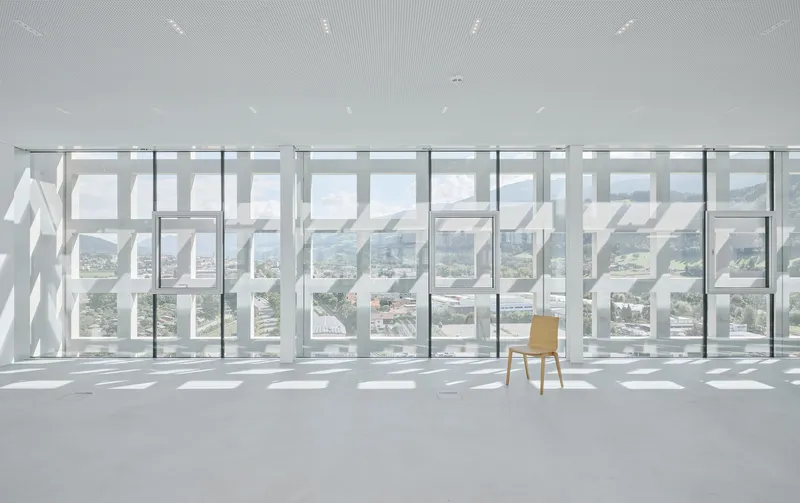
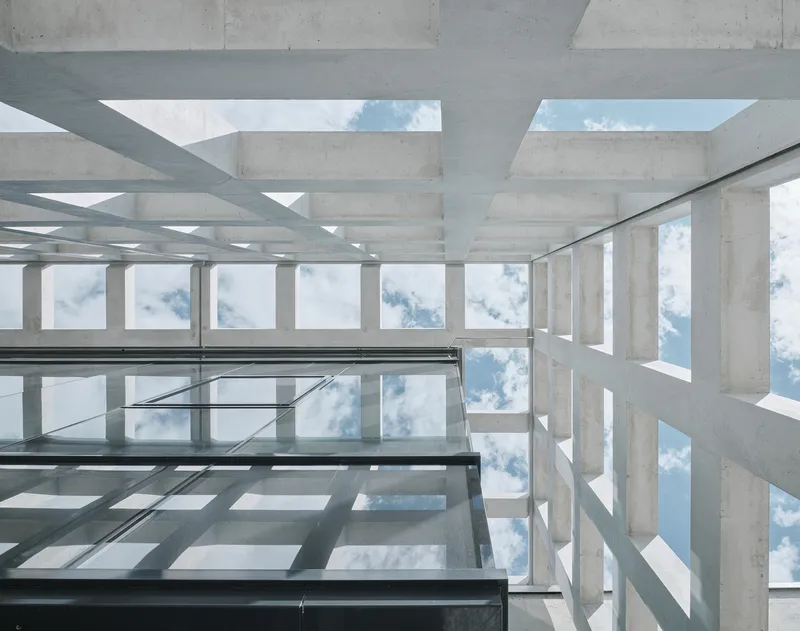
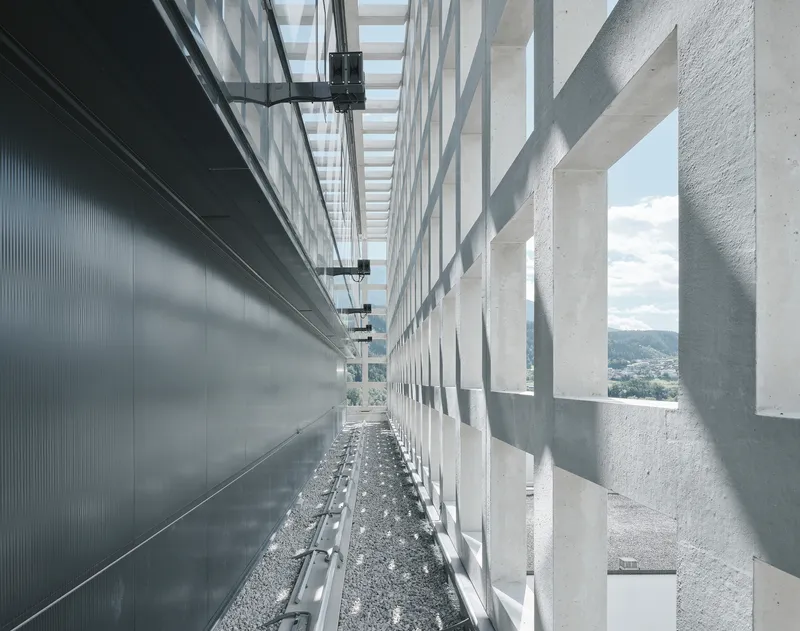
Several images reveal the interstitial zone between the crown and the occupied glass volume: narrow rooftop passages with gravel floors, glass floor panels looking up through the waffle slab ceiling to reveal clouds, and a single wooden chair placed before the perforated white screen wall. These in-between spaces are where the project's architectural ambition is most legible. The concrete grid is not a wall and not a window; it is a filter that mediates between the controlled interior climate and the alpine elements.
The glass floor panels are a particularly effective detail. They allow light to penetrate downward into the structure while offering vertiginous glimpses of the silo's depth from above. The waffle slab overhead registers as both ceiling and infrastructure, a reminder that the occupied space is perched on top of a machine for handling bulk material.
Industrial Ground: Loading and Energy Production
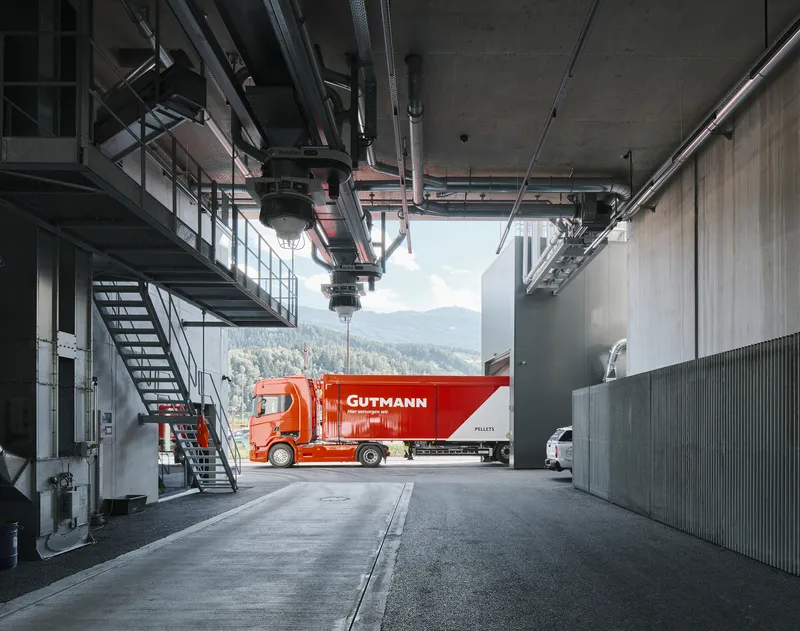
At grade, the building is still very much a working industrial facility. The covered loading bay, with its exposed concrete ceiling and steel walkways, frames mountain views through a truck-scaled portal. Delivery vehicles arrive by road and rail, the site's existing rail connection being a key logistical asset. The 24 cells are filled by conveyor belts, and the integrated wood gasification plant with combined heat and power unit occupies the adjacent annex.
The project's sustainability argument is grounded in these less photogenic spaces. Explosion protection and extraction systems were part of the technical retrofit, and the power plant generates real output for the surrounding community. The building earns its keep before the art lounge ever enters the conversation.
Plans and Drawings
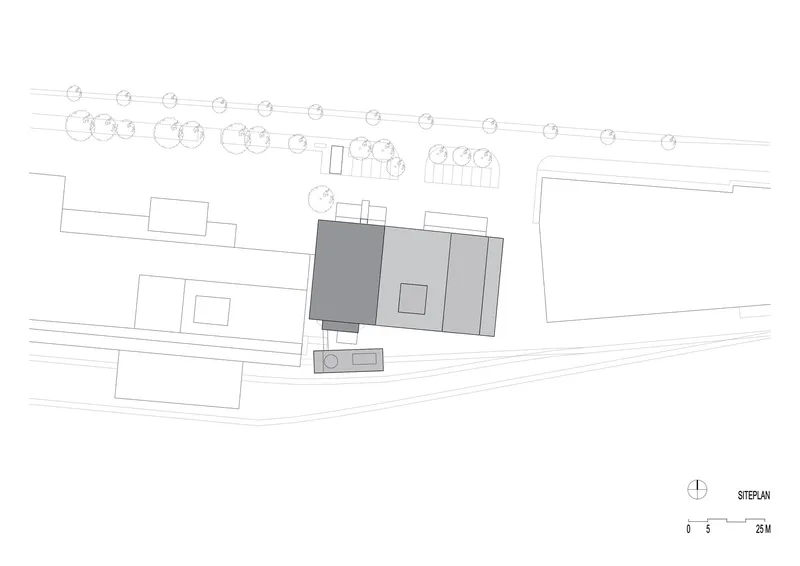
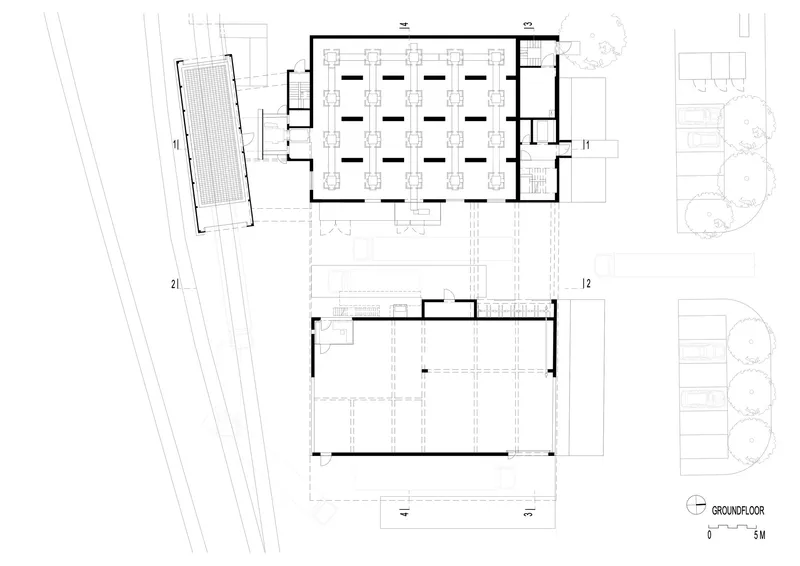
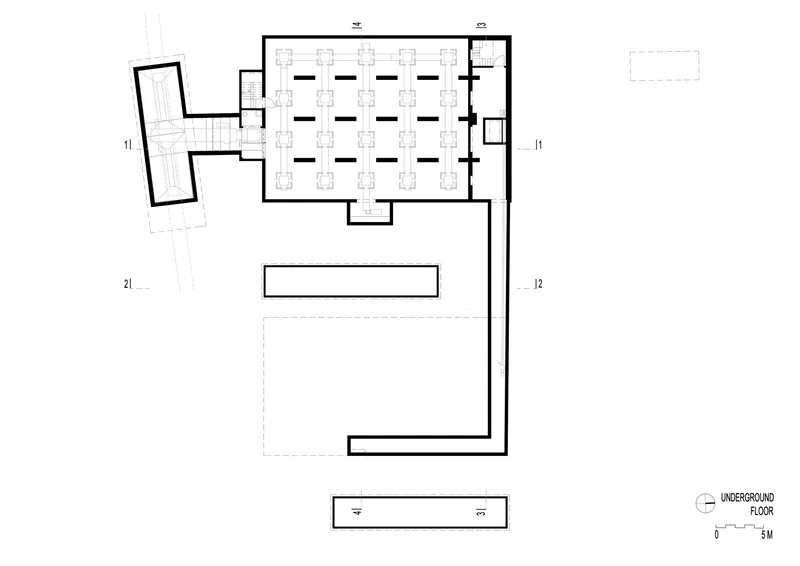
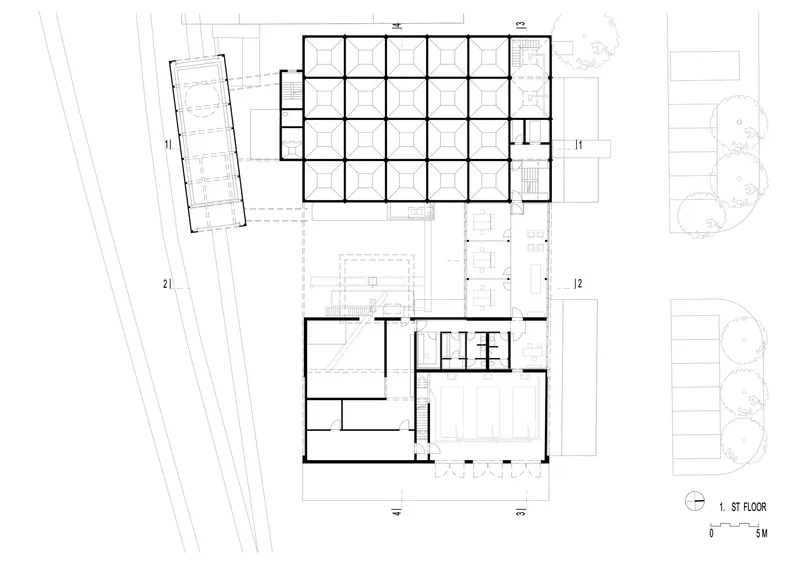
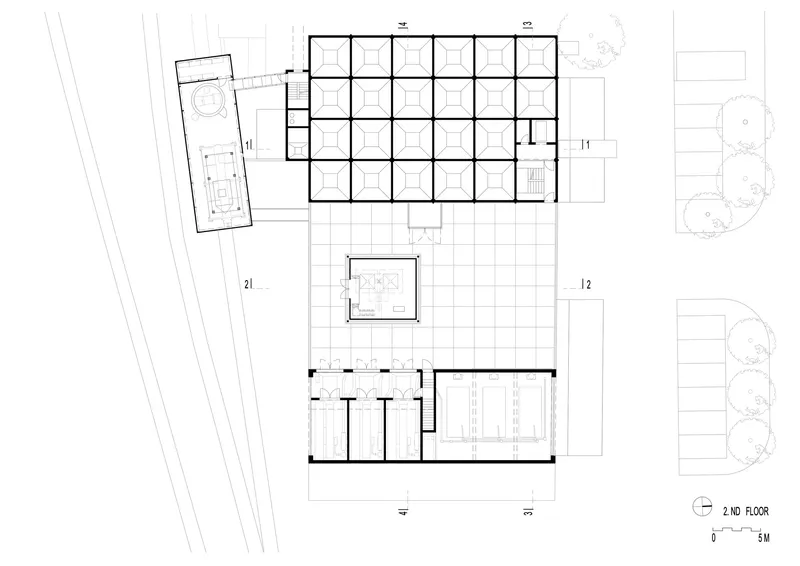
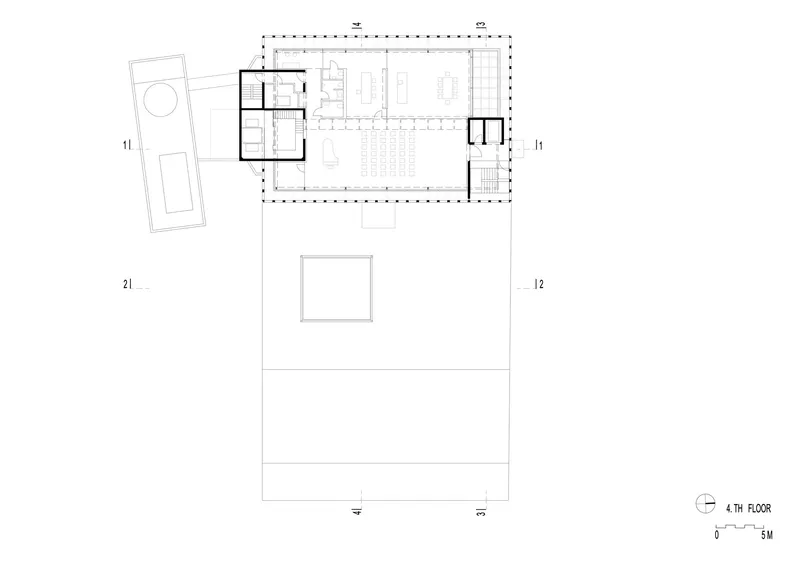
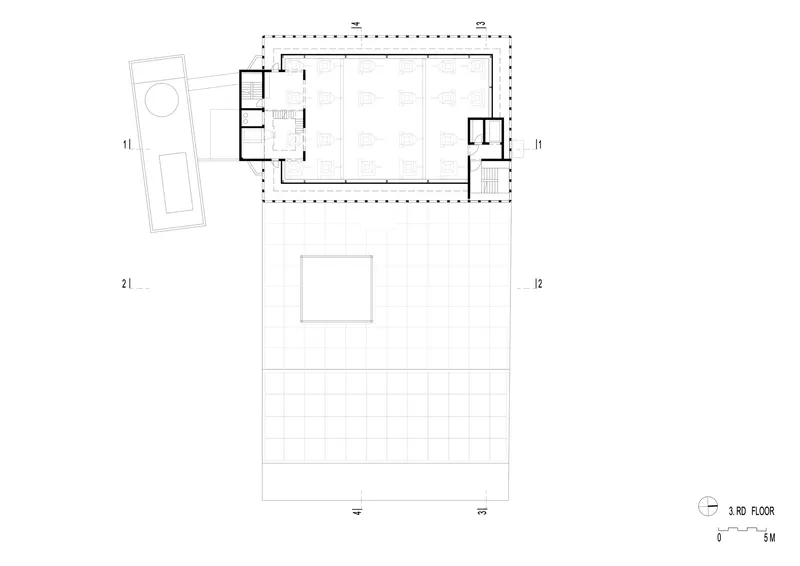
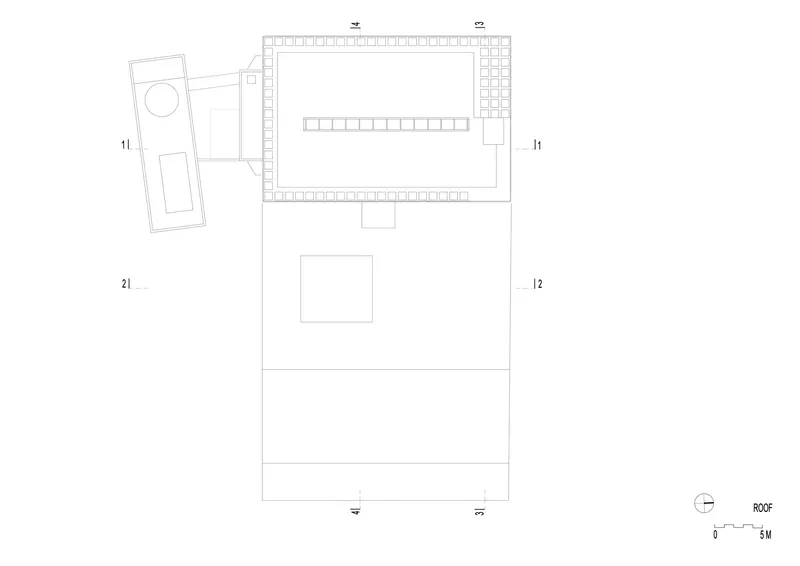
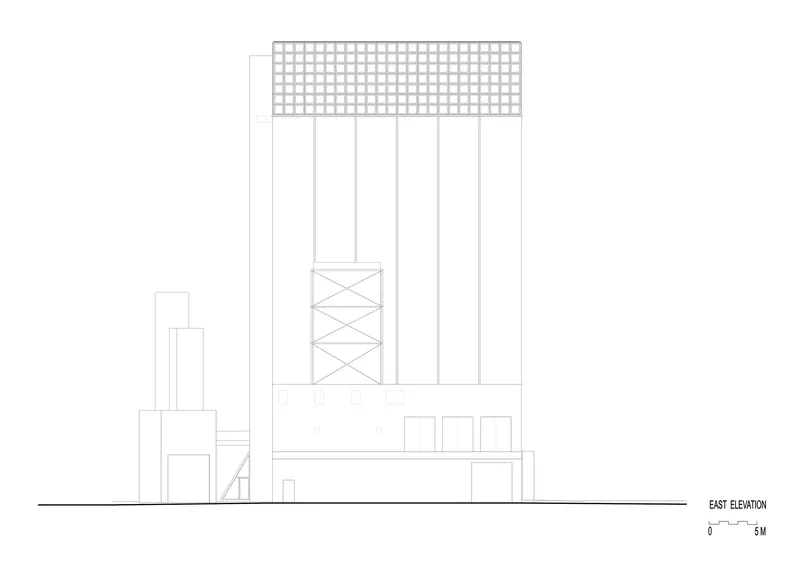
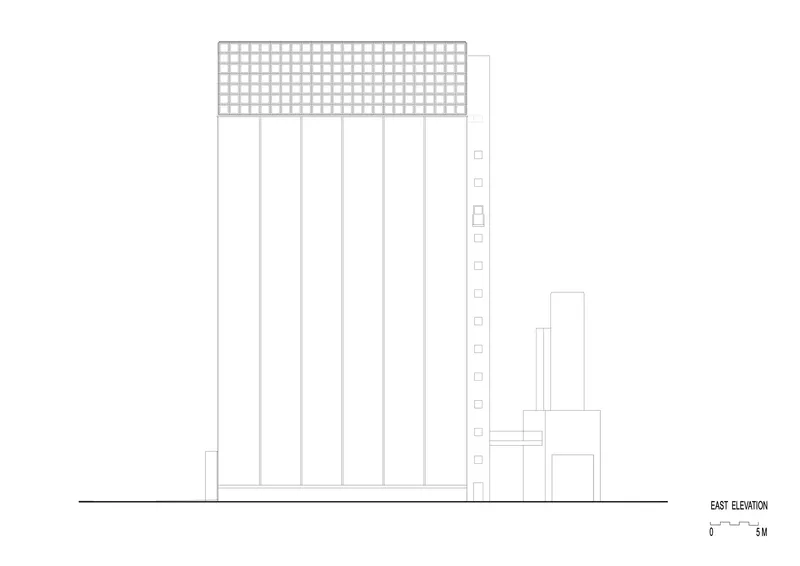
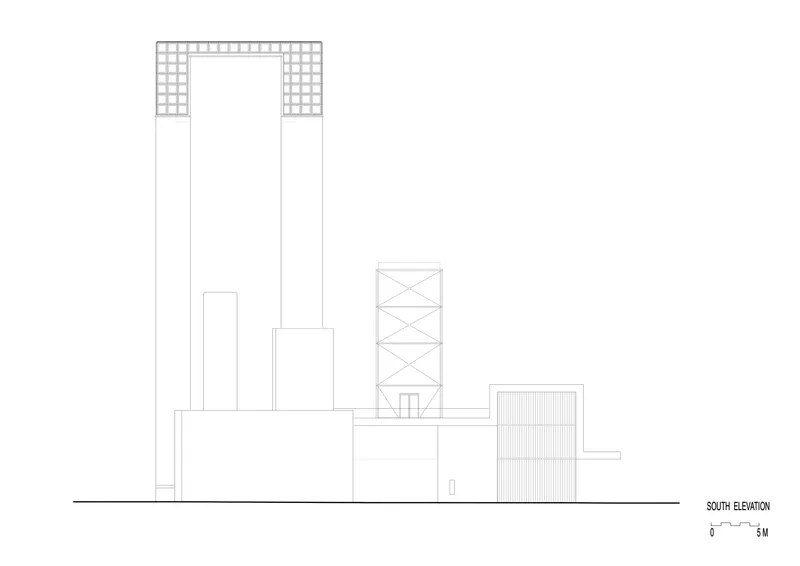
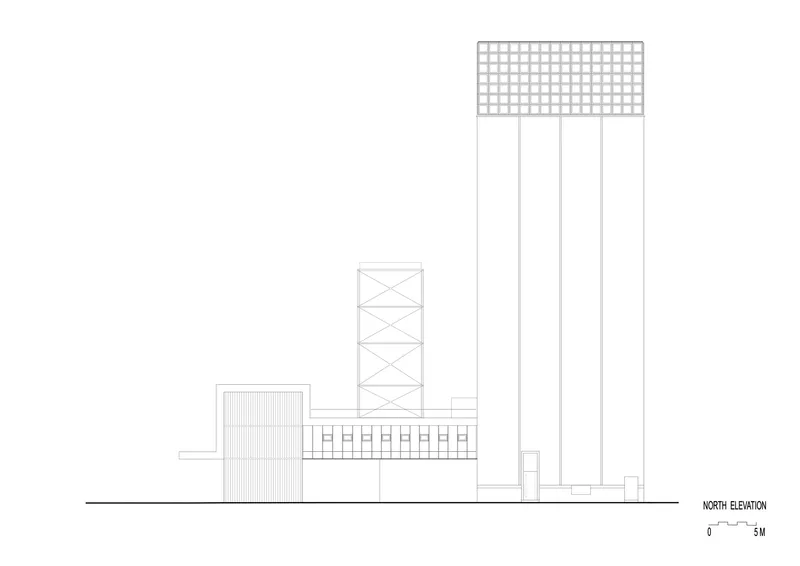
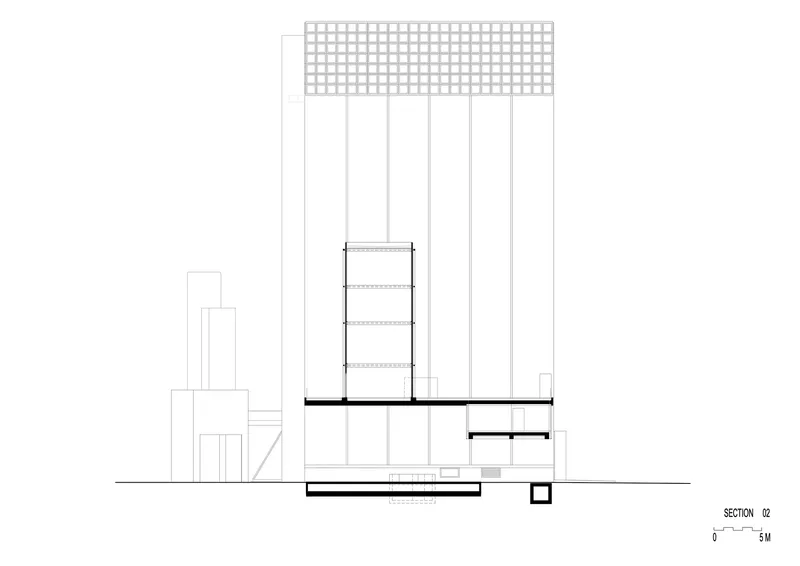
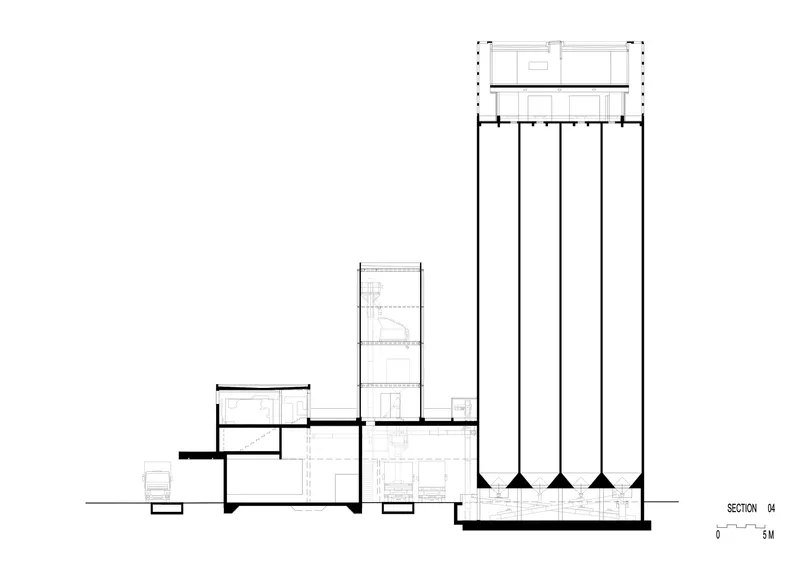
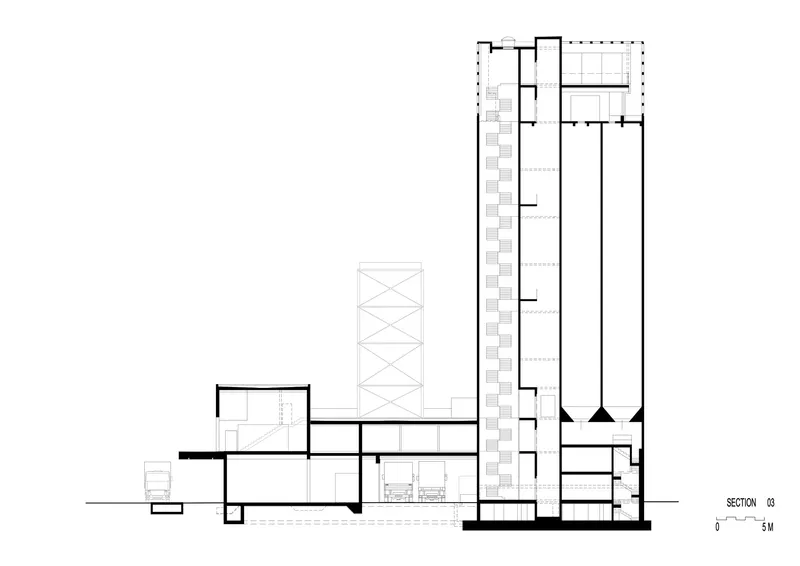
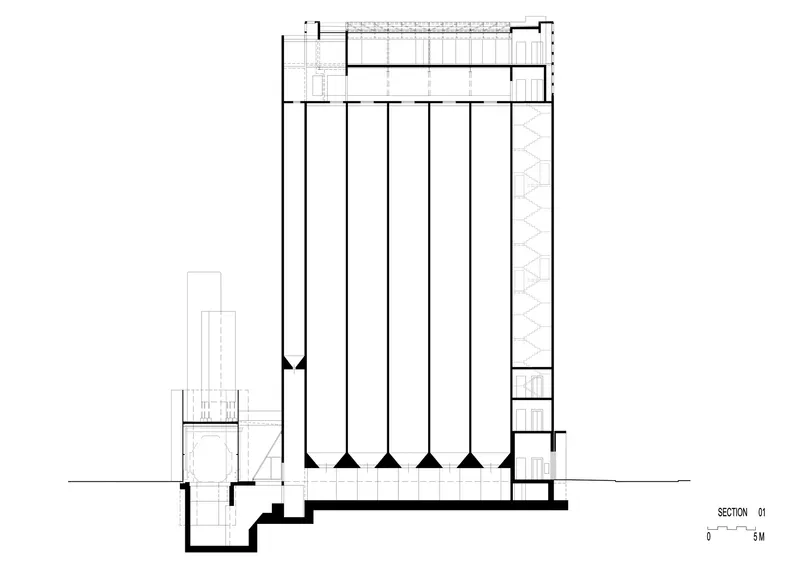
The drawings reveal the project's sectional logic with clarity. The site plan shows the silo's prominent position relative to the road and rail infrastructure. Floor plans progress from the large production hall and loading areas at ground level through modular office grids to the open art lounge at the summit. The sections are the most telling documents: they show the conical supports beneath the tower, the stacked cells that compose the silo's body, and the dramatic vertical jump from industrial storage to glazed inhabitation. The east, south, and north elevations demonstrate how the crown changes the building's proportions, adding a lighter register that reads as both completion and commentary.
The roof plan is worth studying. The perimeter grid structure surrounds a central rectangular opening, confirming that the crown is a freestanding screen rather than a sealed enclosure. This open top allows weather and light to enter the interstitial zone, keeping it connected to the exterior climate and preventing the crown from reading as a closed volume.
Why This Project Matters
Adaptive reuse of industrial structures is common enough to have its own cliché: strip the interior, insert loft apartments or a brewery, celebrate the patina. The Gutmann Pellets Silo does something harder. It keeps the building industrial while adding program that insists on cultural and civic presence. The silo still stores 10,000 tons of pellets. The power plant still heats 430 households. But the crown and the glass box at the summit argue that industrial architecture does not have to choose between function and ambition.
The two-firm collaboration between obermoser + partner architekten and Architekt Hanno Schlögl produced a building that is coherent rather than compromised. The single-year transformation timeline is remarkable for a project of this complexity, and the prefabricated concrete crown demonstrates that speed and specificity are not mutually exclusive. In a valley dominated by mountain silhouettes, the silo now holds its own as a vertical landmark that earns its presence not through scale alone but through the conviction that infrastructure can also be architecture.
Gutmann Pellets Silo, Hall in Tirol, Austria. Architects: obermoser + partner architekten, and Architekt Hanno Schlögl. Area: 2,696 m². Completed: 2020. Photography: David Schreyer.
About the Studio
Share Your Own Work on uni.xyz
If projects like this are the kind of work you want to make, uni.xyz is a place to publish your own, find collaborators, and enter design competitions.




Popular Articles
Popular articles from the community


AL-JANNAH: Sustainable Architecture and Permaculture for Afghan Widows
AL-JANNAH uses sustainable architecture and permaculture to create resilient oasis of housing, learning, work and renewal for Afghan widows.

Co-life: Sustainable Architecture for Age-Friendly Community Living
Co-life reimagines sustainable architecture for seniors through courtyards, rammed earth, shared gardens, and spaces designed for belonging.

Riyadh For All: Intergenerational Urban Design for Active Aging in Rabat
Riyadh For All reimagines urban design in Rabat with intergenerational co-living, adaptive courtyards, and Moroccan cultural exchange today.
EW PARK: Sustainable Architecture Reimagines the Future of Urban Parking
EW PARK reimagines city parking as a modular wooden tower combining automation, solar energy, electric mobility, and adaptable urban design.

Similar Reads
You might also enjoy these articles

Bao Huynh Watercolor Atelier: A Serene Art Retreat in Hội An
Bao Huynh Watercolor Atelier in Hội An blends multifunctional art spaces, sustainable design, local materials, and family-friendly living in a serene environment.

Atelier Macri Concept Store Interior Design by CASE-REAL
Atelier Macri store features a "ko" counter, walnut wood details, cork displays, blending retail, gallery, and seamless customer experiences.

Manuel Vargas Izquierdo Stadium and High-Performance Sports Center: Architectural Excellence in Jalpa de Méndez
The Manuel Vargas Izquierdo Stadium blends sustainable design, inclusive sports facilities, and cultural-inspired architecture, revitalizing Jalpa de Méndez’s public spaces.

KAKR Buluh Awar Hall: Revitalizing Community and Ecology Through Bamboo Architecture
Community built bamboo hall revitalizes Buluh Awar village, empowering youth, restoring ecology, celebrating vernacular craftsmanship through sustainable architecture and culture.


Explore Architecture Competitions
Discover active competitions in this discipline



Challenge to reimagine the Iron Throne


Photograph architecture without architects


Illustrate the lost glory of Angkor Wat - Render Challenge


Design challenge to reuse E-waste
Comments (0)
Please login or sign up to add comments
No comments yet. Be the first to comment!