
Tianjin Zhongshuge Library by X+Living – A Contemporary Cultural Landmark Reimagined with Classical Italian Heritage
A sculptural brick-and-steel library blending Italian heritage with modern design, featuring carved brick façades, integrated bookshelves, and immersive spatial forms.


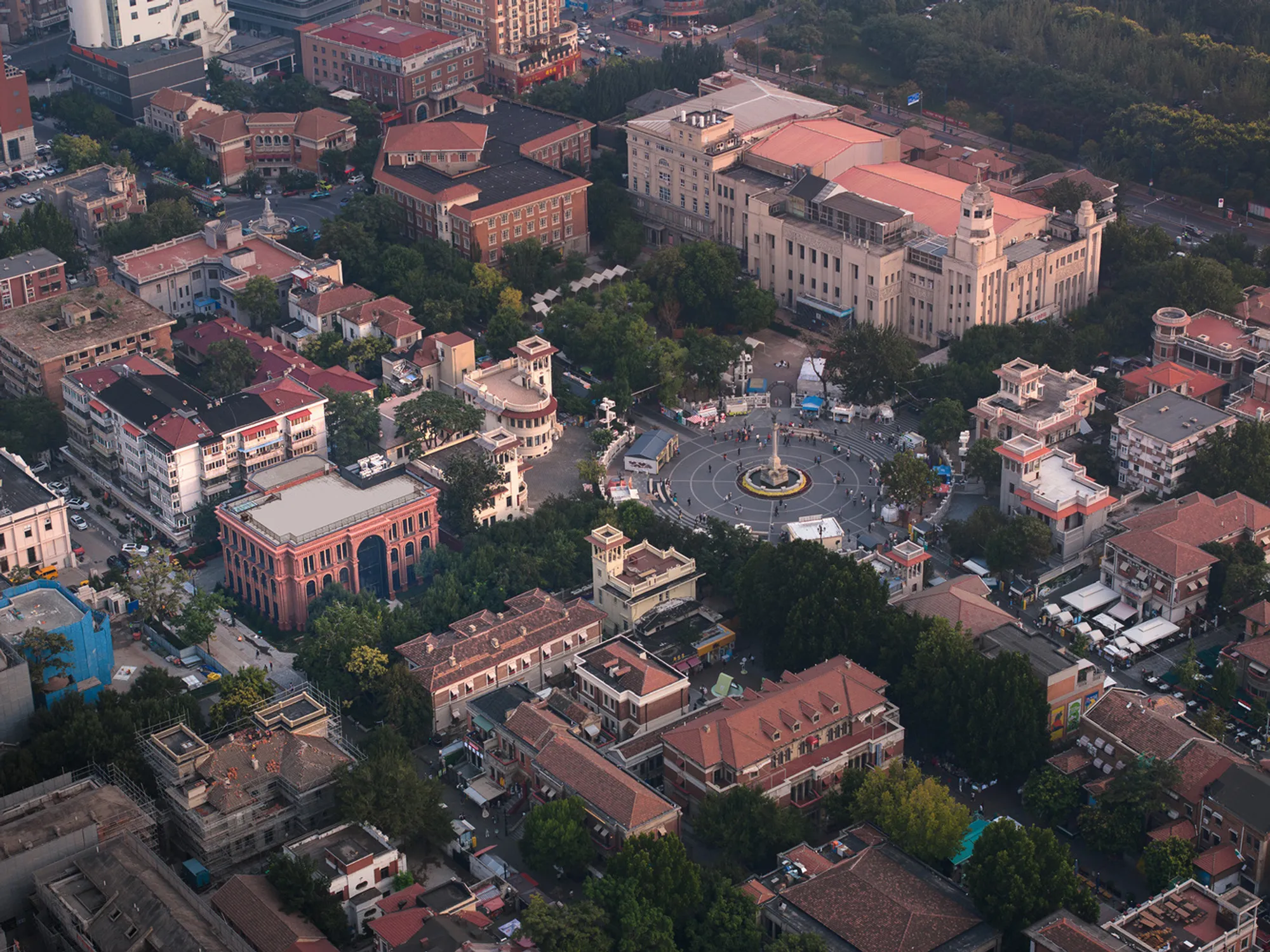
The Tianjin Zhongshuge Library by X+Living is a striking architectural renovation located in the historic Italian-style district of Tianjin, China. Completed in 2024 and spanning 1,821 m², the project blends classical Italian materiality with contemporary spatial expression. Surrounded by century-old red brick buildings, the library transforms a previously modern, contextually detached structure into a cohesive cultural space that resonates with the district’s urban memory while introducing a new visual identity for public architecture in Tianjin.
Context and Design Intent
The Italian-style district of Tianjin is characterized by historic European architecture, brick façades, arched windows, and intricate detailing. The original site of Tianjin Zhongshuge, however, was a modern building lacking connection to this rich architectural context. The redesign, led by architect Li Xiang of X+Living, focused on integrating the building into its surroundings through a material-driven narrative anchored in red bricks, a defining element of Italian classical architecture.
By reintroducing red brick as the primary façade and interior material, the design re-establishes harmony with the neighborhood while simultaneously elevating the structure into a contemporary landmark for local culture, reading, and community gathering.
Material Expression and Façade Transformation
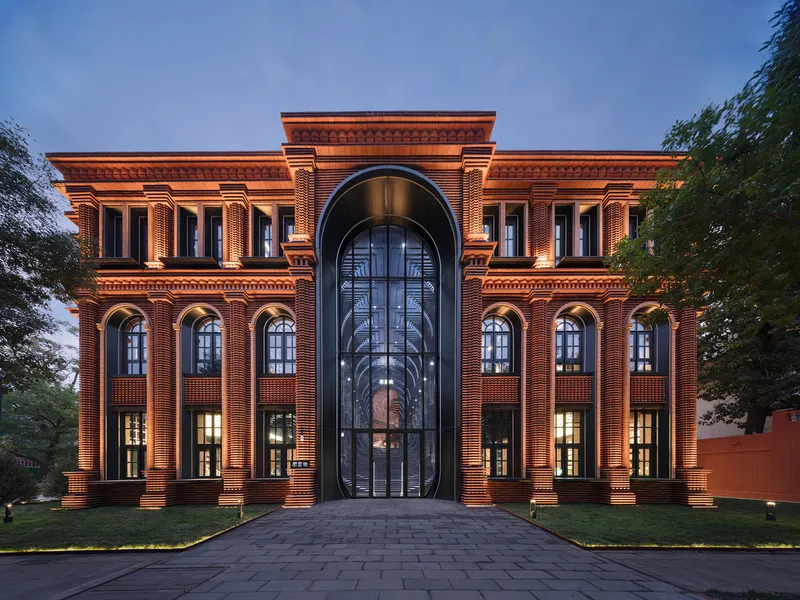
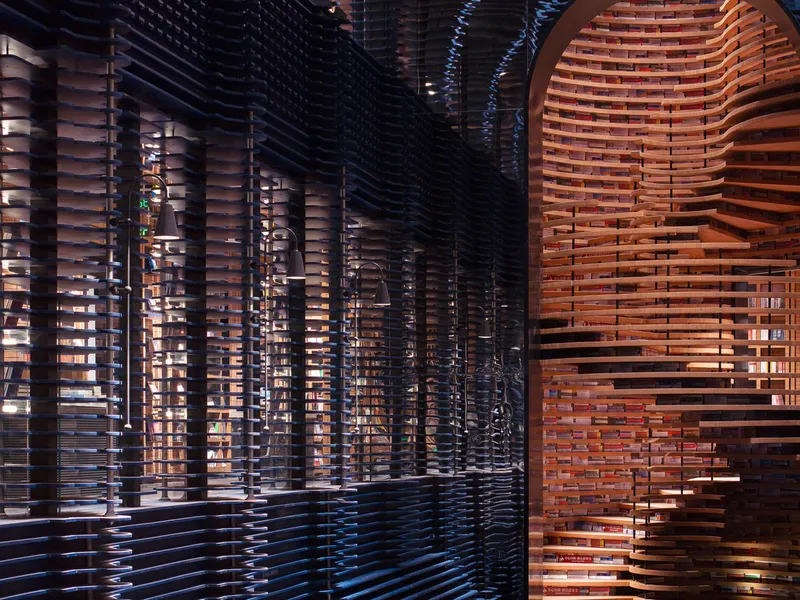
Inspired by traditional window shutters and the rhythmic “cuts” found in historical masonry, the design incorporates a sophisticated cutting technique throughout the brick envelope. These intentional gaps break the density of the brick mass, creating a dynamic play between solid and void, light and shadow. This strategy softens the boundaries of the building and enhances its connection with the surrounding streetscape.
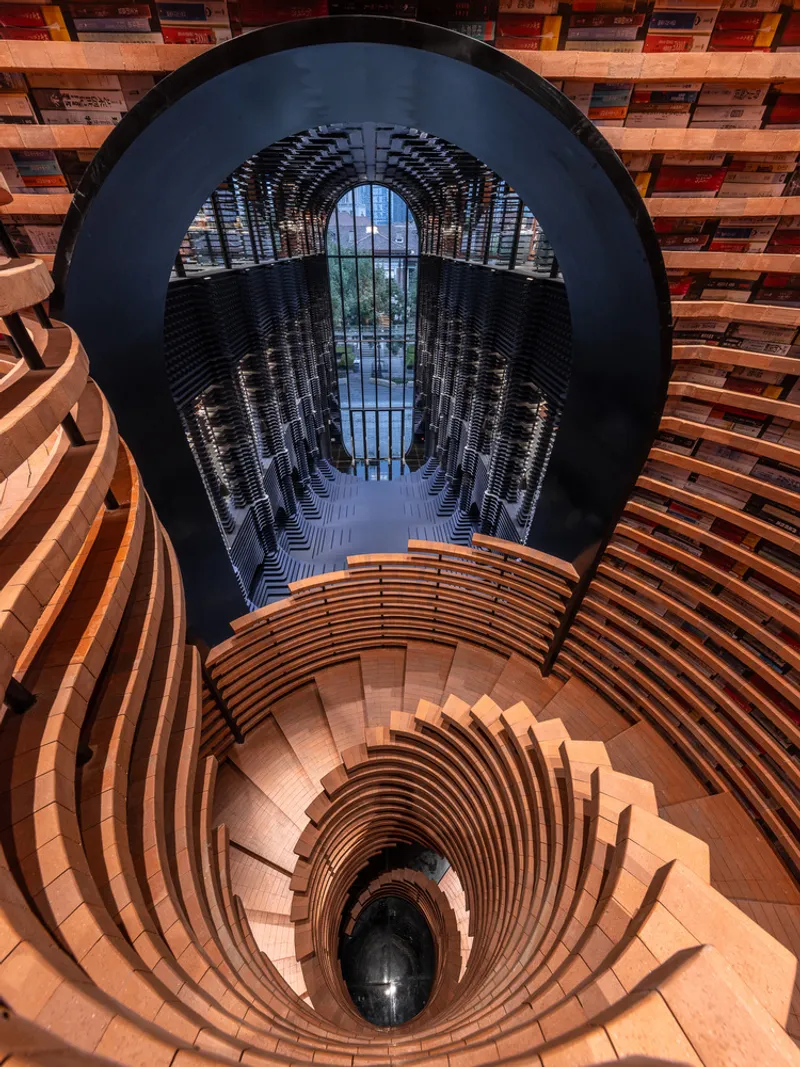
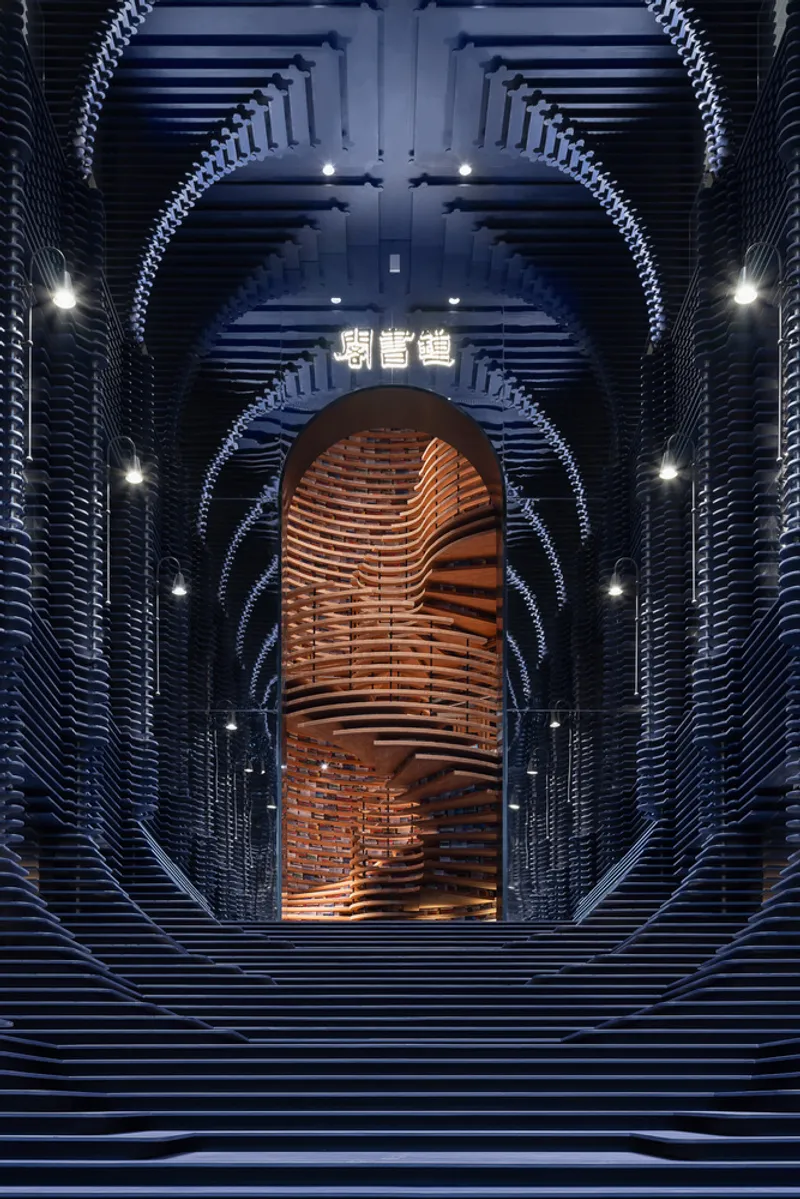
At the building’s center, layered steel plates cut in undulating forms evoke the movement of waves—a subtle gesture referencing Tianjin’s identity as a port city. The interplay between brick and steel introduces textural contrast, symbolizing the fusion of tradition and modernity.
Interior Architecture: Where Structure Becomes Furniture
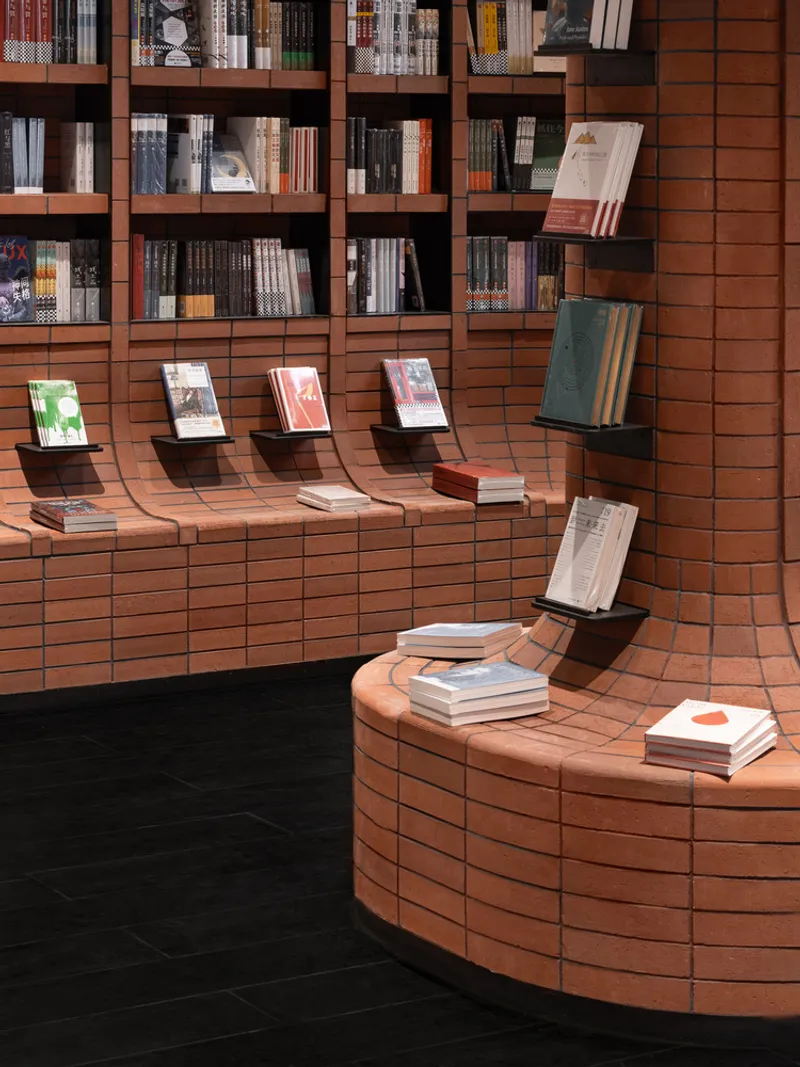
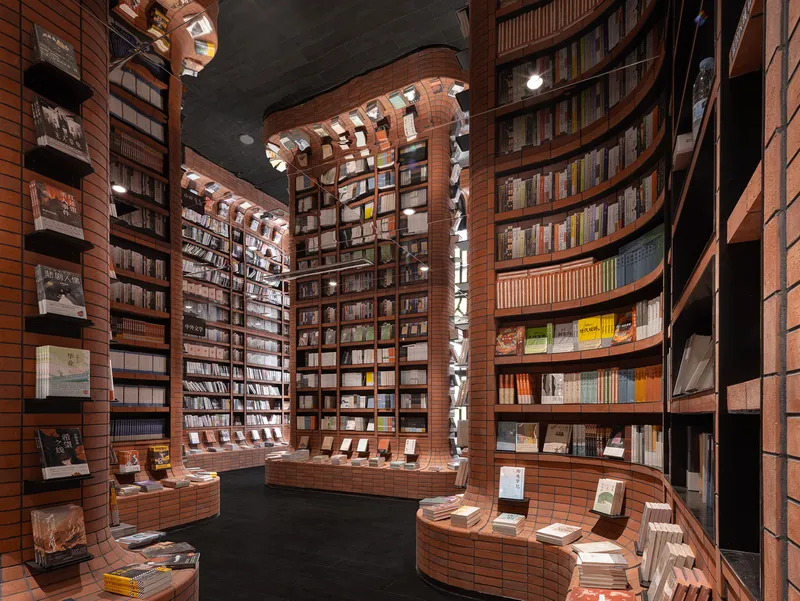
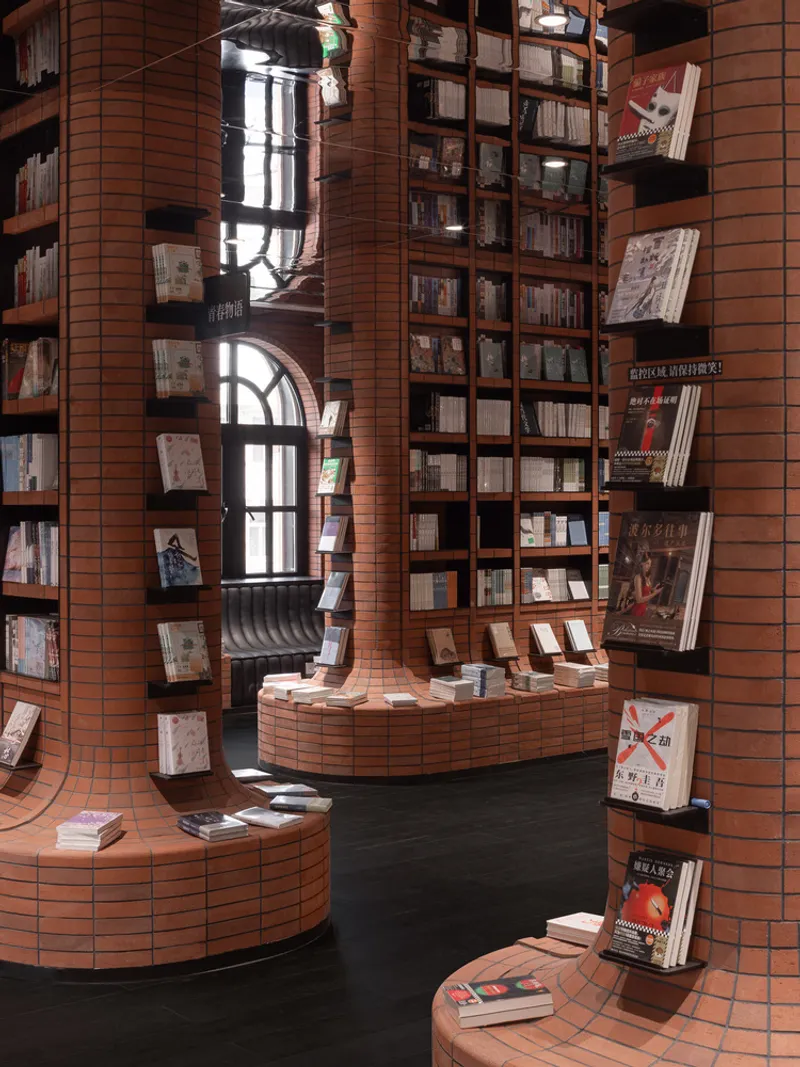
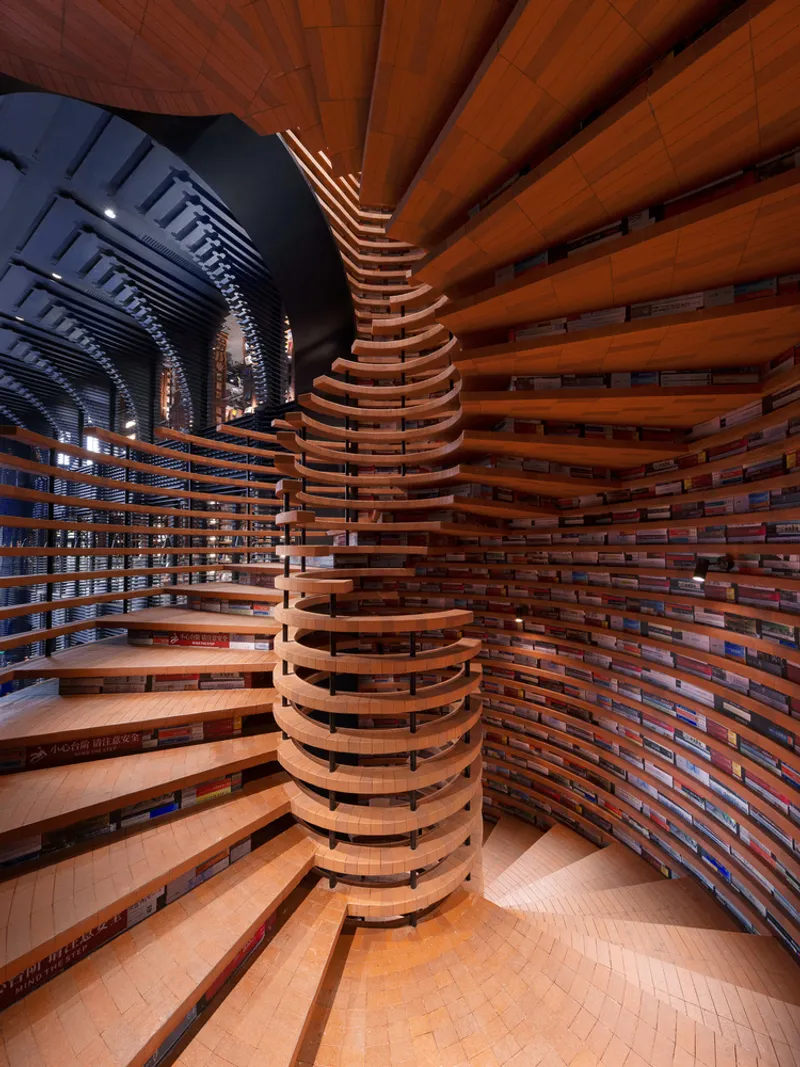
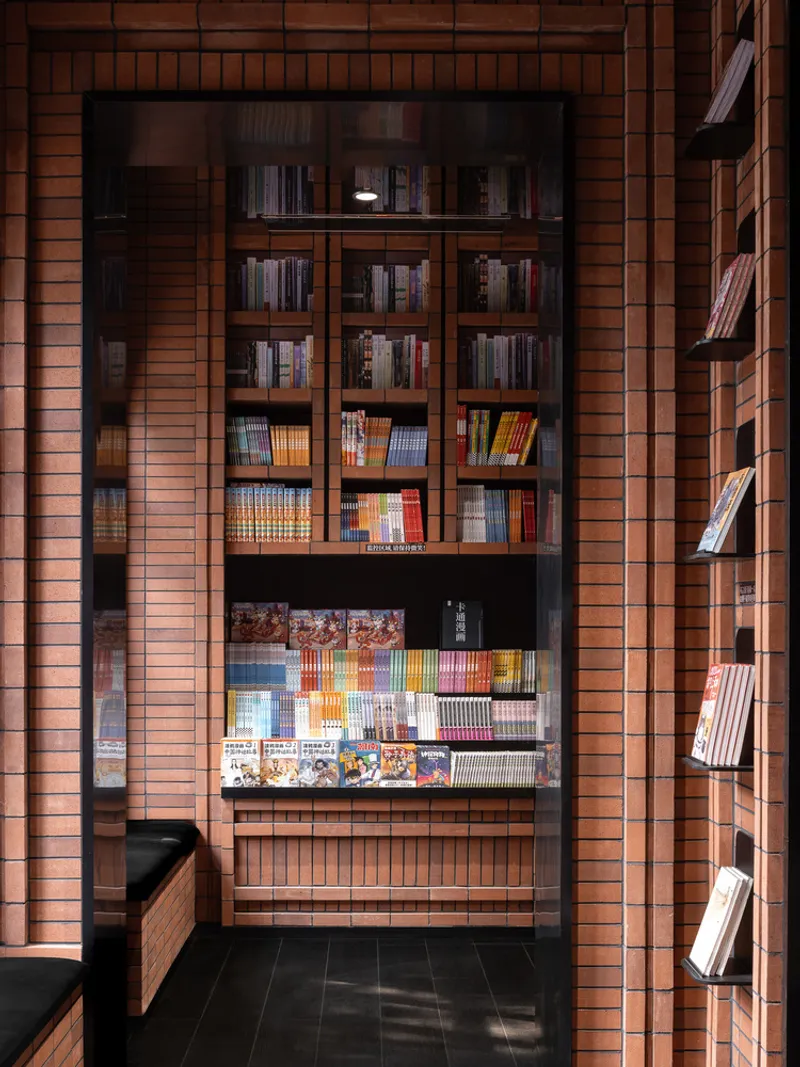
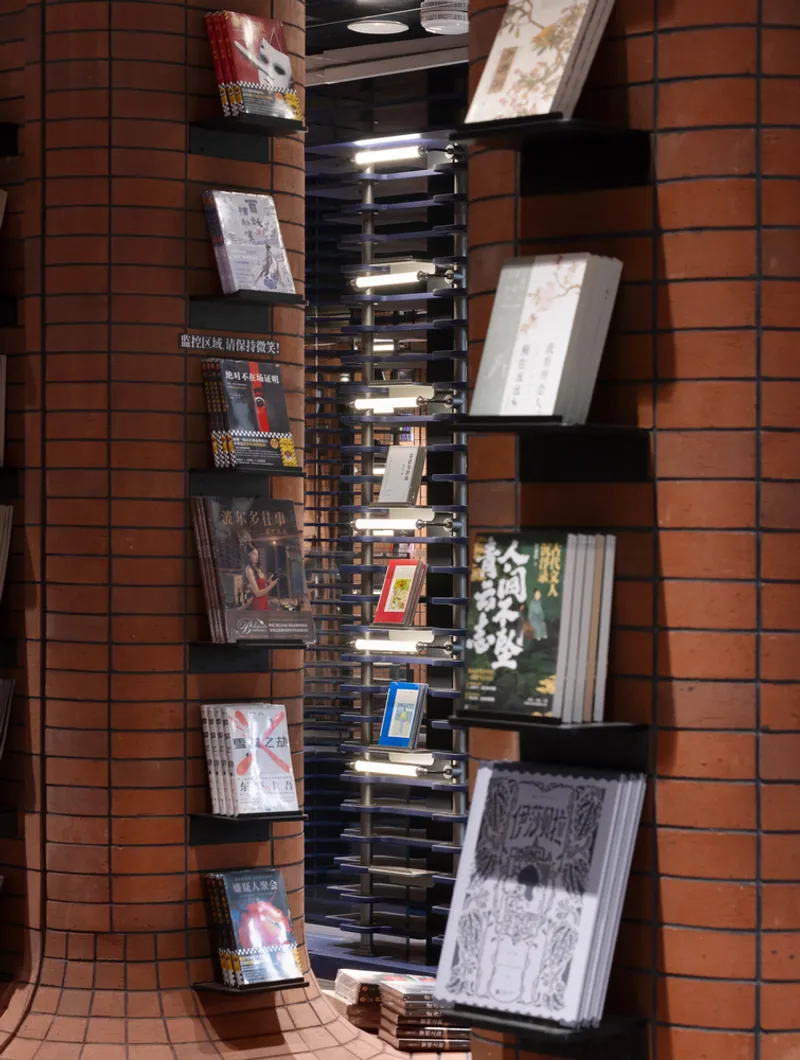
The redesign pushes the boundaries of conventional material use. Over 400,000 customized bricks, varying in size, color tone, and shape, were used to craft the intricate architectural language of the library. The entire interior structure—walls, seating, shelving, and steps—emerges from the stacked brick geometry, complemented delicately by the cool sheen of metal inserts.
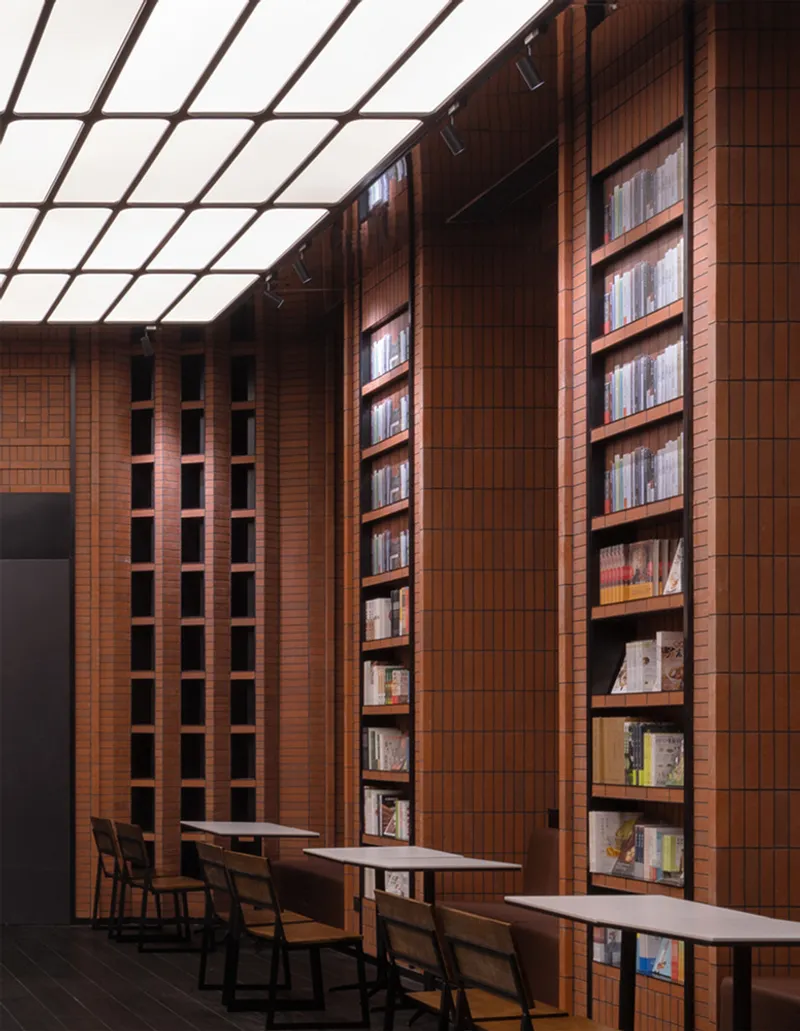
Instead of adding bookshelves as separate elements, the design allows shelves to grow organically from the brick volumes. Seating niches, staircases, and platforms follow the same logic, appearing as seamless continuations of the structure. This approach transforms the interior into an immersive, sculptural environment where architecture and furniture become one cohesive system.
The warm tones of the red brick interact with the industrial modernity of steel, creating a visual balance between heft and lightness, tradition and innovation. Light filters through the cut-brick façade, generating a rhythmic interplay that enhances the contemplative atmosphere of the reading spaces.
Construction Innovation
The ambitious design required extensive research, detailed modeling, and rigorous on-site experimentation. X+Living developed numerous conceptual sketches and refined a precise three-dimensional digital model to simulate the structural and aesthetic behavior of the brick system.
The project involved crafting hundreds of custom brick types, each designed to achieve the precise curvature, thickness, and geometric variation needed for both structural integrity and artistic expression. This meticulous approach results in a library that feels simultaneously handcrafted and technologically advanced, pushing brickwork into a new era of architectural innovation.
Tianjin Zhongshuge Library by X+Living stands as a cultural and architectural milestone for Tianjin—an adaptive transformation that celebrates classical heritage while embracing contemporary craftsmanship. Through inventive brickwork, integrated spatial design, and a powerful material narrative, the project not only redefines what a library can be but also enriches the architectural dialogue of one of Tianjin’s most historically significant districts.
All photographs are works of SFAP



Popular Articles
Popular articles from the community


The Ocean Hive: Sustainable Architecture for a Self-Sufficient Civilization at Sea
The Ocean Hive imagines sustainable architecture at sea, where modular habitats, algae, wave power and ocean waste sustain a growing colony.

Riyadh For All: Intergenerational Urban Design for Active Aging in Rabat
Riyadh For All reimagines urban design in Rabat with intergenerational co-living, adaptive courtyards, and Moroccan cultural exchange today.
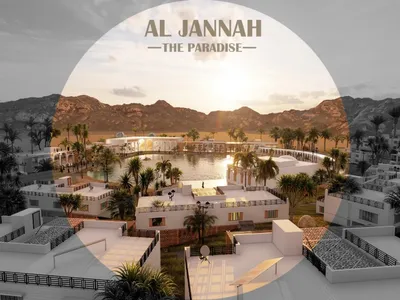
AL-JANNAH: Sustainable Architecture and Permaculture for Afghan Widows
AL-JANNAH uses sustainable architecture and permaculture to create resilient oasis of housing, learning, work and renewal for Afghan widows.

Conexión: Biophilic Design Reimagines High-Rise Living in Hong Kong
Conexión reimagines high-rise living in Hong Kong through biophilic design, green facades, shared spaces, daylight, water and nature within.

Similar Reads
You might also enjoy these articles


Hodi-Mandai Geram
Project Function: Preservation and revitalization of the Intangible heritage and socio-spatial identity of the Hodi by Housing, Cultural Memory Center, Sacred Grove, landscape, local tourism economy


Olio Towers: A Mid-Rise for Performers That Fuses Housing, Rehearsal, and Stage
Located blocks from Houston's Theater District, this modular tower stacks living units around a central performance atrium.

Oasis: Modular Green Housing Carved into Dhaka's Urban Fabric
A shortlisted Plugin Housing entry reclaims unauthorized settlements in Dhaka with stepped concrete volumes, green roofs, and ventilation-driven design.

Black Hole: A Floating Megastructure for the Post-Physical Era
Emiliano Mazzarotto envisions a spherical, self-scaling arena where e-sports, digital hotels, and holographic stadiums replace traditional public space.


Explore Public Architecture Competitions
Discover active competitions in this discipline



Challenge to design public laboratory


Challenge to reimagine the Iron Throne


Photograph architecture without architects


Illustrate the lost glory of Angkor Wat - Render Challenge
Comments (0)
Please login or sign up to add comments
No comments yet. Be the first to comment!