
FMD Architects Crowns a Victorian Terrace with a Tiara-Shaped Timber Screen in Melbourne
A sweeping batten veil transforms a compact rear addition into a sculptural gesture toward Edinburgh Gardens.


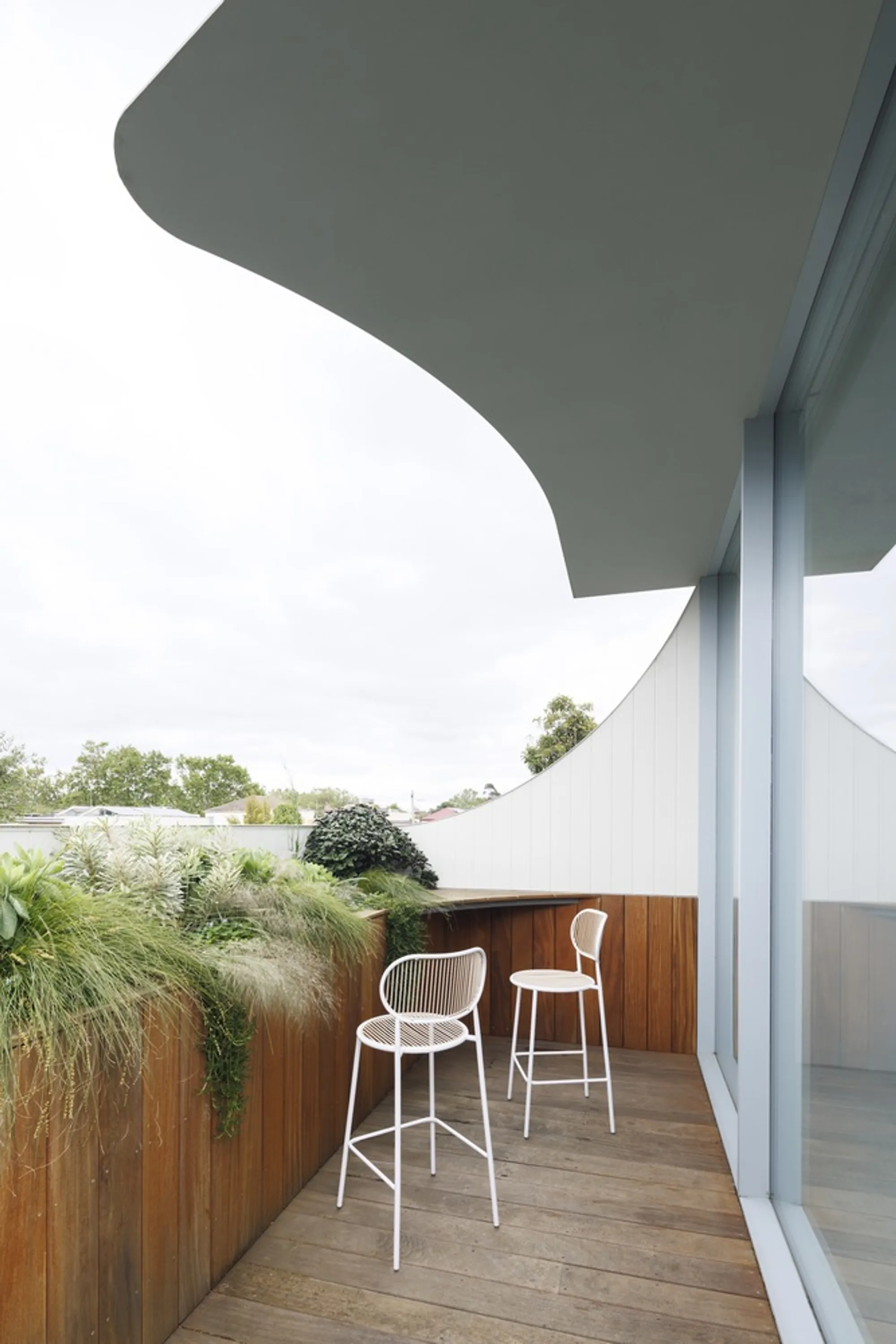
Most Victorian terrace renovations in Melbourne's inner north follow a familiar script: strip the front rooms back to their bones, carve out the lean-to, and drop in a glazed pavilion that opens to a narrow courtyard. FMD Architects followed that script for Tiara House, a 255-square-meter addition to an 1800s terrace overlooking Edinburgh Gardens, but added one decisive flourish. A sweeping veil of Tasmanian Oak battens wraps the upper level in a tiered, sculptural form that reads as ornament from the laneway and privacy screen from within. The tiara shape is both a nod to the home's original female owner and a contemporary echo of the rotunda that sits across the park, translating the decorative spirit of the Victorian era into something that works for a north-facing site hemmed in by neighbors.
The challenge here was not the front of the house, which retains its iron lacework and plaster corbels intact, but the rear, where a dated 1970s structure had to be replaced without sacrificing light or outlook. FMD addressed the difficult southern orientation by threading connections to landscape through every level. An eastern lightwell pulls daylight into the kitchen and living zones, while a scooped profile in the western wall frames views to the rooftops and city skyline beyond. The result is a home that feels neither cramped nor over-exposed, balancing transparency with shelter in a way that actually suits how people live in a terrace.
The Tiara Screen
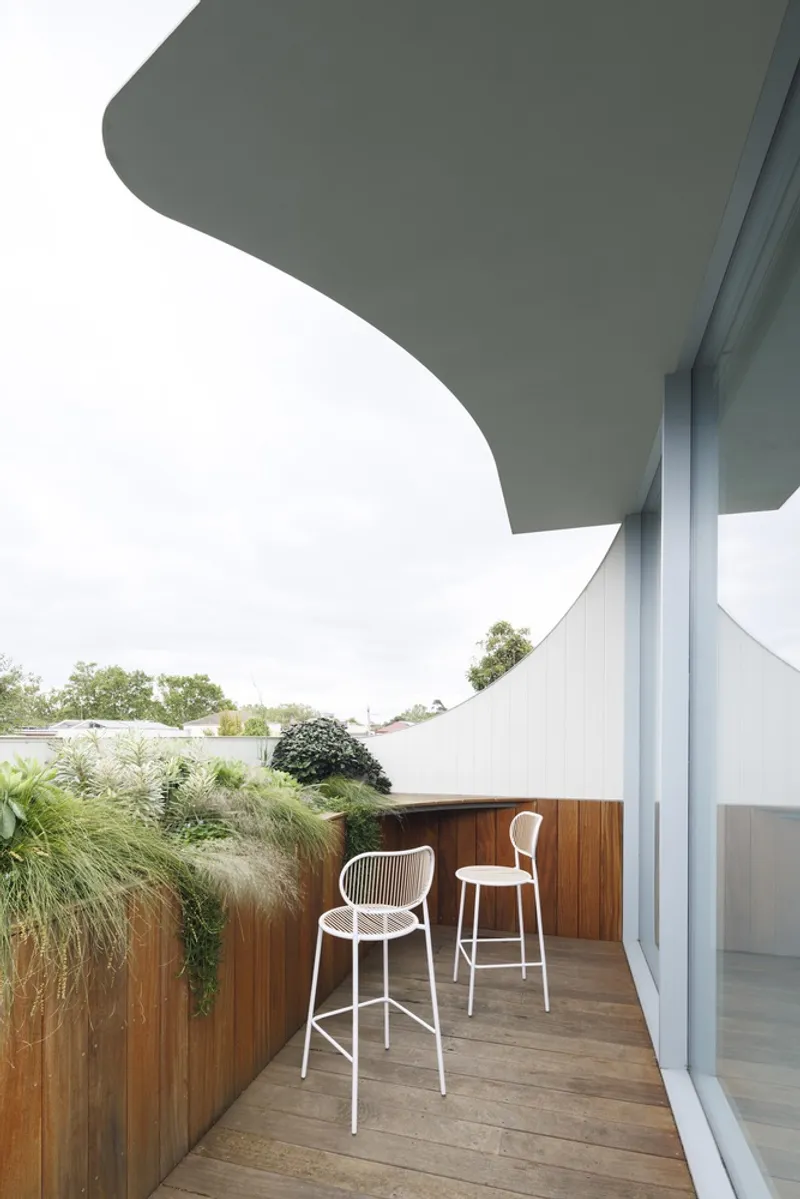
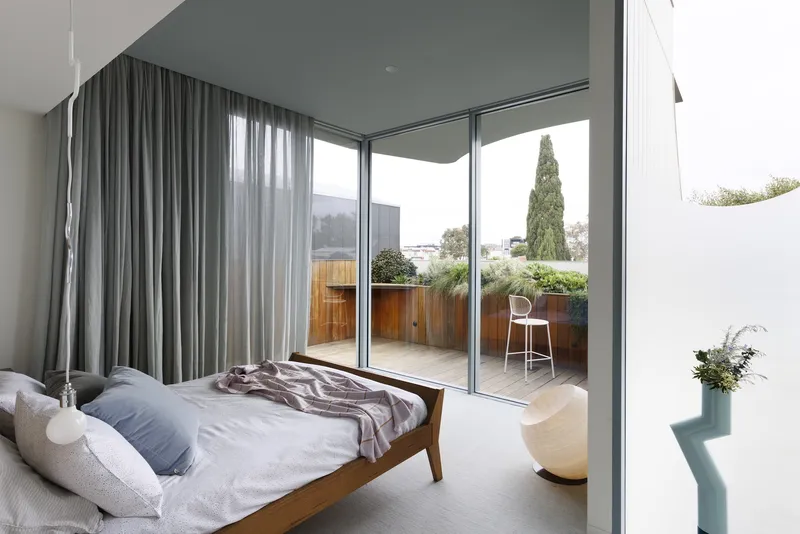
The tiara form is the project's defining move, and it earns its keep. Rather than applying ornament for its own sake, FMD uses the sweeping battens to solve privacy, shading, and massing problems simultaneously. The screen encloses an upper-level deck accessible from the main bedroom, filtering views while keeping the neighbors at bay. From the laneway, the tiered profile breaks down the volume of the addition and gives the rear facade a sculptural presence that the original terrace never had. The battens are carefully engineered to prevent movement when used externally, a detail that matters when you are working with timber at this scale. The material itself, locally sourced Tasmanian Oak from Porta, ties the project to a regional craft tradition without making a fuss about it.
What makes the screen work is restraint. FMD could have extended the battens across the entire rear elevation, but instead confined them to the upper level and the zones where privacy and shading are actually needed. The result is a composition that reads as intentional rather than decorative, a move that amplifies the architecture instead of obscuring it.
Circular Portals and Spatial Compression
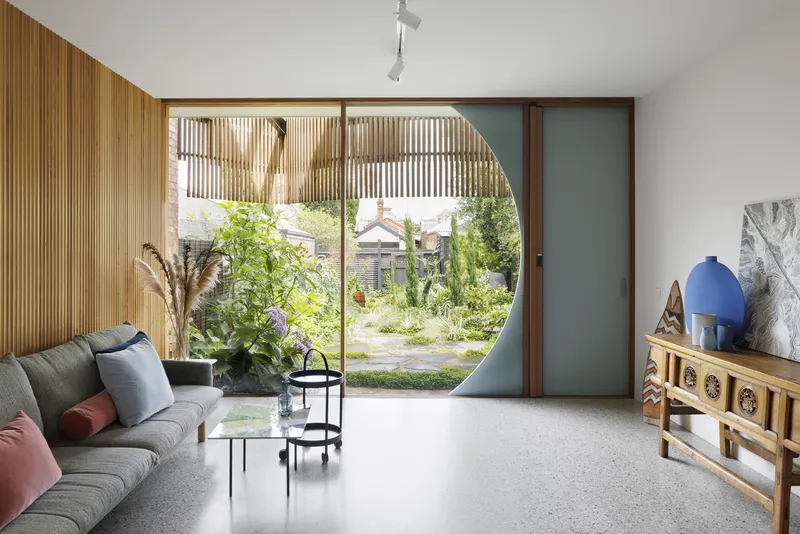
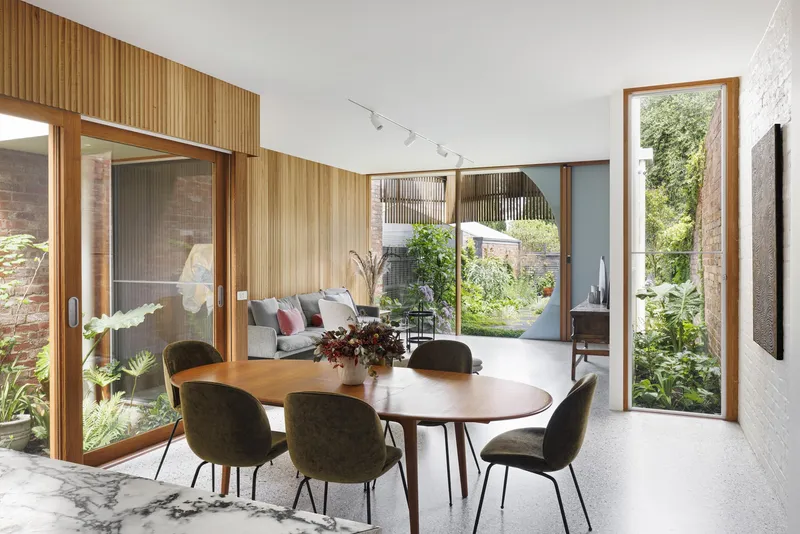
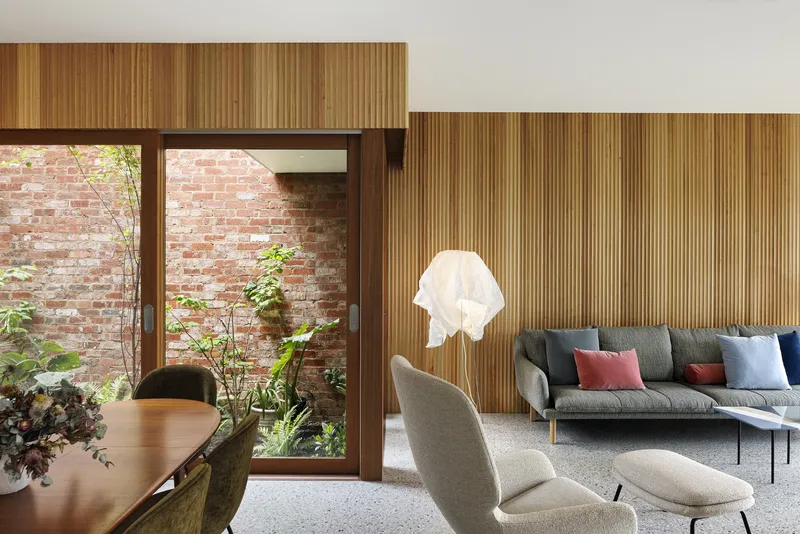
Inside, FMD uses circular openings to compress and release space as you move through the plan. A portal in the living room frames a courtyard view through the batten screen, creating a layered threshold between interior and exterior. Another circular window in the dining area opens onto a lightwell that pulls daylight deep into the footprint. These gestures are not new, but they are deployed with precision here, turning what could have been a straightforward open-plan layout into something with rhythm and variation. The fluted Tasmanian Oak wall lining in the living and dining zones picks up the vertical emphasis of the battens outside, reinforcing the material continuity between the addition and its enclosure.
Material Choices and Detailing
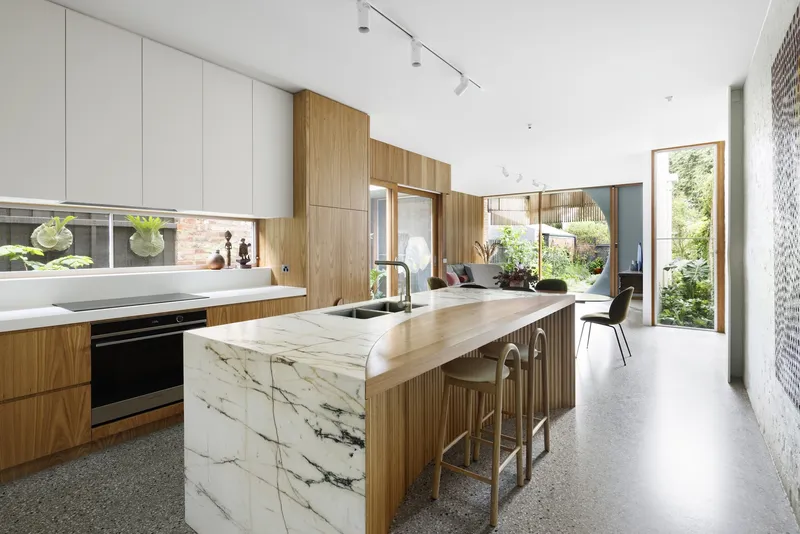
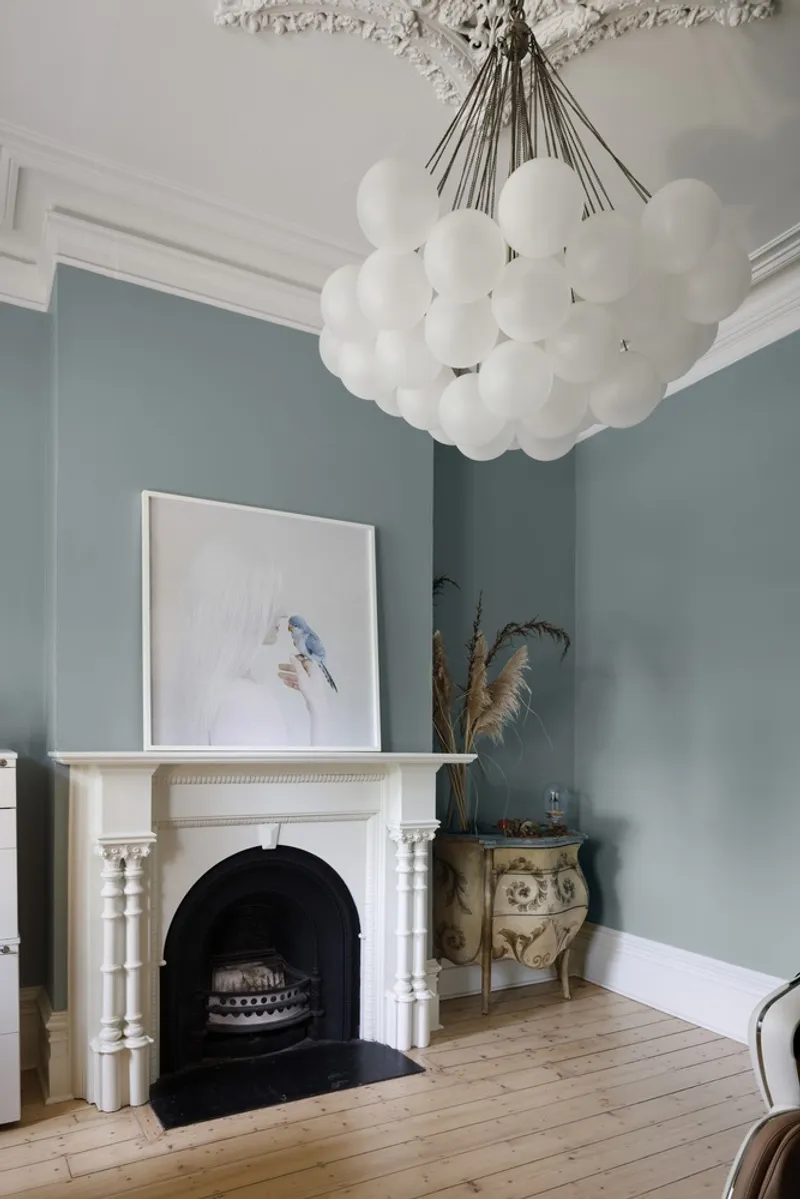
The material palette is narrow but effective: white rendered brick, bespoke concrete aggregate floors, speckled terrazzo, luminous granite, and reeded glass. FMD avoids the trap of over-specifying finishes, instead letting a few strong materials define each room. The kitchen island, clad in stone with a solid timber inlay, reads as a single object rather than a collection of components. In the bathroom, curved forms and terrazzo soften the geometry without tipping into pastiche. The original wood floors in the front rooms are stripped and lime washed, a simple treatment that acknowledges the history of the house without trying to replicate it.
The detailing is careful but not precious. A mirrored panel in the upstairs hallway reflects the volume of the decorative timber staircase, linking the two levels without adding mass. A curved plate steel awning shelters the rear courtyard, its profile echoing the sweep of the tiara screen above. These are small moves, but they accumulate into a coherent architectural language that holds the project together.
Landscape as Extension of Program
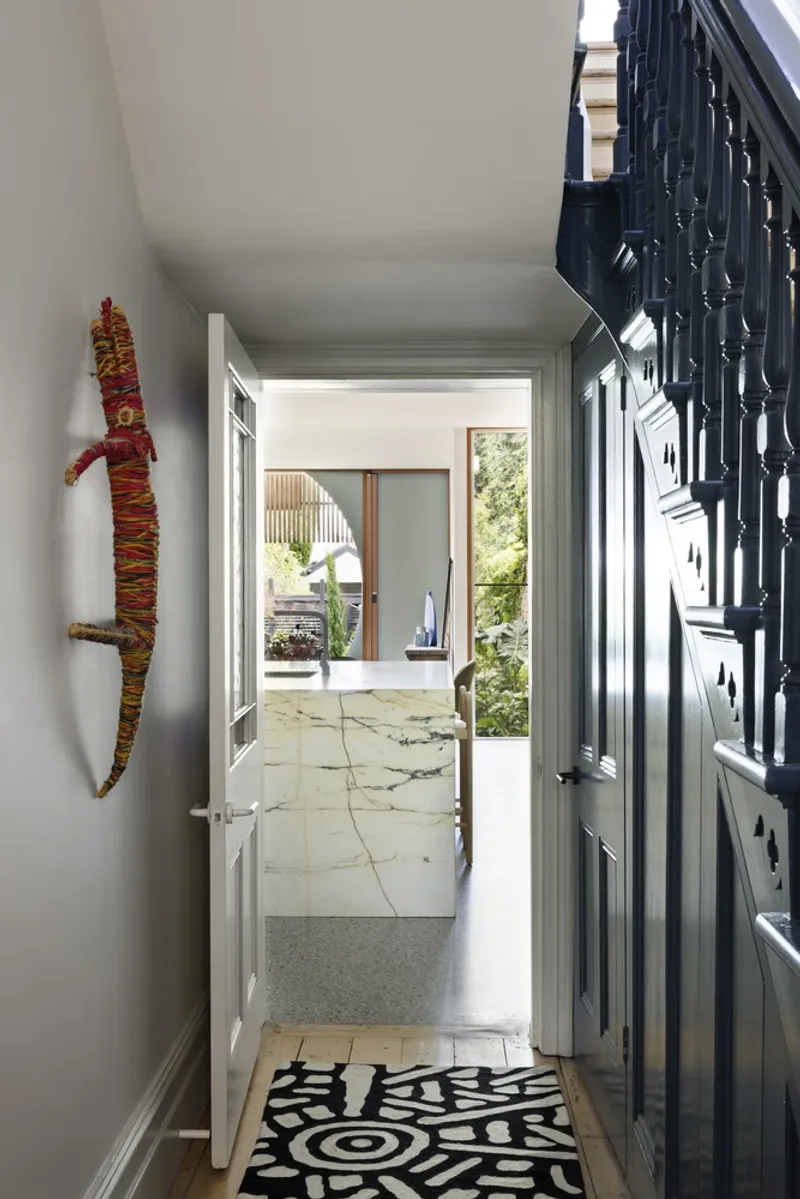
The landscape, designed in collaboration with Jo Ferguson Gardens, is treated as an extension of the interior program rather than an afterthought. Native, cottage, and Mediterranean species are layered to reflect the site's indigenous history and the clients' personal narratives. The rear garden notches into the west, enlivening the circulation path with framed views that shift as you move through the space. An eastern lightwell brings greenery and light into the kitchen and living areas, blurring the boundary between inside and outside in a way that feels earned rather than forced.
Why This Project Matters
Tiara House demonstrates that ornamentation can still do real work in contemporary architecture if you are willing to tie it to program, climate, and site. The tiara screen is not applied decoration but a functional response to privacy, shading, and massing challenges that are specific to this terrace and this orientation. FMD Architects avoids the usual traps of heritage renovation by neither erasing the original house nor trying to mimic it, instead using the tiara form to create a contemporary layer that complements the Victorian frontage without competing with it.
The project also shows how a single strong move can organize an entire addition. The tiara screen gives the rear elevation a sculptural presence that would otherwise be missing in a typical terrace extension, while the circular portals and material continuity inside reinforce the vertical emphasis of the battens. This is not a project that tries to do everything, but what it does, it does with clarity and precision. That restraint is what makes it worth paying attention to.
Tiara House, FMD Architects, Melbourne, Australia, 255 m², 2022. Photography by Dianna Snape.
About the Studio
Share Your Own Work on uni.xyz
If projects like this are the kind of work you want to make, uni.xyz is a place to publish your own, find collaborators, and enter design competitions.




Popular Articles
Popular articles from the community


The Musturak Paradise: Senior Living Architecture for a Connected Future in Temara, Morocco
The Musturak Paradise reimagines senior living architecture in Temara via private homes, social spaces, culture, community, and shared care.

Riyadh For All: Intergenerational Urban Design for Active Aging in Rabat
Riyadh For All reimagines urban design in Rabat with intergenerational co-living, adaptive courtyards, and Moroccan cultural exchange today.

Co-Life: Senior Housing Design That Reconnects Older Adults With the City
Co-Life reimagines senior housing design through healing gardens, shared streets, workshops, and a sustainable community across generations.

Play: Fragments of Their World
Familiar architecture becomes modular playground design, creating safe spaces where displaced children can learn, connect, imagine and play.


Similar Reads
You might also enjoy these articles


Hodi-Mandai Geram
Project Function: Preservation and revitalization of the Intangible heritage and socio-spatial identity of the Hodi by Housing, Cultural Memory Center, Sacred Grove, landscape, local tourism economy


Olio Towers: A Mid-Rise for Performers That Fuses Housing, Rehearsal, and Stage
Located blocks from Houston's Theater District, this modular tower stacks living units around a central performance atrium.

Oasis: Modular Green Housing Carved into Dhaka's Urban Fabric
A shortlisted Plugin Housing entry reclaims unauthorized settlements in Dhaka with stepped concrete volumes, green roofs, and ventilation-driven design.

Black Hole: A Floating Megastructure for the Post-Physical Era
Emiliano Mazzarotto envisions a spherical, self-scaling arena where e-sports, digital hotels, and holographic stadiums replace traditional public space.

Explore Architecture Competitions
Discover active competitions in this discipline



Challenge to reimagine the Iron Throne


Photograph architecture without architects


Illustrate the lost glory of Angkor Wat - Render Challenge


Design challenge to reuse E-waste
Comments (0)
Please login or sign up to add comments
No comments yet. Be the first to comment!