

“Tide’s Echo Hall: A Coastal Cultural Landmark by TAO Architecture”
Tide’s Echo Hall by TAO blends coastal landscapes, forest serenity, and multifunctional spaces, offering immersive cultural, dining, and exhibition experiences.


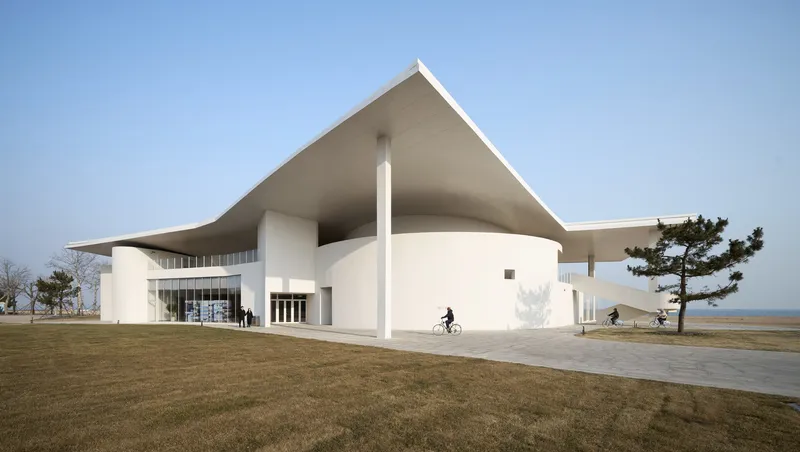
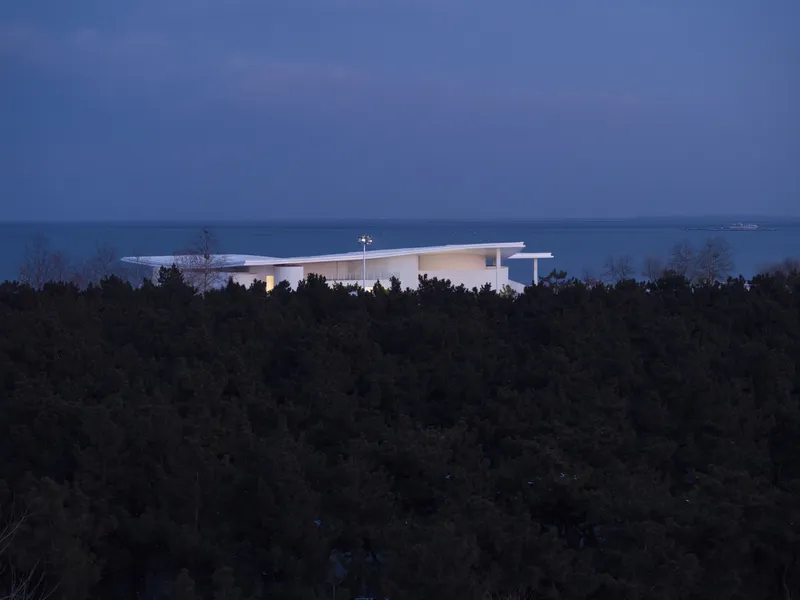
Tide's Echo Hall, designed by TAO (Trace Architecture Office), is a striking example of contemporary hospitality and mixed-use architecture, situated on the scenic Coastal Park along Sanggou Bay, Rongcheng, Shandong Province. Flanked by the Yellow Sea to the east and a lush ecological shelterbelt to the west, the site forms a unique peninsula-like setting, “embraced by greenery on three sides and open to the sea on one side.” Completed in 2021, this 6238 m² architectural complex integrates cultural, tourism, conference, exhibition, banquet, dining, and sightseeing functions, fostering a harmonious relationship between human activity and the coastal ecosystem.
Strategic Coastal Location and Landscape Integration
Occupying the central area of Coastal Park across 11200 m², the site is defined by gently sloping terrain, where a dense black pine forest meets the expansive sea, offering panoramic ocean views and serene woodland vistas. This juxtaposition of natural environments—the boundless ocean and tranquil forest—serves as the primary inspiration for the architectural design. TAO's approach leverages this duality, seamlessly integrating the building complex into its natural surroundings.
Architectural Layout and Functional Zoning
The Tide's Echo Hall is organized into three distinct zones, each reflecting the landscape and functional requirements of the site:
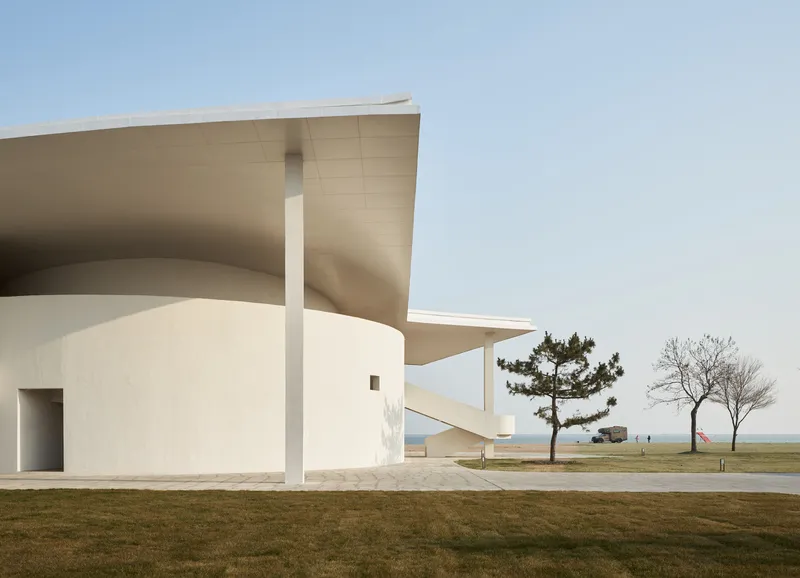
- Main Exhibition and Conference Hall: Located on the northeastern side, closest to the sea, this venue features nested volumes beneath a subtly undulating roof, creating multi-directional views and an open, dynamic spatial experience.
- Restaurant: Situated within the forested western side, the restaurant maintains a low-profile design, respecting the natural environment. Its red concrete with wooden formwork harmonizes with the forest tones, while the undulating roof contrasts elegantly with the main hall.
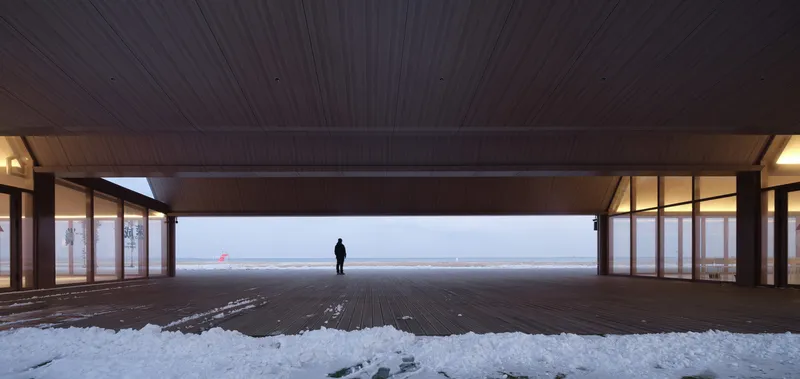
- Coastal Food Court: Extending along the shoreline, the linear layout maximizes sea-facing views through a 170-meter zigzag roof and floor-to-ceiling glass curtain walls, dissolving the boundary between interior and exterior spaces.
This spatial arrangement emphasizes fluidity, connectivity, and the interplay between built form and nature, guiding visitors through a dynamic and layered experience.
Abstraction of Natural Imagery
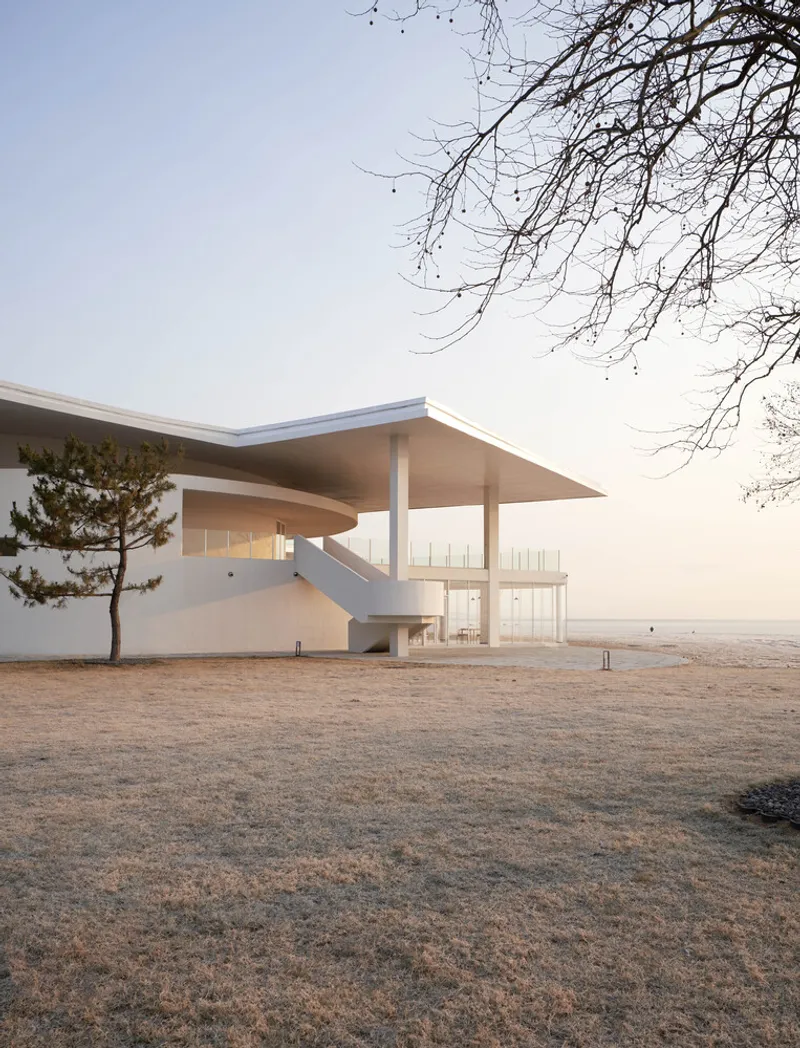
The architecture reflects coastal and maritime motifs, with the main hall oriented to interact both with the forest and the sea. The white curved roof, resembling a sail caught in the wind, serves as a visual landmark, conveying lightness, movement, and elegance. Cantilevered sections supported by slender columns enhance the perception of weightlessness, while the building footprint anchors the hall harmoniously within the landscape.
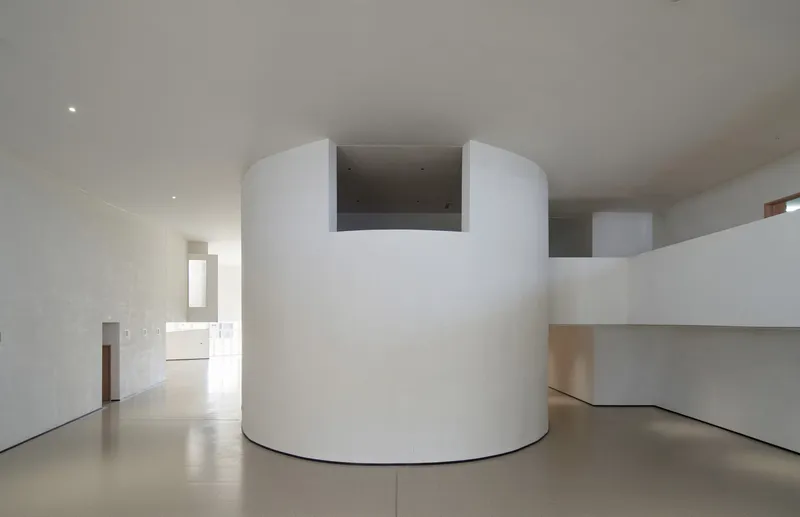
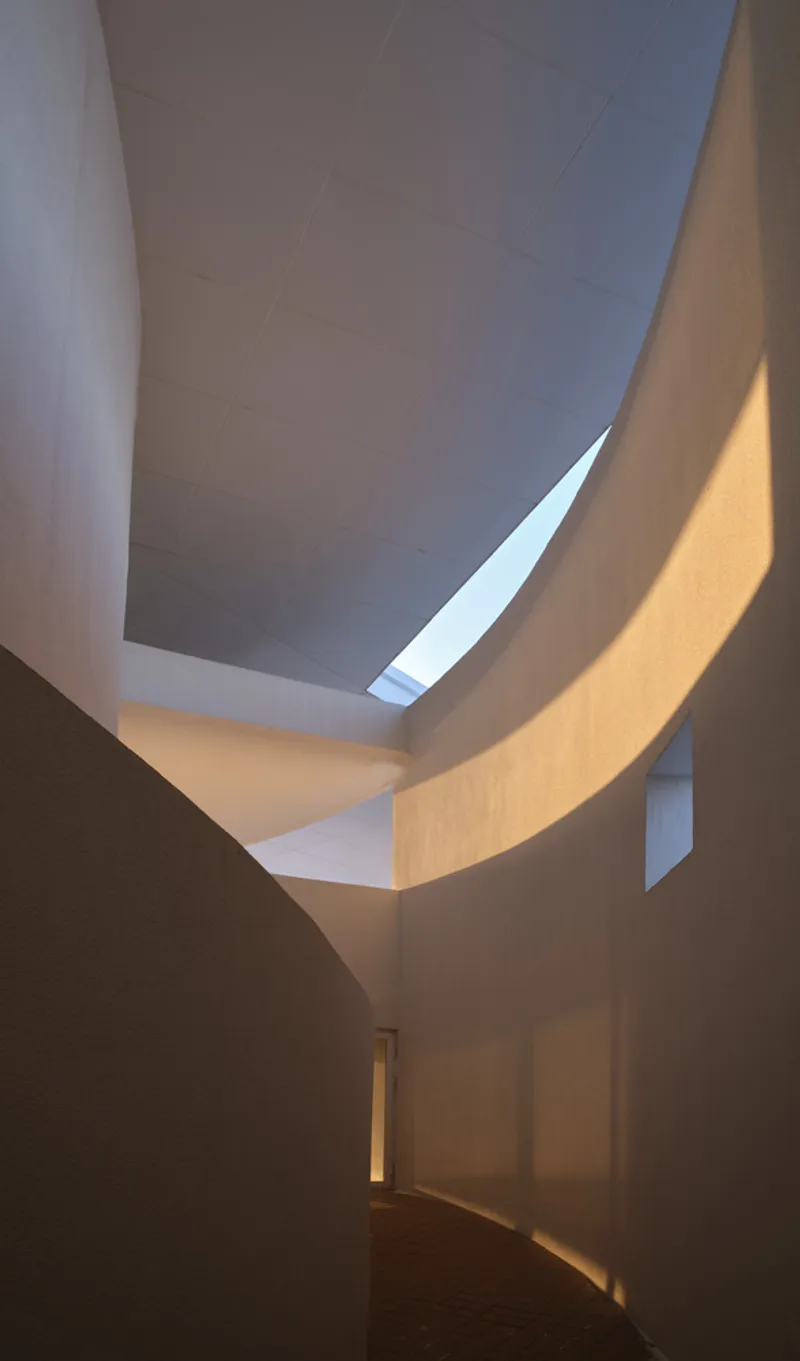
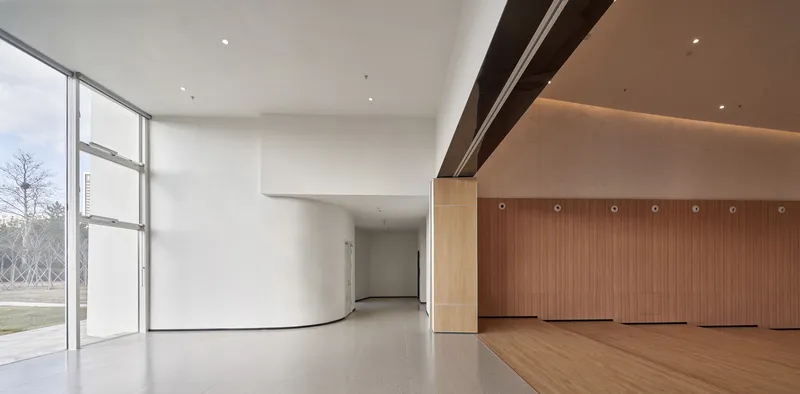
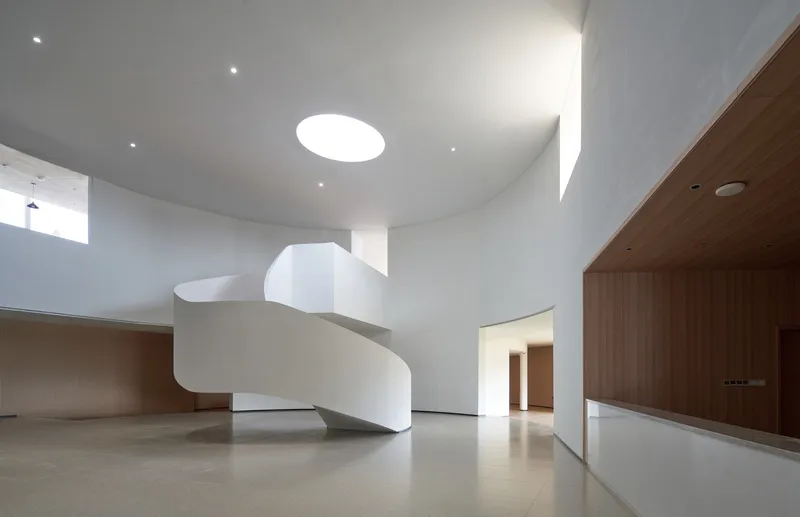
Inside, the design employs a clustered spatial strategy, breaking down monumental volumes into smaller, interconnected spaces akin to coastal rocks, generating a rich interplay of indoor and outdoor experiences. Multi-layered ceilings create “spaces within spaces,” accommodating conference rooms, multifunctional halls, and circulation pathways, evoking a sense of urbanity and coastal exploration simultaneously.

Promenade Experience and Architectural Journey
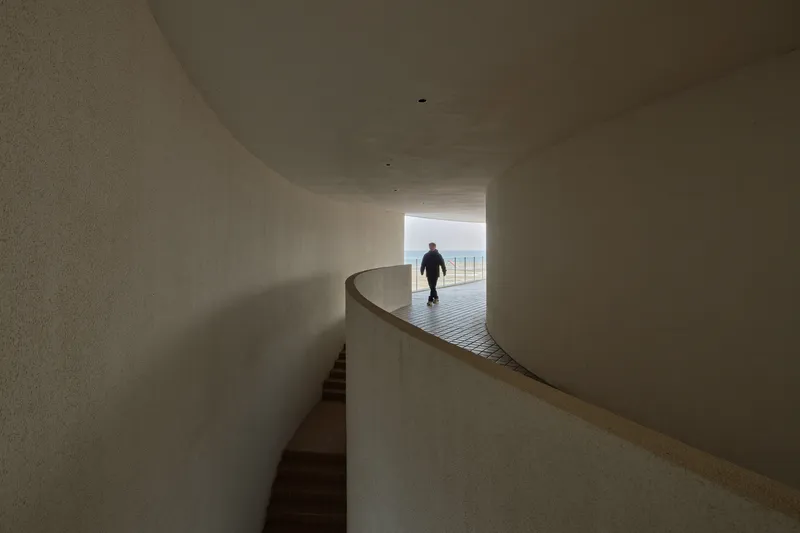
The architectural design emphasizes a promenade narrative, connecting the interior and exterior through ramps, platforms, and viewing terraces. Visitors transition from forested seclusion to expansive ocean vistas, experiencing changing perspectives, light conditions, and spatial qualities along the journey. The second-level viewing platform offers sweeping panoramic views of the sea, while semi-outdoor spaces invite visitors to engage with the sounds and textures of the surrounding environment, blurring the traditional lines between inside and outside.
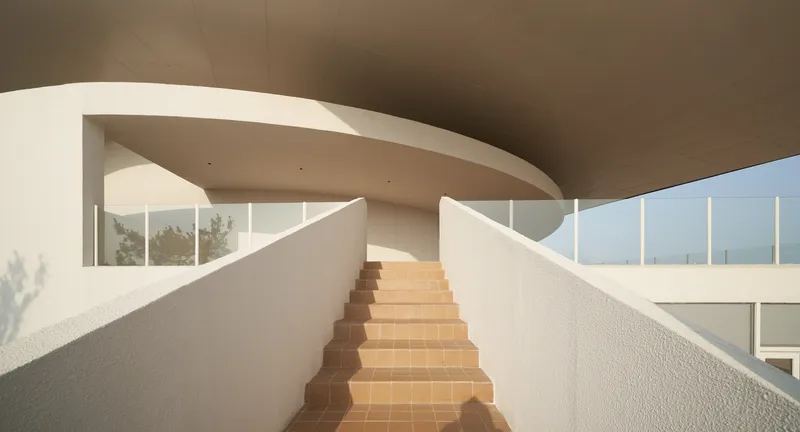
This design strategy transforms Tide's Echo Hall into an open urban-seafront interface, creating a cultural hub that celebrates both coastal ecology and human interaction. The fluid spatial sequencing ensures that visitors experience continuous engagement with nature, whether attending an event, dining, or simply strolling along the promenade.
Materiality and Sustainability
Material choices emphasize natural integration and environmental resonance. The restaurant’s red concrete and wooden formwork blend with the forest, while glass and cantilevered structures highlight transparency and lightweight architectural expression. The use of durable, contextually sensitive materials supports both sustainable design practices and visual harmony with the coastal landscape.
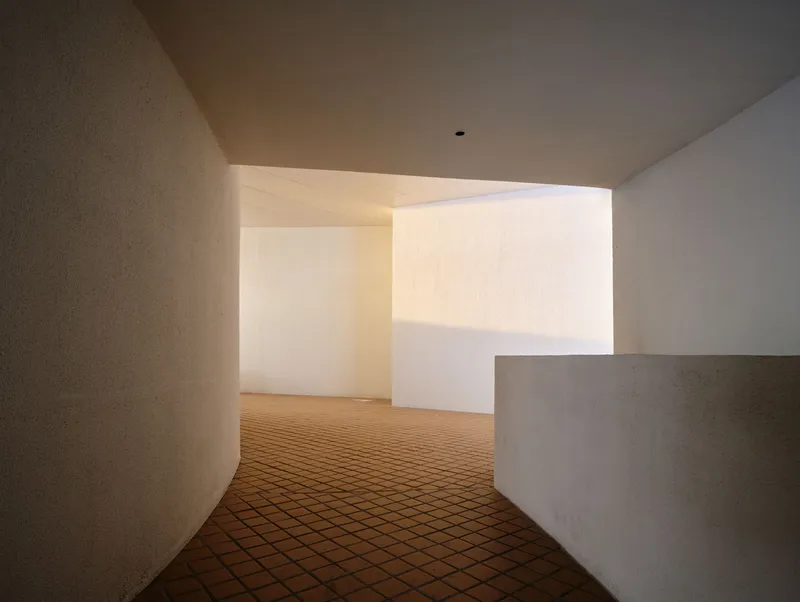
Tide's Echo Hall is a pioneering example of coastal mixed-use architecture, integrating tourism, culture, and ecological sensitivity. Its thoughtful spatial organization, sculptural rooflines, and immersive promenade design establish a unique dialogue between architecture and nature, making it a landmark destination for visitors to Sanggou Bay.
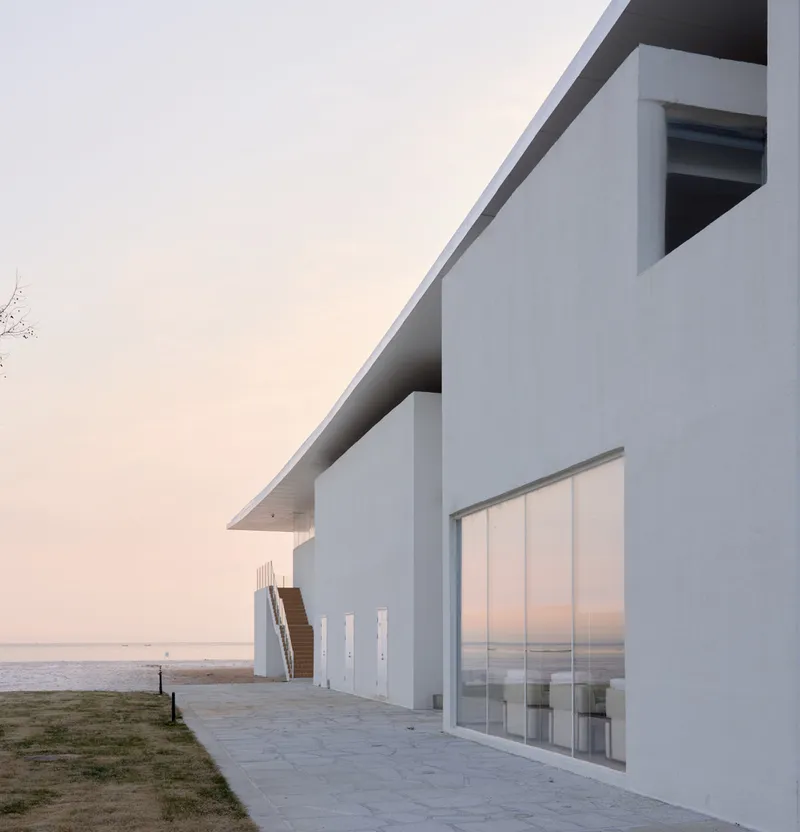
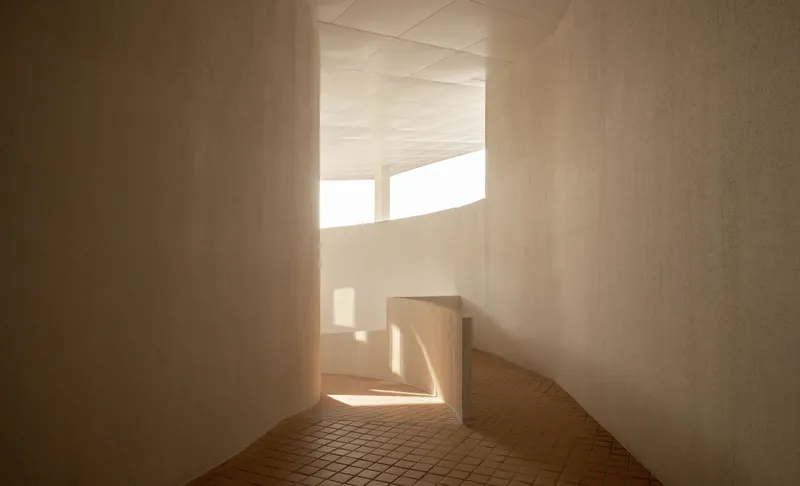
All photographs are works of AOGVISION



Popular Articles
Popular articles from the community


Play: Fragments of Their World
Familiar architecture becomes modular playground design, creating safe spaces where displaced children can learn, connect, imagine and play.

Lunar Spiral: Space Architecture Shaped by the Mathematics of the Universe
Lunar Spiral reimagines space architecture through Fibonacci geometry, lunar regolith, levitating habitats, and self-sustaining Moon living.

Co-life: Sustainable Architecture for Age-Friendly Community Living
Co-life reimagines sustainable architecture for seniors through courtyards, rammed earth, shared gardens, and spaces designed for belonging.

The Ocean Hive: Sustainable Architecture for a Self-Sufficient Civilization at Sea
The Ocean Hive imagines sustainable architecture at sea, where modular habitats, algae, wave power and ocean waste sustain a growing colony.


Similar Reads
You might also enjoy these articles


Hodi-Mandai Geram
Project Function: Preservation and revitalization of the Intangible heritage and socio-spatial identity of the Hodi by Housing, Cultural Memory Center, Sacred Grove, landscape, local tourism economy


Olio Towers: A Mid-Rise for Performers That Fuses Housing, Rehearsal, and Stage
Located blocks from Houston's Theater District, this modular tower stacks living units around a central performance atrium.

Oasis: Modular Green Housing Carved into Dhaka's Urban Fabric
A shortlisted Plugin Housing entry reclaims unauthorized settlements in Dhaka with stepped concrete volumes, green roofs, and ventilation-driven design.

Black Hole: A Floating Megastructure for the Post-Physical Era
Emiliano Mazzarotto envisions a spherical, self-scaling arena where e-sports, digital hotels, and holographic stadiums replace traditional public space.


Explore Hospitality Building Competitions
Discover active competitions in this discipline



Challenge to reimagine the Iron Throne


Photograph architecture without architects


Illustrate the lost glory of Angkor Wat - Render Challenge


Design challenge to reuse E-waste
Comments (0)
Please login or sign up to add comments
No comments yet. Be the first to comment!