
Tiered Realm House and Studio by Fictional Project: A Vertical Live-Work Architecture in Chennai
Tiered live-work residence in Chennai featuring split levels, brick façade, skylit core, artist studios, indoor garden, and terrace overlooking lake.


Tiered Realm House and Studio is a contemporary live-work residence in Chennai designed for an artist couple practicing mixed media and textile art. Conceived as more than a conventional home, this 3,500-square-foot residence redefines suburban domestic architecture by merging creative production, community interaction, and private dwelling into a vertically layered spatial narrative.
Situated in Ambattur, a rapidly expanding suburban neighborhood characterized by tightly packed plots and typical BHK-format houses, the project breaks away from standardized residential planning. Instead, it introduces a porous, interconnected architectural ecosystem structured around a dramatic vertical void and cascading split levels.
Rethinking the Suburban Indian Home
In the context of Chennai’s growing periphery, residential architecture often follows predictable typologies. Tiered Realm challenges this formula by replacing compartmentalized layouts with a fluid, vertically integrated live-work design.
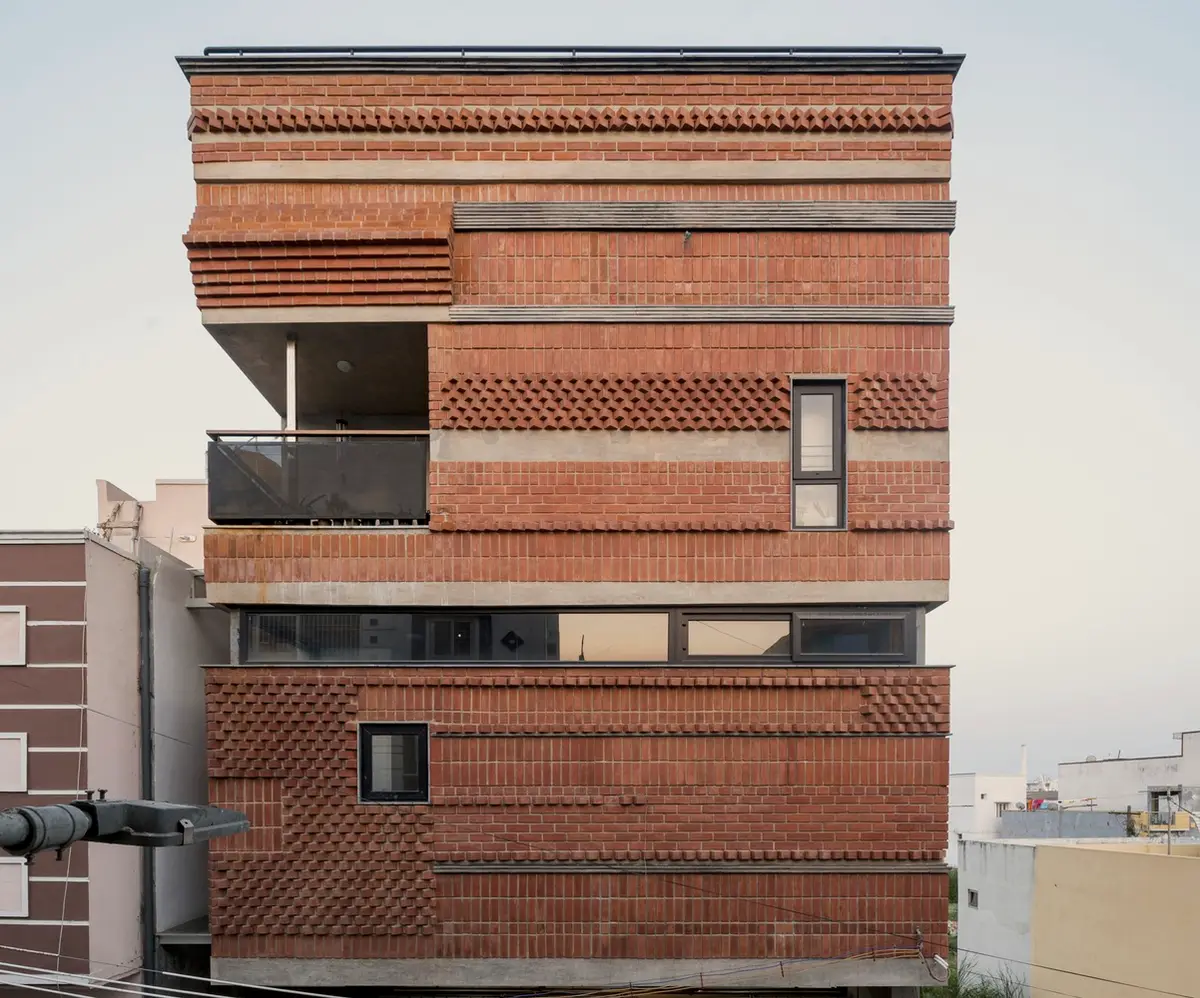
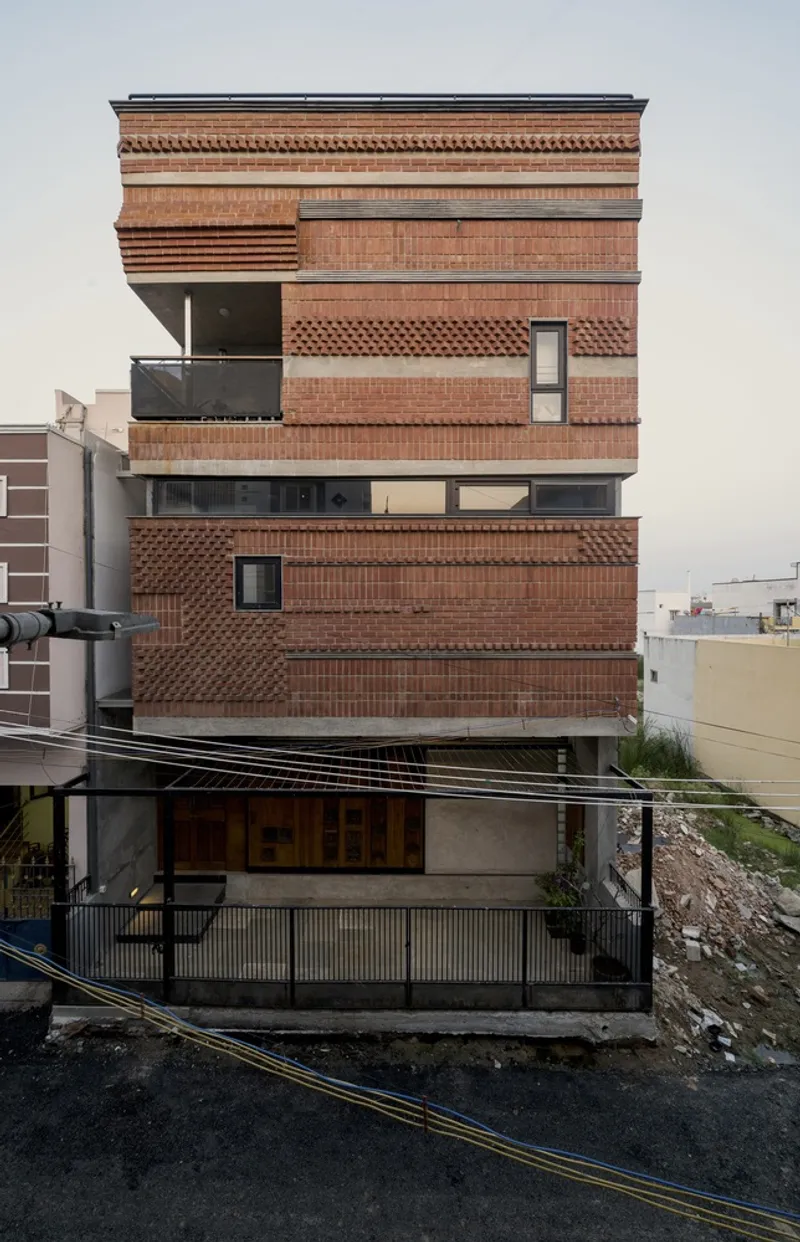
The burnished brick façade rises gently along the western edge of the site, presenting a composed yet dynamic street presence. Rather than revealing the entire house at once, the façade conceals a rich internal tapestry of layered spaces interconnected through light, movement, and visual dialogue.
This project exemplifies contemporary Indian architecture, where craft, climate sensitivity, and spatial storytelling converge.
Ground Level: The Realm of Work and Community
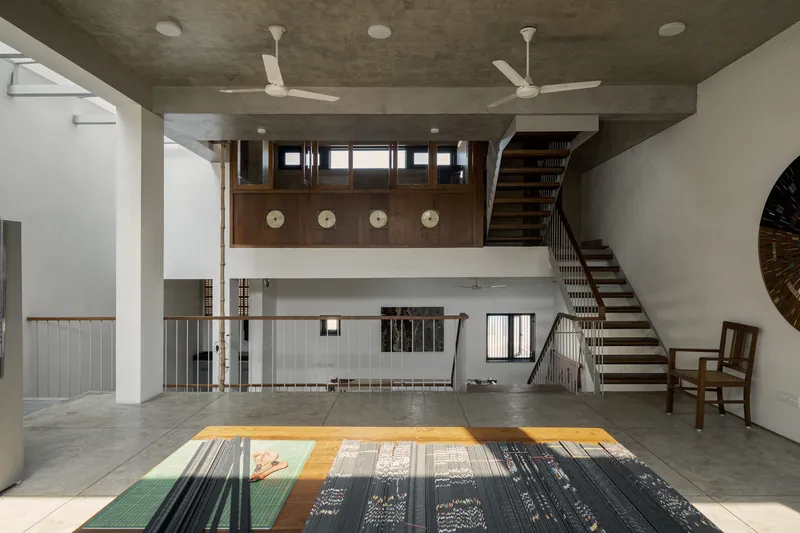
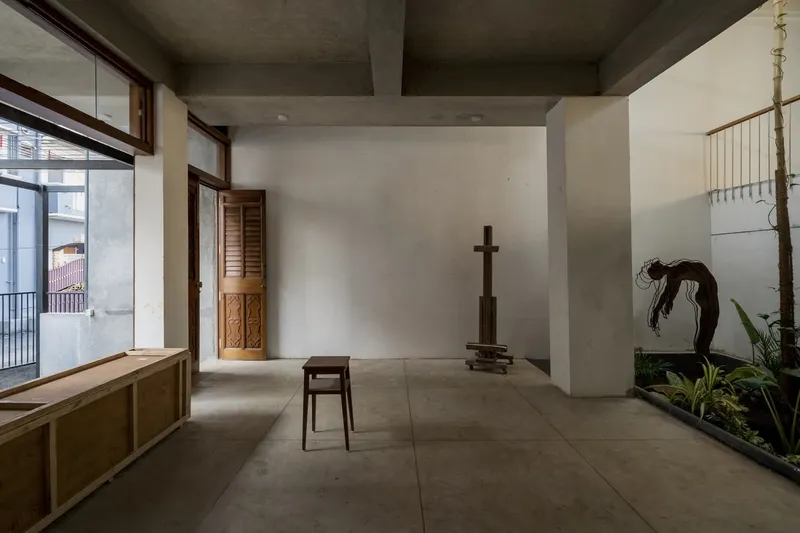
The ground floor establishes a direct relationship between work and the street. A generous workshop opens toward the edge, inviting collaboration and community engagement. Designed for large-format artistic production, this flexible studio accommodates expansive worktables and group gatherings.
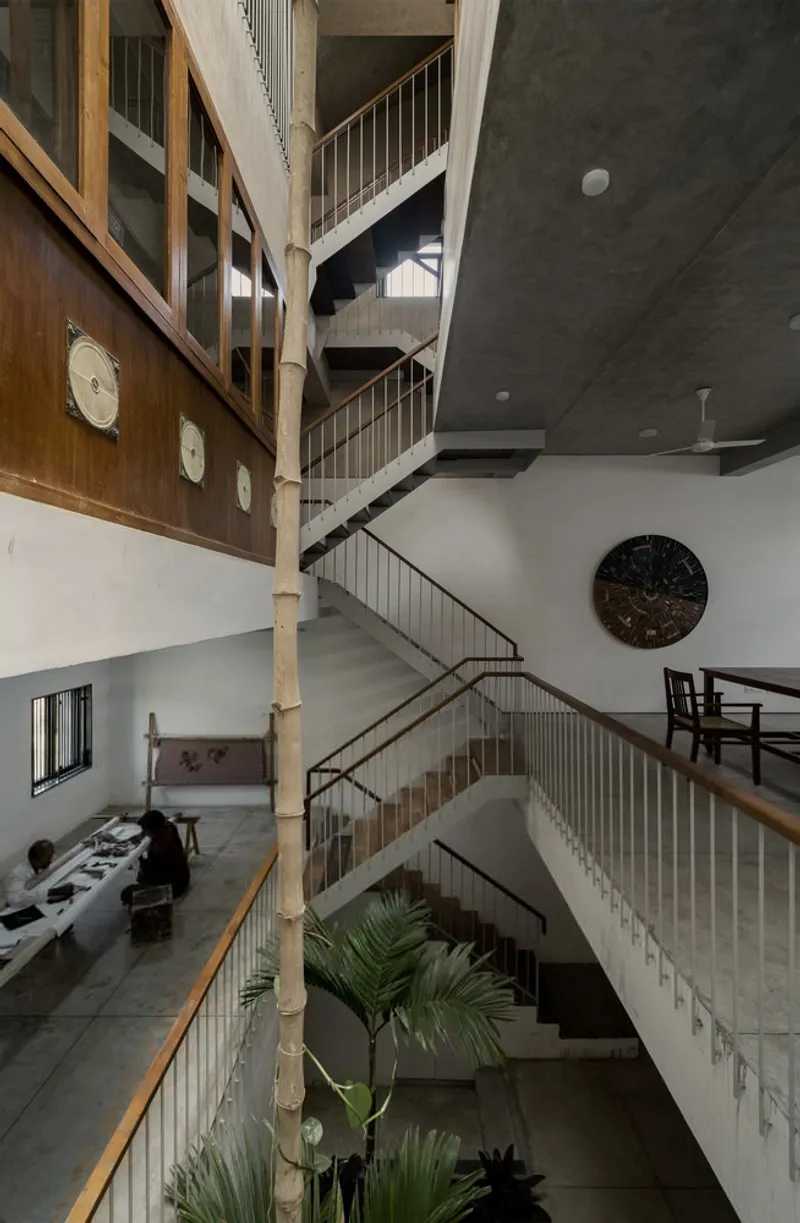
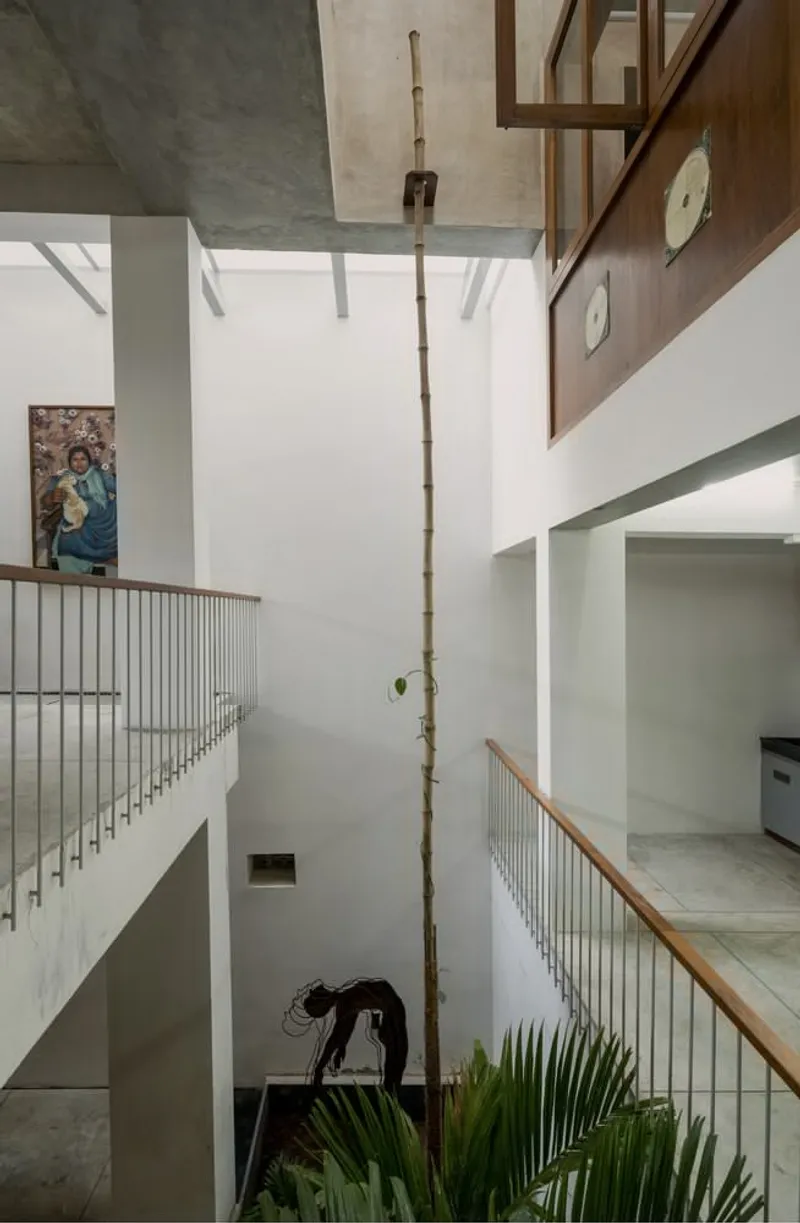
An indoor garden running along the north-south axis anchors the building’s core. Topped by a north-facing skylight, the garden draws daylight deep into the structure. Light filters downward through the vertical void, washing across layered platforms and revealing the visual interconnectedness between floors.
This strategy enhances:
- Passive daylighting
- Spatial continuity
- Thermal comfort
- Visual transparency
The result is a workspace that feels rooted, luminous, and connected to nature despite its dense suburban surroundings.
The Staircase as Architectural Spine
At the heart of Tiered Realm lies a sculptural staircase that acts as both circulation and social condenser. More than a transitional element, it becomes the vital seam stitching together multiple spatial realms.
The house unfolds upward through staggered split levels of varying proportions. Each landing expands to form zones of:
- Work
- Rest
- Display
- Informal gathering
These expanded platforms act as micro-galleries overlooking adjacent workshops across the central void. The stepping of volumes allows conversations to crisscross visually and acoustically, reinforcing collaboration between the artists.
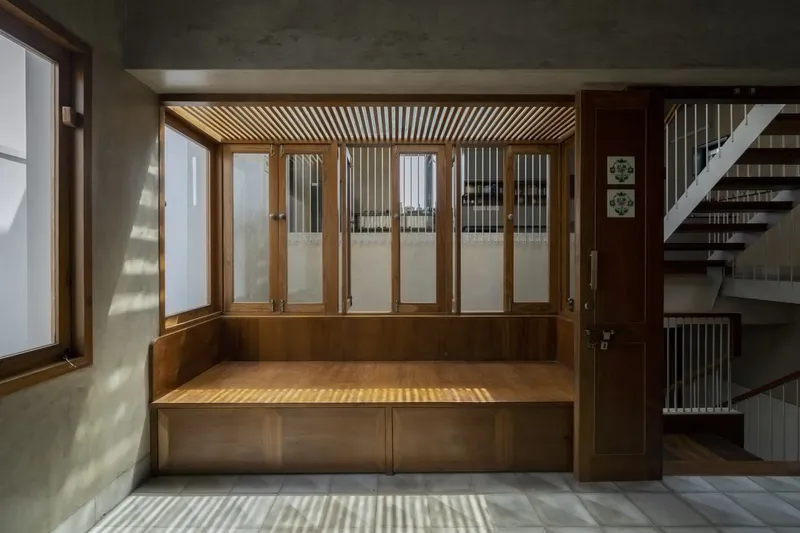
The mixed-media workshop occupies the larger western side, where filtered daylight softens glare while preserving brightness. On the eastern edge, textile studios offer a more introspective environment. A system of wooden shutters allows selective enclosure, transforming the upper workshop into an intimate atelier-like retreat when required.
The sectional design embodies a key architectural metaphor: fragmentation and recomposition, mirroring the artists’ creative process.
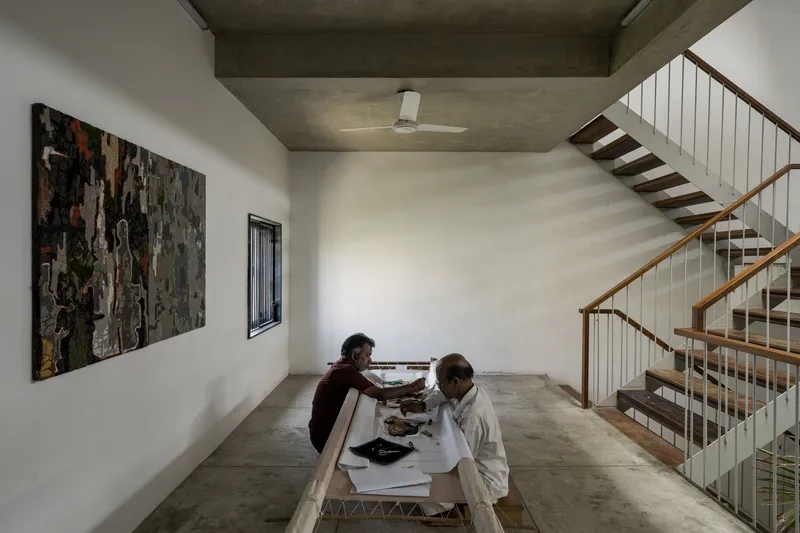
The Residential Realm: Intimate and Elevated
The uppermost tiers shift from production to private life. A compact yet inviting kitchen forms the heart of the domestic level, designed for shared meals and close gatherings.
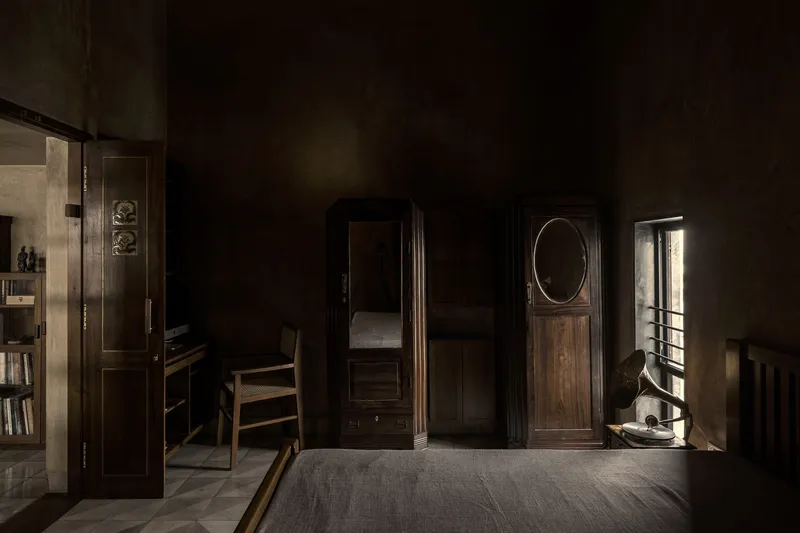
The penultimate landing widens into a living space and private bedroom, complemented by a west-facing balcony. Here, filtered evening light creates a softer ambiance distinct from the brighter studios below.
Crowning the house is a terrace designed as a social and celebratory realm. Stepped seating overlooks a distant lake, offering a communal setting for evening conversations, exhibitions, or intimate performances. The roof becomes an extension of both studio and home: a place where art, friendship, and landscape converge.
Material Palette: Craft, Texture, and Collaboration
Material exploration plays a crucial role in expressing the collaborative ethos of the house.
Workspaces feature durable IPS flooring, providing a robust, low-maintenance surface suited to artistic production.
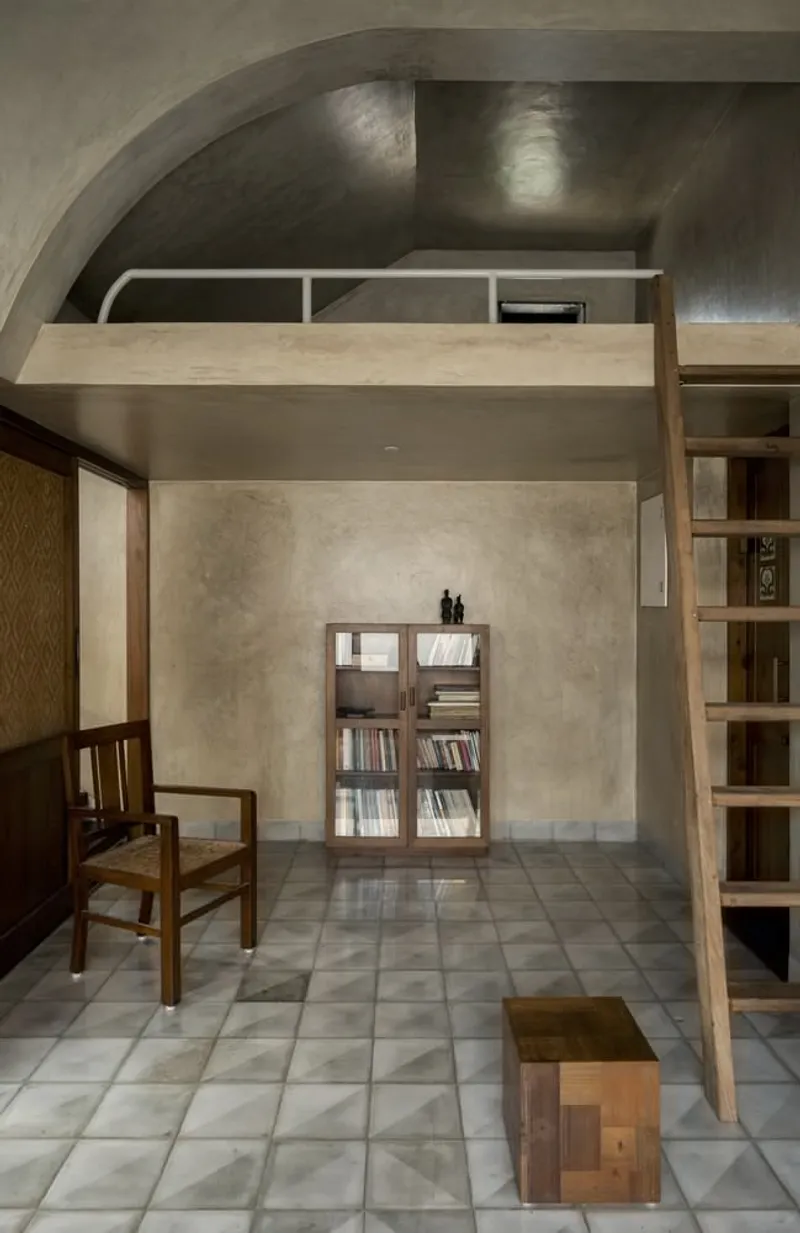
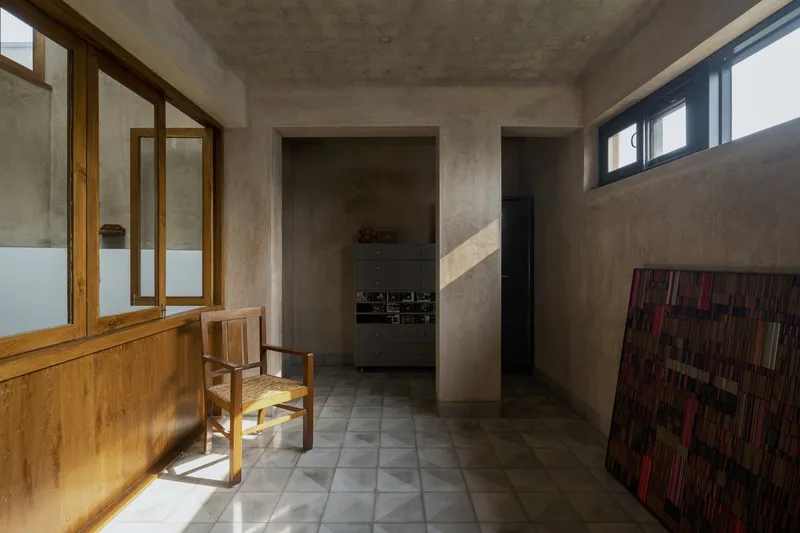
Residential spaces introduce handmade Athangudi tiles, adding color, pattern, and regional identity to the interiors.
Pigmented plaster walls were developed in close dialogue with the artists:
- Lighter tones energize work environments
- Deeper hues define resting and private areas
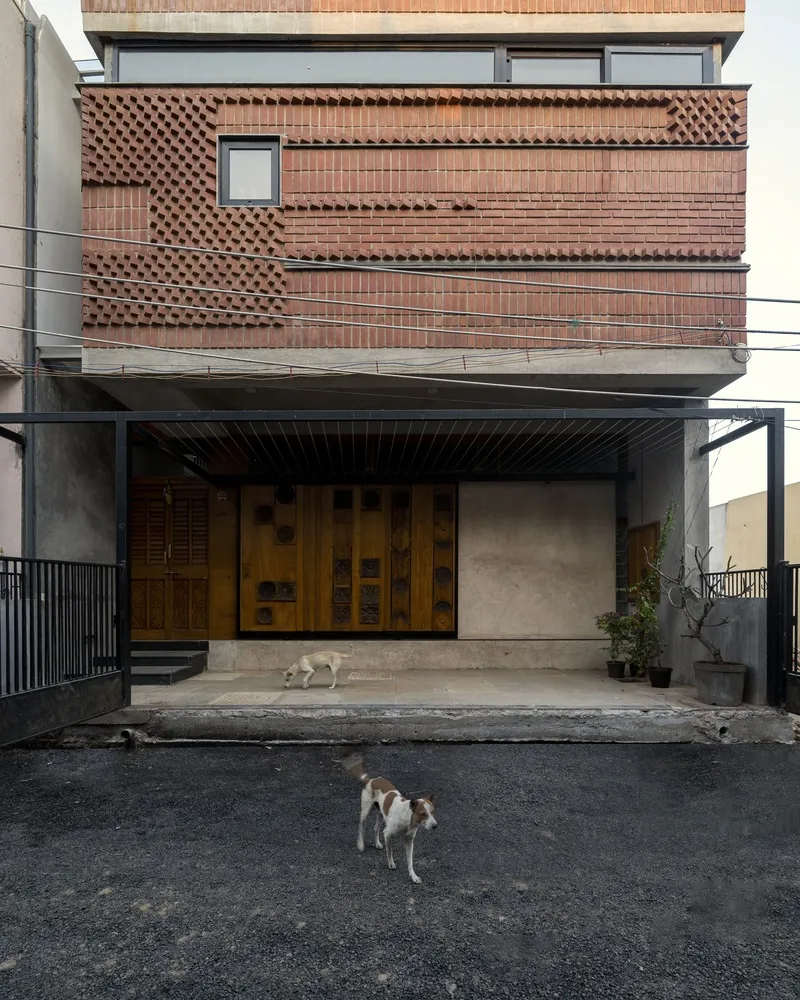
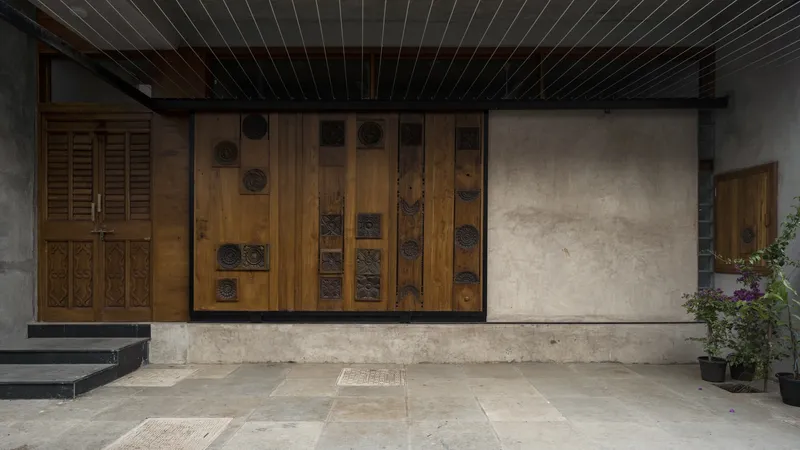
A sliding street-facing door crafted from recycled wood incorporates salvaged ceiling and column ornaments, forming a layered collage that references Chennai’s architectural heritage.
The façade itself is a study in brick craftsmanship. Bands of brick laid in varied configurations animate the street elevation, reflecting local masonry traditions while expressing compositional rhythm. This textured brick skin subtly filters western sunlight and establishes a climate-responsive envelope.
Climate Responsiveness and Spatial Sustainability
Tiered Realm integrates passive design strategies suited to Chennai’s tropical climate:
- North-lit skylight for controlled daylight
- Vertical void for stack ventilation
- Brick massing for thermal buffering
- Layered façade for solar mitigation
- Indoor garden for microclimate moderation
Rather than relying solely on mechanical systems, the house uses spatial configuration and material logic to enhance comfort naturally.
Architecture as a Metaphor for Artistic Practice
The conceptual core of Tiered Realm lies in its analogy to mixed-media art. Just as artistic processes fragment materials and reassemble them into new relationships, the architecture fragments volumes into tiers and layers them into an interconnected whole.
Each “tier” becomes a realm of its own: work, retreat, gathering, contemplation, yet remains visually and spatially intertwined with others. The project demonstrates how residential architecture can evolve beyond typological constraints to become a dynamic ecosystem for creativity.
Why Tiered Realm House Matters in Contemporary Indian Architecture
This project stands out for several reasons:
- It redefines the suburban Indian live-work model
- It integrates studio and residence without hierarchy
- It celebrates local craftsmanship through brickwork and Athangudi tiles
- It uses section as the primary spatial generator
- It demonstrates climate-sensitive urban architecture
In doing so, Tiered Realm House and Studio positions itself as an innovative example of small-plot contemporary architecture in India.
All photographs are works of
Syam Sreesylam


Popular Articles
Popular articles from the community


Architekt Andreas Gruber Scatters 23 Dark Timber Chalets Across a South Tyrolean Forest Edge
In Molini di Tures, Amonti Chalets breaks a resort into a hamlet of gabled timber houses, with parking, storage and services pushed into the slope.

Jaramillo Van Sluys Arquitectura and Urbanismo Turn a Demolished Registry Lot in Quito into an Orchard Plaza
In Quito's Centro Histórico, a 2,800 m² plaza exposes the San Agustín convent wall and redraws its lost Augustinian orchard in volcanic stone.

U.GA Architects Wraps an Oval Rooftop Pool in Curved Board-Formed Concrete on Busan's Jeollidan-gil
In Busan's Jeonpo-dong, a 454 m² mixed-use block stacks a neighborhood facility, guest rooms and an oval rooftop pool inside spiraling concrete walls.

David Ortega Stacks a Two-Story Mexico City Penthouse Around a Steel Stair and a Pergola-Shaded Roof Terrace
In Colonia Roma, a 300 m² penthouse uses oak joinery, a planted steel stair and a slatted roof pergola to make a new-build apartment feel like a house.

Similar Reads
You might also enjoy these articles

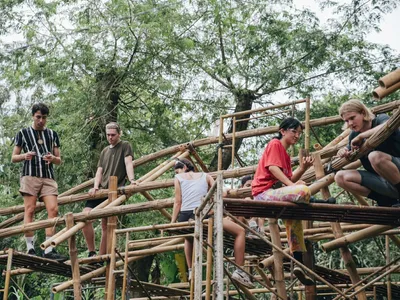
Bamboo Housing Challenge 2026: Design Affordable, Sustainable Homes Using Bamboo
An international design competition by Bamboo U and IBUKU inviting architects and designers to reimagine affordable housing using bamboo — with the winning design built full-scale in Bali.

Computational Design & Education: Beegraphy Design Awards Introduces 7th Category (Featuring Jiyun's Innovative Approach)
Dive into Beegraphy’s 7th Design Awards category, where computational design meets education to create immersive, interactive learning tools, inspired by Jiyun’s work.
From Parametric Lighting to Urban Furniture: Join the 2nd Workshop in Beegraphy’s Computational Design Series
Dive into Cutting-Edge Design Techniques and Practical Applications with Industry Experts

Last Call: Unleash Your Architectural Genius in SHAK's Kindergarten Design Competition
Urgent call for architects to join SHAK's kindergarten design competition before the looming deadline

Explore Live-Work-Play Competitions
Discover active competitions in this discipline

Challenge to reimagine the Iron Throne

Photograph architecture without architects

Illustrate the lost glory of Angkor Wat - Render Challenge

Design challenge to reuse E-waste
Comments (0)
Please login or sign up to add comments
No comments yet. Be the first to comment!