

Timeless Library: A Landmark of Sustainable Architecture in Warsaw
Where heritage, technology, and sustainable architecture shape the future of knowledge.


The Timeless Library, envisioned by Nothing Studio, introduces a transformative model of sustainable architecture in the heart of Warsaw. More than a contemporary cultural building, the project reimagines what modern library architecture can represent in the 21st century: an evolving organism that connects past, present, and future within a unified architectural narrative.
Designed as a civic landmark rooted in Polish culture, the Timeless Library merges advanced structural systems, ecological intelligence, and symbolic geometry. It stands not merely as a building, but as a living institution: one that reflects Warsaw’s identity while responding to global conversations about sustainability, technology, and public space.
Architecture Inspired by Fibonacci Logic and Natural Growth
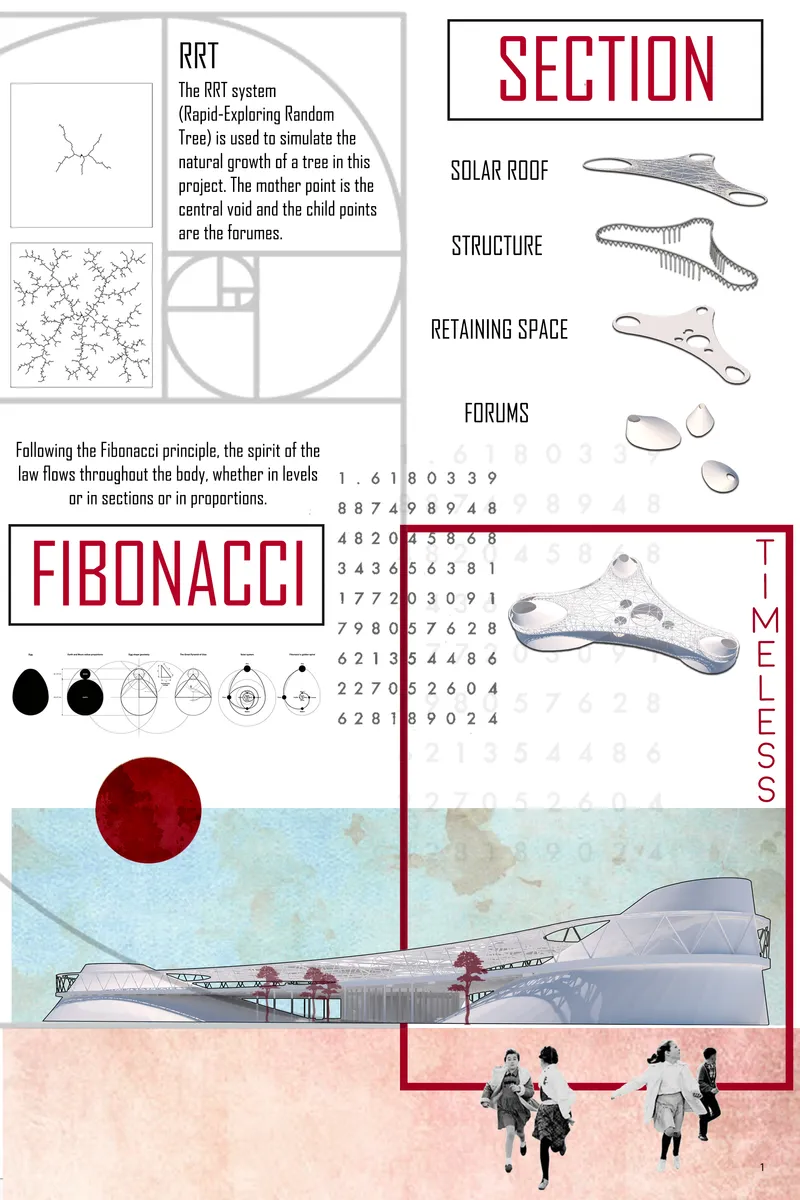
At the conceptual core of the project lies the Fibonacci principle, guiding proportions, spatial hierarchy, and circulation patterns. The design integrates Rapid-Exploring Random Tree (RRT) systems to simulate organic growth, allowing the architectural form to evolve naturally from a central void outward.
The "mother point", a central civic atrium, anchors the complex. From it extend child spaces, including:
- Main Hall
- Fame of Poland Gallery
- Research Center
- Discussion Hall
- Green Public Areas
- Entrance Plaza
This parametric logic reinforces sustainable architecture principles by optimizing structure, daylight, and environmental performance. The geometry is not decorative: it is functional, responsive, and efficient.
A Sustainable Site Plan Designed for Community Interaction
The site plan reveals an interconnected campus structured around fluid, triangular forms. Rather than imposing rigid orthogonal blocks, Nothing Studio introduces a soft, dynamic layout that encourages pedestrian movement and social interaction.
Key zones include:
- Main Hall – The heart of collective gathering.
- Fame of Poland – A cultural archive celebrating Polish identity.
- Research Center – A knowledge incubator for innovation.
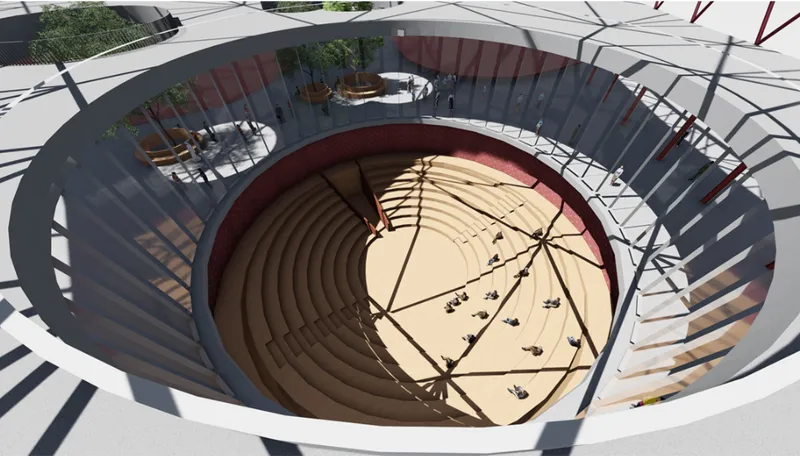
- Discussion Hall – A circular amphitheater fostering dialogue.
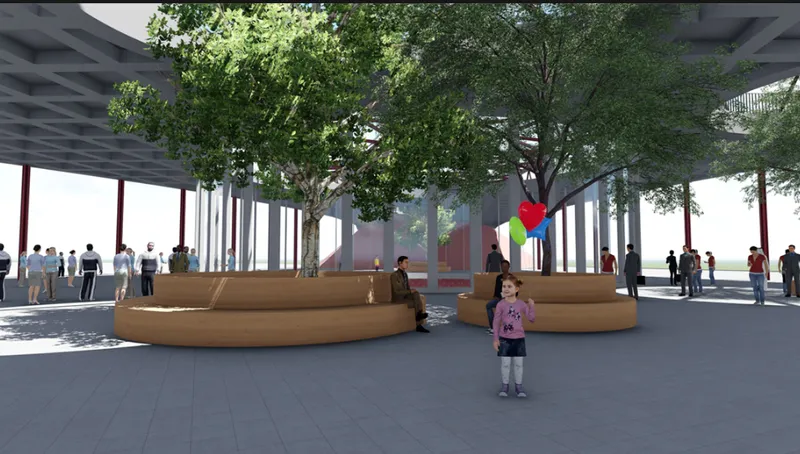
- Green Areas – Ecological breathing spaces.
- Entrance Plaza – A welcoming civic threshold.
The integration of landscape design, circulation flows, and urban context ensures that the Timeless Library becomes a sustainable architecture benchmark within Warsaw’s evolving city fabric.
Structural Innovation and Solar Integration
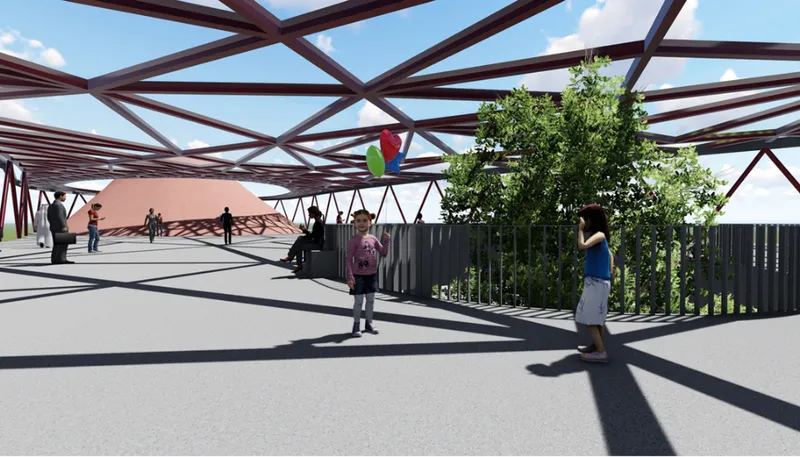
The sectional design highlights an advanced structural system combined with a solar roof canopy. The lightweight lattice framework maximizes daylight penetration while minimizing material waste, an essential aspect of sustainable architecture.
The green roof operates as both insulation and public terrace, improving thermal performance while creating an experiential landscape above the city. Photovoltaic integration ensures renewable energy production, reducing operational carbon footprint.
By blending solar technology, intelligent shading, and structural efficiency, Nothing Studio reinforces the project’s ecological agenda without compromising architectural elegance.
Technology as an Architectural Language
The Timeless Library incorporates holographic interfaces, AI-powered catalog systems, and interactive smart displays. Artificial intelligence guides users through collections, continuously evolving based on data patterns and user engagement.
The floor integrates piezoelectric materials capable of generating micro-energy from movement. Flexible walls enable adaptable spatial programming: transforming exhibition zones, lecture halls, and research spaces according to need.
This fusion of digital infrastructure and sustainable architecture positions the building as a forward-thinking cultural hub, an environment where innovation and ecology coexist.
The Fame of Poland: Architecture as Cultural Narrative
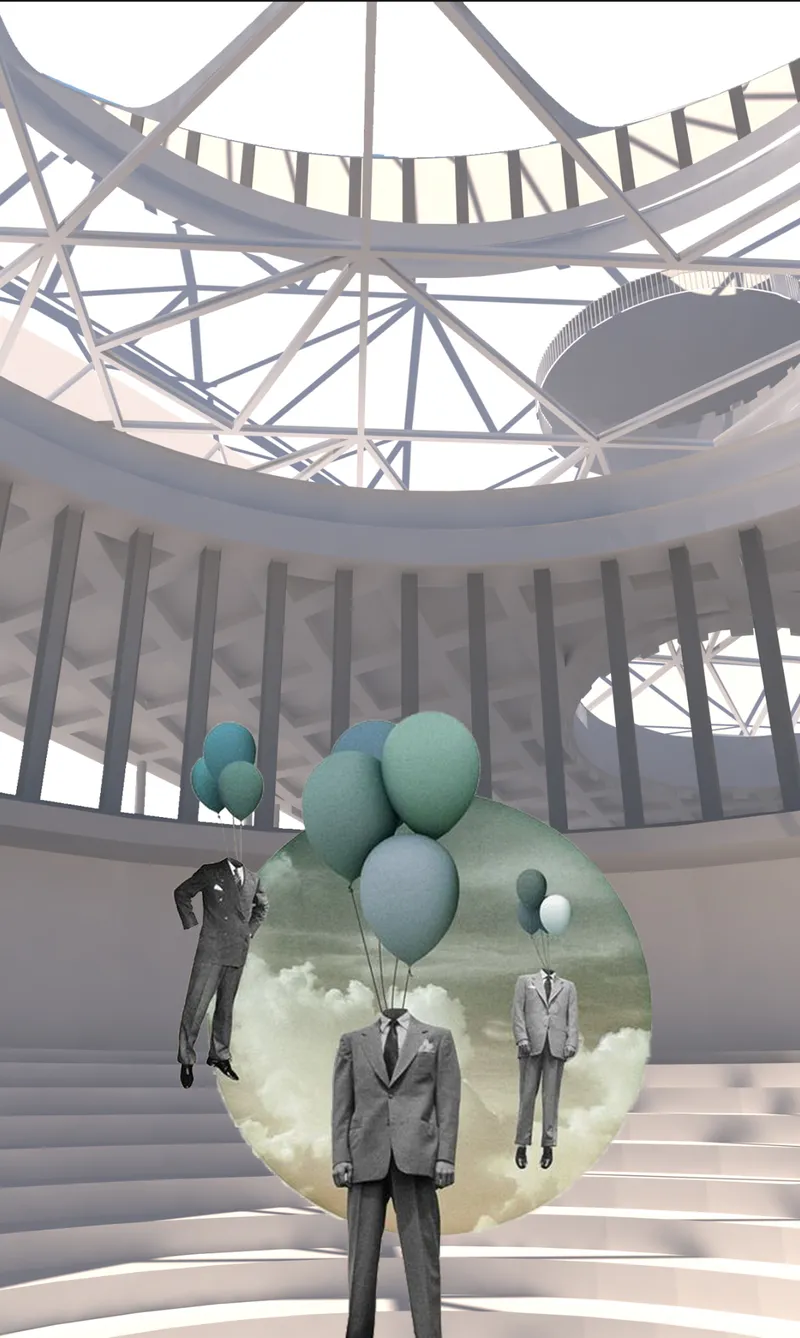
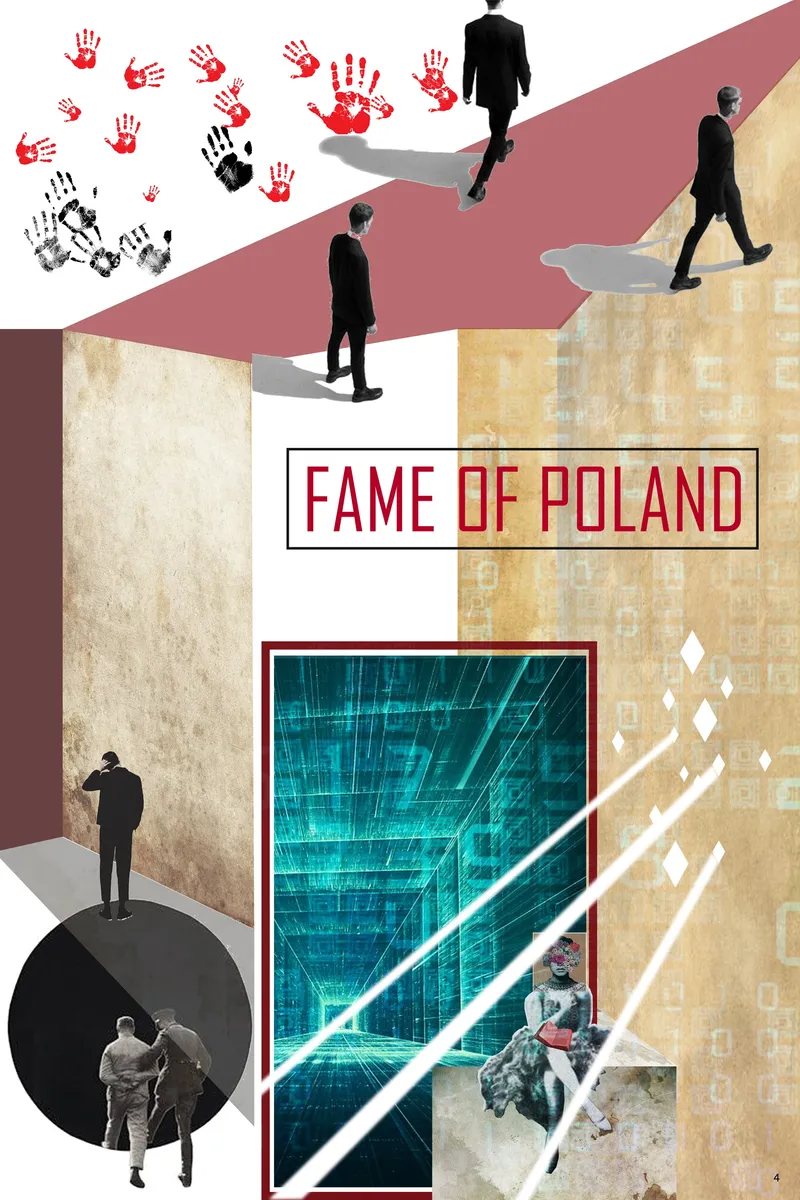
One of the project’s most powerful spaces is the “Fame of Poland” gallery. This immersive exhibition zone bridges historical memory with contemporary identity. Symbolic materials, red linear pathways, and layered perspectives narrate Poland’s journey while projecting its future.
The architecture becomes a storytelling device: using light, structure, and circulation to guide visitors through evolving narratives. In doing so, the building transcends functionality and becomes an experiential cultural landscape.
A Timeless Presence in Warsaw’s Urban Core
The Timeless Library is imagined as if it has always existed, deeply rooted in Warsaw’s urban memory, yet designed to remain relevant for generations to come. This duality defines its architectural philosophy.
By embracing sustainable architecture, ecological responsibility, advanced computation, and cultural symbolism, Nothing Studio has crafted a project that stands as both monument and movement.
It is not simply a modern library.
It is a timeless institution.
It is sustainable architecture shaped by culture, technology, and humanity.



Popular Articles
Popular articles from the community


AL-JANNAH: Sustainable Architecture and Permaculture for Afghan Widows
AL-JANNAH uses sustainable architecture and permaculture to create resilient oasis of housing, learning, work and renewal for Afghan widows.

The Earth Pod: 3D Printed Homes for Resilient Refugee Communities
The Earth Pod reimagines refugee housing through 3D printed homes made from clay, combining resilience, self-sufficiency, and rapid shelter.

Riyadh For All: Intergenerational Urban Design for Active Aging in Rabat
Riyadh For All reimagines urban design in Rabat with intergenerational co-living, adaptive courtyards, and Moroccan cultural exchange today.

The Ocean Hive: Sustainable Architecture for a Self-Sufficient Civilization at Sea
The Ocean Hive imagines sustainable architecture at sea, where modular habitats, algae, wave power and ocean waste sustain a growing colony.


Similar Reads
You might also enjoy these articles

Eco Chapel: A Green Architecture Pavilion Designed in Symbiosis with the Forest
Eco Chapel uses green architecture to weave prayer, learning and reuse into a forest pavilion shaped by modular hexagonal canopies for life.
Kaffeebühnen: Coffee Shop Architecture Designed as a Civic Stage Between Vienna’s City and Park
Kaffeebühnen turns coffee shop architecture into a civic stage, linking Vienna’s park edge, urban life, warm timber yards, and coffee craft.
Healing Façade: Sustainable Architecture for Reforestation, Community, and Sacred Ecology in Ethiopia
Healing Façade reimagines sustainable architecture as a living wall that restores soil, catches water and renews Ethiopia's forest churches.


Urban Forest: A Vertical Ecosystem for 5,000 Workers in Singapore's Changi Business Park
Radially stacked pods and layered green decks turn a 7-acre plot into 47 acres of ecological workspace projected for 2040.


Explore Library Architecture Competitions
Discover active competitions in this discipline


Design a brochure to showcase the effects of the technosphere

Challenge to illustrate ‘A tale of Two Cities’

Deconstructivism - Illustration Design Challenge


Design challenge to reuse E-waste
Comments (0)
Please login or sign up to add comments
No comments yet. Be the first to comment!