
Timeless Variation: Sustainable Memorial Architecture as an Ephemeral Homage to Climate Change
A sustainable memorial architecture project in Cairo that blends ephemeral design with climate awareness, using earth, time, and memory as material.

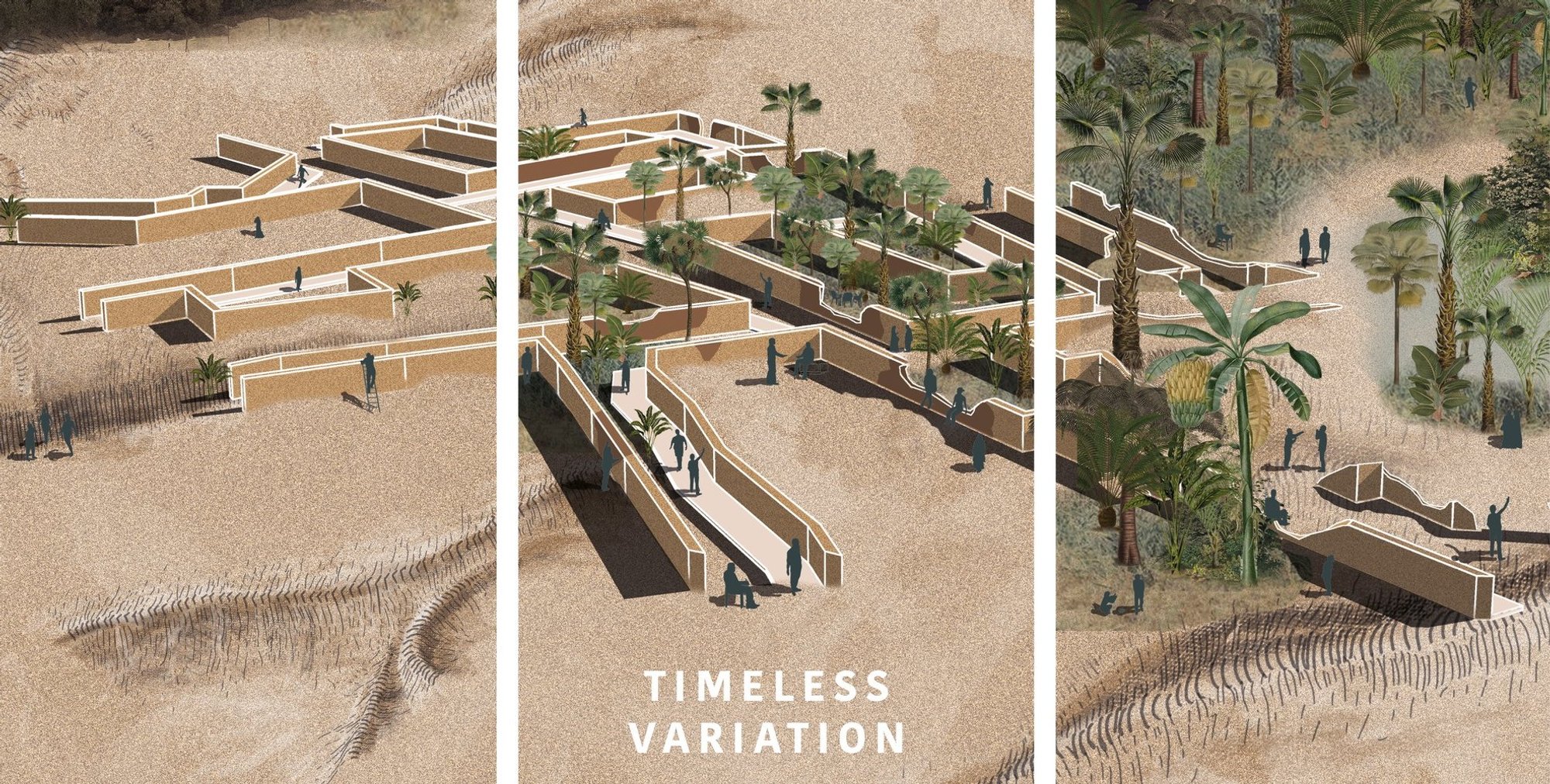
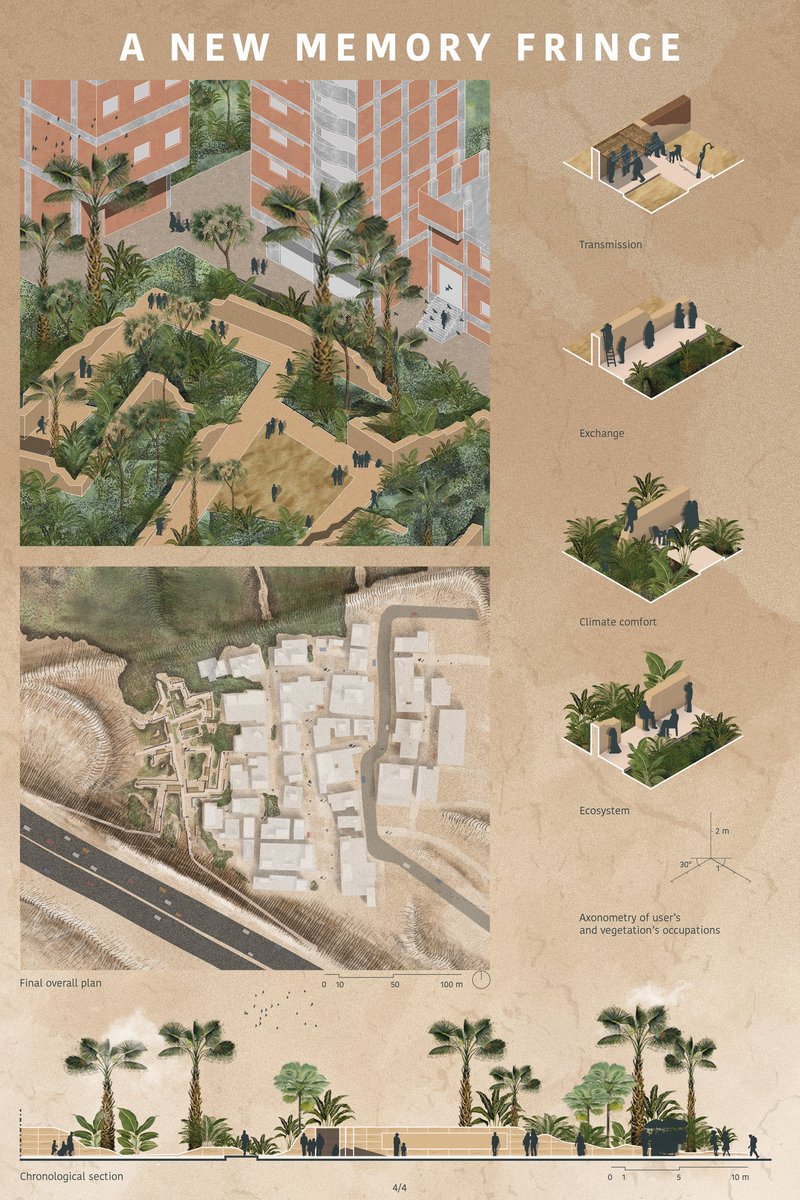
Timeless Variation is a compelling exploration of sustainable memorial architecture that operates at the intersection of time, memory, and environmental consciousness. Designed by Gregoire Boinay, Nathan Barré, and Louise Aimonetto, this Editor’s Choice entry from the Hourglass competition redefines how architecture can function not as permanence, but as a process of transformation.
Set within the evolving landscape of Cairo, the project challenges conventional architectural permanence by embracing erosion, decay, and natural reclamation as essential design components. It positions itself as both a memorial and a living environmental narrative.
Reinterpreting the City Through Sustainable Memorial Architecture
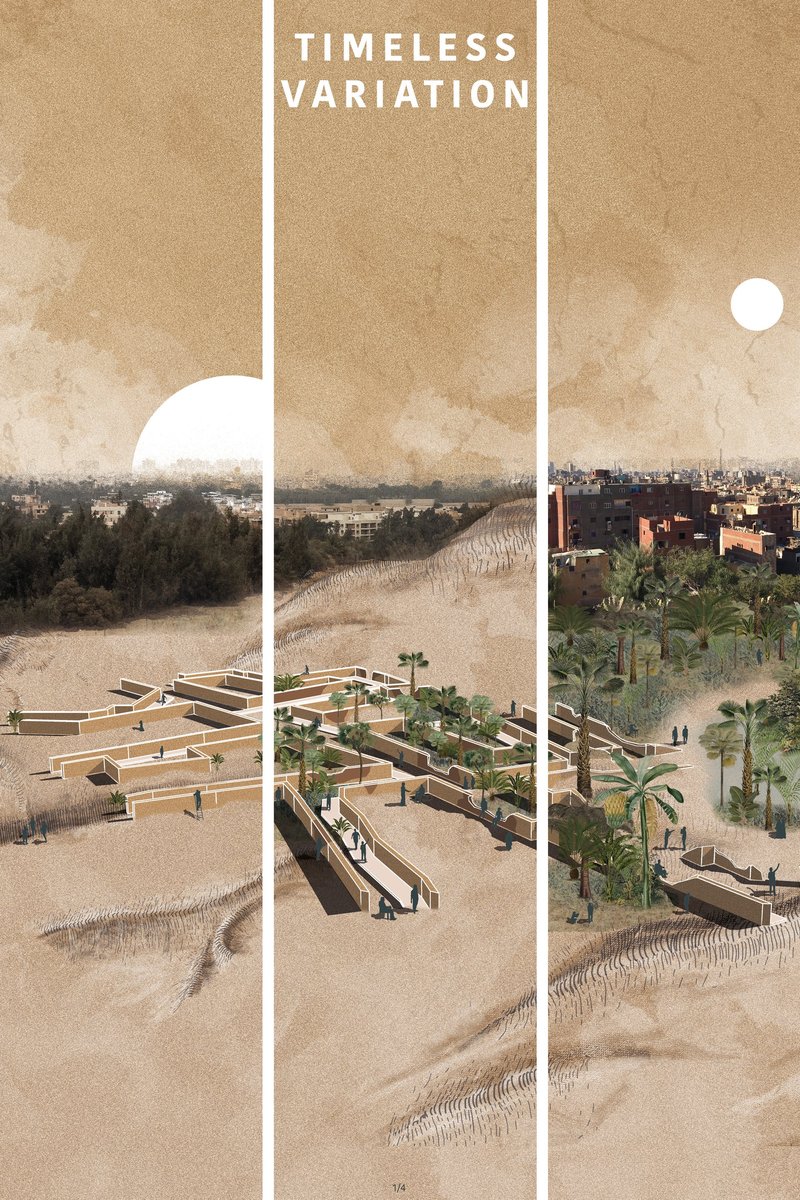
At the core of the project lies a reinterpretation of Bab el-Wazir street in Islamic Cairo, translated onto a vacant desert site. This gesture is not merely spatial but symbolic. It draws attention to the overlooked historic center of Cairo, contrasting it with rapid urban expansion that often lacks ecological sensitivity.
Through this intervention, the architects propose a counter-narrative to unchecked urbanization. Instead of constructing a permanent monument, they embed memory into the land itself, allowing time and environmental forces to reshape the architecture.
Ephemeral Architecture and the Logic of Time
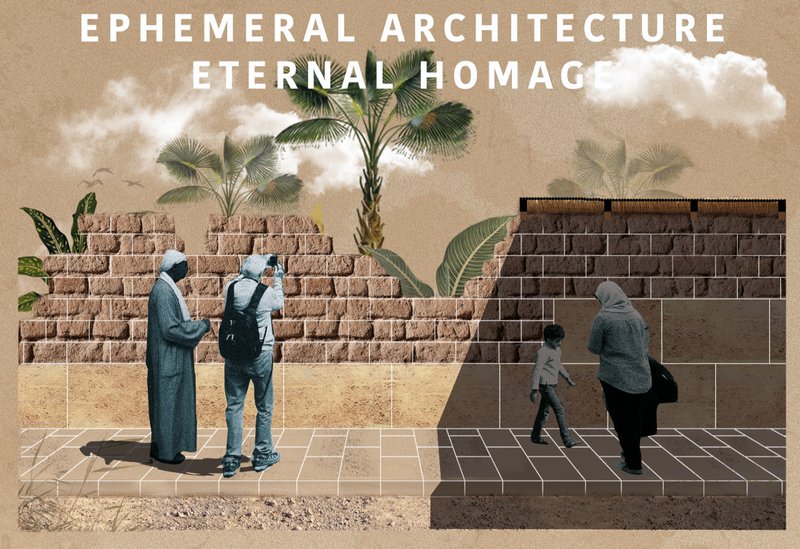
Unlike conventional monuments, Timeless Variation operates within the framework of ephemeral architecture. The built elements, composed of cut stone and raw earth brick, are intentionally vulnerable to natural forces such as wind, sand, and sunlight.
This vulnerability is not a flaw but a deliberate design strategy. The gradual erosion of walls and pathways mirrors the fragility of human interventions in the face of climate change. Over time, the memorial may partially or completely disappear, reinforcing the idea that architecture is not immune to planetary processes.
This approach transforms the project into a temporal artifact, where decay becomes a form of expression rather than a failure of construction.
Material Strategy: Local, Low-Impact, and Climate-Responsive
The project demonstrates a rigorous commitment to sustainable memorial architecture through its material logic. By using locally sourced stone and earth, the design minimizes transportation impact and aligns with traditional construction practices in Cairo.
These materials also provide strong thermal performance, reducing the need for additional infrastructure such as water systems or mechanical cooling. Foundations are kept minimal, and no polluting materials are introduced, ensuring that the intervention remains lightweight and reversible.
This strategy reflects a broader architectural ethic that prioritizes contextual intelligence over technological excess.
Spatial Experience: A Journey of Awareness
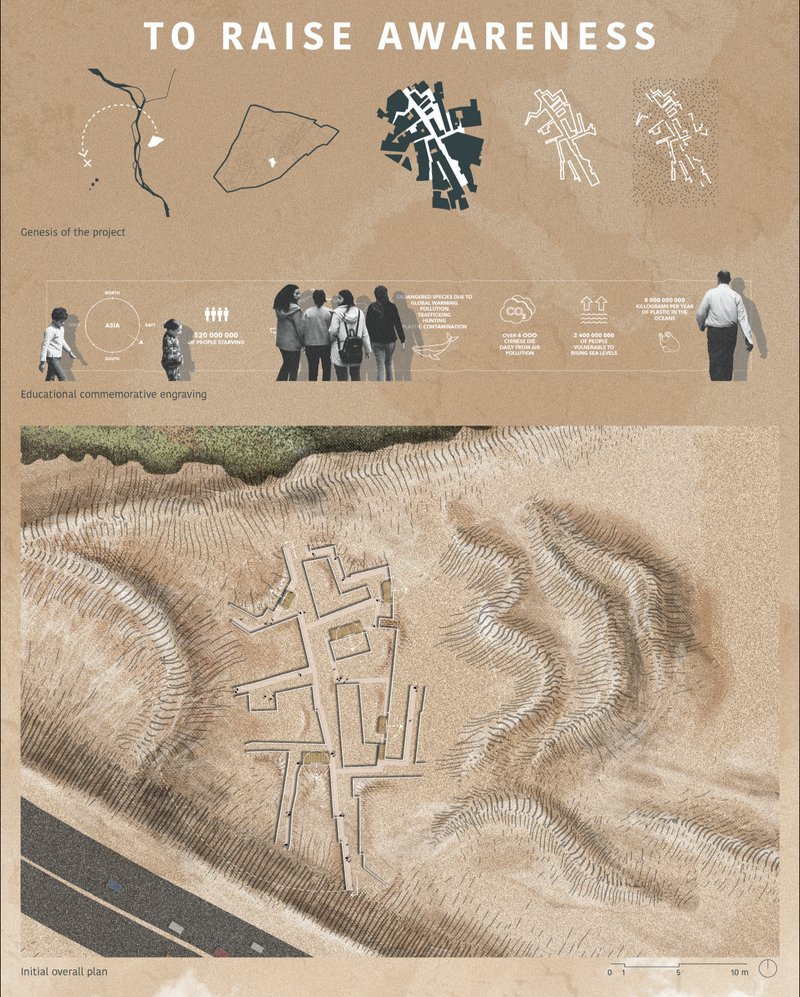
The memorial is designed as a sequential landscape experience, where visitors traverse pathways that echo the morphology of historic streets. Along this journey, they encounter engraved stone inscriptions that communicate the global impacts of climate change.
These inscriptions function as both educational tools and emotional triggers. They reference environmental crises across continents, translating abstract data into tangible narratives. By doing so, the project shifts the visitor from passive observer to active participant.
The spatial sequence also integrates moments of pause, shade, and reflection through lightweight reed and straw structures. These zones provide relief from Cairo’s intense climate while reinforcing the sensory dimension of the experience.
Climate Change as a Design Narrative
A defining aspect of the project is its explicit engagement with climate change and global warming. The memorial does not merely represent these issues symbolically but embeds them within its physical and temporal logic.
Visitors experience heat, exposure, and material degradation firsthand. The architecture becomes a medium through which environmental realities are felt rather than explained.
By aligning spatial experience with environmental conditions, the project creates a pedagogical landscape, where awareness emerges through direct interaction.
Urban Critique: Expansion vs Regeneration
Timeless Variation also operates as a critique of Cairo’s current urban trajectory. The city’s expansion into desert territories is contrasted with the neglect of its historic core.
Through its intervention, the project emphasizes the importance of regeneration over expansion. It highlights the finite nature of Earth’s resources and the responsibility of architects and planners in shaping sustainable futures.
The memorial thus becomes a platform for reflection on broader urban and environmental policies.
Vegetation and Microclimate Formation
As the architecture gradually erodes, vegetation begins to occupy the site. This process introduces a new ecological layer, transforming the memorial into a microclimatic system.
Plants provide shade, improve air quality, and create a more hospitable environment within the desert context. Over time, the site evolves from a constructed landscape into a hybrid ecosystem, blurring the boundaries between architecture and nature.
This adaptive transformation reinforces the project’s core thesis: that architecture should not resist nature but collaborate with it.
Symbolism and Global Relevance
The project employs universal symbols such as tracks, ruins, and routes to communicate its message across cultural boundaries. Inscriptions are designed to be multilingual, ensuring accessibility to a global audience.
Each engraved plaque addresses a specific environmental issue, from deforestation to rising sea levels. This distributed narrative allows visitors to engage with climate change at both local and global scales.
The memorial thus operates as a collective archive of environmental memory.
Juror Insight
Jonas Prismontas, Juror
“Great that the project designer thinks of using local materials and low impact solutions for this memorial.”
This observation underscores the project’s strength in aligning conceptual ambition with practical sustainability. The use of low-impact materials is not only environmentally responsible but also integral to the project’s temporal and experiential qualities.
Timeless Variation expands the discourse on sustainable memorial architecture by questioning the very notion of permanence. It proposes that memory does not require static monuments but can exist within processes of change, erosion, and renewal.
By integrating local materials, climatic responsiveness, and temporal transformation, the project offers a nuanced model for future architectural interventions. It demonstrates that architecture can be both ephemeral and meaningful, capable of engaging with the most pressing issues of our time.
In doing so, it repositions architecture as a medium of awareness, responsibility, and coexistence with the Earth.
Project Credits Gregoire BoinayNathan BarréLouise Aimonetto
Editor’s Choice – Hourglass Competition




Popular Articles
Popular articles from the community

The Faith: Modular Architecture for Play, Learning, and Hope in Kutupalong Refugee Camp
A modular playground architecture project in Bangladesh where play, learning, safety, and hope rebuild childhood inside a refugee camp anew.

Reincarnation Weaves a Three-Story Retreat into the Green Landscape of Rural Bangladesh
Ara Manor in Narsingdi dissolves the line between domestic architecture and its lush surroundings through screens, courtyards, and planted rooftops.
Kerry Kounnapis Packs 800 Daily Coffees into a 43-Square-Metre Melbourne Laneway Bar
Palace Coffee channels Pellegrini's and European standing bars through oxide-red steel and spotted gum timber in a Ridgway Place sliver.
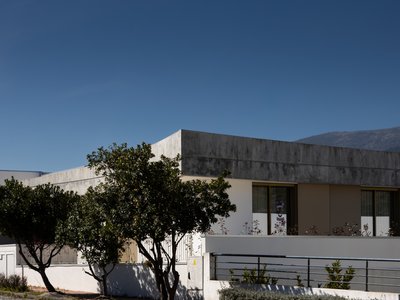
PLATAFORMArq Folds a Concrete Roof Over the Portuguese Mountains in House #474
A 220-square-meter residence in Teixoso, Portugal, wraps board-formed concrete into an angular canopy that frames the Serra da Estrela foothills.


Similar Reads
You might also enjoy these articles
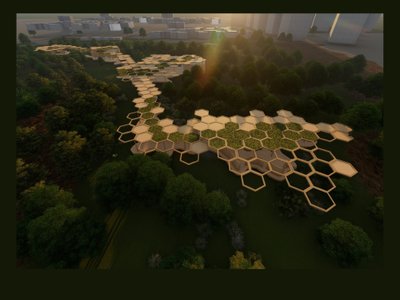
Eco Chapel: A Green Architecture Pavilion Designed in Symbiosis with the Forest
Eco Chapel uses green architecture to weave prayer, learning and reuse into a forest pavilion shaped by modular hexagonal canopies for life.
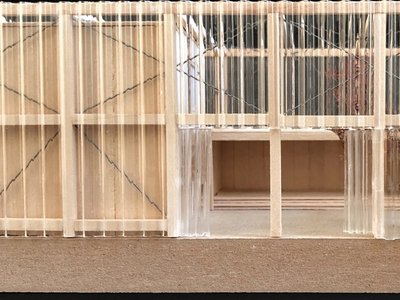
Kaffeebühnen: Coffee Shop Architecture Designed as a Civic Stage Between Vienna’s City and Park
Kaffeebühnen turns coffee shop architecture into a civic stage, linking Vienna’s park edge, urban life, warm timber yards, and coffee craft.
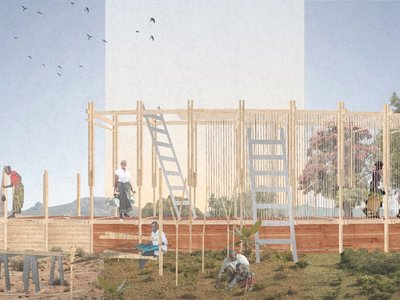
Healing Façade: Sustainable Architecture for Reforestation, Community, and Sacred Ecology in Ethiopia
Healing Façade reimagines sustainable architecture as a living wall that restores soil, catches water and renews Ethiopia's forest churches.


Urban Forest: A Vertical Ecosystem for 5,000 Workers in Singapore's Changi Business Park
Radially stacked pods and layered green decks turn a 7-acre plot into 47 acres of ecological workspace projected for 2040.


Explore Sustainable Design Competitions
Discover active competitions in this discipline




The Global Benchmark for Architecture Dissertation Awards


Design challenge to reuse E-waste
Comments (0)
Please login or sign up to add comments
No comments yet. Be the first to comment!