
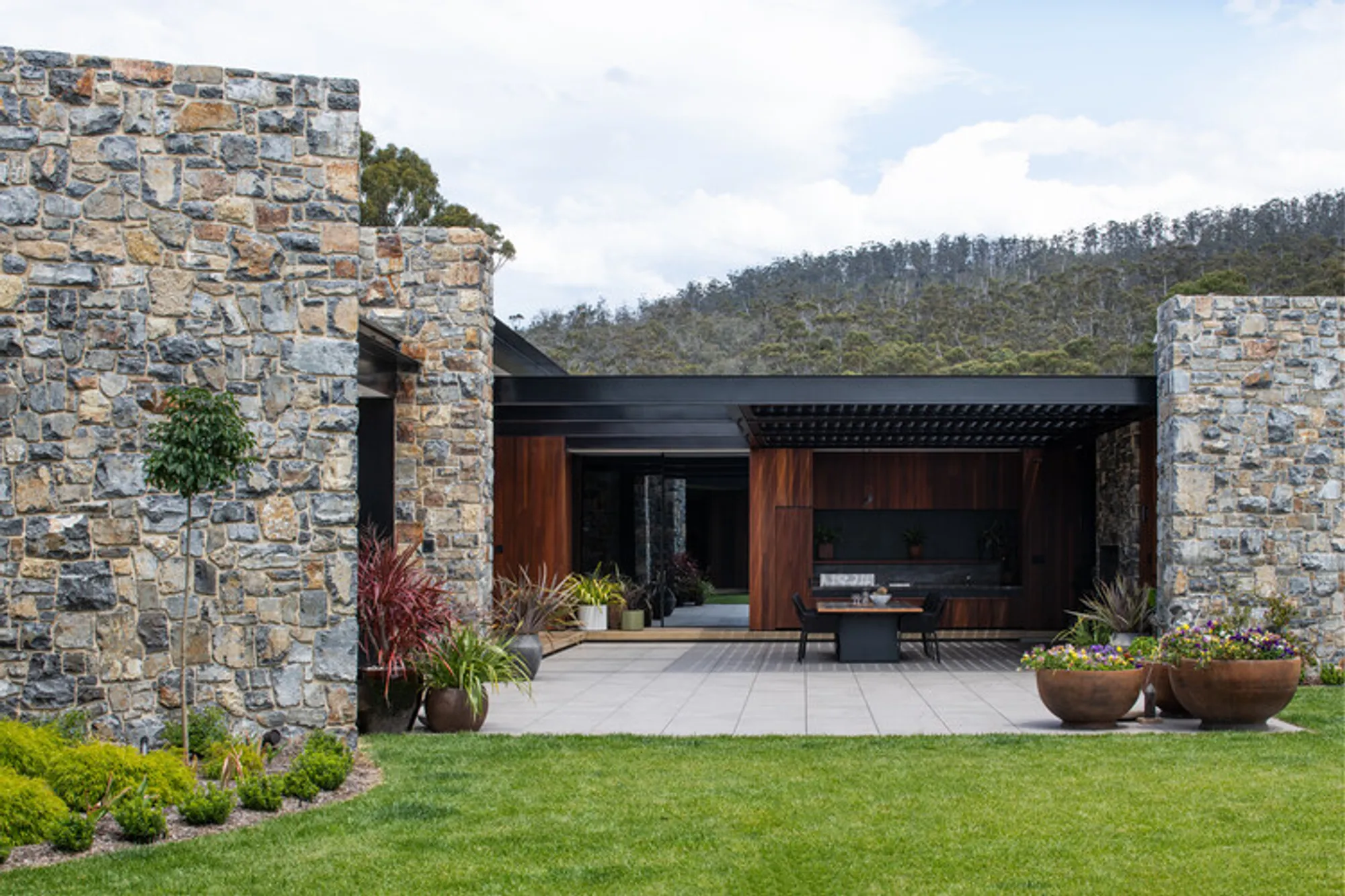
Tinderbox House By Studio Ilk Architecture + Interiors: A Passive Solar Coastal Retreat in Tasmania
Tinderbox House in Tasmania by Studio Ilk blends passive solar design, mudstone, timber, and coastal views into a sustainable, luxurious family retreat.


Located in the rugged and semi-rural landscape of Tinderbox, Australia, Tinderbox House by Studio Ilk Architecture + Interiors is a masterfully crafted family retreat that balances practicality, luxury, and environmental responsibility. Completed in 2021 on a 1,767 m² site, the project responds to a unique combination of challenges: coastal cliff-side views, bushfire exposure, biodiversity overlays, and a previously excavated, partially unbuilt site including an underground cellar.
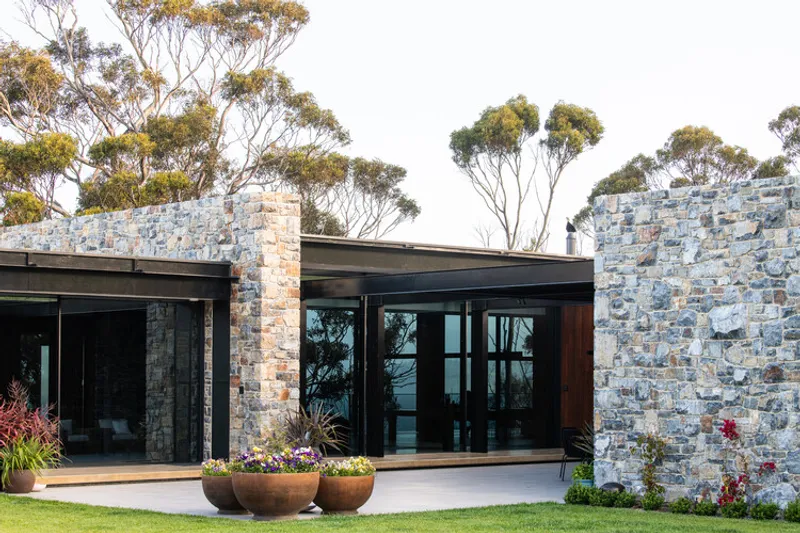
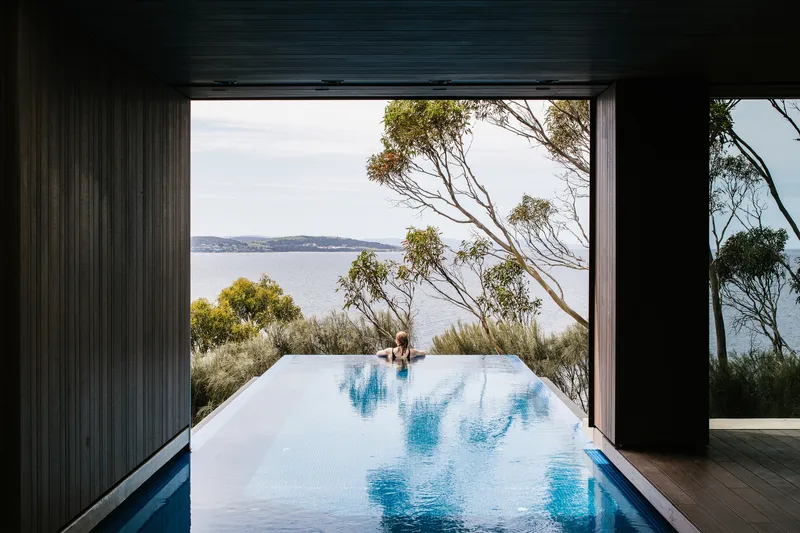
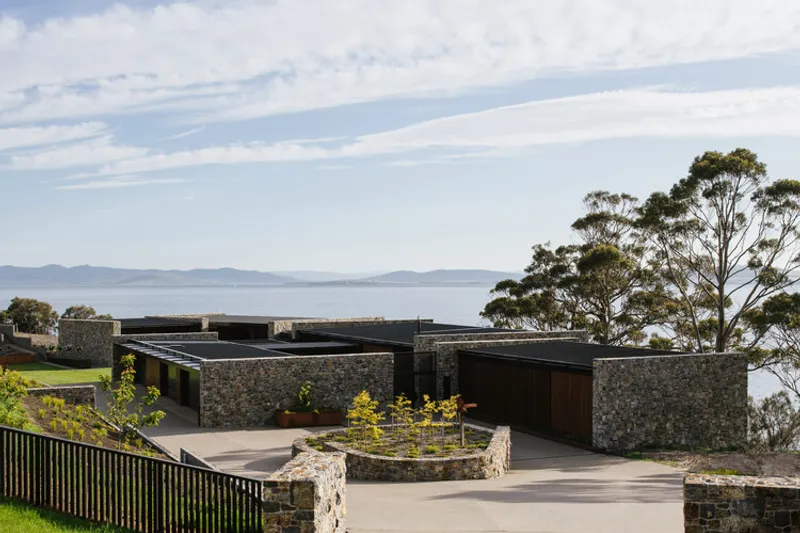
Designed for a local Tasmanian family, the house exemplifies passive solar design principles, carefully oriented to maximize natural light and warmth while offering expansive southern water views from every room. The home is organized as a linear sequence of pavilions separated by mudstone bookend walls, which provide thermal massing, structural grounding, and visual segmentation. The mudstone walls were selected in collaboration with the client and stonemason to reflect the warm tones of the surrounding landscape, harmonizing with ochre-toned spotted gum timber cladding and caramel burnished concrete floors, all bushfire-resistant.
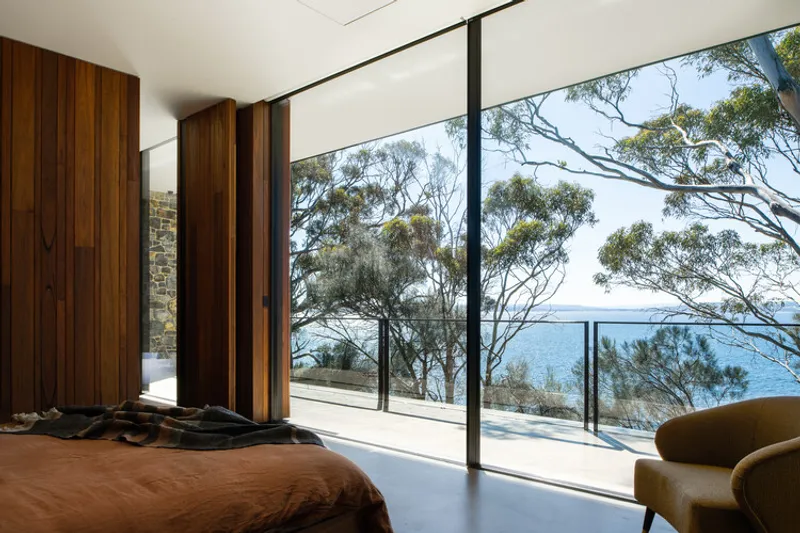
Spatial organization prioritizes family living, privacy, and comfort. The home’s layout supports both intimate daily routines and large gatherings, allowing guests to enjoy recreational amenities, such as the cantilevered pool, while children rest quietly in the guest wing. The main bedroom wing features a winter garden with a full-height spotted gum screen, creating privacy and a dynamic play of sunlight throughout the day.
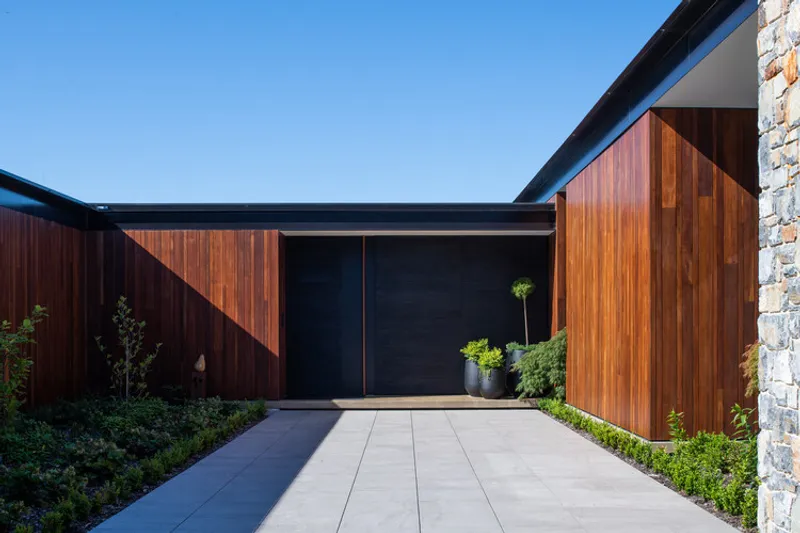
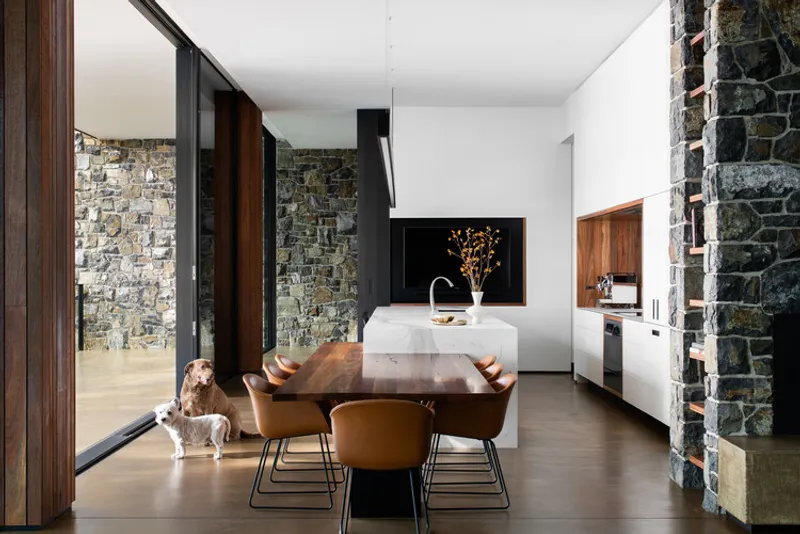
Sustainability and efficiency are central to the design. The building envelope is super-insulated, with thermal breaks, enclosed subfloors, and concrete floors that provide passive thermal regulation. A commercial-scale solar/battery storage system, geothermal heating, and ventilation systems optimize energy use, allowing the home to remain environmentally responsible while offering comfort in a large-scale coastal residence. Cross-ventilation ensures natural cooling without mechanical reliance.
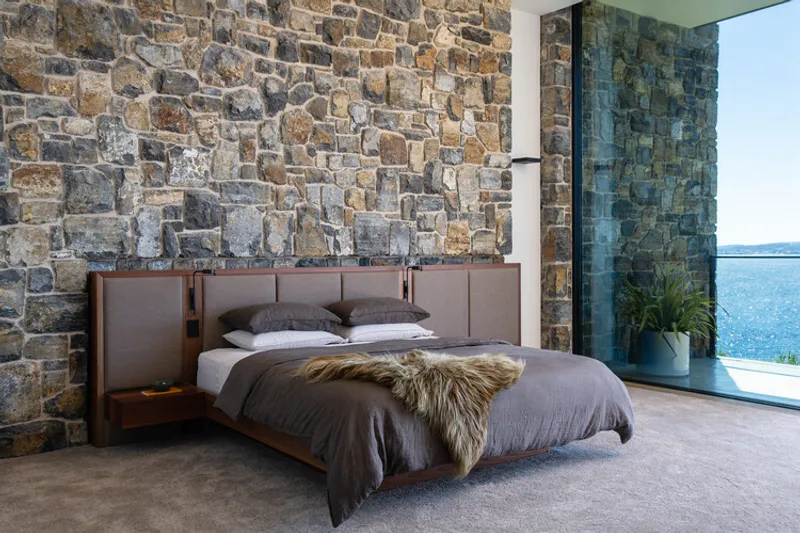
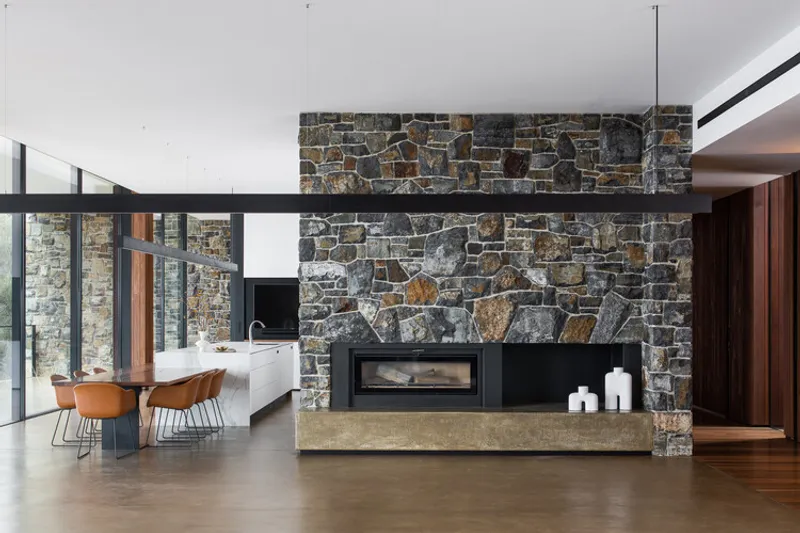
The design process was deeply collaborative, integrating selected subcontractors, including the stone mason and smart home specialists, ensuring precise execution and alignment with the client’s vision. Despite regulatory and topographical challenges, the house was positioned along the eastern edge of the property, nestled below the ridge for protection from prevailing winds and preserving views through native White Gum habitats.
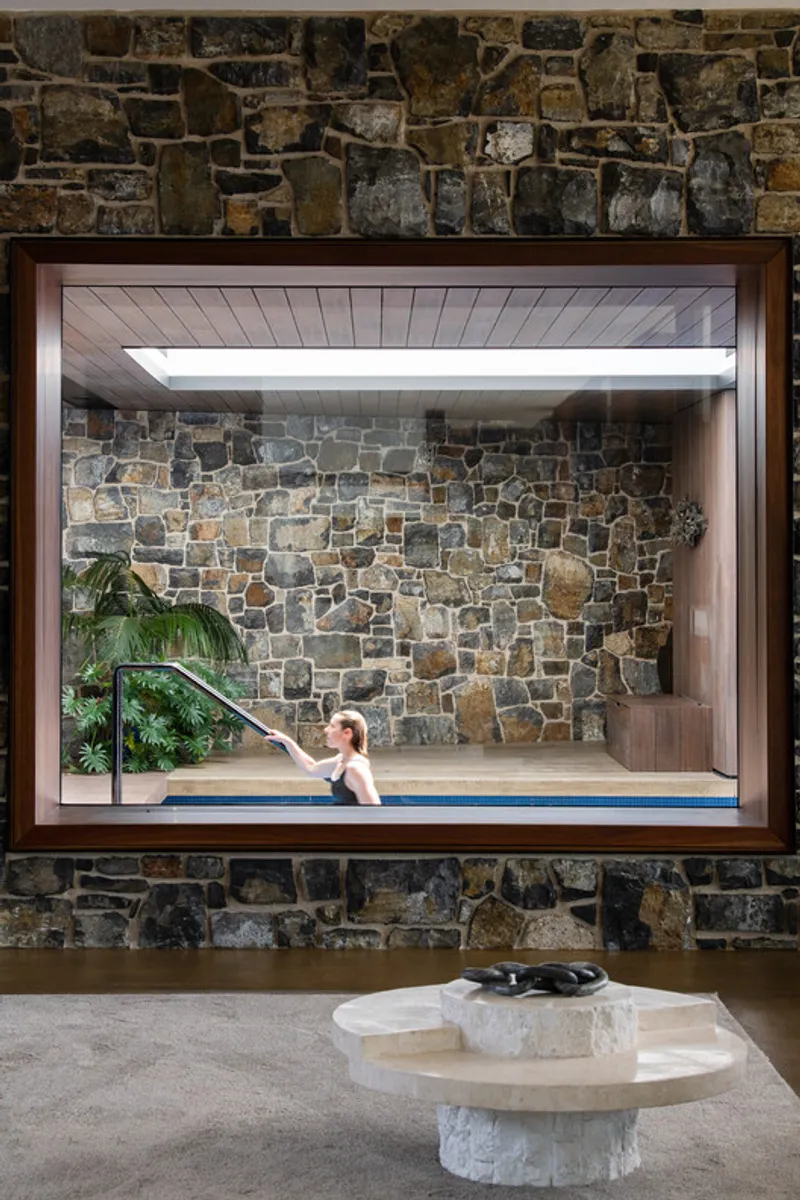
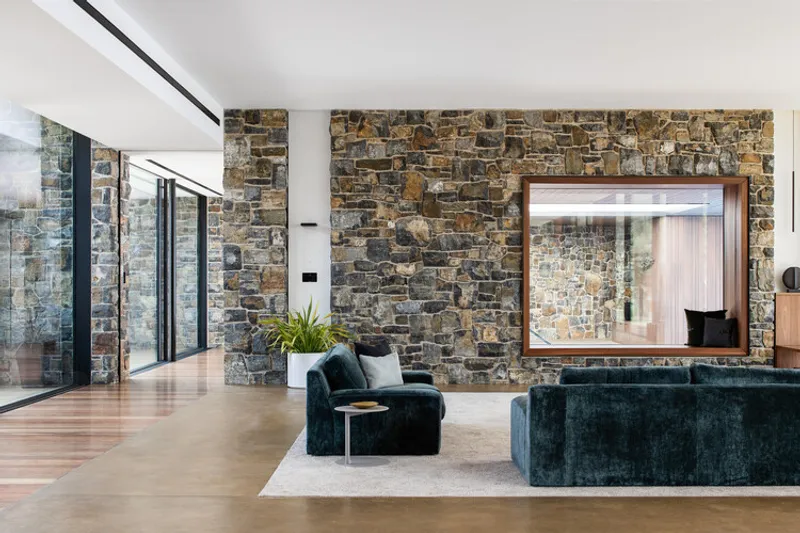
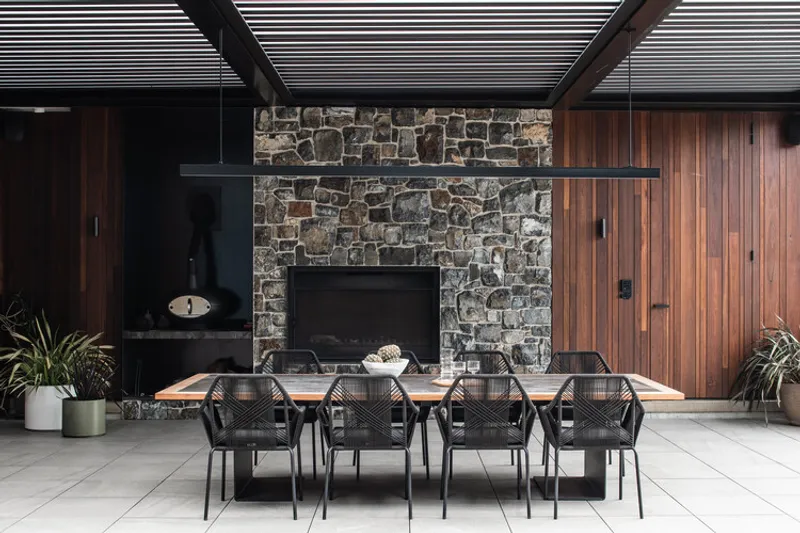
Tinderbox House is both visually striking and intimately connected to its environment. Its combination of mudstone, timber, and concrete, along with passive solar efficiency, makes it a durable, long-lasting coastal retreat that embodies contemporary Tasmanian residential architecture. The result is a home that feels both monumental and grounded, offering a serene sanctuary for the family while integrating seamlessly with the natural landscape.
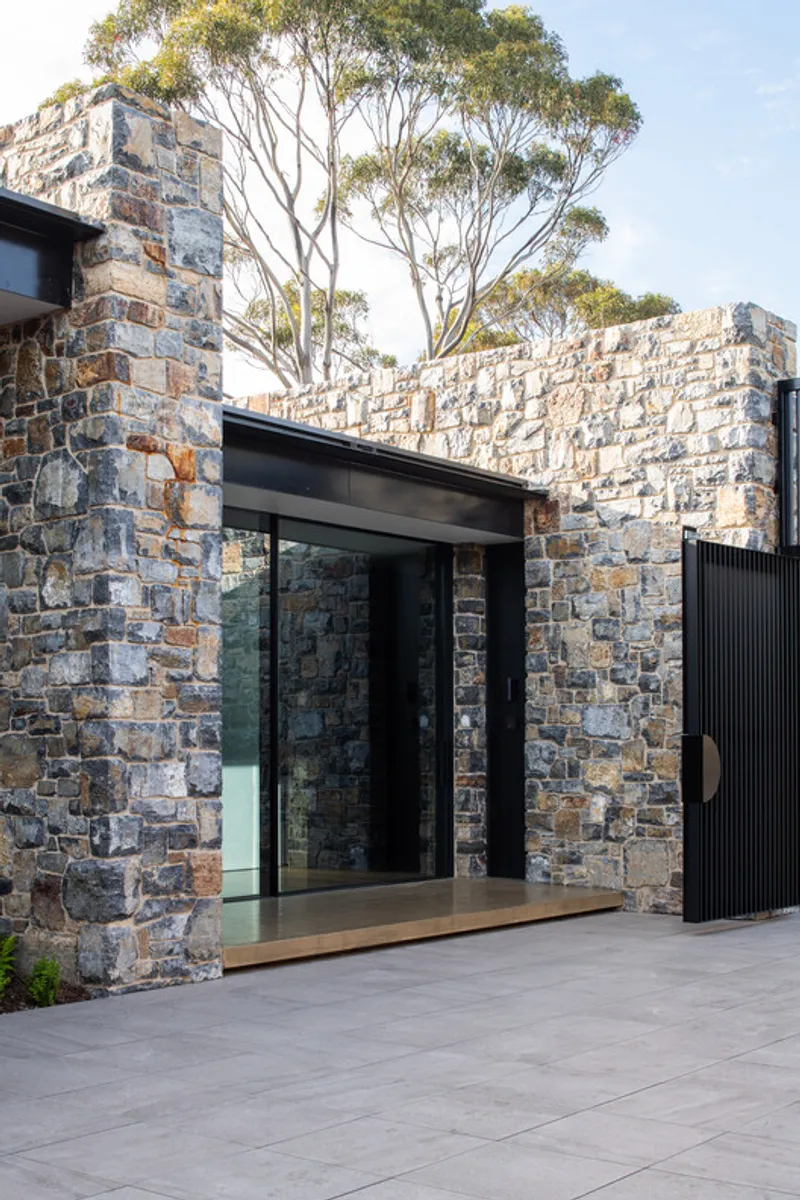
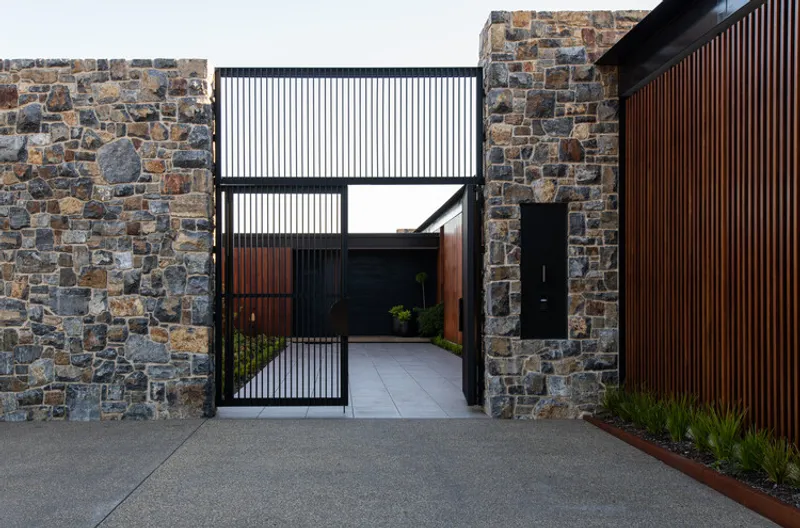
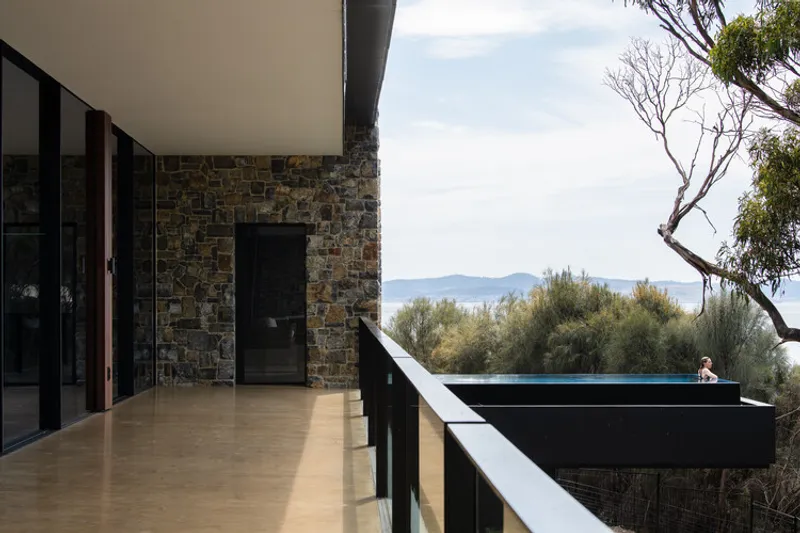
All the photographs are works of Anjie Blair



Popular Articles
Popular articles from the community


Co-life: Sustainable Architecture for Age-Friendly Community Living
Co-life reimagines sustainable architecture for seniors through courtyards, rammed earth, shared gardens, and spaces designed for belonging.

Lunar Spiral: Space Architecture Shaped by the Mathematics of the Universe
Lunar Spiral reimagines space architecture through Fibonacci geometry, lunar regolith, levitating habitats, and self-sustaining Moon living.

Riyadh For All: Intergenerational Urban Design for Active Aging in Rabat
Riyadh For All reimagines urban design in Rabat with intergenerational co-living, adaptive courtyards, and Moroccan cultural exchange today.

The Ocean Hive: Sustainable Architecture for a Self-Sufficient Civilization at Sea
The Ocean Hive imagines sustainable architecture at sea, where modular habitats, algae, wave power and ocean waste sustain a growing colony.

Similar Reads
You might also enjoy these articles


Hodi-Mandai Geram
Project Function: Preservation and revitalization of the Intangible heritage and socio-spatial identity of the Hodi by Housing, Cultural Memory Center, Sacred Grove, landscape, local tourism economy


Olio Towers: A Mid-Rise for Performers That Fuses Housing, Rehearsal, and Stage
Located blocks from Houston's Theater District, this modular tower stacks living units around a central performance atrium.

Oasis: Modular Green Housing Carved into Dhaka's Urban Fabric
A shortlisted Plugin Housing entry reclaims unauthorized settlements in Dhaka with stepped concrete volumes, green roofs, and ventilation-driven design.

Black Hole: A Floating Megastructure for the Post-Physical Era
Emiliano Mazzarotto envisions a spherical, self-scaling arena where e-sports, digital hotels, and holographic stadiums replace traditional public space.
Explore Housing Competitions
Discover active competitions in this discipline



Challenge to reimagine the Iron Throne


Photograph architecture without architects


Illustrate the lost glory of Angkor Wat - Render Challenge


Design challenge to reuse E-waste
Comments (0)
Please login or sign up to add comments
No comments yet. Be the first to comment!