

Tinyleaf Cabin by GO’C: A Minimalist Hillside Retreat in Washington
A compact concrete cabin embedded into a forested hillside, blending indoor efficiency with outdoor living through seasonal, site-responsive design.


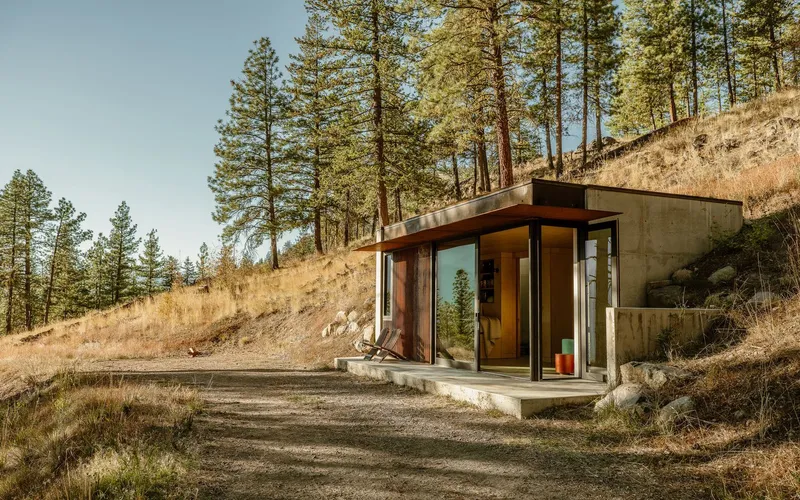
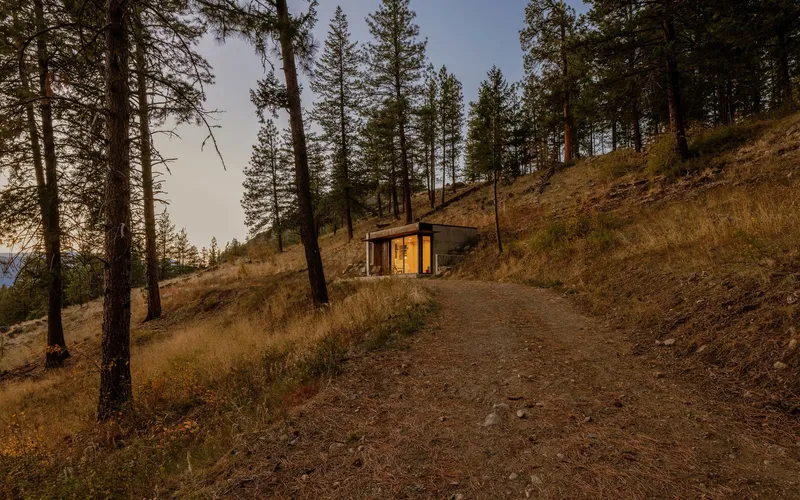
Nestled into the rugged terrain of the Methow Valley in Mazama, Washington, Tinyleaf Cabin, designed by GO’C, is a compact architectural outpost that embraces landscape, seasonality, and efficiency. Conceived as an initial inhabitable structure on a larger undeveloped site, the 330-square-foot cabin allows its owner, an outdoor enthusiast, to establish a year-round connection with the land long before future buildings are introduced.
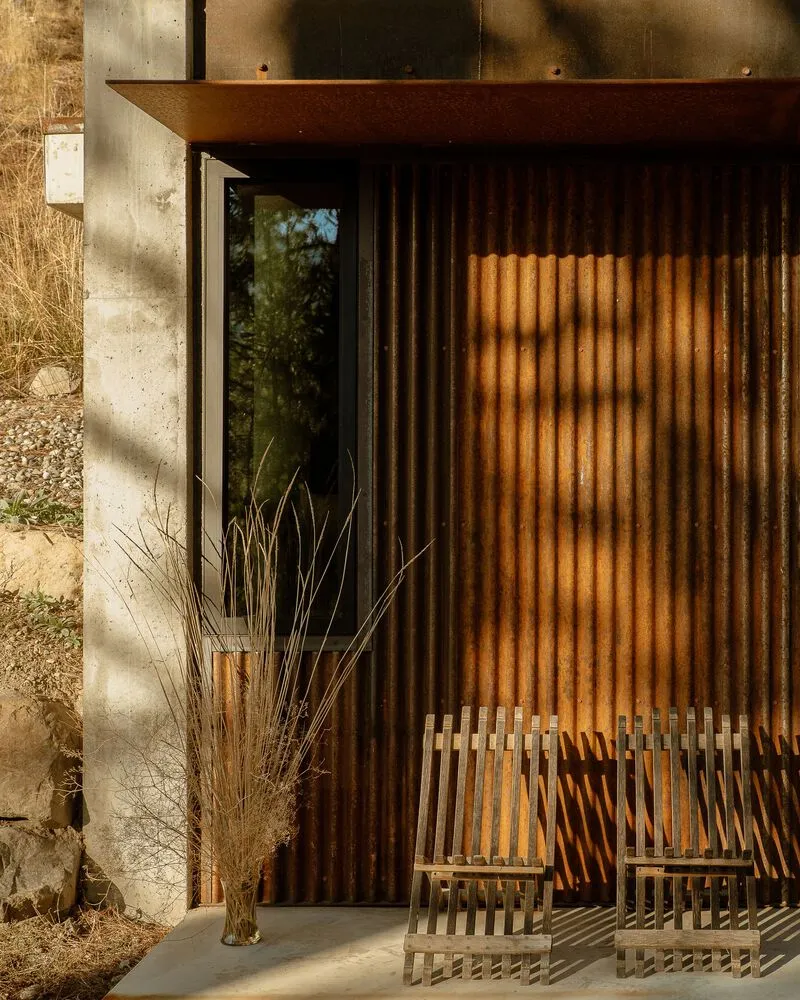

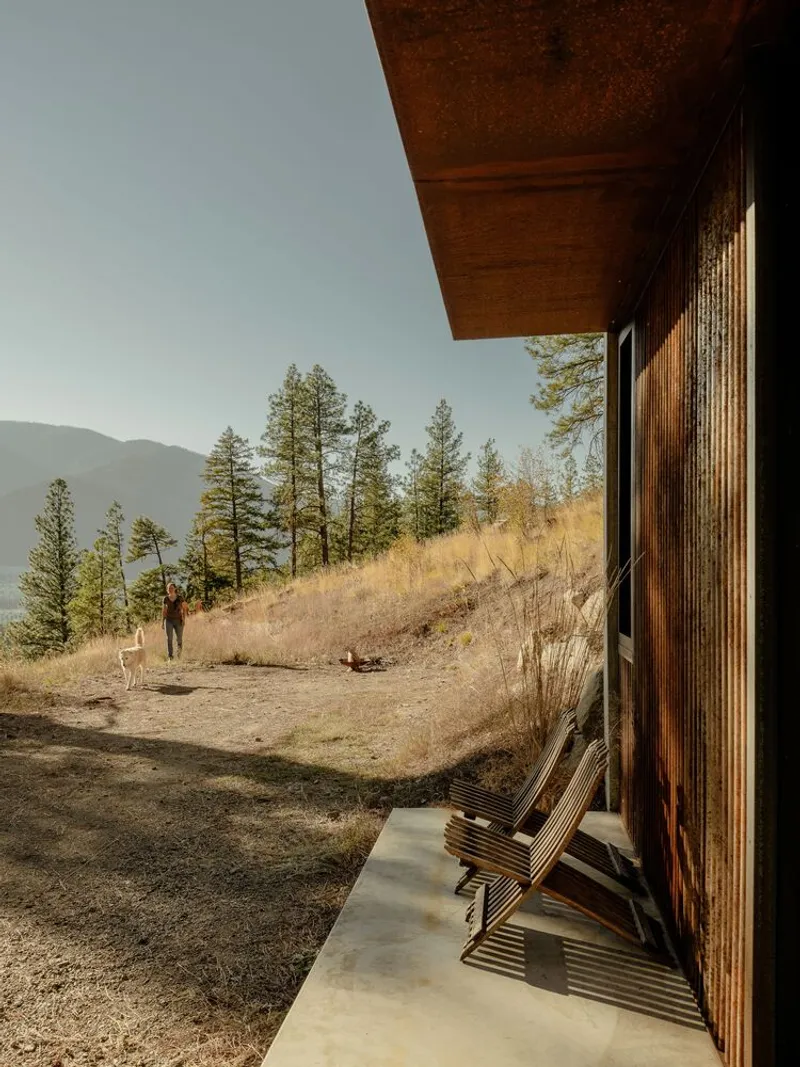
The site’s dramatic topography, expansive mountain views, and immediate access to mountain biking and cross-country skiing routes played a decisive role in shaping the design. Bermed directly into a steep hillside, Tinyleaf Cabin responds sensitively to both the physical contours of the site and the extreme seasonal shifts characteristic of the region. Rather than standing apart from its surroundings, the cabin embeds itself within them, forming a quiet, resilient presence in the landscape.

Compact Footprint, Expanded Living Experience
With a modest footprint of approximately 15 by 22 feet, the project prioritizes spatial efficiency while deliberately blurring the boundary between interior and exterior. The south-facing façade is fully opened through large glazed sliding doors, extending the living space outward during milder months and reinforcing a constant visual relationship with the surrounding forest and valley beyond. This openness transforms the cabin into a flexible shelter that expands and contracts with the seasons.
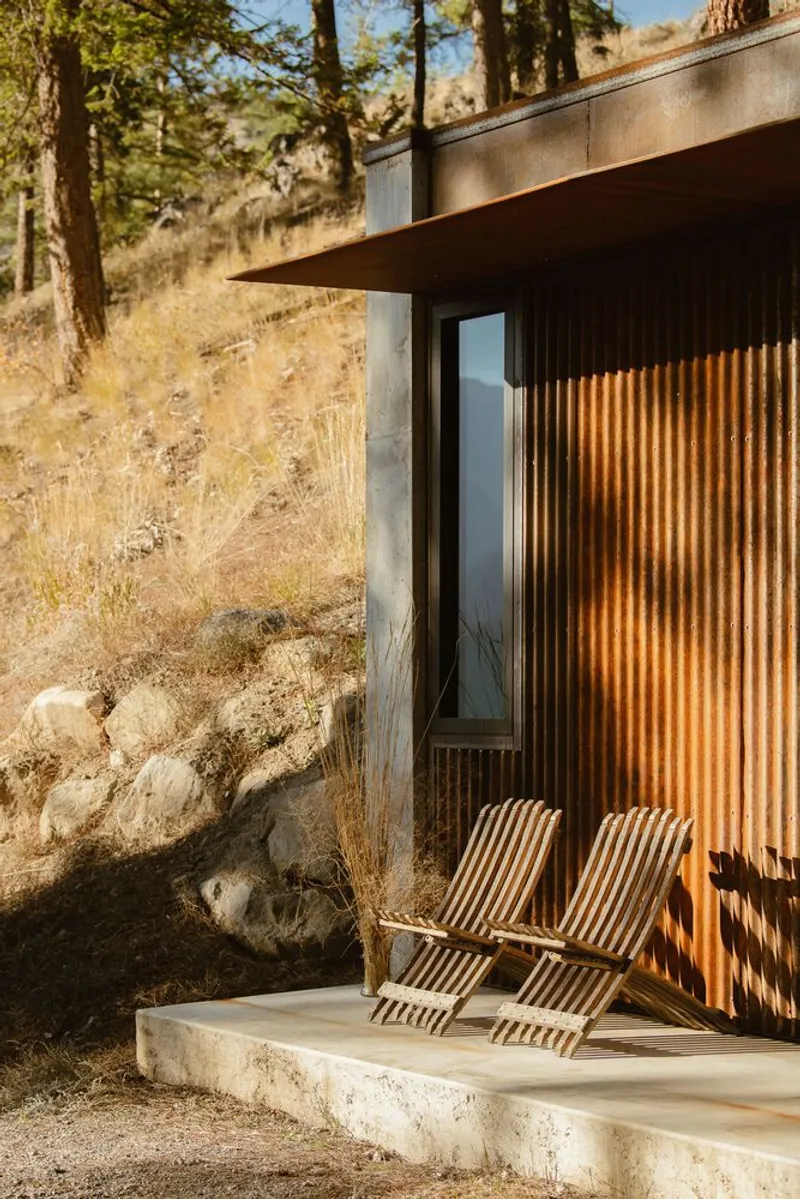
The flat roof introduces an additional functional layer. In warmer months, it serves as a usable roof deck, offering elevated views of the site. In winter, accumulated snow increases thermal mass, contributing to passive temperature regulation. The cabin’s cast-in-place concrete walls anchor the structure into the hillside, providing durability, insulation, and a tactile material dialogue with the exposed rocks and soil of the site.

Interior as Cabinetry
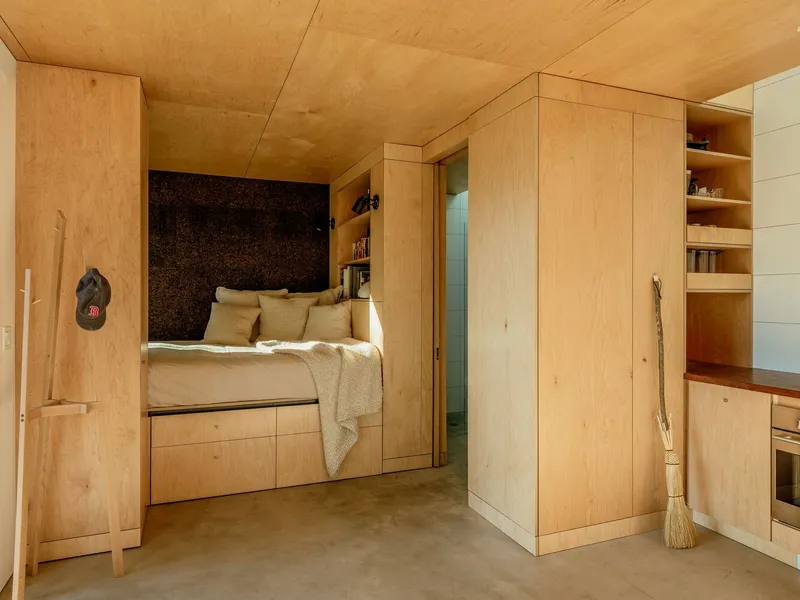
Inside, the design language shifts toward precision and restraint. The interior is conceived almost as a single piece of built-in furniture, echoing the efficiency of a ship’s cabin. A limited palette of concrete and warm wood creates continuity between surfaces while reinforcing the cabin’s minimalist ethos.
Every element serves multiple purposes. The raised bed integrates deep storage drawers for daily use, with concealed compartments extending the full depth of the platform for seasonal items. Thickened partition walls between the kitchen and bathroom house pull-out pantry units and utility storage, allowing spatial separation without wasted volume. A compact bookcase at the head of the bed forms an intimate reading nook, adding comfort without compromising efficiency.
Natural light is carefully choreographed throughout the small interior. In addition to the expansive south-facing glazing, a linear skylight introduces soft daylight along the rear wall, enhancing spatial depth and reducing reliance on artificial lighting.
Materiality and Aging in Place
The exterior material palette was selected to evolve alongside the landscape rather than resist it. Steel cladding and awning panels are designed to weather and patinate over time, gradually shifting toward muted, earth-toned hues. The exposed concrete walls absorb and reflect the colors of the surrounding hillside, reinforcing the impression that the cabin has always belonged to the site.

All photographs are works of Ben Lindbloom




Popular Articles
Popular articles from the community


Co-Life: Senior Housing Design That Reconnects Older Adults With the City
Co-Life reimagines senior housing design through healing gardens, shared streets, workshops, and a sustainable community across generations.

Co-life: Sustainable Architecture for Age-Friendly Community Living
Co-life reimagines sustainable architecture for seniors through courtyards, rammed earth, shared gardens, and spaces designed for belonging.

AL-JANNAH: Sustainable Architecture and Permaculture for Afghan Widows
AL-JANNAH uses sustainable architecture and permaculture to create resilient oasis of housing, learning, work and renewal for Afghan widows.

The Musturak Paradise: Senior Living Architecture for a Connected Future in Temara, Morocco
The Musturak Paradise reimagines senior living architecture in Temara via private homes, social spaces, culture, community, and shared care.


Similar Reads
You might also enjoy these articles


Hodi-Mandai Geram
Project Function: Preservation and revitalization of the Intangible heritage and socio-spatial identity of the Hodi by Housing, Cultural Memory Center, Sacred Grove, landscape, local tourism economy


Olio Towers: A Mid-Rise for Performers That Fuses Housing, Rehearsal, and Stage
Located blocks from Houston's Theater District, this modular tower stacks living units around a central performance atrium.

Oasis: Modular Green Housing Carved into Dhaka's Urban Fabric
A shortlisted Plugin Housing entry reclaims unauthorized settlements in Dhaka with stepped concrete volumes, green roofs, and ventilation-driven design.

Black Hole: A Floating Megastructure for the Post-Physical Era
Emiliano Mazzarotto envisions a spherical, self-scaling arena where e-sports, digital hotels, and holographic stadiums replace traditional public space.


Explore Residential Building Competitions
Discover active competitions in this discipline


Challenge to design mud housing for contemporary communities


Challenge to reimagine the Iron Throne


Photograph architecture without architects


Illustrate the lost glory of Angkor Wat - Render Challenge
Comments (0)
Please login or sign up to add comments
No comments yet. Be the first to comment!