
TNOP House: A Harmonious Blend of Modern Design and Northern Thai Vernacular
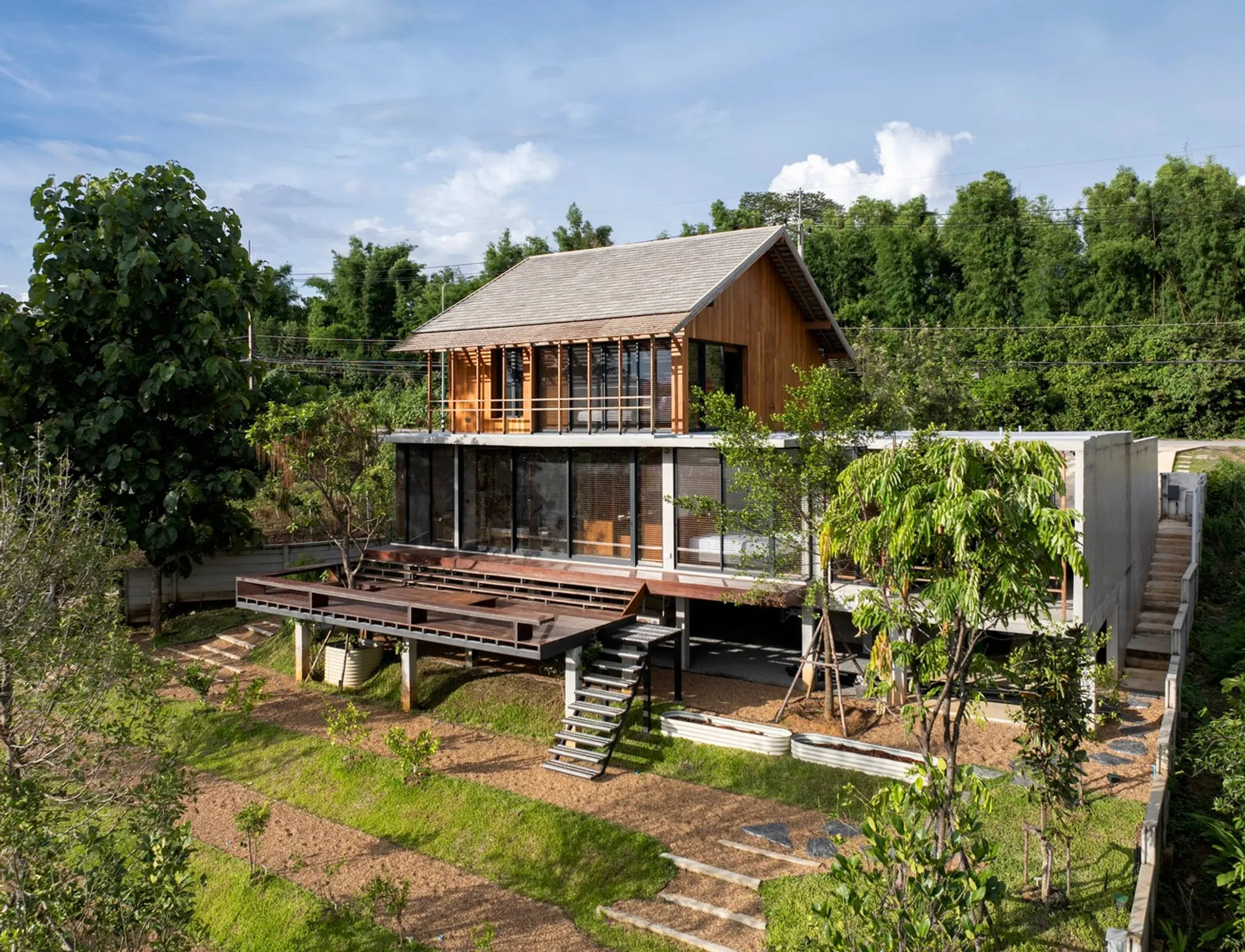
TNOP House by IS Architects blends modern design with Northern Thai vernacular, embracing nature, local materials, sunlight, ventilation, and hillside views.


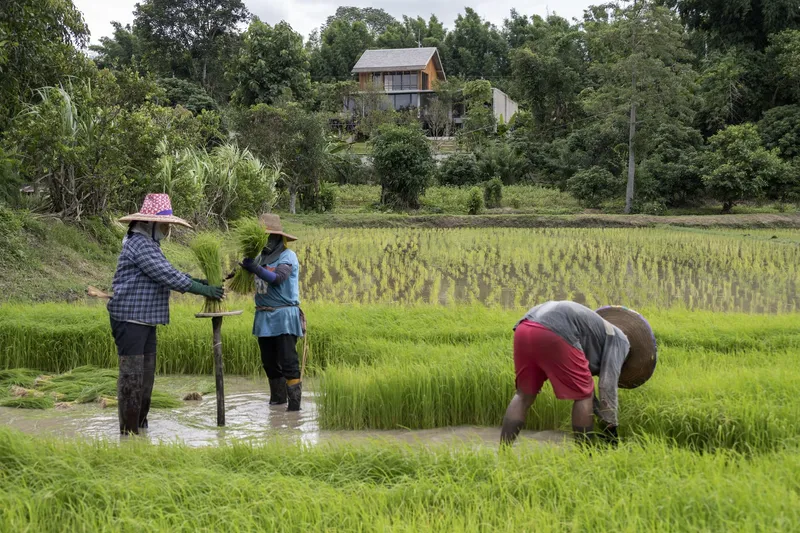
TNOP House serves as a serene vacation home for a renowned graphic designer seeking respite from the fast-paced urban life. Situated in Chiang Rai Province, one of Northern Thailand’s most picturesque regions, this home is set within a tranquil agricultural residential area. The site slopes gently from east to west, offering panoramic views of lush rice fields that transform from vibrant green in the rainy season to golden hues at harvest, like living paintings framed by nature itself.
While the location is breathtaking, the design presented challenges, including environmental factors, privacy concerns, and structural planning on hilly terrain. IS Architects approached these challenges with thoughtful strategies to create a functional and aesthetically compelling home.
Integrating Local Climate and Vernacular Wisdom
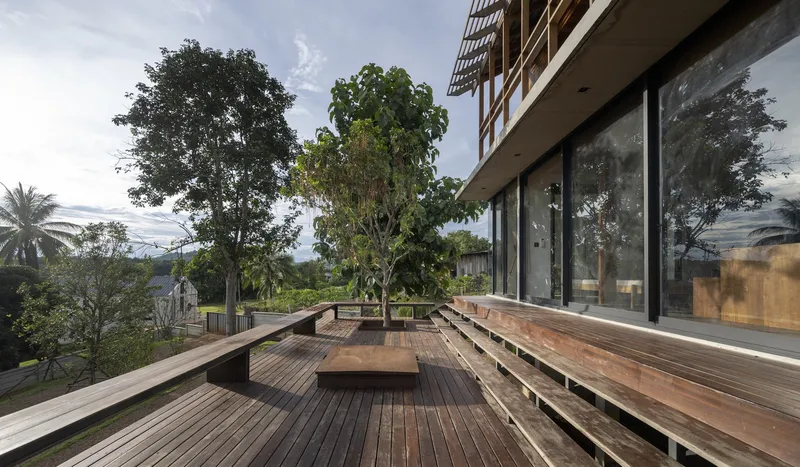
The surrounding village practices traditional cooking methods over open fires, producing smoke and odors. To address this, the architects carefully studied local wind patterns, designing long walls to guide airflow and reduce disturbances inside and outside the home. This natural ventilation strategy exemplifies how architecture can harness climate for both comfort and sustainability.
Positioned near a highway, the house could have faced noise and pollution challenges. To mitigate this, the building was placed at a distance equivalent to its height and buffered by landscaped areas. Orientation was carefully aligned parallel to the slope’s contour lines, simplifying structural demands while integrating seamlessly with the terrain.

Embracing Sunlight, Nature, and Seasonal Shifts
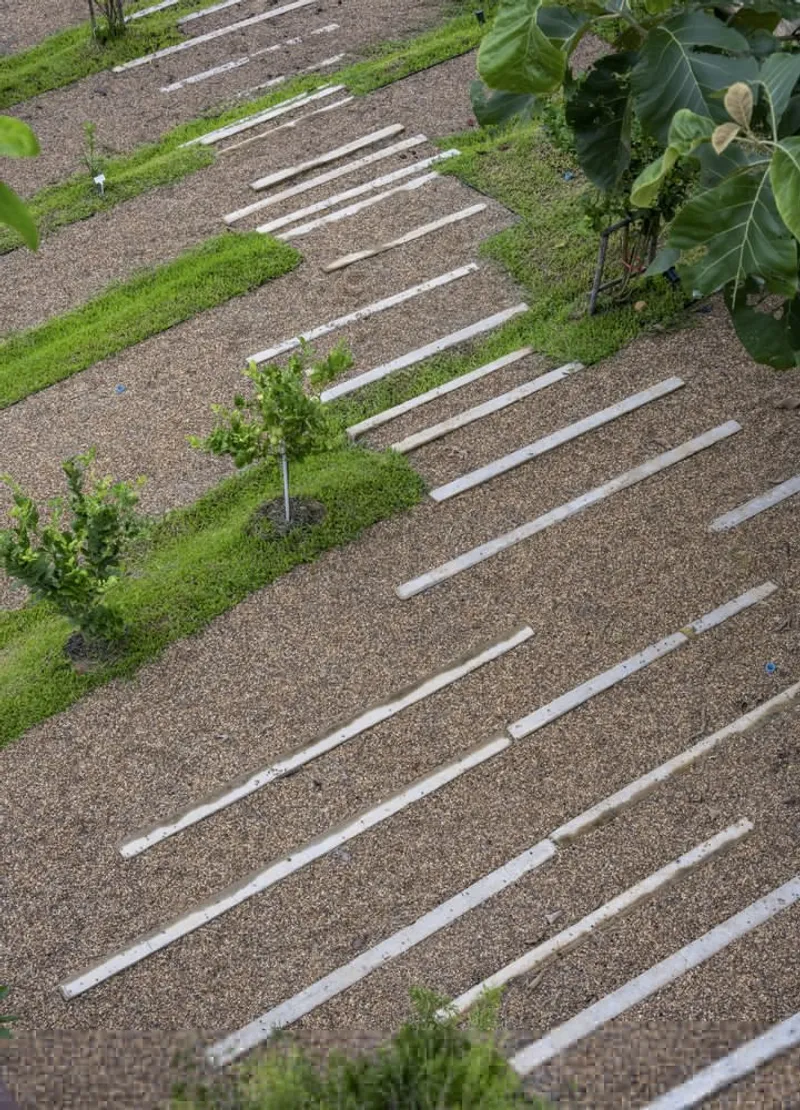
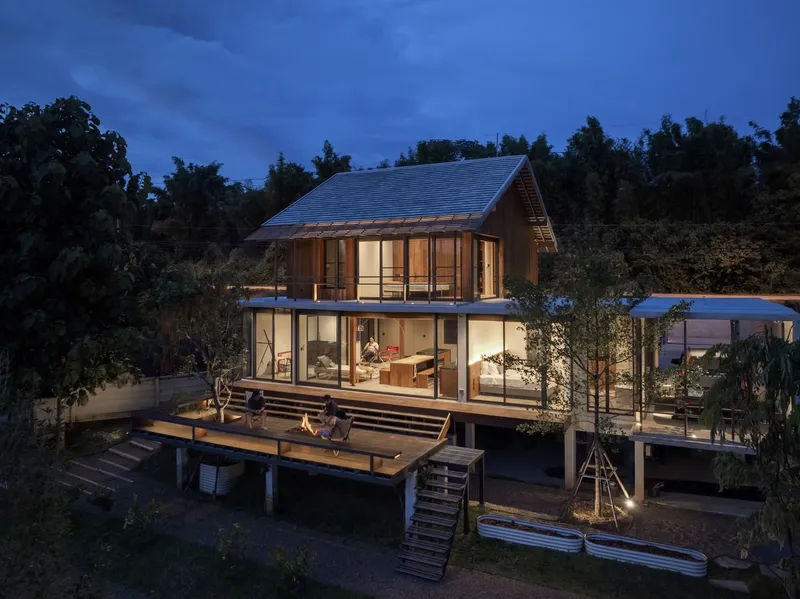
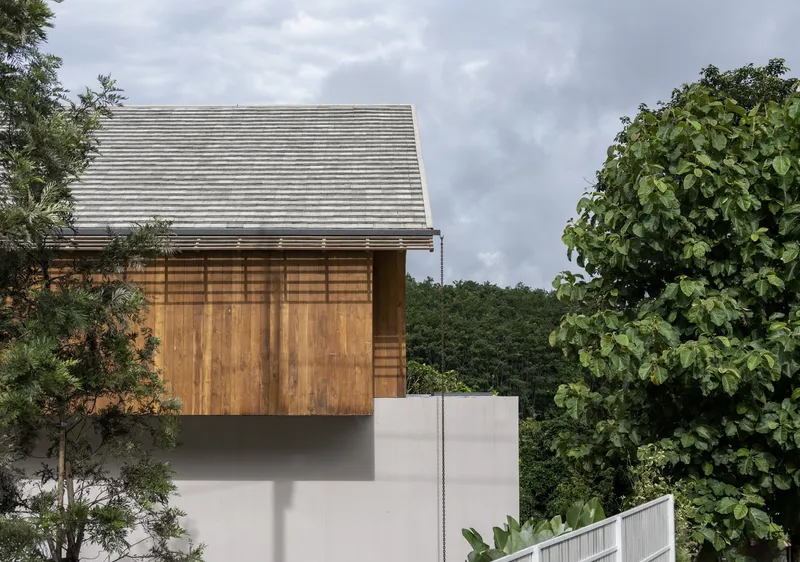
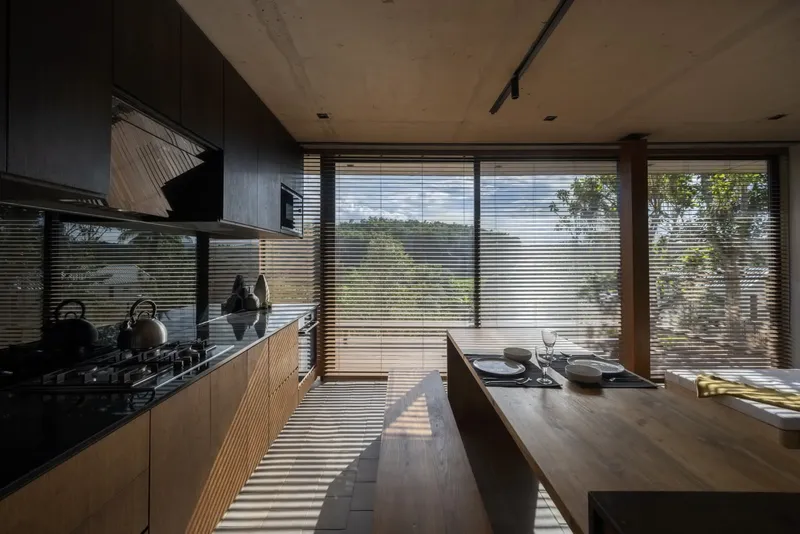
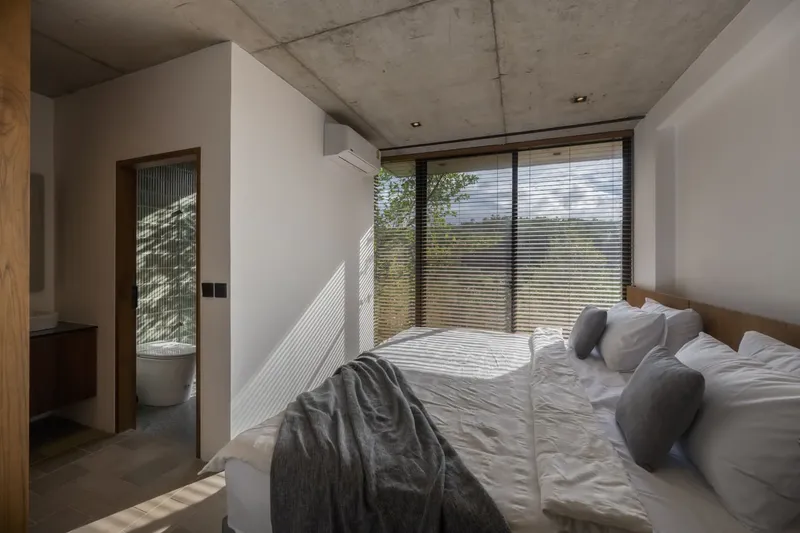
A key feature of TNOP House is its large southwest-facing balcony, welcoming evening sunlight and views of surrounding fields, trees, and mountains. The architects intentionally embraced natural elements, allowing sunlight and breezes to animate interior spaces. This approach not only enhances visual and thermal comfort but also reflects vernacular Thai architecture principles, which naturally regulate humidity and promote healthy living in tropical climates.

Materials and Craftsmanship: Local Identity Meets Modern Form
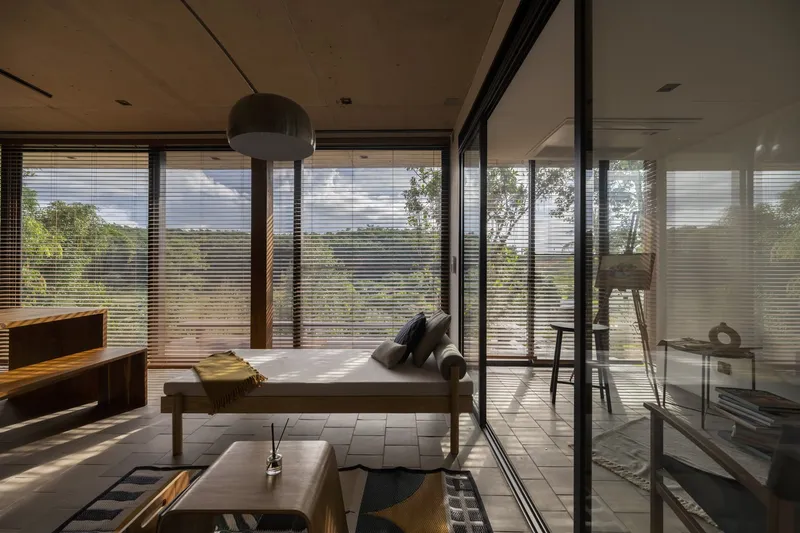
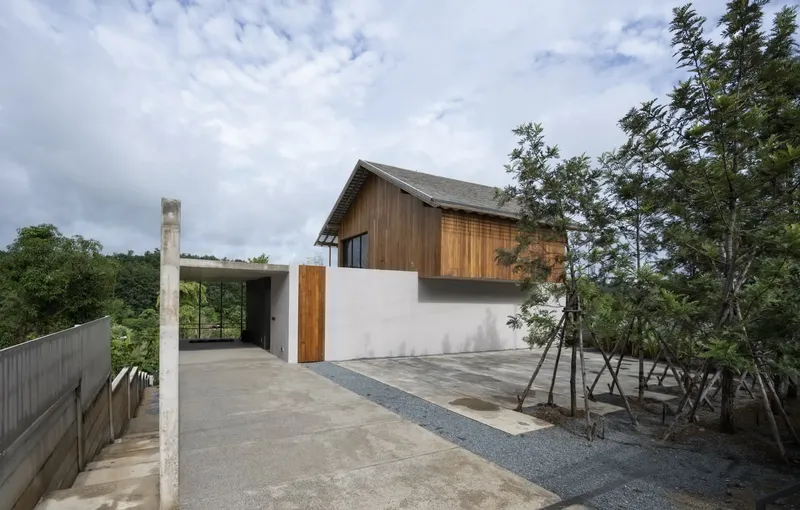
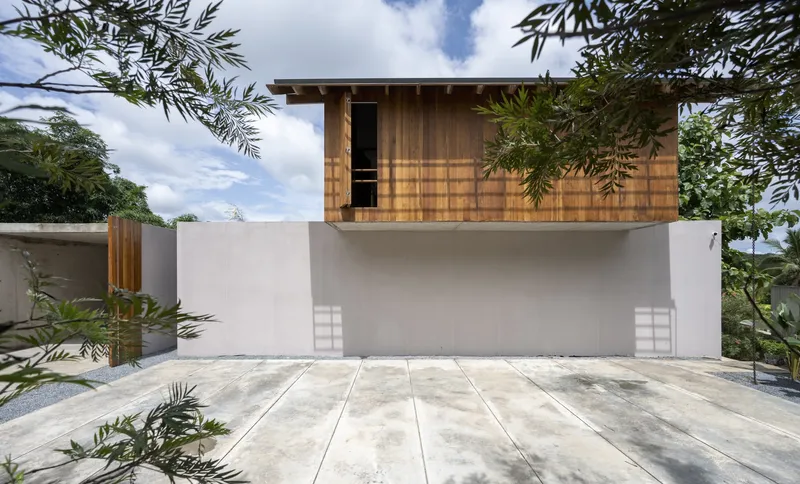
The design harmoniously merges modern architecture with local traditions. The architects employed simple, functional forms while emphasizing the province’s artisanal materials: old teak wood, decorative wooden structures, gray-brown terracotta tiles, green glazed tiles, terrazzo finishes, and sand-washed surfaces. Local craftsmen executed these details meticulously, preserving cultural authenticity while supporting a contemporary aesthetic.
This combination of local materials and modern forms allows TNOP House to communicate visually with its surroundings, blending contemporary architectural language with regional identity. The design is both contextually responsive and aesthetically striking, showcasing how modern living can coexist with vernacular traditions.
Interior Experience: Art, Nature, and Flow
Upon entering TNOP House, visitors are welcomed by a small garden that transitions them into the home, setting a calm, contemplative mood. The living area acts as the heart of the house, connecting the kitchen, art studio, and southwest terrace. These spaces foster creativity and relaxation, allowing residents to fully engage with both art and nature.
Circulation spaces, including the main staircase oriented north to south, were treated as transitional areas with the feel of an art gallery, providing moments of pause and reflection. Even functional hallways were designed to enhance privacy, mediate light and shadow, and enrich the overall spatial experience.


Nature-Inspired Modern Living
TNOP House stands as a testament to the synergy between modern architecture and local cultural identity. By embracing natural surroundings, leveraging climatic conditions, and integrating local materials and craftsmanship, IS Architects created a home that is both functional and poetic. Every design choice, from spatial hierarchy to material selection, reflects a thoughtful balance between contemporary living and the rhythms of Northern Thailand’s landscape.

This vacation home is a vibrant example of how architecture can be inspired by nature, climate, and culture, creating spaces that nourish the body, mind, and creative spirit.
All photographs are works of Rungkit Charoenwat



Popular Articles
Popular articles from the community

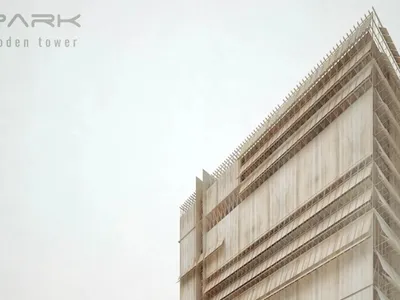
EW PARK: Sustainable Architecture Reimagines the Future of Urban Parking
EW PARK reimagines city parking as a modular wooden tower combining automation, solar energy, electric mobility, and adaptable urban design.

The Earth Pod: 3D Printed Homes for Resilient Refugee Communities
The Earth Pod reimagines refugee housing through 3D printed homes made from clay, combining resilience, self-sufficiency, and rapid shelter.

Riyadh For All: Intergenerational Urban Design for Active Aging in Rabat
Riyadh For All reimagines urban design in Rabat with intergenerational co-living, adaptive courtyards, and Moroccan cultural exchange today.

The Ocean Hive: Sustainable Architecture for a Self-Sufficient Civilization at Sea
The Ocean Hive imagines sustainable architecture at sea, where modular habitats, algae, wave power and ocean waste sustain a growing colony.

Similar Reads
You might also enjoy these articles


Hodi-Mandai Geram
Project Function: Preservation and revitalization of the Intangible heritage and socio-spatial identity of the Hodi by Housing, Cultural Memory Center, Sacred Grove, landscape, local tourism economy


Olio Towers: A Mid-Rise for Performers That Fuses Housing, Rehearsal, and Stage
Located blocks from Houston's Theater District, this modular tower stacks living units around a central performance atrium.

Oasis: Modular Green Housing Carved into Dhaka's Urban Fabric
A shortlisted Plugin Housing entry reclaims unauthorized settlements in Dhaka with stepped concrete volumes, green roofs, and ventilation-driven design.

Black Hole: A Floating Megastructure for the Post-Physical Era
Emiliano Mazzarotto envisions a spherical, self-scaling arena where e-sports, digital hotels, and holographic stadiums replace traditional public space.


Explore Architecture Competitions
Discover active competitions in this discipline



Challenge to reimagine the Iron Throne


Photograph architecture without architects


Illustrate the lost glory of Angkor Wat - Render Challenge


Design challenge to reuse E-waste
Comments (0)
Please login or sign up to add comments
No comments yet. Be the first to comment!