
Tondo Bridge by OFFICE Kersten Geers David Van Severen
A circular pedestrian bridge in Brussels, blending accessibility, reflective surfaces, and minimalist design to connect historic parliamentary buildings seamlessly.


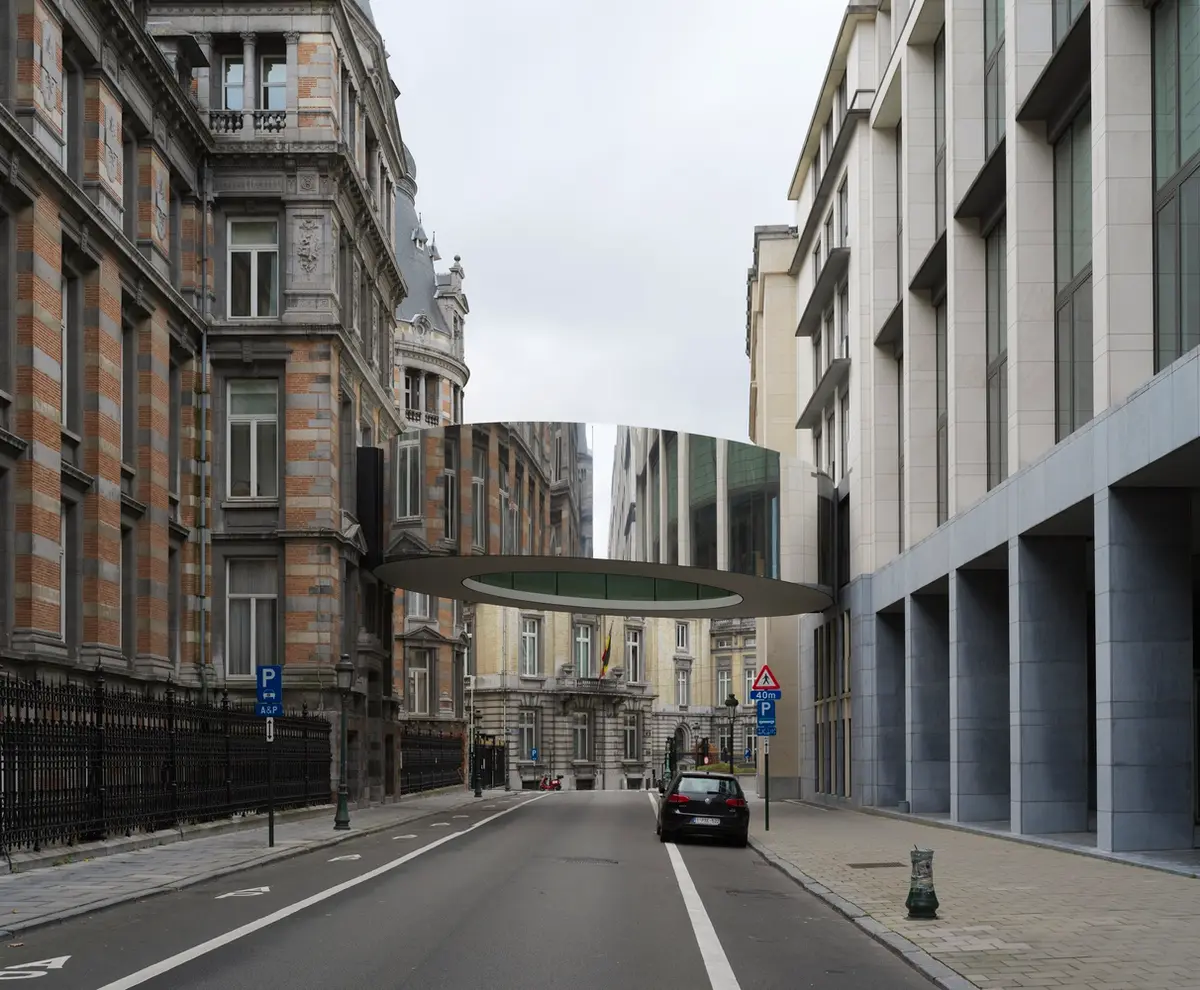
Tondo Bridge is a pedestrian footbridge designed by OFFICE Kersten Geers David Van Severen, located in the historic heart of Brussels, Belgium. Completed in 2020, the project connects two buildings of the Belgian Federal Parliament, transforming a purely functional requirement into a refined architectural and spatial experience.
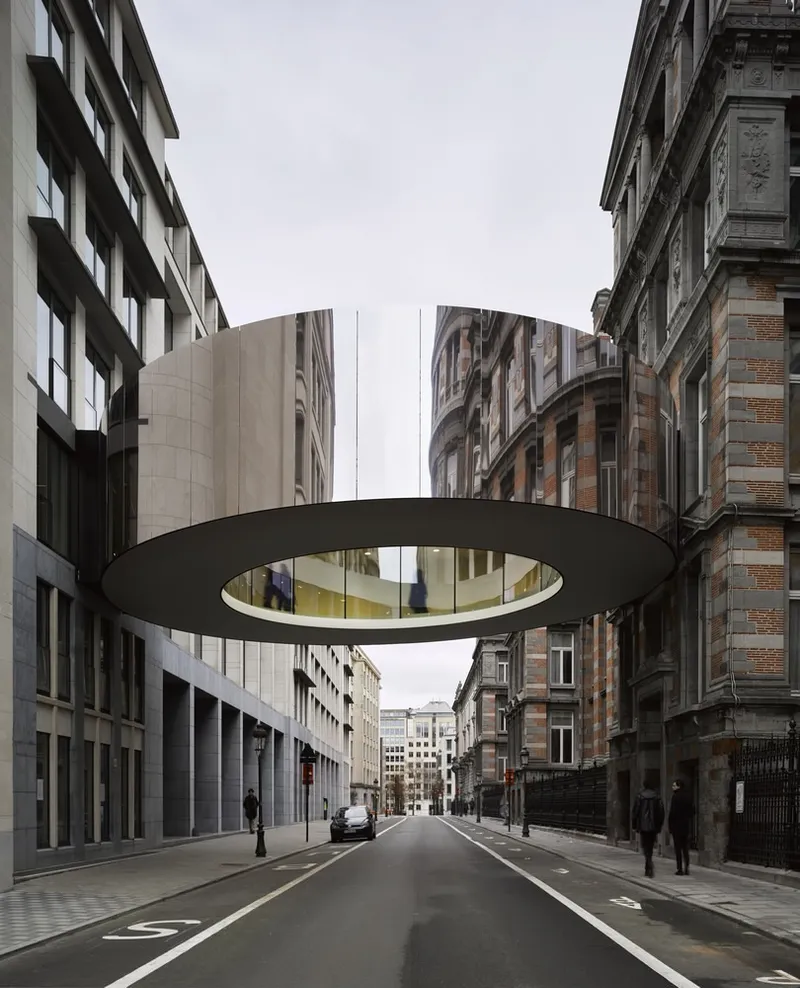
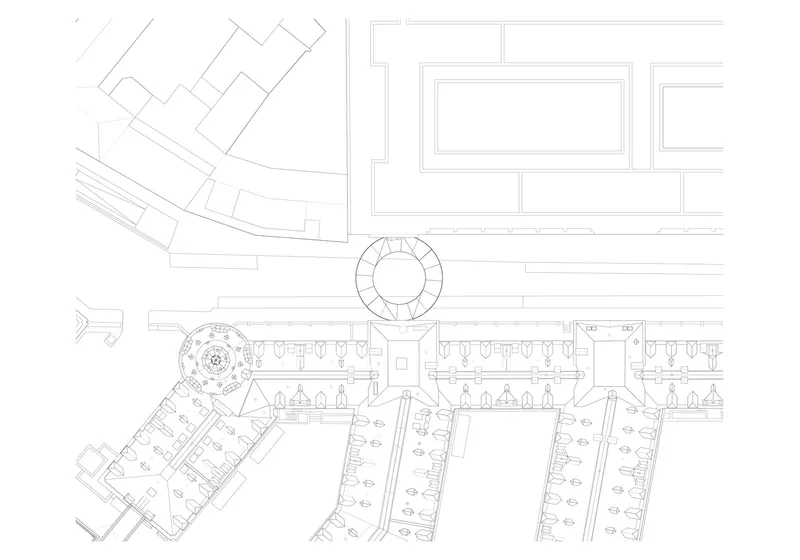
Rather than approaching the bridge as a conventional piece of infrastructure, the architects conceived it as an autonomous architectural object: a spatial intervention that mediates between buildings, users, and the surrounding city. Named after the “Tondo,” a circular format rooted in Renaissance painting, the bridge takes the form of a perfect ring, suspended between the two parliamentary structures. This geometric clarity gives the project a strong symbolic presence while reinforcing its role as a civic element within the urban fabric.
Architecture as Spatial Experience
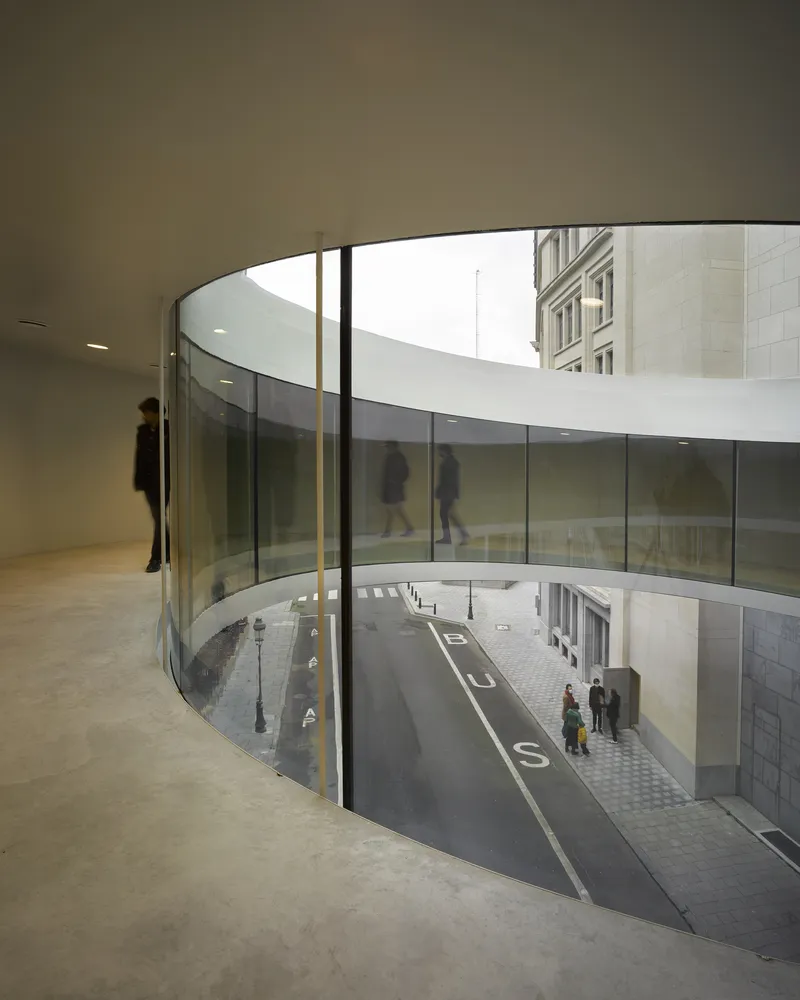
Inside the bridge, movement is deliberately slowed and expanded. The circulation follows a generous circular path, creating an enclosed yet luminous interior space that functions not only as a passage but also as an informal meeting area. This continuous walk transforms what could have been a narrow corridor into a shared spatial experience, encouraging interaction and pause.
The circular detour also serves a practical purpose. A 90-centimeter height difference between the two connected buildings is resolved through a single wheelchair-accessible ramp with a gentle 4% slope, ensuring full accessibility without mechanical intervention. This seamless integration of universal design principles reinforces the bridge’s civic responsibility and inclusive intent.
Urban Presence and Material Expression
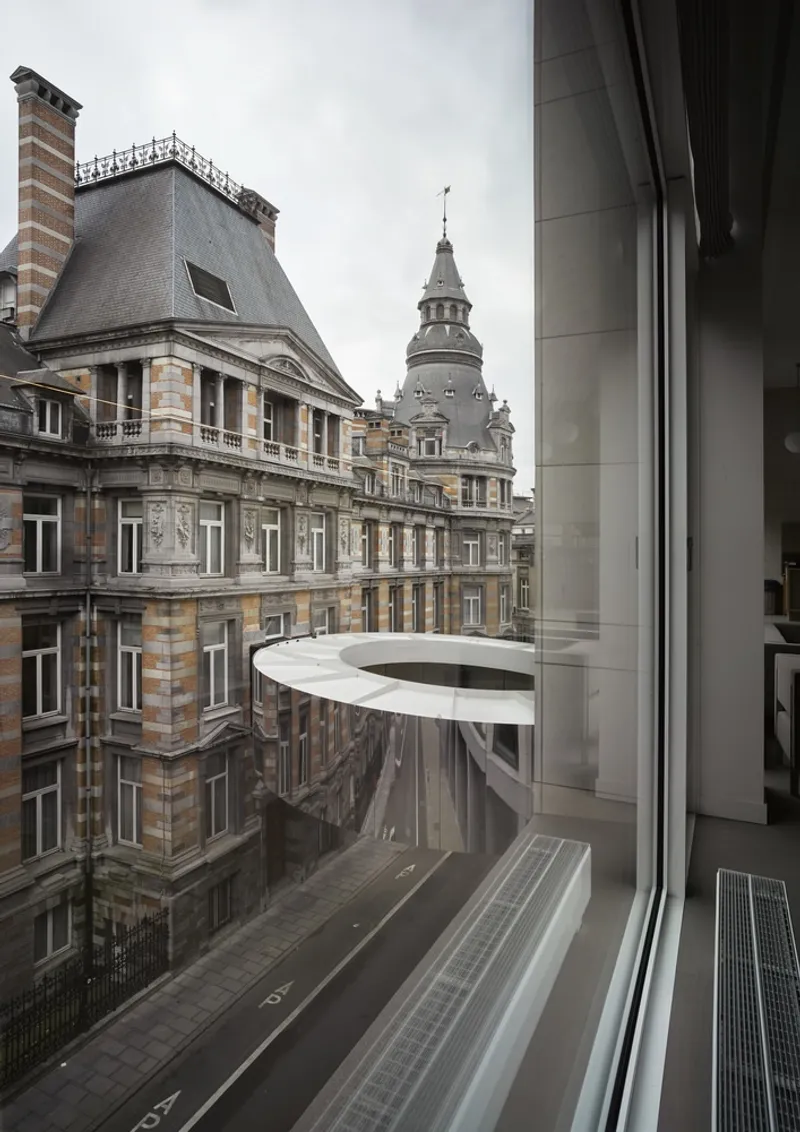
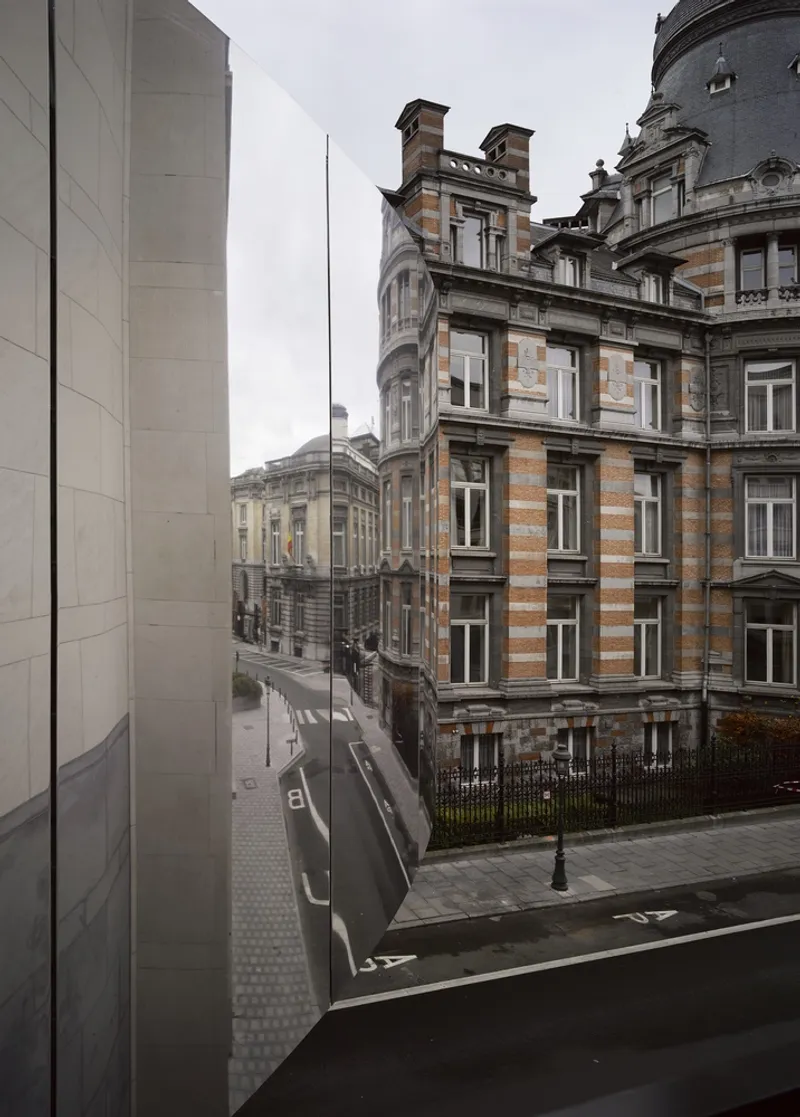
From the exterior, Tondo Bridge presents itself as a closed and enigmatic volume, echoing historical precedents such as the Bridge of Sighs in Venice. Its façade is clad in mirrored panels, reflecting the 18th-century Parliament building as well as its contemporary extension across the street. This reflective surface allows the bridge to visually dissolve into its context, simultaneously asserting and concealing its presence.
At closer range, carefully placed glazed openings reveal subtle glimpses of the interior circulation, offering a restrained dialogue between inside and outside. These moments of transparency hint at movement within, without compromising the bridge’s monolithic character.
Structural Concept and Engineering
Structurally, the bridge functions as a stiff disc, with the floor suspended from the roof, minimizing the visible structural components. Developed in collaboration with Bollinger+Grohmann, the engineering strategy supports the architects’ intention of achieving a light, almost ephemeral presence. The result is a pavilion-like structure hovering between buildings: precise, minimal, and quietly monumental.
A Contemporary Civic Connector
With a modest footprint of 110 square meters, Tondo Bridge demonstrates how infrastructure architecture can transcend utility to become a meaningful spatial and symbolic gesture. By combining geometric purity, accessibility, reflective materiality, and structural clarity, OFFICE Kersten Geers David Van Severen deliver a project that operates at the intersection of architecture, art, and urban continuity.
All photographs are works of Bas Princen


Popular Articles
Popular articles from the community


Opera on the Sea: Driftwood Logic Shapes a Timber Opera House on Estonia's Coast
Trevor Orgill's opera house translates the entangled drift of floating timber into a civic building where wood, water, and music converge.


David Ortega Stacks a Two-Story Mexico City Penthouse Around a Steel Stair and a Pergola-Shaded Roof Terrace
In Colonia Roma, a 300 m² penthouse uses oak joinery, a planted steel stair and a slatted roof pergola to make a new-build apartment feel like a house.

Cube Design Draws an Ecological Corridor Between Two Shenzhen Hills with the Nankai Building
Beside Shenzhen's container docks, the Nankai Building pairs stacked balconies with a climbing green screen to connect two hillsides across its height.

The Amber Palace Opera: A Geological Fiction Surfaces on Tallinn's Baltic Waterfront
Pierre Brillard reimagines a Baltic legend as a public landscape, opera house, and waterfront promenade rooted in Tallinn's coastal identity.

Similar Reads
You might also enjoy these articles


Hodi-Mandai Geram
Project Function: Preservation and revitalization of the Intangible heritage and socio-spatial identity of the Hodi by Housing, Cultural Memory Center, Sacred Grove, landscape, local tourism economy


Olio Towers: A Mid-Rise for Performers That Fuses Housing, Rehearsal, and Stage
Located blocks from Houston's Theater District, this modular tower stacks living units around a central performance atrium.

Oasis: Modular Green Housing Carved into Dhaka's Urban Fabric
A shortlisted Plugin Housing entry reclaims unauthorized settlements in Dhaka with stepped concrete volumes, green roofs, and ventilation-driven design.

Black Hole: A Floating Megastructure for the Post-Physical Era
Emiliano Mazzarotto envisions a spherical, self-scaling arena where e-sports, digital hotels, and holographic stadiums replace traditional public space.

Explore Pedestrian Bridge Competitions
Discover active competitions in this discipline

Challenge to reimagine the Iron Throne

Photograph architecture without architects

Illustrate the lost glory of Angkor Wat - Render Challenge

Design challenge to reuse E-waste
Comments (0)
Please login or sign up to add comments
No comments yet. Be the first to comment!