
Tracing the Faded: A Cinematic Architecture Project Reimagining Film Culture in the Desert
A cinematic architecture project in the desert that transforms film history into spatial experience, blending landscape, culture, and immersive design.


In an era where digital consumption is rapidly redefining how we engage with cinema, architecture has the potential to reclaim the physical and cultural significance of film. Tracing the Faded, a winner of the Cinema Box 2020 competition, is a compelling cinematic architecture project that reinterprets the evolution of film culture through spatial design. Conceived by ZHIYU LI, Rui Huang, Ziyang Xu, and Ziyang Xu, the project positions architecture as both a medium and a narrative device.
Set within the expansive desert landscape of Umm Al Quwain in the UAE, the project responds to both environmental and cultural contexts. It explores how cinematic architecture can translate intangible cultural evolution into a tangible, immersive journey. The design is not merely a building but a spatial timeline, where visitors physically traverse the history of cinema.
Cinematic Architecture as Narrative
At its core, this cinematic architecture project is driven by the idea that cinema is more than entertainment. It is a social, cultural, and ideological construct. The design reflects three key roles of cinema in society: as a form of sensory experience, as a social activity, and as a medium of cultural transmission.
Rather than isolating these roles, the project integrates them into a continuous architectural sequence. Visitors move from underground spaces to the surface, symbolizing the transition from the origins of cinema to its contemporary manifestations. This vertical progression is not arbitrary. It mirrors the evolution of film from primitive open-air performances to advanced immersive technologies like virtual reality.
Spatial Translation of Film Evolution
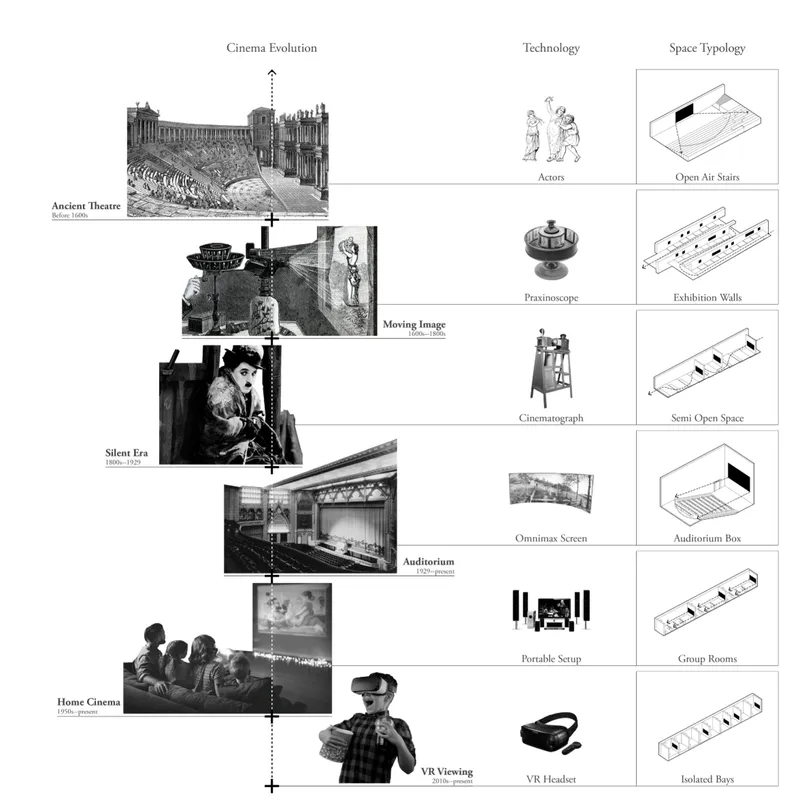
The project organizes its program based on six major phases of film evolution, each translated into a distinct spatial condition:
- Open-air theatres reflect early communal performances
- Exhibition walls represent pre-cinematic visual experimentation
- Silent cinema spaces evoke the birth of narrative film
- Auditorium-based cinemas mark the technological maturation of the industry
- Home cinema environments reflect privatization of viewing
- VR and immersive rooms indicate the future of cinematic experience
This layered approach positions the project as a cinematic architecture prototype, where spatial typologies evolve alongside cultural shifts. Each programmatic element is carefully embedded within the architectural mass, creating a seamless experiential flow.
Architecture as Landscape
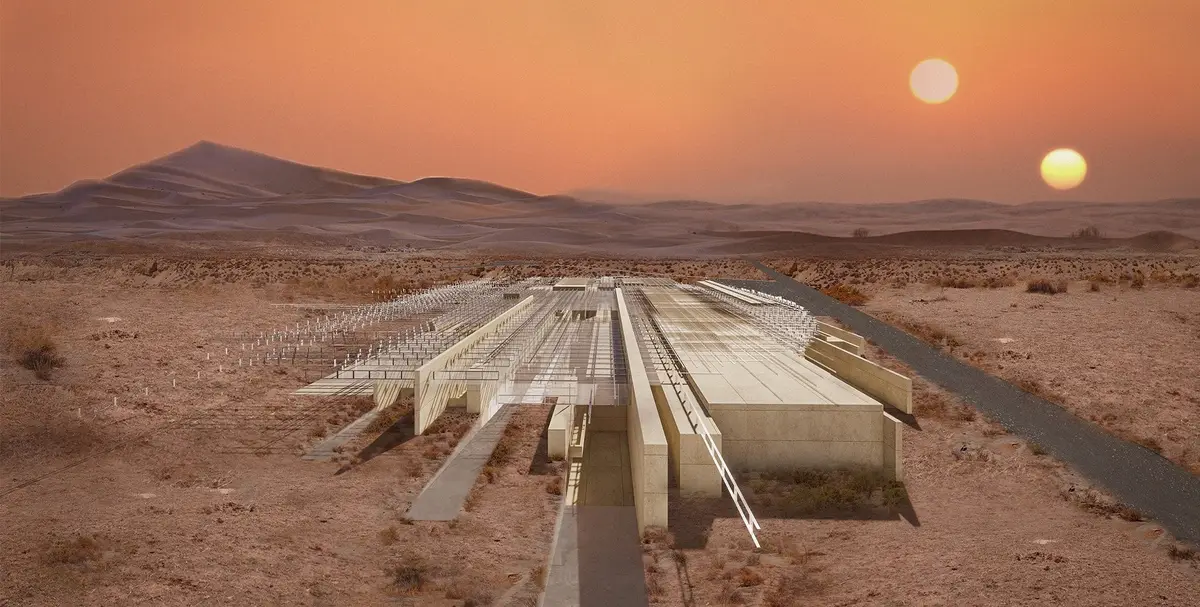
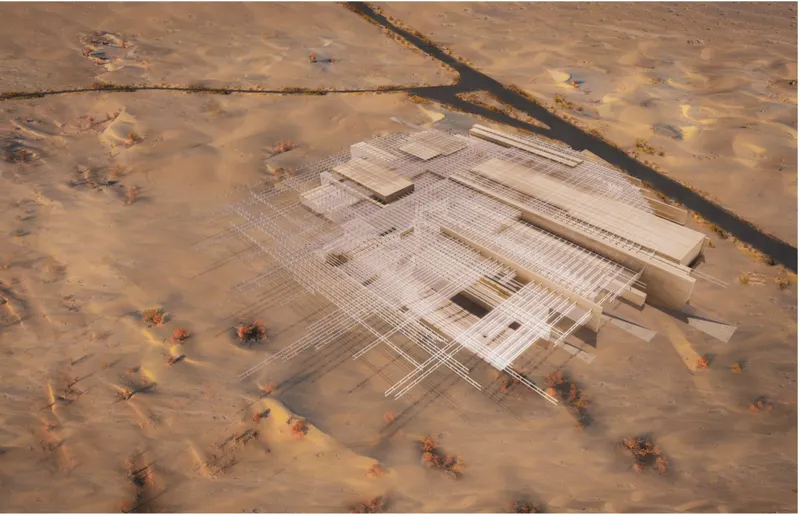
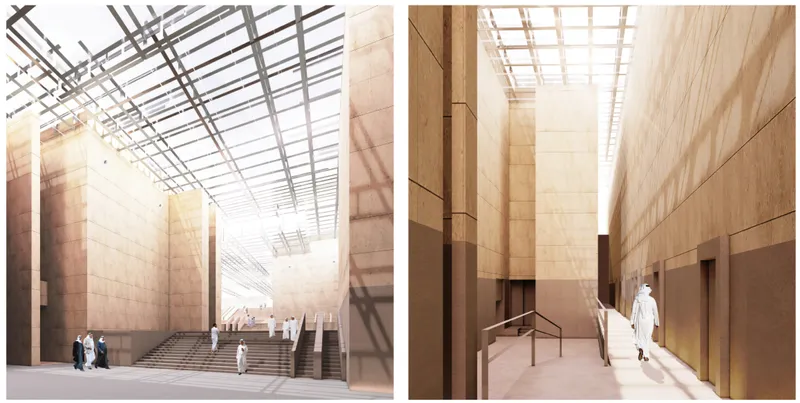
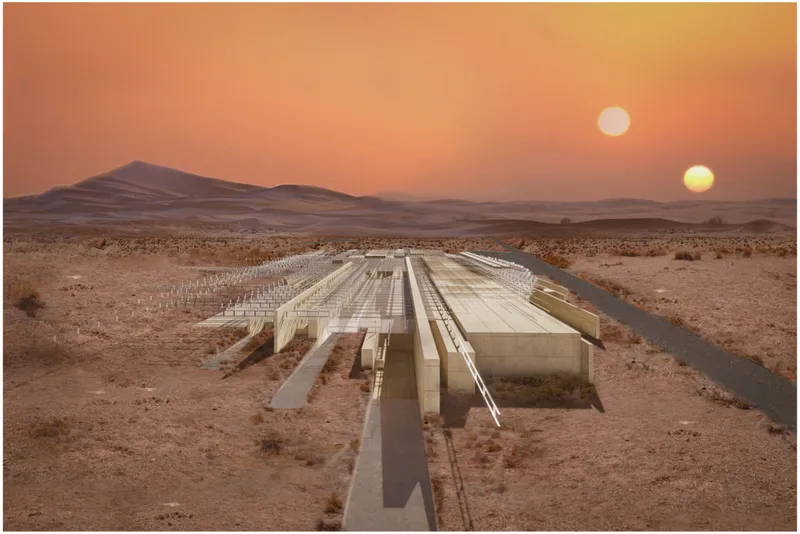
One of the most striking aspects of this cinematic architecture project is its integration with the desert landscape. Instead of imposing a monumental object, the design dissolves into the terrain. The majority of the structure is embedded underground, minimizing visual impact while enhancing thermal performance.
Above ground, a lightweight grid-like canopy floats across the site. This canopy acts as both a shading device and a symbolic layer, representing the fading memory of cinema’s past. Its fragmented geometry extends outward, blurring the boundary between architecture and landscape.
The project’s form is derived from the site’s unique condition, where the highway and shoreline create two parallel edges. In response, the architecture adopts a linear yet diffused configuration, allowing it to mediate between infrastructure and nature.
Material and Atmosphere
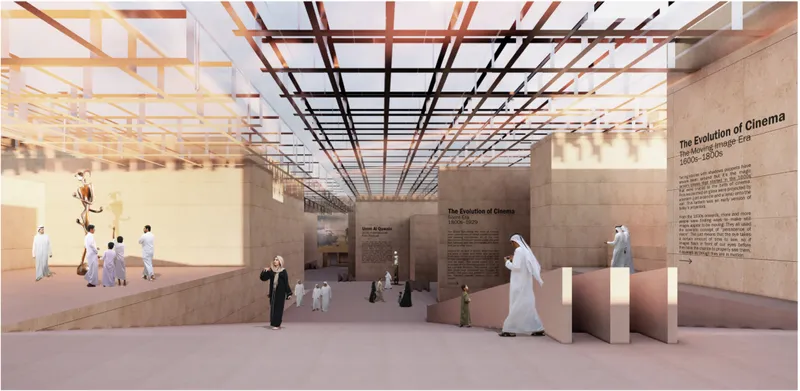
Materiality plays a critical role in reinforcing the project’s conceptual narrative. The use of warm-toned stone reflects the desert’s natural palette, grounding the building within its context. In contrast, the translucent roof structure introduces lightness and permeability.
This juxtaposition between heavy and light elements creates a dynamic spatial experience. As visitors move through the building, they encounter varying درجات of الضوء and الظل, enhancing the cinematic quality of the architecture. The interplay of الضوء, material, and space transforms the building into a living sequence of frames.
Social and Cultural Relevance
The project also addresses the shifting role of cinema in contemporary society. With the rise of digital platforms, traditional cinemas are losing their dominance. This cinematic architecture proposal responds by reintroducing cinema as a collective and cultural experience.
By integrating exhibition spaces, gathering areas, and performance zones, the project expands beyond a conventional film center. It becomes a cultural hub that fosters interaction, learning, and community engagement. The inclusion of future infrastructure, such as a proposed subway connection, further reinforces its role as a regional destination.
A New Prototype for Cinematic Architecture
Tracing the Faded ultimately proposes a new typology for cinematic architecture. It challenges the notion of cinema as a singular enclosed space and instead presents it as a distributed, evolving system.
The architecture is both iconic and contextual. It appears as a subtle crater in the desert, gradually fading into its surroundings, while the floating canopy acts as a monumental gesture visible from afar. This duality allows the project to be both grounded and expressive.
As architecture continues to engage with cultural narratives, projects like Tracing the Faded demonstrate the potential of cinematic architecture to bridge past and future. By translating the evolution of film into spatial experience, the project offers a powerful reflection on how we perceive, consume, and inhabit cinema.
In doing so, it redefines architecture not just as a container of functions, but as a medium of storytelling. A medium where space, time, and culture converge into a unified experiential journey.


Popular Articles
Popular articles from the community


Play: Fragments of Their World
Familiar architecture becomes modular playground design, creating safe spaces where displaced children can learn, connect, imagine and play.
ALGAL REALM: A Bio-Integrated Lunar Habitat Design for Life Beyond Earth
ALGAL REALM reimagines lunar habitat design with algae-powered life support, 3D-printed regolith, and vertical living for a lunar future.

Little Red Riding Hood: Architectural Design as a Journey Through Fear, Light, and Storytelling
Little Red Riding Hood reimagines the fairy tale through architectural design shaped by fear, light, scale, memory, uncertainty, and choice.

Co-life: Sustainable Architecture for Age-Friendly Community Living
Co-life reimagines sustainable architecture for seniors through courtyards, rammed earth, shared gardens, and spaces designed for belonging.

Similar Reads
You might also enjoy these articles

Eco Chapel: A Green Architecture Pavilion Designed in Symbiosis with the Forest
Eco Chapel uses green architecture to weave prayer, learning and reuse into a forest pavilion shaped by modular hexagonal canopies for life.
Kaffeebühnen: Coffee Shop Architecture Designed as a Civic Stage Between Vienna’s City and Park
Kaffeebühnen turns coffee shop architecture into a civic stage, linking Vienna’s park edge, urban life, warm timber yards, and coffee craft.
Healing Façade: Sustainable Architecture for Reforestation, Community, and Sacred Ecology in Ethiopia
Healing Façade reimagines sustainable architecture as a living wall that restores soil, catches water and renews Ethiopia's forest churches.


Urban Forest: A Vertical Ecosystem for 5,000 Workers in Singapore's Changi Business Park
Radially stacked pods and layered green decks turn a 7-acre plot into 47 acres of ecological workspace projected for 2040.

Explore Architecture Competitions
Discover active competitions in this discipline

Challenge to reimagine the Iron Throne

Photograph architecture without architects

Illustrate the lost glory of Angkor Wat - Render Challenge

Design challenge to reuse E-waste
Comments (0)
Please login or sign up to add comments
No comments yet. Be the first to comment!