

Traditional Japanese Machiya Renovation: A Modern Take on Classic Kyo-Machiya by Design It
The article details the renovation of a traditional Kyo-machiya into a modern home, preserving historic elements while adding contemporary comforts.


The concept of traditional Japanese Machiya renovation involves updating classic Japanese townhouses for contemporary living while preserving their historic charm. The Machiya East of Kinkakuji Temple House, renovated by Design It, serves as an exemplary case of blending the old with the new in Kyoto's historic Nishijin district.


The Essence of Machiya Architecture
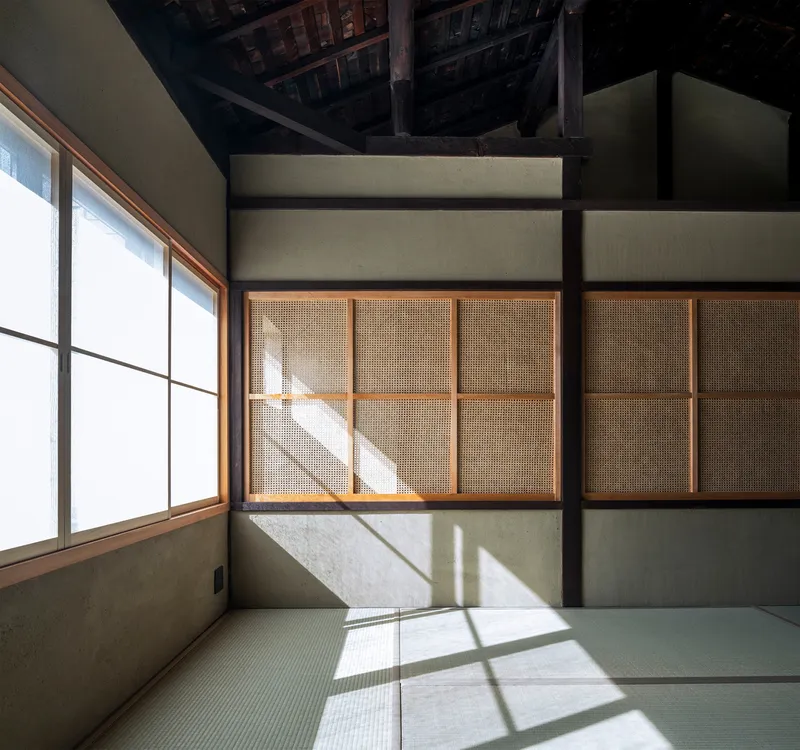
Traditional Kyo-machiya are known for their unique smallness and intimate connection with daily life. The Machiya East of Kinkakuji Temple House exemplifies these characteristics, with its traditional low door heights and compact tatami rooms, offering a glimpse into the life that once flourished in these spaces.
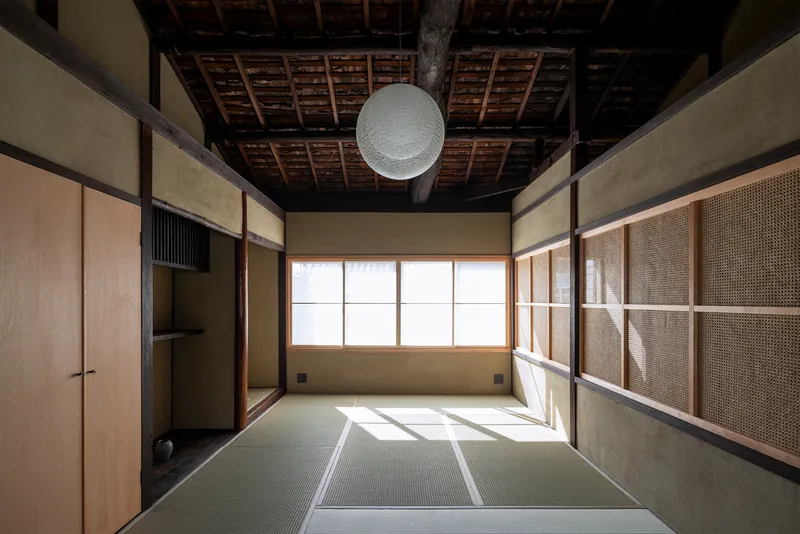


Preserving the Spirit of Machiya
Design It’s renovation approach for the Machiya East of Kinkakuji Temple House was rooted in preservation. The firm aimed to maintain the building's original aesthetic and functional aspects, such as the Misenoma (commercial space) and Daidoko (kitchen), while adapting them for modern uses.


Modern Living in a Historic Context
Adapting to Modern Needs
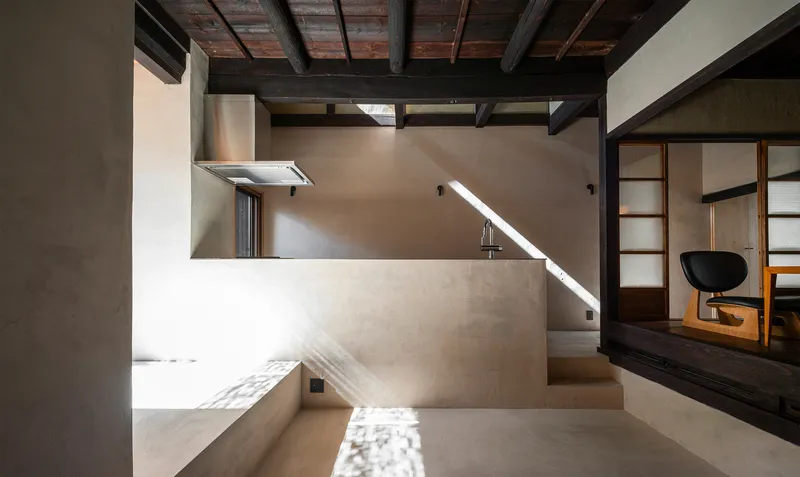
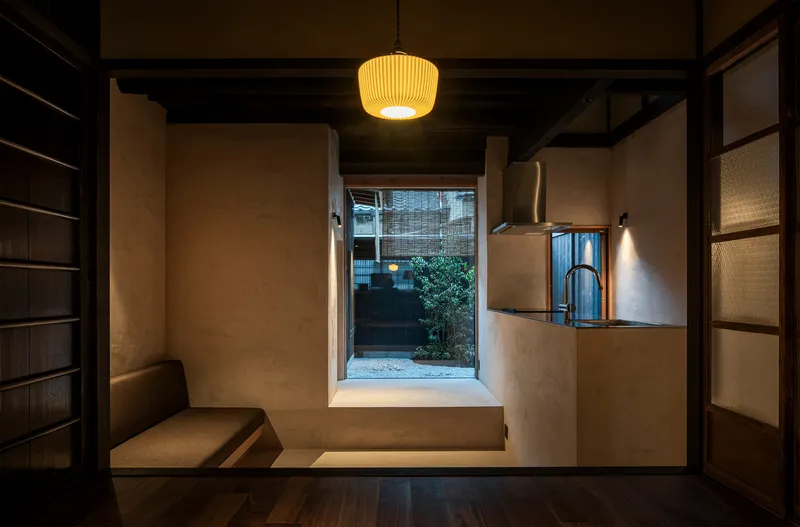
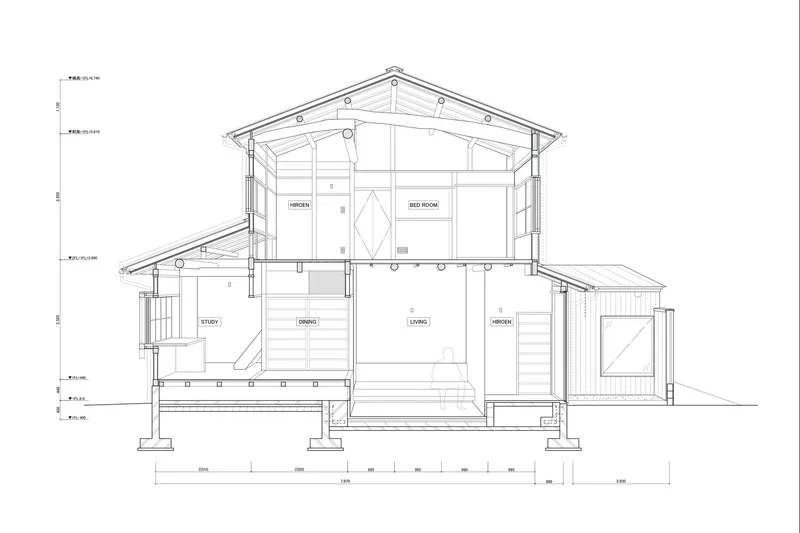
While the exterior and room functions preserve the Machiya spirit, the renovation introduces modern elements to meet contemporary living standards. This includes creating a new living space within the semi-basement area, once a textile workshop, now transformed into a cozy, den-like environment for relaxation and leisure.


A Multi-Level Living Experience
The renovation introduced three different floor heights within the first floor, enhancing the house's spatial variety and comfort. Each level serves a distinct purpose, from the sunlit study to the intimate, dug-out living room, offering a unique living experience in each space.


Bridging Tradition with Modernity
The Machiya East of Kinkakuji Temple House by Design It represents a successful traditional Japanese Machiya renovation, merging the historical essence of Kyo-machiya with the requirements of contemporary living. This project highlights the beauty and potential of revitalizing traditional Japanese architecture for modern lifestyles.




Popular Articles
Popular articles from the community


Juan García Correa, John González and Claudia Rueda Sink a Circular Amphitheater into a Manizales Engineering Building
On the La Nubia campus in Manizales, Colombia, the S1 Building folds labs and offices into a hillside of ramped lawns that double as a campus route.

David Macias Steps a Doorless Stone and Plaster House Down a Tropical Colombian Hillside
In the humid hills of Colombia, Threshold House replaces the front door with an open void and terraces its 850 m² down the slope instead of fighting it.

LT2A and OPEN Architectes Thread a Brick and Glass High School Through a Wooded Belgian Campus
In Braine-l'Alleud, a 3,000 m² wing for Collège Cardinal Mercier pairs pale brick with a glazed colonnade, deferring to a small chapel and a dense wood.

Cube Design Draws an Ecological Corridor Between Two Shenzhen Hills with the Nankai Building
Beside Shenzhen's container docks, the Nankai Building pairs stacked balconies with a climbing green screen to connect two hillsides across its height.

Similar Reads
You might also enjoy these articles


Hodi-Mandai Geram
Project Function: Preservation and revitalization of the Intangible heritage and socio-spatial identity of the Hodi by Housing, Cultural Memory Center, Sacred Grove, landscape, local tourism economy


Olio Towers: A Mid-Rise for Performers That Fuses Housing, Rehearsal, and Stage
Located blocks from Houston's Theater District, this modular tower stacks living units around a central performance atrium.

Oasis: Modular Green Housing Carved into Dhaka's Urban Fabric
A shortlisted Plugin Housing entry reclaims unauthorized settlements in Dhaka with stepped concrete volumes, green roofs, and ventilation-driven design.

Black Hole: A Floating Megastructure for the Post-Physical Era
Emiliano Mazzarotto envisions a spherical, self-scaling arena where e-sports, digital hotels, and holographic stadiums replace traditional public space.

Explore Traditional Japanese Competitions
Discover active competitions in this discipline

Challenge to reimagine the Iron Throne

Photograph architecture without architects

Illustrate the lost glory of Angkor Wat - Render Challenge

Design challenge to reuse E-waste
Comments (0)
Please login or sign up to add comments
No comments yet. Be the first to comment!