

Urzúa Soler Arquitectos Suspends a Steel-and-Pine House in the Andes Forest
Trama House deploys a rigid modular grid of steel and folded metal across a wild hillside in Las Trancas, Chile.


There is something almost confrontational about placing a perfectly ordered steel grid inside a forest that obeys no grid at all. Trama House, completed in 2020 by Urzúa Soler Arquitectos, does exactly that: it drops a 330 square meter bar of repeating 3 x 3 x 6 meter modules onto a sloping, densely wooded site in Las Trancas, deep in the Chilean Andes. The house does not try to disappear. Its folded metal skin, steel H-columns, and triangular trusses telegraph precision against a backdrop of bark and rock. But the confrontation is deliberate. By making the artificial legible, the architects give the natural something to push back against, and the resulting tension is what makes the project genuinely interesting.
The plan reads as a horizontal programmatic bar, split at its center by the entrance. Public rooms, a double-height living area, and a barbecue zone stretch one way; private bedrooms extend the other. Service spaces and terraces bookend the low ends. It is a straightforward diagram, and the architects do not pretend otherwise. The rigor is the point: every decision about where to place a skylight, where to cant the roof, and where to suspend the floor above grade follows from the structural module, not from sculptural whim. The result is a house that feels both highly disciplined and remarkably open to the weather, the light, and the volatile Andean seasons that surround it.
A Dark Object in the Trees
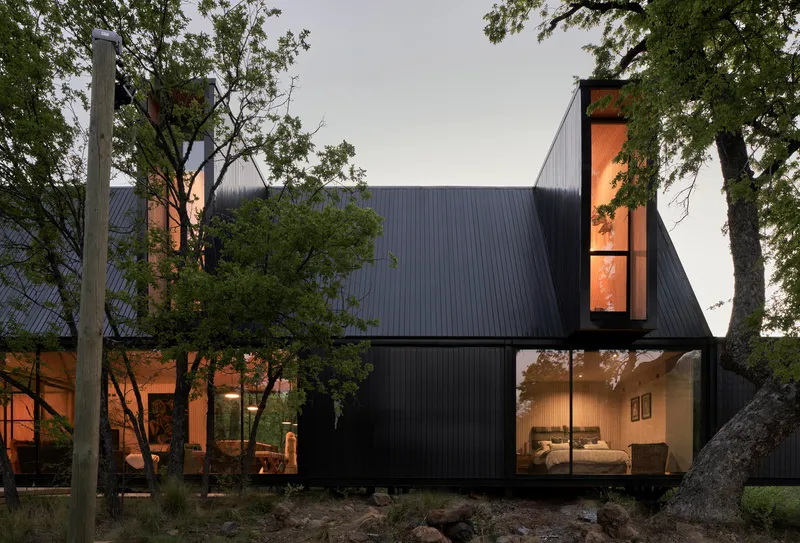
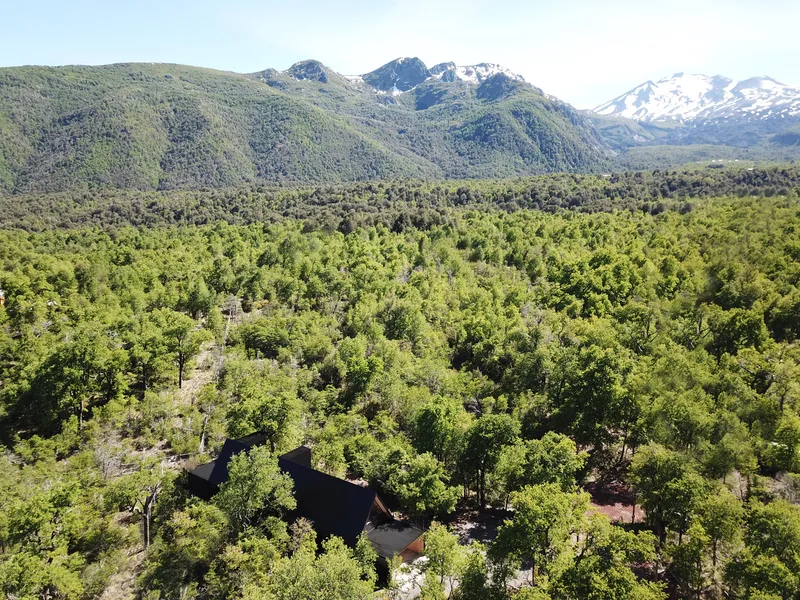
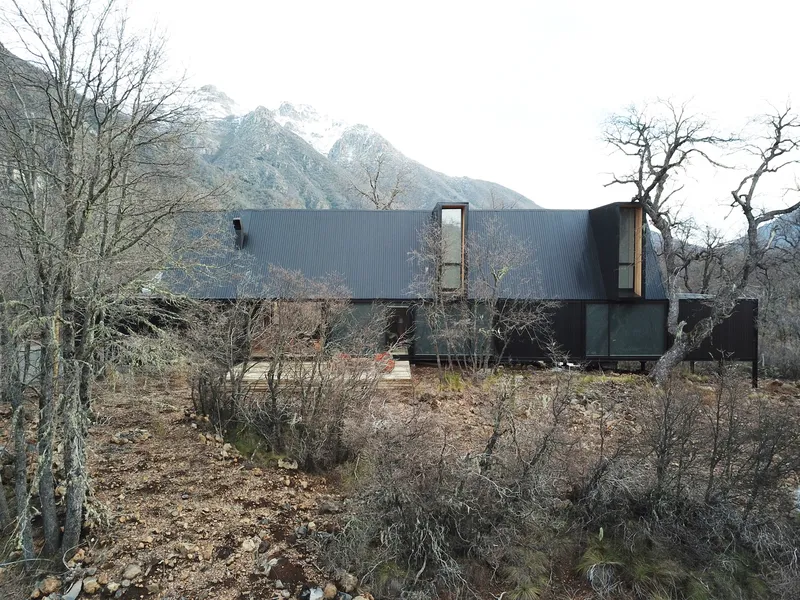
From the air, Trama House reads as a slender dark line threaded through the canopy, its low profile barely rising above the treetops. At ground level the reading shifts: the corrugated metal cladding catches twilight and shadow in ways that fragment the volume, making the house feel less monolithic than its aerial silhouette suggests. The dark finish absorbs rather than reflects, pulling the building into the tonal range of the surrounding trunks and soil. Snow-capped peaks in the distance give scale to the scene and remind you that this is not a gentle woodland retreat but a site that sees real winters.
Folded Metal Meets Timber Reveal
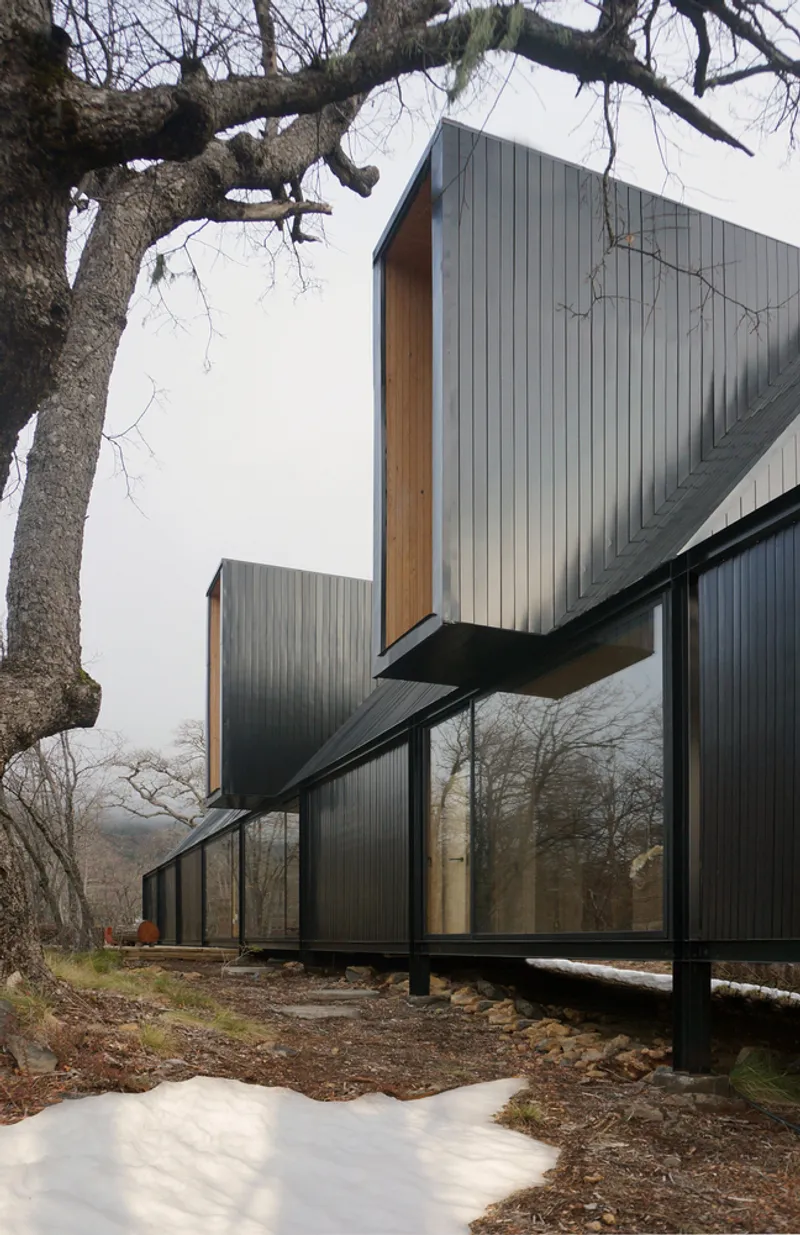
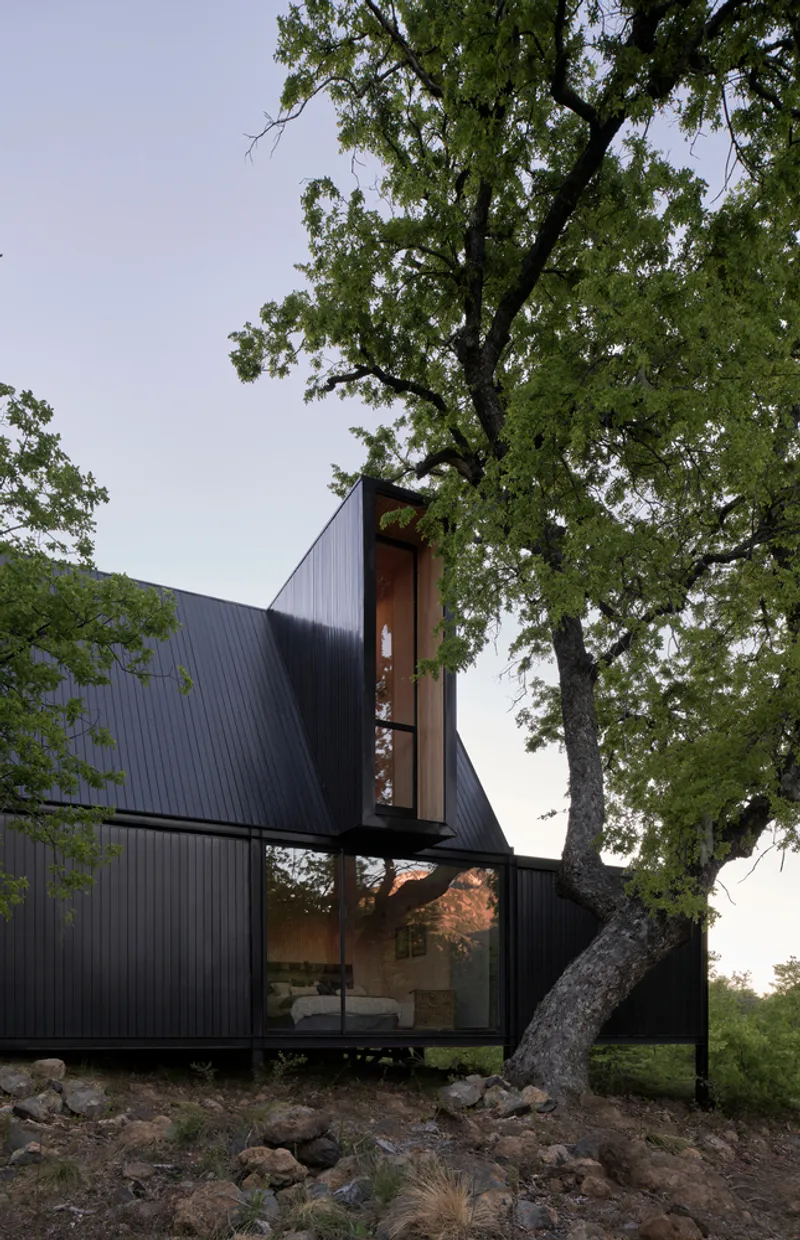

The exterior envelope is a folded metal skin fabricated on-site, a detail that speaks to pragmatism as much as craft. Off-the-shelf cladding panels would have been simpler, but the custom folding lets the surface wrap tightly around the steel frame and express each structural bay with a subtle crease. Where the skin pulls back to admit a window, pine timber lining appears as a warm reveal, framing every opening like a deep-set eye. The contrast is potent: cold, corrugated metal on the outside, warm grain on the inside, with the threshold itself doing all the work of transition.
These narrow window slots are not random punches. Each one aligns with the 3-meter structural grid, reinforcing the modular logic while controlling views toward specific trees or stretches of sky. At dusk, the lit timber reveals glow against the dark metal, making the house look almost perforated by light.
The Double-Height Interior


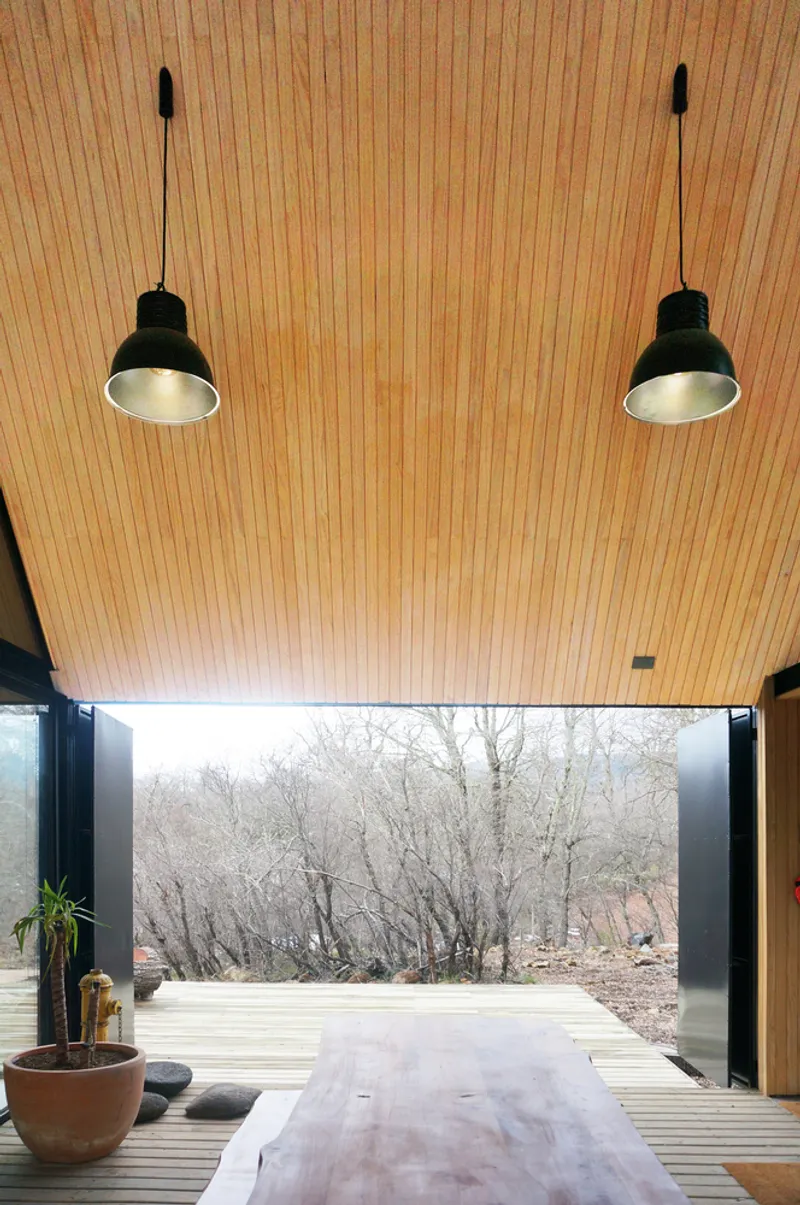
Step inside and the material palette collapses to one: pine boarding on floors, walls, and ceilings. It is a total commitment. The sloped ceiling of the public zone rises to a generous double height, exposing the black steel beams and triangular trusses that do all the structural work. Pendant lights drop on long cords from the ridge, their simple forms calibrated to the scale of the room rather than to any decorative impulse.
Full-height glazing at the end wall dissolves the boundary between living room and forest. In winter, with bare branches pressing close, the effect is cinematic. In summer, the canopy filters light into a shifting pattern across the pine surfaces. The inclined roof is not merely formal; it mediates climate by encouraging airflow upward through the double-height void, a passive strategy that keeps the space breathable during the intense Andean summer.
Intimate Frames
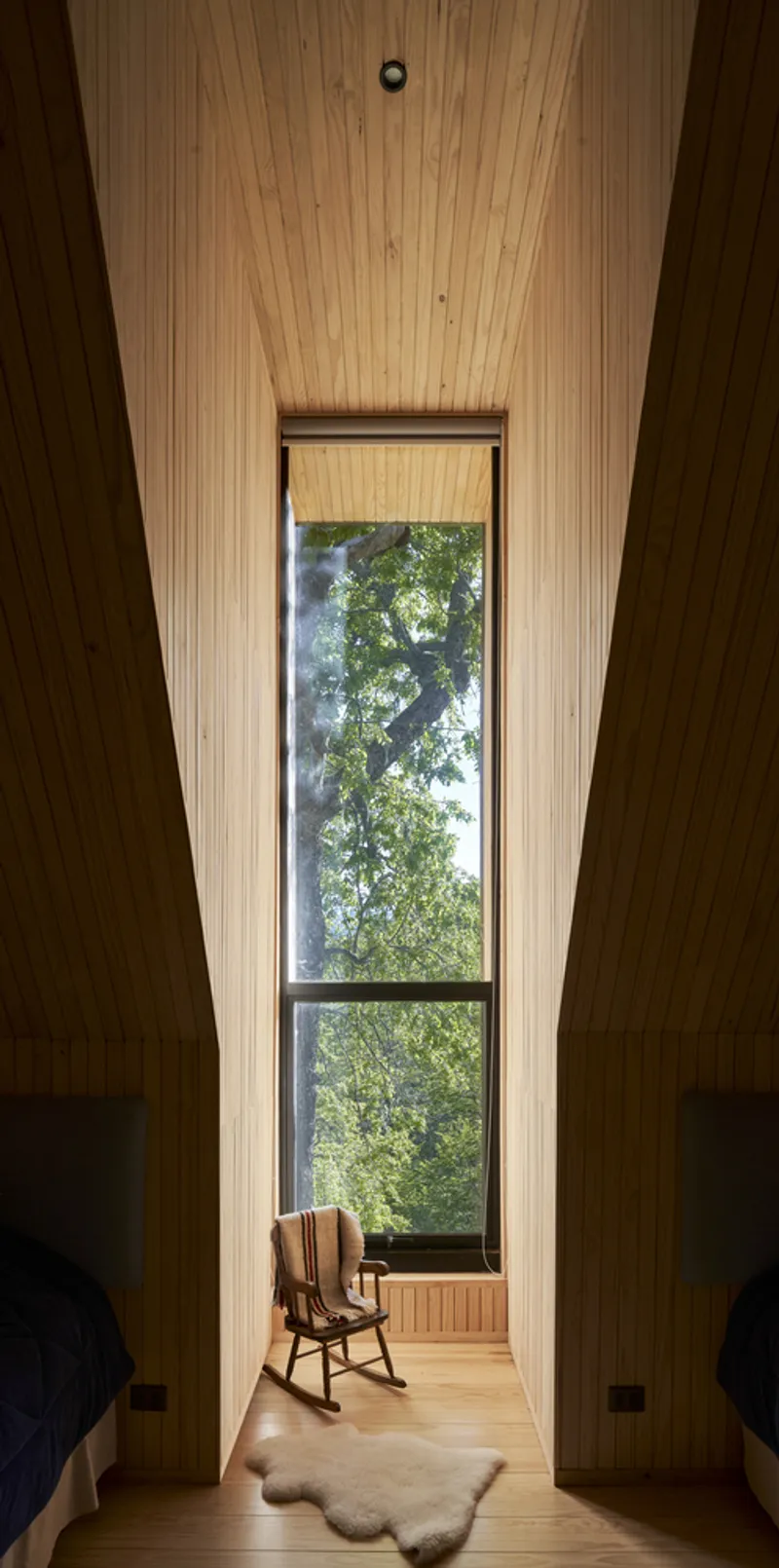
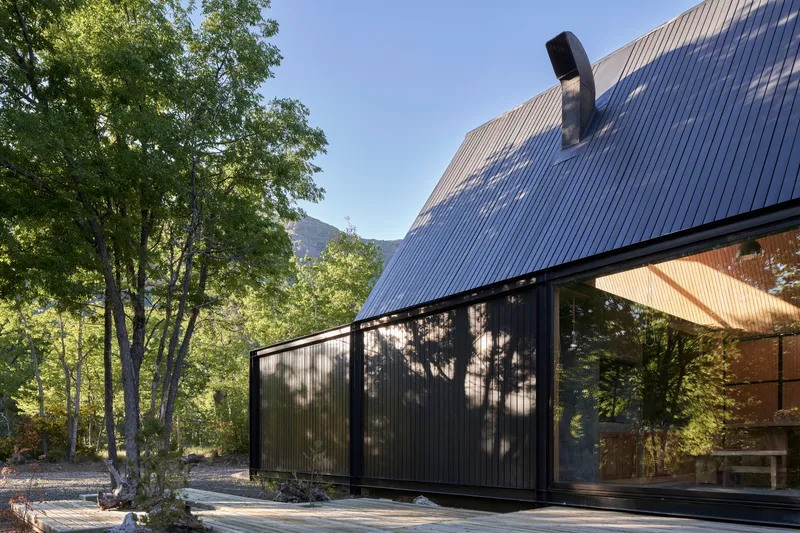
Not everything in the house is expansive. Some of its best moments are the smallest: a narrow, timber-lined alcove deep enough for a rocking chair, framing a single tall view of branches. These compressed spaces work precisely because they sit inside a building whose dominant gesture is openness and repetition. They give occupants a place to retreat without leaving the logic of the module. The sliding glass panels along the side elevation reinforce this duality, offering the option to open the house completely or close it down to a sealed, weather-tight shell when a storm rolls in.
Plans and Drawings

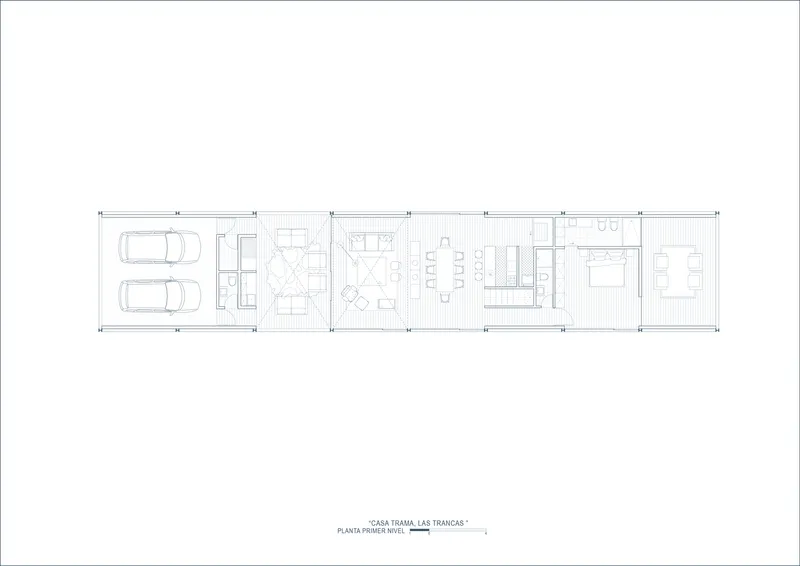


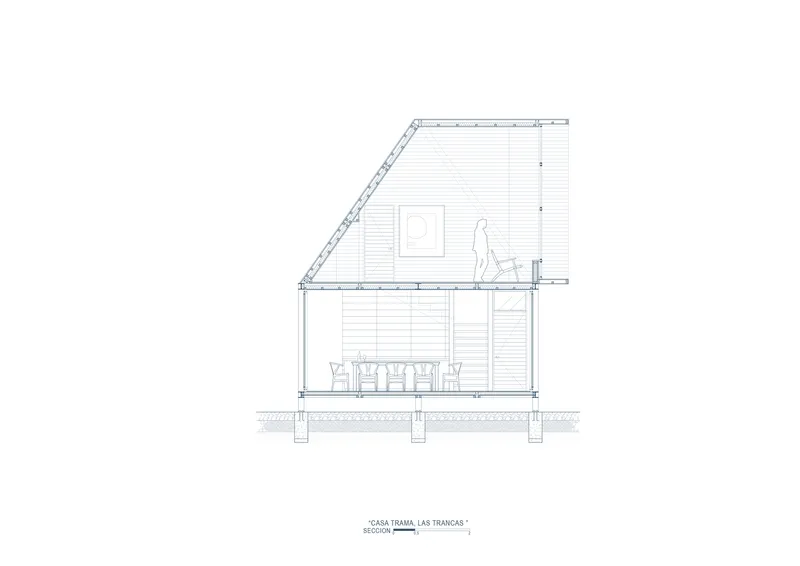


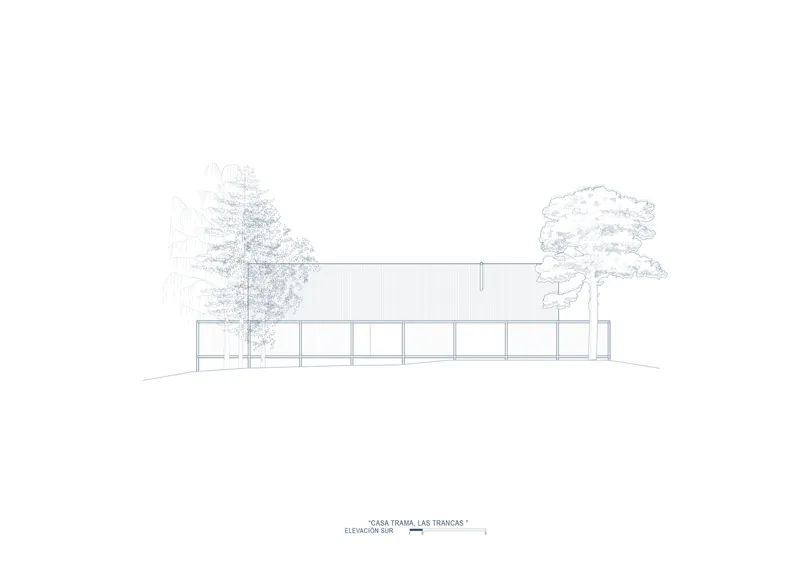
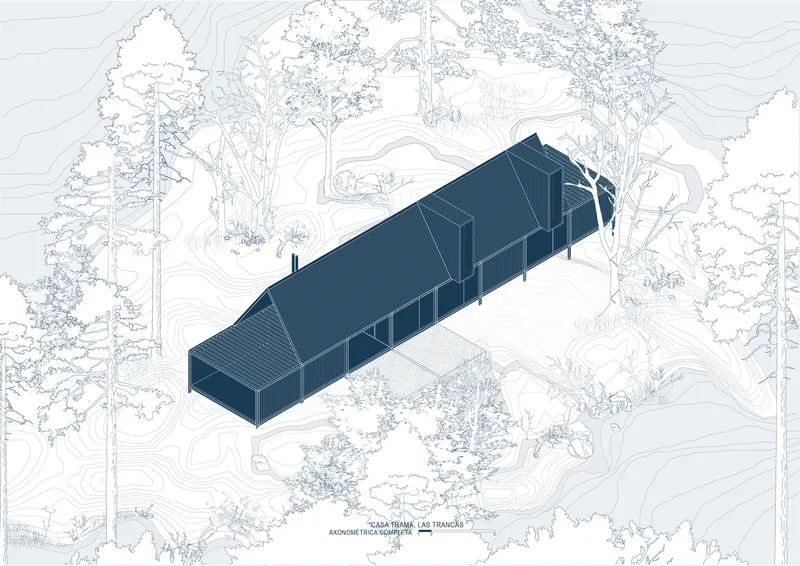
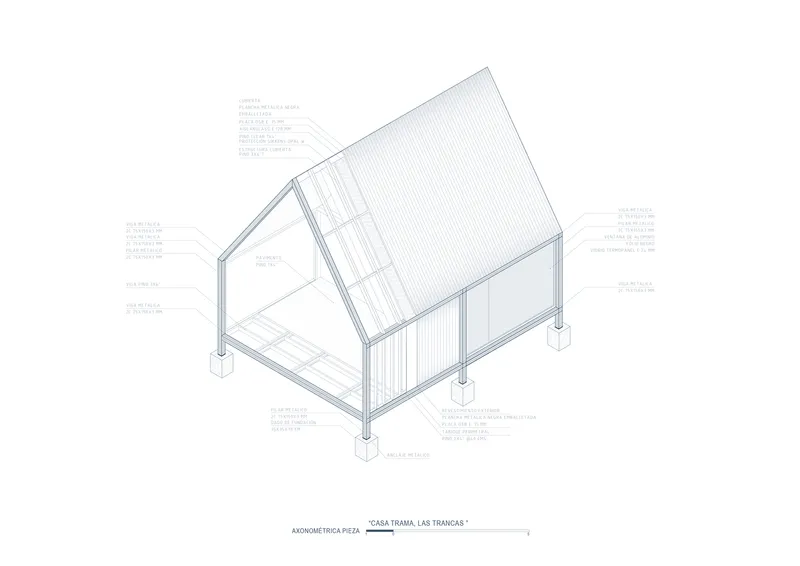
The site plan confirms what the aerial photograph implies: the building is a single linear bar slotted between existing trees, none of which appear to have been removed. The first level floor plan shows the garage at one end, living areas at the center, and a bedroom wing extending in the opposite direction. Upstairs, bedrooms flank a central stair and bathroom core, with decks at either end pulling the private rooms outward toward the canopy. The sections are the most revealing documents. They show how the inclined roof creates the double-height void over public spaces while compressing the upper bedrooms beneath the ridge. Two large skylights, aligned to the center of each structural bay in the bedroom zone, punch through the roofline to deliver direct overhead light.
The exploded axonometric drawing breaks the building into its constituent layers: foundation, steel frame, pine lining, and folded metal envelope. Reading it from bottom to top, you can see how few materials are actually at play. The economy is striking. Steel does the heavy lifting, pine does the living, and metal does the weathering. There is no decorative fourth layer.
Why This Project Matters
Trama House is worth studying because it refuses the two most common approaches to building in a forest: camouflage and spectacle. It neither hides behind green roofs and reclaimed timber nor detonates a glass pavilion for maximum drama. Instead, it proposes a third path: legible order placed in direct dialogue with natural disorder. The modular grid is honest, the material choices are limited, and the structural logic is visible everywhere you look. That discipline frees the architects from having to invent novelty at every corner, because the forest itself provides all the variety the house needs.
For anyone designing in extreme climates, the project also offers a practical lesson. The folded metal skin, fabricated on-site, handles snow, rain, and fierce sun without requiring complex layered assemblies. The pine interior insulates occupants from direct exposure while maintaining a sensory warmth that steel alone could never provide. It is a house built from three materials, one structural idea, and a willingness to let the landscape be the protagonist. That restraint, in a discipline that often rewards excess, is its most compelling quality.
Trama House by Urzúa Soler Arquitectos. Las Trancas, Andes Mountains, Chile. 330 m². Completed 2020.
About the Studio
Share Your Own Work on uni.xyz
If projects like this are the kind of work you want to make, uni.xyz is a place to publish your own, find collaborators, and enter design competitions.




Popular Articles
Popular articles from the community


Hill & Cross Opera: Sculptural Opera House Architecture Shaped by Tallinn’s Landscape and Identity
Hill & Cross Opera reimagines opera house architecture in Tallinn through its sculptural hill, civic plaza, glass wave and a luminous cross.

Co-life: Sustainable Architecture for Age-Friendly Community Living
Co-life reimagines sustainable architecture for seniors through courtyards, rammed earth, shared gardens, and spaces designed for belonging.

Co-Life: Senior Housing Design That Reconnects Older Adults With the City
Co-Life reimagines senior housing design through healing gardens, shared streets, workshops, and a sustainable community across generations.

EW PARK: Sustainable Architecture Reimagines the Future of Urban Parking
EW PARK reimagines city parking as a modular wooden tower combining automation, solar energy, electric mobility, and adaptable urban design.
Similar Reads
You might also enjoy these articles

FAMM Arquitectura Organizes Ten Villas Around Courtyards and Jungle in Nosara, Costa Rica
El Molino pairs two elongated volumes with deep overhangs and timber louvers to build a compact coastal community five minutes from the beach.
Oscar Niemeyer's Ibirapuera Park Pavilions Define São Paulo's Cultural Identity in Concrete and Curve
A constellation of modernist volumes set within São Paulo's most important urban park, conceived for the city's 400th anniversary in 1954.
How Henri Picq's 1889 Paris Pavilion Traveled 11,000 Kilometers to Become Santiago's Artequín Museum
A prefabricated iron and glass pavilion built for the Paris Universal Exposition found a second life as a children's art museum in Chile.
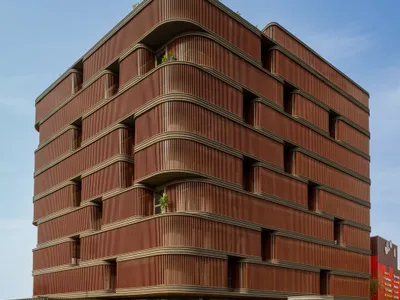
Sanjay Puri Architects Wraps a Jaipur Office Tower in Capsule-Shaped Green Buffers
A nine-level climate-responsive workplace near Jaipur Airport uses stacked planter terraces and aluminium screens to fight 40°C heat.
Explore Architecture Competitions
Discover active competitions in this discipline



Challenge to reimagine the Iron Throne


Photograph architecture without architects


Illustrate the lost glory of Angkor Wat - Render Challenge


Design challenge to reuse E-waste
Comments (0)
Please login or sign up to add comments
No comments yet. Be the first to comment!