
Tran Duy Hung Secondary School – Innovative Urban Education in Hanoi
Tran Duy Hung Secondary School in Hanoi features modern, sustainable architecture with green roofs, natural ventilation, multifunctional spaces, and student-centered learning.

ran Duy Hung Secondary School in Hanoi, designed by Sunjin Vietnam, spans 21,586 m² and was completed in 2022. Led by Tran Nguyen Quang and Le Van Hao, the project integrates modern educational spaces with durable materials and advanced technologies from Austrong, Lixil-Inax, Mitsubishi, and Autodesk for a flexible, future-ready learning environment.
Transforming Urban Learning Environments
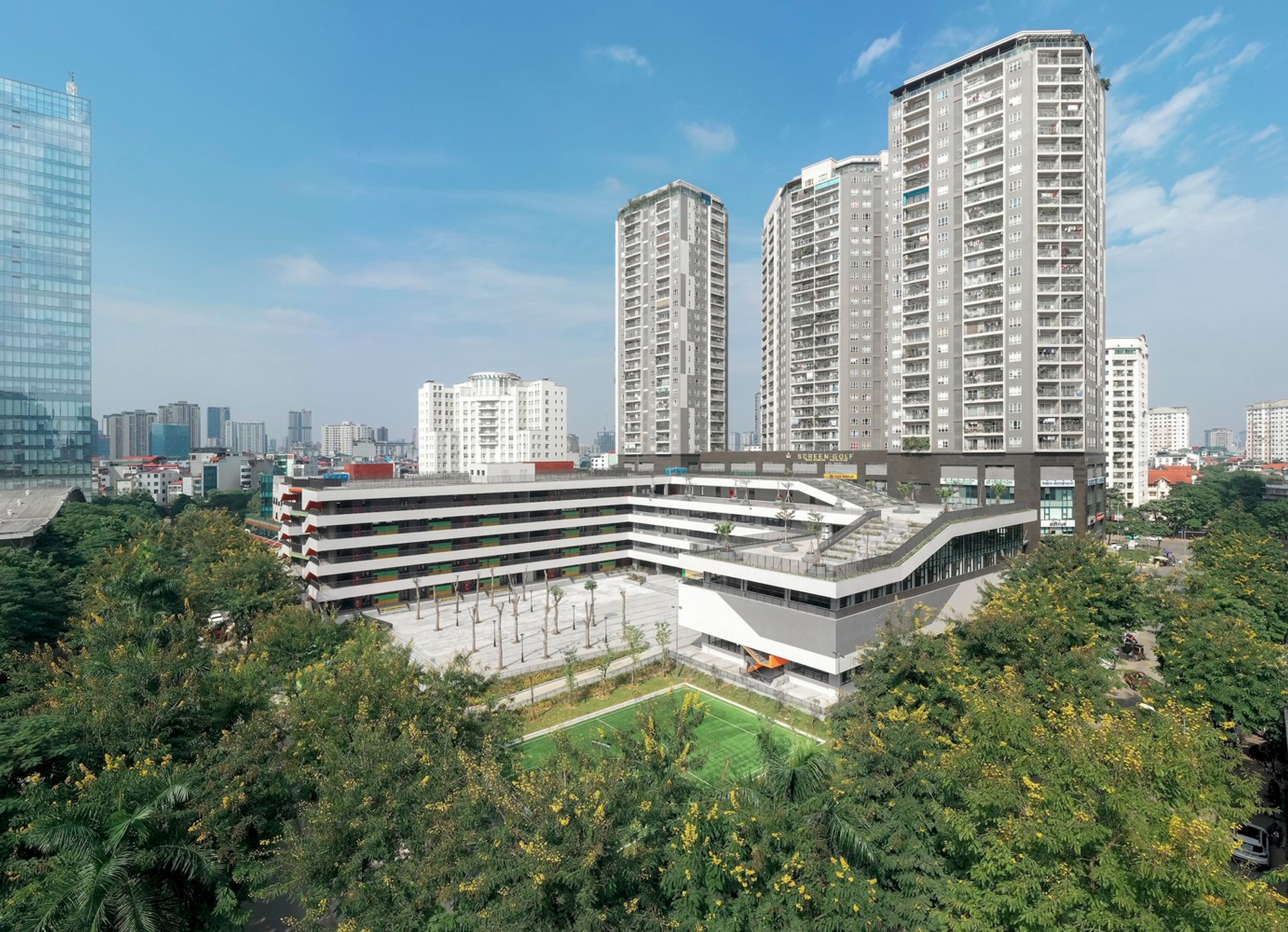
Located in Tran Duy Hung Street, one of Hanoi’s rapidly developing urban areas, the Tran Duy Hung Secondary School responds to the city’s growing need for modern educational infrastructure. Surrounded by high-rise apartments and contemporary urban projects, the school emerges as a green oasis in a dense cityscape, blending functionality, sustainability, and modern design.
The school covers five floors and one basement, housing 44 fully equipped classrooms, specialized subject rooms, a multi-purpose area, and a community-accessible swimming pool. Its design follows Vietnam’s national Level 2 educational standards, ensuring both compliance and innovation.
Master Planning & Design Strategy
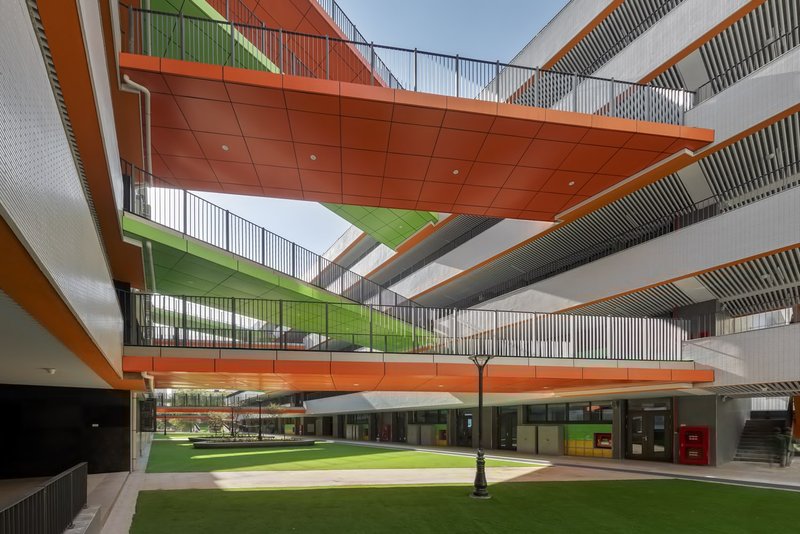
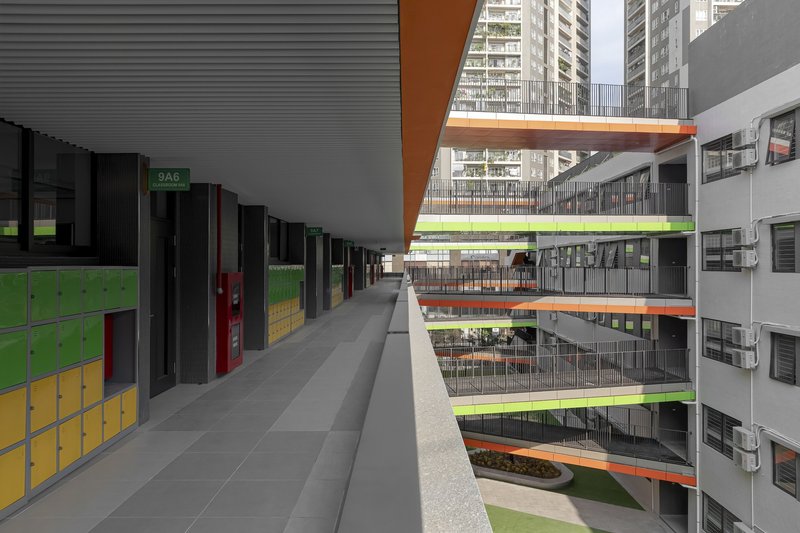
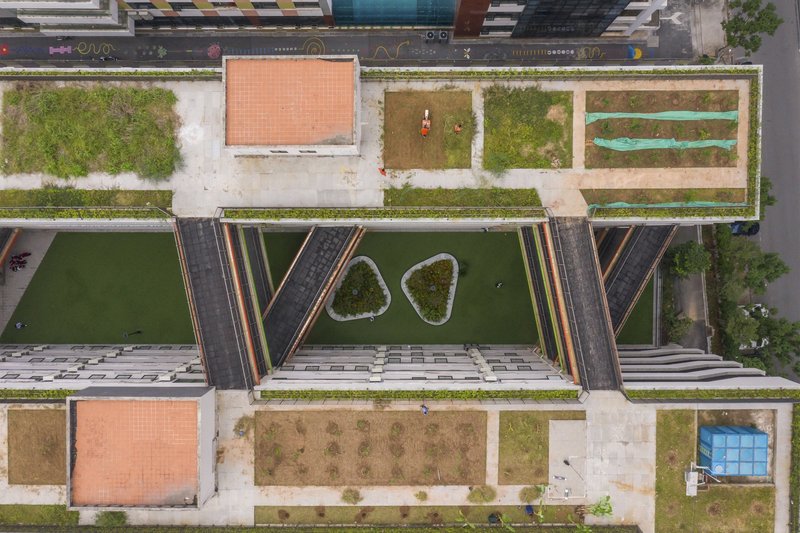
The master plan adopts a modular block layout, with the main façade oriented towards the southwest road. A central courtyard connects classrooms, functional spaces, and the gymnasium through an elevated bridge system, promoting fluid circulation and visual connectivity.
Classrooms are strategically positioned along the Northeast-Southwest axis, optimizing natural ventilation, daylight, and noise protection. The gymnasium and multi-purpose facilities are placed adjacent to the main road, balancing community accessibility while buffering street noise from learning areas.
Green Roofs & Experiential Learning
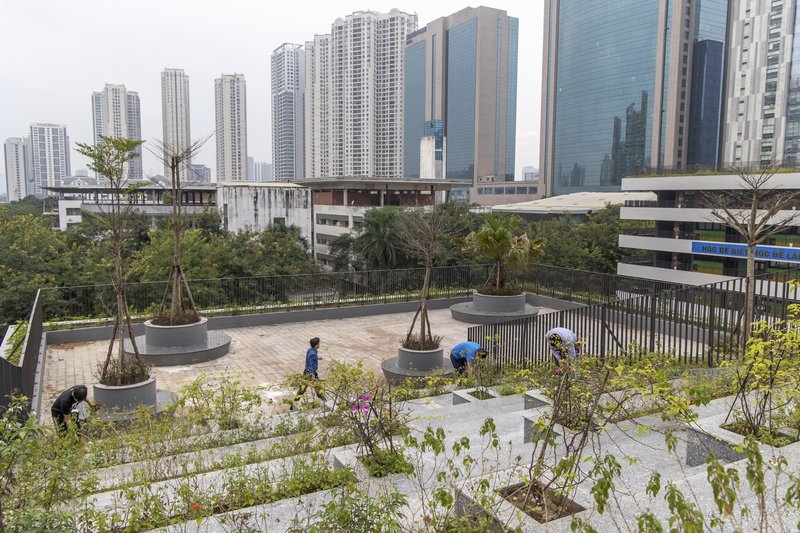
A defining feature of Tran Duy Hung Secondary School is its innovative green roof, designed as a botanical garden and experiential learning space. Spanning 6,000 m², this rooftop includes vegetable gardens, flower areas, and an outdoor library, allowing students to observe and participate in modern agricultural practices using 4.0 technology.
By integrating nature into urban education, the school not only enhances aesthetics but also fosters environmental awareness and hands-on learning opportunities for students—transforming every day at school into an engaging and immersive experience.
Architectural Style & Materials
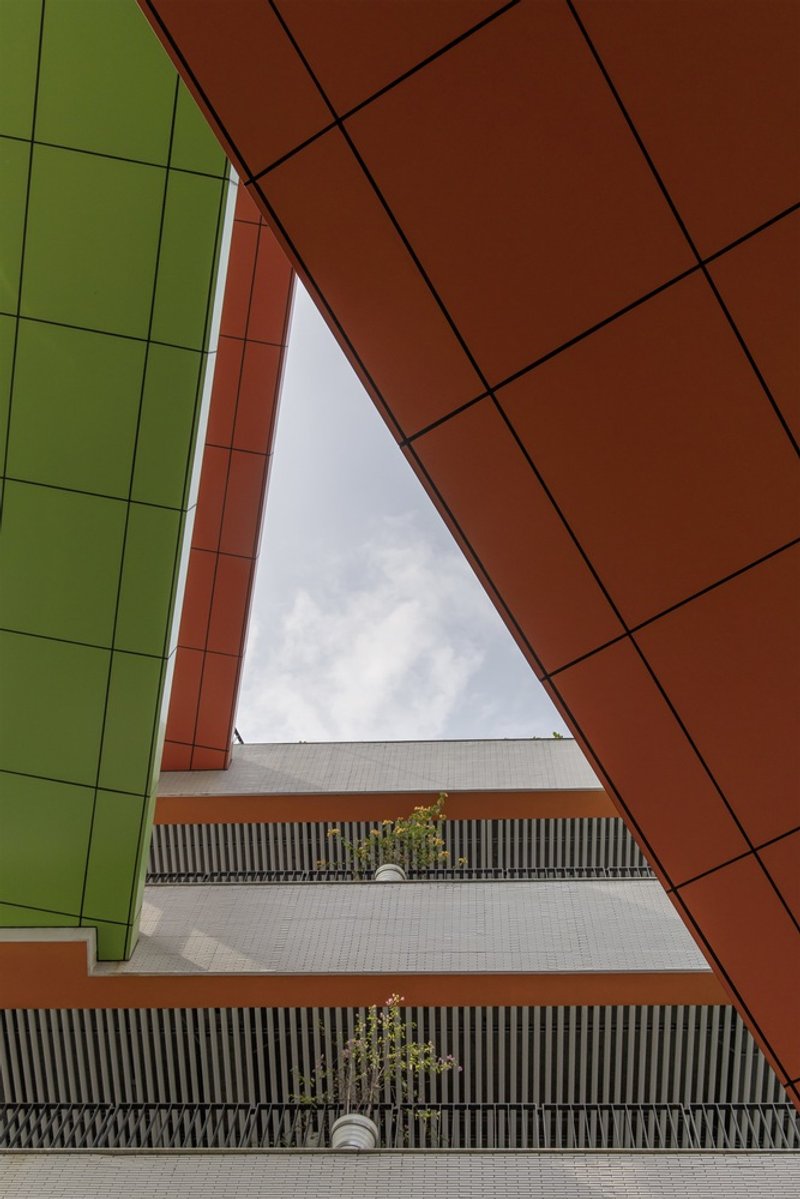
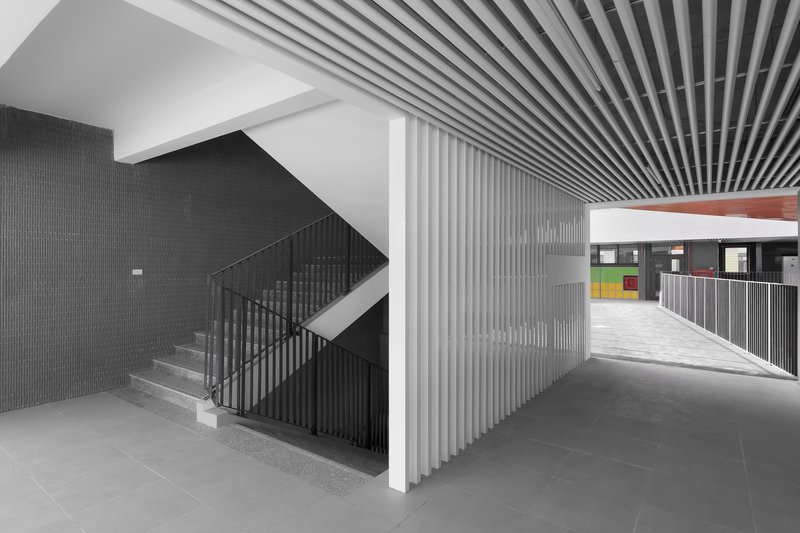
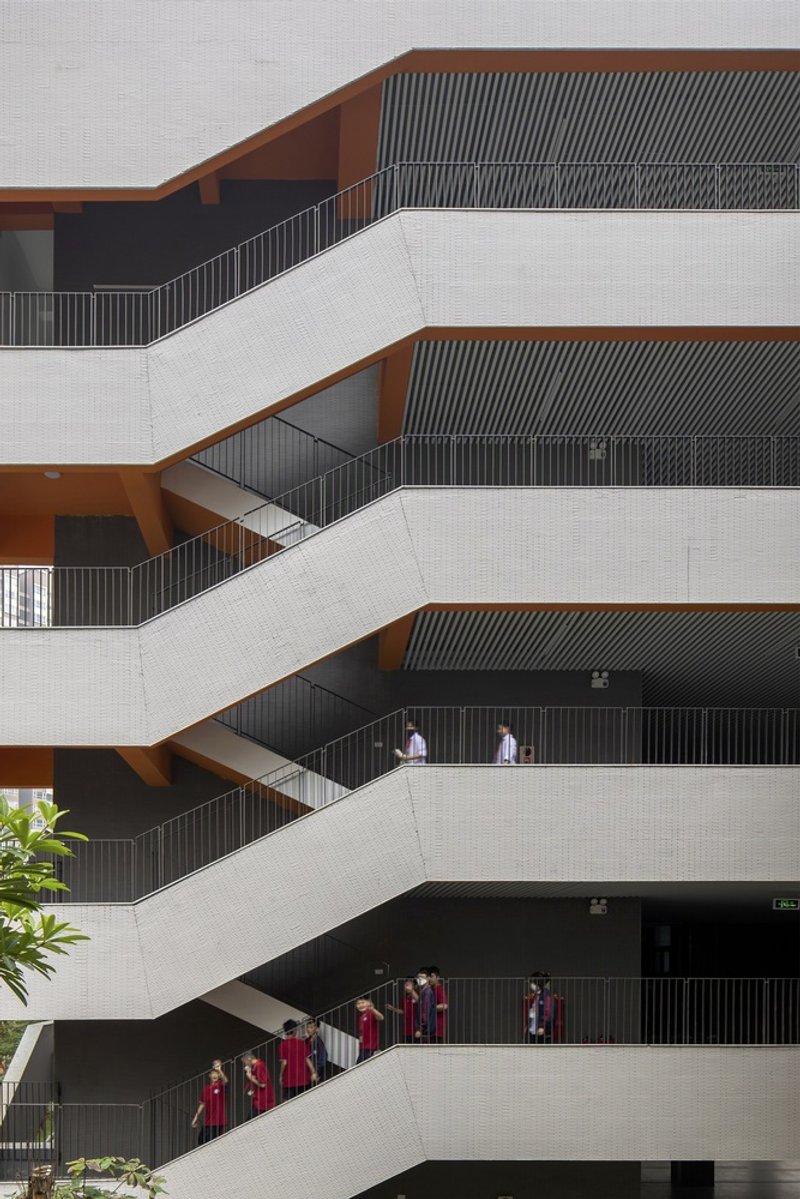
The school embraces a minimalist architectural style, combining simple, flexible colors with a focus on natural integration. Materials and structures are carefully selected to achieve energy efficiency, durability, and low maintenance:
- Reinforced concrete with film-coated shutter systems requiring no plaster
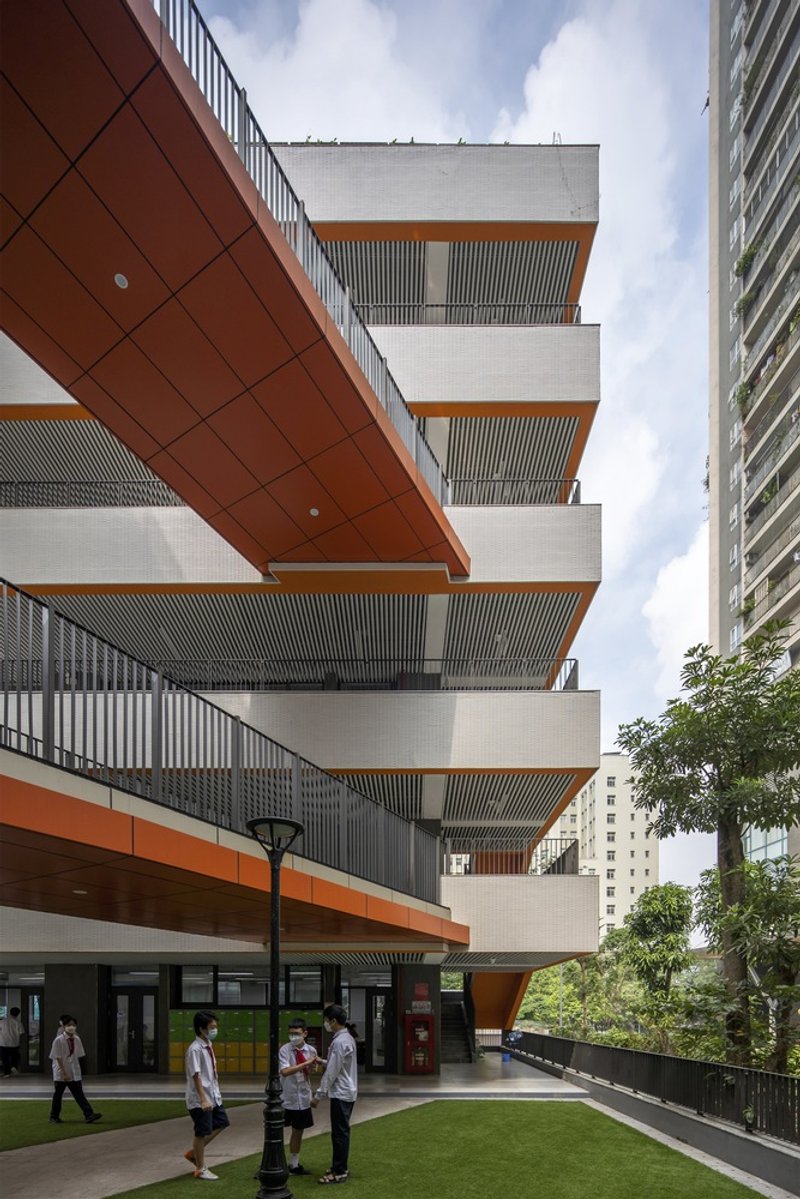
- Column balcony systems for natural ventilation and privacy
- Glazed ceramic wall tiles with self-cleaning technology
- Low-density construction to maximize green spaces and natural light
This approach aligns with modern educational philosophies, emphasizing student-centered learning, play-based education, and holistic development.
Community Impact
Tran Duy Hung Secondary School is more than a learning facility—it serves as a community hub with multifunctional spaces accessible to the public. From the perspective of nearby apartments, the school resembles a green park, creating a sense of calm and nature in the heart of a busy urban environment.




Popular Articles
Popular articles from the community

3dor Concepts Wraps a Kerala Home in Mirrored Concrete Arcs Around a Courtyard Tree
In the Western Ghats foothills of Thamarassery, a 270 m² single-story house uses two curved volumes to frame nature as its center.
BAST Slots a Four-Story Glass House into a Narrow Gap Between Toulouse Townhouses
In the dense Bonnefoy district, a stepped infill building merges home and office while preserving a majestic hackberry tree.
RDTH architekti Rips Out Nearly Every Wall in a Prague Apartment and Replaces Them with Furniture
A 101-square-meter post-war flat in Prague trades rigid partitions for a single rotated furniture block, curtains, and glass concrete.

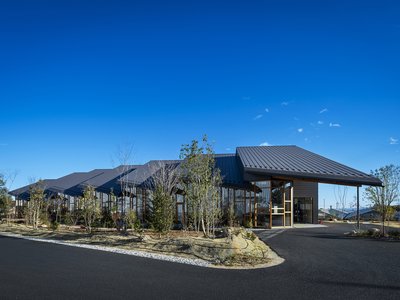
20 Most Popular Office Building Projects of 2025
From biophilic workspaces in India to net-positive energy offices in New Delhi, 20 office building projects that defined architecture in 2025.


Similar Reads
You might also enjoy these articles
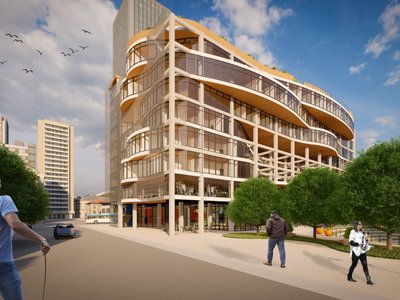
Olio Towers: A Mid-Rise for Performers That Fuses Housing, Rehearsal, and Stage
Located blocks from Houston's Theater District, this modular tower stacks living units around a central performance atrium.
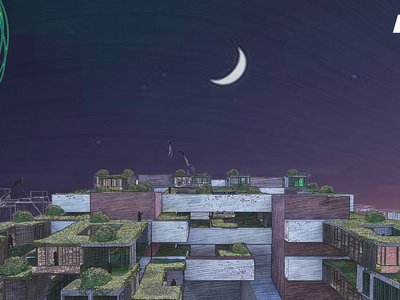
Oasis: Modular Green Housing Carved into Dhaka's Urban Fabric
A shortlisted Plugin Housing entry reclaims unauthorized settlements in Dhaka with stepped concrete volumes, green roofs, and ventilation-driven design.

Black Hole: A Floating Megastructure for the Post-Physical Era
Emiliano Mazzarotto envisions a spherical, self-scaling arena where e-sports, digital hotels, and holographic stadiums replace traditional public space.
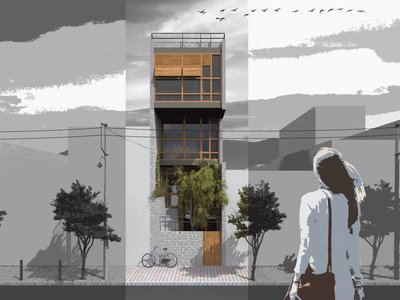
Compact & Sustainable Living in Piraeus: A Four-Level Family Home Built Around Light and Air
A narrow townhouse in one of Greece's densest port cities uses a central atrium and passive strategies to house three generations under one roof.


Explore Architecture Competitions
Discover active competitions in this discipline




The International Standard for Design Portfolios


The Global Benchmark for Architecture Dissertation Awards


The Global Benchmark for Graduation Excellence


Challenge to reimagine the Iron Throne
Comments (0)
Please login or sign up to add comments
No comments yet. Be the first to comment!