

Transformation of a Protected Barn by Simon Durand Architecte: Reviving Heritage with Contemporary Design
A 17th-century Swiss barn transformed by Simon Durand architecte into a modern glazed dwelling, blending heritage preservation with contemporary design.


Preserving Heritage Through Adaptive Reuse
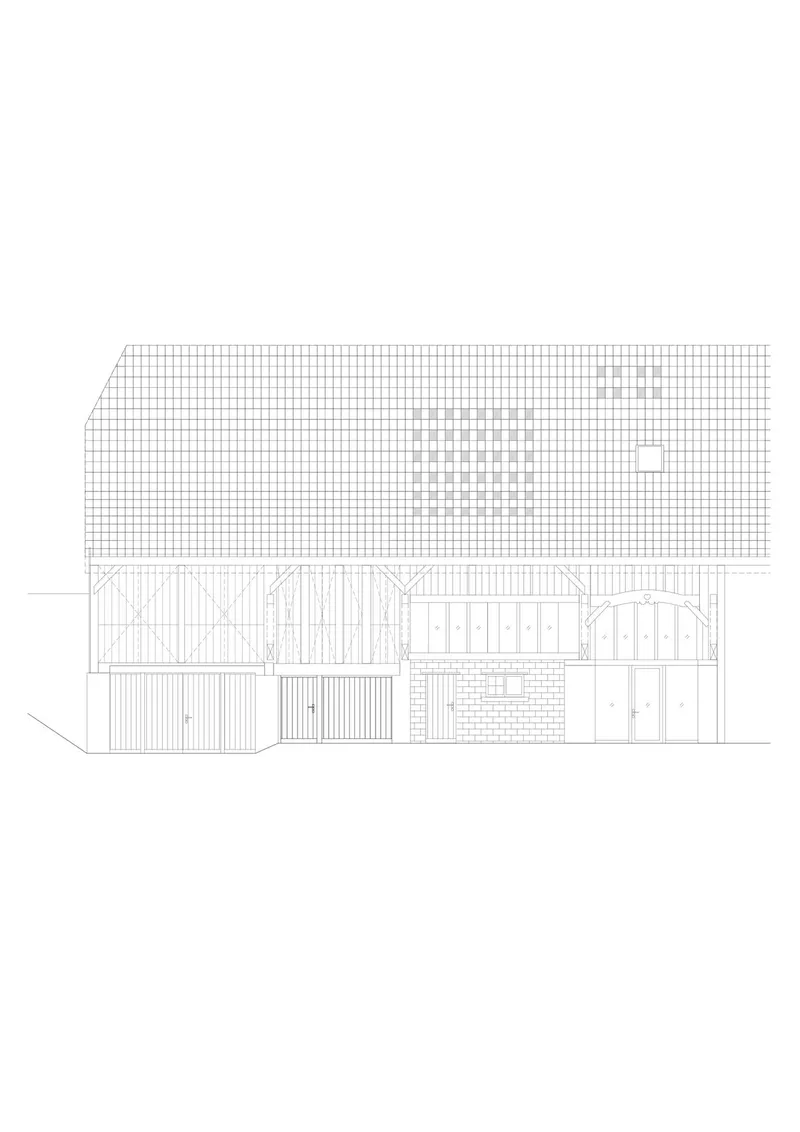
The Transformation of a Protected Barn by Simon Durand architecte in Cottens, Switzerland, showcases how contemporary architecture can coexist with historic structures. This project exemplifies adaptive reuse, breathing new life into a 17th-century agricultural barn while preserving its identity and cultural significance.
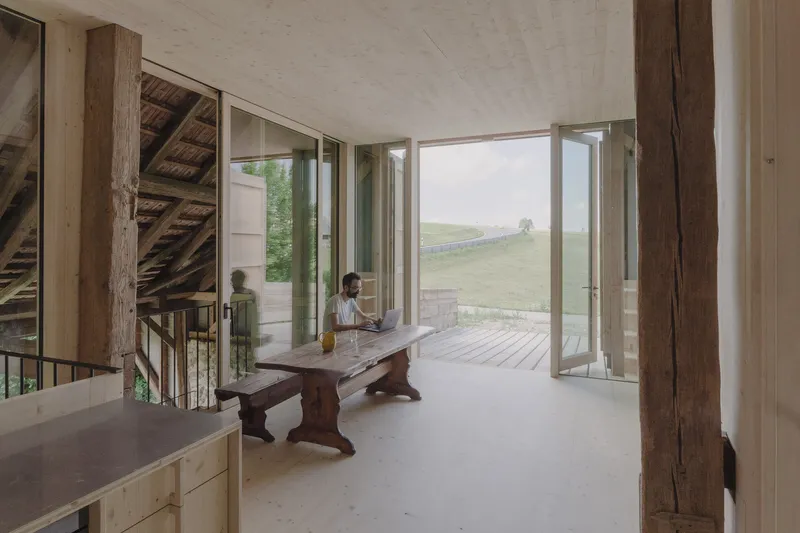
Within a building where no line runs straight, the architect introduced a wooden box with fully glazed facades, designed as a self-contained apartment. This intervention respects the barn’s original framework while giving it a new purpose as a modern dwelling.
Balancing Old and New
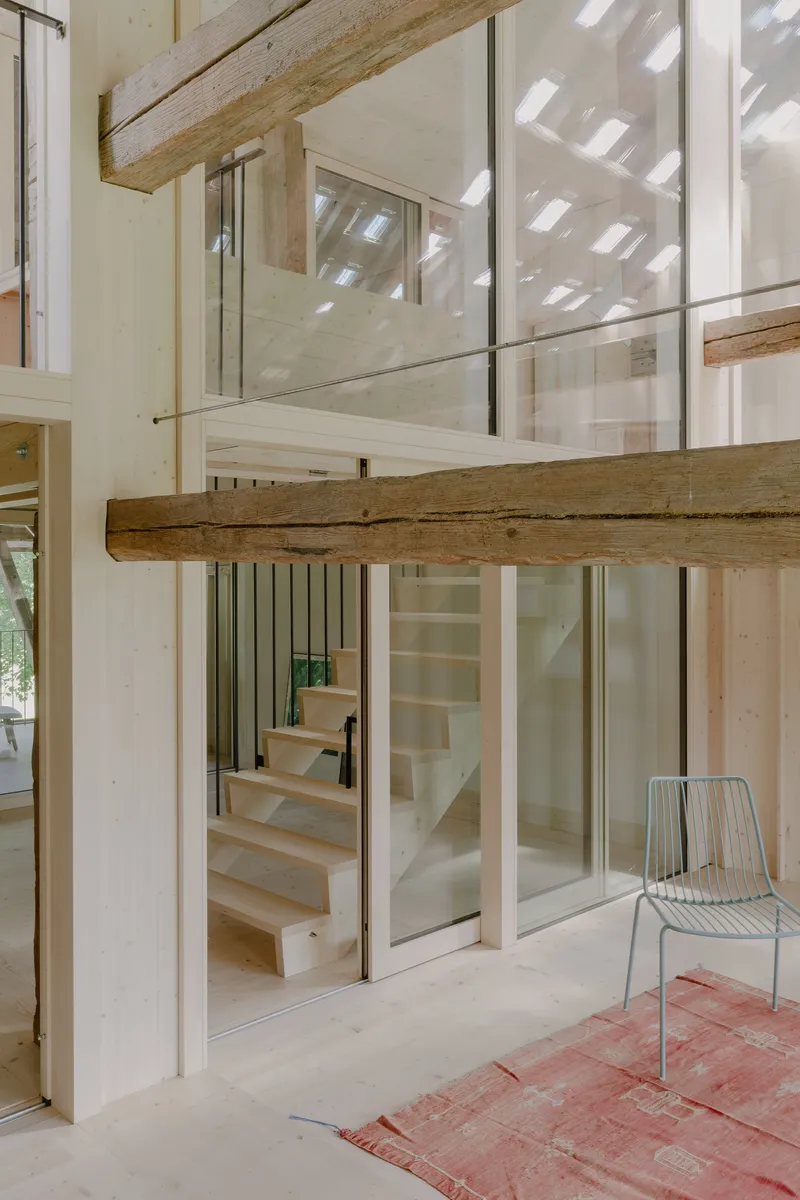
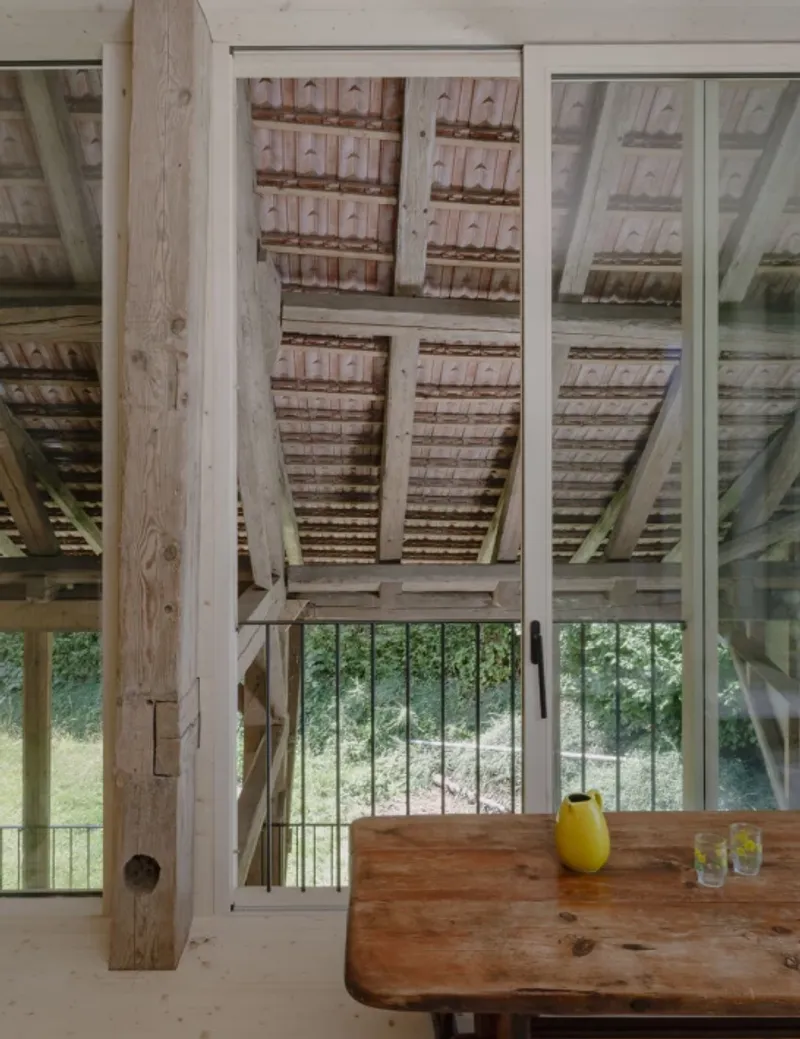
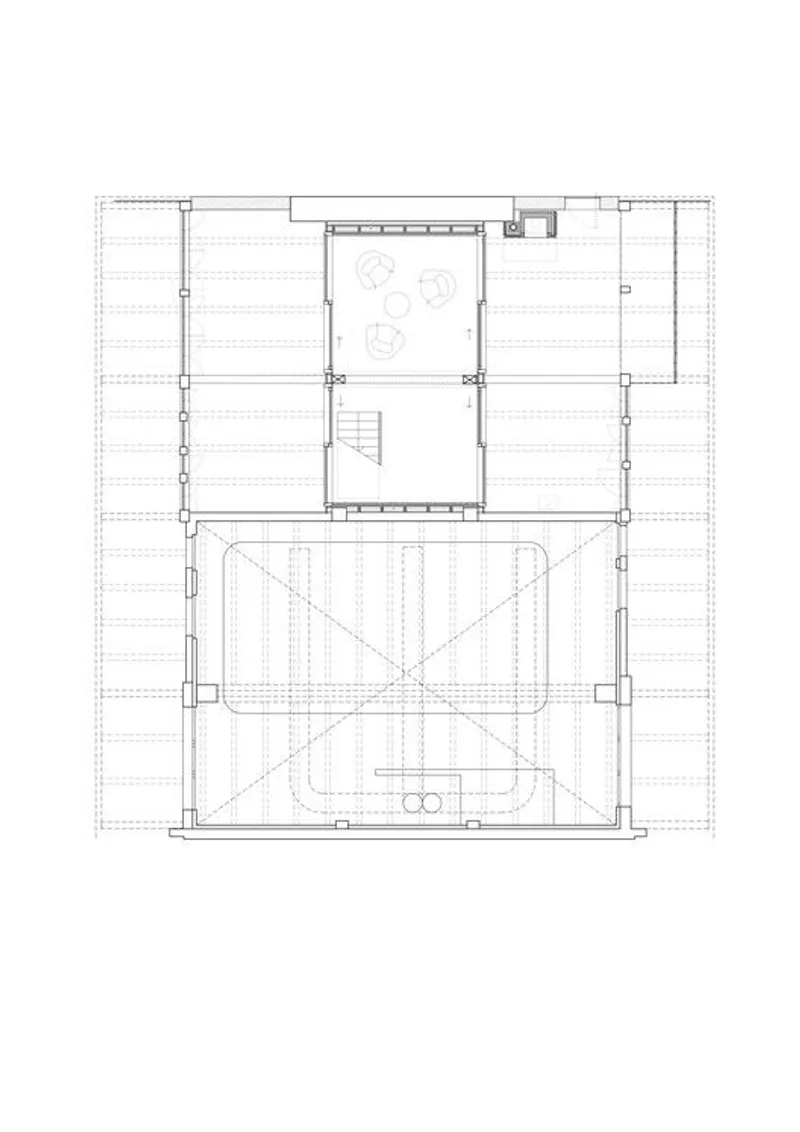
The design approach carefully echoes traditional Swiss agricultural construction while reinterpreting architectural archetypes for residential use. The barn’s massive wooden frame remains the centerpiece, enhanced by a glazed inner structure that stands back 4 meters from the original envelope.
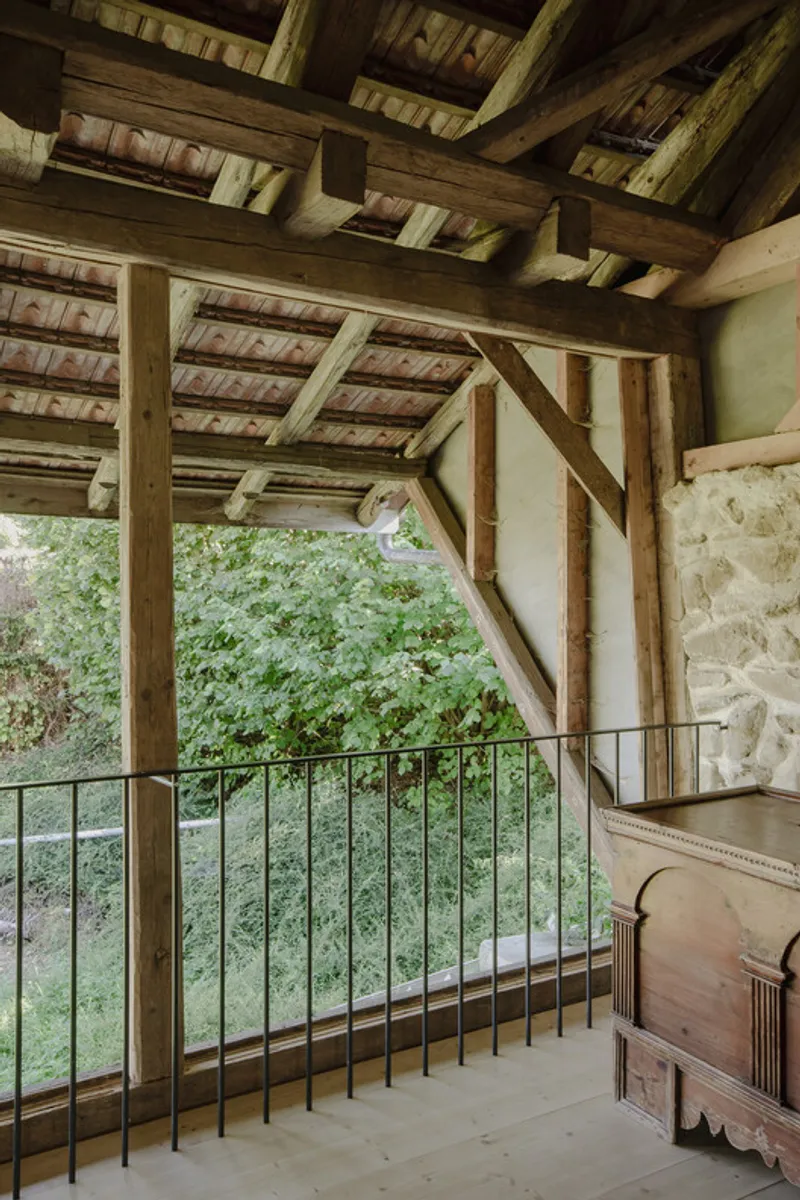
This deliberate offset creates covered terraces and in-between spaces that extend the living area, blurring the boundaries between indoor and outdoor life. These sheltered zones provide flexible spaces for relaxation, gardening, or seasonal gatherings, reinforcing the barn’s role as a dynamic living environment.
Spatial Experience: Between Interior and Exterior
The apartment revolves around two distinct levels:
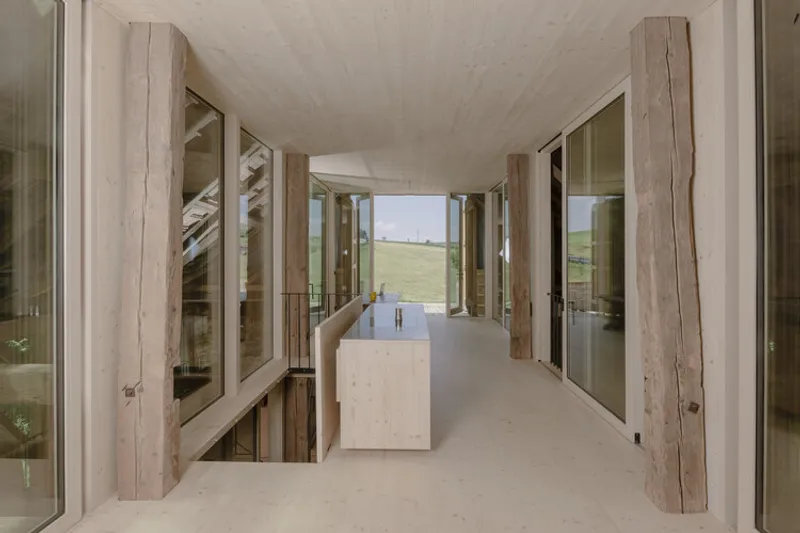
- The main living space, with a ceiling height of 3.15 meters, accessed via a newly built external bridge. This space feels expansive and open, ideal for social life.
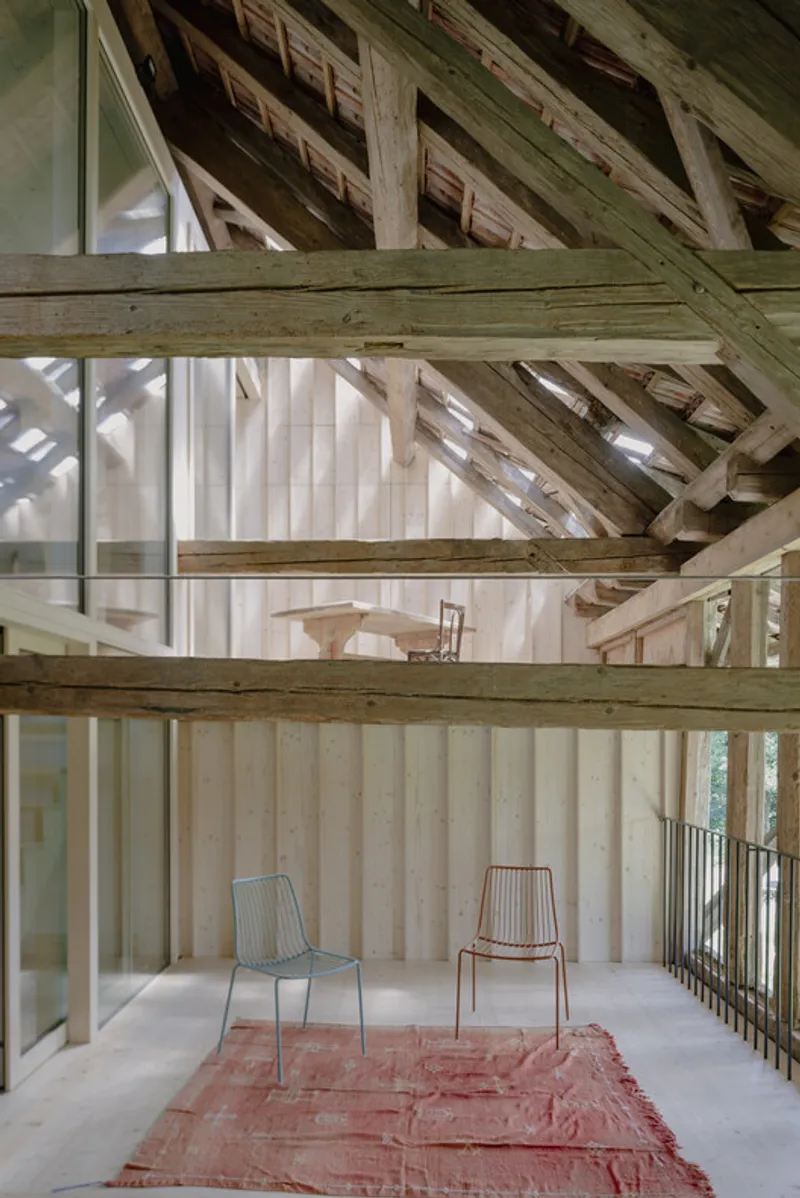
- The lower floor, with a more intimate height of 2.09 meters, designed to foster privacy and comfort.
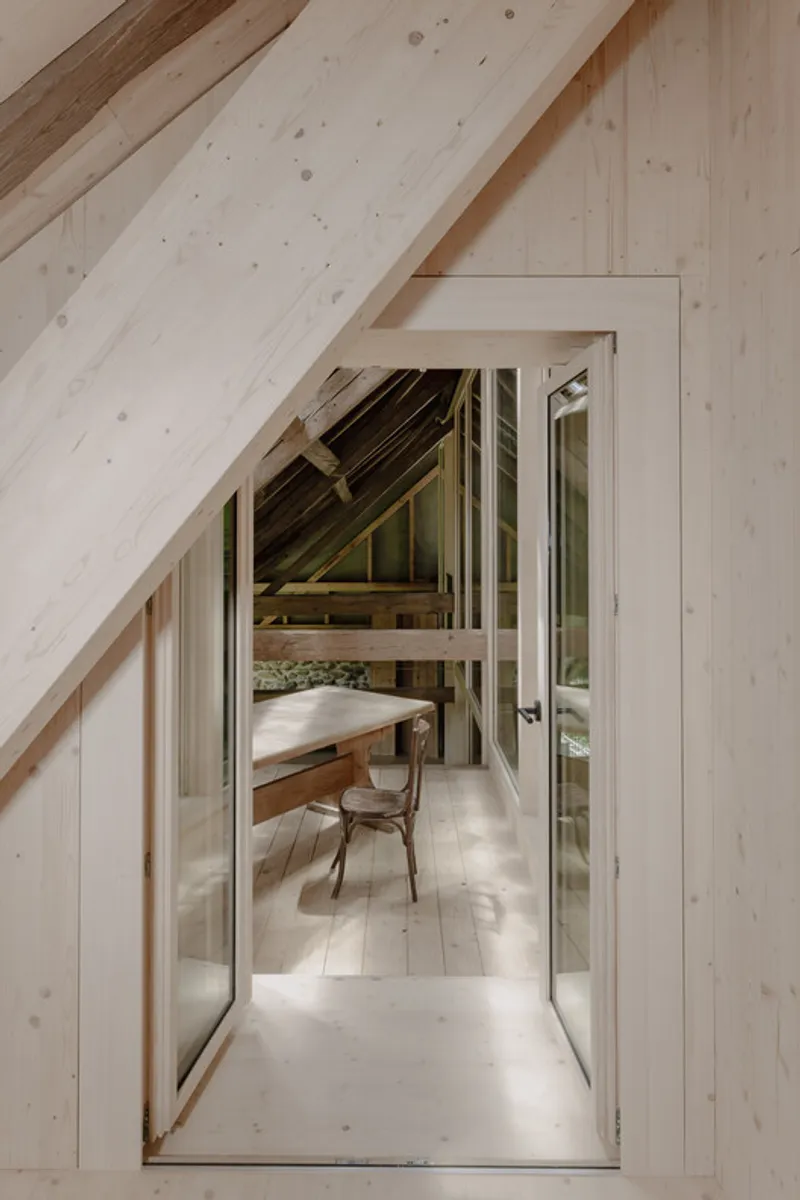
When the sliding windows are opened, the dwelling transforms into a hybrid environment—neither fully inside nor entirely outside. This fluidity allows the space to adapt with the changing seasons and daily rhythms.
Light, Transparency, and Historical Frame
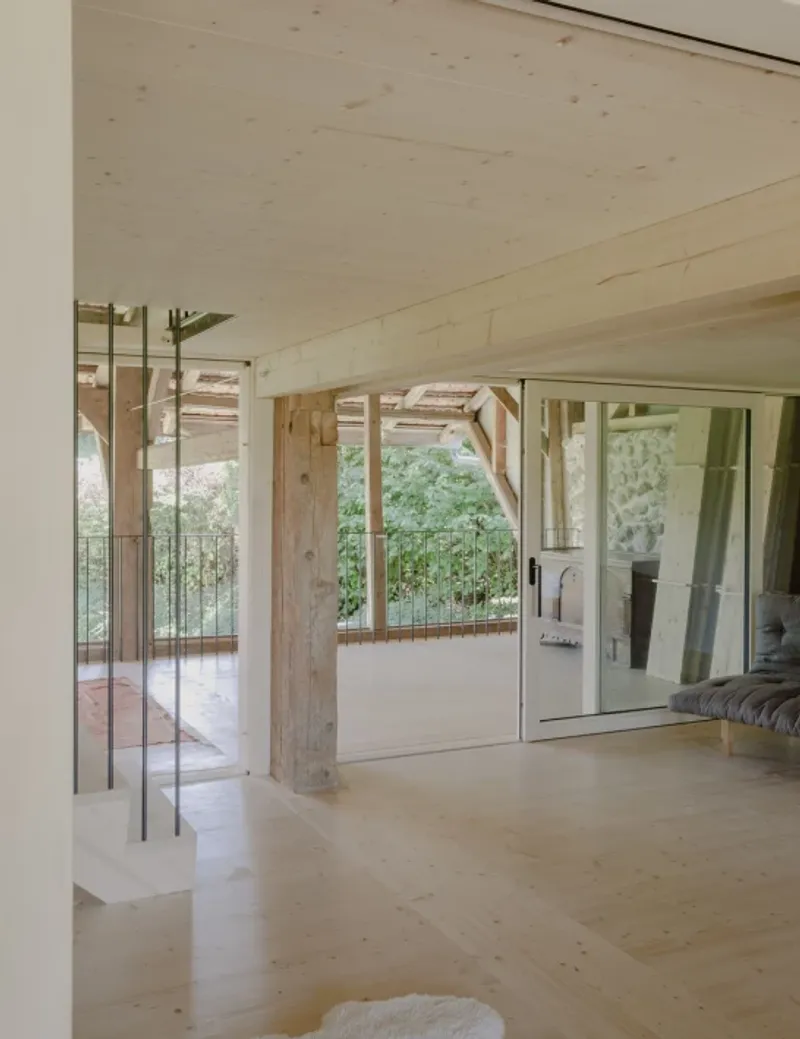
One of the project’s most striking features is its interaction with light. Natural daylight filters through the glass facades, revealing the barn’s original wooden frame while creating shifting atmospheres throughout the day. From the outside, only subtle glass reflections hint at the transformation within, allowing the barn’s historical presence to remain dominant in the rural landscape.
The bedrooms are positioned further back, concealed behind a large timber facade yet still connected to the terraces. At the heart of the design, the bathroom occupies a reimagined “terminal”—a trapezoidal vertical shaft traditionally used to dry food. This element now opens onto a window, once again exposing the historical framework and merging the old with the new.
Flexibility and Movement
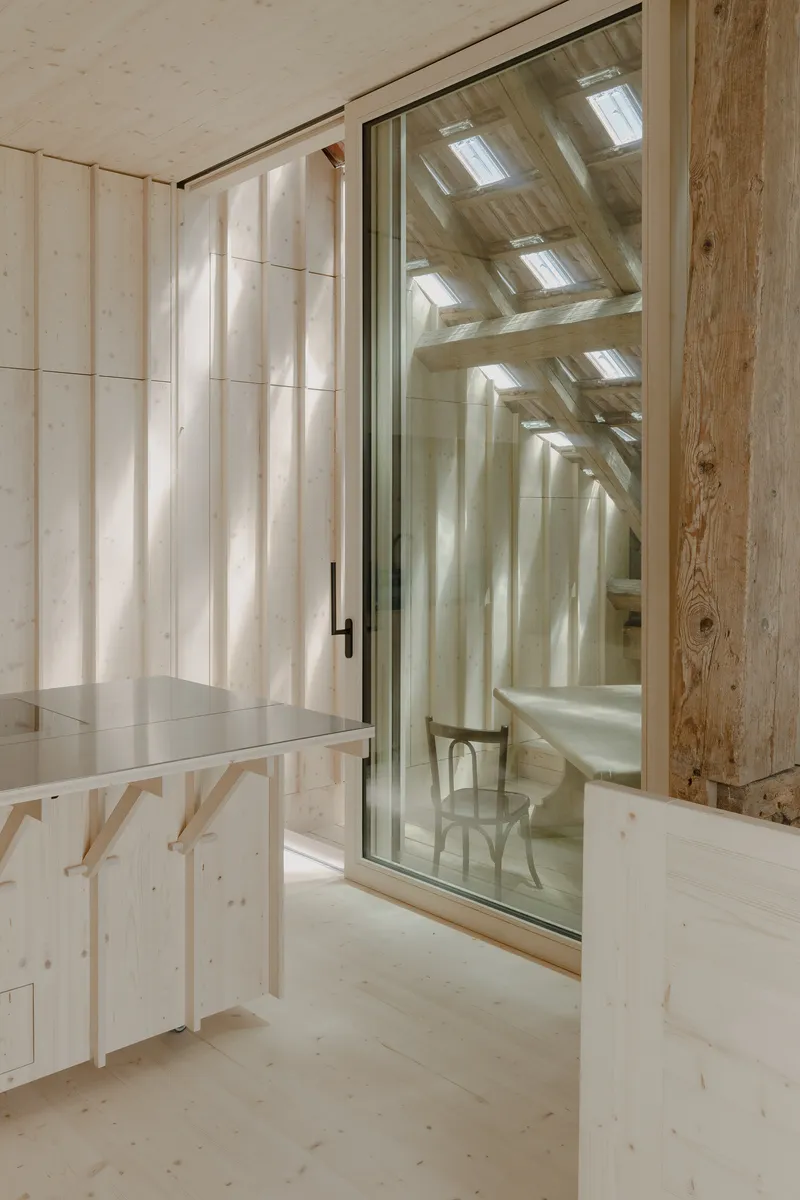
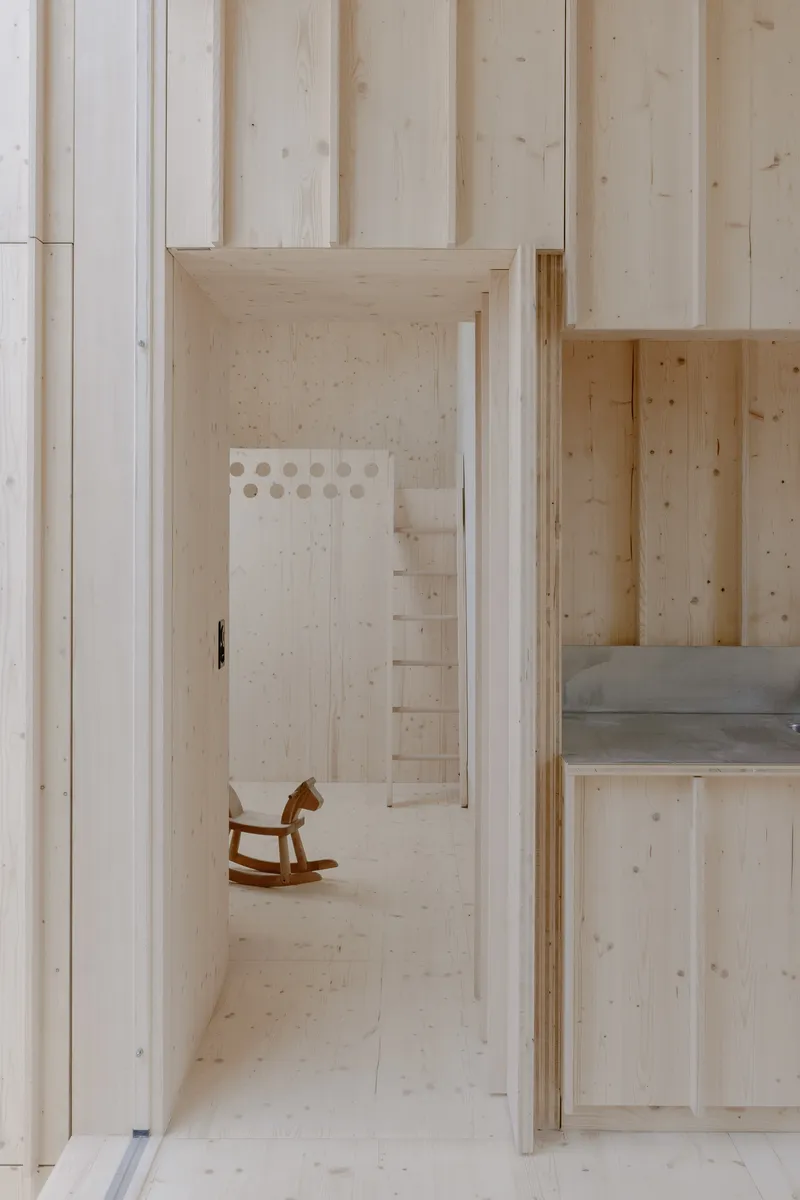
The barn is not a static structure but a fluid and flexible living space. The kitchen is mobile, able to shift based on need. The stair hatch folds down to create new spatial connections. The barn’s design reflects a living architecture, one that responds to the seasons, the residents’ habits, and the environment.
A Dialogue Between Past and Present
The Transformation of a Protected Barn is a powerful example of how architecture can bridge heritage and modernity. By preserving the 17th-century wooden frame and introducing a minimal yet expressive glazed structure, Simon Durand architecte creates a dialogue between the past and the present.
The result is a home of unexpected proportions, where historic materials and contemporary design intersect, and where the boundaries of inside and outside dissolve into new possibilities.
All the photogaphs are works of Alan Hasoo


Popular Articles
Popular articles from the community


Cube Design Draws an Ecological Corridor Between Two Shenzhen Hills with the Nankai Building
Beside Shenzhen's container docks, the Nankai Building pairs stacked balconies with a climbing green screen to connect two hillsides across its height.

LT2A and OPEN Architectes Thread a Brick and Glass High School Through a Wooded Belgian Campus
In Braine-l'Alleud, a 3,000 m² wing for Collège Cardinal Mercier pairs pale brick with a glazed colonnade, deferring to a small chapel and a dense wood.

longwave studio Reorganizes a 112 m² Tainan Apartment Around the Daily Routines of a Family and Two Cats
In Tainan, Taiwan, birch plywood, rust-red furniture and a freestanding plaster wall link arrival, storage, work and family life in one apartment.

David Macias Steps a Doorless Stone and Plaster House Down a Tropical Colombian Hillside
In the humid hills of Colombia, Threshold House replaces the front door with an open void and terraces its 850 m² down the slope instead of fighting it.

Similar Reads
You might also enjoy these articles


Hodi-Mandai Geram
Project Function: Preservation and revitalization of the Intangible heritage and socio-spatial identity of the Hodi by Housing, Cultural Memory Center, Sacred Grove, landscape, local tourism economy


Olio Towers: A Mid-Rise for Performers That Fuses Housing, Rehearsal, and Stage
Located blocks from Houston's Theater District, this modular tower stacks living units around a central performance atrium.

Oasis: Modular Green Housing Carved into Dhaka's Urban Fabric
A shortlisted Plugin Housing entry reclaims unauthorized settlements in Dhaka with stepped concrete volumes, green roofs, and ventilation-driven design.

Black Hole: A Floating Megastructure for the Post-Physical Era
Emiliano Mazzarotto envisions a spherical, self-scaling arena where e-sports, digital hotels, and holographic stadiums replace traditional public space.

Explore Barn Conversion Competitions
Discover active competitions in this discipline

Challenge to reimagine the Iron Throne

Photograph architecture without architects

Illustrate the lost glory of Angkor Wat - Render Challenge

Design challenge to reuse E-waste
Comments (0)
Please login or sign up to add comments
No comments yet. Be the first to comment!