

Trestle Cabin by Miller Hull Partnership: A Low-Impact, Adaptive Retreat Suspended in the Forest
An elevated, low-impact forest cabin using a steel exoskeleton and modular timber design, adapting over time while preserving the natural landscape.


The Trestle Cabin by Miller Hull Partnership is a visionary prototype for low-impact cabin architecture, designed for remote, environmentally sensitive landscapes. Completed in 2024 on a secluded island in the Salish Sea, this 868-square-foot cabin demonstrates how modularity, superstructure logic, and long-term adaptability can redefine sustainable living in the wilderness. Inspired by the principles of Metabolist architecture, the project integrates a flexible framework that anticipates generational changes, shifting lifestyles, and evolving environmental conditions.
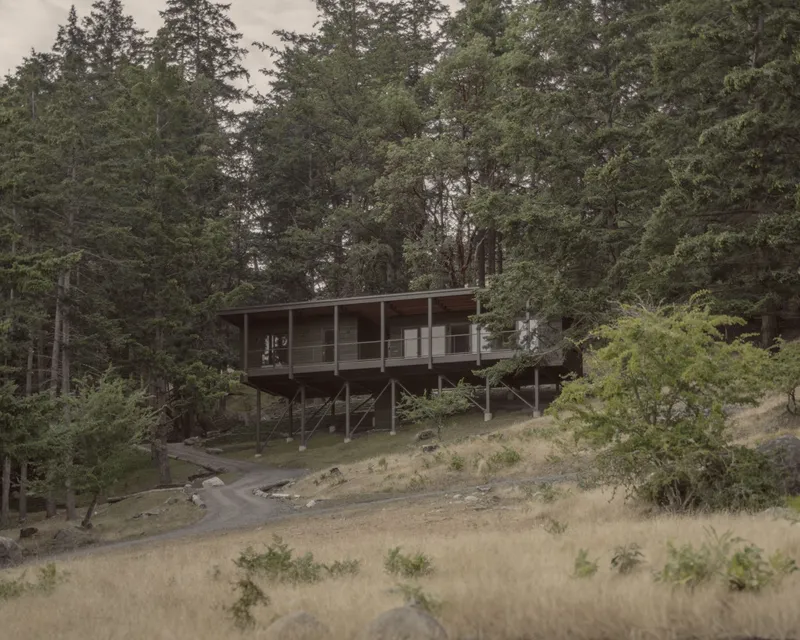
Positioned about 70 miles north of Seattle, the cabin sits at the edge of a mature fir and madrone forest, overlooking the expansive views of the San Juan Islands. The steep natural terrain and restricted site access shaped a design strategy that prioritizes preservation of the land. Instead of excavation or heavy ground disturbance, the architects developed a concept of elevated living, allowing the forest floor to return to native vegetation and wildlife activity. Wild sheep and deer continue to graze beneath the structure, reinforcing its minimal ecological footprint.


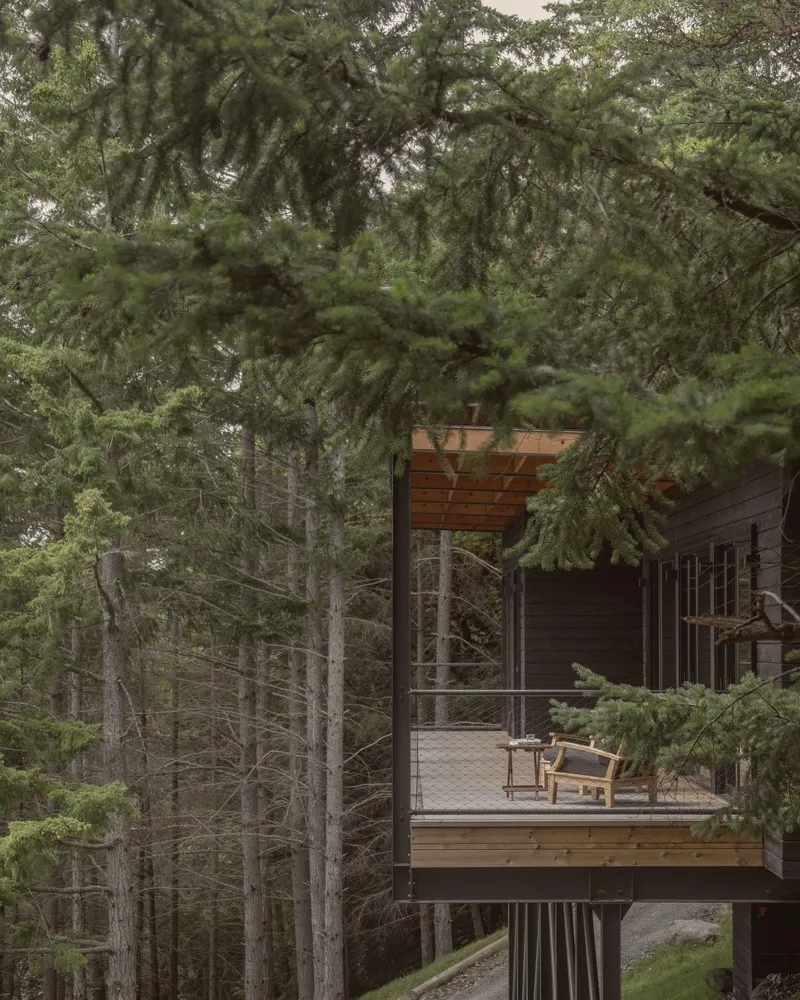
A Superstructure That Lightly Touches the Land
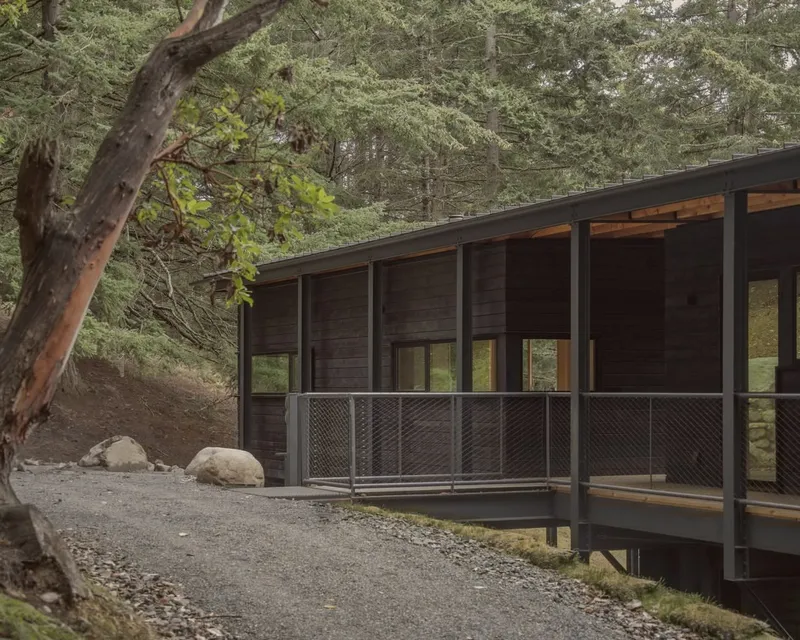
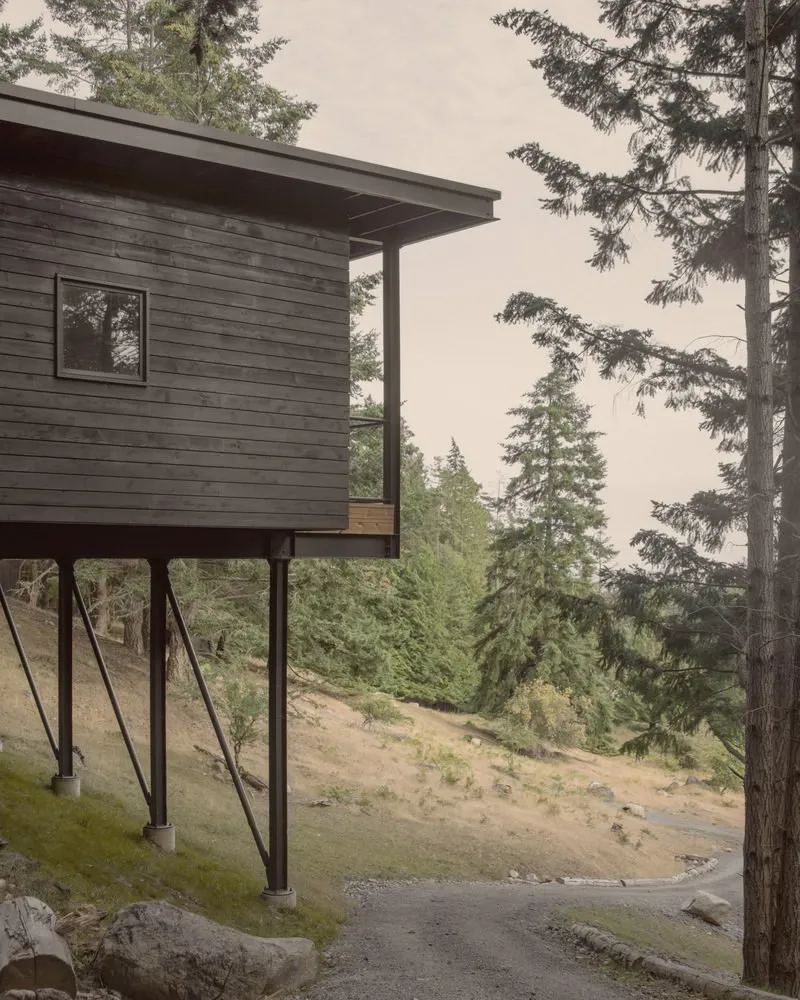
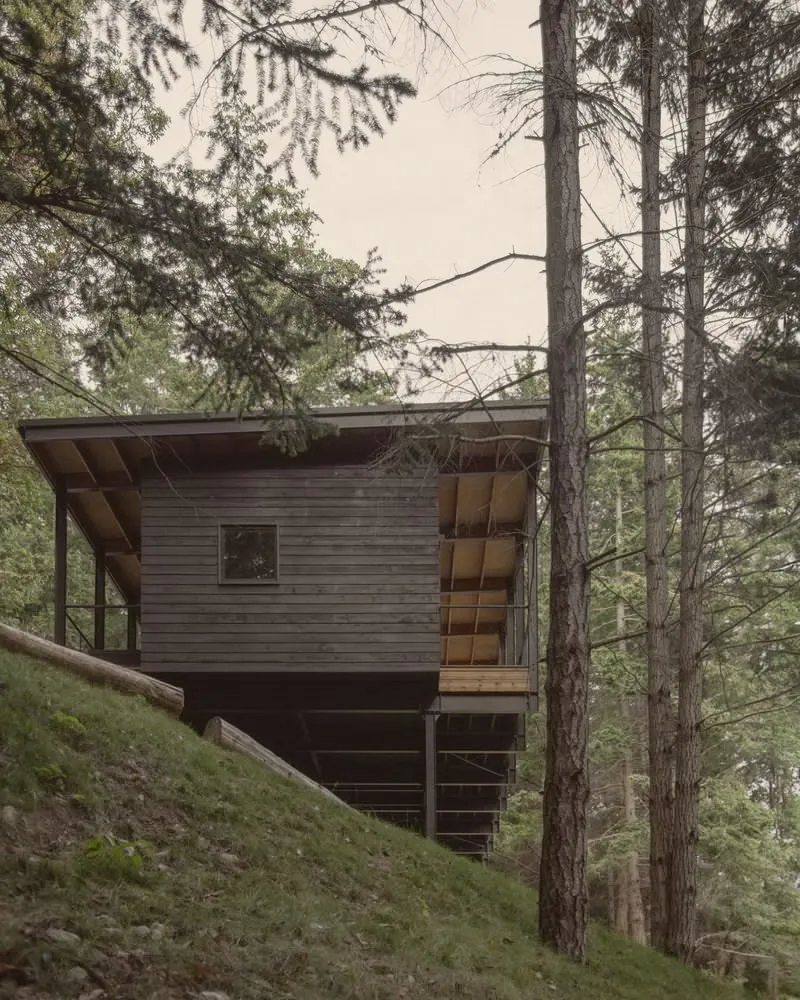
Built on a challenging hillside, the cabin adopts a philosophy of levitation over excavation. A rhythmic, exposed steel exoskeleton rises with the topography, lifting the wooden living modules into the canopy. This structural system echoes the verticality of surrounding tree trunks, allowing the architecture to recede visually into the forest environment.
By hovering above the ground plane, the cabin protects root systems, preserves the natural slope, and reduces erosion. The elevated position frames immersive views while creating a calm, floating presence among the trees.

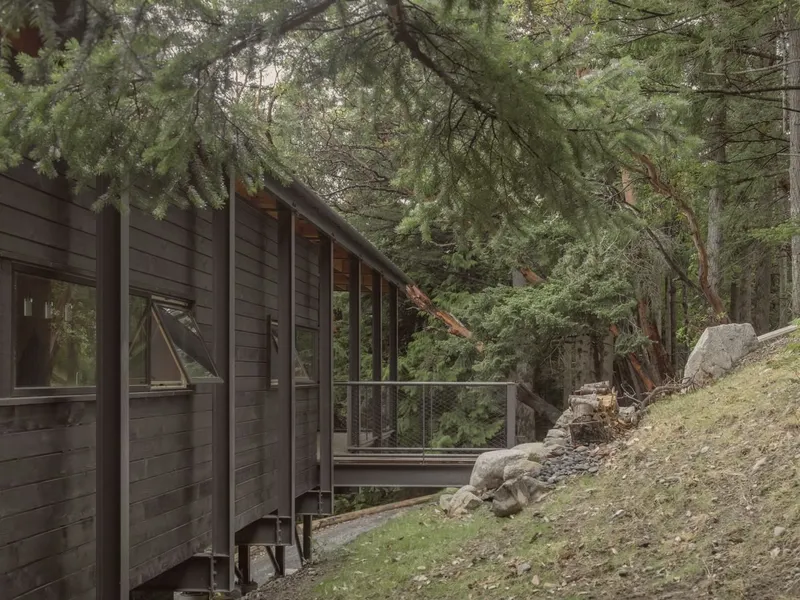
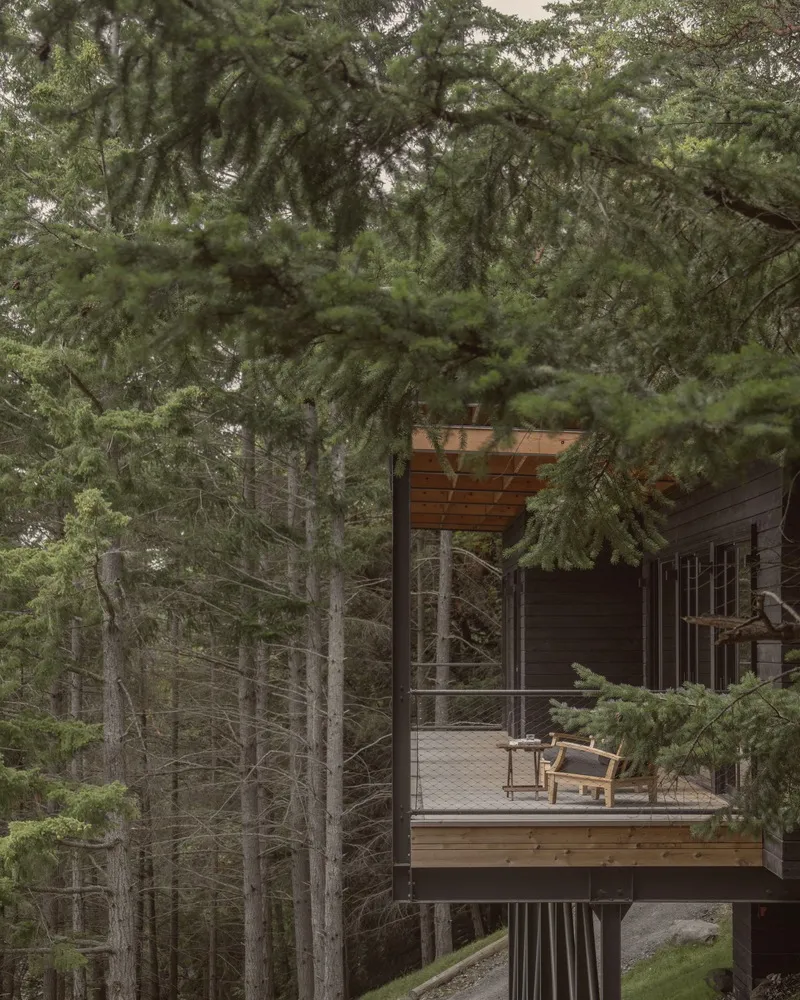
Adaptable Modules for a 200-Year Lifespan
One of the project’s most innovative components is its 200-year steel superstructure, designed to outlast and evolve beyond the lifespan of traditional residential construction. The steel frame serves as a permanent armature, while the insulated wooden modules—housing the thermal enclosures—can be reconfigured, replaced, or expanded over time.
This modular flexibility makes the cabin future-ready. As owners change or needs shift, the interior living units can adapt without altering the core frame. Generous exterior decks extend the interior, creating a seamless transition between indoor comfort and outdoor immersion. Seasonal living is encouraged, expanding usable space throughout the warm months while supporting efficient winter retreat.

Reducing Energy and Material Consumption
Rather than maximizing conditioned interior space, the Trestle Cabin embraces minimalism and natural connection. Circulation zones are located outdoors, reducing the demand for mechanically heated square footage and fostering daily interaction with the surrounding environment.
A deep south-facing overhang moderates solar exposure, providing shade during peak summer sun while allowing comfortable year-round use of the exterior decks. The design prioritizes passive energy strategies, reducing reliance on mechanical systems and supporting an overall low-carbon footprint.
To meet additional energy needs, the cabin incorporates a 3.6 kW photovoltaic array, calibrated to the current occupant load. Infrastructure for future solar expansion was integrated during construction, preparing the cabin for shifts in use or increased energy demand in the decades ahead.
A Prototype for Future-Forward Remote Living
The Trestle Cabin stands as a powerful model for remote cabin architecture, demonstrating how thoughtful design, modular systems, and long-term thinking can coexist harmoniously with sensitive natural environments. Through its elevated structure, adaptive layout, and passive performance strategies, the project redefines what it means to build in the wilderness—prioritizing ecological respect, architectural resilience, and generational longevity.
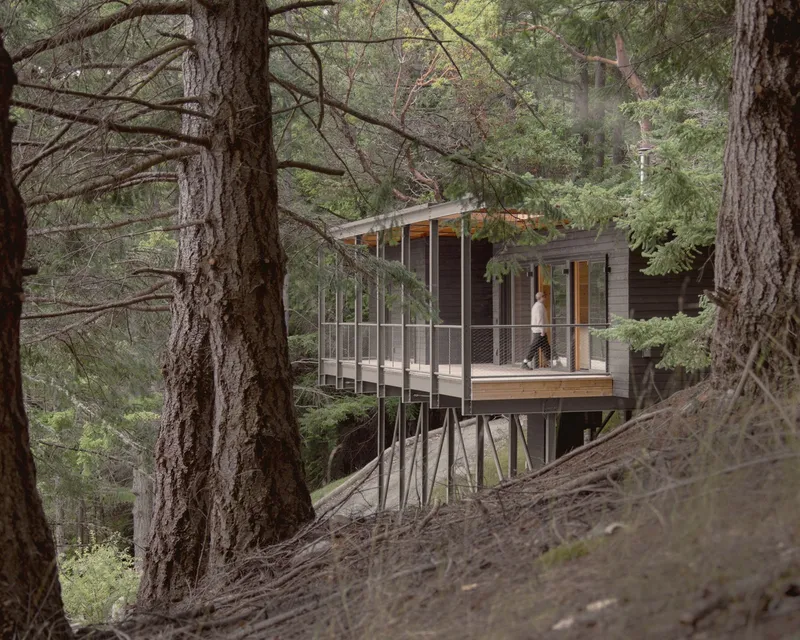

All photographs are works of Juan Benavides




Popular Articles
Popular articles from the community


Hill & Cross Opera: Sculptural Opera House Architecture Shaped by Tallinn’s Landscape and Identity
Hill & Cross Opera reimagines opera house architecture in Tallinn through its sculptural hill, civic plaza, glass wave and a luminous cross.

Co-Life: Senior Housing Design That Reconnects Older Adults With the City
Co-Life reimagines senior housing design through healing gardens, shared streets, workshops, and a sustainable community across generations.

Riyadh For All: Intergenerational Urban Design for Active Aging in Rabat
Riyadh For All reimagines urban design in Rabat with intergenerational co-living, adaptive courtyards, and Moroccan cultural exchange today.

Conexión: Biophilic Design Reimagines High-Rise Living in Hong Kong
Conexión reimagines high-rise living in Hong Kong through biophilic design, green facades, shared spaces, daylight, water and nature within.


Similar Reads
You might also enjoy these articles


Hodi-Mandai Geram
Project Function: Preservation and revitalization of the Intangible heritage and socio-spatial identity of the Hodi by Housing, Cultural Memory Center, Sacred Grove, landscape, local tourism economy


Olio Towers: A Mid-Rise for Performers That Fuses Housing, Rehearsal, and Stage
Located blocks from Houston's Theater District, this modular tower stacks living units around a central performance atrium.

Oasis: Modular Green Housing Carved into Dhaka's Urban Fabric
A shortlisted Plugin Housing entry reclaims unauthorized settlements in Dhaka with stepped concrete volumes, green roofs, and ventilation-driven design.

Black Hole: A Floating Megastructure for the Post-Physical Era
Emiliano Mazzarotto envisions a spherical, self-scaling arena where e-sports, digital hotels, and holographic stadiums replace traditional public space.


Explore Sustainable Living Competitions
Discover active competitions in this discipline



Challenge to reimagine the Iron Throne


Photograph architecture without architects


Illustrate the lost glory of Angkor Wat - Render Challenge


Design challenge to reuse E-waste
Comments (0)
Please login or sign up to add comments
No comments yet. Be the first to comment!