

Triangular Pavilion by Enrico Dusi Studio, Cavallino-Treporti
A triangular concrete pavilion in the Venetian lagoon, combining nursery expansion and civic space with light-filled, flexible, community-focused architecture.


Located within the delicate landscape of the Venetian lagoon, the Triangular Pavilion by Enrico Dusi Studio redefines the role of small-scale public architecture through clarity of form, spatial flexibility, and strong civic intent. Completed in 2024 in Cavallino-Treporti, Italy, the 250-square-meter pavilion responds simultaneously to educational and community needs, operating as both a nursery extension and a public gathering space.


A Dual-Use Civic and Educational Pavilion
Designed in collaboration with engineering firm IBZ, the pavilion expands an existing nursery by introducing a generous, light-filled environment dedicated to children’s activities. At the same time, its independent access and spatial autonomy allow it to function as a multifunctional civic pavilion, hosting exhibitions, cultural events, and community meetings beyond school hours. This dual-use strategy reinforces the pavilion’s role as shared public infrastructure rather than a single-purpose building.

Spatial Openness and Structural Expression
Connected to the original nursery via a passageway that also serves as the new main entrance, the pavilion is constructed in exposed reinforced concrete, emphasizing durability and material honesty. Inside, a 120-square-meter multipurpose hall unfolds beneath a ceiling that varies from 3 to 5 meters in height, creating a dynamic sense of openness and vertical expansion. The spatial proportions enhance flexibility while ensuring optimal daylight distribution and visual comfort.


Light, Landscape, and Visual Continuity
A defining architectural gesture is the 7-meter-wide panoramic window, which frames views of the surrounding lagoon landscape and establishes a strong visual connection between the interior hall and the external portico. This opening allows the pavilion to visually extend into its environment, reinforcing indoor, outdoor continuity. During exhibitions or performances, the window can be partially shaded using a curtain system, allowing the space to adapt to changing functional requirements. Overhead, zenithal light enters through a triangular shed roof, ensuring consistent natural illumination throughout the day.


Triangular Geometry as Identity
The pavilion’s architectural identity is rooted in its recurring triangular geometry, visible in both plan and section. This regular yet expressive form gives the building a distinct, autonomous presence while maintaining harmony with its surroundings. The clear geometry enhances legibility, making the pavilion instantly recognizable as a civic landmark within the nursery complex and the wider community fabric.


Contextual Integration in the Venetian Lagoon
Despite its strong formal character, the Triangular Pavilion integrates sensitively into the Venetian lagoon context. Its compact footprint, restrained material palette, and controlled proportions ensure environmental coherence, while the bold geometry asserts a contemporary architectural language. The result is a public pavilion that balances contextual respect with architectural clarity, serving as a model for small-scale community-focused design.
By merging educational functions with civic use, and expressive geometry with environmental responsiveness, the Triangular Pavilion demonstrates how public architecture can be both functional and symbolic, enriching daily life in Cavallino-Treporti through space, light, and shared experience.


All photographs are works of Marco Cappelletti


Popular Articles
Popular articles from the community

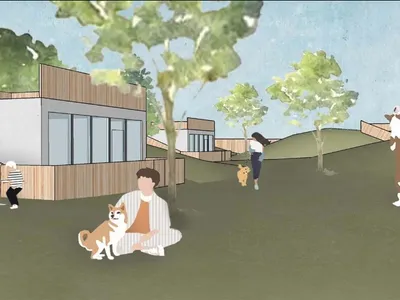
Temporary Home for Dogs: A Reversed Zoo Rethinks Animal Shelter Architecture
In Bucharest, a sinuous corridor and freed landscape flip the logic of containment, designing a shelter that works to make itself unnecessary.
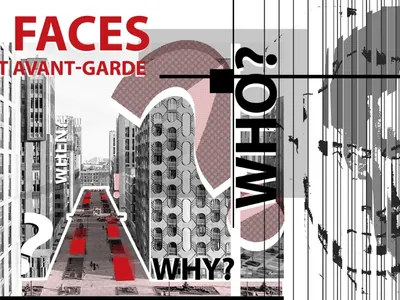
Faces of the Soviet Avant-Garde: Turning Moscow's Street Names into an Open-Air Museum
A network of sculptural installations across a Moscow residential district transforms forgotten architect names into spatial encounters with cultural memor
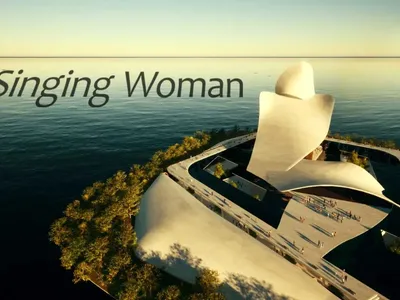
Singing Woman: An Opera House That Performs Before the Curtain Rises
Ovidiu Cristian Pavel's conceptual opera house translates Estonia's choral identity into a sculpted waterfront landmark facing the Baltic Sea.
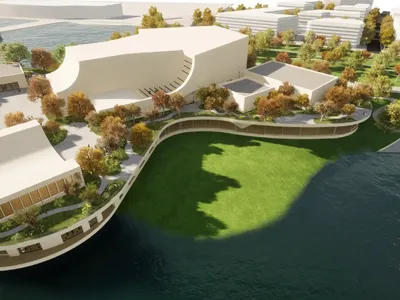
The Amber Palace Opera: A Geological Fiction Surfaces on Tallinn's Baltic Waterfront
Pierre Brillard reimagines a Baltic legend as a public landscape, opera house, and waterfront promenade rooted in Tallinn's coastal identity.

Similar Reads
You might also enjoy these articles


Hodi-Mandai Geram
Project Function: Preservation and revitalization of the Intangible heritage and socio-spatial identity of the Hodi by Housing, Cultural Memory Center, Sacred Grove, landscape, local tourism economy


Olio Towers: A Mid-Rise for Performers That Fuses Housing, Rehearsal, and Stage
Located blocks from Houston's Theater District, this modular tower stacks living units around a central performance atrium.

Oasis: Modular Green Housing Carved into Dhaka's Urban Fabric
A shortlisted Plugin Housing entry reclaims unauthorized settlements in Dhaka with stepped concrete volumes, green roofs, and ventilation-driven design.

Black Hole: A Floating Megastructure for the Post-Physical Era
Emiliano Mazzarotto envisions a spherical, self-scaling arena where e-sports, digital hotels, and holographic stadiums replace traditional public space.

Explore Educational Building Competitions
Discover active competitions in this discipline

Challenge to design public laboratory

Challenge to reimagine the Iron Throne

Photograph architecture without architects

Illustrate the lost glory of Angkor Wat - Render Challenge
Comments (0)
Please login or sign up to add comments
No comments yet. Be the first to comment!