

Turbinenhaus by Atelier NU: A Reflective Residential Landmark Bridging Industrial Heritage and Contemporary Living
The Turbinenhaus blends reflective aluminum facades, turbine-inspired geometry, and diverse apartments, connecting industrial heritage with contemporary living and communal green spaces.


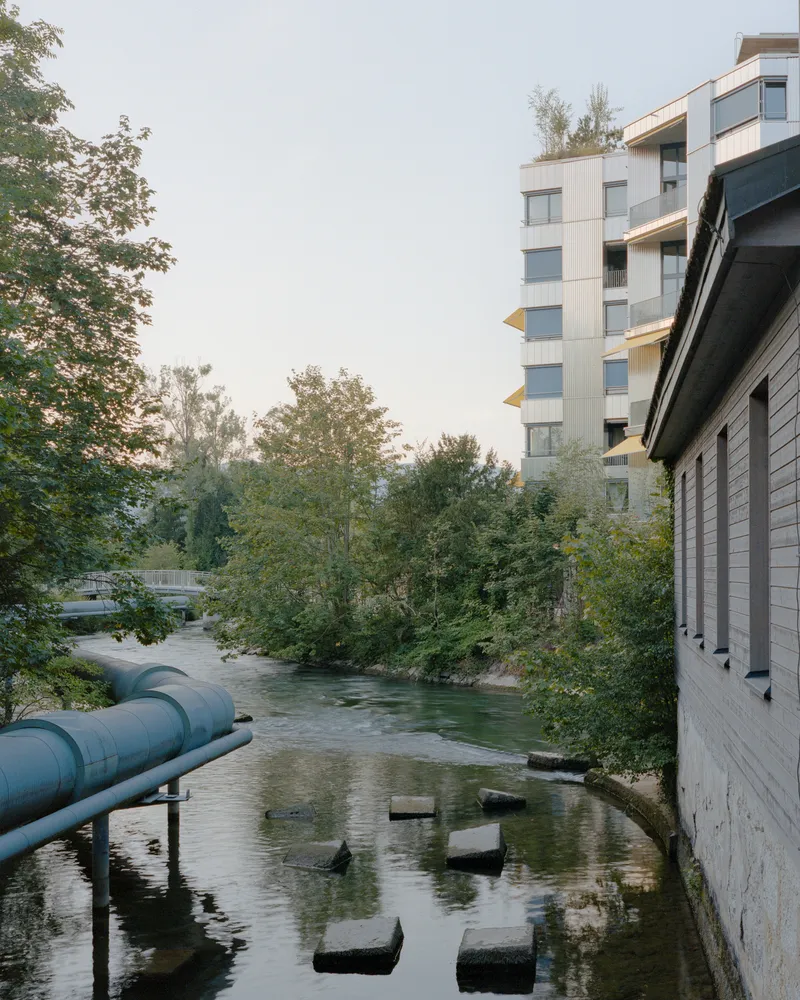
Located in Derendingen’s Emmenhof district, the Turbinenhaus by Atelier NU reimagines residential architecture through an innovative blend of industrial memory, reflective materiality, and community-centered design. Completed in 2024, the 3,400 m² building stands at the intersection of Derendingen’s historic spinning mill precinct and the natural landscape surrounding the canal, transforming an industrial threshold into a vibrant living environment.
With its name derived from the turbine, the building embodies movement, rotation, and dynamic spatial interplay. This conceptual foundation informs both the architectural form and the interior spatial organization, positioning the Turbinenhaus as a pivotal piece of Swiss residential redevelopment.
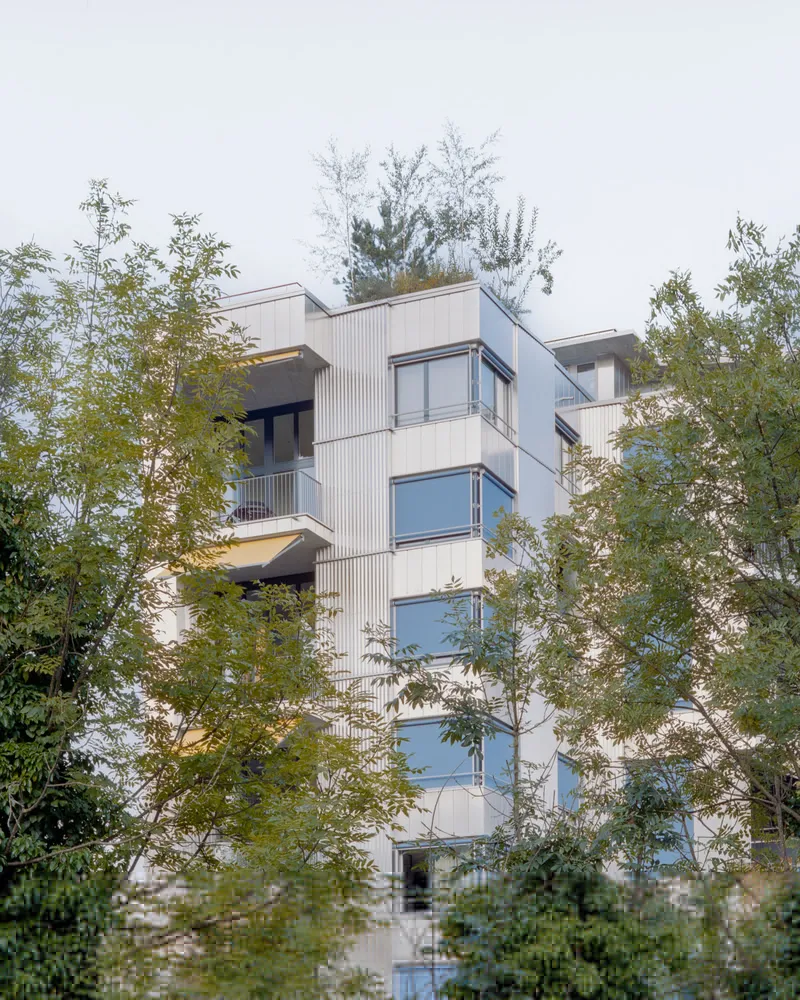
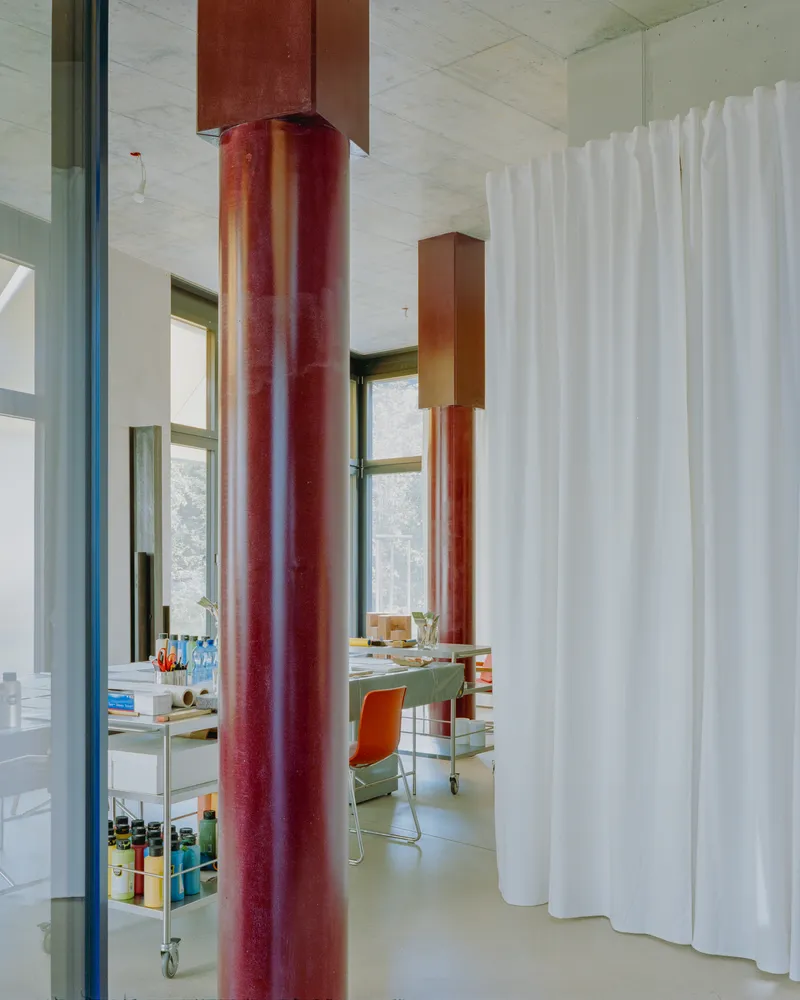
Industrial Inspiration Reimagined Through a Reflective Aluminum Facade
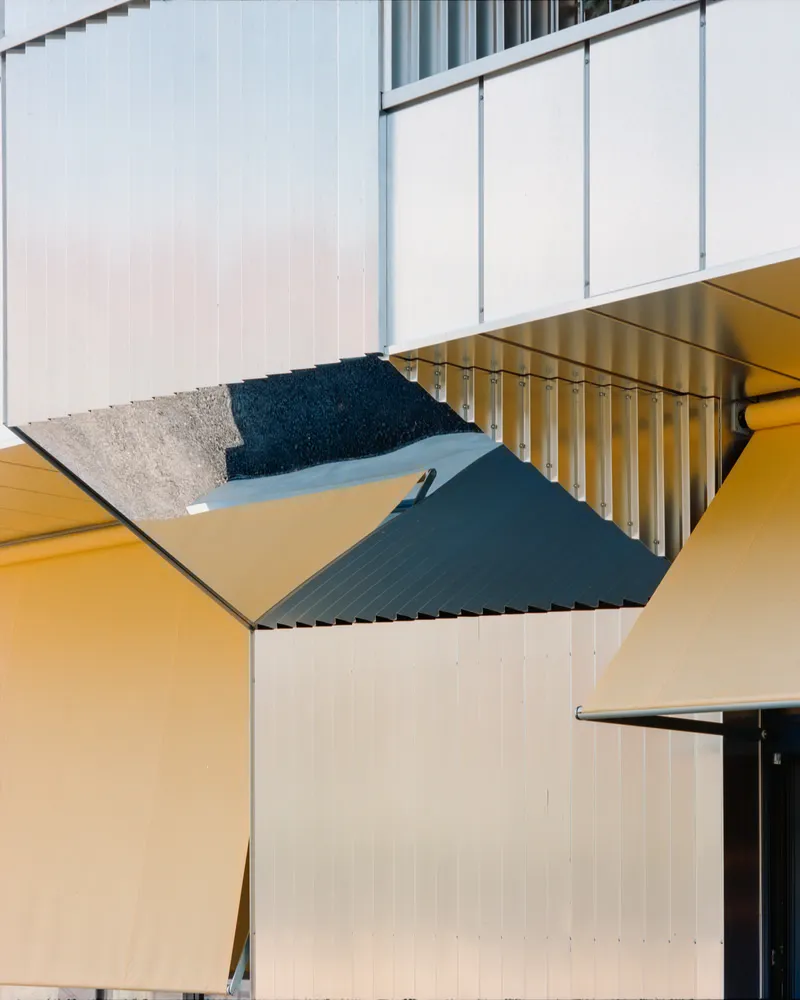
The most striking element of the project is its sleek aluminum facade, drawing visual inspiration from the polished, metallic surfaces of turbines. This reflective skin is not merely an aesthetic gesture; it functions as a dynamic mirror, capturing the interplay of light, changing weather, and the surrounding architectural context.
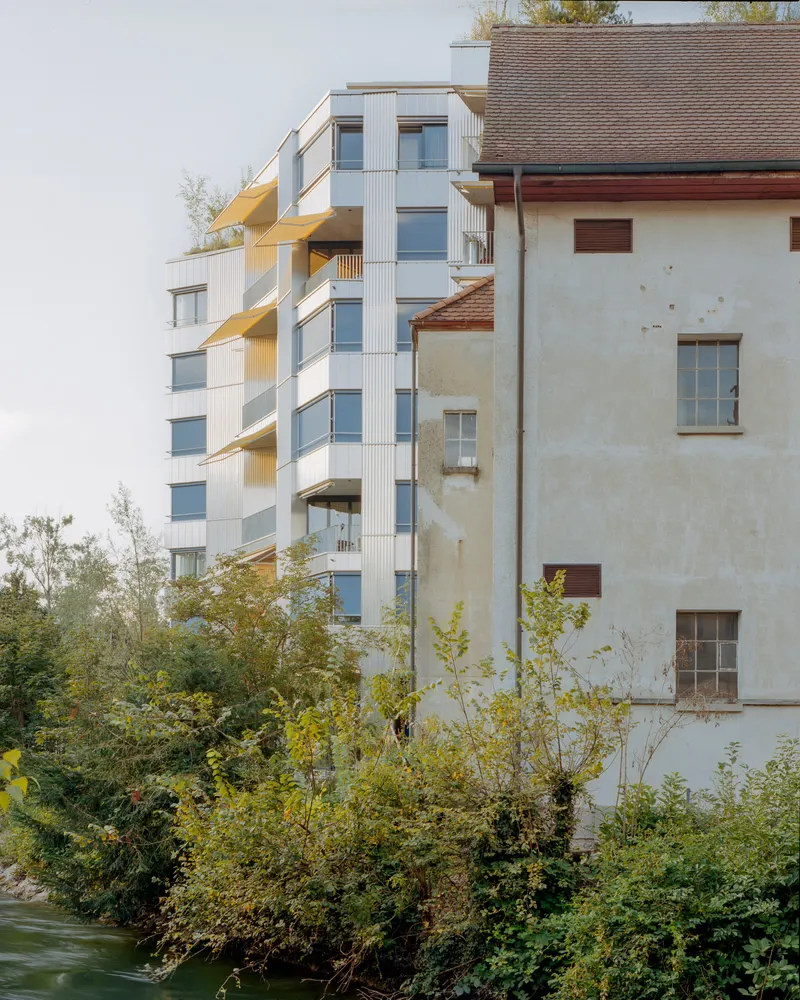
Throughout the day, the surface responds to shifting natural conditions, at times blending seamlessly with the sky, at others emphasizing the heritage facades of the spinning mill and the adjacent hydroelectric power plant. This interplay creates a subtle continuous dialogue between past and present, merging industrial heritage with contemporary minimalism.
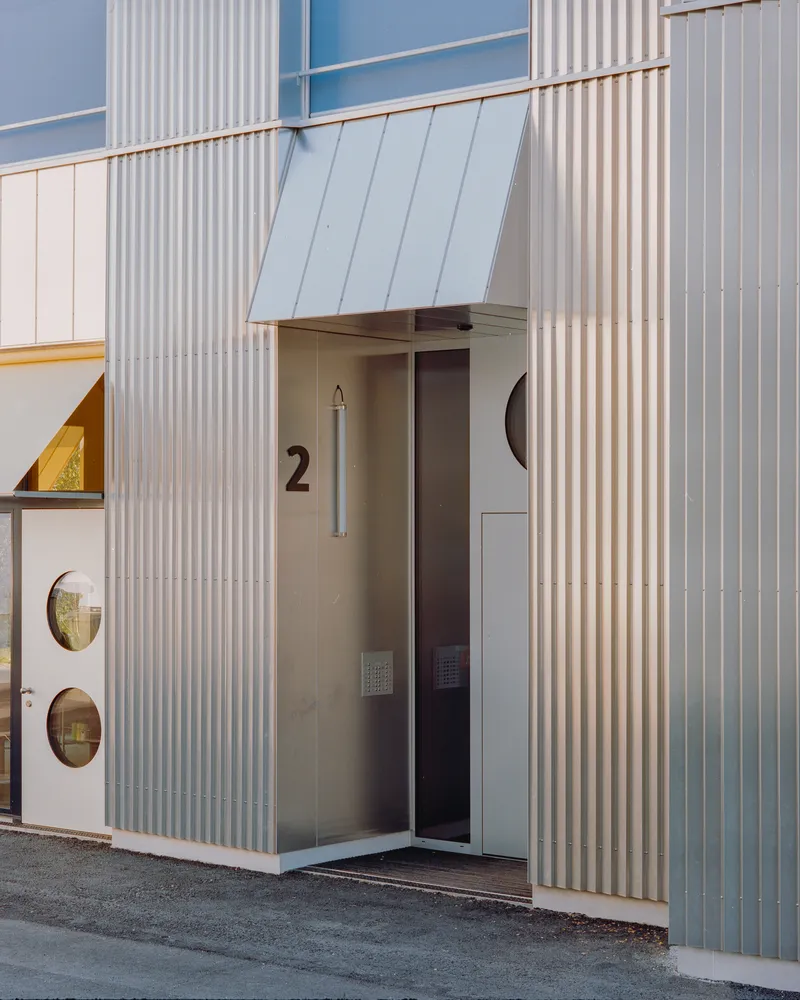
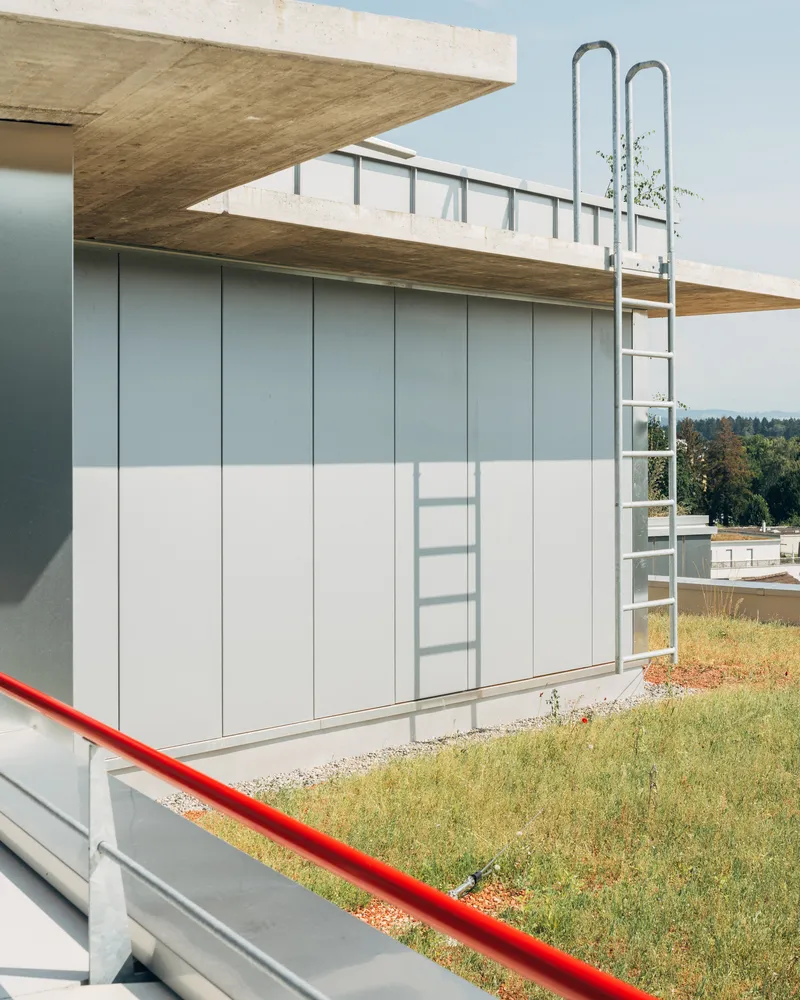
A Rotational Spatial Concept Rooted in a Central Core
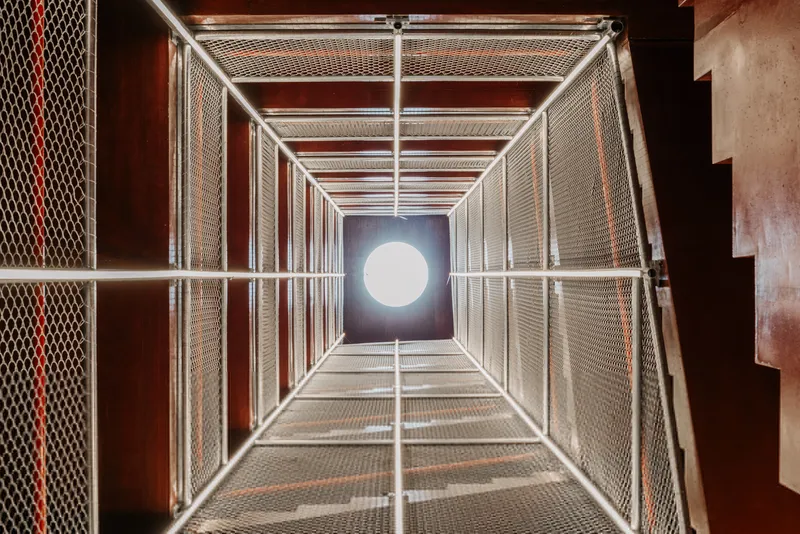
The building’s spatial strategy evolves from a rotated inner core, much like the central axis of a turbine. The main staircase forms this central torque, around which the apartments and circulation routes orbit.
This logic creates:
- Multidirectional apartment orientations, with each unit opening to at least three sides
- Interlocking spatial arrangements reminiscent of turbine blades
- Strong visual and physical connections to the canal and surrounding green spaces
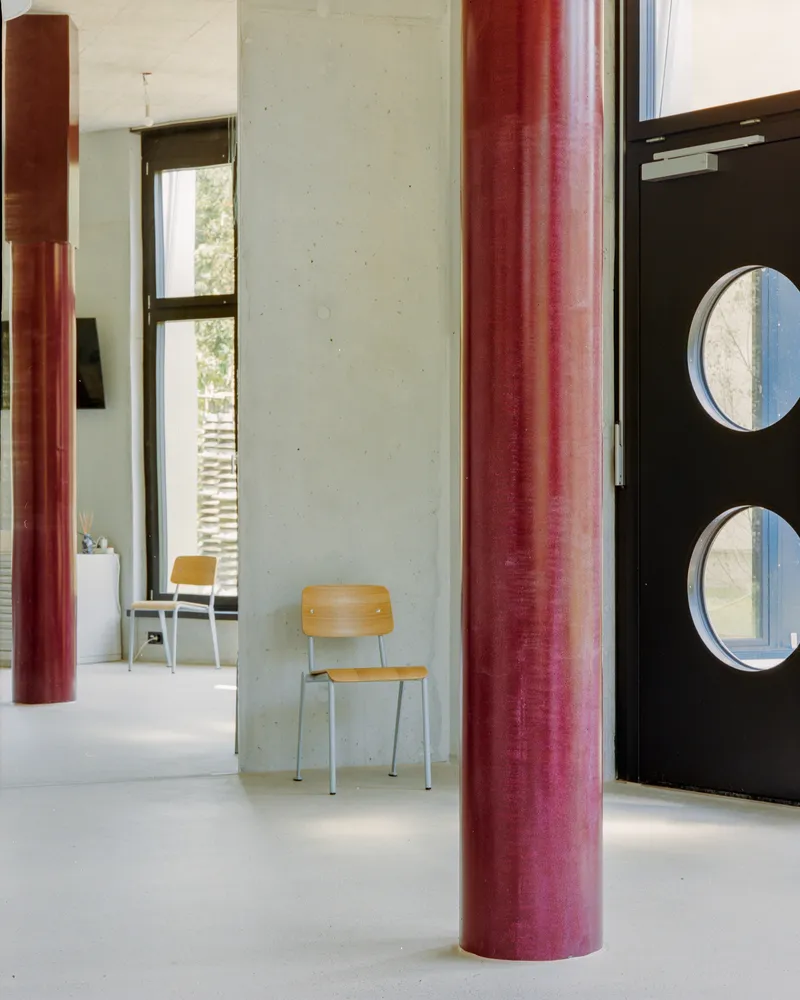
The ground-floor plan is intentionally flexible and public-facing, activating the spinning mill square through a restaurant and commercial units. This strategic mix fosters community interaction and supports the site's transformation into a lively urban node.
Diverse Residential Typologies Across Six Levels
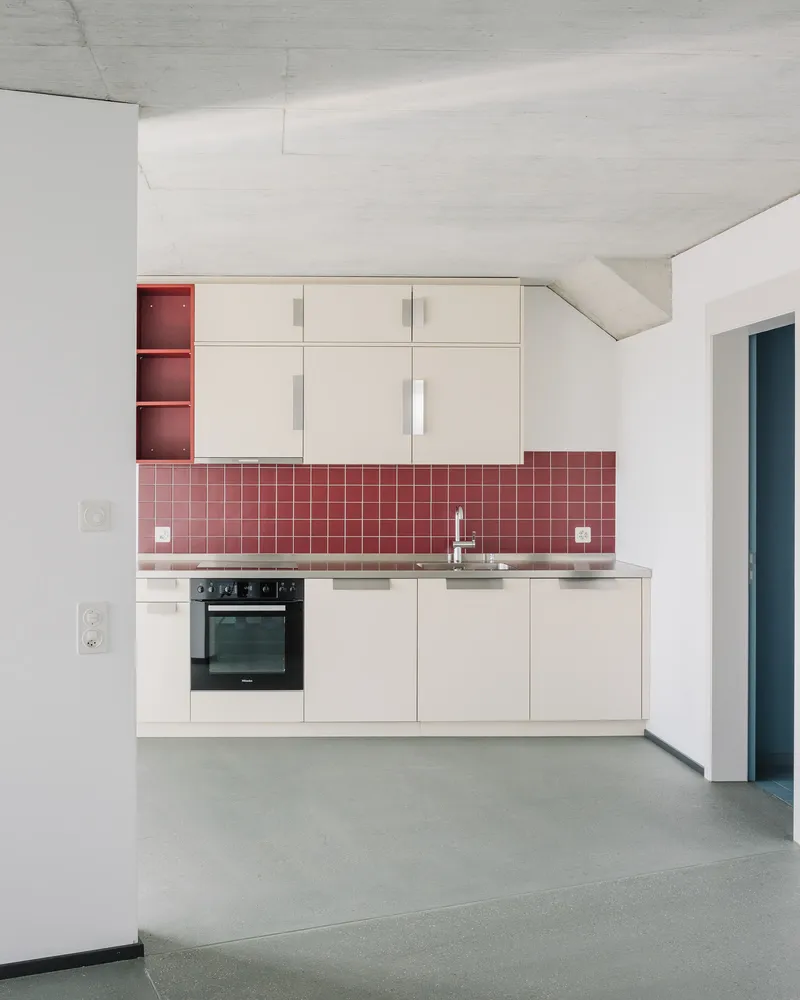
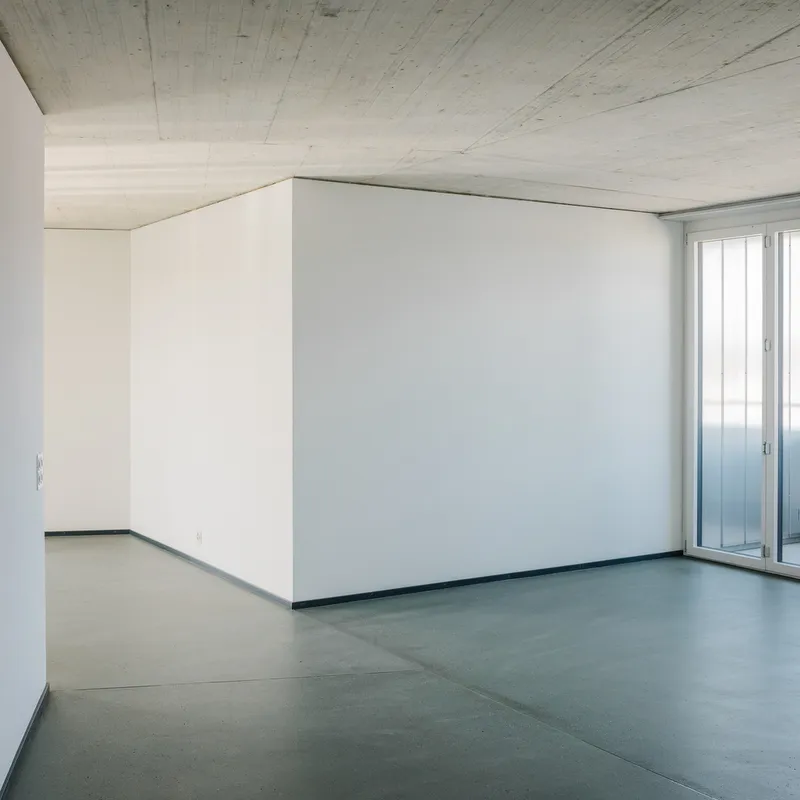
Above the public base level, the Turbinenhaus houses 24 apartments across 6 floors, offering eight distinct typologies. These variations accommodate different lifestyles while enhancing cross-ventilation, daylight access, and long views toward the landscape.
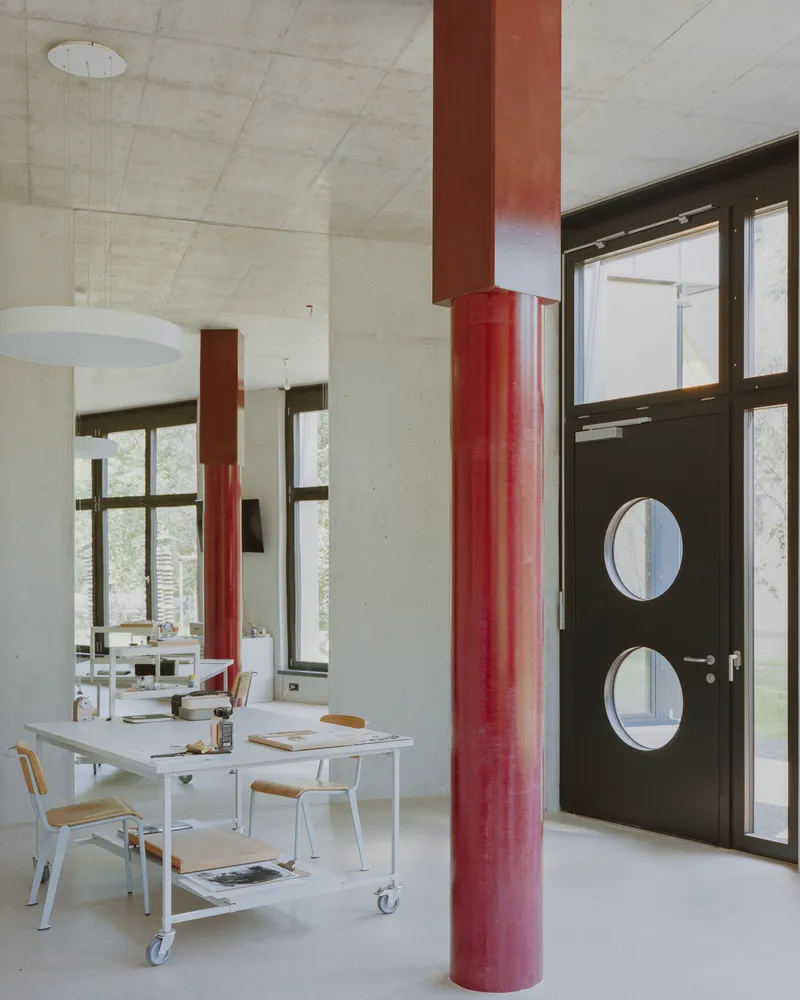
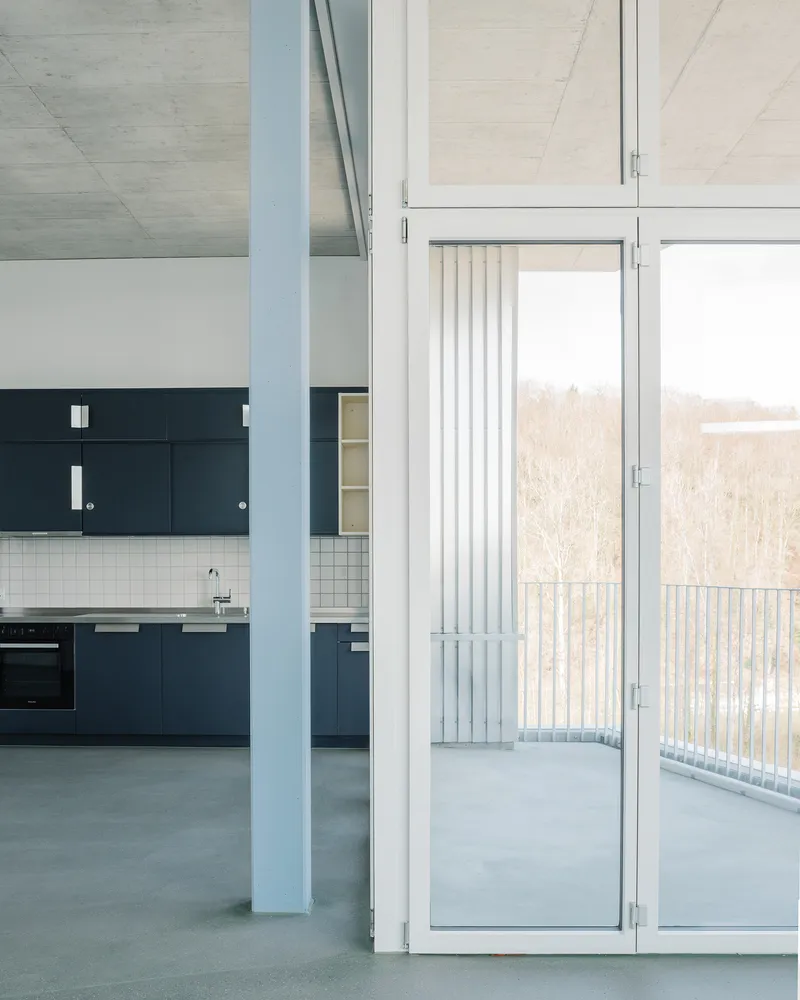
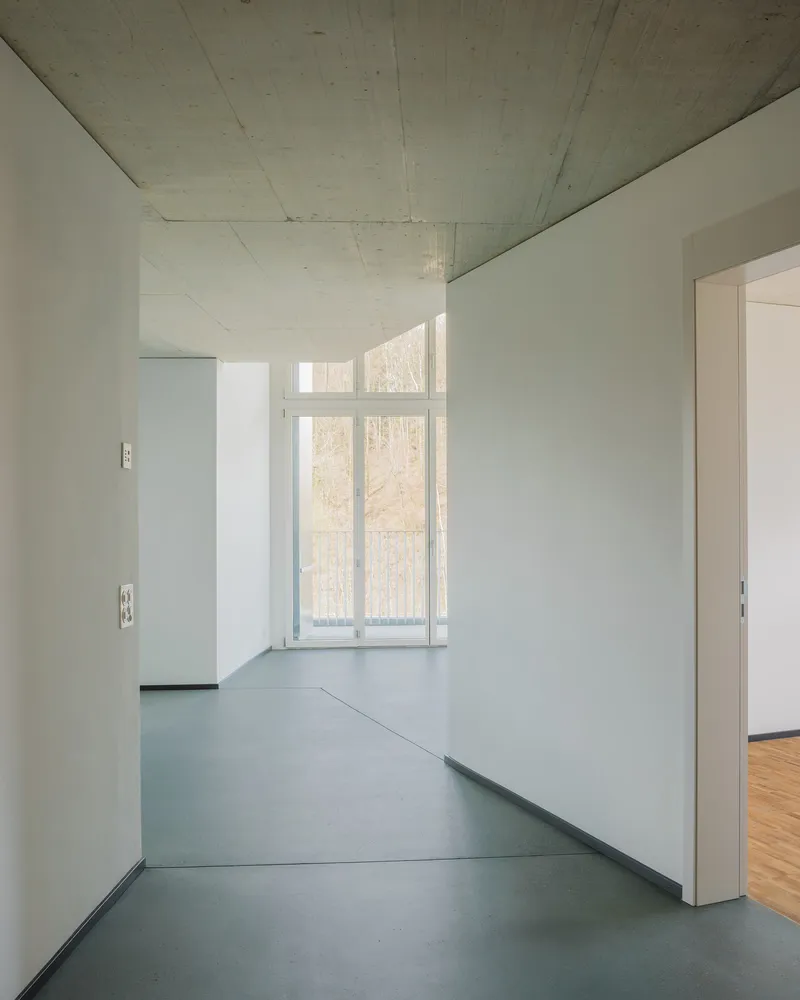
Split-level apartments on the west side extend toward the canal, maximizing the sensory and spatial experience of nature. Large windows, column-free living areas, and thoughtfully framed views amplify openness and expand the perception of interior space.
Through these gestures, the project achieves a sophisticated balance between density, comfort, and connection to context.
A Collective Attic Garden Celebrating Urban Community and Climate Responsiveness
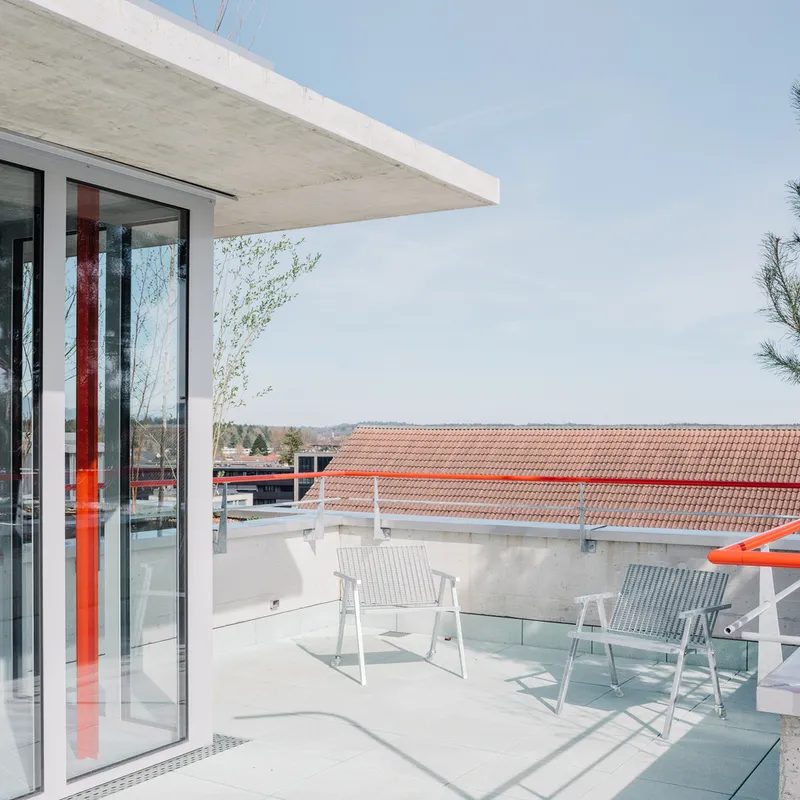
Topping the building is a shared attic floor transformed into an elevated communal garden. Designed as a multifunctional green space, the rooftop strengthens social relationships among residents while providing climate benefits.
Key features include:
- Dense tree plantings for natural shading and cooling
- Generous terraces for gatherings, leisure, and community life
- A biophilic ambiance that softens the expressive aluminum massing below
This roofscape reinforces the project's identity as a socially productive and environmentally responsive residential landmark.
A Contemporary Catalyst Within an Industrial Heritage Landscape
The Turbinenhaus by Atelier NU stands as a model of sustainable urban redevelopment, connecting Derendingen’s industrial past with a new vision for contemporary living. Its reflective facade, turbine-inspired spatial choreography, lush communal rooftop, and diversity of apartment types collectively forge a dynamic architectural statement.
More than a residential building, the Turbinenhaus acts as a cultural connector, reshaping the Emmenhof area into an inclusive, active, and future-oriented community space, one that respects history while embracing innovation.
All photographs are works of
Federico Farinatti


Popular Articles
Popular articles from the community


ETEH Reworks the Shared Spaces of São Domingos School in Brazil Around Timber, Color and Hanging Plants
At São Domingos School in Brazil, 436 m² of hall, refectory and library are recast with timber joinery, a yellow and blue code and trailing greenery.


Manzana Morphosis: Stretching Barcelona's Grid into a Living Landscape for 2050
A radical reworking of the Eixample manzana turns density into a tool for generous public space, vertical ecology, and environmental performance.

Aquadapt: An Underwater Habitat That Rewrites Its Rooms by the Hour
Curved modules ring the seabed while one shell shifts from breakfast room to cinema, farm and football pitch as residents' needs change.

Singing Woman: An Opera House That Performs Before the Curtain Rises
Ovidiu Cristian Pavel's conceptual opera house translates Estonia's choral identity into a sculpted waterfront landmark facing the Baltic Sea.

Similar Reads
You might also enjoy these articles


Hodi-Mandai Geram
Project Function: Preservation and revitalization of the Intangible heritage and socio-spatial identity of the Hodi by Housing, Cultural Memory Center, Sacred Grove, landscape, local tourism economy


Olio Towers: A Mid-Rise for Performers That Fuses Housing, Rehearsal, and Stage
Located blocks from Houston's Theater District, this modular tower stacks living units around a central performance atrium.

Oasis: Modular Green Housing Carved into Dhaka's Urban Fabric
A shortlisted Plugin Housing entry reclaims unauthorized settlements in Dhaka with stepped concrete volumes, green roofs, and ventilation-driven design.

Black Hole: A Floating Megastructure for the Post-Physical Era
Emiliano Mazzarotto envisions a spherical, self-scaling arena where e-sports, digital hotels, and holographic stadiums replace traditional public space.

Explore Wind Turbine Competitions
Discover active competitions in this discipline

Challenge to design mud housing for contemporary communities

Challenge to reimagine the Iron Throne

Photograph architecture without architects

Illustrate the lost glory of Angkor Wat - Render Challenge
Comments (0)
Please login or sign up to add comments
No comments yet. Be the first to comment!