

Two Houses and a Courtyard – Mostlikely Architecture
Two Houses and a Courtyard in Klosterneuburg blends a 1950s home with modern design, featuring an open interior, courtyard, and Danube views.


Integrating History and Modern Living
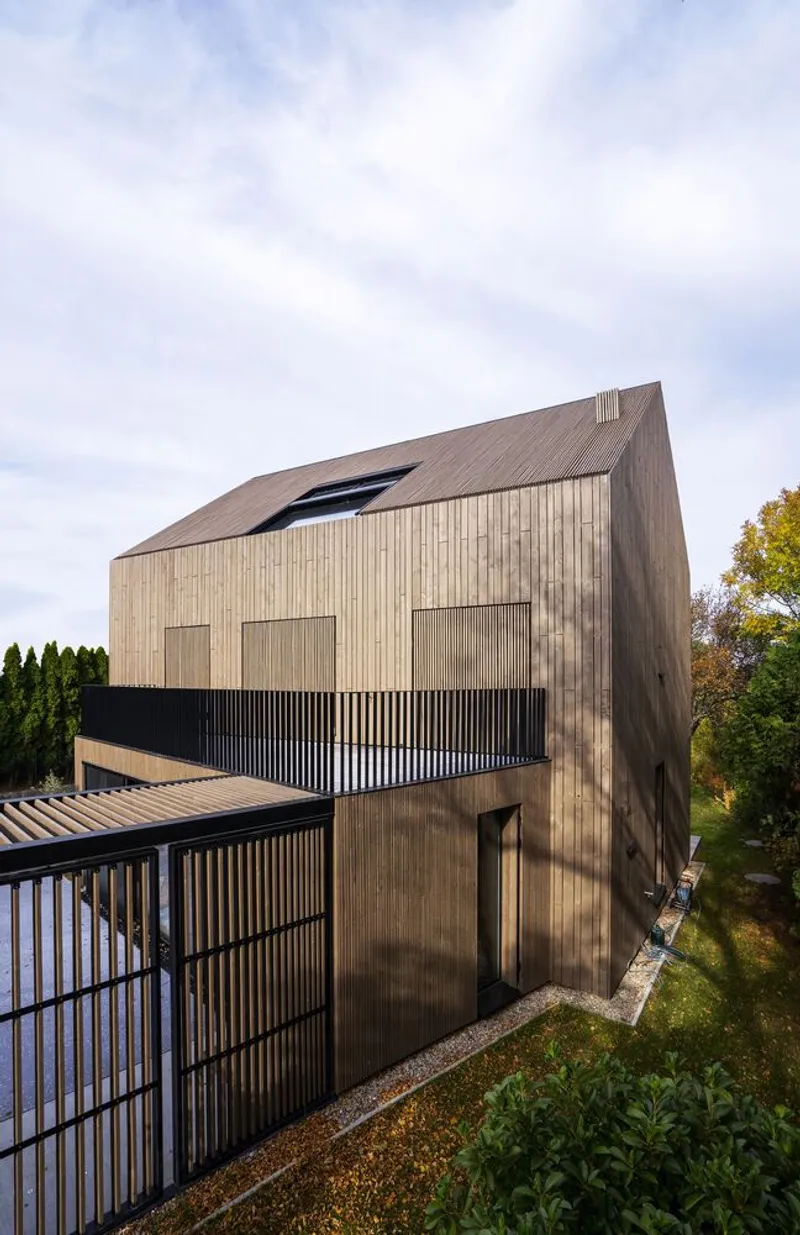
In Klosterneuburg, Austria, a family discovered their ideal home: a compact 1950s house at the front of an elongated plot, with breathtaking views of the Danube from the back. Instead of demolishing the existing house, Mostlikely Architecture preserved its character and integrated it into a contemporary residential project. A new house was thoughtfully inserted, forming an atrium between old and new structures, seamlessly connected by a shared courtyard.

Dynamic Architecture and Facade Design
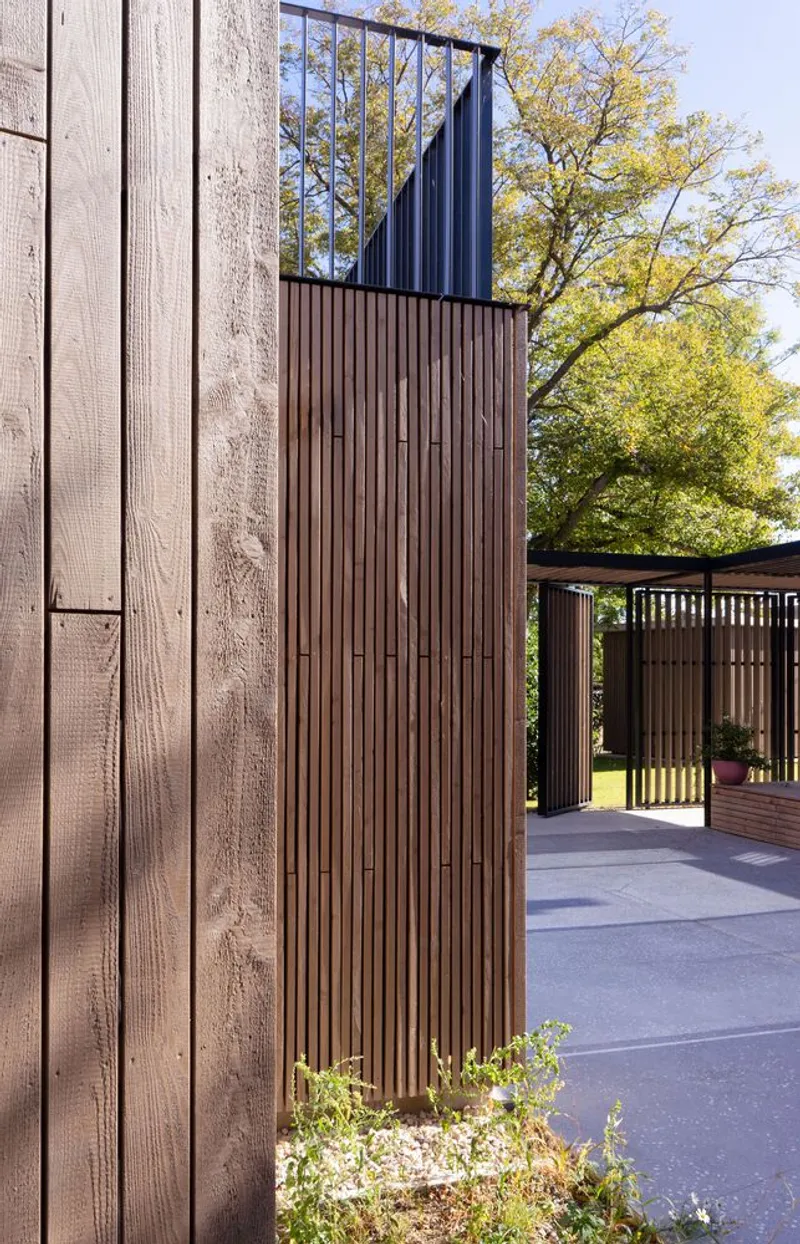
The project features a black metal pergola on the shorter side, filled with wooden slats and designed as high revolving doors to meet various functional needs. These wooden slats extend into the window openings of the new building as large folding shutters, creating a minimalist yet dynamic facade. This living exterior continuously transforms with light and movement, blending traditional elements with modern design.

Interior Layout: Open Space and Fluid Levels
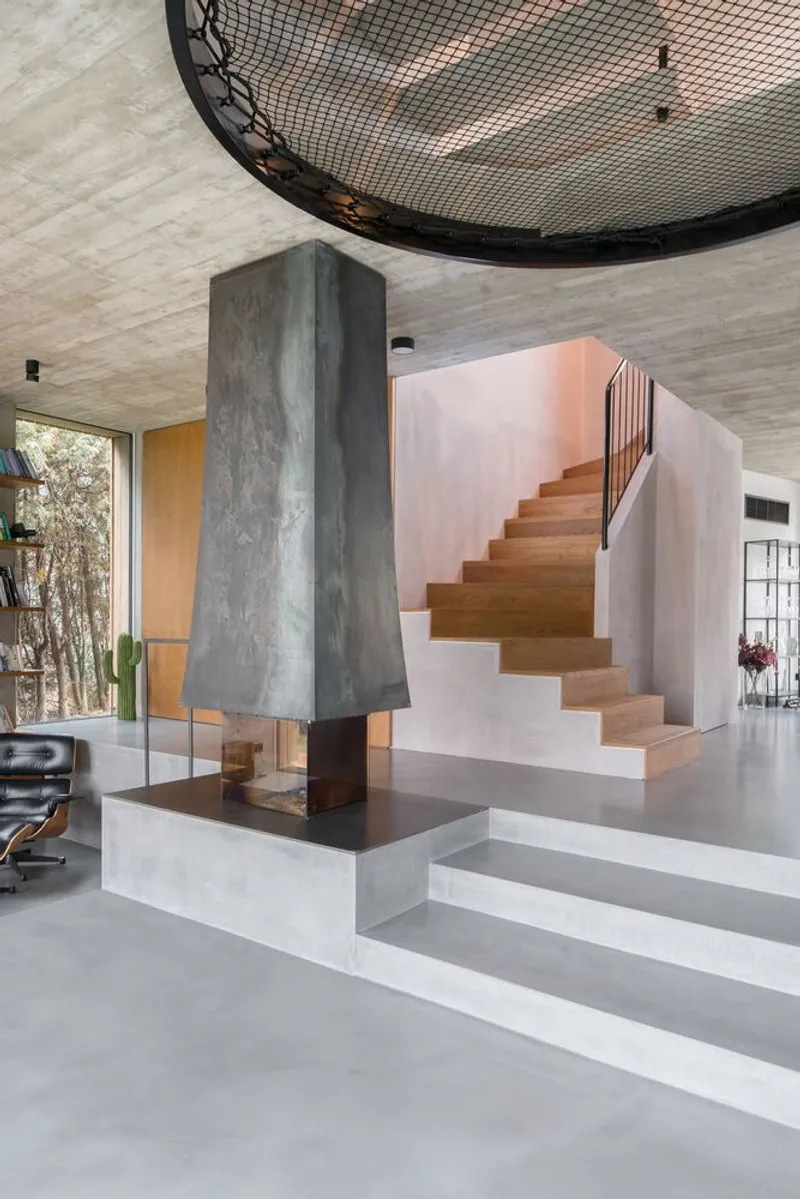
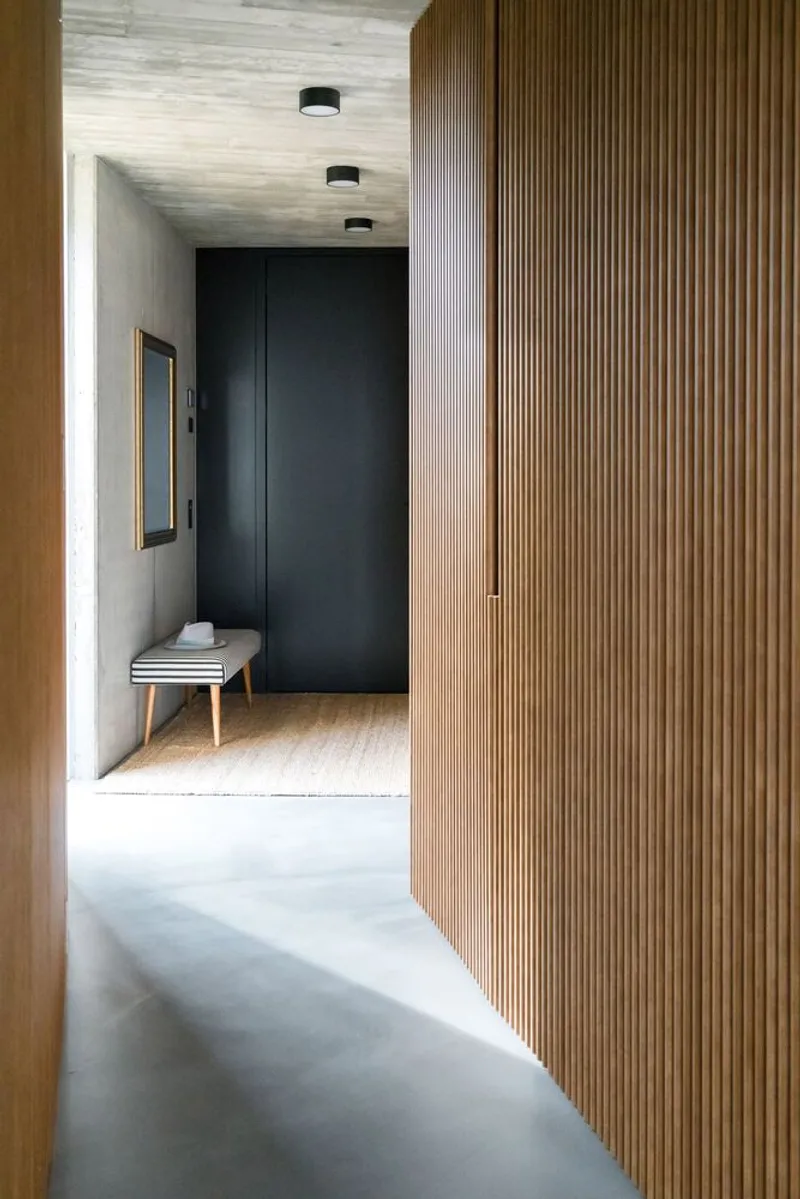
Inside, the ground floor presents a large, open-plan space shaped by the plot’s natural slope. Different floor levels define distinct areas while maintaining a sense of openness, reminiscent of Adolf Loos’ “Raumplan” concept. Exposed concrete, inlaid board ceilings, rough wall textures, and smooth floors enhance the tactile quality of the interiors. Vertical openings and a circular cut-out in the ceiling create a central focal point, where a suspended net introduces playful spatial experiences.

Garden and Courtyard Integration
The architecture carefully connects multiple garden areas through large sliding doors and expansive windows. A natural pool at the rear offers uninterrupted views of the Danube, while a delicate shed roof along the street functions as a carport. Existing mature trees were preserved, and the combination of board-clad new structures and natural vegetation ensures the house integrates harmoniously into its surroundings.
The original 1950s house was transformed into a guest house and atelier, providing flexible, multifunctional spaces while retaining historical character.

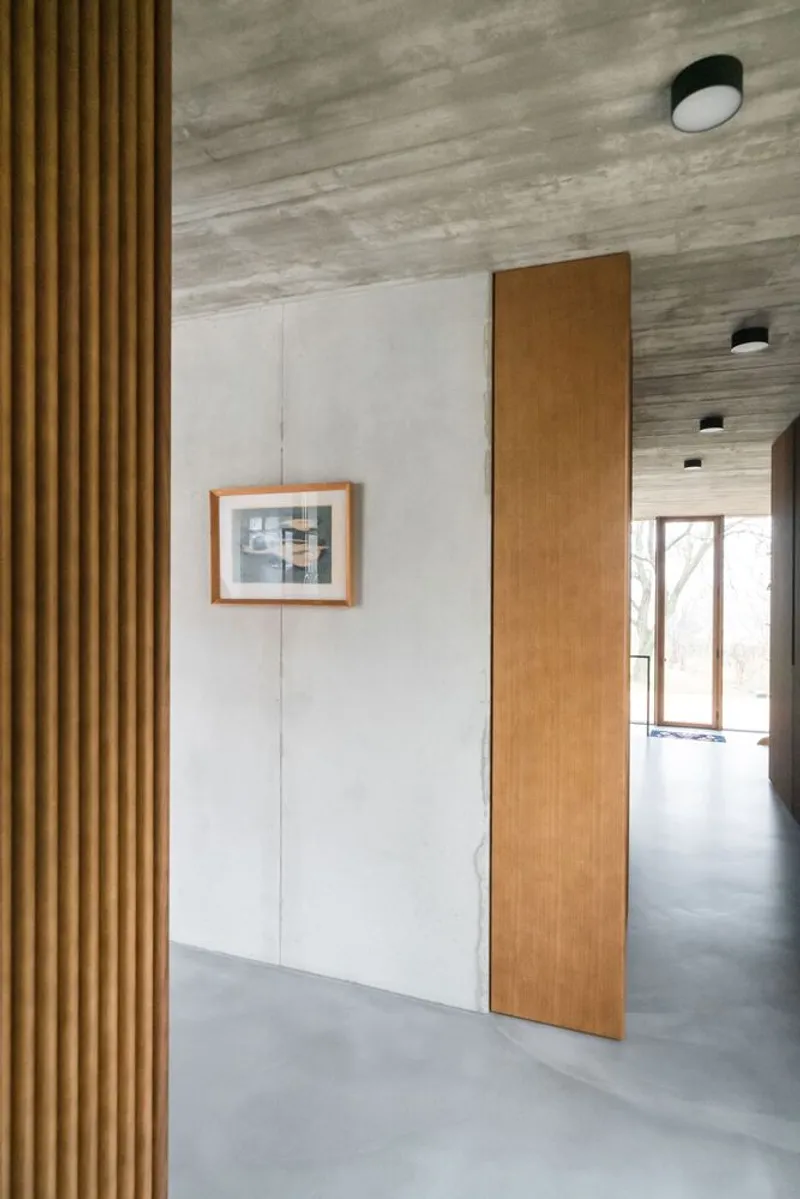
All Photographs are works of Mostlikely Architecture, Sara Sera




Popular Articles
Popular articles from the community


Conexión: Biophilic Design Reimagines High-Rise Living in Hong Kong
Conexión reimagines high-rise living in Hong Kong through biophilic design, green facades, shared spaces, daylight, water and nature within.

Hill & Cross Opera: Sculptural Opera House Architecture Shaped by Tallinn’s Landscape and Identity
Hill & Cross Opera reimagines opera house architecture in Tallinn through its sculptural hill, civic plaza, glass wave and a luminous cross.

The Ocean Hive: Sustainable Architecture for a Self-Sufficient Civilization at Sea
The Ocean Hive imagines sustainable architecture at sea, where modular habitats, algae, wave power and ocean waste sustain a growing colony.

The Musturak Paradise: Senior Living Architecture for a Connected Future in Temara, Morocco
The Musturak Paradise reimagines senior living architecture in Temara via private homes, social spaces, culture, community, and shared care.


Similar Reads
You might also enjoy these articles


Hodi-Mandai Geram
Project Function: Preservation and revitalization of the Intangible heritage and socio-spatial identity of the Hodi by Housing, Cultural Memory Center, Sacred Grove, landscape, local tourism economy


Olio Towers: A Mid-Rise for Performers That Fuses Housing, Rehearsal, and Stage
Located blocks from Houston's Theater District, this modular tower stacks living units around a central performance atrium.

Oasis: Modular Green Housing Carved into Dhaka's Urban Fabric
A shortlisted Plugin Housing entry reclaims unauthorized settlements in Dhaka with stepped concrete volumes, green roofs, and ventilation-driven design.

Black Hole: A Floating Megastructure for the Post-Physical Era
Emiliano Mazzarotto envisions a spherical, self-scaling arena where e-sports, digital hotels, and holographic stadiums replace traditional public space.


Explore Architecture Competitions
Discover active competitions in this discipline



Challenge to reimagine the Iron Throne


Photograph architecture without architects


Illustrate the lost glory of Angkor Wat - Render Challenge


Design challenge to reuse E-waste
Comments (0)
Please login or sign up to add comments
No comments yet. Be the first to comment!