

UCCA Clay Museum by Kengo Kuma & Associates – A Contemporary Cultural Landmark Rooted in Yixing’s Ceramic Heritage
The museum blends mountain-inspired forms, wooden lattice structures, and handcrafted ceramic façades to honor Yixing’s heritage through immersive, contemporary cultural architecture.


Honoring a Thousand Years of Ceramic Craft
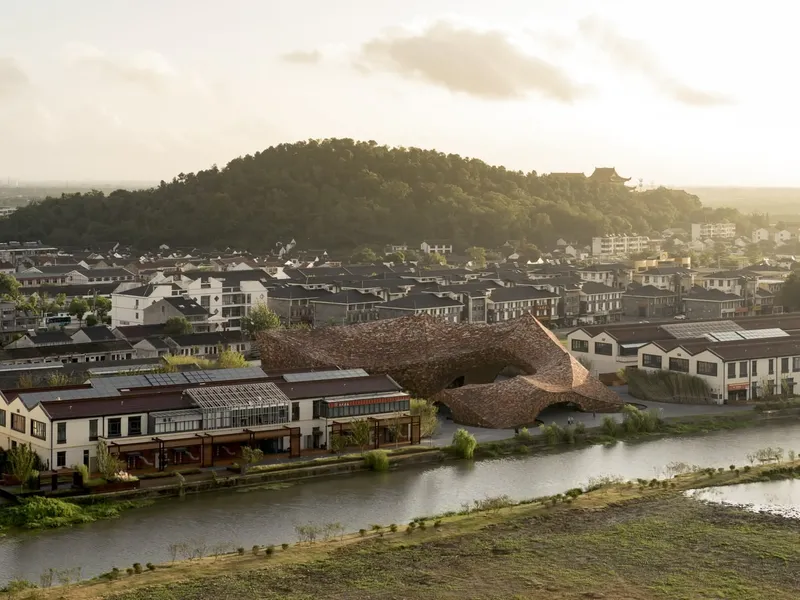
The UCCA Clay Museum by Kengo Kuma & Associates stands as a cultural beacon in Yixing, China—a city celebrated as the historic “ceramic capital” and world-renowned for its purple clay craftsmanship. Designed in 2024 and spanning 3,437 square meters, the museum forms part of an ambitious urban regeneration plan that reimagines former factory grounds as a vibrant center for cultural production, artisan workshops, and contemporary exhibition spaces. The architecture not only preserves the memory of the site but elevates Yixing’s ceramic legacy into an architectural narrative shaped by materiality, craftsmanship, and landscape.
A Site Embedded in Ceramic History
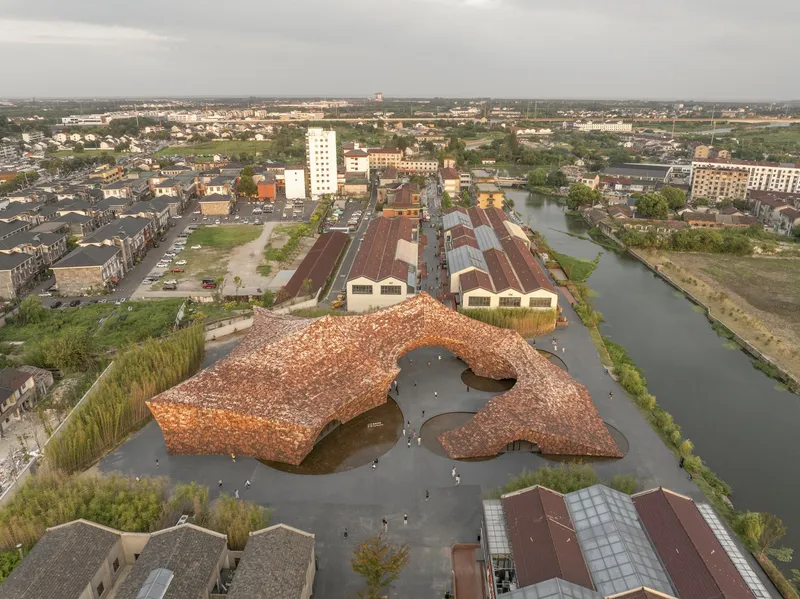
The museum occupies a site once filled with clay workshops, kilns, and pottery factories—places where generations of artisans shaped the city’s identity. Rather than erasing this industrial fabric, Kengo Kuma & Associates integrate the surviving structures into the new design approach, linking past and present through an interconnected campus of ateliers, exhibition halls, and public spaces. The project supports Yixing’s vision for creating a cultural destination that celebrates ceramics through education, production, and immersive experience.
Architecture Inspired by Mountains and Kilns
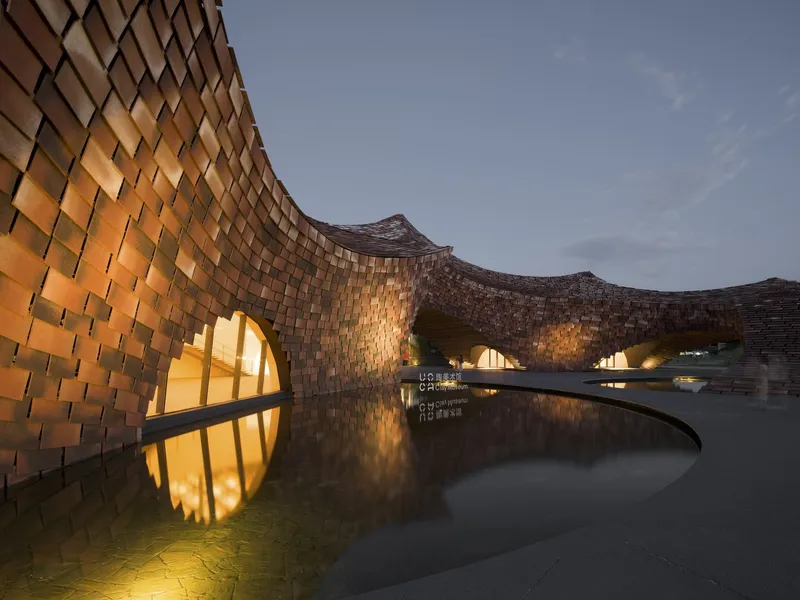
The museum takes the shape of a sculptural volume reminiscent of a mountain made of clay vessels. This form draws inspiration from two sources:
- Shushan Mountain, a local landmark admired by Song Dynasty poet Su Dongpo.
- The historic dragon kiln, a sloped climbing kiln that has burned continuously for more than six centuries.
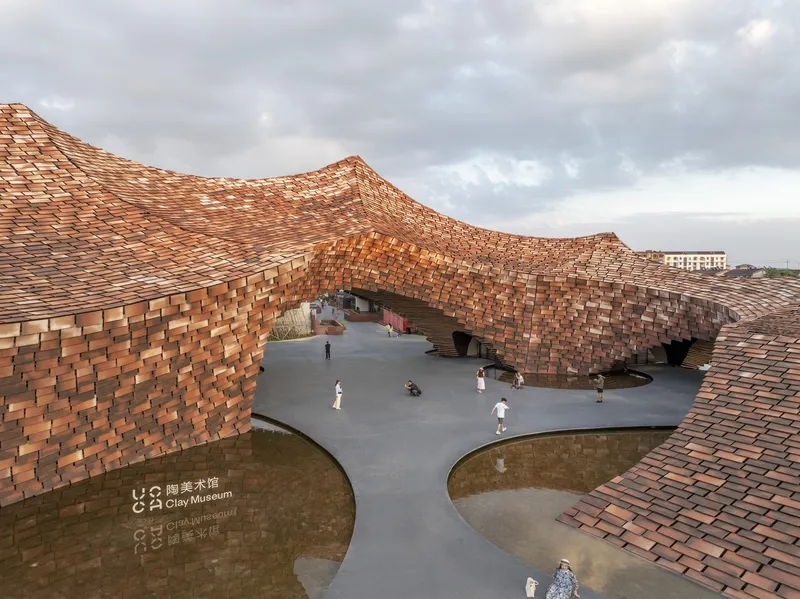
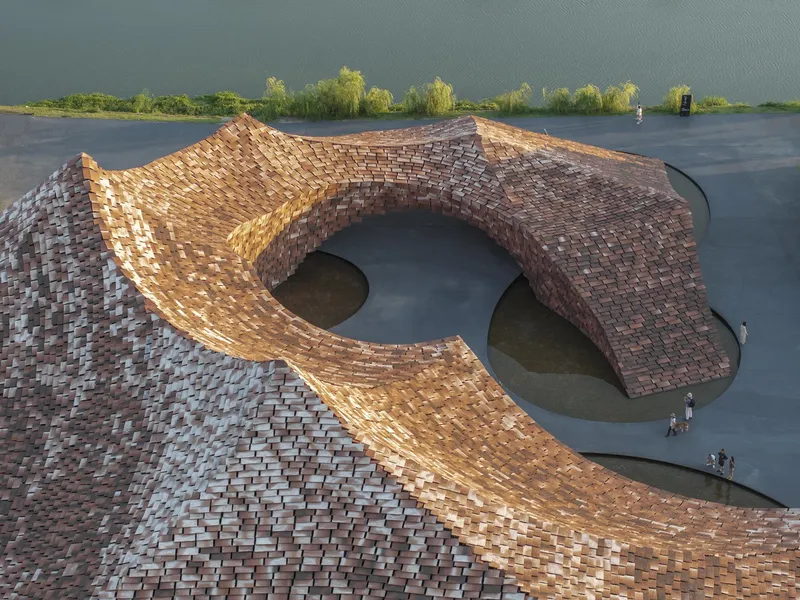
The architects reinterpret these cultural references as a contemporary architectural massing—one that rises like a terraced mountain while evoking the rhythm of stacked pottery. Carefully placed openings and carved voids puncture the volume, creating visual and physical connections to the adjacent canal, surrounding factory buildings, and pedestrian pathways. This gesture anchors the museum within its industrial heritage while framing a new urban axis for future development.
A Dynamic Roof Form Defined by Wood and Light
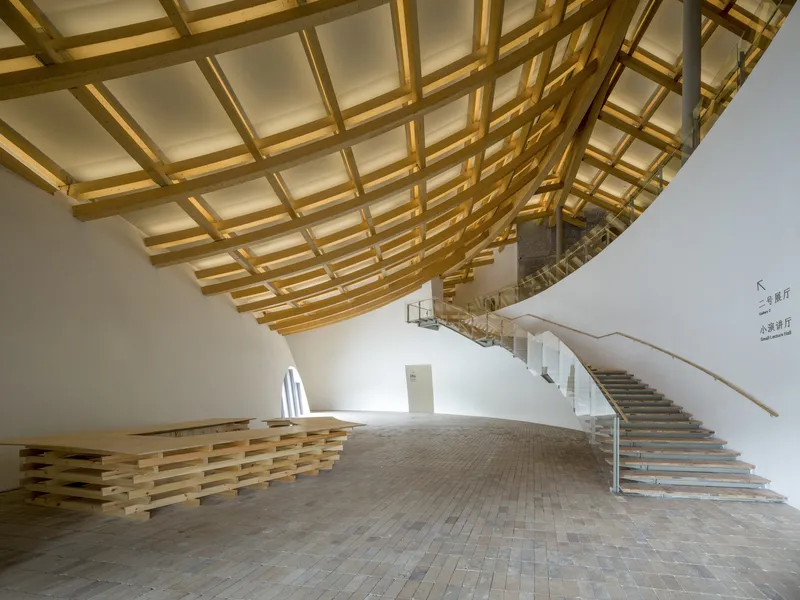
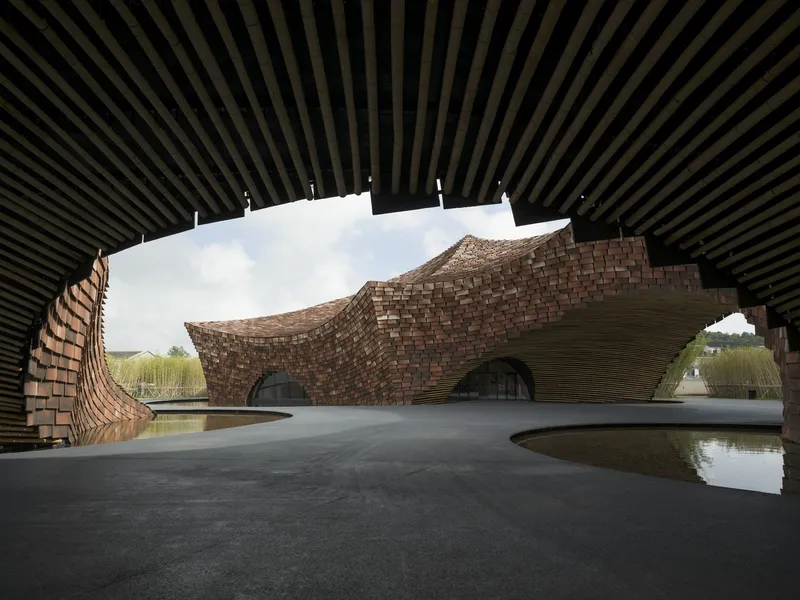
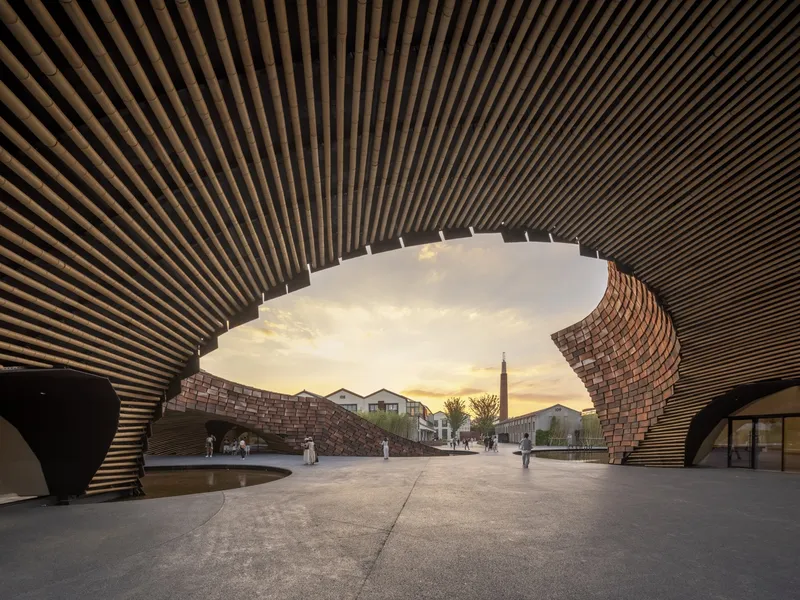
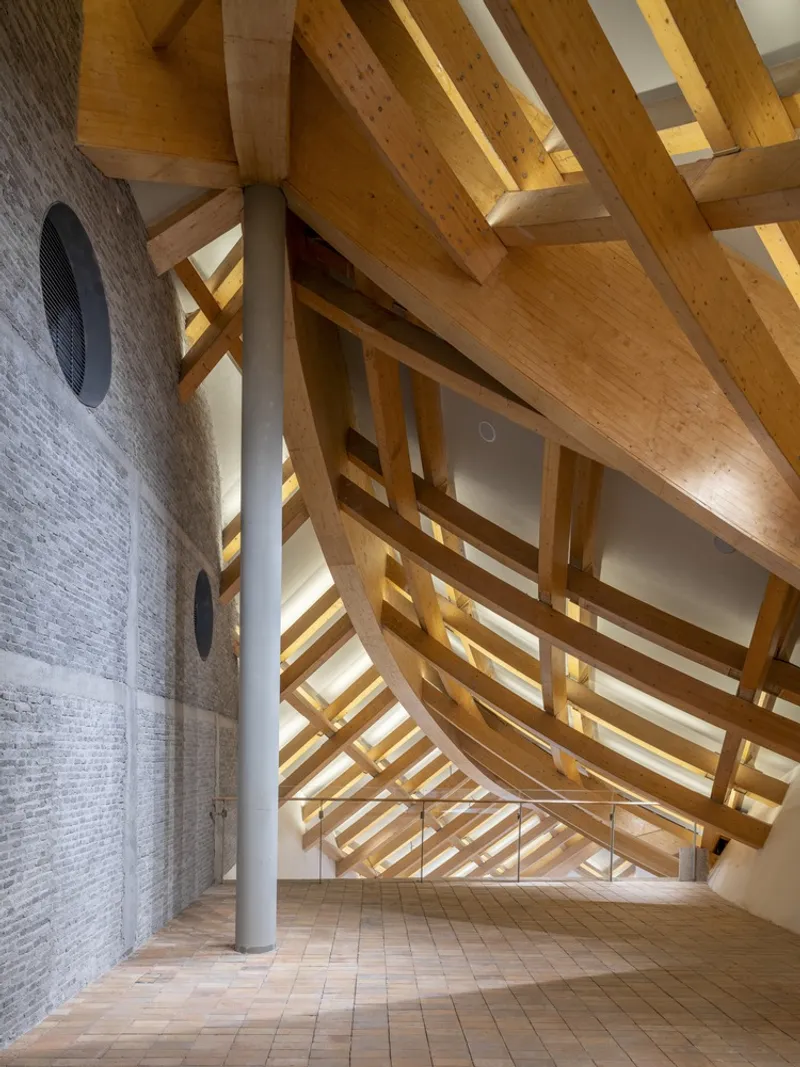
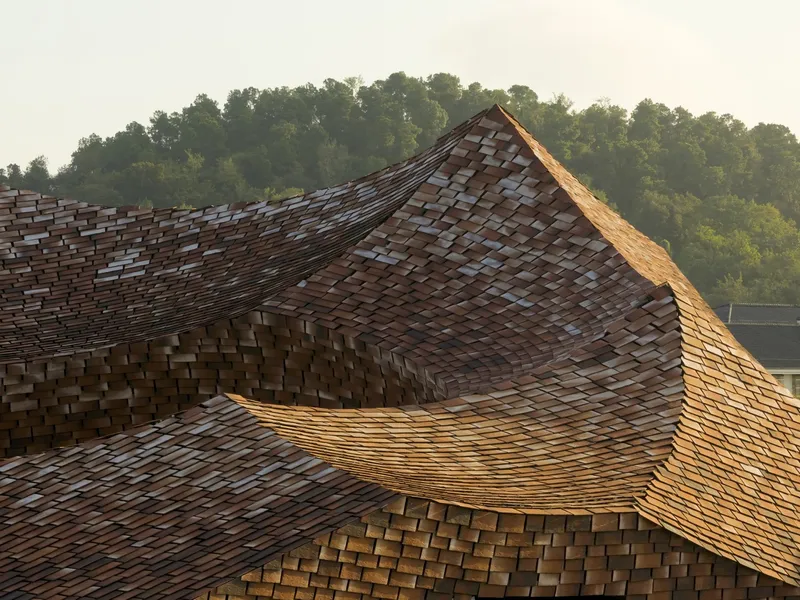
One of the building’s most striking features is its inverted shell roof, which appears to have been sculpted by intersecting spherical forms. The ceiling is supported by four layers of interlocking wooden lattice beams—an engineering and aesthetic achievement that merges traditional joinery with contemporary structural logic.
This wooden canopy generates dramatic shifts in height and curvature, guiding visitors deeper into the museum as natural light sweeps across the interior. The interplay of shadow and structure enhances the sense of discovery, making the space feel both monumental and intimate. The design encourages fluid circulation, inviting visitors to explore the galleries, workshops, and open spaces at their own rhythm.
A Ceramic Facade Crafted by Local Artisans
Materiality is central to the museum’s identity. Working closely with master ceramicists from Yixing, the architects developed a façade composed of handcrafted ceramic panels. These tiles bear subtle tonal variations, achieving color gradations that shift with sunlight, season, and weather. Their tactile finish—warm, slightly coarse, and reminiscent of traditional teaware—creates a sensory connection between the museum and the city’s enduring craft traditions.
The façade becomes a living surface: sometimes shimmering, sometimes earthy, but always evocative of the firing process that defines Yixing’s clay culture. By embedding local craftsmanship directly into the architecture, the museum stands as a testament to cultural continuity and the value of collective expertise.
Interior Experience and Spatial Flow
Inside, the architecture maintains a dialogue between material warmth and spatial fluidity. The wooden lattice roof filters light with gentle gradation, enhancing the display of ceramics while elevating the visitor’s sense of immersion. Open-plan galleries, flexible exhibition zones, and workshop spaces encourage education, participation, and interaction with clay as both material and cultural artifact.
The interior maintains a calm, meditative quality, aligning with Kengo Kuma’s philosophy of architecture that respects human scale, natural materials, and the emotional resonance of light.
Preservation, Education, and Community Engagement
Beyond its role as an exhibition venue, the UCCA Clay Museum functions as a cultural hub. Integrated workshops and ateliers invite artists, students, and community members to engage directly with ceramic processes. The project celebrates both heritage and innovation, positioning Yixing as a global center for clay-based design and research while remaining deeply rooted in local craft traditions.
The UCCA Clay Museum is a masterful blend of cultural reverence, architectural craftsmanship, and contemporary design. Kengo Kuma & Associates transform Yixing’s legacy into a spatial experience that celebrates clay not only as a material but as a story shaped over a thousand years. Through its mountain-inspired form, wooden lattice roof, and artisan-crafted ceramic façade, the museum becomes a living embodiment of tradition, innovation, and place-making.
All photographs are works of Fangfang Tian, Eiichi Kano


Popular Articles
Popular articles from the community


David Macias Steps a Doorless Stone and Plaster House Down a Tropical Colombian Hillside
In the humid hills of Colombia, Threshold House replaces the front door with an open void and terraces its 850 m² down the slope instead of fighting it.

GROUP A Strips a 1969 Rotterdam Harbor Headquarters to Its Frame and Wraps It in Timber Louvers
In Rotterdam's M4H harbor district, Ferro Offices reuses a 1969 frame, adds one timber storey and reaches BREEAM-NL Outstanding.

Architekt Andreas Gruber Scatters 23 Dark Timber Chalets Across a South Tyrolean Forest Edge
In Molini di Tures, Amonti Chalets breaks a resort into a hamlet of gabled timber houses, with parking, storage and services pushed into the slope.

Juan García Correa, John González and Claudia Rueda Sink a Circular Amphitheater into a Manizales Engineering Building
On the La Nubia campus in Manizales, Colombia, the S1 Building folds labs and offices into a hillside of ramped lawns that double as a campus route.

Similar Reads
You might also enjoy these articles


Hodi-Mandai Geram
Project Function: Preservation and revitalization of the Intangible heritage and socio-spatial identity of the Hodi by Housing, Cultural Memory Center, Sacred Grove, landscape, local tourism economy


Olio Towers: A Mid-Rise for Performers That Fuses Housing, Rehearsal, and Stage
Located blocks from Houston's Theater District, this modular tower stacks living units around a central performance atrium.

Oasis: Modular Green Housing Carved into Dhaka's Urban Fabric
A shortlisted Plugin Housing entry reclaims unauthorized settlements in Dhaka with stepped concrete volumes, green roofs, and ventilation-driven design.

Black Hole: A Floating Megastructure for the Post-Physical Era
Emiliano Mazzarotto envisions a spherical, self-scaling arena where e-sports, digital hotels, and holographic stadiums replace traditional public space.

Explore Architecture Competitions
Discover active competitions in this discipline

Challenge to reimagine the Iron Throne

Photograph architecture without architects

Illustrate the lost glory of Angkor Wat - Render Challenge

Design challenge to reuse E-waste
Comments (0)
Please login or sign up to add comments
No comments yet. Be the first to comment!