
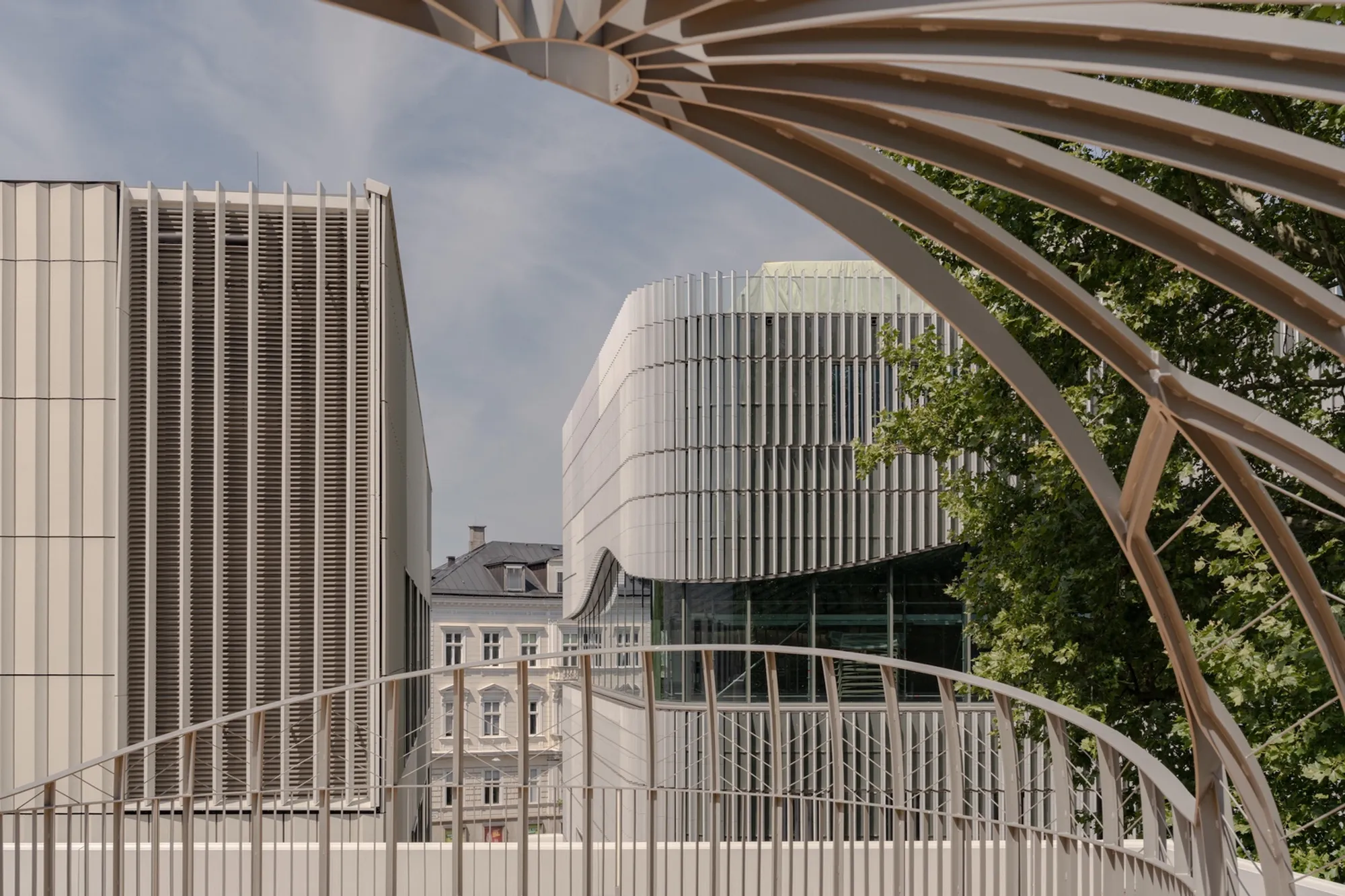
UMAK Mozarteum University by Berger Parkkinen + Architects
UMAK Mozarteum University in Salzburg blends historic context with modern design, featuring staggered structures, ceramic façades, flexible interiors, and sustainable architecture.


The UMAK Mozarteum University in Salzburg, designed byBerger Parkkinen + Architects, is a striking addition to the city’s historic urban fabric. Commissioned in 2021, the new university building sits adjacent to the Paracelsus Bad & Kurhaus—also designed by the firm—and together they define a modern architectural dialogue within Salzburg’s city center.
Context and Urban Integration
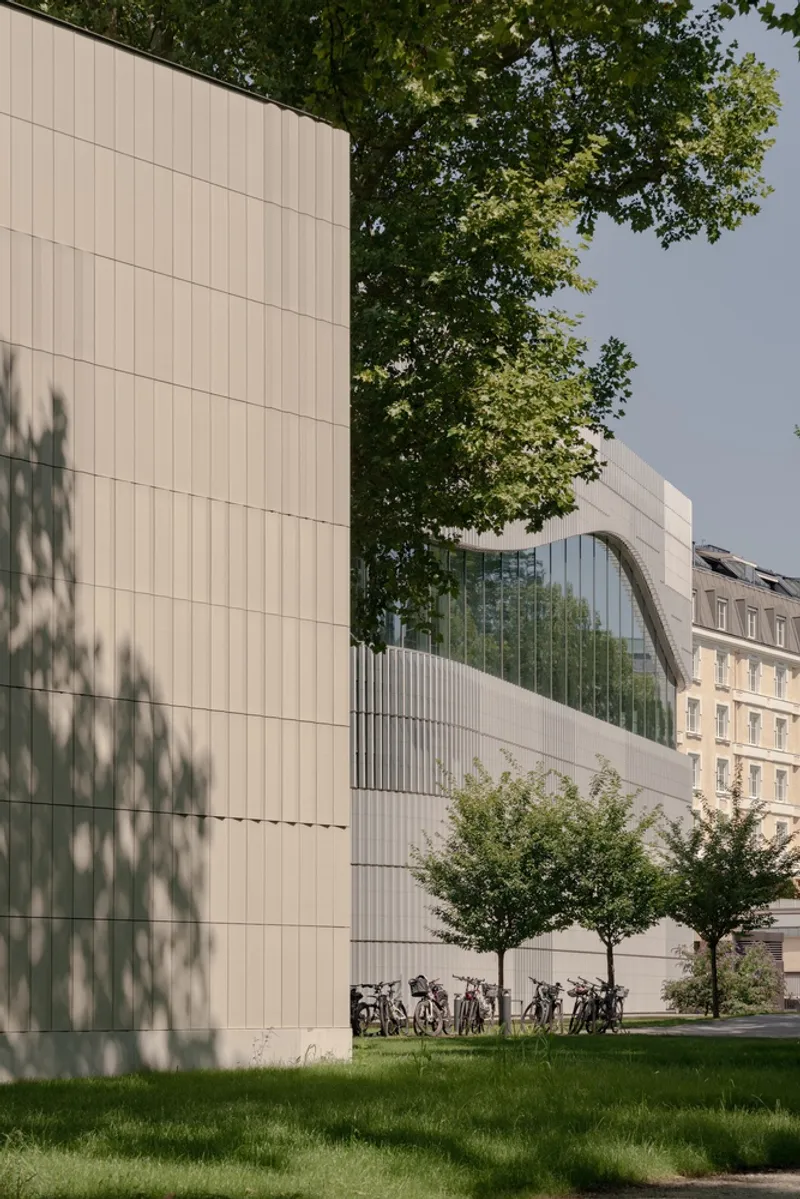
The architectural design responds sensitively to its surroundings, drawing inspiration from the morphology of the spa gardens and remnants of former fortifications. By linking the Baroque grounds of Mirabell Palace to the Wilhelminian Markus-Sittikus-Straße, the project creates a seamless transition between historic and contemporary urban elements.
UMAK is strategically positioned at the south-western edge of Salzburg’s inner-city parks, including Kurgarten, Zwergerlgarten, and Mirabellgarten. This location ensures a strong relationship between the university, public green spaces, and the surrounding urban streets.
Architectural Design and Structure
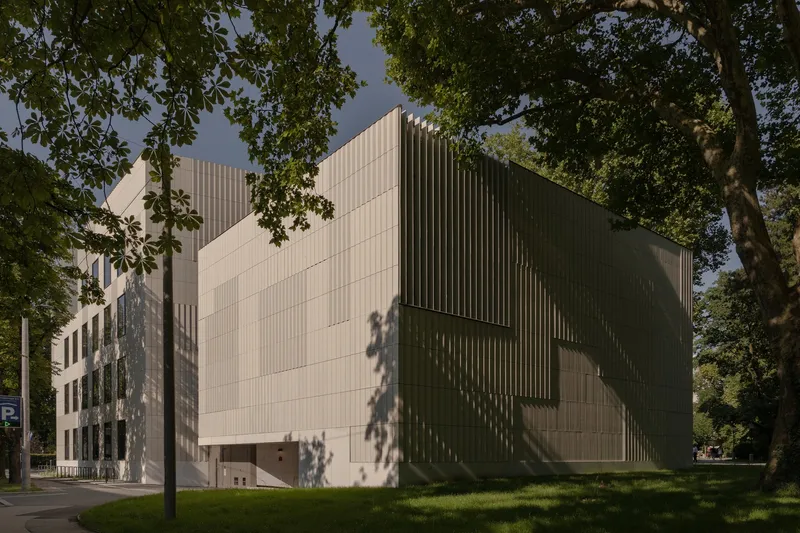
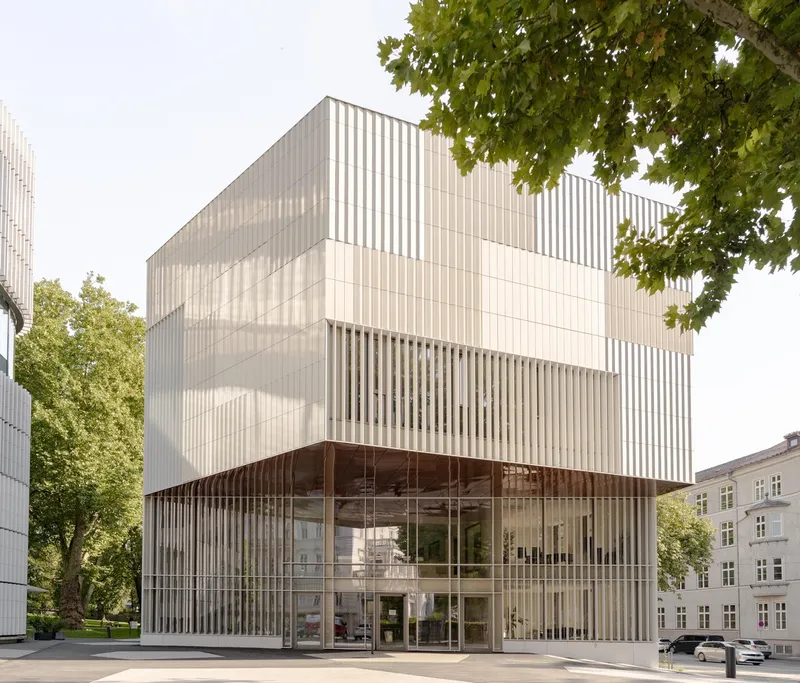
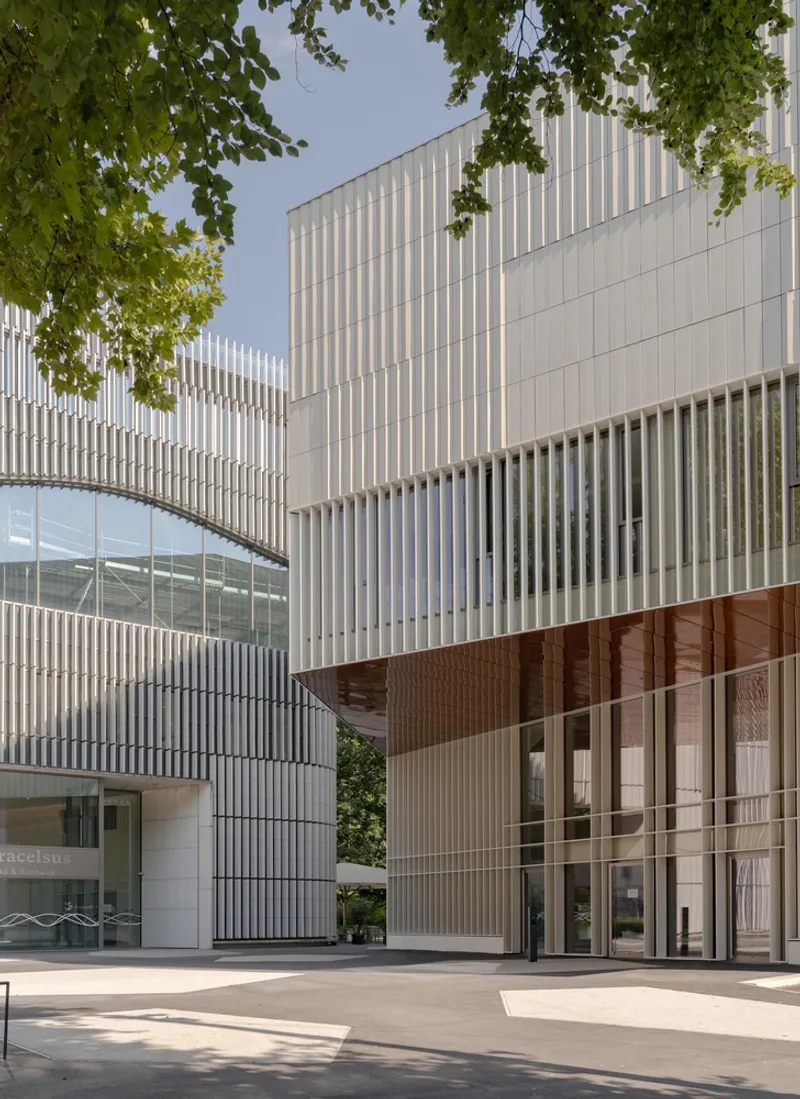
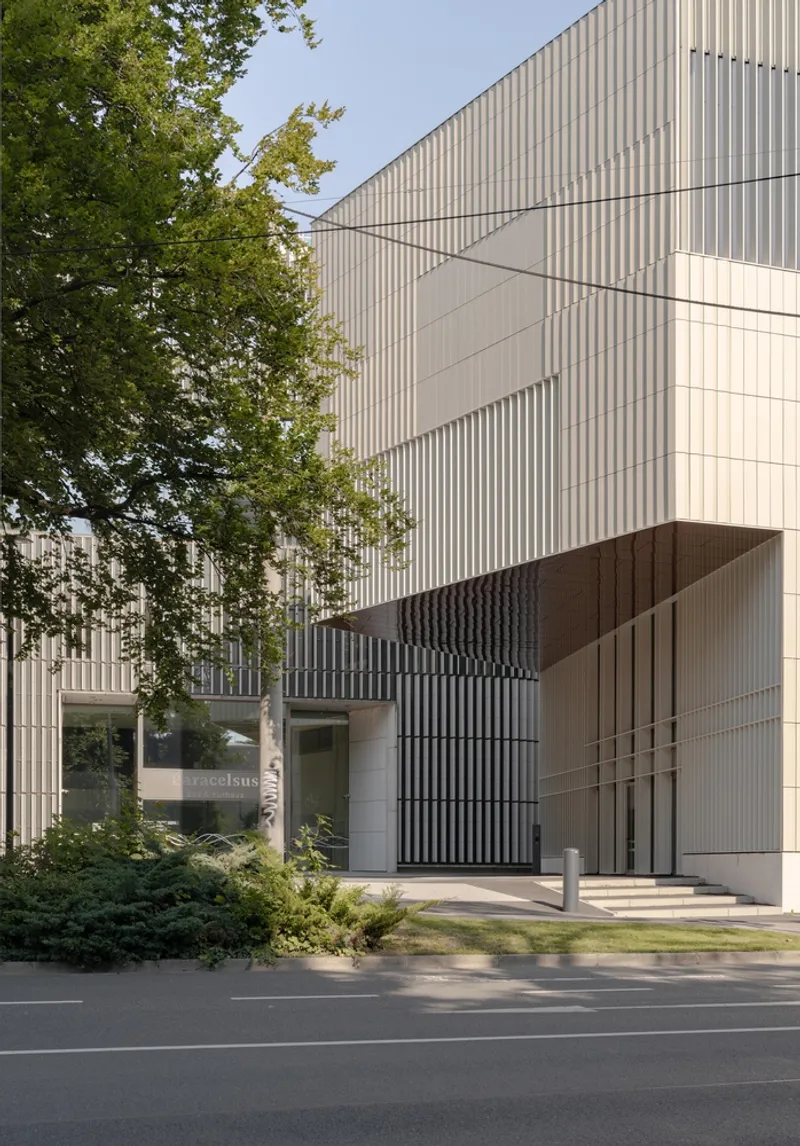
The building forms part of a broader urban development strategy that unites architectural styles spanning Baroque, Wilhelminian, and 20th-century influences. To harmonize with neighboring buildings, UMAK is divided into two staggered structures: a closed façade along Auerspergstraße and a more open frontage along Schwarzstraße. The main entrance faces a newly designed square, offering a visual and functional connection to the Paracelsus Baths & Spa.
Interior Layout and Functionality
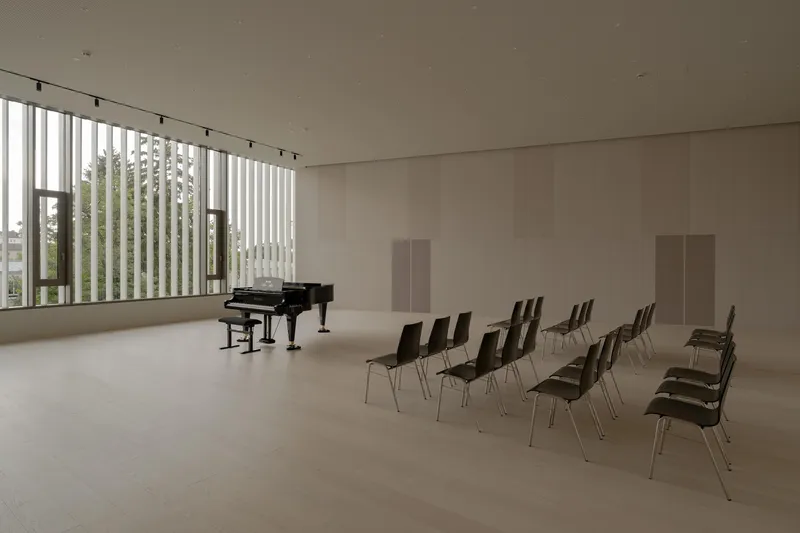
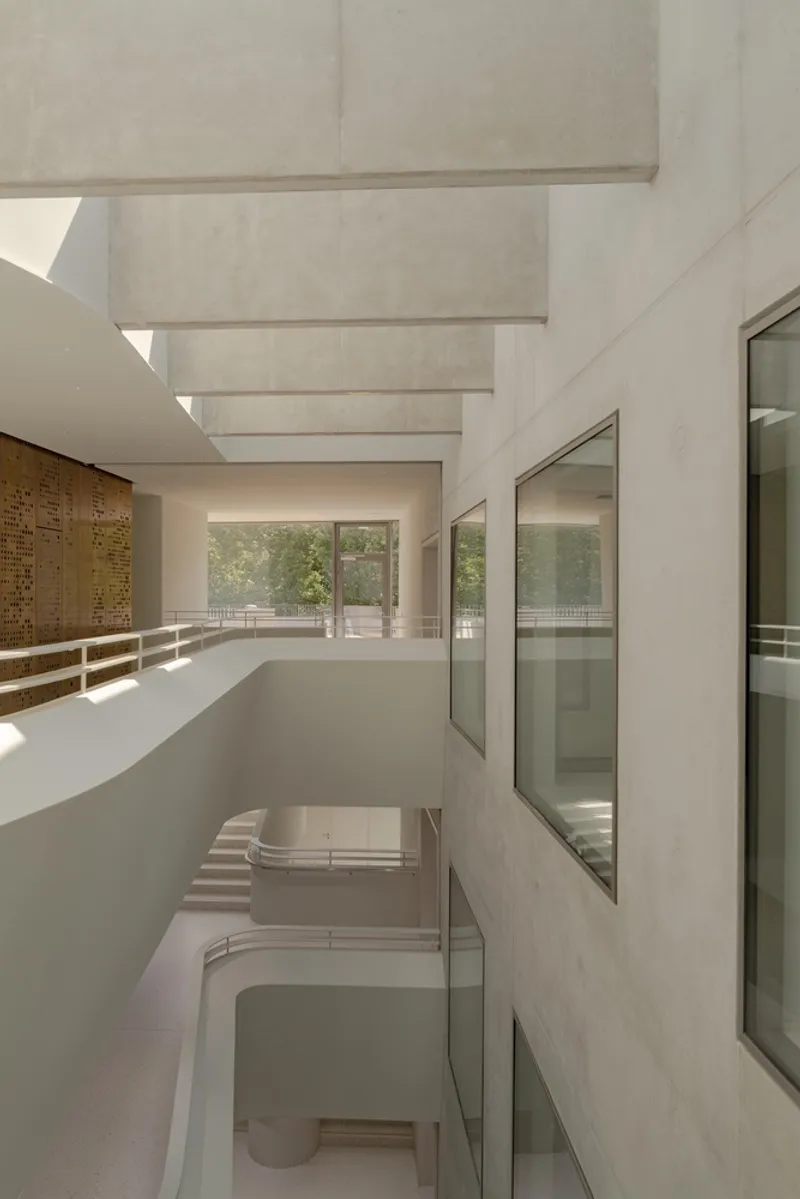
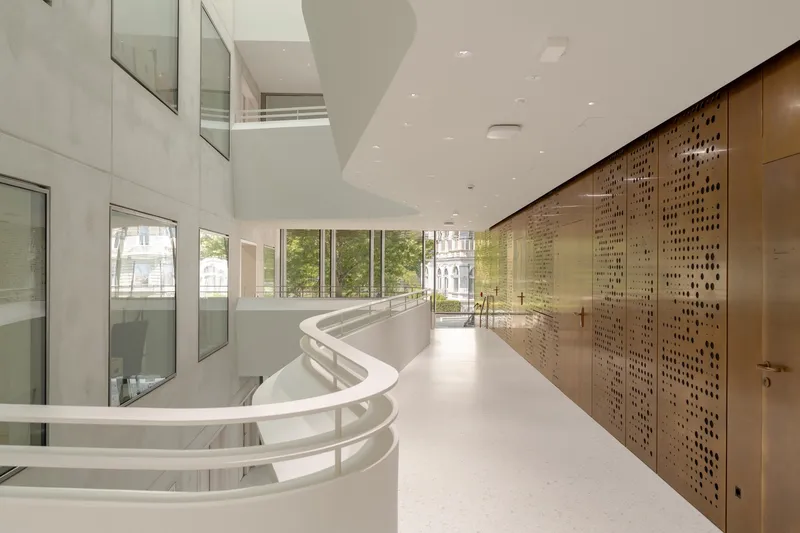
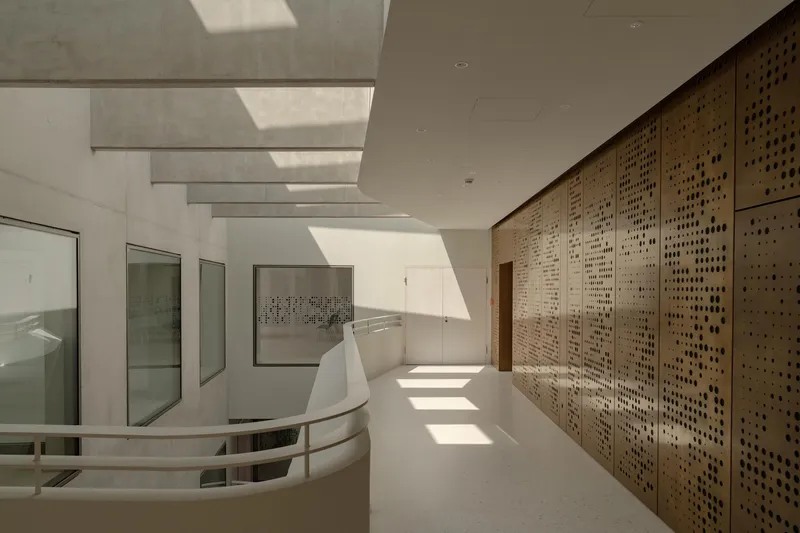
The interior emphasizes transparency, accessibility, and adaptability. The ground floor is open to the public, while the building’s core features a double-height hall with natural skylights extending to the top floor. The staggered design allows large rehearsal halls and practice rooms with specialized ceiling heights, catering to the specific needs of a music and art university. The upper floors feature a prominent overhang, visually marking the entrance square and highlighting the building’s urban presence.
Façade and Materials
The UMAK’s façade, like its neighboring bathhouse, is composed of rear-ventilated ceramic panels, creating a refined, durable exterior. Unlike the Paracelsus Bad, UMAK features closed slats, while large rehearsal rooms incorporate fixed sun-shading slats. Uniform windows integrate sun and glare protection, balancing daylight access with acoustic and thermal comfort. Generously glazed entrance areas connect the two structures while reinforcing transparency and openness.
Sustainability and Flexibility
Despite the building’s complex technical requirements, it remains flexible for future use, supporting evolving educational needs. The compact design contributes to energy efficiency, reducing long-term environmental impact and supporting the university’s sustainability goals.
All photographs are works of Ana Barros




Popular Articles
Popular articles from the community


Play: Fragments of Their World
Familiar architecture becomes modular playground design, creating safe spaces where displaced children can learn, connect, imagine and play.

Conexión: Biophilic Design Reimagines High-Rise Living in Hong Kong
Conexión reimagines high-rise living in Hong Kong through biophilic design, green facades, shared spaces, daylight, water and nature within.

Co-Life: Senior Housing Design That Reconnects Older Adults With the City
Co-Life reimagines senior housing design through healing gardens, shared streets, workshops, and a sustainable community across generations.

Co-life: Sustainable Architecture for Age-Friendly Community Living
Co-life reimagines sustainable architecture for seniors through courtyards, rammed earth, shared gardens, and spaces designed for belonging.


Similar Reads
You might also enjoy these articles


Hodi-Mandai Geram
Project Function: Preservation and revitalization of the Intangible heritage and socio-spatial identity of the Hodi by Housing, Cultural Memory Center, Sacred Grove, landscape, local tourism economy


Olio Towers: A Mid-Rise for Performers That Fuses Housing, Rehearsal, and Stage
Located blocks from Houston's Theater District, this modular tower stacks living units around a central performance atrium.

Oasis: Modular Green Housing Carved into Dhaka's Urban Fabric
A shortlisted Plugin Housing entry reclaims unauthorized settlements in Dhaka with stepped concrete volumes, green roofs, and ventilation-driven design.

Black Hole: A Floating Megastructure for the Post-Physical Era
Emiliano Mazzarotto envisions a spherical, self-scaling arena where e-sports, digital hotels, and holographic stadiums replace traditional public space.
Explore Educational Building Competitions
Discover active competitions in this discipline



Challenge to design public laboratory


Challenge to reimagine the Iron Throne


Photograph architecture without architects


Illustrate the lost glory of Angkor Wat - Render Challenge
Comments (0)
Please login or sign up to add comments
No comments yet. Be the first to comment!