
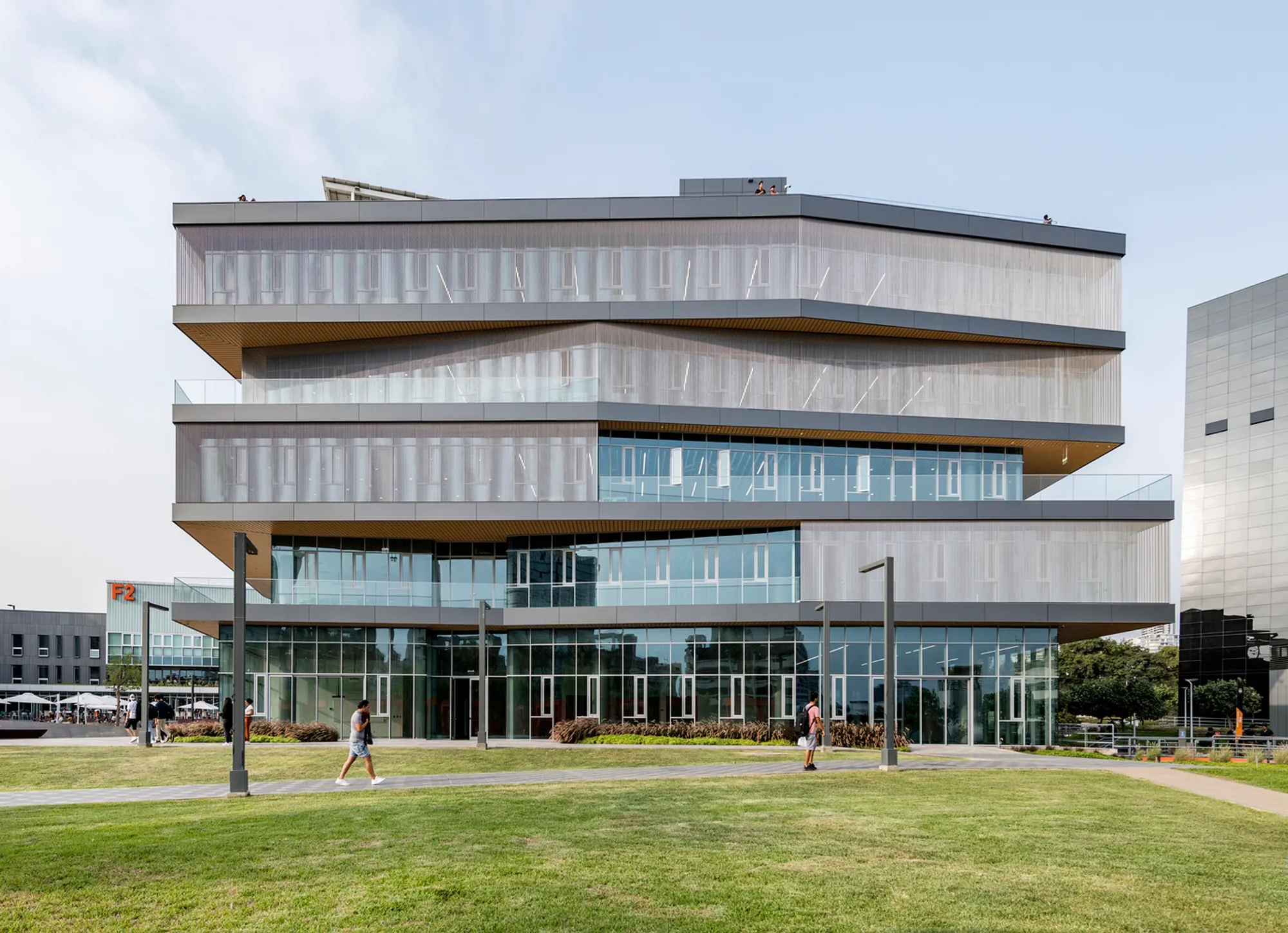
Universidad de Lima Engineering Innovation Center by Sasaki: A New Era of Innovation in Higher Education
Sasaki’s Engineering Innovation Center at Universidad de Lima redefines education through collaborative spaces, sustainability, and cutting-edge engineering facilities.


Located at the heart of the Universidad de Lima campus, the Engineering Innovation Center, designed by Sasaki, represents a bold step into the future of higher education architecture in Peru. Completed in 2023, this 92,000-square-foot facility brings together cross-disciplinary collaboration, applied research, and entrepreneurial development in a dynamic and interactive environment.
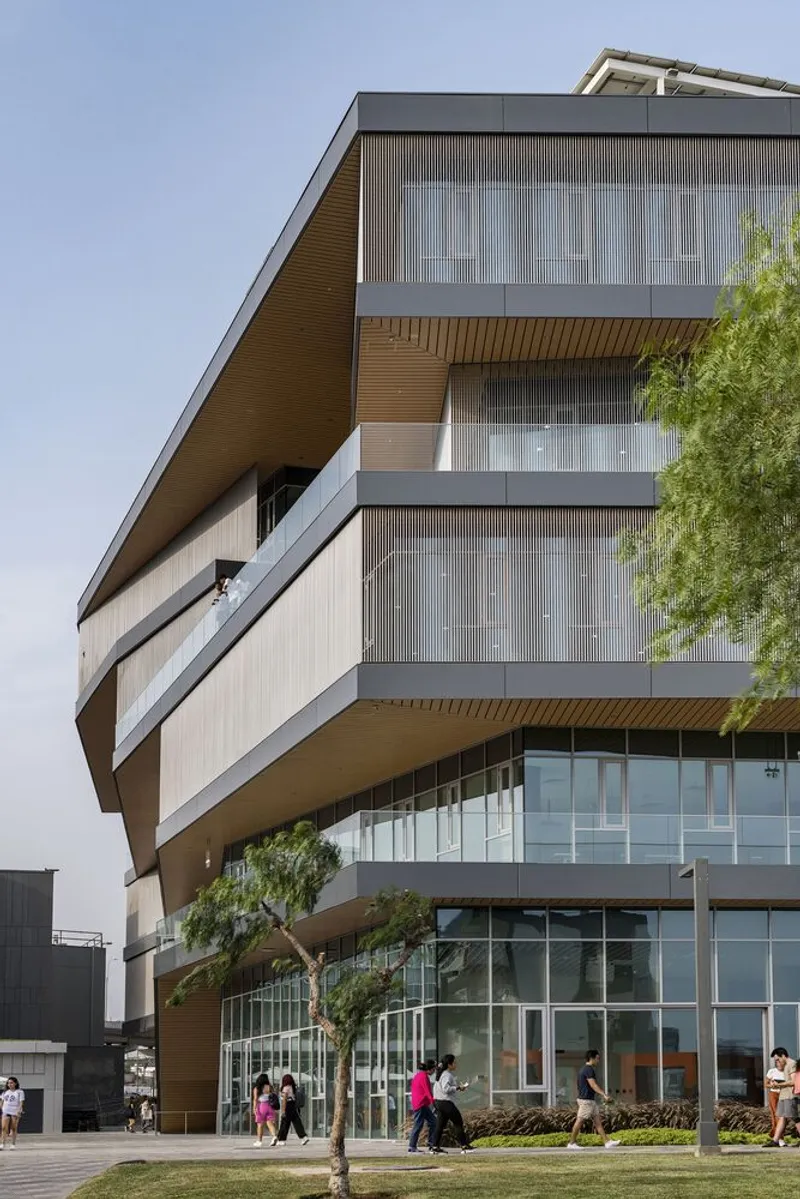
A Landmark for Innovation and Applied Engineering
Sasaki’s design transforms the campus with a new innovation hub that unites students, researchers, and industry professionals in one collaborative space. As one of the first major projects from the university’s long-term master plan, the Engineering Innovation Center serves as both a symbol and a tool for growth, aiming to redefine engineering education in Latin America.
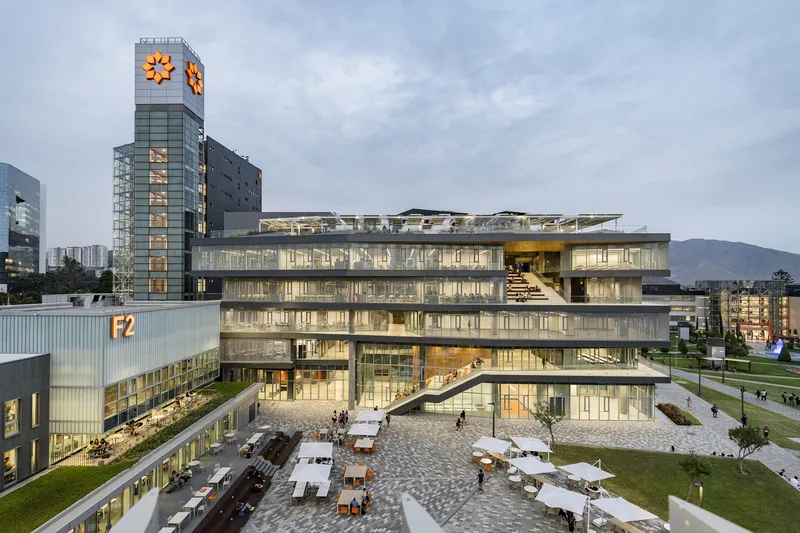
Positioned across from the new Student Life, Recreation, and Wellness Center, the building strengthens the core of campus life while fostering a seamless connection between academic and social engagement.
Spatial Design that Encourages Cross-Pollination
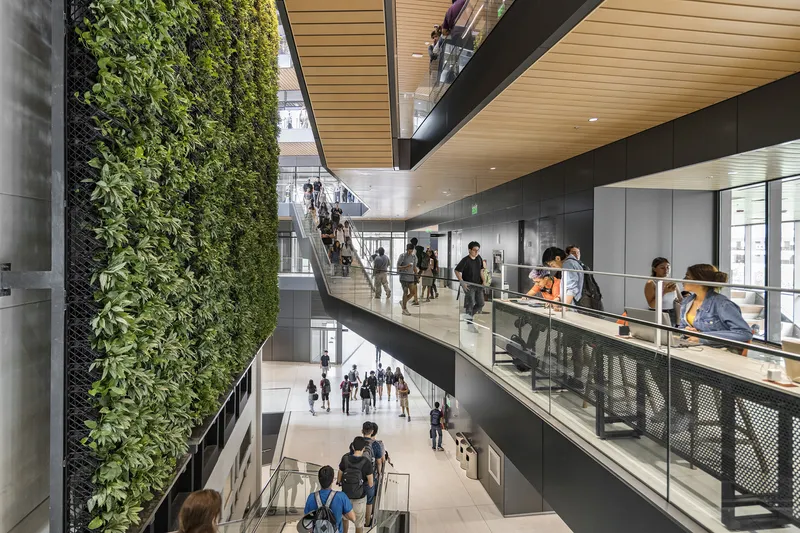
Central to the project is a multi-story social atrium, surrounded by a network of open terraces, transparent labs, and multi-functional collaboration zones. This spatial armature encourages fluid movement, visibility, and serendipitous interactions, promoting knowledge exchange among diverse disciplines.
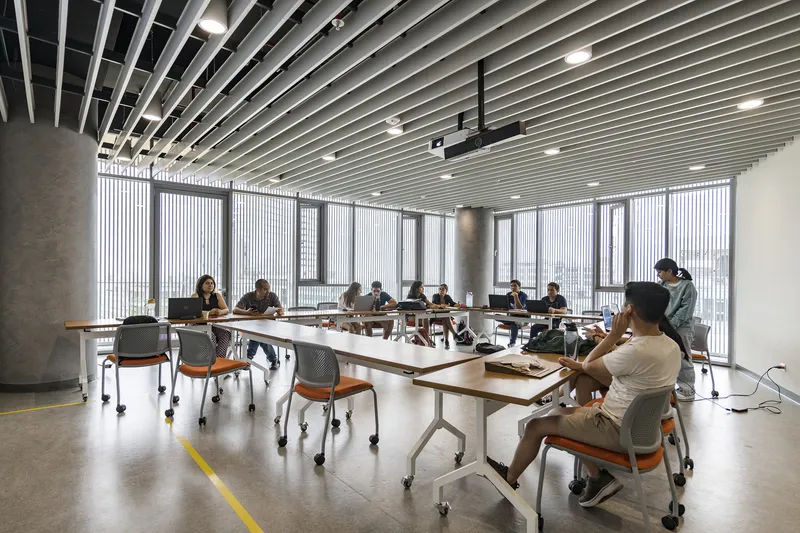
Inside the five-story complex, a range of flexible programs support project-based learning and enterprise-sponsored research. These include:
- Robotics and prototyping labs on the ground floor
- A sustainable development center and fabrication studio in the lower levels
- AI and computer science laboratories on the second floor
- A textile innovation hub on the third level
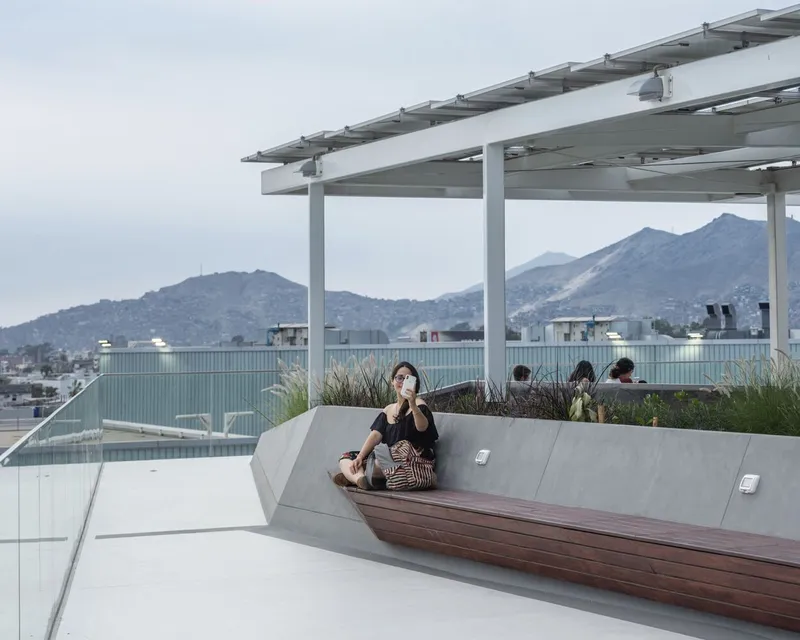
- Food innovation laboratories and café on the fourth floor, linked to a solar-powered rooftop terrace
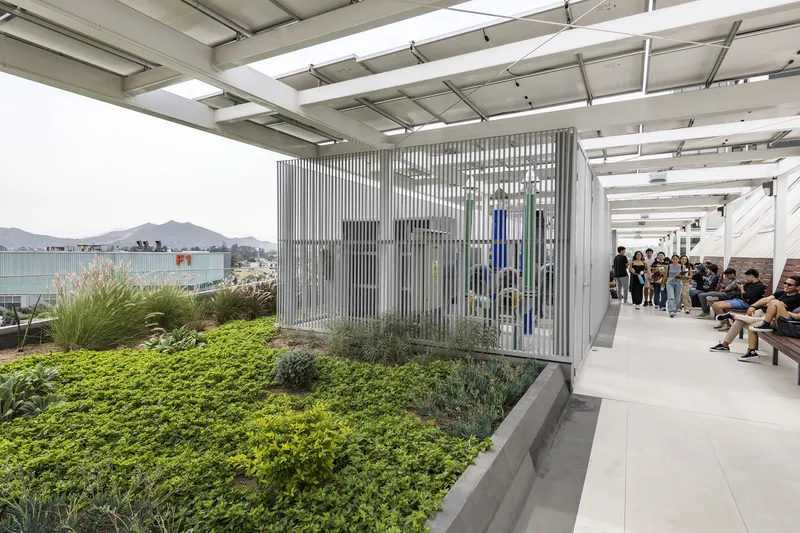
The rooftop, featuring a photovoltaic pergola, not only offers panoramic views of Lima and the Andes but also houses a drone launching pad and outdoor learning environments surrounded by native vegetation.
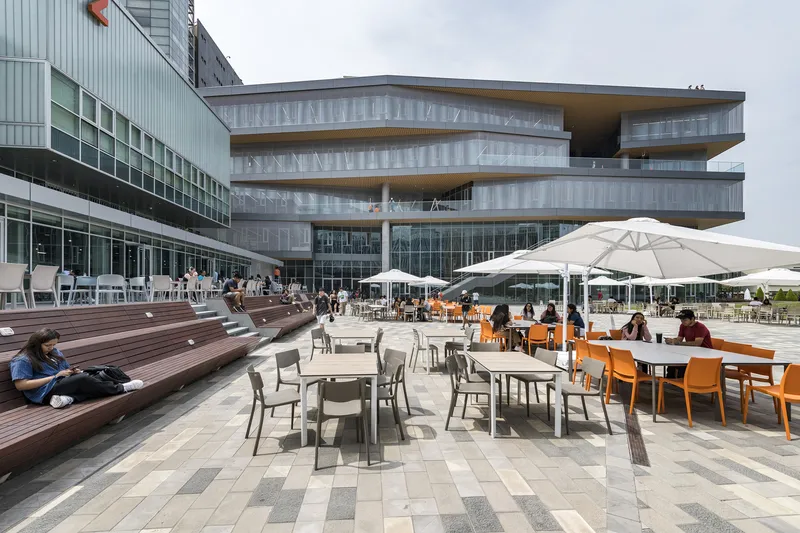
Integrated Learning Environments and Advanced Facilities
This flagship building is a direct expression of the university’s pedagogical shift toward emerging technologies and interdisciplinary engineering practices. By consolidating previously separated departments into a single, cohesive space, Sasaki has created a living lab for innovation and experimentation.
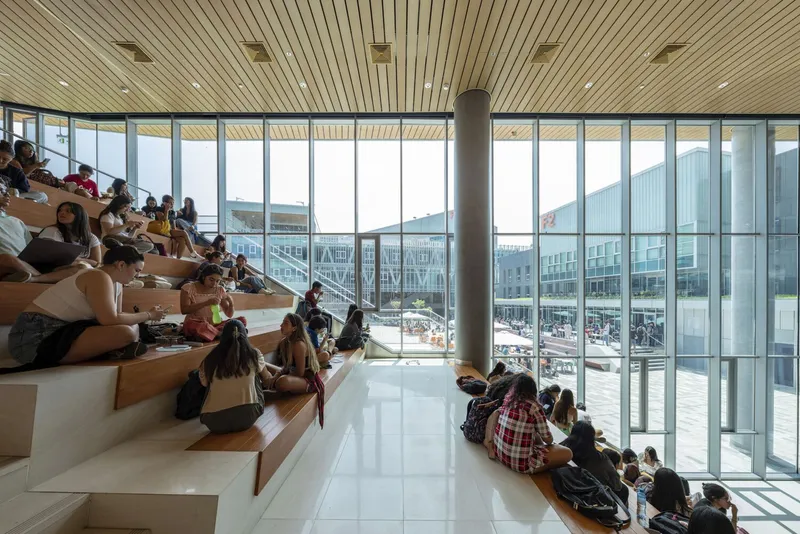
Public zones, such as the amphitheater-style seating and open media labs, blur the lines between formal and informal learning. Faculty offices and technical areas are embedded within lab suites to maximize student-instructor engagement, and open visibility across the interior encourages a sense of shared purpose and discovery.
Sustainable Design and Passive Performance
Environmental performance was a guiding force in the design strategy. The mixed-mode climate control system uses natural ventilation for transient spaces and mechanical conditioning for labs and offices. The building’s undulating form, inspired by solar orientation, creates shaded pockets throughout, reducing heat gain and enhancing comfort.
A double-skin glass façade, protected by an aluminum rod screen, maximizes transparency while mitigating solar exposure. This creates a visual dialogue between the collaborative interior spaces and the campus landscape, while maintaining thermal performance and daylight control.
Part of a Larger Vision for Campus Transformation
The Engineering Innovation Center is one of four signature buildings realized from Sasaki’s comprehensive master plan for the Universidad de Lima. This forward-looking framework establishes design guidelines for the next two decades, aiming to optimize existing campus assets while introducing a new generation of academic, infrastructural, and public spaces.
By prioritizing sustainable architecture, digital innovation, and community interaction, the master plan and its architectural executions position Universidad de Lima as a leader in educational excellence and regional development.
Project Details
- Project Name: Engineering Innovation Center
- Location: Lima, Peru
- Architect: Sasaki
- Completion Year: 2023
- Area: 92,000 ft²
- Client: Universidad de Lima
- Main Contractor: Cosapi
- Structural Engineering: GCAQ, Studio NYL
- MEP Engineering: AT Consultores
- Sustainability Consultant: SUMAC
- Lighting Design: LPLED
Materials and Products
- Fiber Cement Panels by Swisspearl (Carat and Largo series)
- Exterior systems by Fundermax, STACBOND
- Windows and glass by TVITEC, Exlabesa
- Interior finishes by Forbo, Hunter Douglas
- Smart systems and technology by Crestron, Current
- Fabrication and concrete by UNICON




Popular Articles
Popular articles from the community


Play: Fragments of Their World
Familiar architecture becomes modular playground design, creating safe spaces where displaced children can learn, connect, imagine and play.

Co-Life: Senior Housing Design That Reconnects Older Adults With the City
Co-Life reimagines senior housing design through healing gardens, shared streets, workshops, and a sustainable community across generations.

The Musturak Paradise: Senior Living Architecture for a Connected Future in Temara, Morocco
The Musturak Paradise reimagines senior living architecture in Temara via private homes, social spaces, culture, community, and shared care.

The Earth Pod: 3D Printed Homes for Resilient Refugee Communities
The Earth Pod reimagines refugee housing through 3D printed homes made from clay, combining resilience, self-sufficiency, and rapid shelter.


Similar Reads
You might also enjoy these articles


Hodi-Mandai Geram
Project Function: Preservation and revitalization of the Intangible heritage and socio-spatial identity of the Hodi by Housing, Cultural Memory Center, Sacred Grove, landscape, local tourism economy


Olio Towers: A Mid-Rise for Performers That Fuses Housing, Rehearsal, and Stage
Located blocks from Houston's Theater District, this modular tower stacks living units around a central performance atrium.

Oasis: Modular Green Housing Carved into Dhaka's Urban Fabric
A shortlisted Plugin Housing entry reclaims unauthorized settlements in Dhaka with stepped concrete volumes, green roofs, and ventilation-driven design.

Black Hole: A Floating Megastructure for the Post-Physical Era
Emiliano Mazzarotto envisions a spherical, self-scaling arena where e-sports, digital hotels, and holographic stadiums replace traditional public space.


Explore Educational Building Competitions
Discover active competitions in this discipline



Challenge to design public laboratory


Challenge to reimagine the Iron Throne


Photograph architecture without architects


Illustrate the lost glory of Angkor Wat - Render Challenge
Comments (0)
Please login or sign up to add comments
No comments yet. Be the first to comment!