

Exploring architecture theory through design experimentation
Unwinding Classics - Result Story


Background
In architecture, a theory is not divorced from practice, rather theory and practice are inseparable. To design a building, an architect needs a set of concepts and ideas to guide their actions. They may be traditional conventions, experimental structural concepts, or aesthetics. Similarly, theory ultimately relies on practice, to test its hypotheses and assumptions.
Designing as a process is continuous and, when it comes to designing buildings (architecture) the process originates from an idea/inspiration and develops on the theory acquired over a period of time.
While learning in design is advocated through practice and experience, we also study theories as a part of our curriculum. The architectural principles devised by renowned architects in “Theory of Architecture” acts as an ignition point for our ideas and inspirations. Supported by examples of buildings that are already made. The evolution of architecture is captured and updated in the theory.
What if we looked at learning from a new perspective? There are different parts to reach learning but, can we learn beyond reading?
Brief
These are some of the pioneers of the architecture illustrated in each slide whose successful experiments changed the future of design by thinking ahead of their time. Theory of architecture comprises their work to understand what has shaped architecture that we see today. Their understanding of forms, spaces and integration of both has created a benchmark for generations. These could be seen as the initial points of inspiration and theoretical study for the design challenge.
The participants chose any one of the following architects and interpreted their design ideologies into a Pavillion and Exhibition Center.
The ultimate outcome and the process of design aimed to help the participant develop a sense of personal “style” founded on the theories of architecture.
The jury for the competition consisted of esteemed designers, professionals, and academicians from around the world. The Lead Jurors for the competitions were as follows:
Rolf Knudsen, Founder, Studio Roso, Rotterdam, Netherlands
Sophie Nielsen, Founder, Studio Roso, Rotterdam, Netherlands
Charlotte Hansson, Partner/Architect, LCLA office, Norway

Some of the Best of competition projects as follows:
Winning Project: Paths Uncharted
By: Aditya Vijay, Kritik Kapoor, Rashi Desadla & Nancy Sahu
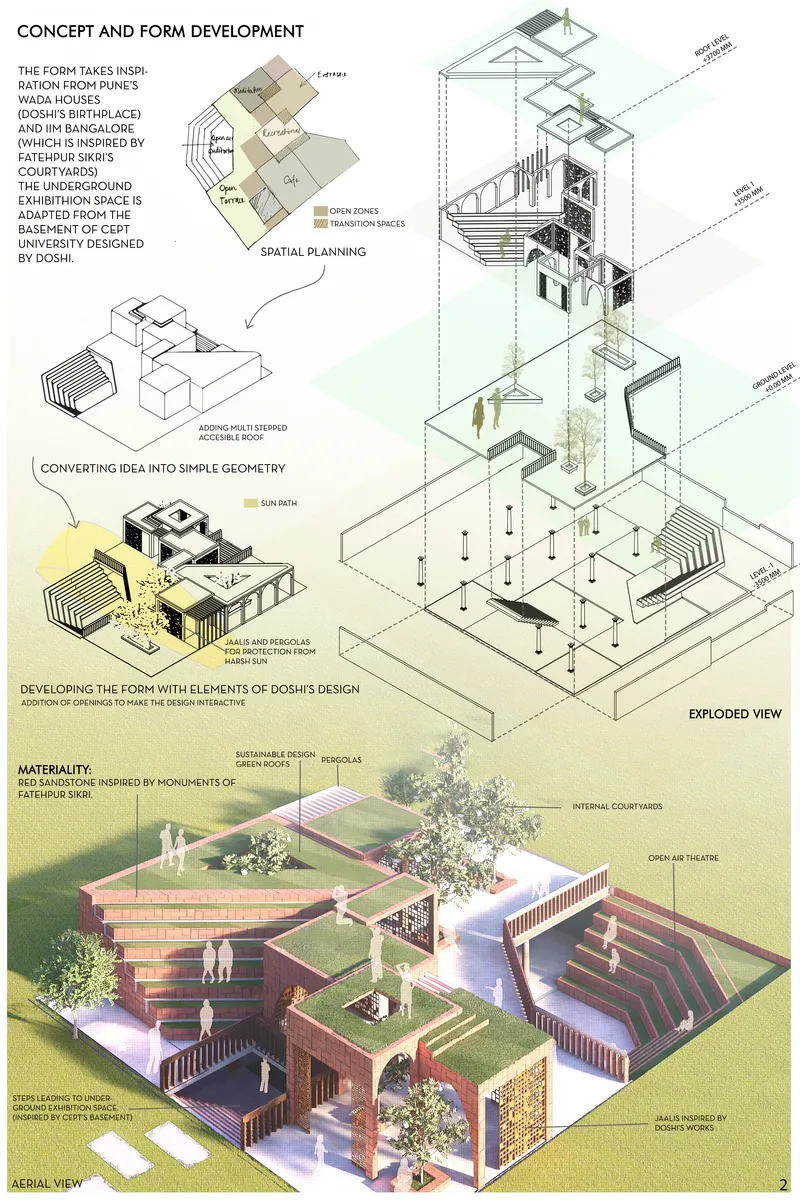
Description: This pavilion/exhibition space is inspired by the philosophies of B V Doshi. It is a truly public space that transcends all barriers of caste, creed, race, and religion. Every space is adaptable, multifunctional, and interactive allowing access to everyone.
-----------------
People’s Choice: B. V. Doshi Pavilion
By: Paulina Samołyk & Monika Zielińska
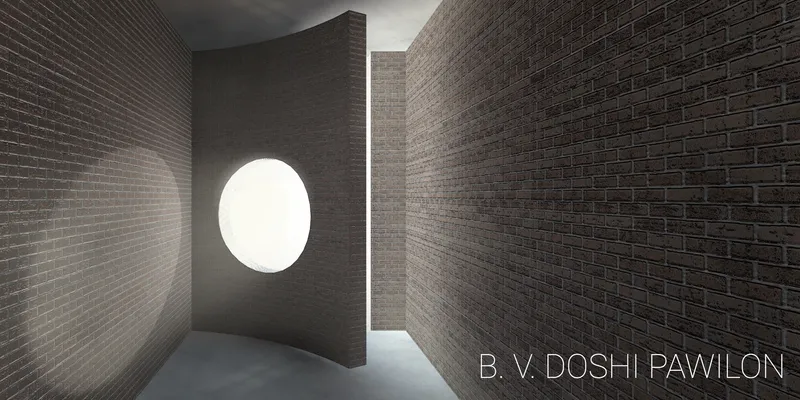
Description: Pavilion created in honor of architect B.V. Doshi
-----------------
Editor’s Choice: EXHIBITION PAVILION OF REPTILES
By: Nonna Iankevich
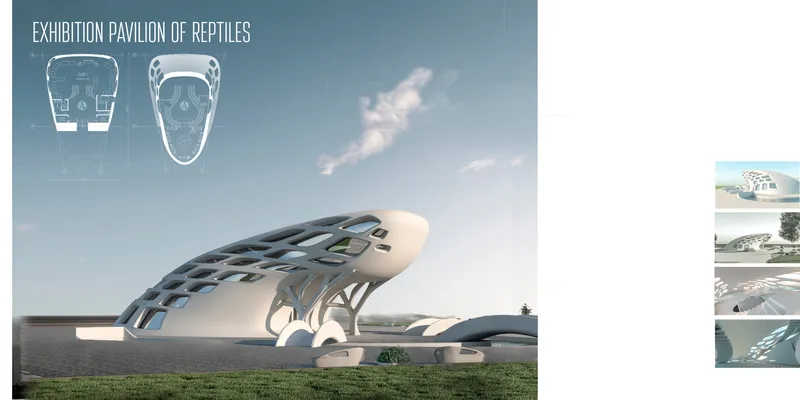
Description: The purpose of the pavilion exterior is to stir emotions. The shape of the building resembles a creature crawling out of the water, so a person can immediately understand the theme of the exhibition. In the interior of the building, smooth flowing lines and shapes together with the light pouring from the many curved windows create a unique atmosphere.
Discover the design brief here:
https://uni.xyz/competitions/unwinding-classics/info/about/
Discover the full results here: https://uni.xyz/competitions/unwinding-classics/entries/
Follow us on social media: Facebook | Instagram | LinkedIn | Twitter | Youtube
Discover other design competitions to participate here: https://uni.xyz/competitions


Popular Articles
Popular articles from the community


Tsunami Convergenics: Turning Catastrophic Ocean Forces into Underwater Housing Infrastructure
A speculative underwater settlement off the coast of Onagawa, Japan, treats tsunamis and typhoons as energy sources rather than threats.

Singing Woman: Contemporary Architecture Inspired by Estonia’s Voice and the Sea
Singing Woman turns Estonia’s song culture into flowing opera house architecture, blending public life, landscape, sea, and national memory.

Manzana Morphosis: Stretching Barcelona's Grid into a Living Landscape for 2050
A radical reworking of the Eixample manzana turns density into a tool for generous public space, vertical ecology, and environmental performance.

Extended Shell: Retrofitting Kolkata's Balconies as Living Urban Thresholds
A modular retrofit system recovers the social and environmental intelligence of Kolkata's historic verandas for contemporary Park Street residents.

Similar Reads
You might also enjoy these articles

The Amber Palace Opera: A Geological Fiction Surfaces on Tallinn's Baltic Waterfront
Pierre Brillard reimagines a Baltic legend as a public landscape, opera house, and waterfront promenade rooted in Tallinn's coastal identity.
Dynamic Modules Shelter: A Telescopic Ring for Mountain Pilgrimage
A circular modular framework of steel, bamboo, and fabric grows vertically with demand, wrapping communal ground in adaptable shelter.
Singing Woman: Contemporary Architecture Inspired by Estonia’s Voice and the Sea
Singing Woman turns Estonia’s song culture into flowing opera house architecture, blending public life, landscape, sea, and national memory.

HYPERBLOCK: Flexible Urban Design for Barcelona’s Future City
HYPERBLOCK reimagines Barcelona as flexible urban design, layering density, daylight, public space and adaptable housing above Cerdà’s grid.

Comments (0)
Please login or sign up to add comments
No comments yet. Be the first to comment!