

Urban Corner Architecture in the Peper Multifunctional Building by Architecten De Bruyn
This article explores how the Peper Multifunctional Building uses urban corner architecture to integrate diverse programs in a compact site.


Redefining the Urban Corner in Aalst’s City Center
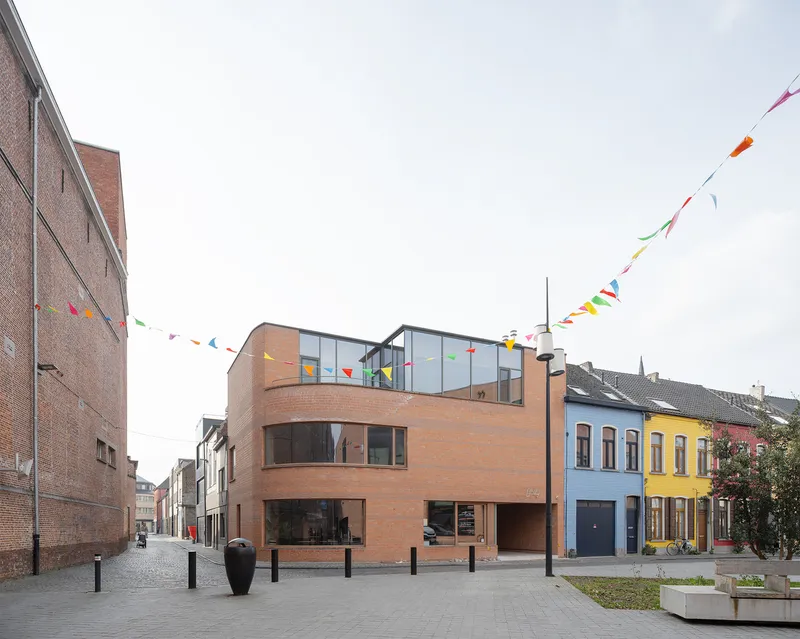
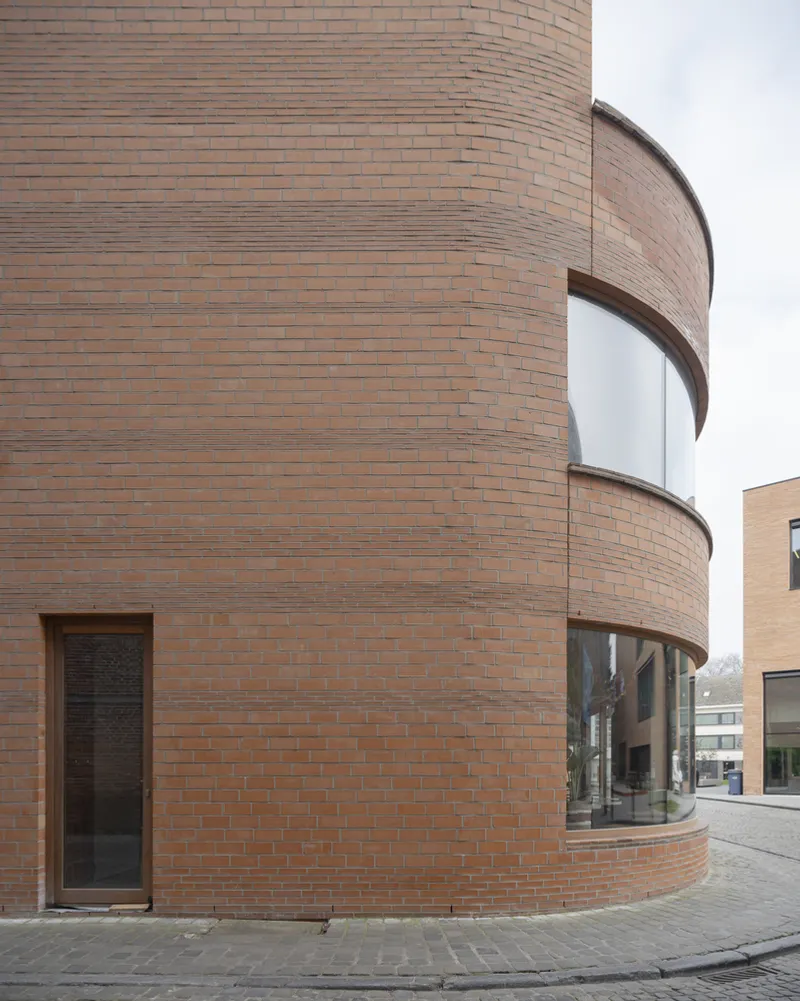
The Peper Multifunctional Building, designed by Architecten De Bruyn, is a striking example of urban corner architecture that revitalizes a compact plot in the heart of Aalst, Belgium. Occupying just 410 m², the project transforms a small-scale corner site into a dynamic, vertically stacked program consisting of a restaurant, co-working space, and residential unit. With sensitivity to context and precision in function, the building reshapes the experience of an urban intersection through minimalist materials and layered transparency.
The Architectural Potential of Urban Corners
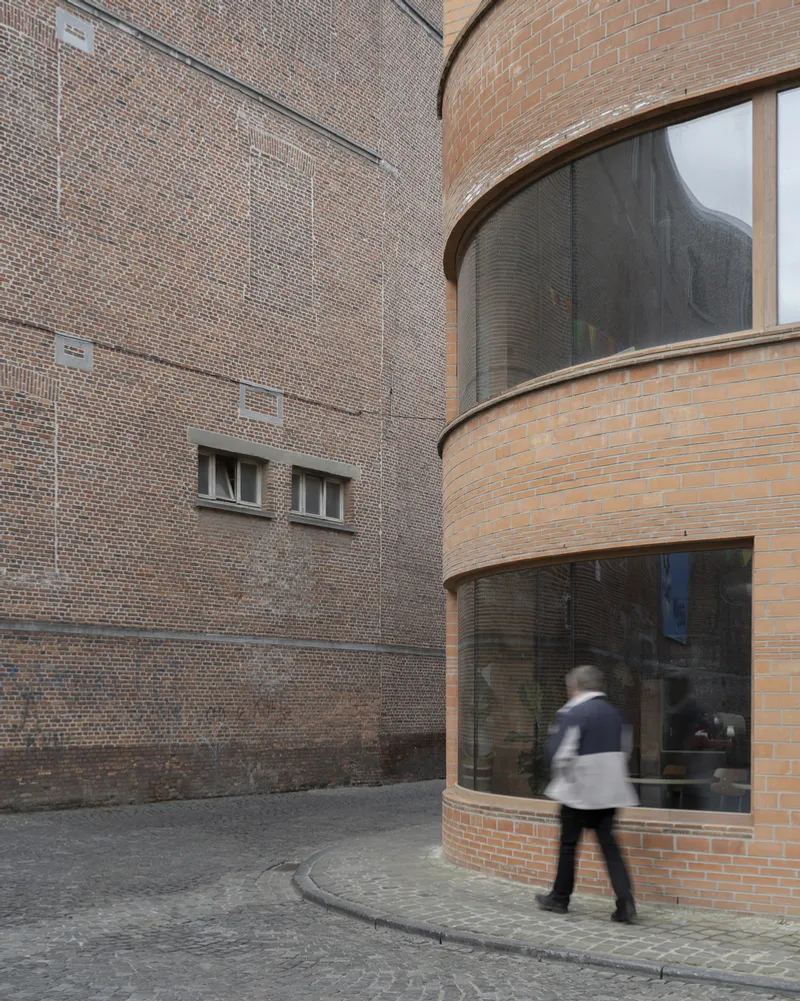
Unlike public squares that sprawl outwards, corners mark transitions, directions, and urban flow. This building embraces its corner location as a foundational concept. Rather than treating the site’s irregularity as a constraint, Architecten De Bruyn uses it as an architectural opportunity to create intersections between functions, circulation, and visibility. The building forms a sculpted response to the urban grain of Aalst, maximizing its presence without overwhelming its surroundings.
Compact Stacking and Programmatic Integration
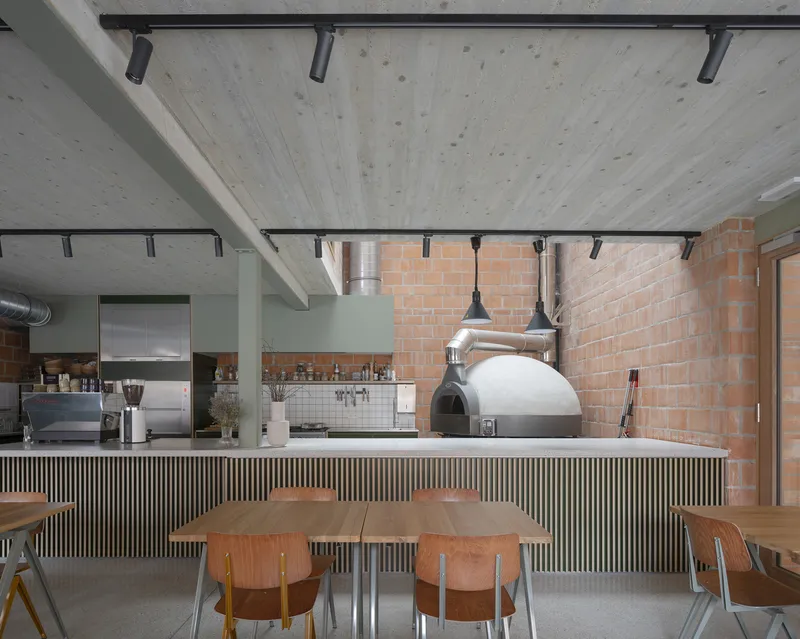
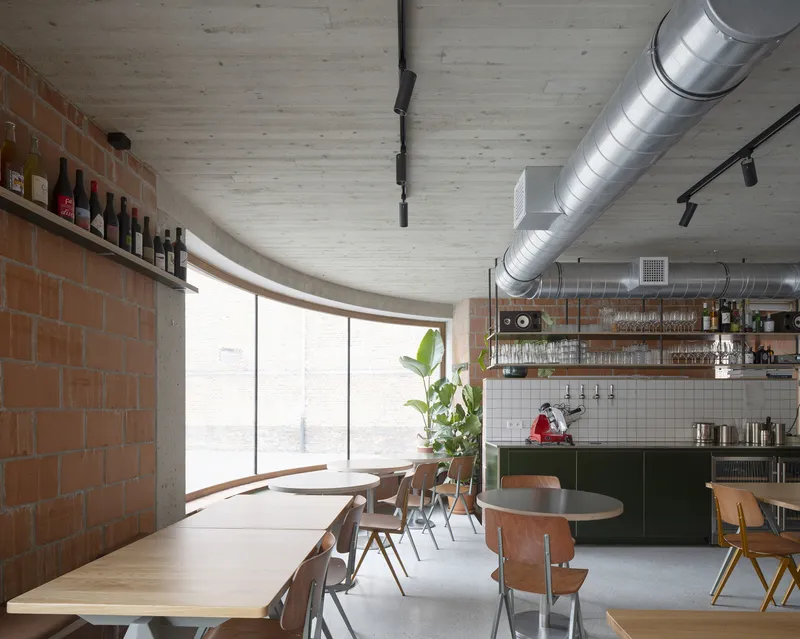
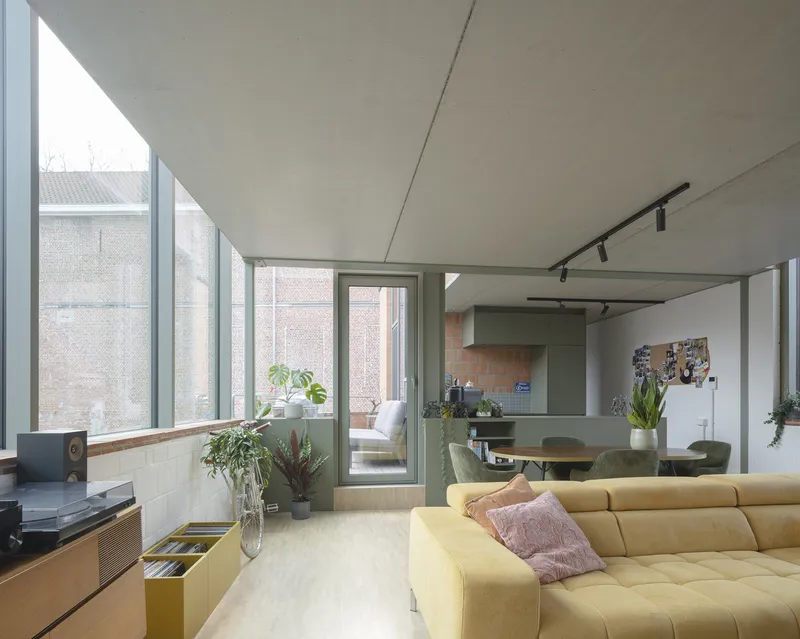
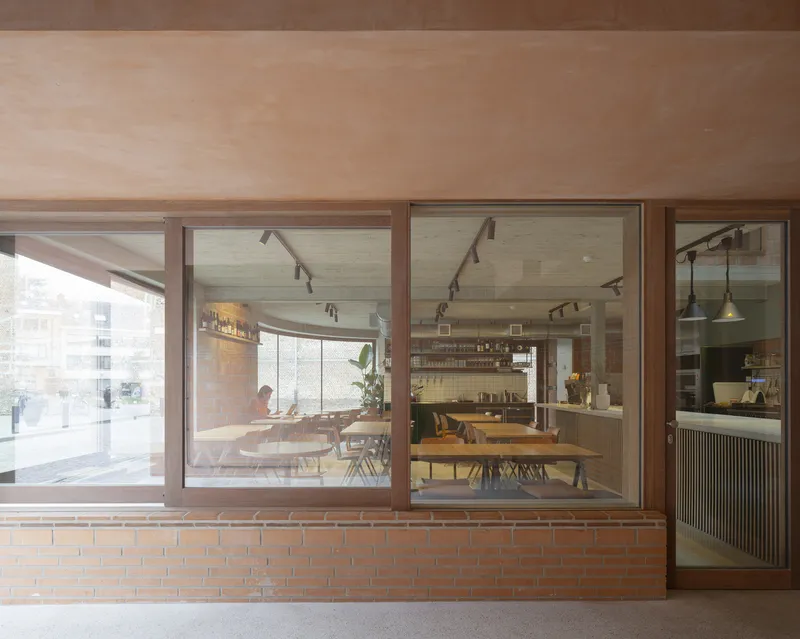
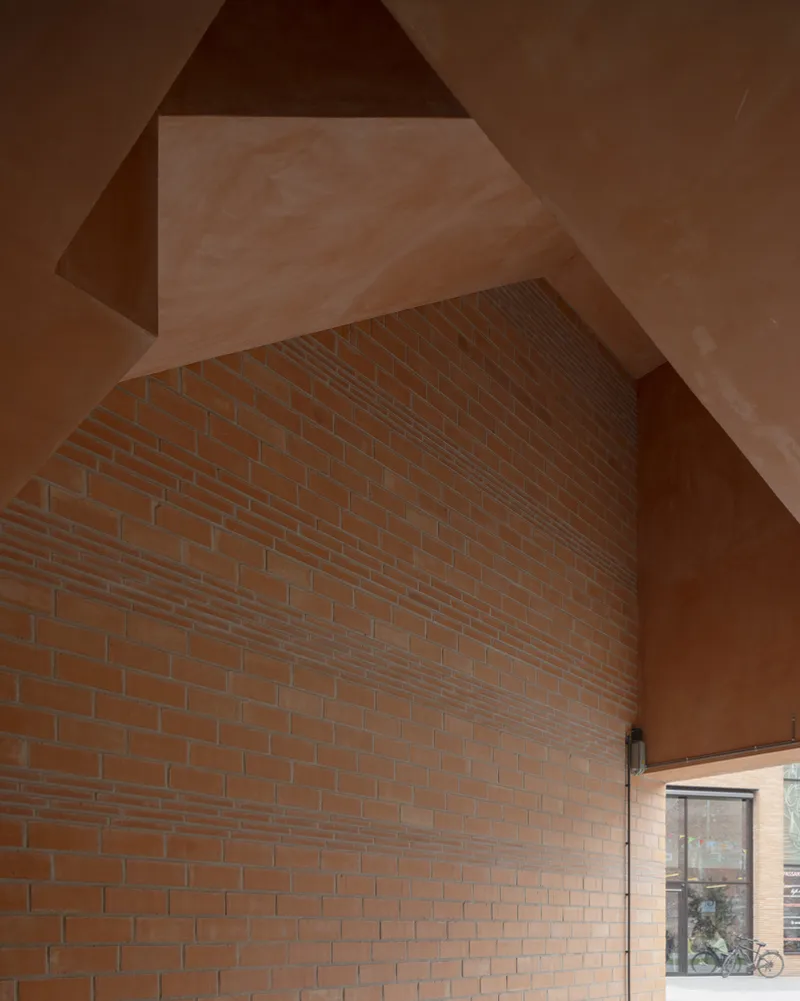
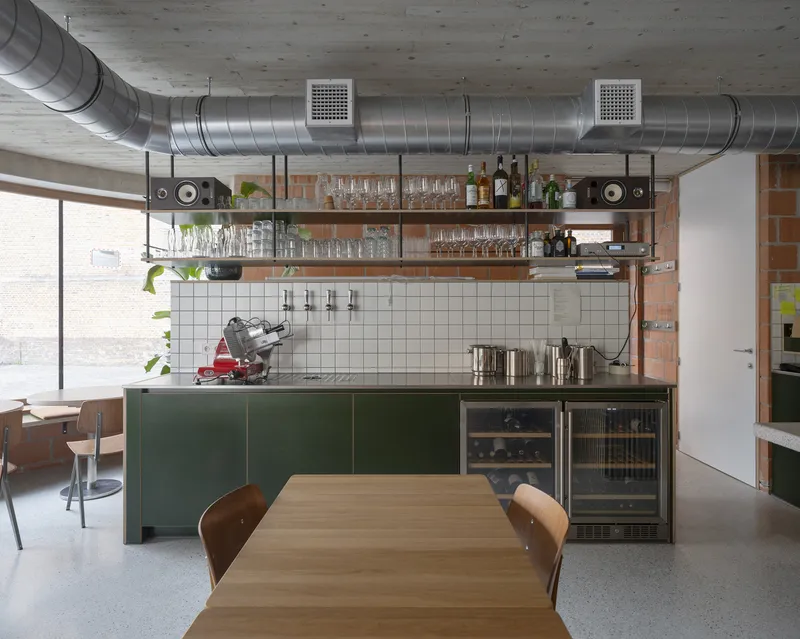
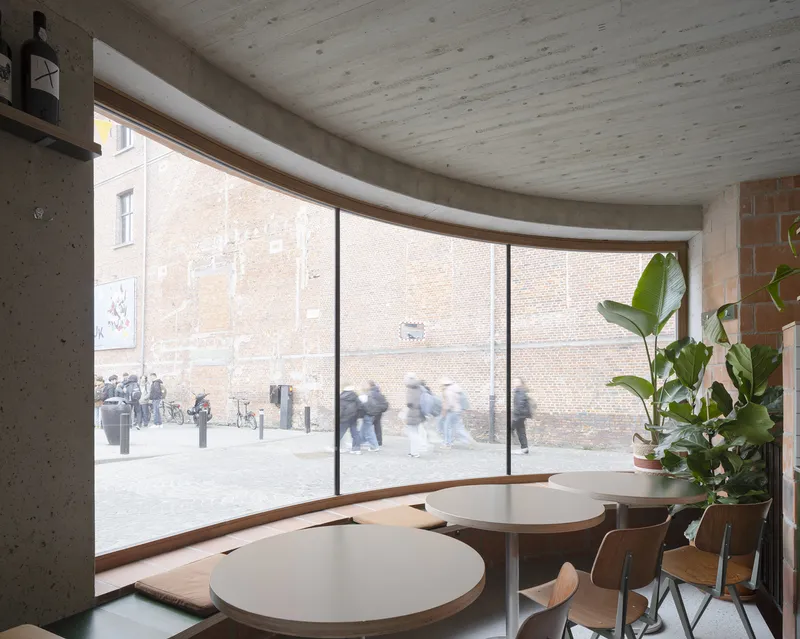
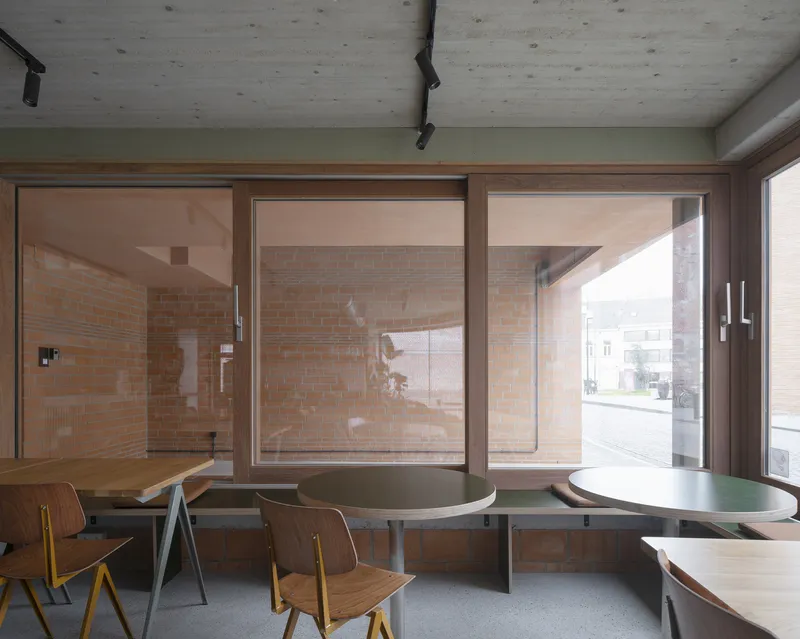
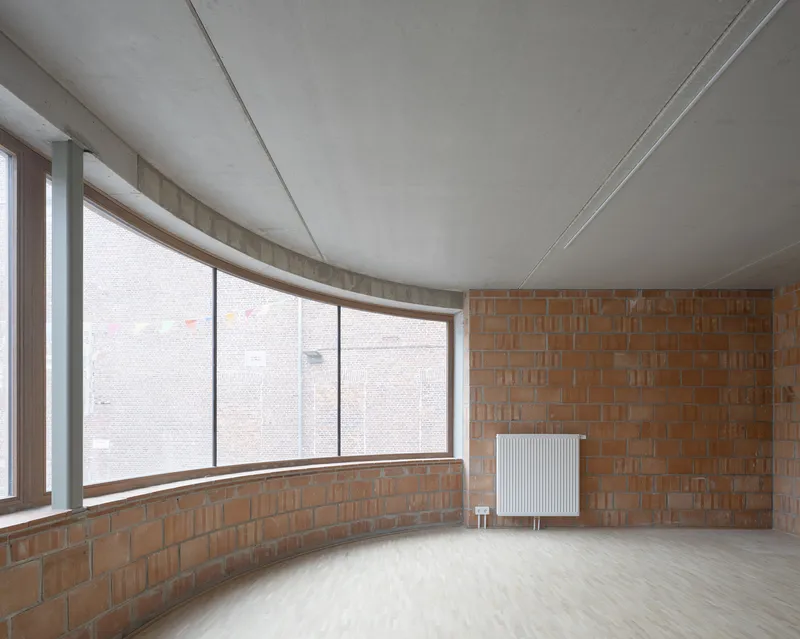
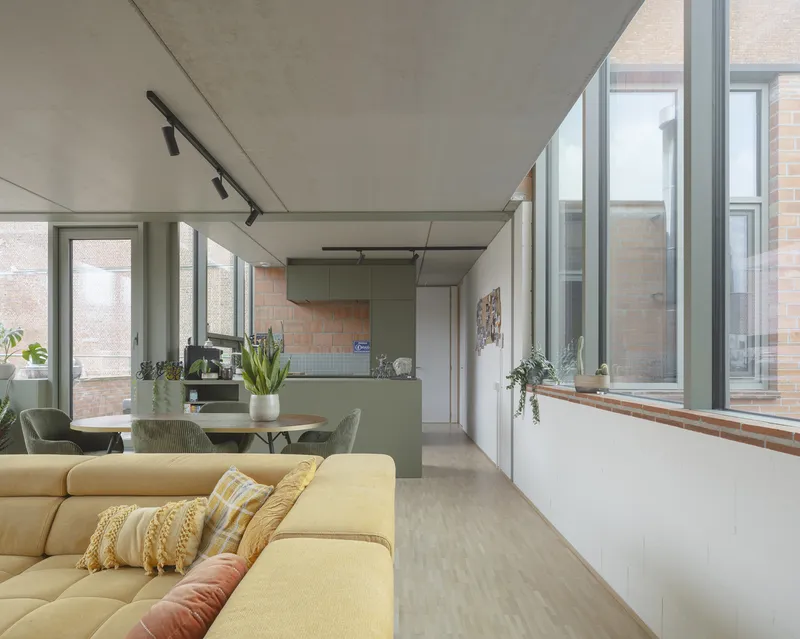
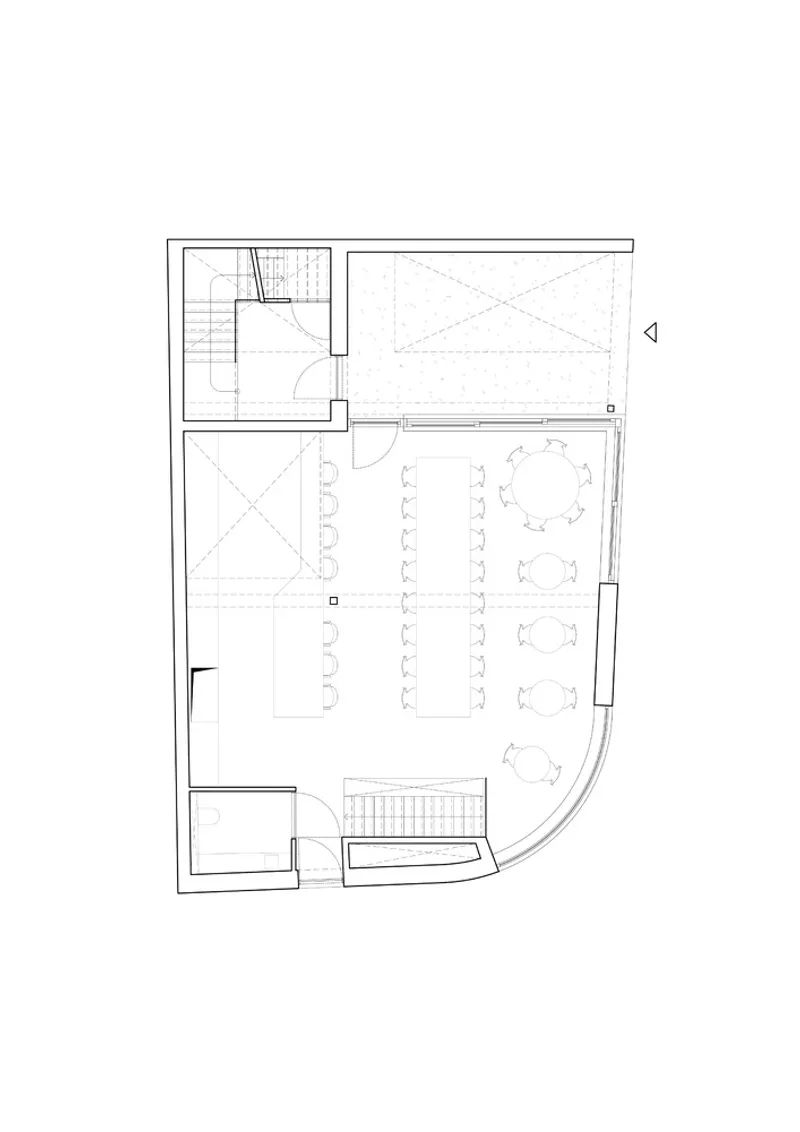
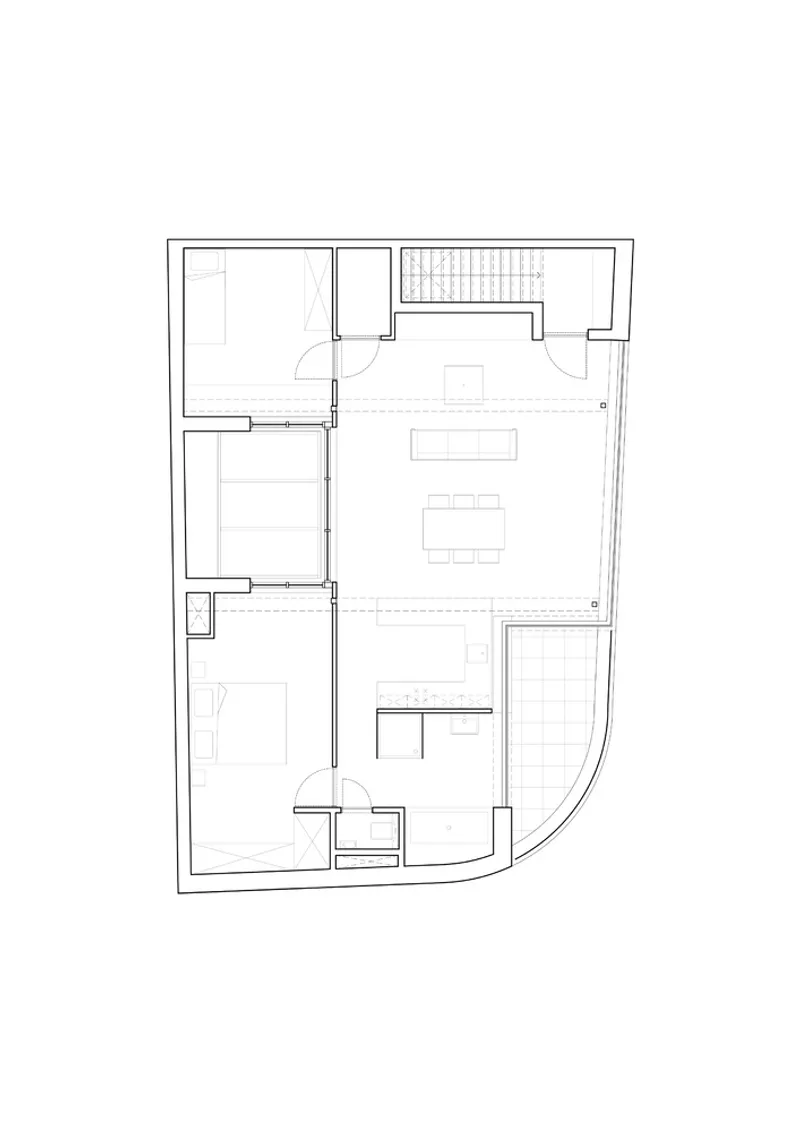
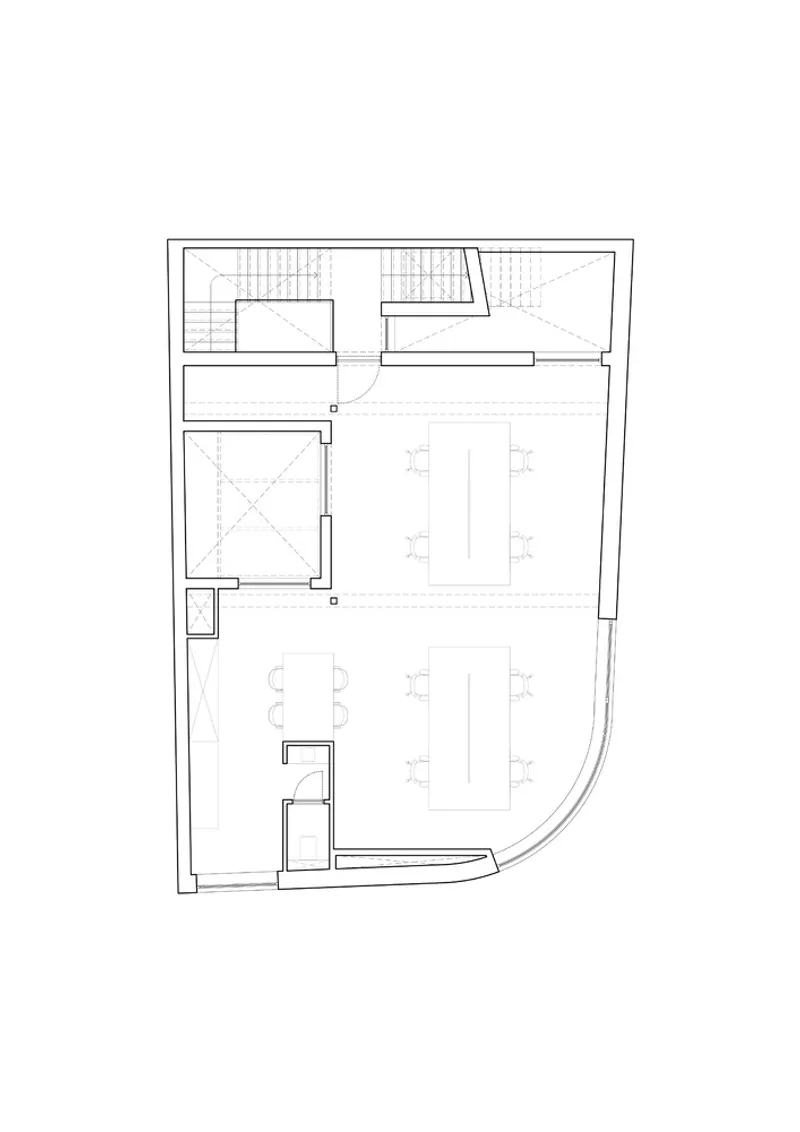
The project is structured as a pared-down vertical stack, with each floor carefully programmed to serve a distinct yet interconnected function. The ground and underground floors house ‘Wally,’ a restaurant that prioritizes openness and light. Seating-height window openings blur the boundary between interior dining and street activity, creating a transparent threshold that invites engagement. On the first floor, a multifunctional co-working space extends the building’s social functionality, offering views over the square and direct access to the covered entrance zone. At the top, a compact yet fully-equipped two-bedroom flat completes the stack, illustrating the site’s capacity for mixed-use living.
The Role of Light and Transparency
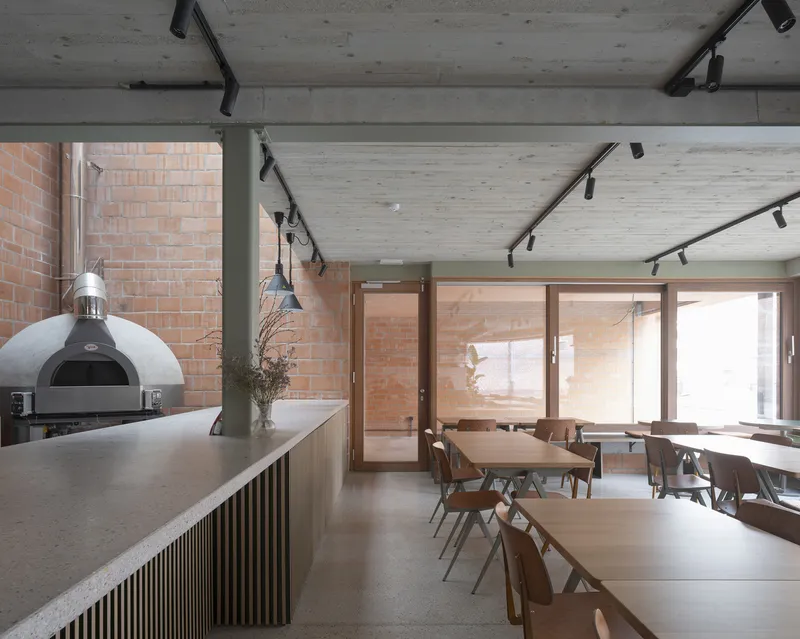
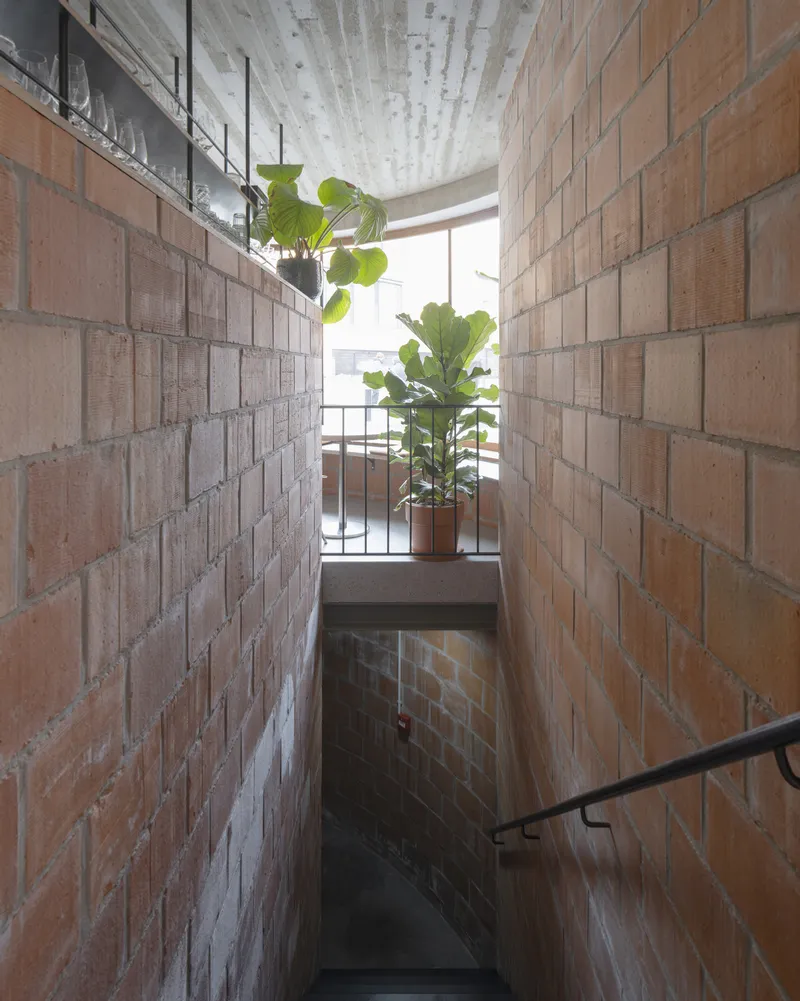
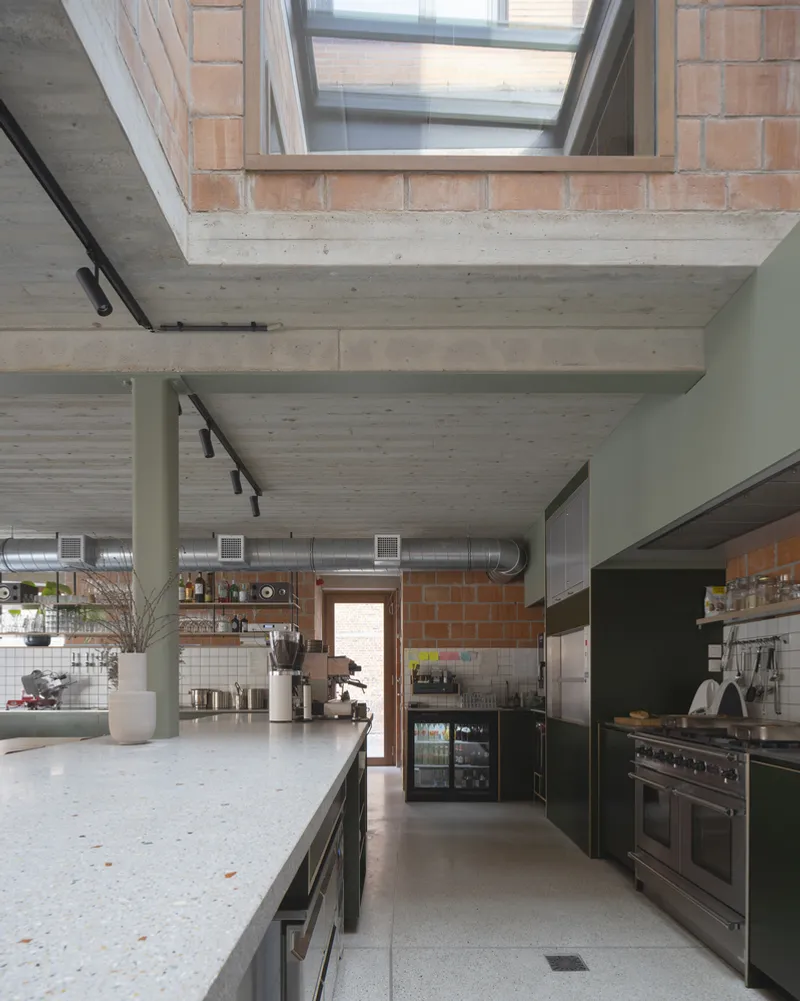
Central to the building’s spatial coherence is a patio and internal light street that penetrates all levels. This architectural gesture not only enhances vertical connection and natural light access but also reinforces the sense of openness within an otherwise compact structure. Transparency—both literal and conceptual—guides the design, allowing each function to feel autonomous yet unified within the whole.
Honest Materials and Expressive Simplicity
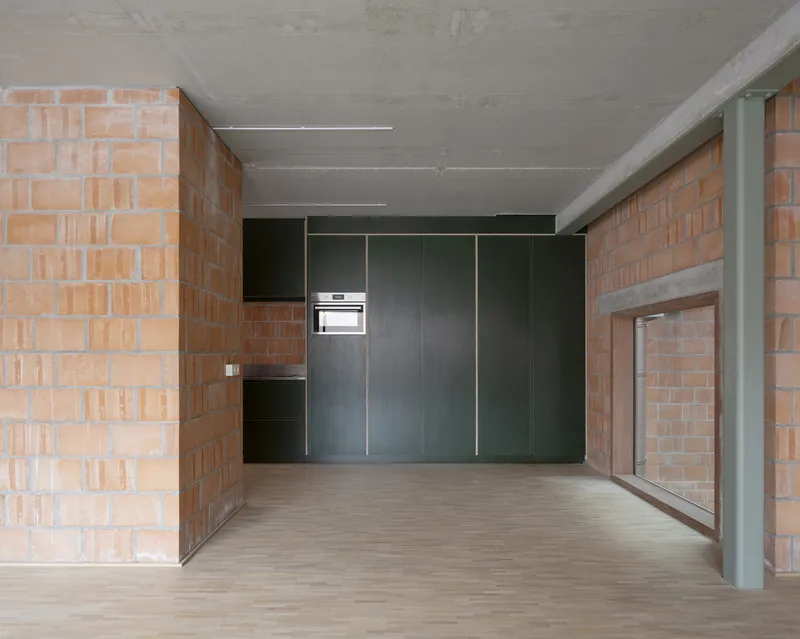
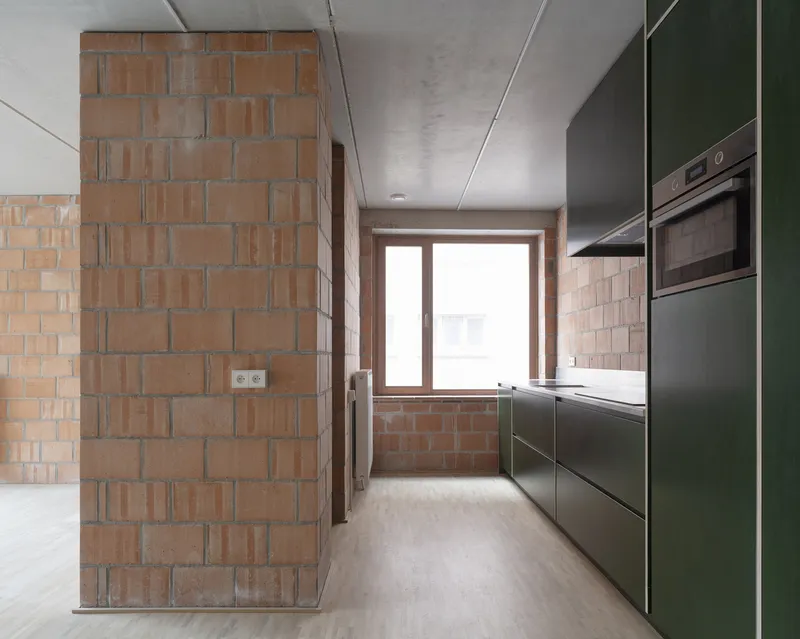
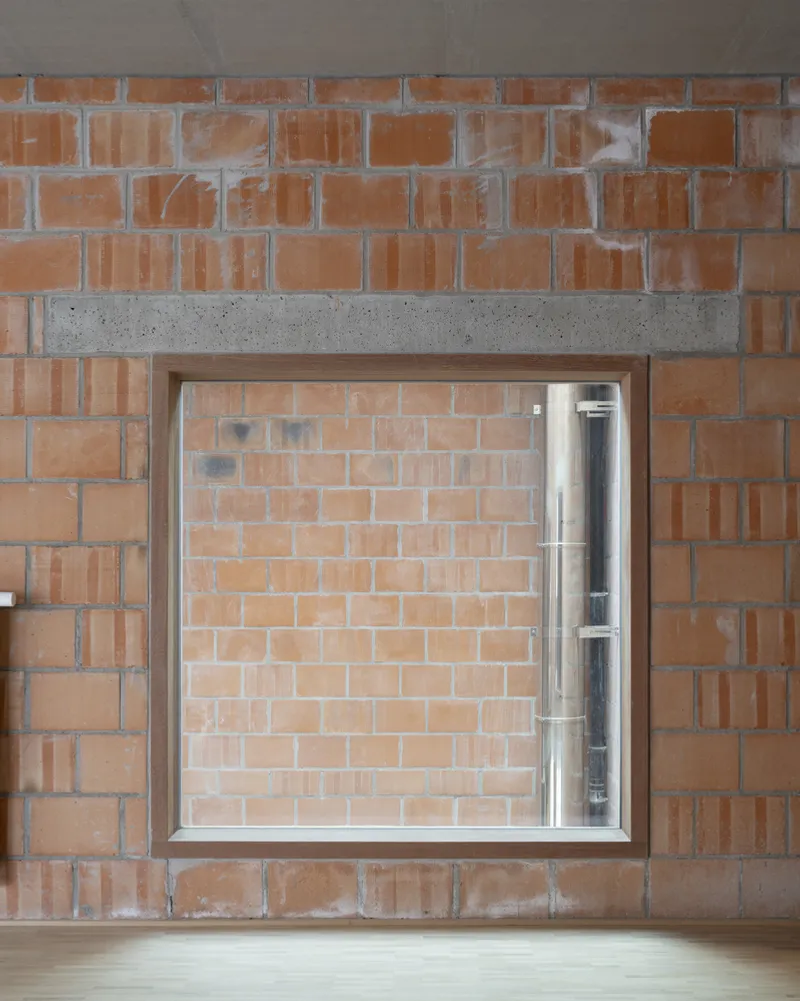
Material choices reflect the project's commitment to authenticity and economy. Spanish brick, used in varying formats and color tones, gives the façade texture and rhythm. Different masonry dressings contribute a subtle playfulness to the exterior. The structure is celebrated in its raw form: load-bearing brick walls, exposed concrete, and wooden detailing reveal the craft behind the construction. Interior finishes such as colorful terrazzo floors and green-grey steel accents add character without excess. The architecture embraces a rough-but-refined aesthetic, allowing material honesty to define its identity.
A Modest Landmark in the Urban Fabric
Though understated, the Peper Multifunctional Building asserts itself as a contemporary interpretation of the urban corner. It harmonizes with neighboring structures while standing out through its material articulation and spatial logic. It does not seek grandeur, but rather clarity, cohesion, and community engagement. This building demonstrates how thoughtful design can transform even the smallest urban sites into functional, flexible, and beautiful spaces.
All Photographs are works of Johny Umans




Popular Articles
Popular articles from the community


Conexión: Biophilic Design Reimagines High-Rise Living in Hong Kong
Conexión reimagines high-rise living in Hong Kong through biophilic design, green facades, shared spaces, daylight, water and nature within.

The Ocean Hive: Sustainable Architecture for a Self-Sufficient Civilization at Sea
The Ocean Hive imagines sustainable architecture at sea, where modular habitats, algae, wave power and ocean waste sustain a growing colony.

Co-life: Sustainable Architecture for Age-Friendly Community Living
Co-life reimagines sustainable architecture for seniors through courtyards, rammed earth, shared gardens, and spaces designed for belonging.

The Earth Pod: 3D Printed Homes for Resilient Refugee Communities
The Earth Pod reimagines refugee housing through 3D printed homes made from clay, combining resilience, self-sufficiency, and rapid shelter.

Similar Reads
You might also enjoy these articles


Hodi-Mandai Geram
Project Function: Preservation and revitalization of the Intangible heritage and socio-spatial identity of the Hodi by Housing, Cultural Memory Center, Sacred Grove, landscape, local tourism economy


Olio Towers: A Mid-Rise for Performers That Fuses Housing, Rehearsal, and Stage
Located blocks from Houston's Theater District, this modular tower stacks living units around a central performance atrium.

Oasis: Modular Green Housing Carved into Dhaka's Urban Fabric
A shortlisted Plugin Housing entry reclaims unauthorized settlements in Dhaka with stepped concrete volumes, green roofs, and ventilation-driven design.

Black Hole: A Floating Megastructure for the Post-Physical Era
Emiliano Mazzarotto envisions a spherical, self-scaling arena where e-sports, digital hotels, and holographic stadiums replace traditional public space.


Explore Geurst & Schulze Architecten Competitions
Discover active competitions in this discipline



Challenge to reimagine the Iron Throne


Photograph architecture without architects


Illustrate the lost glory of Angkor Wat - Render Challenge


Design challenge to reuse E-waste
Comments (0)
Please login or sign up to add comments
No comments yet. Be the first to comment!