
Urban Pause Under a Sloping Roof: The Architectural Identity of The 1999’s Coffee
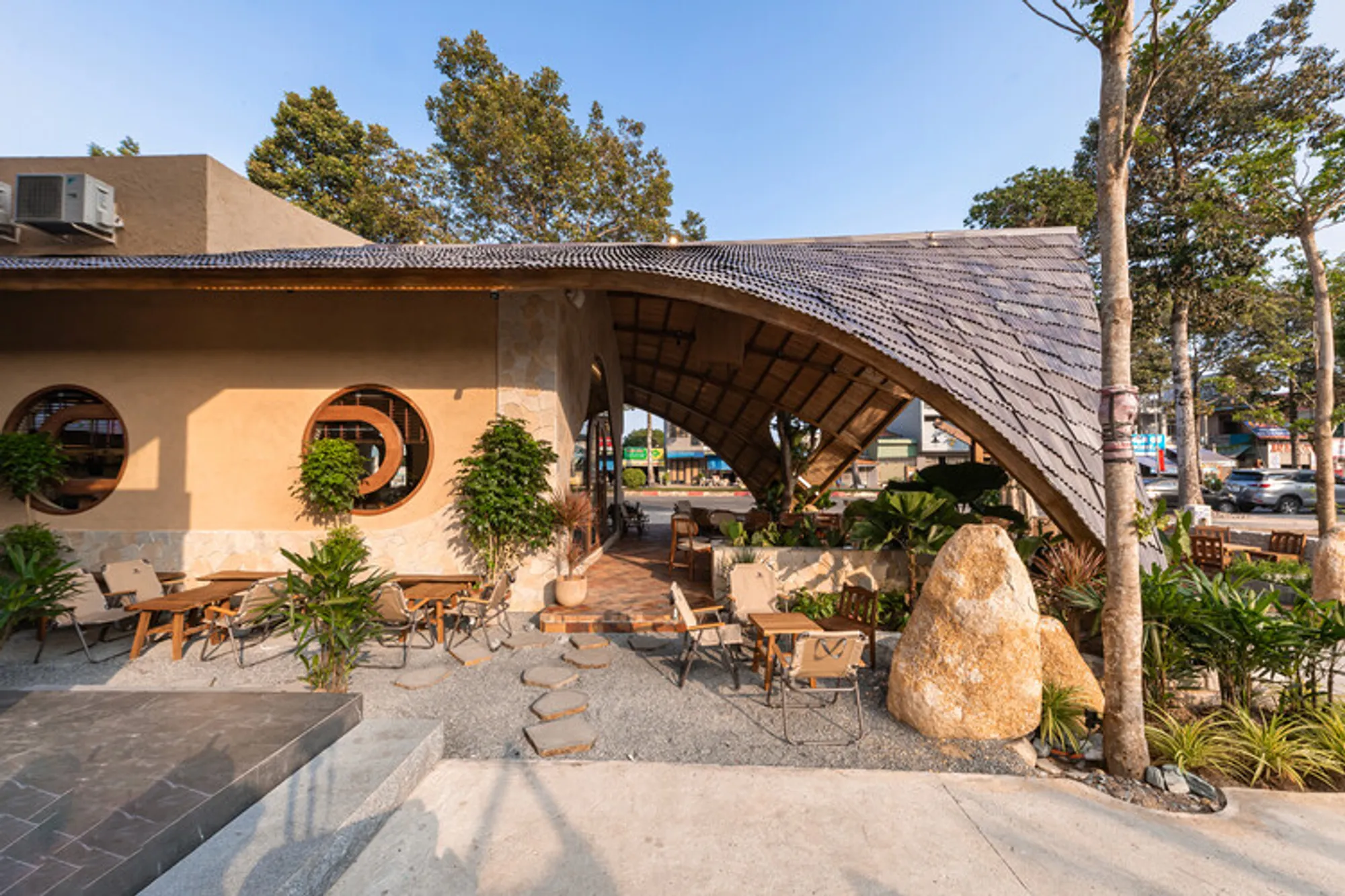
Corner café in Ho Chi Minh City featuring dramatic sloping roof, fish-scale cladding, and warm natural materials creating urban retreat.


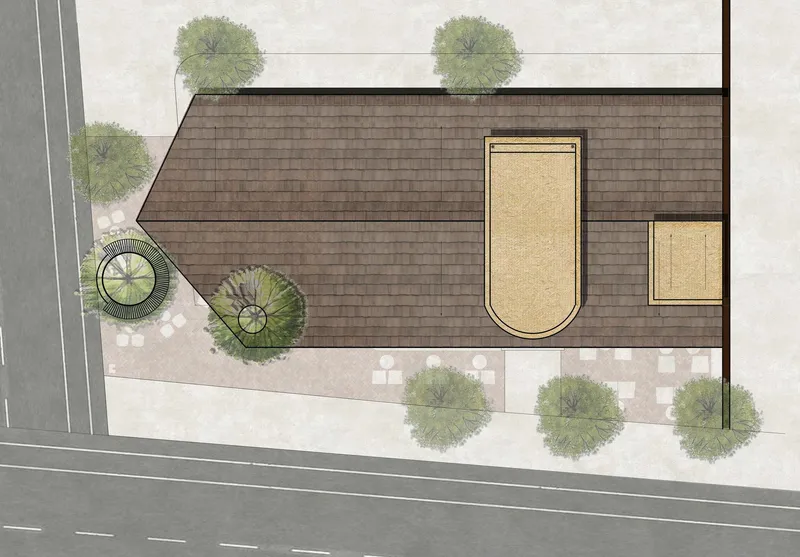
Completed in 2025 in Ho Chi Minh City, Vietnam, The 1999’s Coffee by KQI Architect occupies a prominent corner lot along one of the busiest streets in Bà Rịa Ward. With a built area of 210 square meters, the café establishes itself not only as a commercial venue but also as an architectural landmark within a rapidly developing urban district. Conceived as a spatial retreat amid the city's constant motion, the project balances expressive form, climatic responsiveness, and material warmth to create a distinctive urban pause.
A Corner Landmark in a Dynamic District
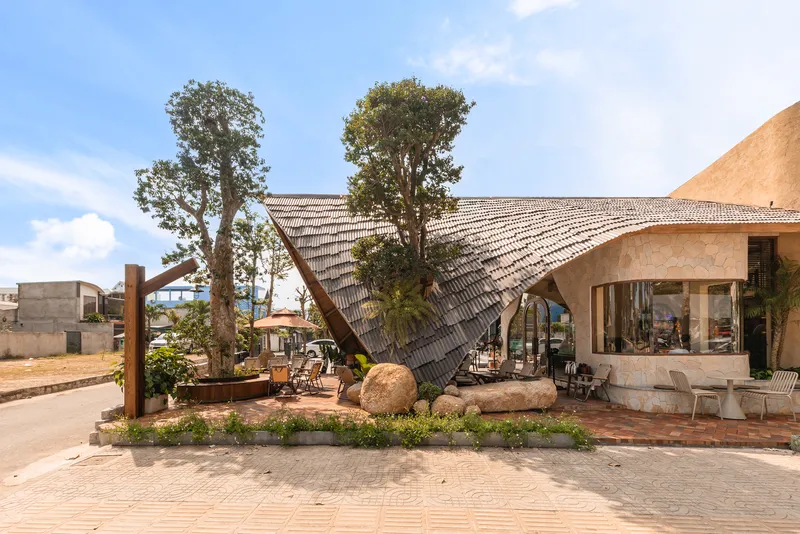
Situated at a high-visibility intersection, the café leverages its strategic position to maximize openness and engagement with the surrounding streetscape. Instead of turning inward, the design embraces its corner condition, opening generously in multiple directions. This approach enhances permeability, encourages visual connectivity, and establishes a welcoming presence from all sides.
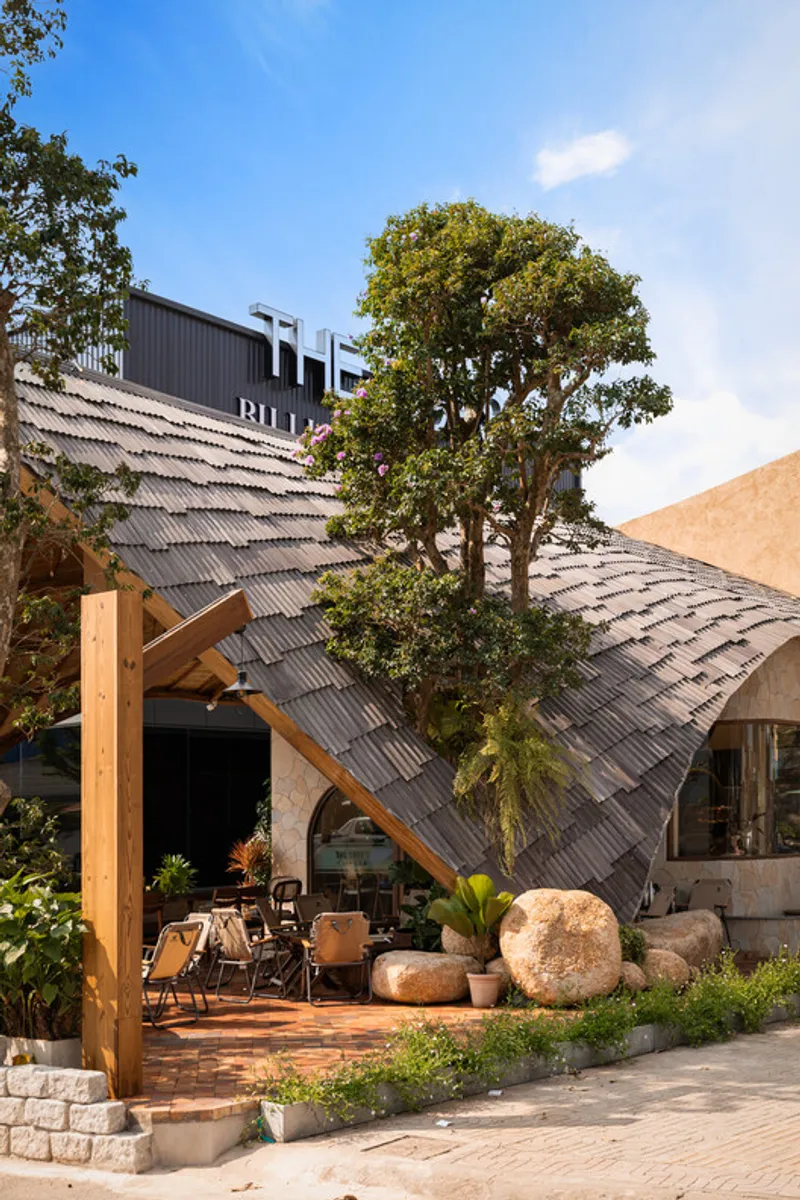
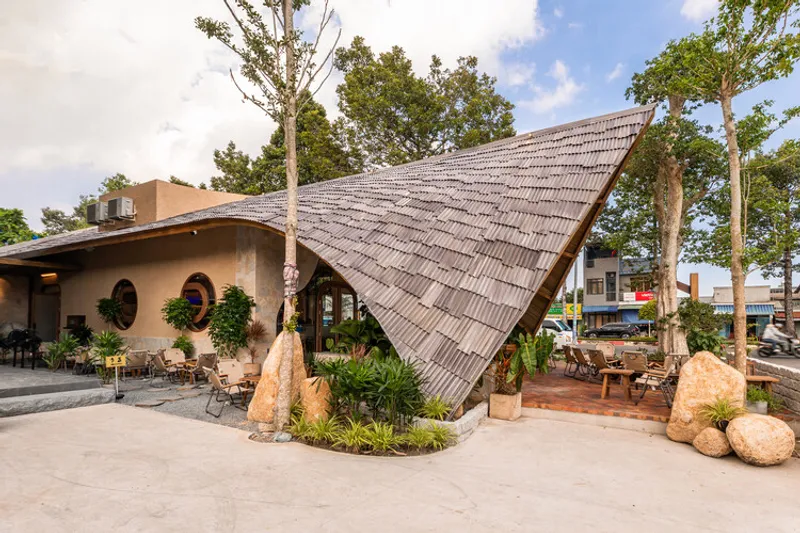
In a dense and fast-paced environment, architecture often competes for attention. However, rather than relying solely on signage or ornamentation, KQI Architect shaped the building’s massing to create identity. The result is a structure that is immediately recognizable yet harmonious with its context.
The Signature Sloping Roof
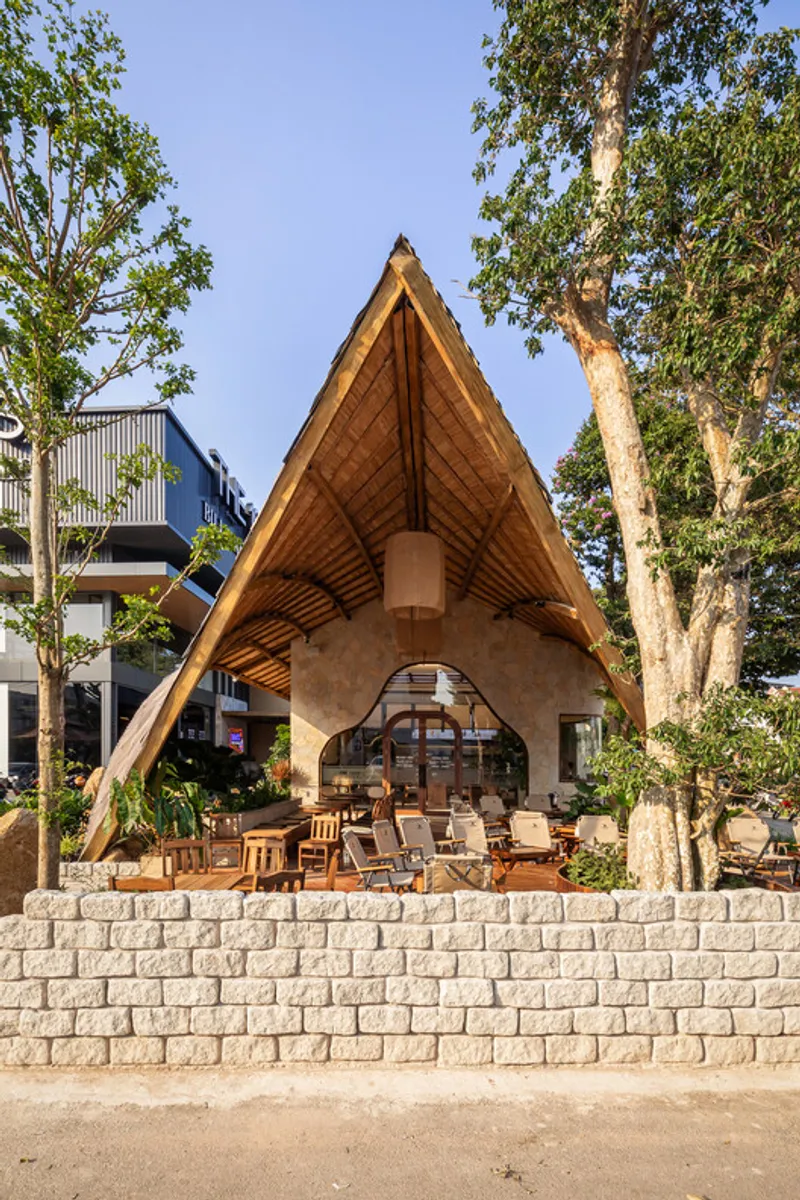
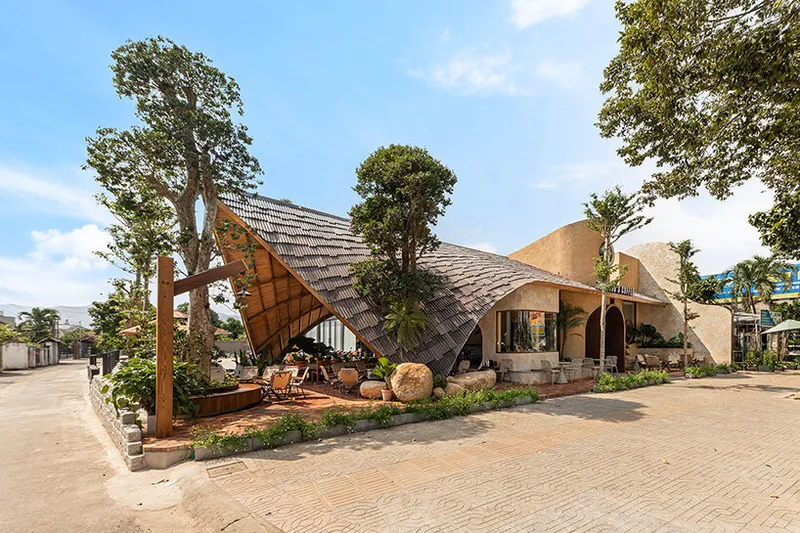
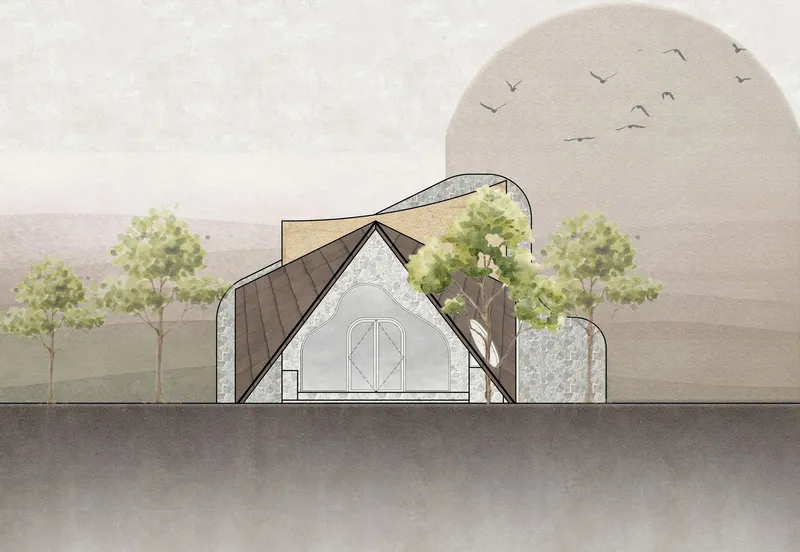
The most defining architectural gesture is the long, west-facing sloping roof. Extending dramatically across the structure, the roof not only shapes the building’s silhouette but also performs critical environmental functions. Given Vietnam’s tropical climate and intense western sun exposure, the extended slope provides effective shading throughout the day.
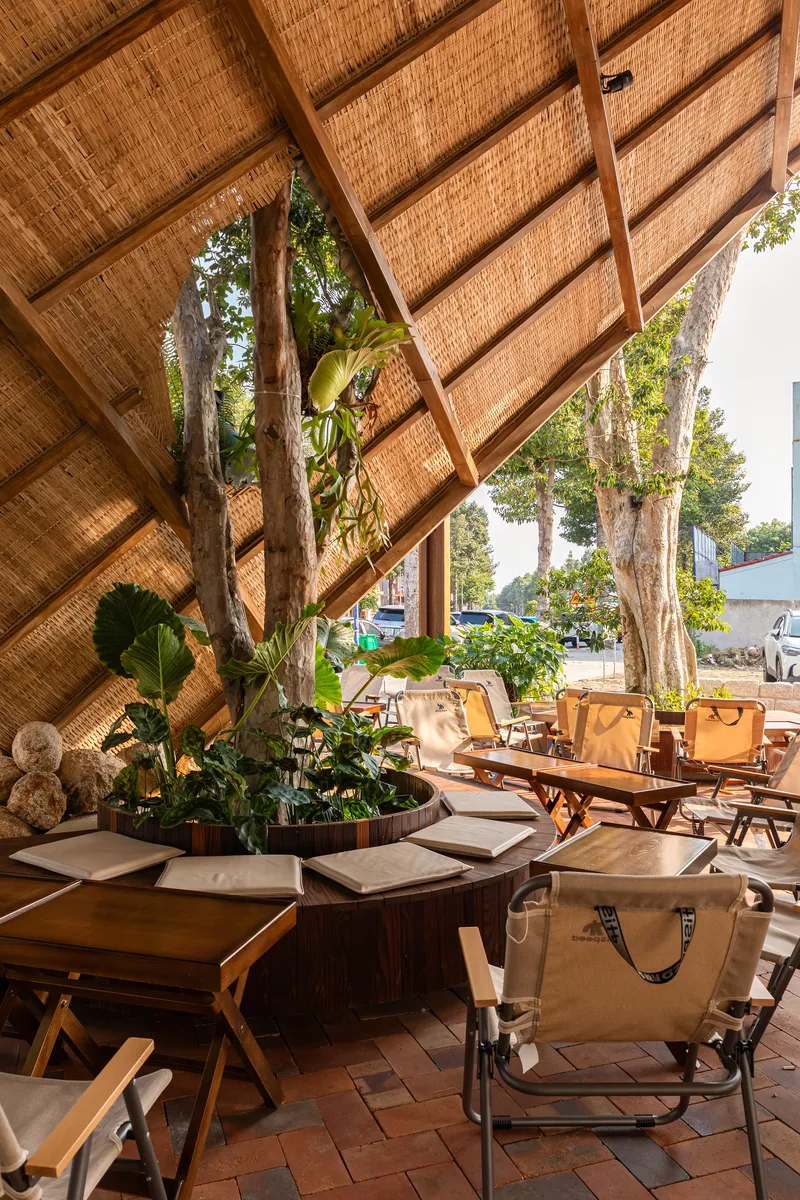
As sunlight shifts from morning to late afternoon, it glides along the elongated roofline, emphasizing the café’s asymmetrical volumes. The interplay between light and form animates the façade, creating dynamic visual interest without excessive complexity.
The roof is clad in small metal sheets arranged in varying colors, shapes, and sizes. Layered in a pattern reminiscent of fish scales, the cladding introduces texture and depth while reinforcing the building’s handcrafted aesthetic. This detail has quickly become the café’s signature visual element, distinguishing it within the urban fabric.
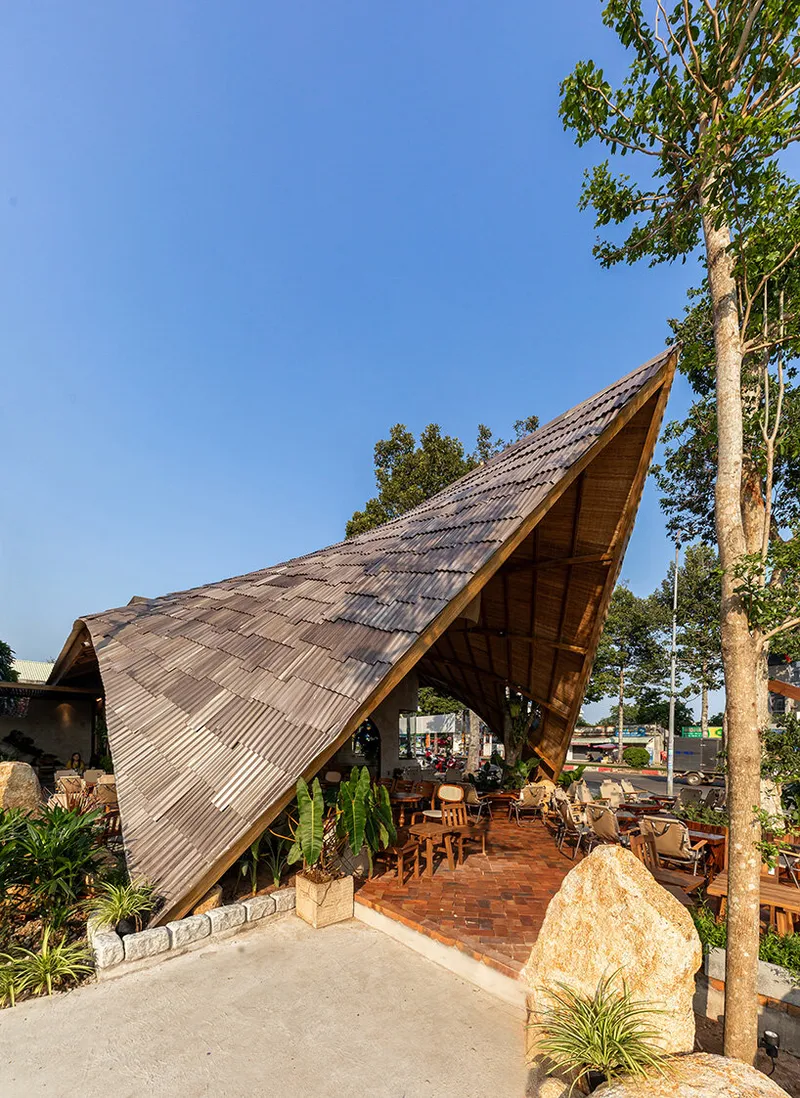
Beyond its aesthetic appeal, the roof serves as a climatic shield. It protects the interior from direct heat gain while allowing controlled daylight to penetrate through strategically positioned openings. The combination of expressive form and environmental logic exemplifies how architecture can be both iconic and responsive.
Materiality Rooted in Tradition
Complementing the greenery surrounding the building, the project adopts a palette of natural and traditional materials. Stone, baked brick, woven reed panels, natural wood, and rammed-earth textures contribute to a tactile architectural language grounded in local sensibilities.
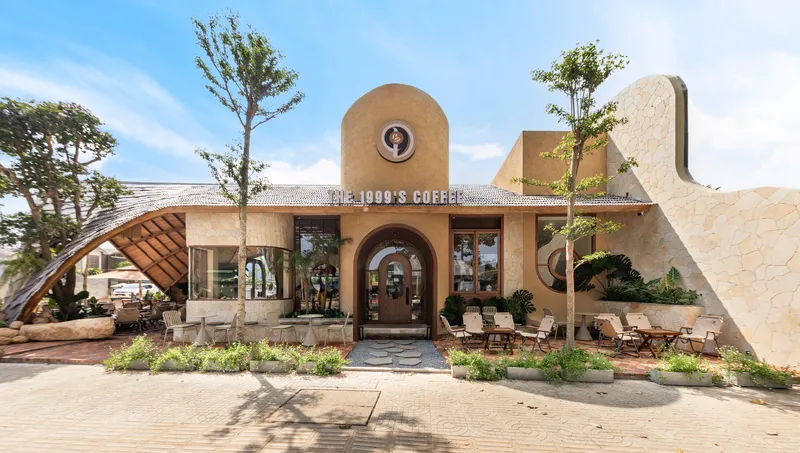
Each material is used with restraint and authenticity. Rather than being polished to perfection, surfaces retain their raw character. This decision reinforces the café’s approachable atmosphere and fosters a sense of comfort. The textured walls, warm wooden elements, and earthy tones collectively soften the boldness of the sloping roof.
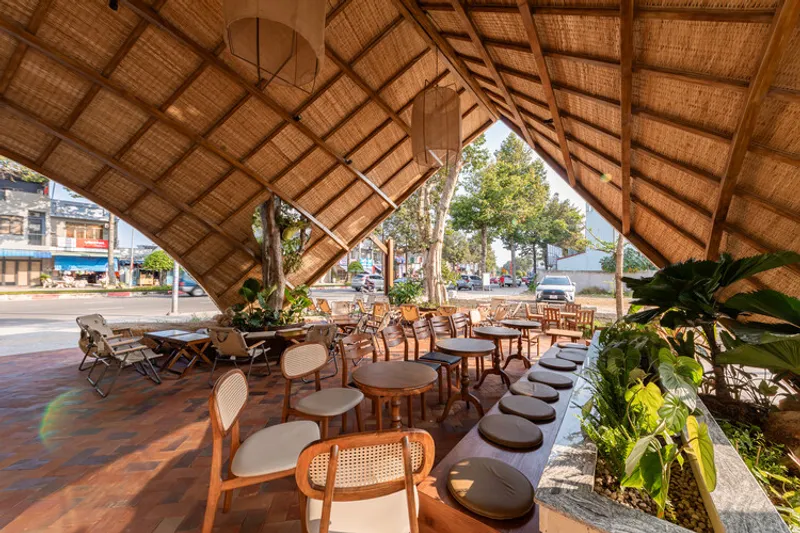
The integration of traditional materials also connects the café to regional craftsmanship. In a rapidly modernizing city, such references provide continuity and cultural resonance. The result is a space that feels contemporary yet deeply rooted in place.
Interior Atmosphere and Spatial Experience
Inside, the rustic language continues seamlessly. The interior design relies on a harmonious palette of neutral shades, soft yellows, and warm wood finishes. These tones enhance the café’s inviting ambiance, encouraging visitors to linger.
Large windows play a central role in shaping the indoor experience. They extend sightlines outward, visually expanding the relatively compact interior while maximizing natural light. Daylight becomes an active participant in the design, shifting throughout the day and illuminating the textures of brick, wood, and rammed earth.
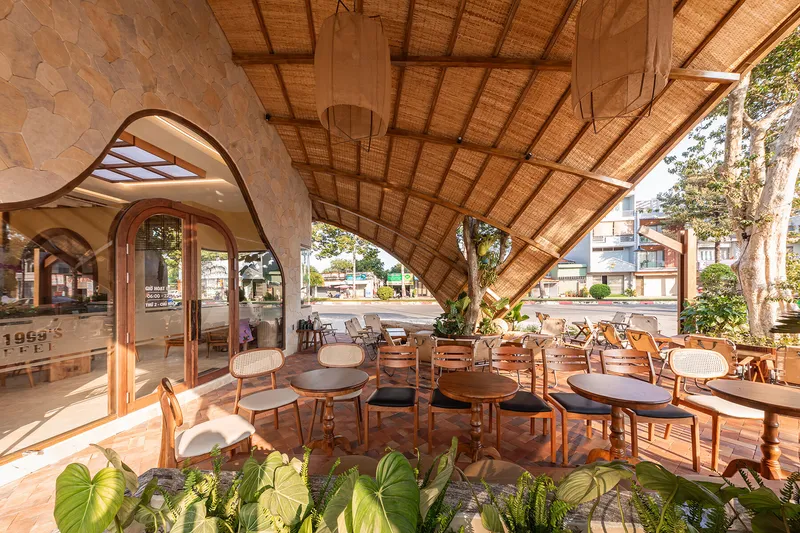
Despite its modest footprint, the café feels open and breathable. Carefully considered spatial planning ensures smooth circulation and varied seating arrangements. Customers can choose between more private corners or seats that engage directly with the street. This flexibility allows the café to accommodate diverse user preferences, from solitary visitors seeking quiet reflection to groups gathering socially.
Architecture as Urban Retreat
More than a venue for tea and coffee, The 1999’s Coffee functions as a deliberate counterpoint to its surroundings. Ho Chi Minh City is characterized by energy, movement, and density. Within this context, the café offers a gentle pause, a space designed to slow rhythms and encourage contemplation.
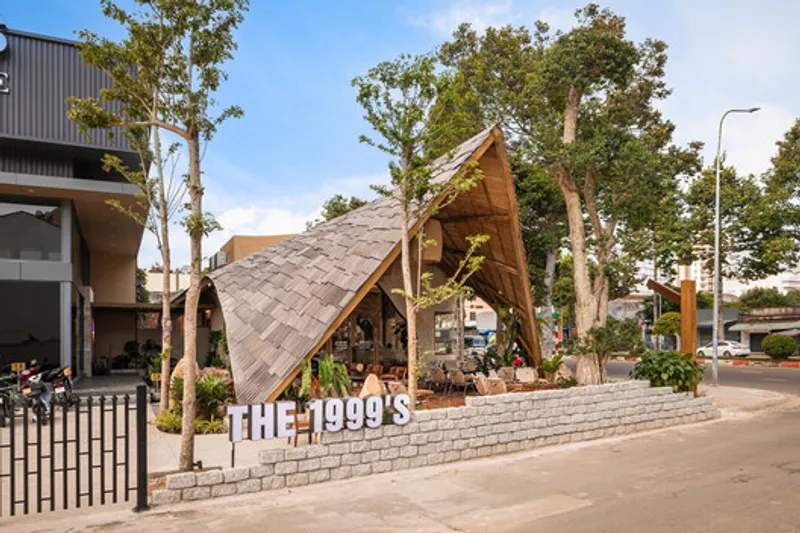
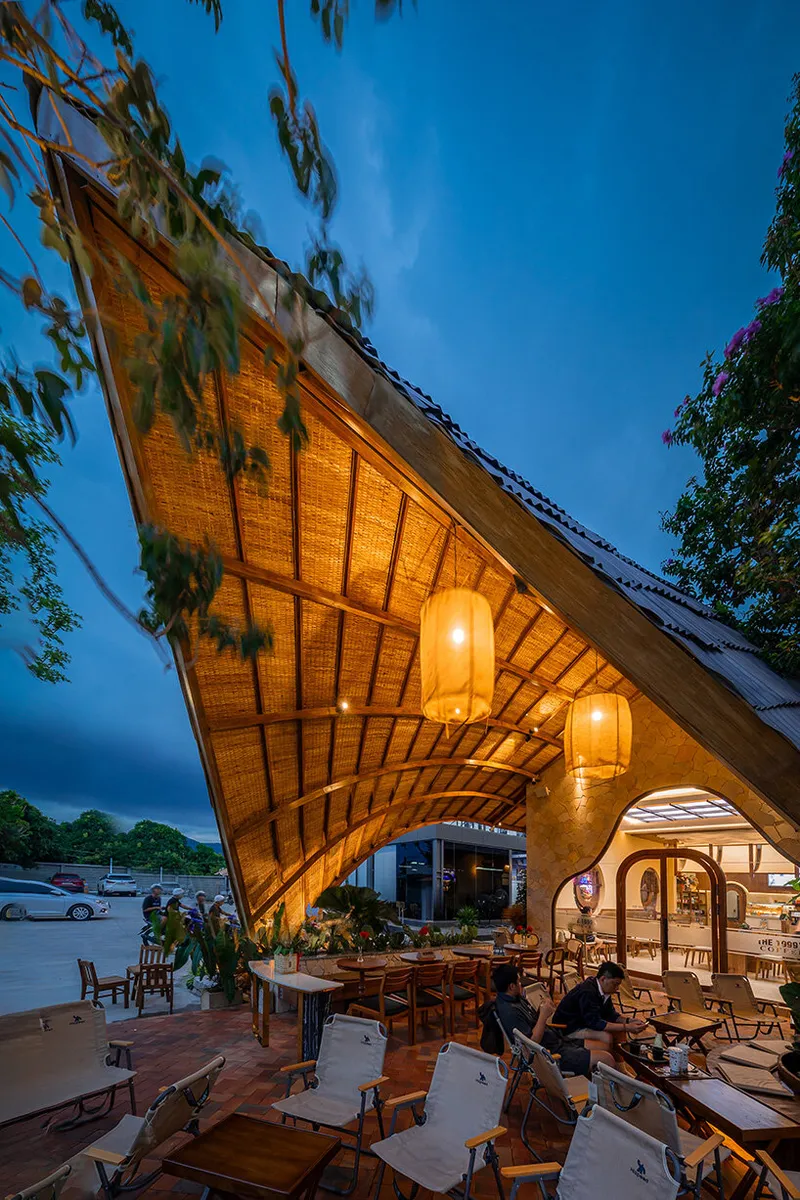
The combination of generous openings, protective roof overhangs, and lush landscaping blurs the boundary between inside and outside. Patrons remain connected to the city while enjoying a sense of shelter and tranquility. The architecture does not isolate; instead, it filters and reframes the urban experience.
The sloping roof, natural materials, and open façades collectively create a micro-environment that tempers noise, light, and heat. Visitors can momentarily detach from the relentless pace of the street without losing awareness of it.
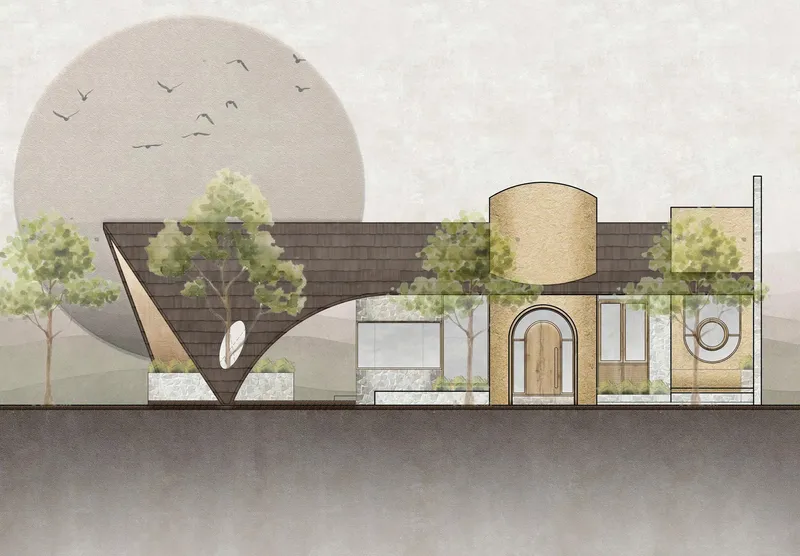
Form, Function, and Identity
The 1999’s Coffee demonstrates how a small-scale project can achieve strong architectural presence through clarity of concept. The sloping roof establishes identity, the corner openness enhances engagement, and the material palette fosters warmth.
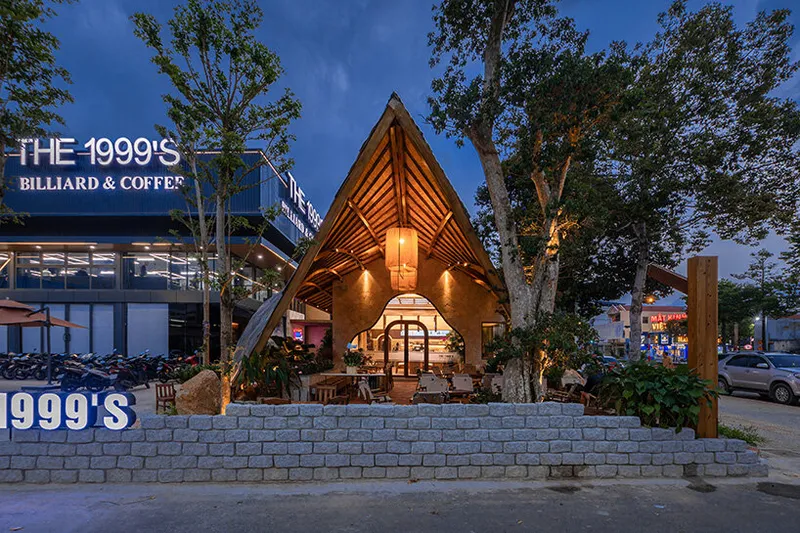
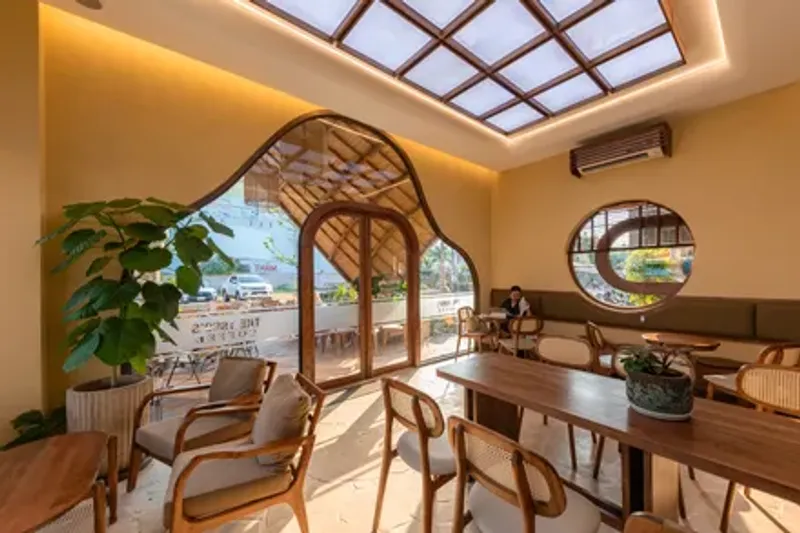
By combining expressive geometry with traditional materials, KQI Architect created a space that resonates emotionally as well as visually. The building’s fish-scale roof becomes a symbol, while its interior textures ground the experience in familiarity.
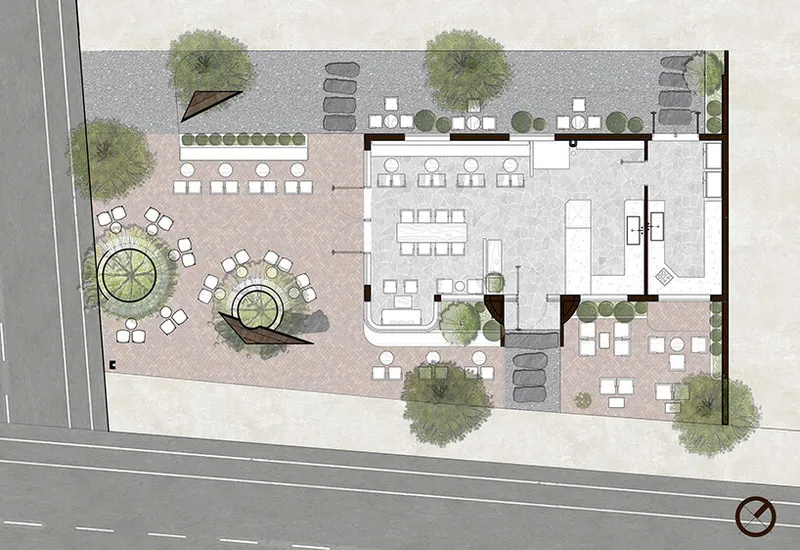
In a rapidly evolving urban district, the café stands as both landmark and refuge. It illustrates how thoughtful design can elevate everyday experiences, transforming a simple coffee stop into an architectural encounter.
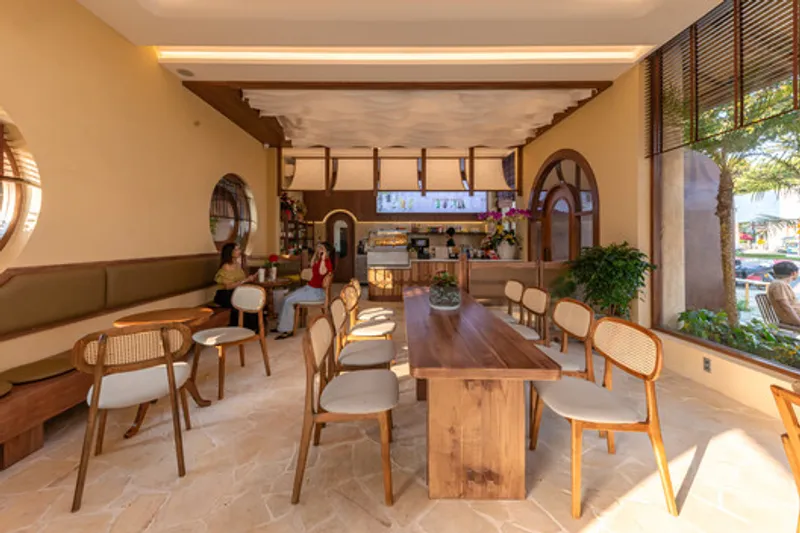
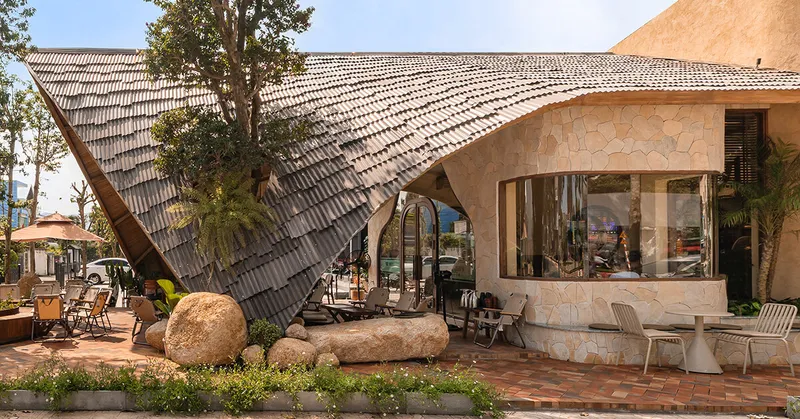
All the Photographs are works of Minq Bui




Popular Articles
Popular articles from the community


Co-life: Sustainable Architecture for Age-Friendly Community Living
Co-life reimagines sustainable architecture for seniors through courtyards, rammed earth, shared gardens, and spaces designed for belonging.

The Musturak Paradise: Senior Living Architecture for a Connected Future in Temara, Morocco
The Musturak Paradise reimagines senior living architecture in Temara via private homes, social spaces, culture, community, and shared care.

Conexión: Biophilic Design Reimagines High-Rise Living in Hong Kong
Conexión reimagines high-rise living in Hong Kong through biophilic design, green facades, shared spaces, daylight, water and nature within.

The Ocean Hive: Sustainable Architecture for a Self-Sufficient Civilization at Sea
The Ocean Hive imagines sustainable architecture at sea, where modular habitats, algae, wave power and ocean waste sustain a growing colony.


Similar Reads
You might also enjoy these articles

FAMM Arquitectura Organizes Ten Villas Around Courtyards and Jungle in Nosara, Costa Rica
El Molino pairs two elongated volumes with deep overhangs and timber louvers to build a compact coastal community five minutes from the beach.
Oscar Niemeyer's Ibirapuera Park Pavilions Define São Paulo's Cultural Identity in Concrete and Curve
A constellation of modernist volumes set within São Paulo's most important urban park, conceived for the city's 400th anniversary in 1954.
How Henri Picq's 1889 Paris Pavilion Traveled 11,000 Kilometers to Become Santiago's Artequín Museum
A prefabricated iron and glass pavilion built for the Paris Universal Exposition found a second life as a children's art museum in Chile.
Sanjay Puri Architects Wraps a Jaipur Office Tower in Capsule-Shaped Green Buffers
A nine-level climate-responsive workplace near Jaipur Airport uses stacked planter terraces and aluminium screens to fight 40°C heat.


Explore Architecture Competitions
Discover active competitions in this discipline



Challenge to reimagine the Iron Throne


Photograph architecture without architects


Illustrate the lost glory of Angkor Wat - Render Challenge


Design challenge to reuse E-waste
Comments (0)
Please login or sign up to add comments
No comments yet. Be the first to comment!