
U.S. Embassy Guatemala City by The Miller Hull Partnership: A Symbol of Diplomatic Vision and Sustainable Architecture
A sustainable, Maya-inspired U.S. Embassy in Guatemala City symbolizes diplomacy through modern architecture, landscape integration, and environmental performance.


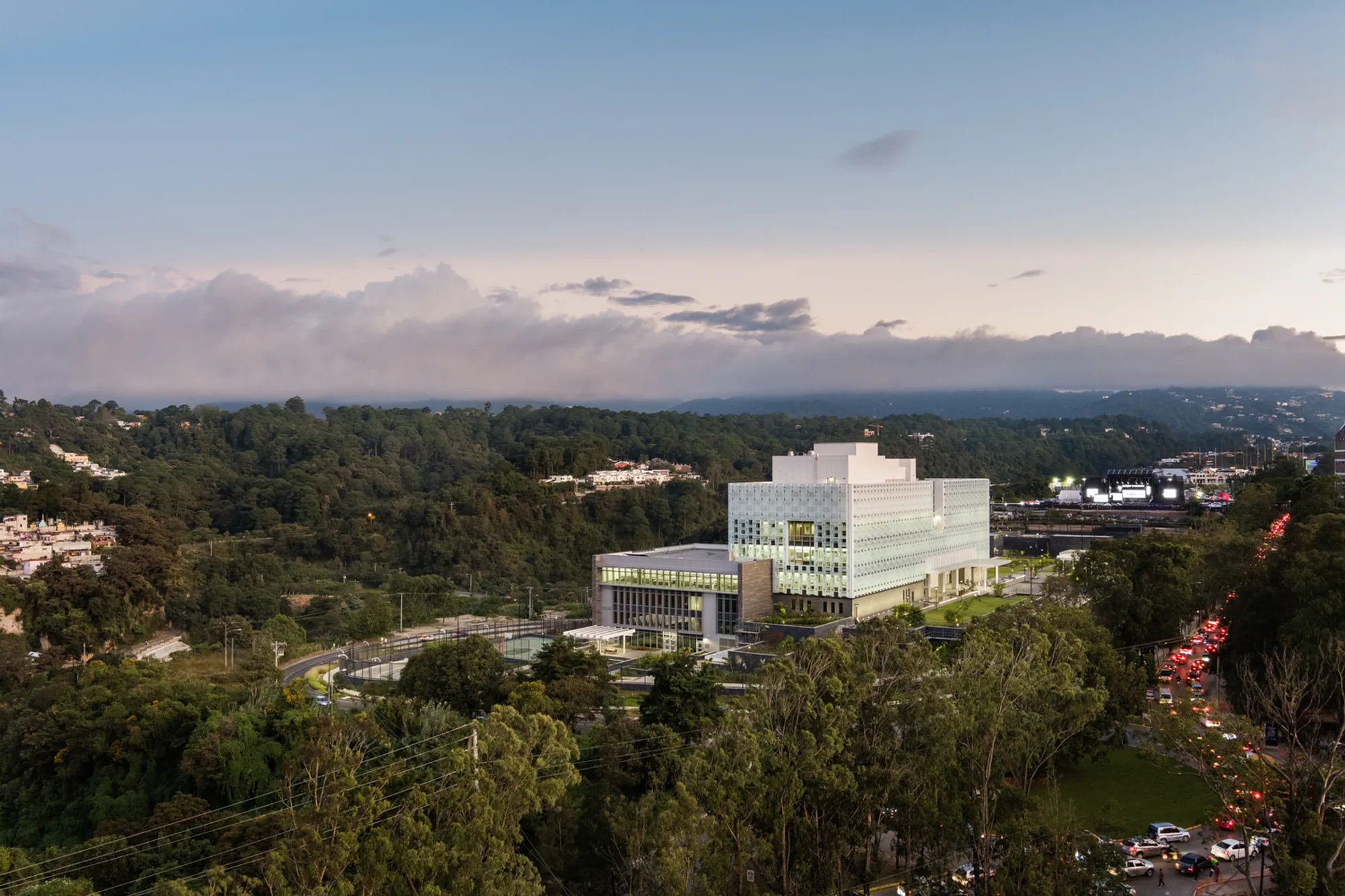
Located in the southeastern hills of Guatemala City, the newly completed U.S. Embassy, designed by The Miller Hull Partnership, stands as a striking architectural statement and a powerful diplomatic symbol. Completed in 2022, this 24,300-square-meter complex integrates modern design, cultural symbolism, and environmental responsibility, reinforcing the relationship between the United States and Guatemala through its built form.
A Landmark of Diplomacy in the Heart of Guatemala City
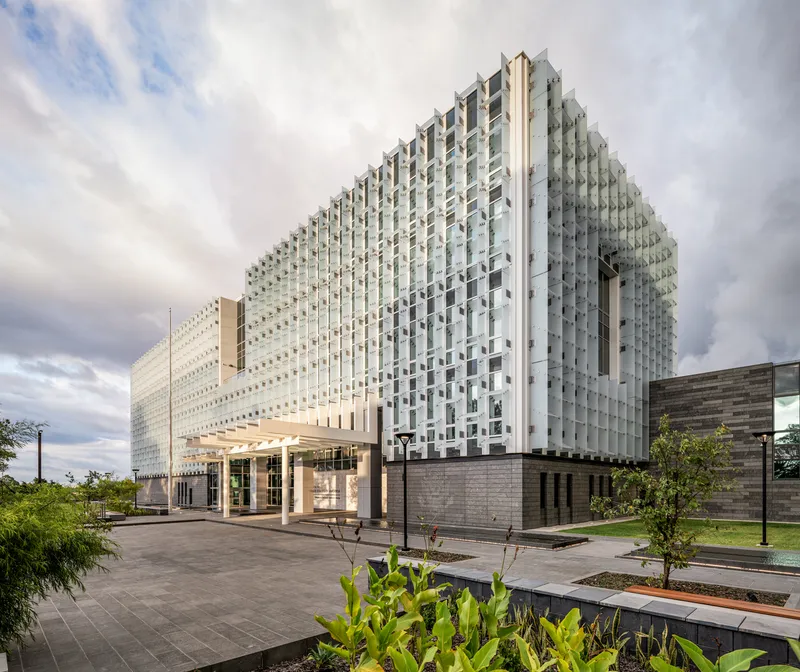
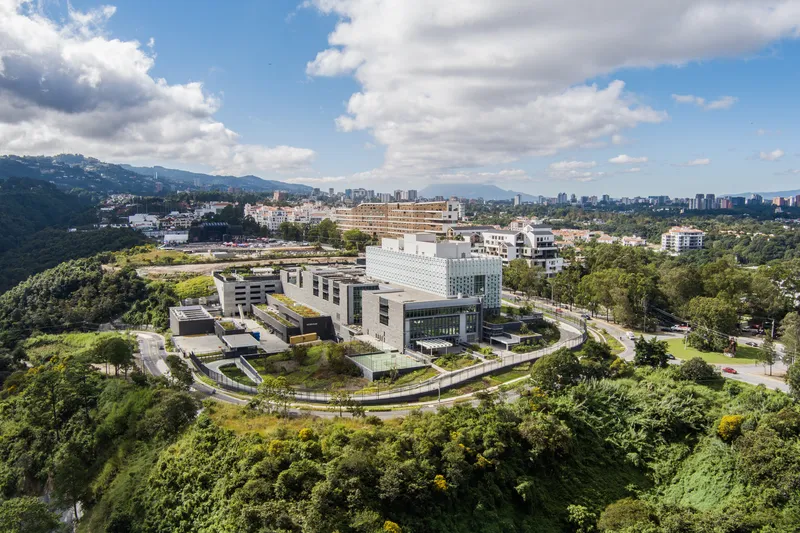
Positioned just nine kilometers from the city's historic center, the U.S. Embassy campus comprises an 18,800-square-meter chancery building, support structures, and a below-grade garage. Designed in close collaboration with the U.S. Department of State’s Bureau of Overseas Buildings Operations (OBO) and constructed by B.L. Harbert International, the embassy introduces a modern face of American diplomacy while embracing the surrounding Guatemalan context.
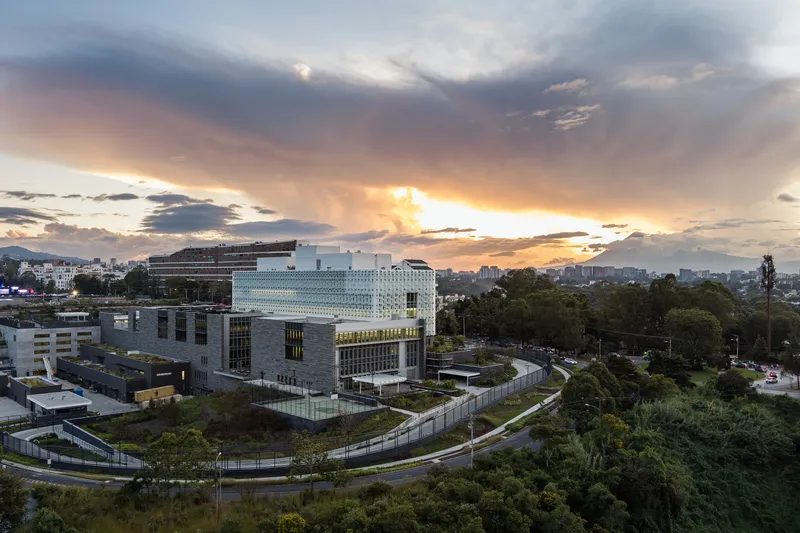
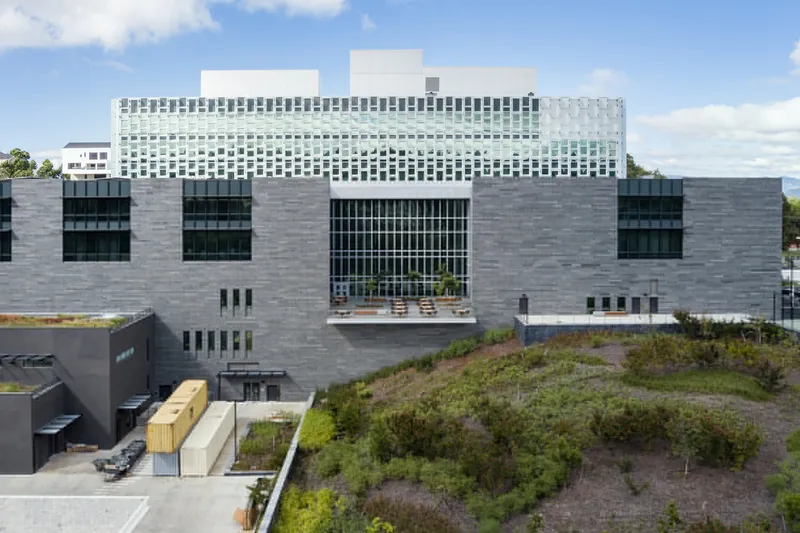
The site itself presents a unique challenge—steep, forested terrain bordered by mountain valleys and ravines. The design team utilized an innovative terracing strategy to manage the topography, creating stable platforms that house embassy functions while incorporating lush outdoor gardens for visitors and staff alike. This approach harmonizes the building with its natural setting, offering a serene and secure diplomatic campus.
Architectural Dialogue Between Two Nations
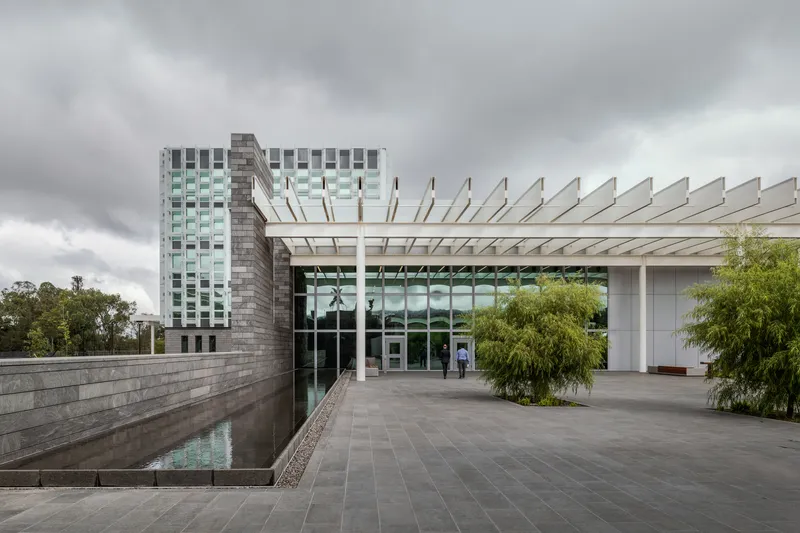
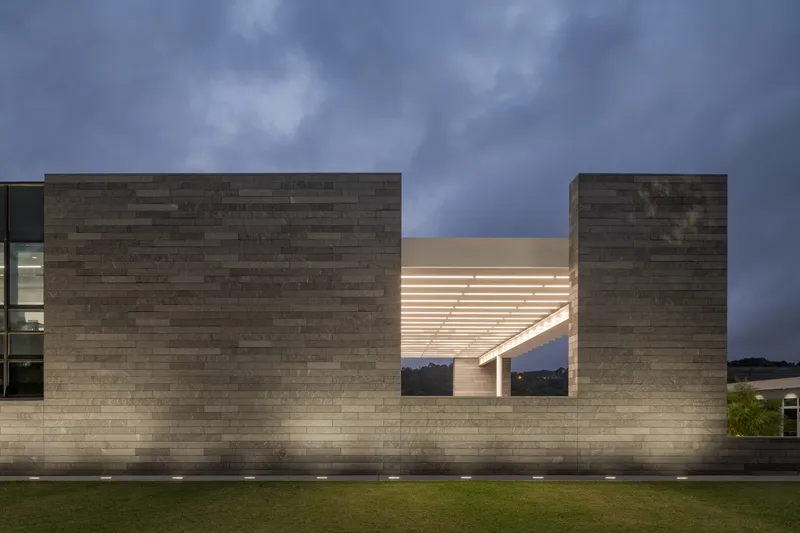
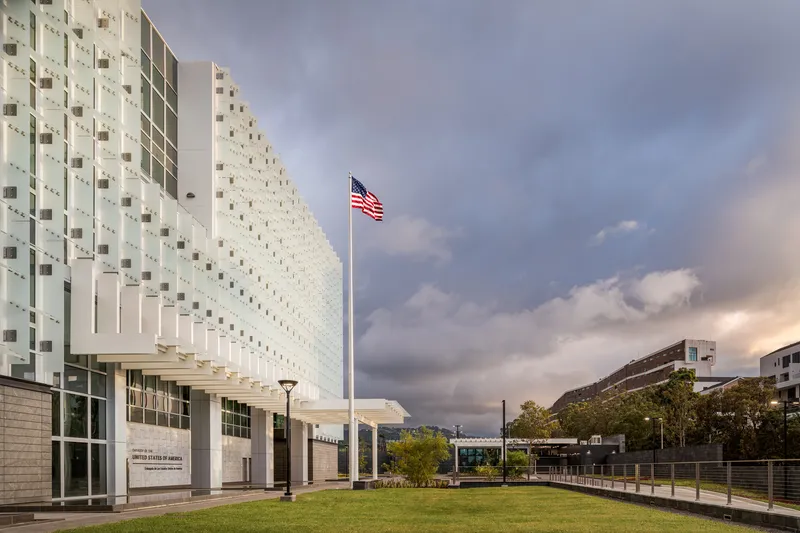
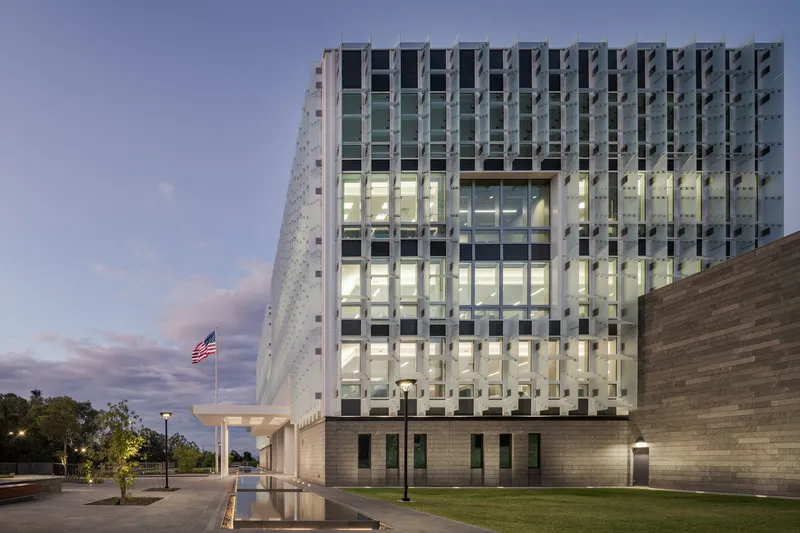
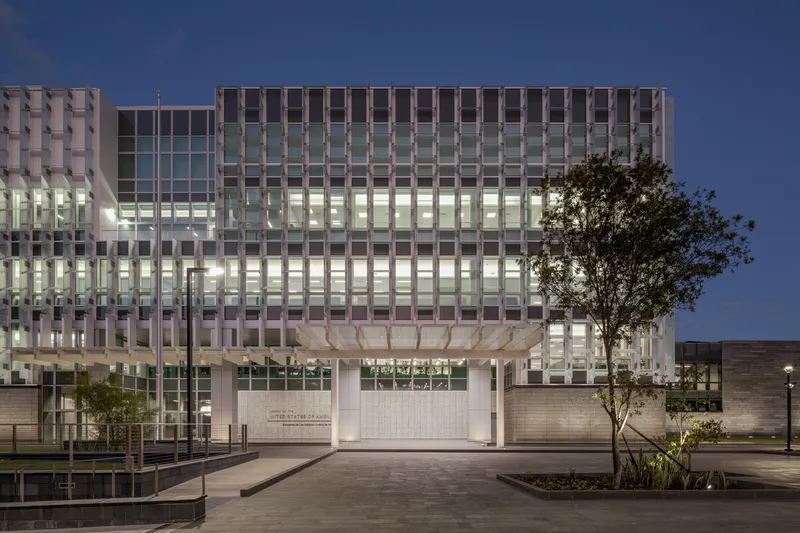
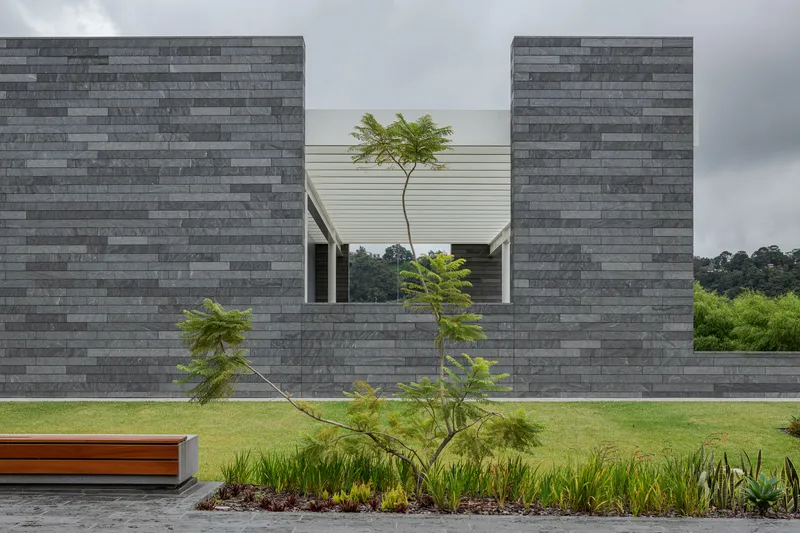
The embassy’s form is both symbolic and functional, emerging from the earth as a dialogue between mass and transparency. The stone base, grounded and robust, draws from the materials and spirit of Maya architecture, while the glass tower above represents transparency, openness, and the forward-looking nature of U.S.-Guatemalan relations. Together, these elements reflect a partnership rooted in history and rising toward a shared future.
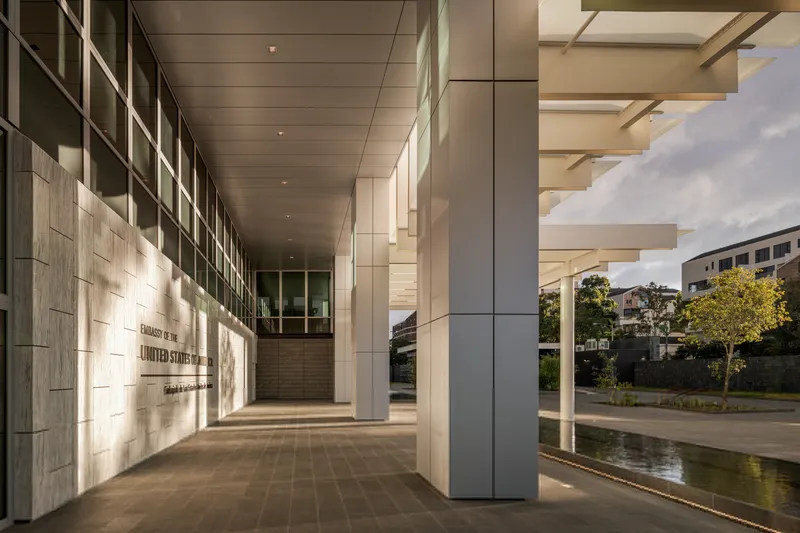
At the heart of the design lies a central courtyard, where communal spaces converge. This courtyard acts as a connective zone between the grounded base and the elevated tower, symbolizing mutual exchange and collaboration. Visitors are welcomed into a shaded plaza and consular garden, covered by elegant canopies that provide protection and comfort, ensuring an inviting experience even amidst the site’s busy diplomatic functions.
Seamless Integration with the Natural Environment
Bordering key ecological zones such as Parque Ecológico Jacarandas de Cayalá and Parque Ecológico y Deportivo Cayalá, the embassy design extends its influence beyond its footprint. Landscaped areas of native forest vegetation connect to the adjacent green belts, enhancing biodiversity, providing natural disaster resilience, and contributing to groundwater recharge.
The site’s ecological stewardship reflects a deep commitment to sustainability. Knot Studio, the landscape architect, designed a resilient green network that supports local ecosystems while offering tranquil zones for reflection and gathering.
A Benchmark for Sustainable Embassy Design
This embassy goes beyond its diplomatic role by setting high standards for sustainable architecture. Targeted to exceed Federal Performance Goals for energy and water efficiency, the building demonstrates significant environmental performance:
- 26.5% reduction in energy consumption compared to standard buildings of its type.
- 9% of energy needs met through solar photovoltaics integrated into the design.
- Onsite wastewater treatment allows for complete reuse in landscape irrigation.
- Stormwater detention systems replicate pre-development runoff conditions, preserving slope stability and water quality.
Interface Engineering spearheaded the MEP design, supporting the project’s high-performance goals with advanced mechanical and electrical systems. Interior design by Integrus Architecture complements the project’s refined aesthetic with functional, modern interiors suited for international diplomacy.
Building with Purpose: A Future-Oriented Embassy
The U.S. Embassy in Guatemala City is not only a secure and functional diplomatic hub—it’s also a model of environmentally responsive design, cultural sensitivity, and international cooperation. With leadership by David Miller, co-founder of The Miller Hull Partnership, the project is a powerful representation of 21st-century diplomacy through architecture.
By weaving together symbolic design, sustainability, and landscape integration, this project affirms architecture’s role in shaping meaningful and forward-looking global relationships.
📌 Project Details
- Location: Guatemala City, Guatemala
- Architects: The Miller Hull Partnership
- Lead Architect: David Miller
- Area: 24,300 m²
- Completion: 2022
- Contractor: BL Harbert International
- Interior Design: Integrus Architecture
- Landscape Architecture: Knot Studio
- MEP Engineer: Interface Engineering
- Photography: Gabe Border




Popular Articles
Popular articles from the community


Hill & Cross Opera: Sculptural Opera House Architecture Shaped by Tallinn’s Landscape and Identity
Hill & Cross Opera reimagines opera house architecture in Tallinn through its sculptural hill, civic plaza, glass wave and a luminous cross.
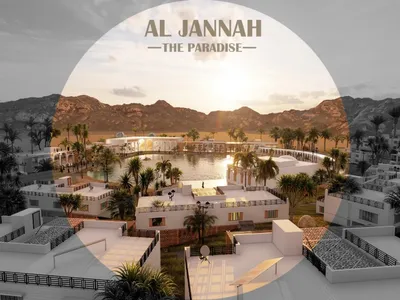
AL-JANNAH: Sustainable Architecture and Permaculture for Afghan Widows
AL-JANNAH uses sustainable architecture and permaculture to create resilient oasis of housing, learning, work and renewal for Afghan widows.

Co-life: Sustainable Architecture for Age-Friendly Community Living
Co-life reimagines sustainable architecture for seniors through courtyards, rammed earth, shared gardens, and spaces designed for belonging.

The Earth Pod: 3D Printed Homes for Resilient Refugee Communities
The Earth Pod reimagines refugee housing through 3D printed homes made from clay, combining resilience, self-sufficiency, and rapid shelter.

Similar Reads
You might also enjoy these articles


Hodi-Mandai Geram
Project Function: Preservation and revitalization of the Intangible heritage and socio-spatial identity of the Hodi by Housing, Cultural Memory Center, Sacred Grove, landscape, local tourism economy


Olio Towers: A Mid-Rise for Performers That Fuses Housing, Rehearsal, and Stage
Located blocks from Houston's Theater District, this modular tower stacks living units around a central performance atrium.

Oasis: Modular Green Housing Carved into Dhaka's Urban Fabric
A shortlisted Plugin Housing entry reclaims unauthorized settlements in Dhaka with stepped concrete volumes, green roofs, and ventilation-driven design.

Black Hole: A Floating Megastructure for the Post-Physical Era
Emiliano Mazzarotto envisions a spherical, self-scaling arena where e-sports, digital hotels, and holographic stadiums replace traditional public space.


Explore Sustainable Design Competitions
Discover active competitions in this discipline



Challenge to reimagine the Iron Throne


Photograph architecture without architects


Illustrate the lost glory of Angkor Wat - Render Challenge


Design challenge to reuse E-waste
Comments (0)
Please login or sign up to add comments
No comments yet. Be the first to comment!