
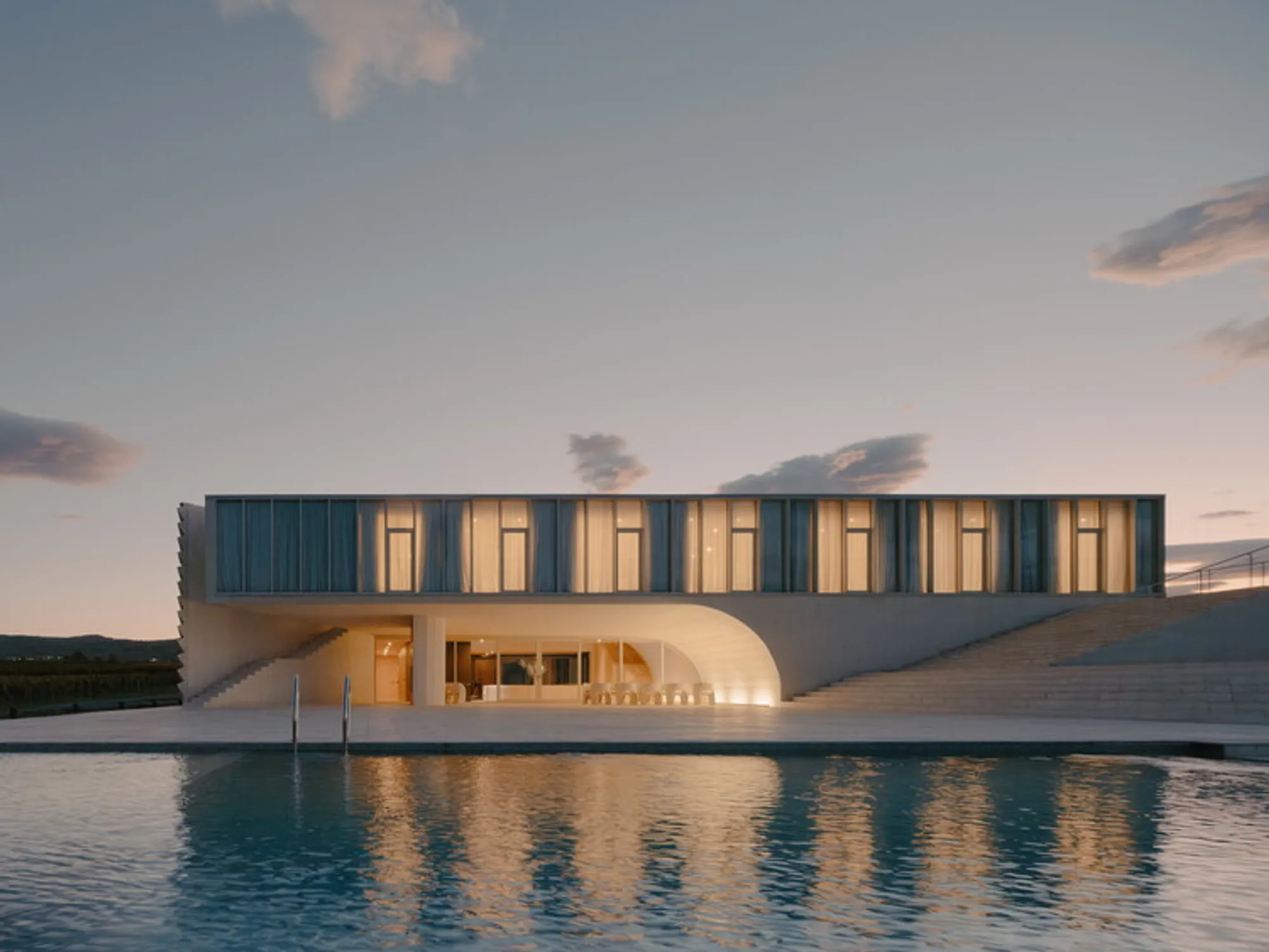
Vachnadziani Winery: A Sculptural Estate Bridging Georgian Tradition and Contemporary Architecture
Sculptural winery blending Georgian tradition with modern design, integrating production, hospitality, and landscape through monolithic forms, arches, and immersive spatial experience.


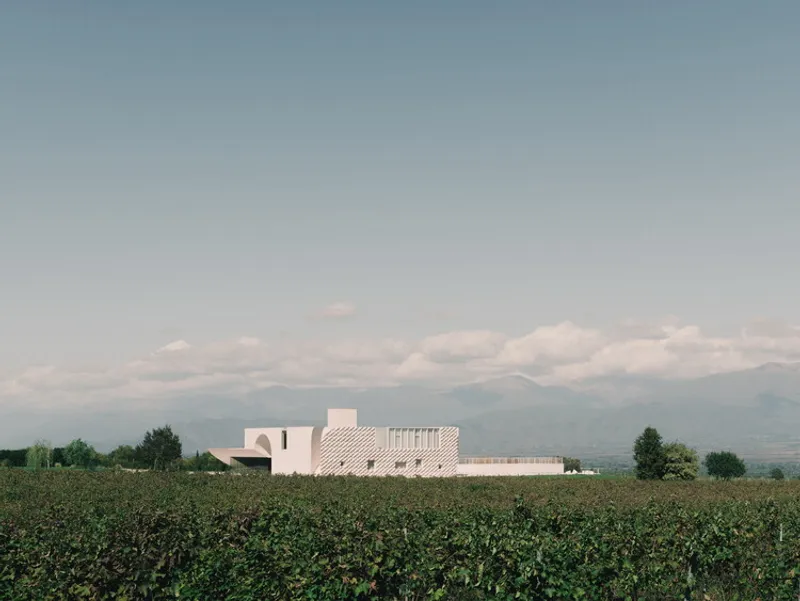
Set within the historic Alazani Valley in Vachnadziani, Georgia, Vachnadziani Winery by Laboratory of Architecture #3 is a powerful architectural expression rooted in the cultural and ritualistic significance of winemaking. Surrounded by vineyards and framed by the Caucasus Mountains, the project engages deeply with its landscape and heritage, transforming the act of wine production into a spatial and experiential narrative.

In Georgia, winemaking is more than a craft: it is a deeply embedded cultural ritual tied to history, identity, and collective memory. The architecture responds to this legacy by subtly referencing traditional forms and tectonics, particularly those reminiscent of medieval structures. However, these references are not literal reproductions; instead, they are reinterpreted through a contemporary lens, creating a dialogue between past and present.

The building is conceived as a multifunctional complex that integrates production, hospitality, and public engagement. Alongside the winery, the program includes a boutique hotel, restaurant, reception spaces, and conference facilities. This layered functionality transforms the project into a destination where visitors can experience wine not only as a product but as a cultural and architectural journey.


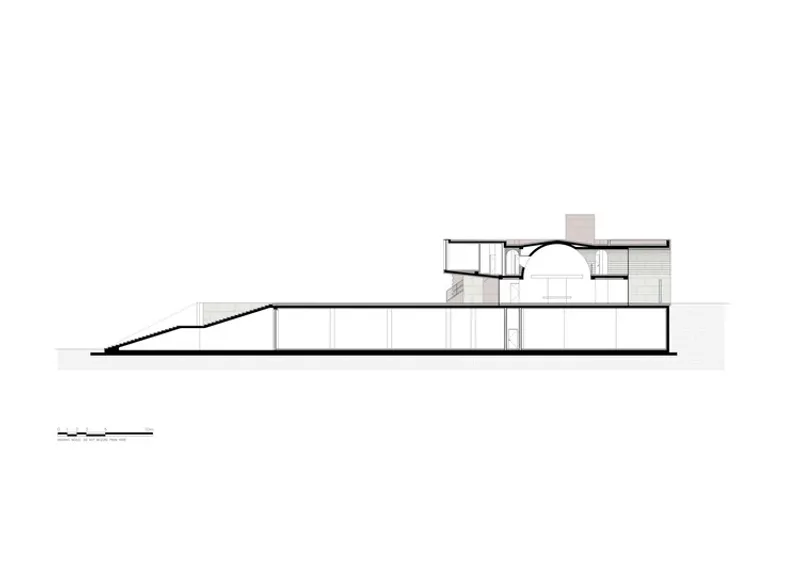
A key design strategy lies in how the building is embedded within the terrain. The production facilities are partially concealed within the slope, minimizing their visual impact and allowing the structure to read as a modest estate rather than an industrial facility. This integration with the landscape reinforces the connection between architecture, land, and the process of winemaking itself.


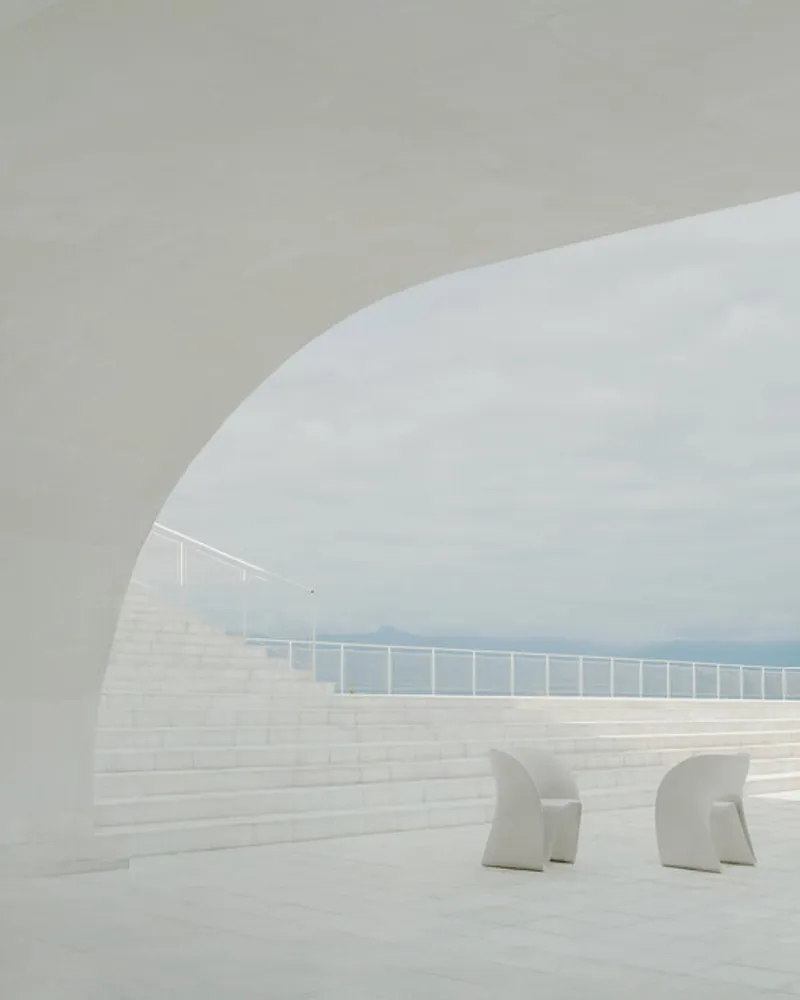
The building is oriented toward the Caucasus Mountains, establishing a strong visual axis that anchors the project within its broader geographical context. A grand staircase descends from the main structure into the vineyards below, creating a ceremonial transition between the cultivated landscape and the architectural domain. This movement reinforces the ritualistic quality of the experience, guiding visitors through different layers of the site.

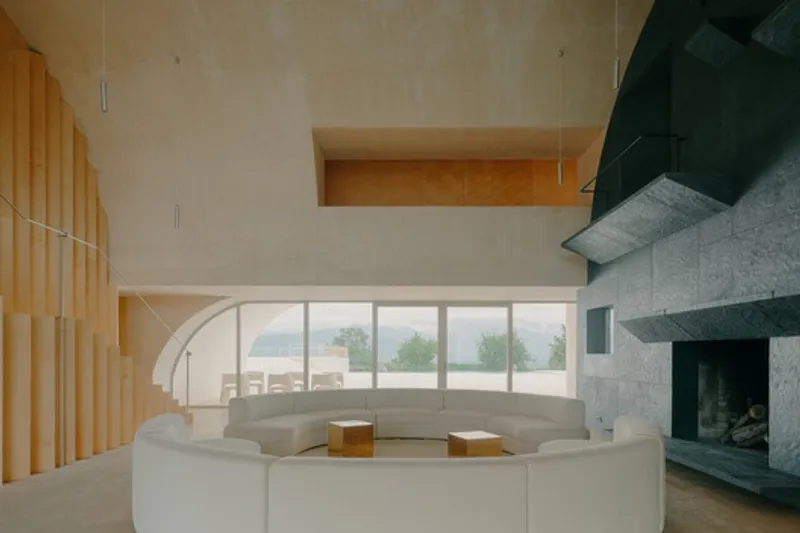
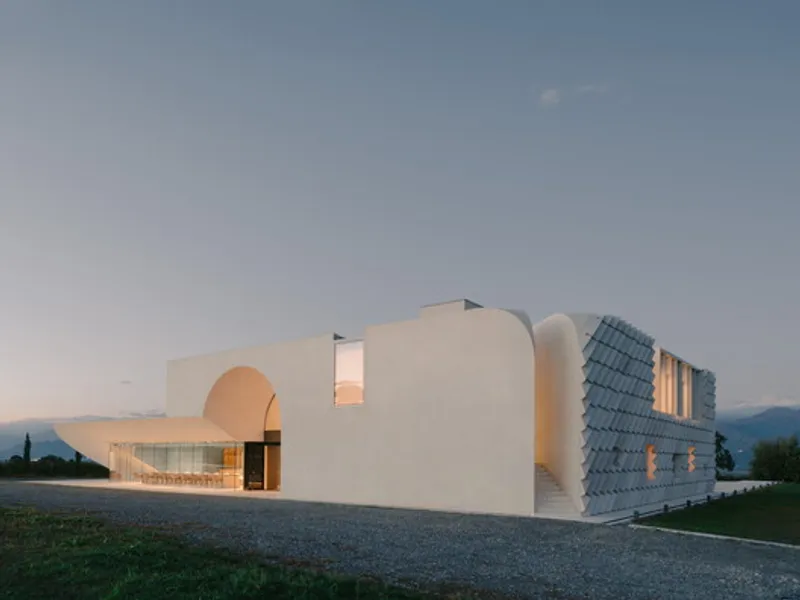
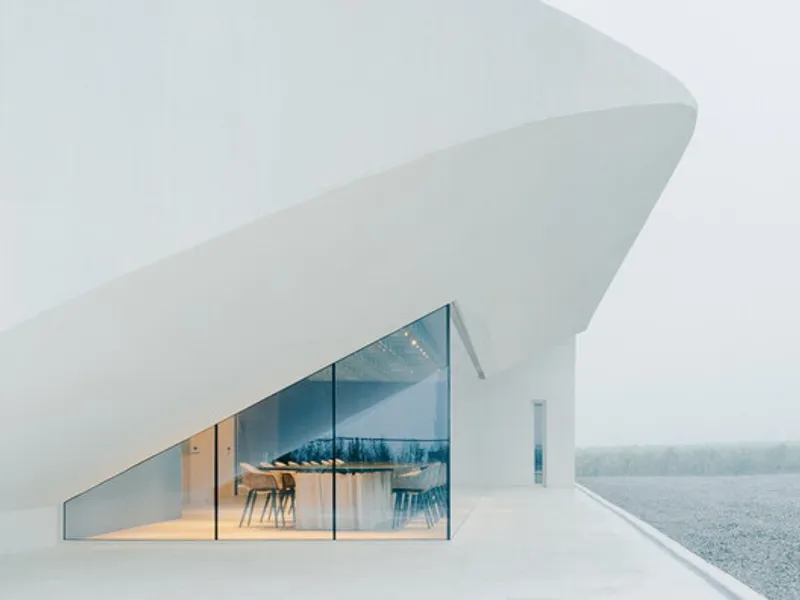
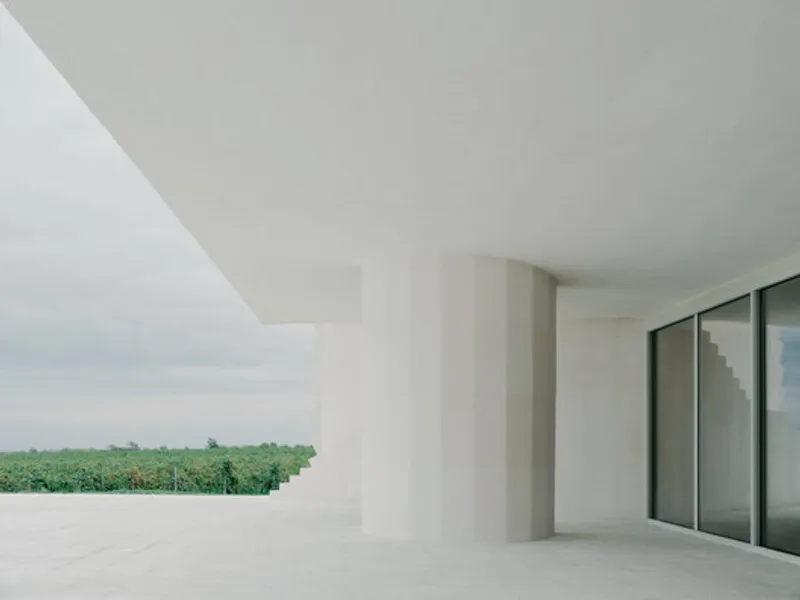
Formally, the architecture is defined by sculptural, monolithic volumes that appear as though carved from a single mass. The building evokes the presence of a large stone or boulder, grounded firmly within the earth. Yet, this sense of solidity is counterbalanced by moments of lightness: arched voids, deep recesses, and sharp volumetric pauses introduce contrast and rhythm. The interplay between mass and void, weight and suspension, creates a dynamic architectural language.


Material treatment further emphasizes this duality. On one hand, tactile, hand-sculpted surfaces establish a strong connection to the earth, reflecting the raw materiality of the landscape. On the other, smooth and reflective surfaces introduce a sense of abstraction, allowing parts of the building to visually dissolve into their surroundings. This contrast reinforces the tension between permanence and ephemerality.
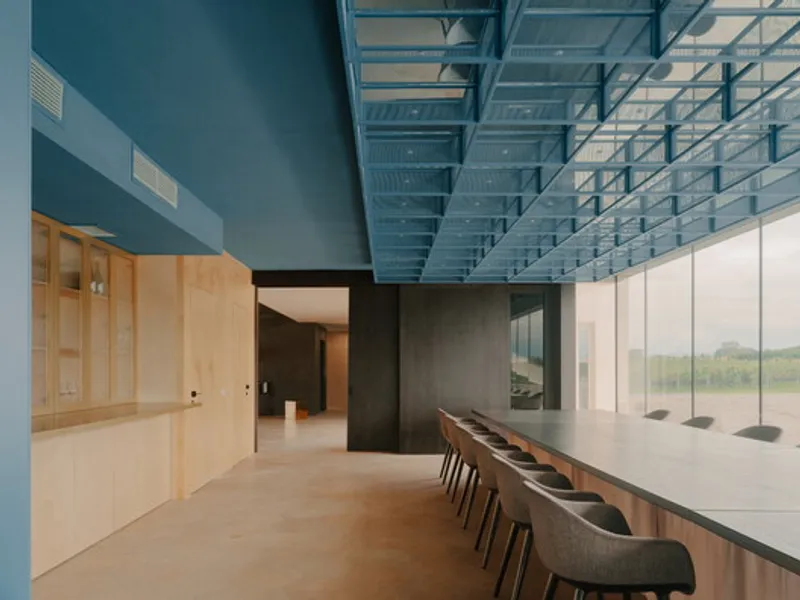
Internally, the spatial experience is organized around a central double-height hall that serves as the heart of the building. This space recalls the atmosphere of a medieval great hall, complete with a fireplace, yet functions as a contemporary lobby. It is both monumental and intimate, balancing historical reference with modern comfort.

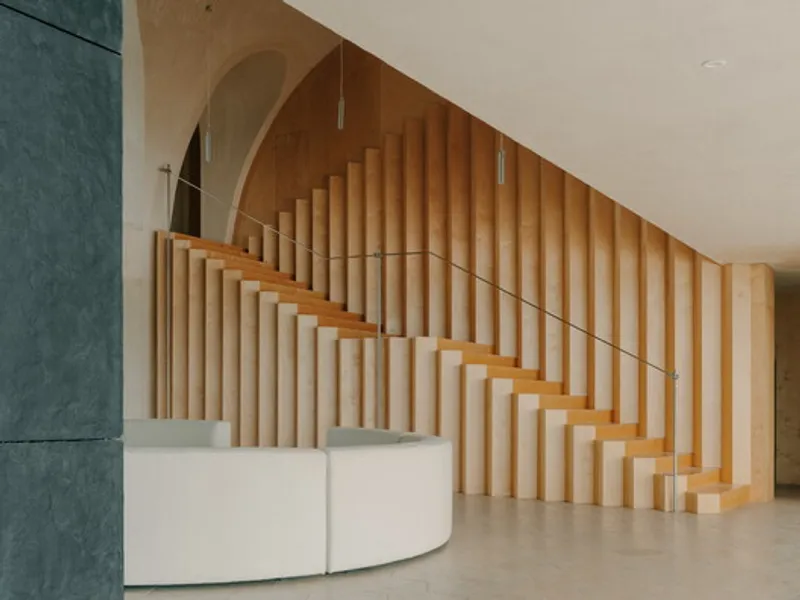
A sculptural staircase becomes a defining element within this space, its form reminiscent of a musical organ. Its fragmented geometry echoes themes found in the building’s exterior, reinforcing continuity between inside and outside. The interior palette remains largely monochromatic, composed of wood and plaster textures that create a cohesive and calm environment.


Subtle color accents, inspired by Georgian fresco traditions, introduce moments of visual richness without overwhelming the overall restraint. In the hotel rooms, softer elements such as drapery create a more intimate, boudoir-like atmosphere, offering a contrast to the monumental character of the public spaces.
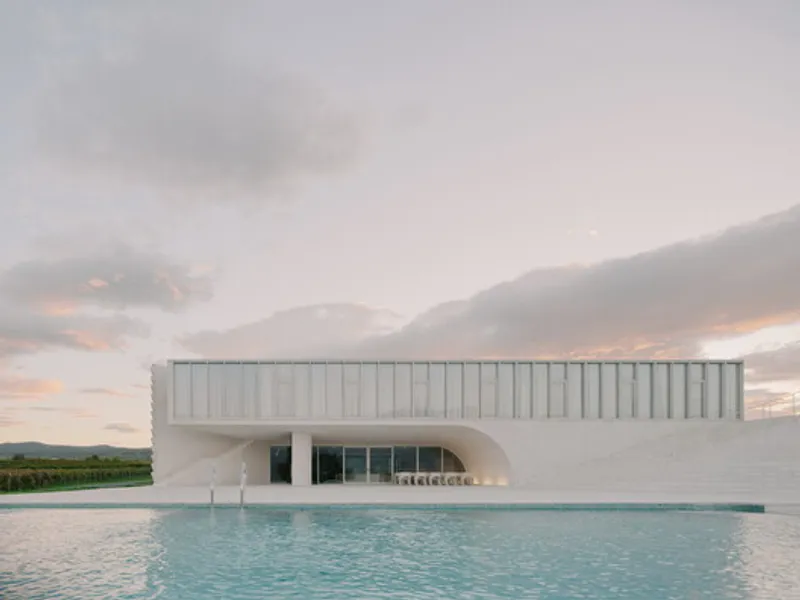
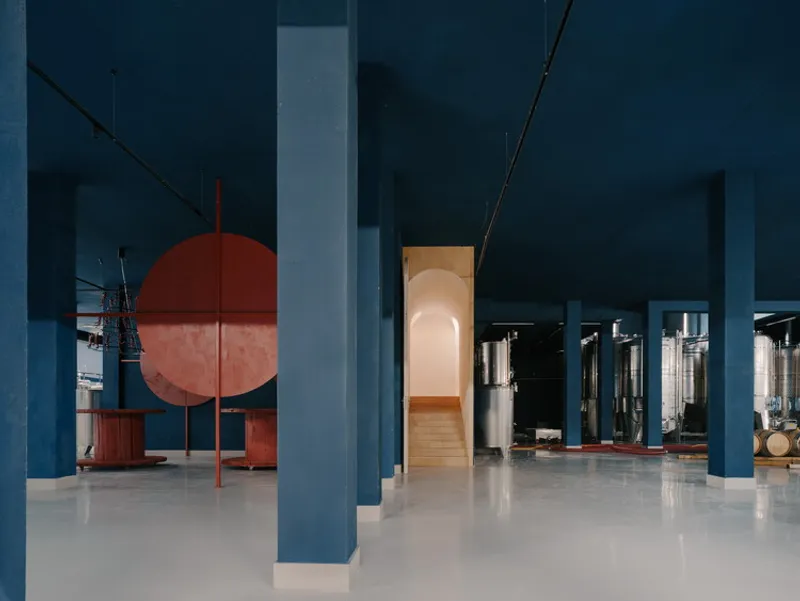
Ultimately, Vachnadziani Winery is an architecture of contrasts and continuity. It bridges tradition and modernity, landscape and structure, ritual and function. Through its sculptural form, material depth, and spatial choreography, the project transforms winemaking into an immersive experience, one that is as much about place and culture as it is about production.
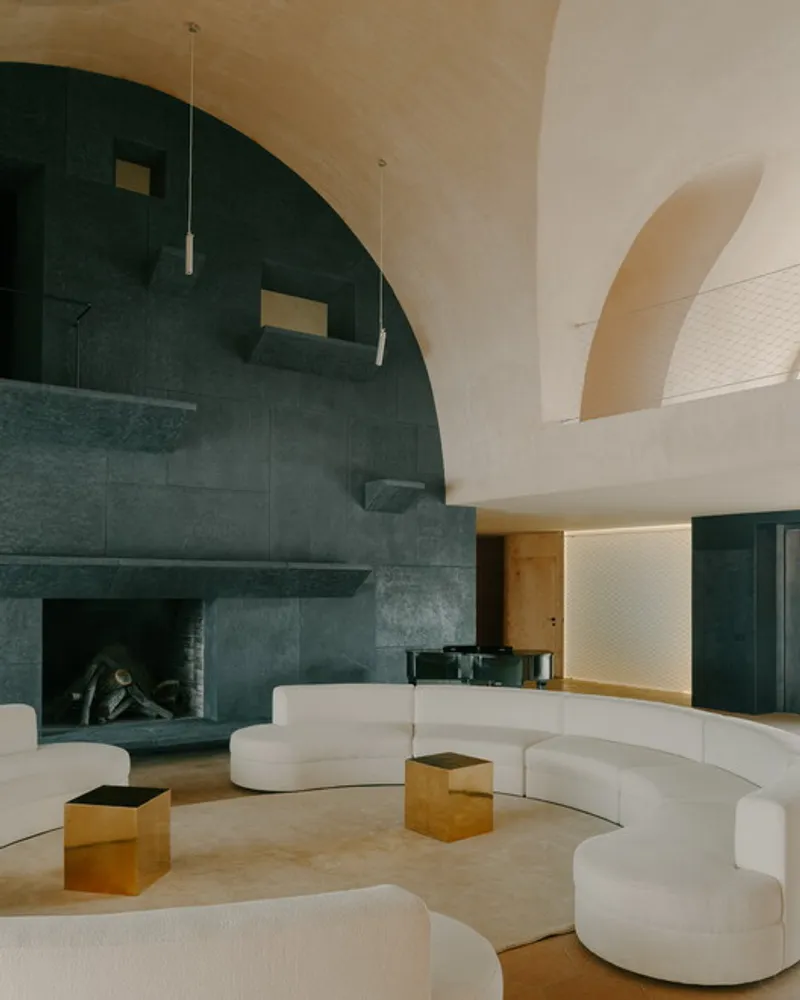

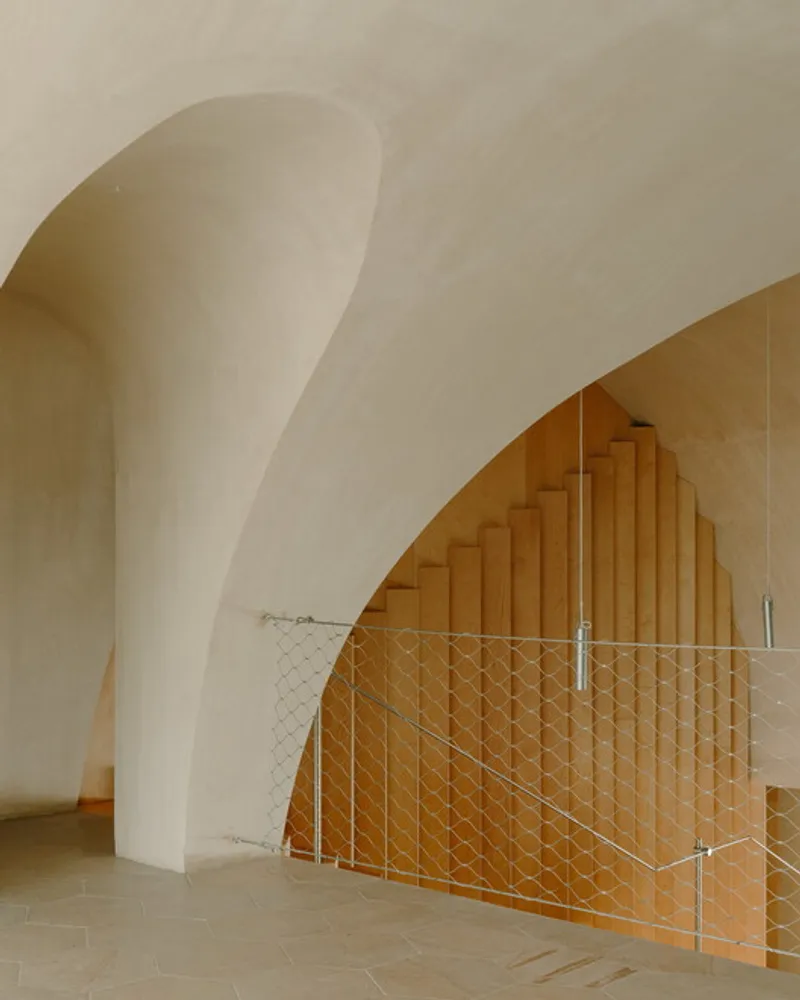
All the Photographs are works of Grigory Sokolinsky



Popular Articles
Popular articles from the community


The Musturak Paradise: Senior Living Architecture for a Connected Future in Temara, Morocco
The Musturak Paradise reimagines senior living architecture in Temara via private homes, social spaces, culture, community, and shared care.

Hill & Cross Opera: Sculptural Opera House Architecture Shaped by Tallinn’s Landscape and Identity
Hill & Cross Opera reimagines opera house architecture in Tallinn through its sculptural hill, civic plaza, glass wave and a luminous cross.

The Ocean Hive: Sustainable Architecture for a Self-Sufficient Civilization at Sea
The Ocean Hive imagines sustainable architecture at sea, where modular habitats, algae, wave power and ocean waste sustain a growing colony.

Co-Life: Senior Housing Design That Reconnects Older Adults With the City
Co-Life reimagines senior housing design through healing gardens, shared streets, workshops, and a sustainable community across generations.

Similar Reads
You might also enjoy these articles

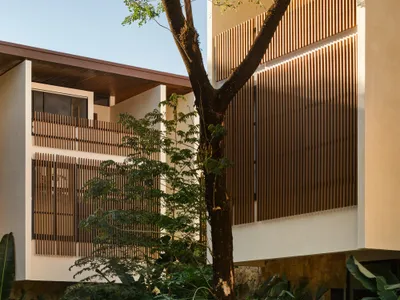
FAMM Arquitectura Organizes Ten Villas Around Courtyards and Jungle in Nosara, Costa Rica
El Molino pairs two elongated volumes with deep overhangs and timber louvers to build a compact coastal community five minutes from the beach.
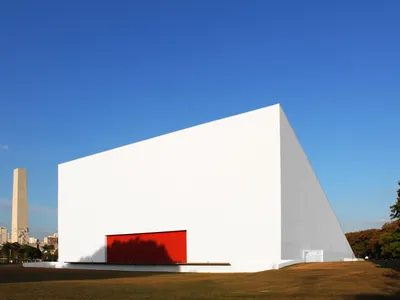
Oscar Niemeyer's Ibirapuera Park Pavilions Define São Paulo's Cultural Identity in Concrete and Curve
A constellation of modernist volumes set within São Paulo's most important urban park, conceived for the city's 400th anniversary in 1954.
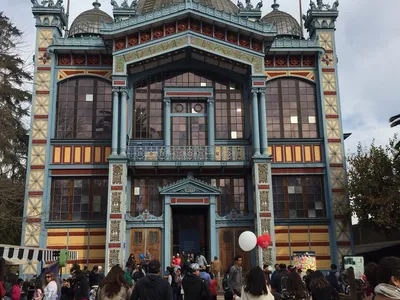
How Henri Picq's 1889 Paris Pavilion Traveled 11,000 Kilometers to Become Santiago's Artequín Museum
A prefabricated iron and glass pavilion built for the Paris Universal Exposition found a second life as a children's art museum in Chile.
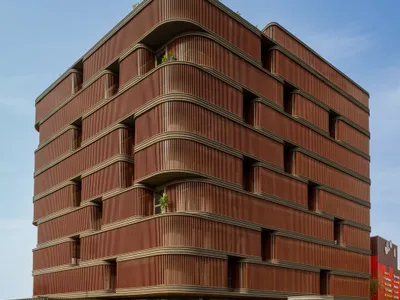
Sanjay Puri Architects Wraps a Jaipur Office Tower in Capsule-Shaped Green Buffers
A nine-level climate-responsive workplace near Jaipur Airport uses stacked planter terraces and aluminium screens to fight 40°C heat.


Explore Architecture Competitions
Discover active competitions in this discipline



Challenge to reimagine the Iron Throne


Photograph architecture without architects


Illustrate the lost glory of Angkor Wat - Render Challenge


Design challenge to reuse E-waste
Comments (0)
Please login or sign up to add comments
No comments yet. Be the first to comment!