
Vaires-sur-Marne Olympic Nautical Stadium by Auer Weber: A Landmark of Olympic Sports Architecture
The Vaires-sur-Marne Olympic Nautical Stadium by Auer Weber blends whitewater sports, sustainable design, and landscape integration for the 2024 Olympics.


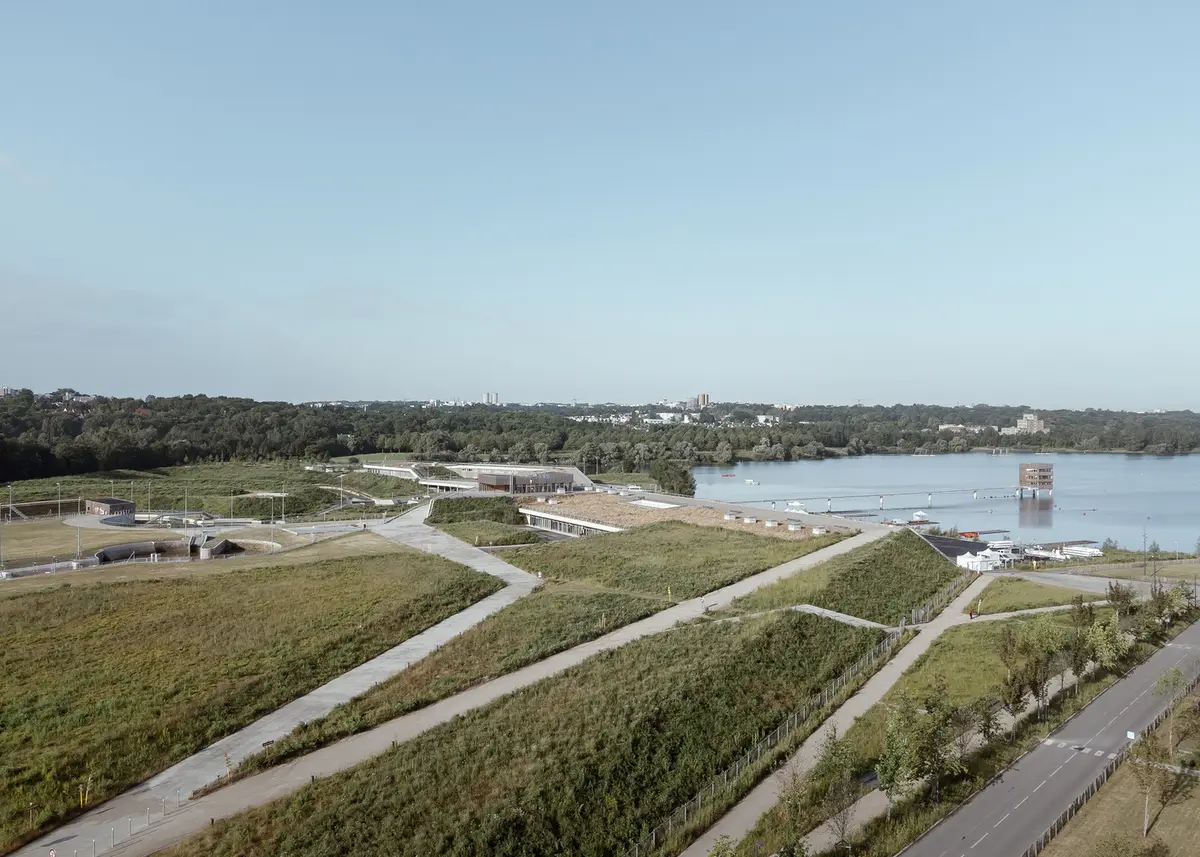
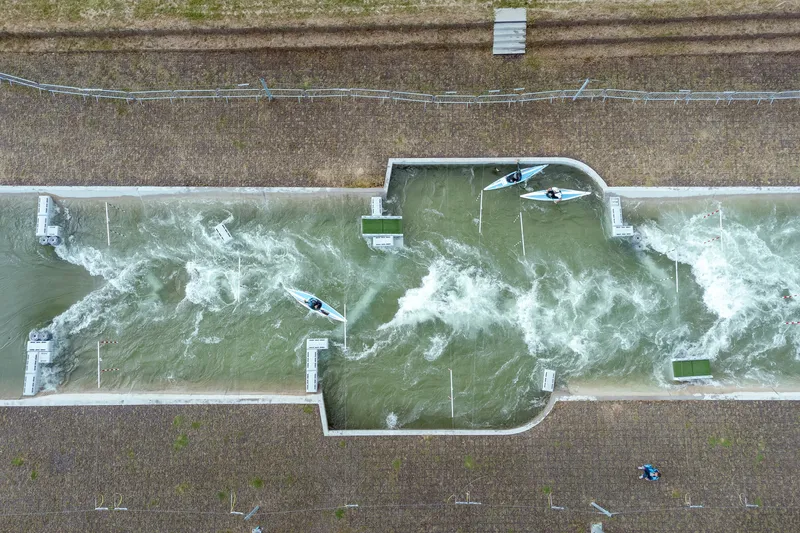
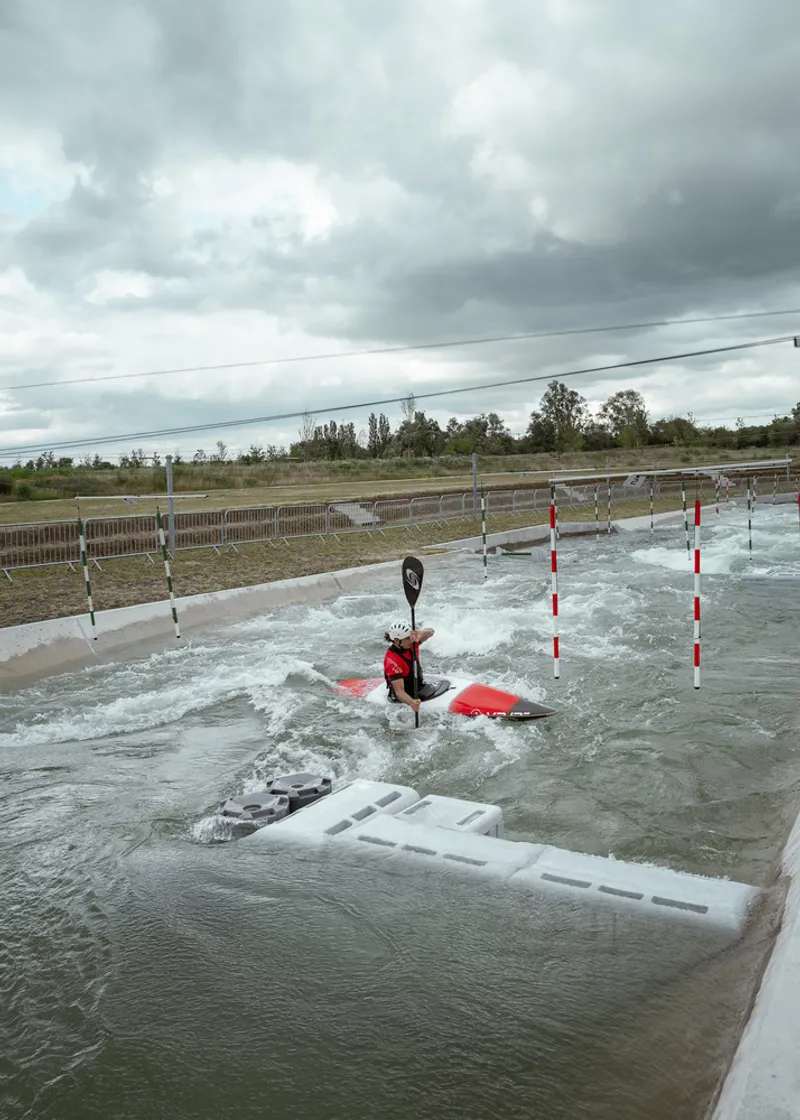
The Vaires-sur-Marne Olympic Nautical Stadium, designed byAuer Weber, stands as a premier sports complex in Île-de-France, just 30 kilometers east of Paris. Completed in 2019, this state-of-the-art facility is the first venue finalized for the 2024 Summer Olympic and Paralympic Games in France. Spanning 19,000 m², the stadium houses Europe’s largest whitewater center and serves as a competition hub for rowing, kayaking, canoe racing, and slalom events.
Photographed by Christoph Gramann and Aldo Amoretti, and developed with landscape architecture by Agence TER, this venue merges architectural precision with environmental sensitivity, creating a seamless integration between sport and nature.


Olympic-Ready Design and Landscape Integration
In 2012, the Île-de-France region initiated the redesign of the area surrounding Vaires-sur-Marne to enhance existing green and water spaces while preparing for Olympic-level competitions. The design team led by Auer Weber won the international design competition due to its innovative integration of buildings within the natural landscape.
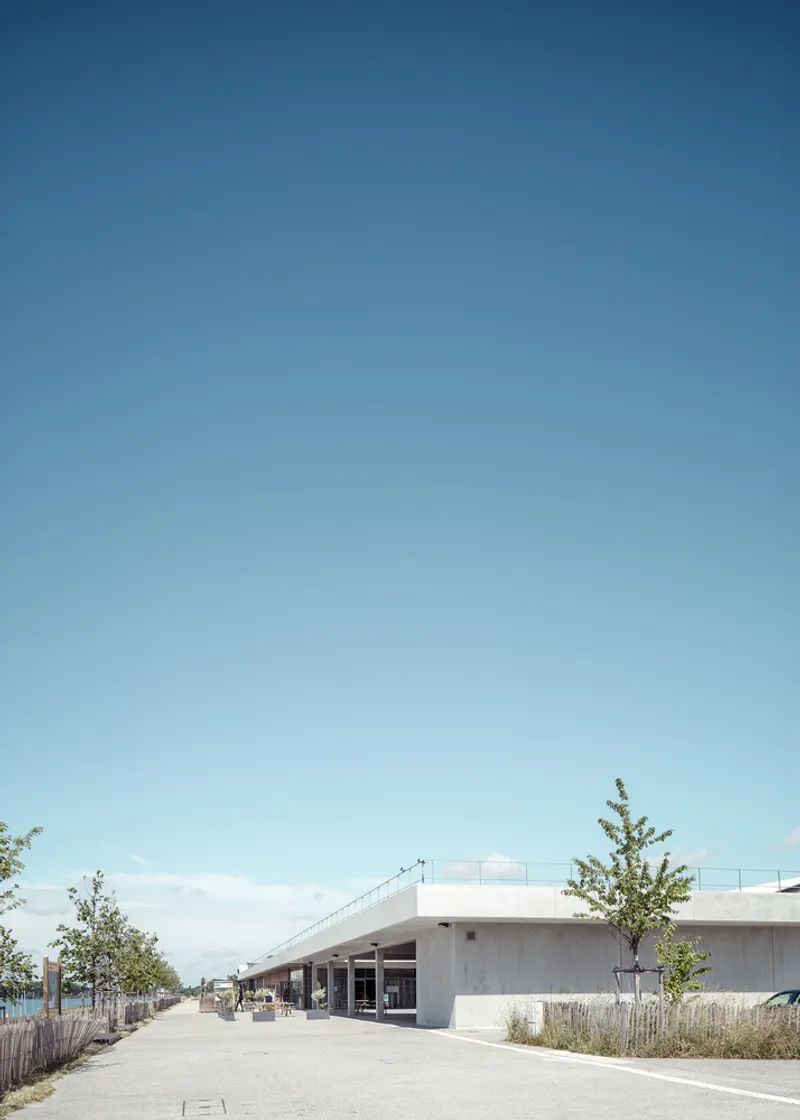
The stadium’s architecture reflects the surrounding terrain, continuing the natural plateau as a design element and unifying all functional areas: competition zones, training facilities, and public spaces, into a cohesive horizontal structure. This approach ensures both aesthetic harmony and practical functionality, allowing visitors to experience a fluid connection between architecture, landscape, and sport.


A “Sports Archipelago” in a Historic Water Park
The Vaires-sur-Marne stadium forms part of the 200-hectare Vaires-Torcy water sports park, a historic landscape on the banks of the Marne River. The park is framed by a large lake to the west, a recreational bathing lake and golf course to the east, the Marne River to the south, and a shipping canal to the north. The Île de Vaires sits at the heart of this network, effectively functioning as an island for water sports and leisure.
Auer Weber’s design interprets the landscape as a mosaic of small islands, or a “sports archipelago,” with water as the defining element. Fluid transitions connect individual installations, integrating professional training facilities, public recreational zones, and media centers into a single cohesive complex.
Architectural Features and Functional Zoning
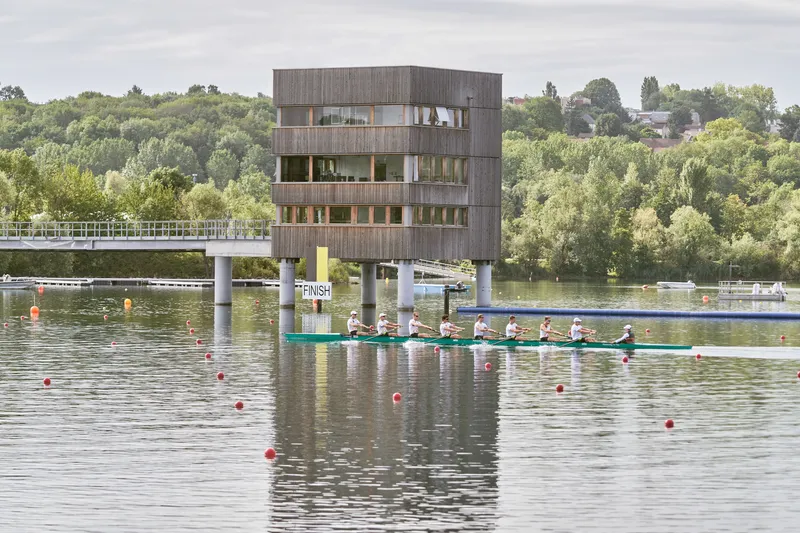
The stadium’s horizontal plateau spans north to south, linking the main entrance and parking area with public water sports facilities. Beneath this landscaped band, professional and amateur sports buildings coexist while maintaining visual and functional separation. Athletes can train without disruption from visitors, yet the competitions remain visible and engaging.
The complex also features:
- Judges’ buildings and central competition center connected by the plateau.
- A panorama hall above the central platform for spectators and media.
- Whitewater canyon-like amphitheater east of the plateau, providing close-up spectator views of slalom competitions.
A limited material palette of exposed concrete, wood, and polycarbonate panels (common in boat building) ensures architectural cohesion, blending seamlessly with the surrounding landscape.
Sustainable and Visitor-Centric Design
Auer Weber’s approach emphasizes sustainability and user experience. By integrating buildings into the plateau, the stadium maintains environmental balance while offering accessible public areas for water sports enthusiasts. Visitors can navigate the site intuitively, with clear sightlines to both competition arenas and recreational facilities.
Water remains the central design element, structuring spaces, guiding circulation, and creating visual continuity. This dynamic water-centric design transforms the stadium into more than a sports facility, it becomes a landmark that embodies both Olympic ambition and regional heritage.


The Vaires-sur-Marne Olympic Nautical Stadium is a model of modern sports architecture, combining functional performance, sustainable landscape design, and spectator engagement. From its canyon-like whitewater center to its harmonious plateau structure, the venue exemplifies how architecture can enhance both competition and community. As France prepares to host the 2024 Summer Olympics, this stadium stands ready as a testament to innovative design and athletic excellence.

All photographs are works of
Christoph Gramann, Aldo Amoretti


Popular Articles
Popular articles from the community


GROUP A Strips a 1969 Rotterdam Harbor Headquarters to Its Frame and Wraps It in Timber Louvers
In Rotterdam's M4H harbor district, Ferro Offices reuses a 1969 frame, adds one timber storey and reaches BREEAM-NL Outstanding.

Architekt Andreas Gruber Scatters 23 Dark Timber Chalets Across a South Tyrolean Forest Edge
In Molini di Tures, Amonti Chalets breaks a resort into a hamlet of gabled timber houses, with parking, storage and services pushed into the slope.

Cube Design Draws an Ecological Corridor Between Two Shenzhen Hills with the Nankai Building
Beside Shenzhen's container docks, the Nankai Building pairs stacked balconies with a climbing green screen to connect two hillsides across its height.

U.GA Architects Wraps an Oval Rooftop Pool in Curved Board-Formed Concrete on Busan's Jeollidan-gil
In Busan's Jeonpo-dong, a 454 m² mixed-use block stacks a neighborhood facility, guest rooms and an oval rooftop pool inside spiraling concrete walls.

Similar Reads
You might also enjoy these articles


Hodi-Mandai Geram
Project Function: Preservation and revitalization of the Intangible heritage and socio-spatial identity of the Hodi by Housing, Cultural Memory Center, Sacred Grove, landscape, local tourism economy


Olio Towers: A Mid-Rise for Performers That Fuses Housing, Rehearsal, and Stage
Located blocks from Houston's Theater District, this modular tower stacks living units around a central performance atrium.

Oasis: Modular Green Housing Carved into Dhaka's Urban Fabric
A shortlisted Plugin Housing entry reclaims unauthorized settlements in Dhaka with stepped concrete volumes, green roofs, and ventilation-driven design.

Black Hole: A Floating Megastructure for the Post-Physical Era
Emiliano Mazzarotto envisions a spherical, self-scaling arena where e-sports, digital hotels, and holographic stadiums replace traditional public space.

Explore Sports Architecture Competitions
Discover active competitions in this discipline

Challenge to design a barrier free sports center

Challenge to design an outdoor ice-rink and park

Challenge to reimagine the Iron Throne

Photograph architecture without architects
Comments (0)
Please login or sign up to add comments
No comments yet. Be the first to comment!