
Ivy Studio Wraps a Montreal Tech Office in Dark Blue Corrugated Steel
Vention's headquarters channels industrial materiality into a refined workspace where ribbed metal panels anchor every room.


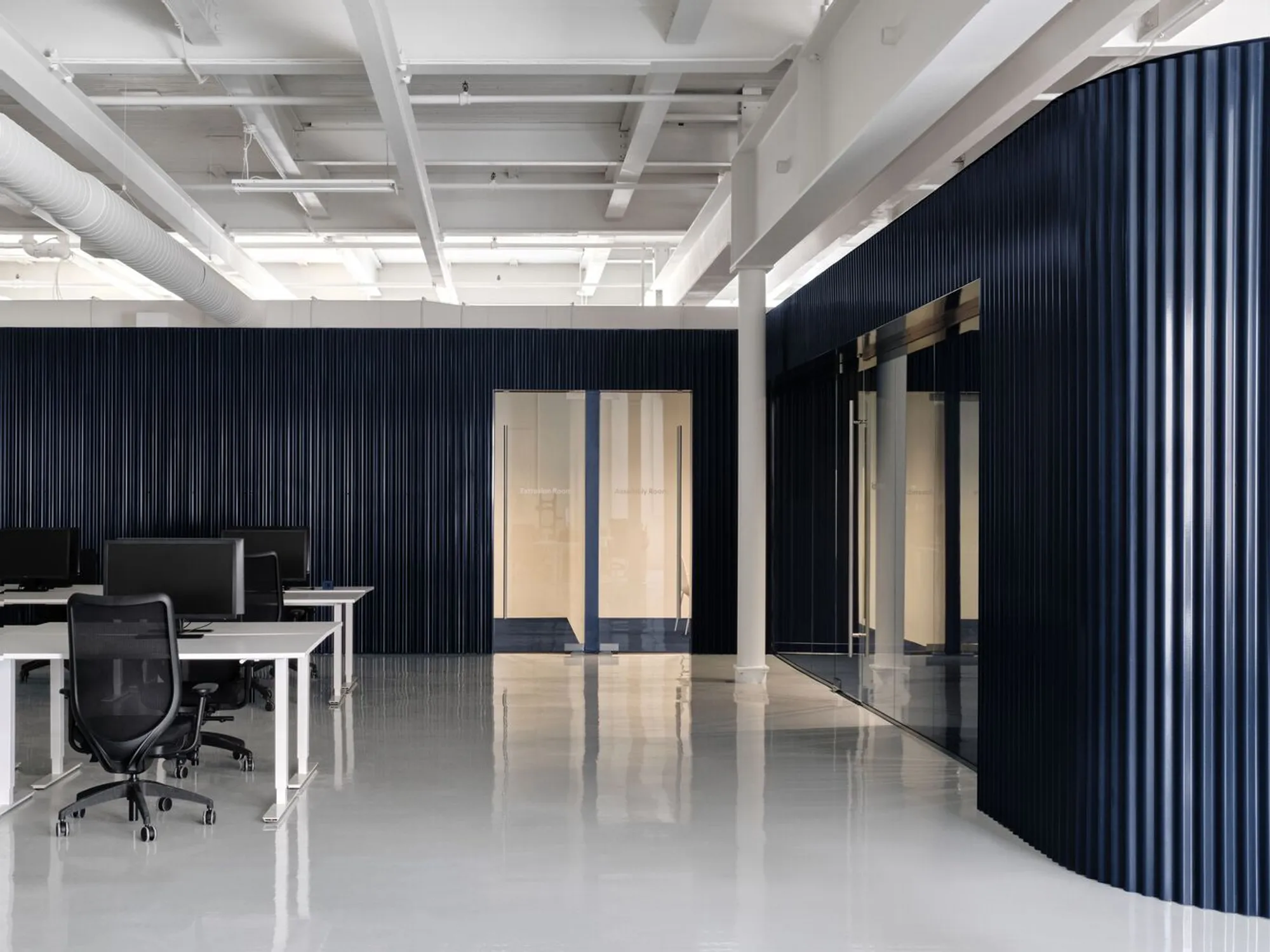
Most offices that claim an "industrial" aesthetic settle for exposing ceiling ducts and calling it a day. Ivy Studio's design for Vention, a Montreal-based manufacturing automation company, actually earns the label. The headquarters takes corrugated steel, a material you would find on a factory floor or loading dock, and deploys it as the primary interior cladding. Dark blue ribbed panels curve through the floorplate like freestanding volumes, defining reception, meeting rooms, and circulation without conventional walls.
The result is an office that reads as a single material idea developed across every scale, from a table leg detail to a sweeping corridor wall. Against a backdrop of exposed painted structure and polished white floors, the blue corrugated surfaces do all the spatial work: they separate, they enclose, they absorb sound, and they give Vention a visual identity rooted in the products it actually makes. It is a workplace that respects the company's engineering culture rather than papering over it with tech-office clichés.
A Reception That Sets the Material Contract
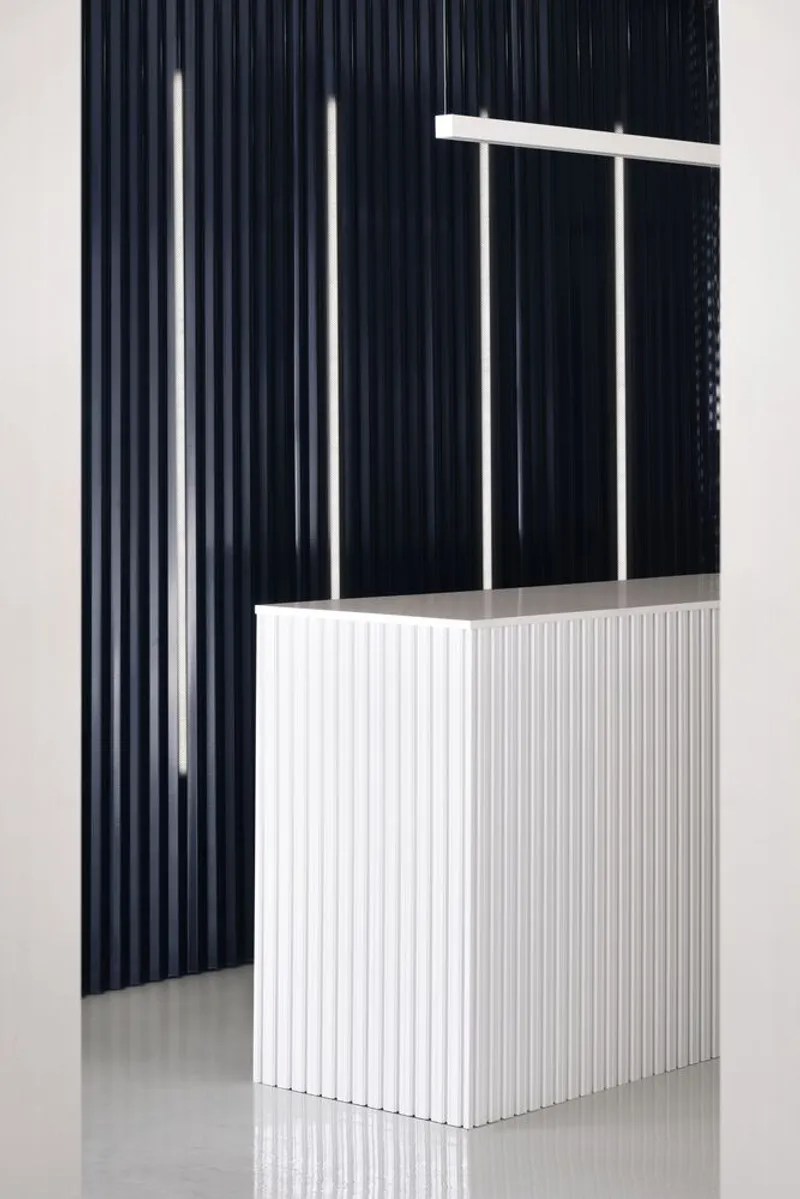
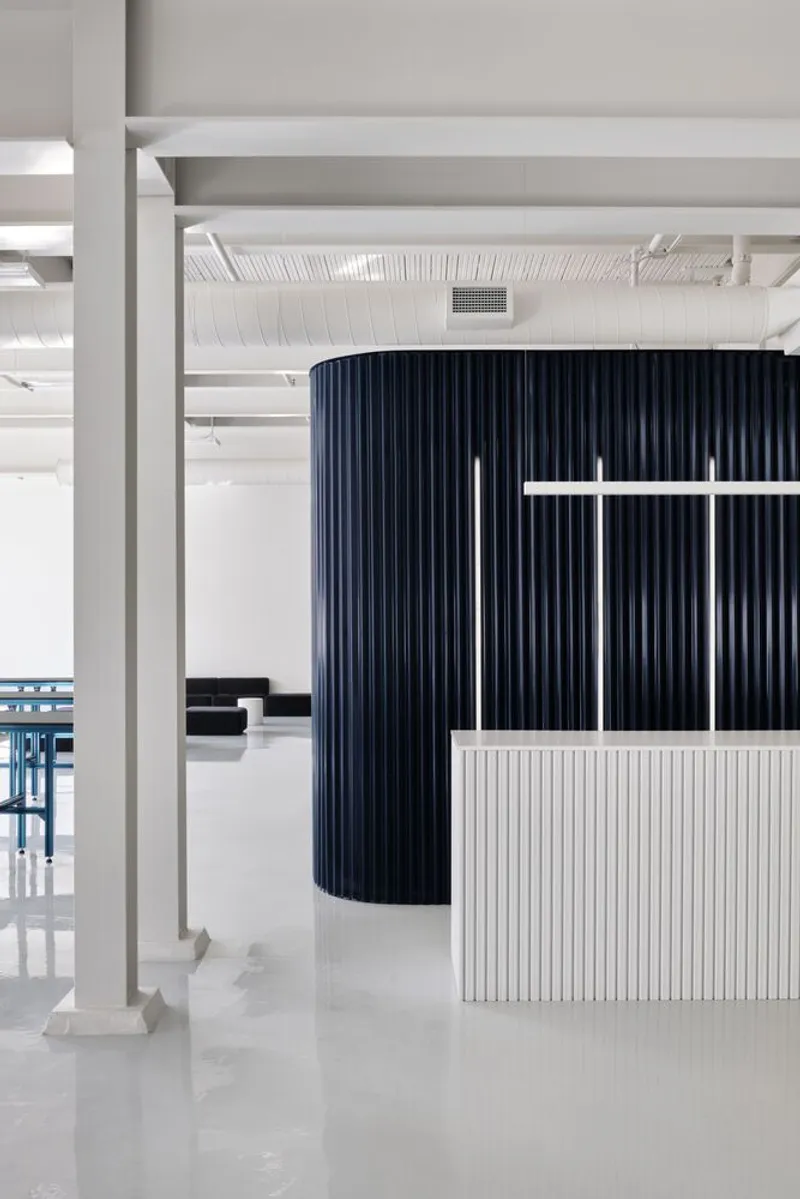
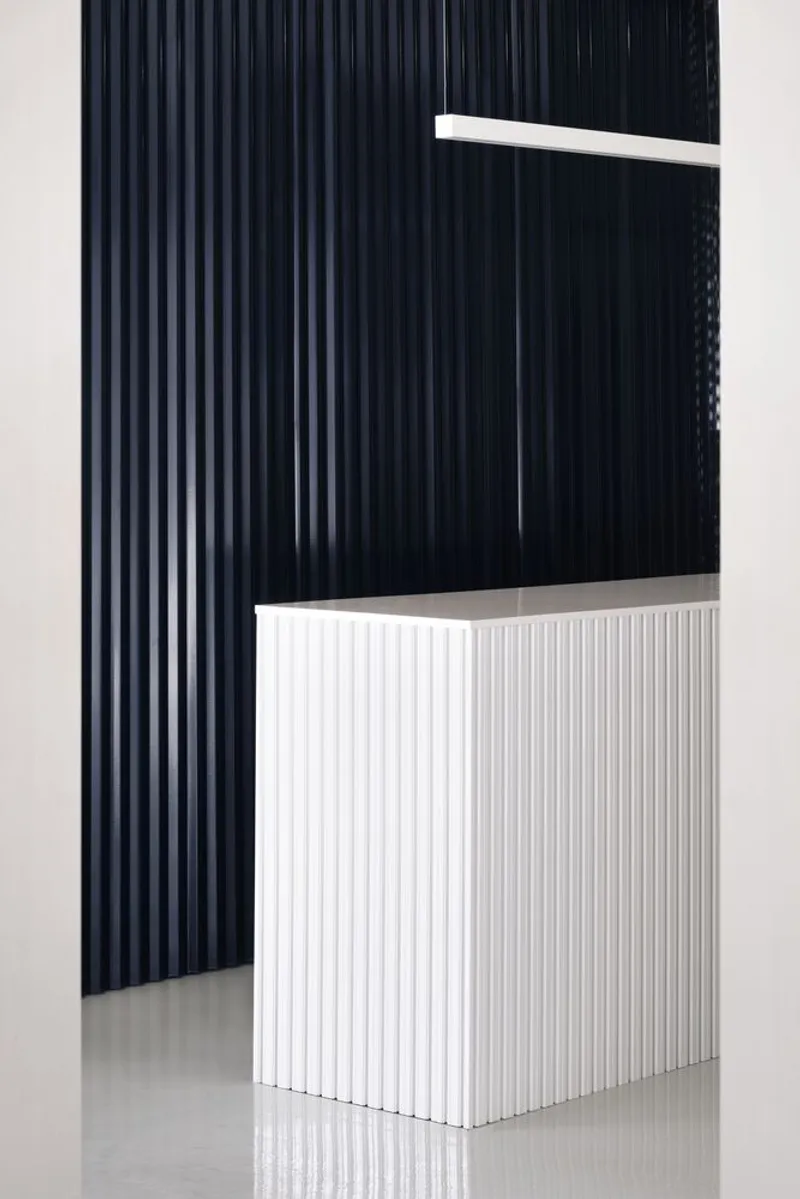
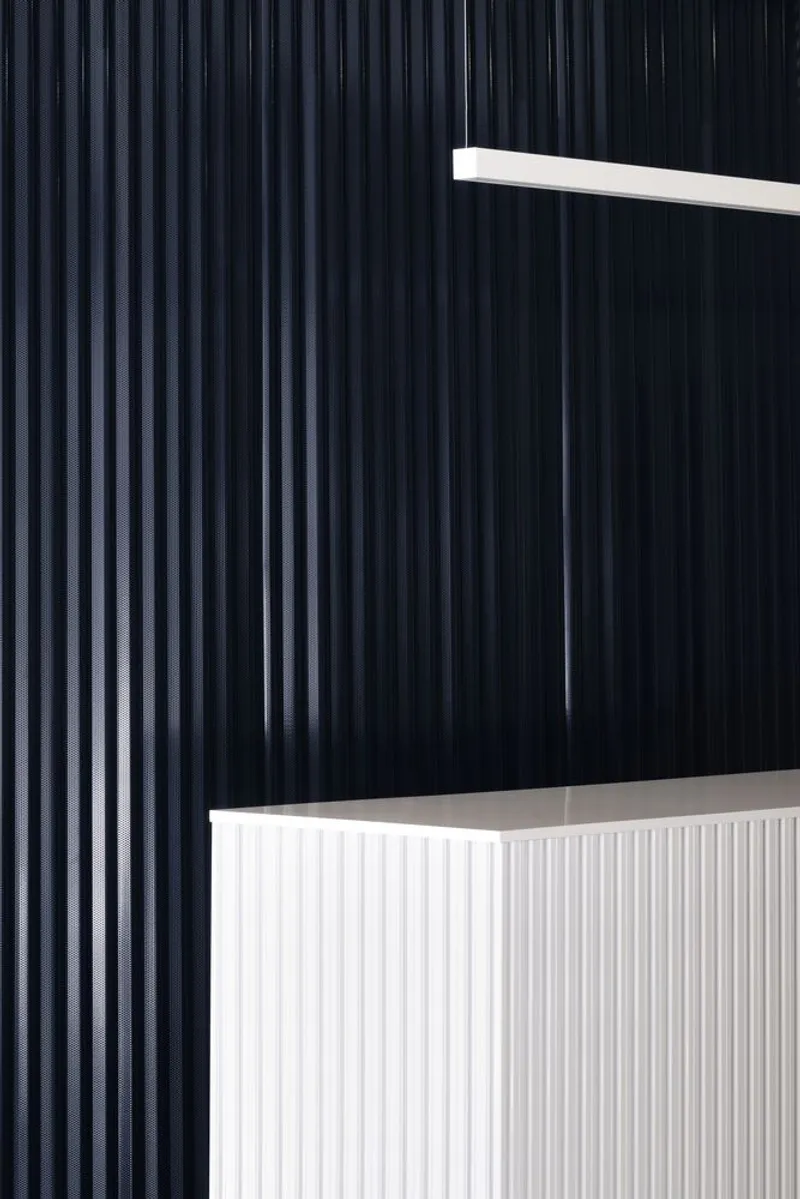
The first thing visitors encounter is a white vertically slatted reception counter pressed against a wall of dark blue corrugated panels. The pairing is deliberate and unsubtle: two ribbed surfaces in contrasting tones, one light, one dark, establishing the material vocabulary that will repeat throughout the entire office. Linear lighting overhead traces the seam between wall and ceiling, drawing the eye along the counter's length.
The counter's white slats have a refined, almost furniture-grade quality, while the corrugated steel behind them is unapologetically industrial. That tension is the project's engine. By placing these materials in direct contact at the threshold, Ivy Studio signals that this is not a standard corporate lobby. The curve of the blue wall softens what could feel aggressive, guiding movement toward the office beyond.
Corrugated Steel as Space-Maker
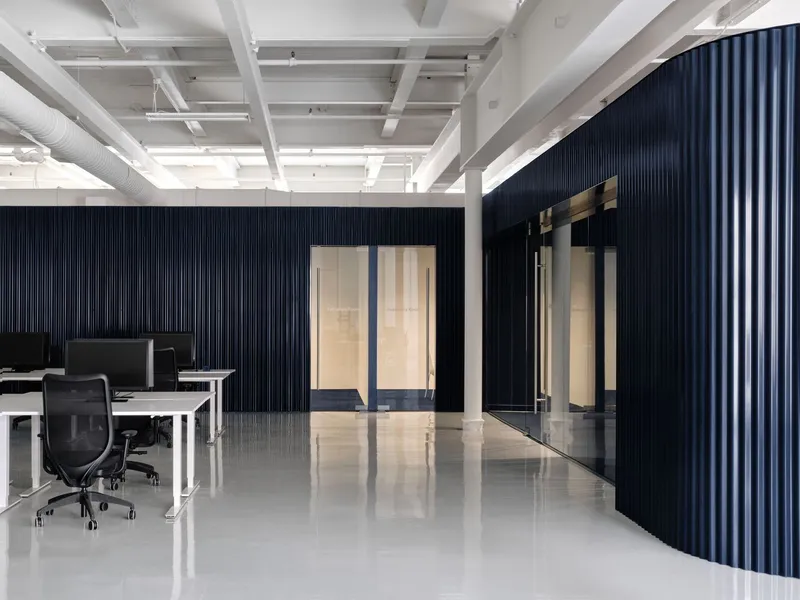
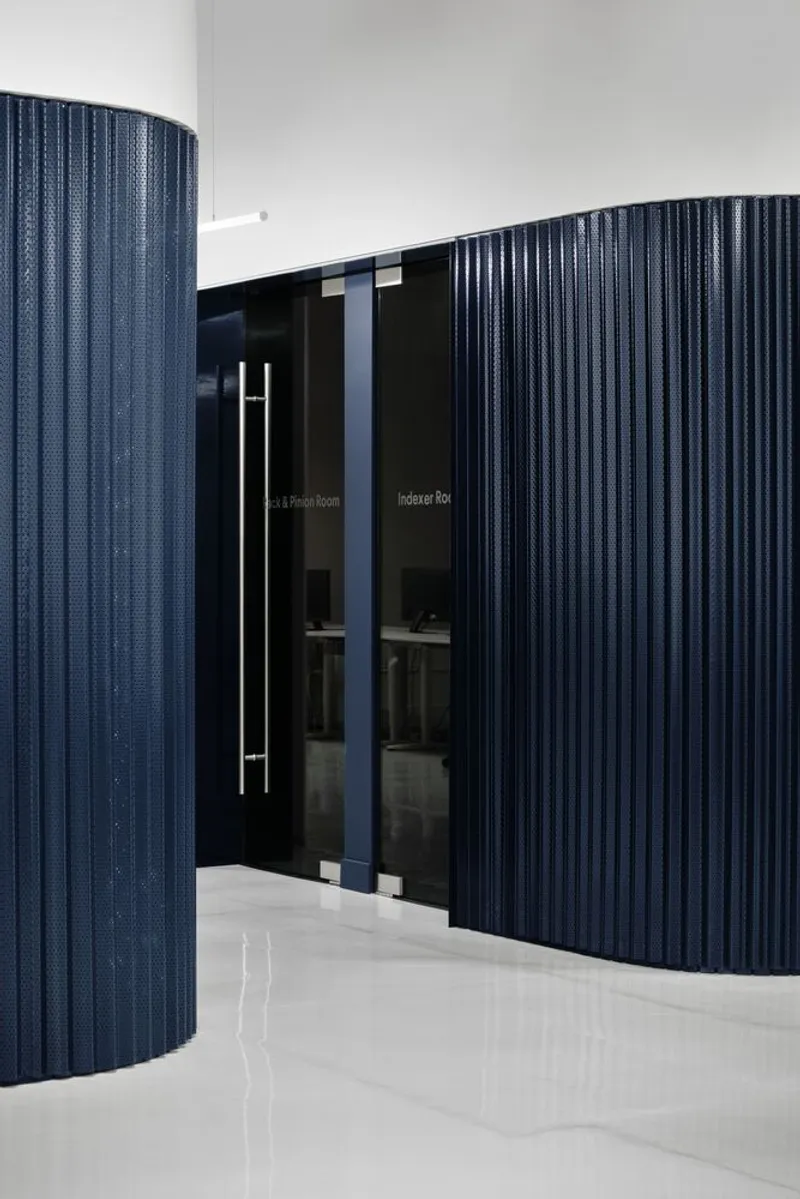
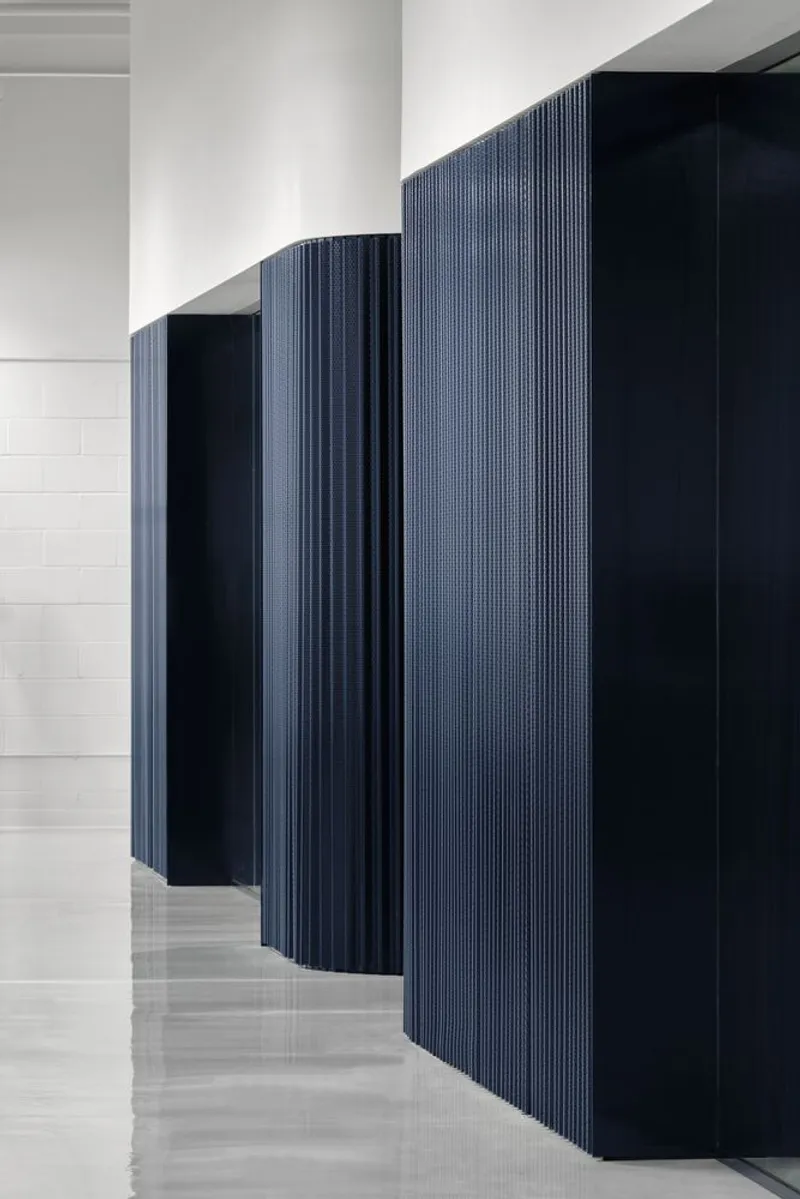
Walk deeper into the floorplate and the corrugated panels become architectural elements in their own right. They curve to form enclosures, run in long straight lines to define corridors, and frame illuminated doorways that punch through them with glass doors and vertical handles. On the polished white floor, their reflections double the visual weight, making the blue volumes appear to float and extend downward simultaneously.
The curves deserve attention. Rather than relying on drywall partitions that would have been cheaper and faster, the design bends corrugated metal into gentle arcs. This is not easy to execute cleanly, and the precision here suggests careful coordination between fabricator and installer. The payoff is a series of freestanding objects that feel more like oversized pieces of industrial furniture than traditional walls, giving the open plan a rhythm without fragmenting it.
The Open Floor: Workstations and Glazed Rooms
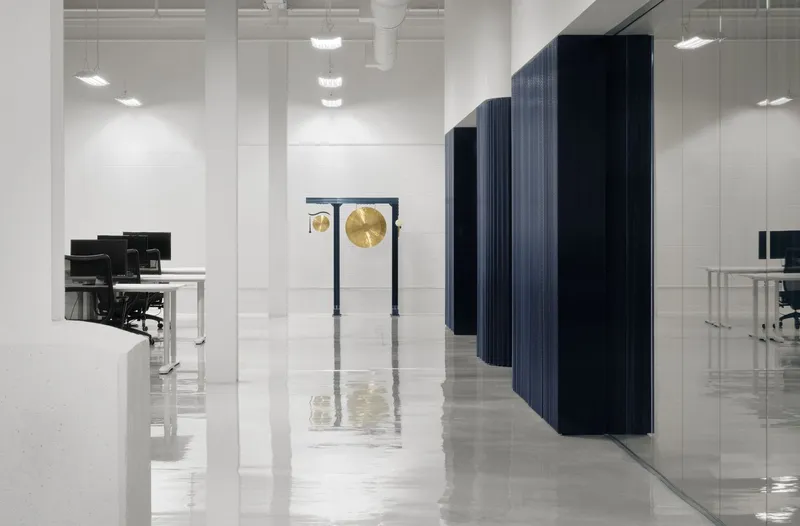
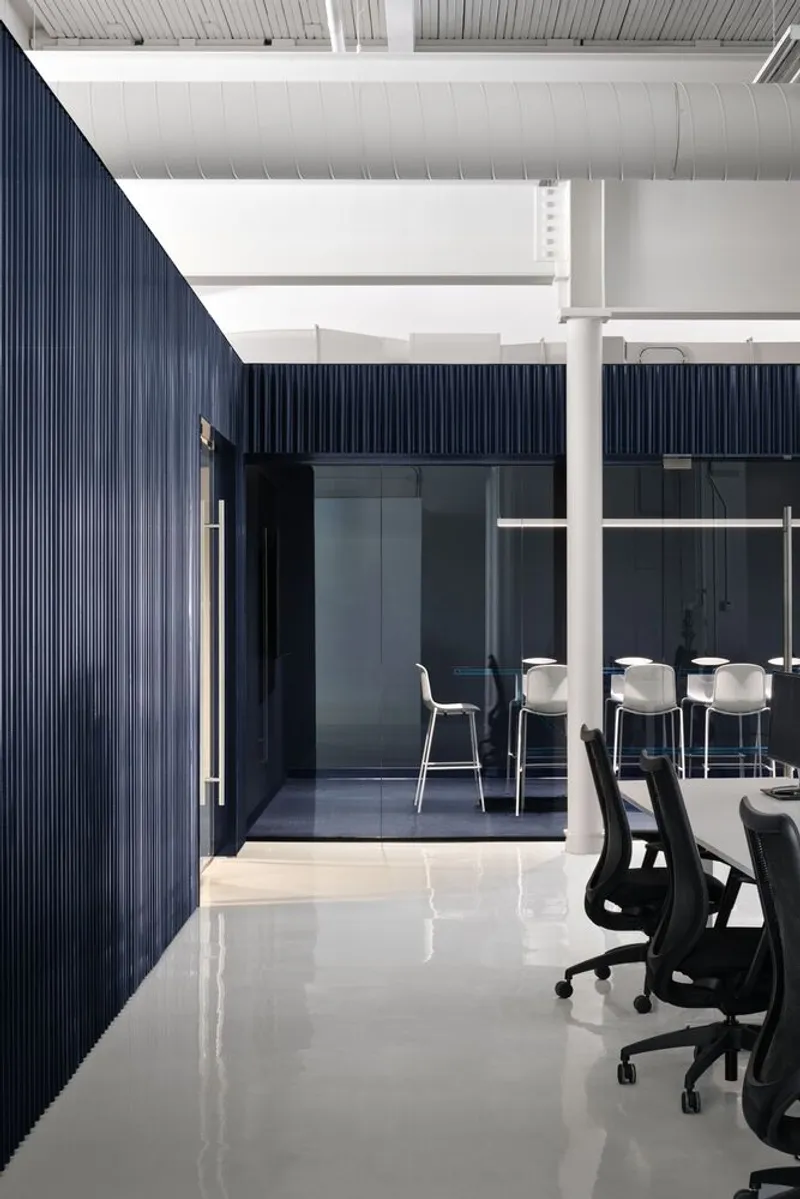
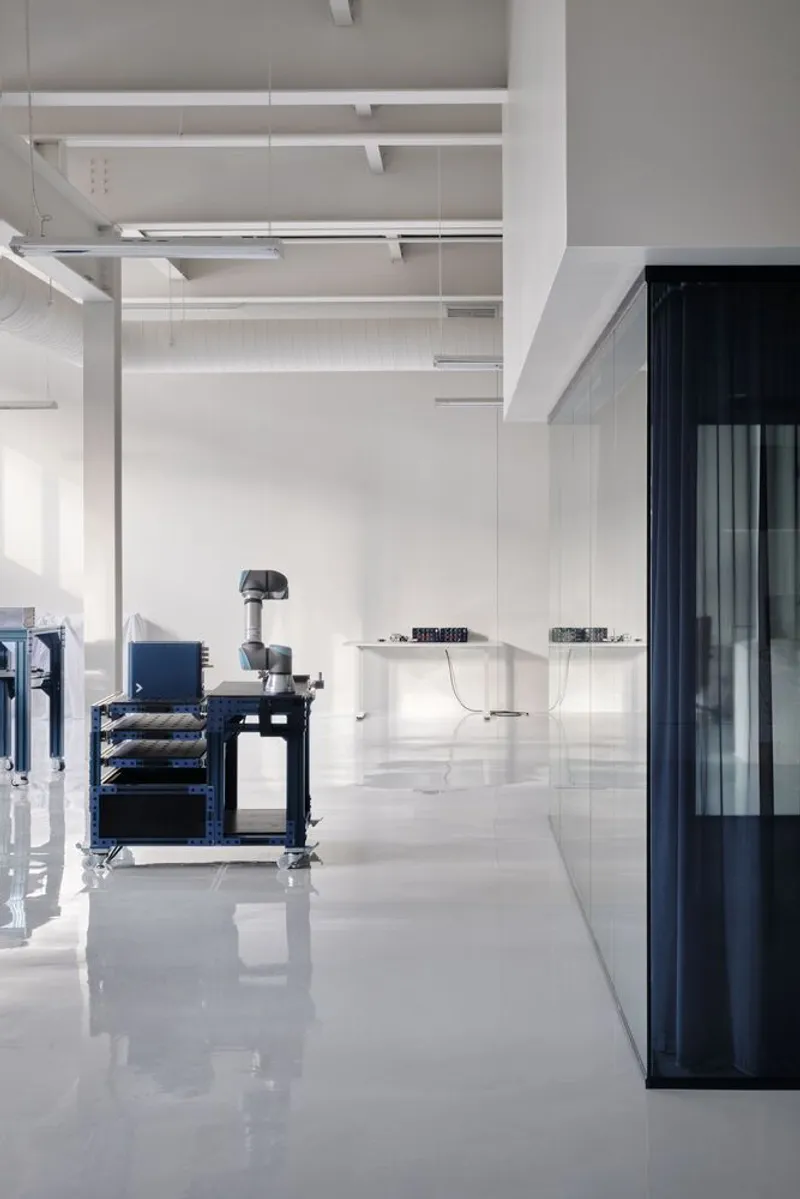
The workstation zones sit on either side of the central corrugated volumes, organized in rows that benefit from natural light and the high exposed ceiling. Dark blue ribbed partitions mark transitions between open desk areas and enclosed meeting rooms, the latter wrapped in glass to maintain visual continuity. The industrial ceiling, with its painted beams and exposed ductwork, provides a raw canopy that the polished floor reflects back upward.
What works here is restraint. The desks themselves are simple. The chairs are standard. The flooring is a single neutral surface. All the design energy has been concentrated in the corrugated enclosures and the lighting that traces them. When everything around a signature material is kept quiet, that material gets louder. It is a lesson many workplace projects forget.
Meeting and Focus Rooms Behind Curved Screens
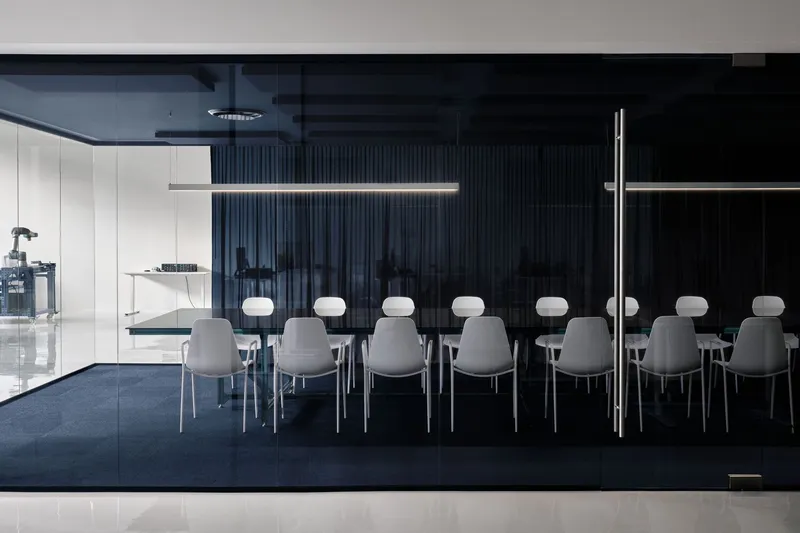
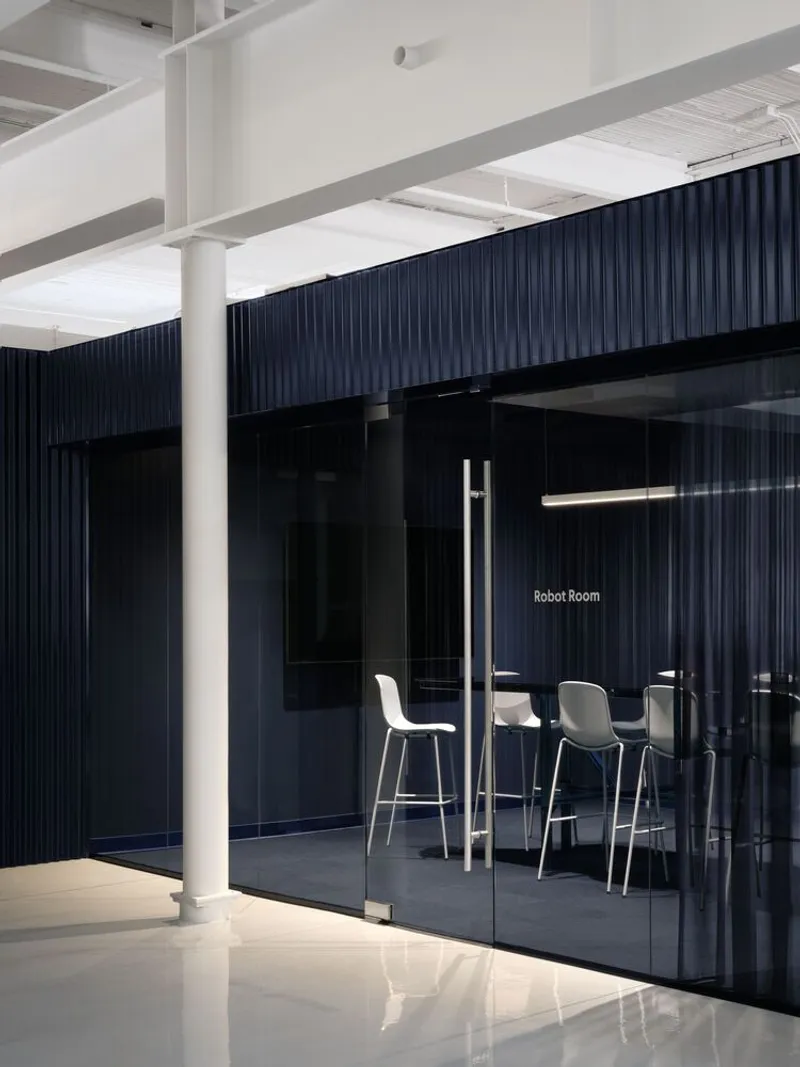
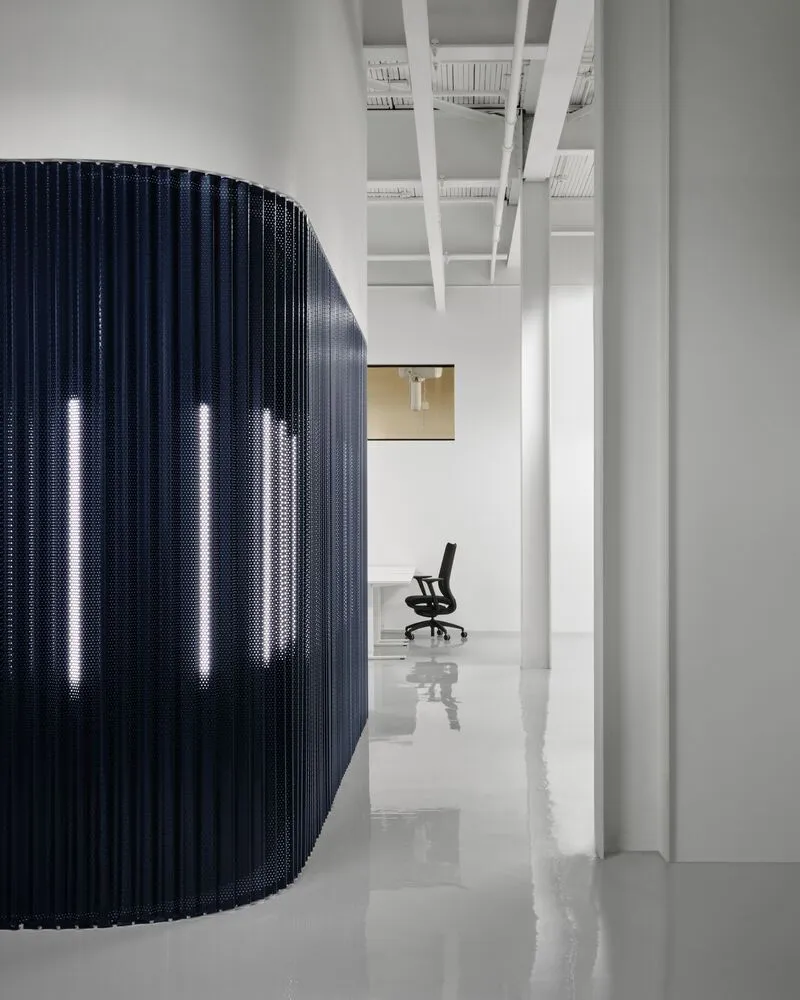
Conference and focus rooms are carved out of the blue corrugated masses. One room features a long table flanked by grey upholstered chairs and terminated by a dark ribbed acoustic wall that doubles as a visual backdrop for video calls. Another is a glass-enclosed high-top zone with stools set against a fluted blue surface and white structural columns. A perforated curved screen integrates vertical lights along its edge, blending acoustic function with ambient illumination.
The acoustic logic is worth noting. Corrugated and perforated metal surfaces break up sound reflections that would otherwise bounce freely off the polished floor and exposed concrete above. By making the acoustic strategy visible rather than hiding it behind fabric panels, the design turns a technical requirement into an aesthetic decision. You can see, and almost feel, what the material is doing for the room's sound quality.
Cafeteria and Kitchen: Mesh, Metal, Daylight
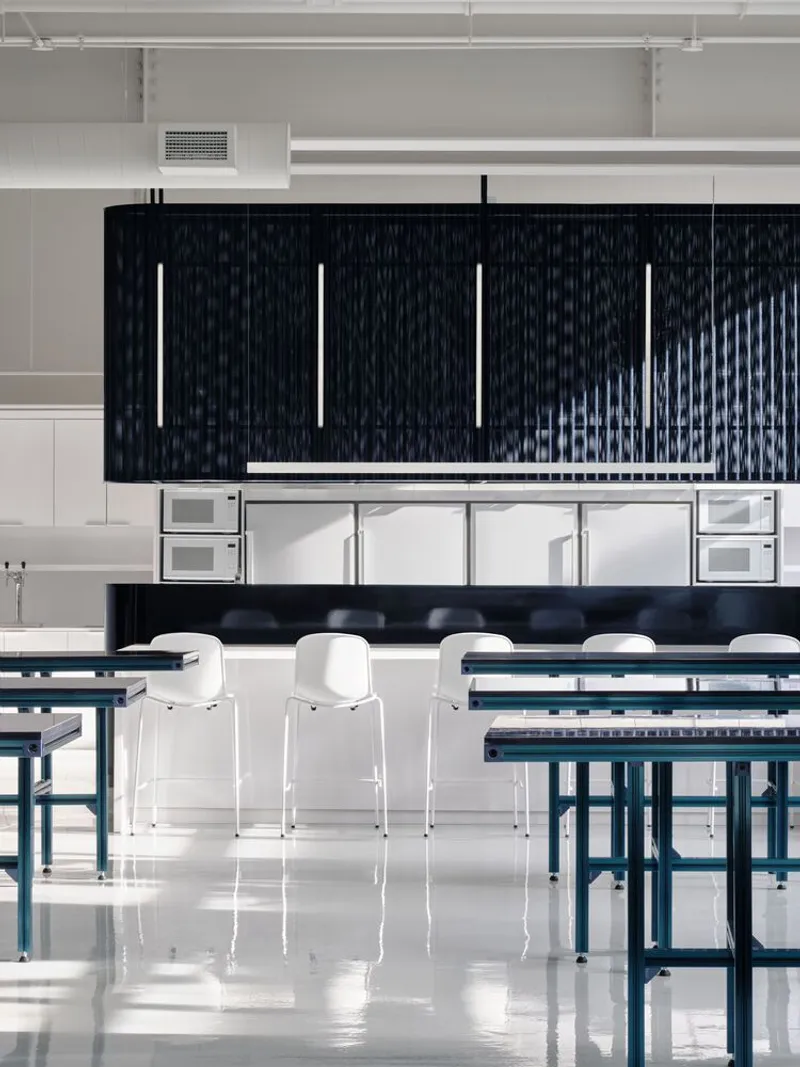
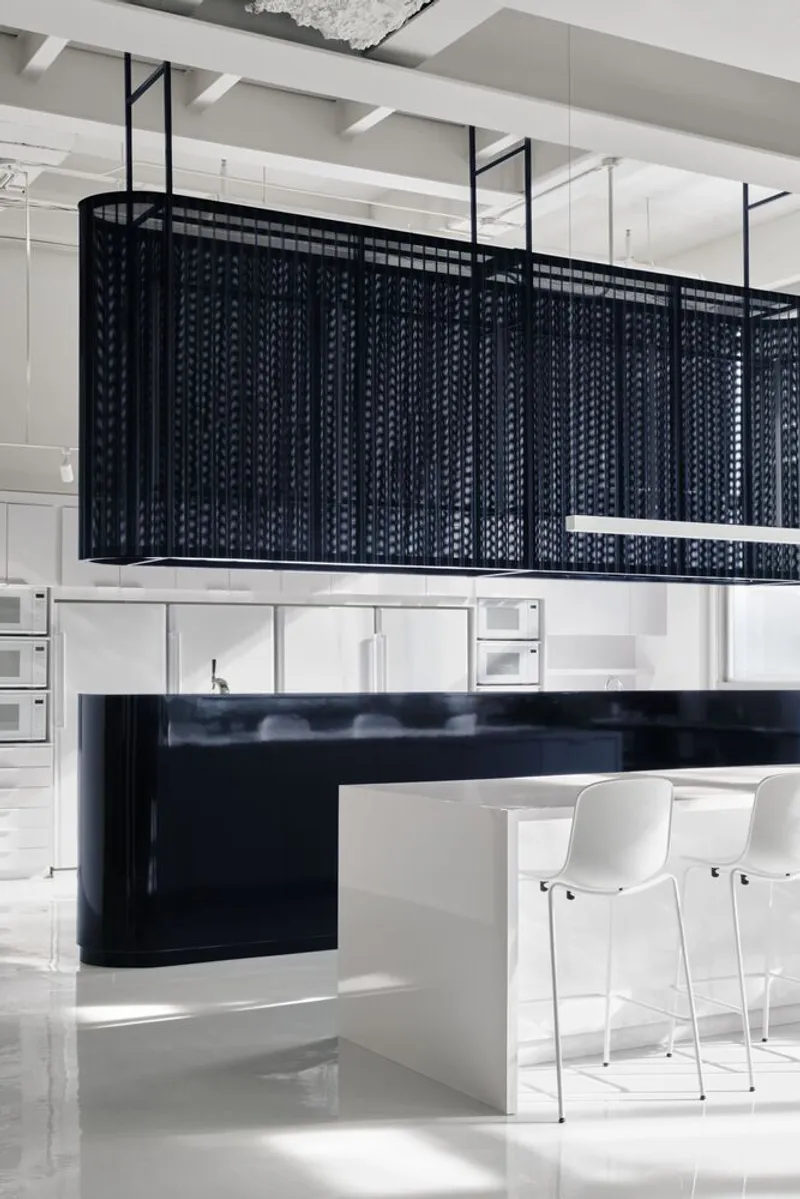
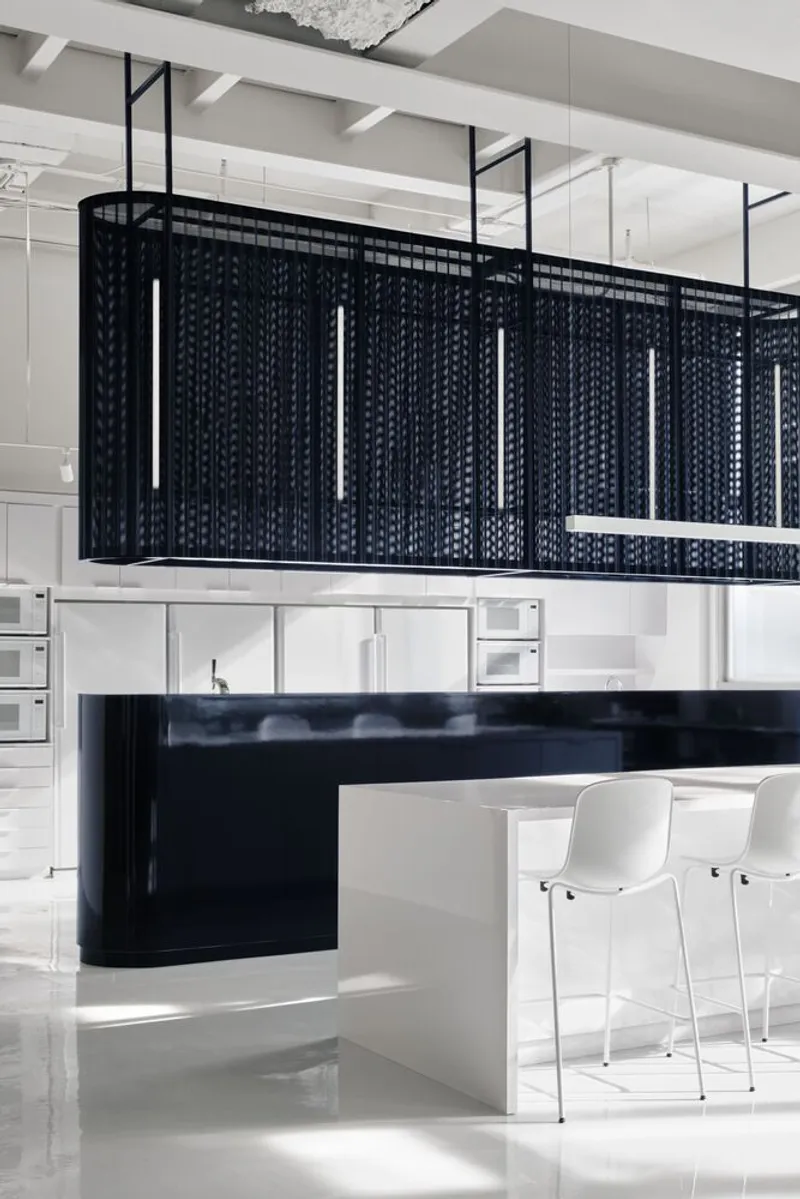
The cafeteria introduces a second material move: suspended black perforated metal mesh screens that hang above a white kitchen island and bar seating. These mesh enclosures define an overhead volume, creating a sense of intimacy in an otherwise tall, open space. Pendant lights drop through the mesh, casting patterned shadows onto the counter and stools below.
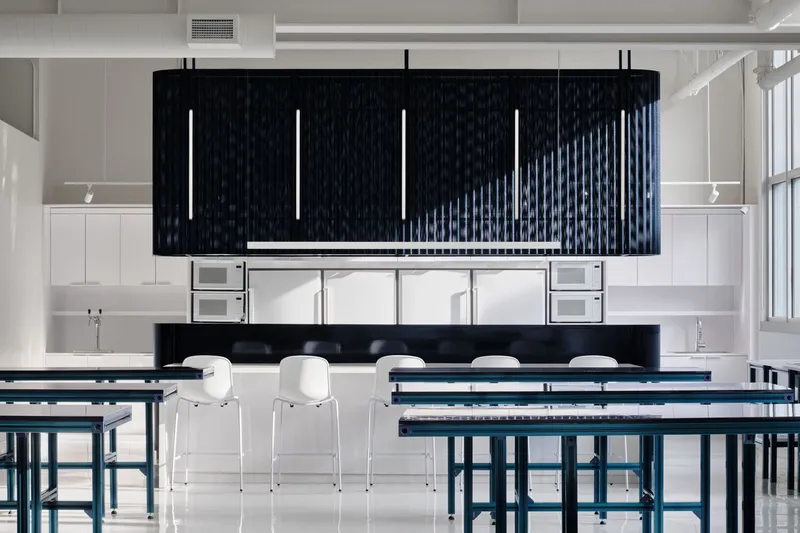
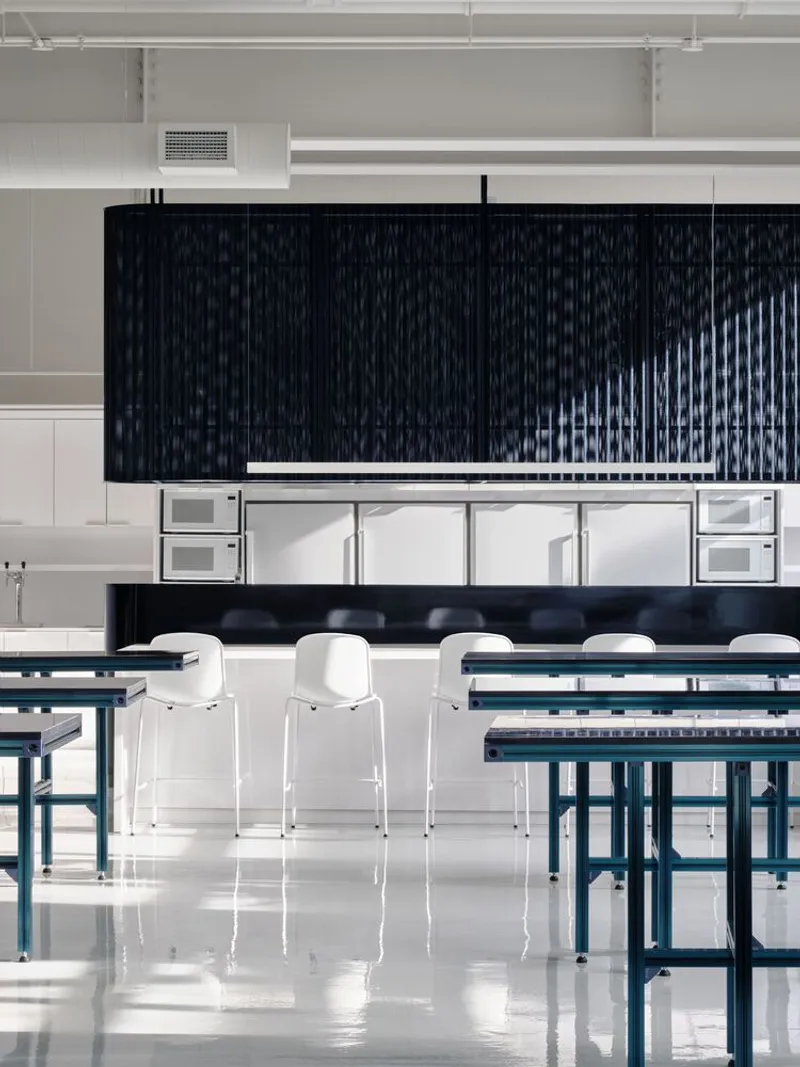
The kitchen area pairs a dark fluted canopy over the counters with white workbenches and stools, maintaining the contrast between industrial cladding and clean, minimal furnishings. Daylight washes across the communal dining area, and the reflective floor amplifies it. Blue metal table legs and stackable white chairs keep the furniture palette tight. Everything here reads as considered without feeling precious, which is exactly the right tone for a lunchroom that needs to handle daily wear.
Material Details at Furniture Scale
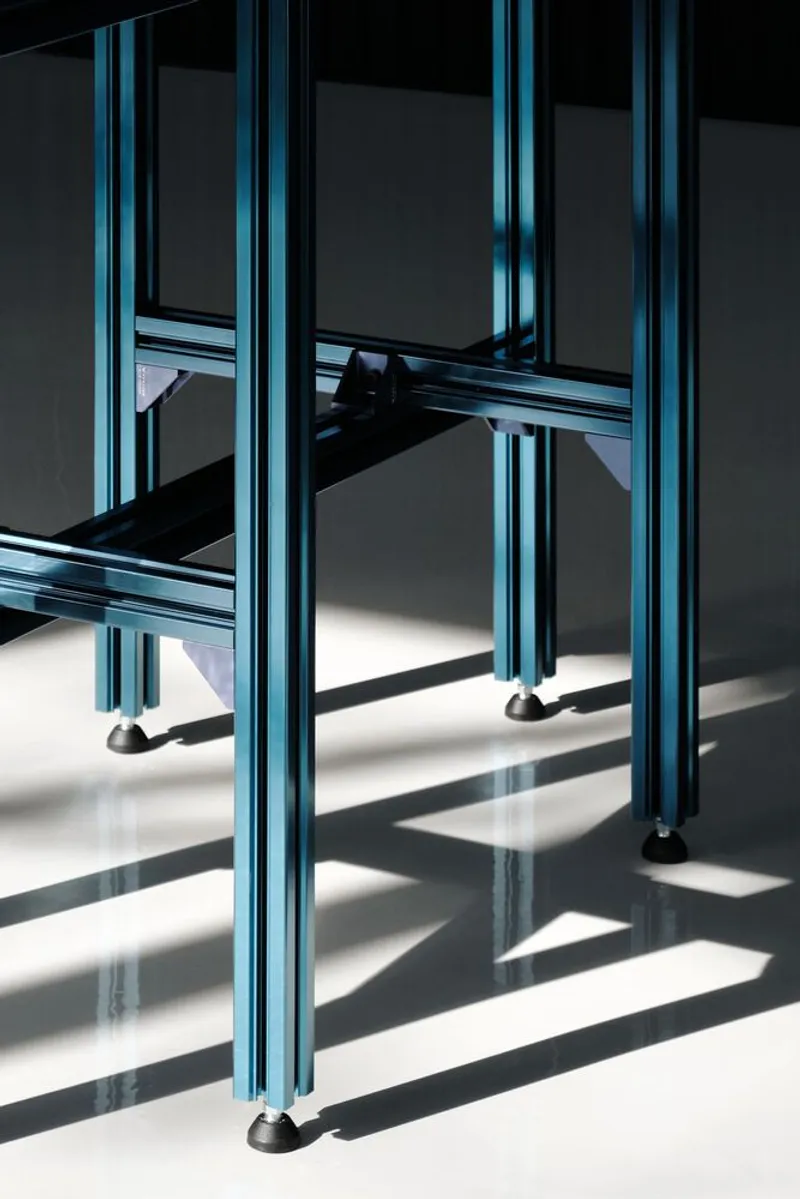
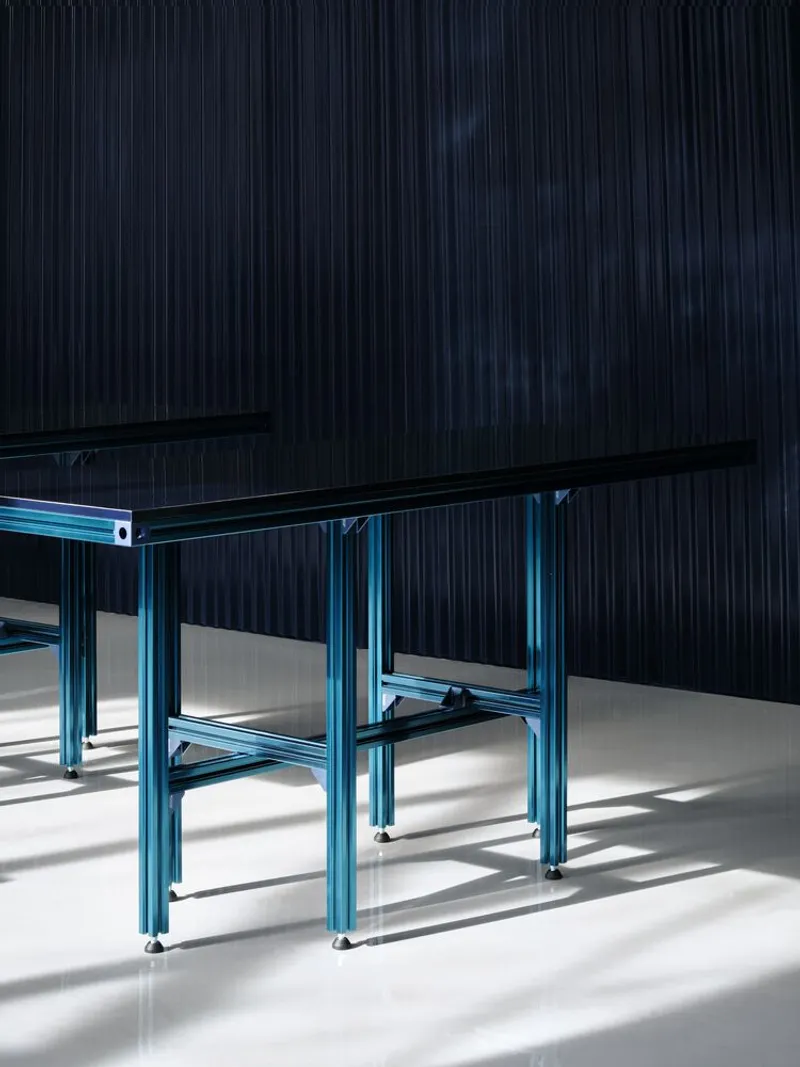
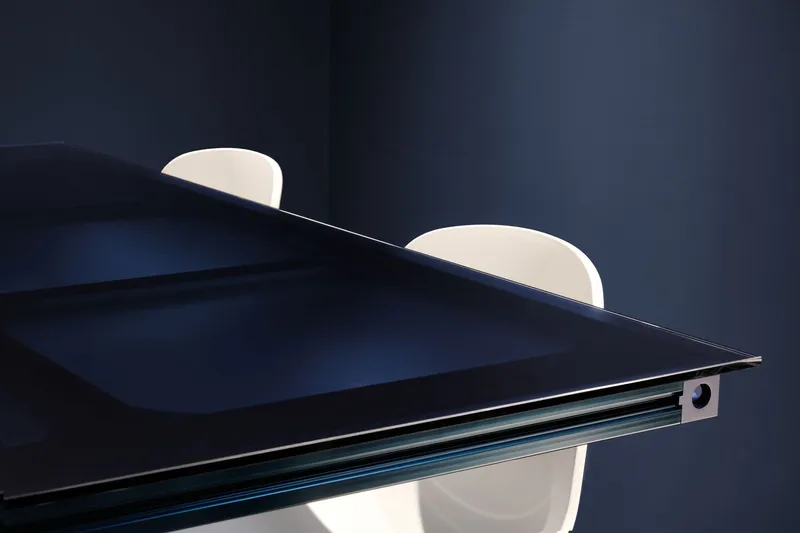
The most telling sign of a committed interior project is whether the material palette survives at close range. Here it does. Blue anodized aluminum table bases with adjustable feet sit on the polished floor, casting crisp shadows. Tubular steel legs in the same blue pick up the corrugated wall tones. Even the table edges carry a ribbed blue detail that rhymes with the larger panels behind them.
These details matter because they prove the design was not just a surface application. The corrugated language was developed as a system that scales from architecture down to furniture components. When a workplace achieves that kind of continuity, the brand identity stops being a logo on a wall and starts being embedded in every surface you touch.
Transparency and Enclosure in Balance
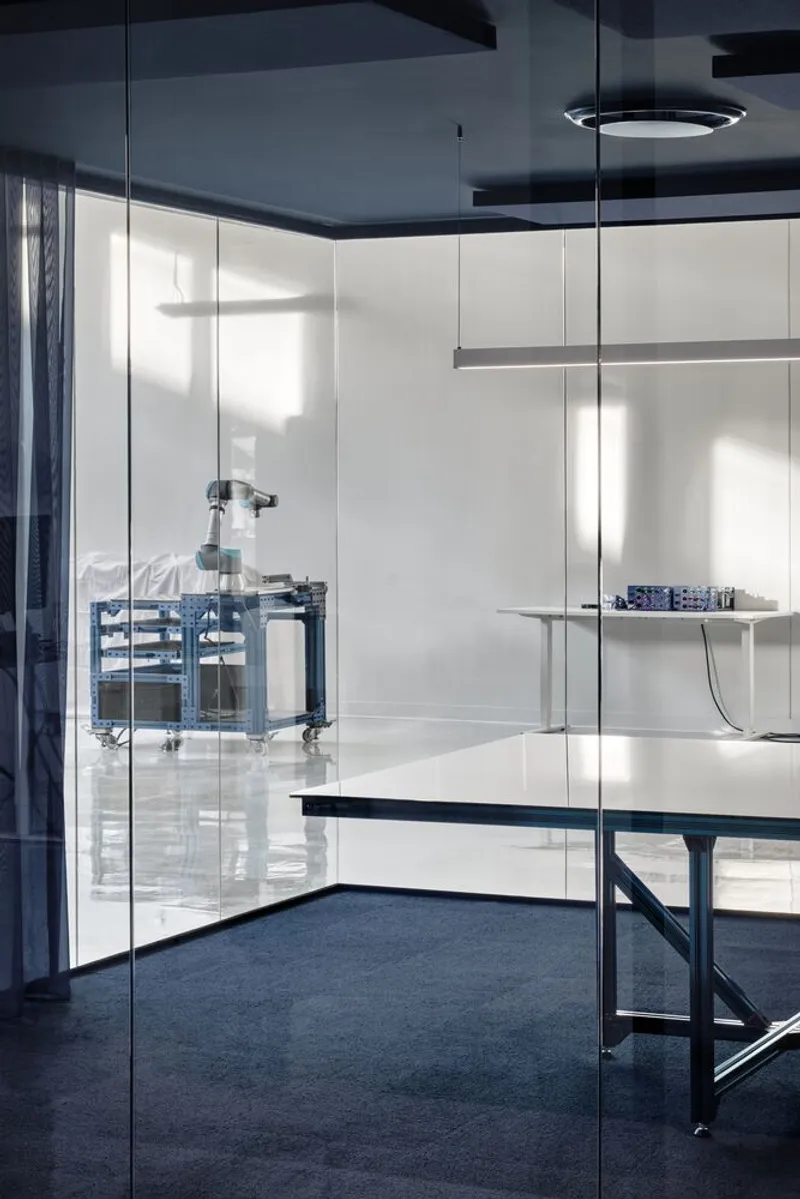
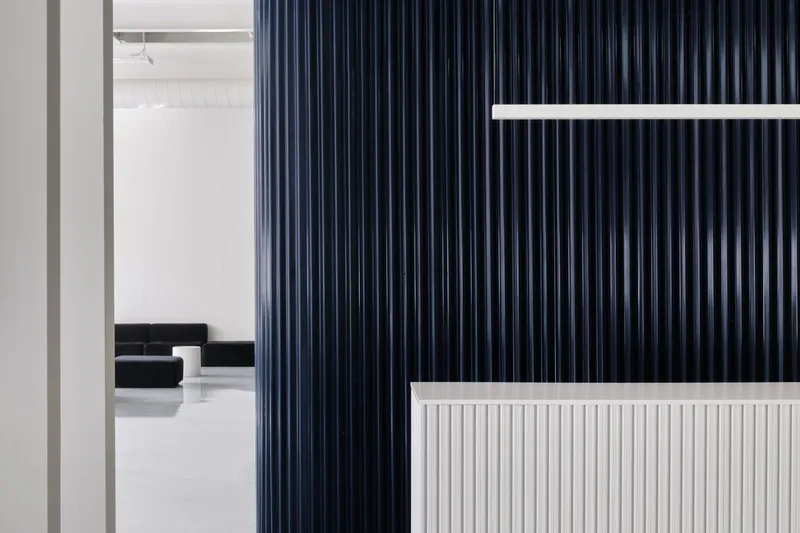
Glass partitions play a supporting role throughout, always paired with the corrugated volumes rather than standing alone. A white-walled room is separated from a blue-carpeted space by a full-height glass wall. Elsewhere, the white fluted reception counter is glimpsed through a gap beside a dark panel wall. The interplay between opaque metal and transparent glass creates layered sightlines that change as you move through the floor.
The balance is well judged. Too much glass and the office would feel like an aquarium. Too much corrugated steel and it would feel bunker-like. By alternating solid and transparent enclosures, the design lets daylight penetrate deep into the plan while still giving teams acoustic and visual privacy when they need it.
Plans and Drawings
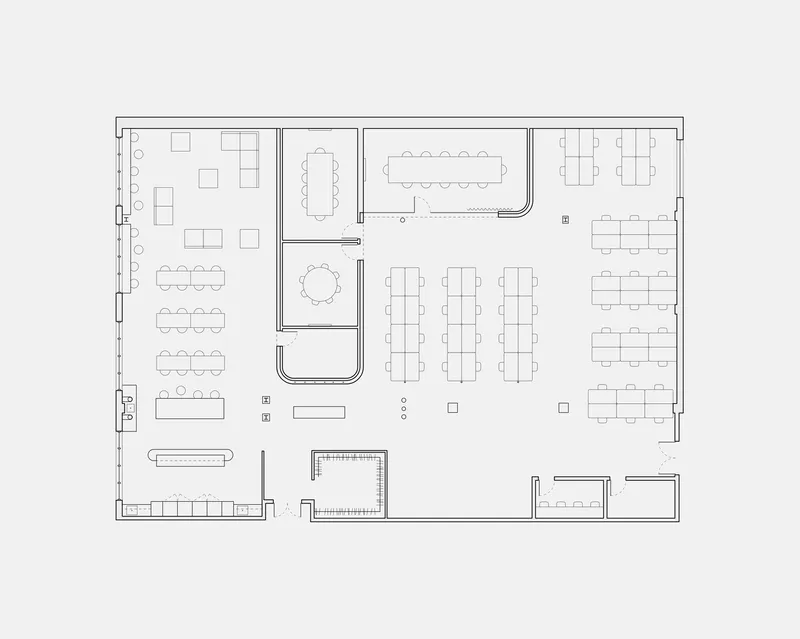
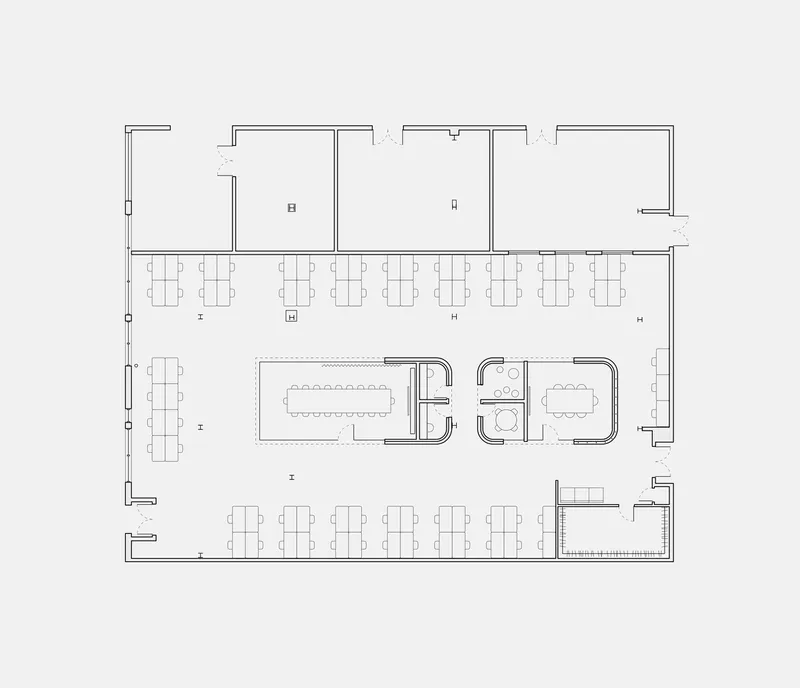
The floor plans reveal the organizational logic that the photos only hint at. Rows of individual workstations flank the perimeter, while central zones are occupied by meeting rooms, phone booths, and the kitchen and dining area. The corrugated volumes read on plan as curved freestanding objects inserted into the open floor, confirming that they were conceived as discrete spatial elements rather than standard partition walls. Restrooms and service cores tuck against the building's core, freeing the perimeter for daylight and workstations.
Why This Project Matters
Vention's office is a case study in how a single material commitment can organize an entire workplace. Rather than assembling a mood board of finishes and hoping they cohere, Ivy Studio bet on corrugated steel and then followed that bet from the lobby wall down to the table leg. The result is an interior with genuine identity, one that could only belong to a company that makes things from metal.
It also demonstrates that industrial materials do not have to produce harsh environments. Through careful detailing, acoustic consideration, and the strategic use of white surfaces and daylight as counterpoints, the office feels energetic without being aggressive. For any studio looking to give a tech or manufacturing client an authentic workspace rather than a generic one, this project offers a clear and replicable lesson: choose your material, trust it, and build everything else around it.
Vention Office by Ivy Studio, Montreal, Canada. Photography by Alex Lesage.
About the Studio
Share Your Own Work on uni.xyz
If projects like this are the kind of work you want to make, uni.xyz is a place to publish your own, find collaborators, and enter design competitions.



Popular Articles
Popular articles from the community


Co-life: Sustainable Architecture for Age-Friendly Community Living
Co-life reimagines sustainable architecture for seniors through courtyards, rammed earth, shared gardens, and spaces designed for belonging.

Co-Life: Senior Housing Design That Reconnects Older Adults With the City
Co-Life reimagines senior housing design through healing gardens, shared streets, workshops, and a sustainable community across generations.

Hill & Cross Opera: Sculptural Opera House Architecture Shaped by Tallinn’s Landscape and Identity
Hill & Cross Opera reimagines opera house architecture in Tallinn through its sculptural hill, civic plaza, glass wave and a luminous cross.

Conexión: Biophilic Design Reimagines High-Rise Living in Hong Kong
Conexión reimagines high-rise living in Hong Kong through biophilic design, green facades, shared spaces, daylight, water and nature within.

Similar Reads
You might also enjoy these articles


Hodi-Mandai Geram
Project Function: Preservation and revitalization of the Intangible heritage and socio-spatial identity of the Hodi by Housing, Cultural Memory Center, Sacred Grove, landscape, local tourism economy


Olio Towers: A Mid-Rise for Performers That Fuses Housing, Rehearsal, and Stage
Located blocks from Houston's Theater District, this modular tower stacks living units around a central performance atrium.

Oasis: Modular Green Housing Carved into Dhaka's Urban Fabric
A shortlisted Plugin Housing entry reclaims unauthorized settlements in Dhaka with stepped concrete volumes, green roofs, and ventilation-driven design.

Black Hole: A Floating Megastructure for the Post-Physical Era
Emiliano Mazzarotto envisions a spherical, self-scaling arena where e-sports, digital hotels, and holographic stadiums replace traditional public space.

Explore Architecture Competitions
Discover active competitions in this discipline



Challenge to reimagine the Iron Throne


Photograph architecture without architects


Illustrate the lost glory of Angkor Wat - Render Challenge


Design challenge to reuse E-waste
Comments (0)
Please login or sign up to add comments
No comments yet. Be the first to comment!