
VERDANT- A future library design
The library of the future is verdant.
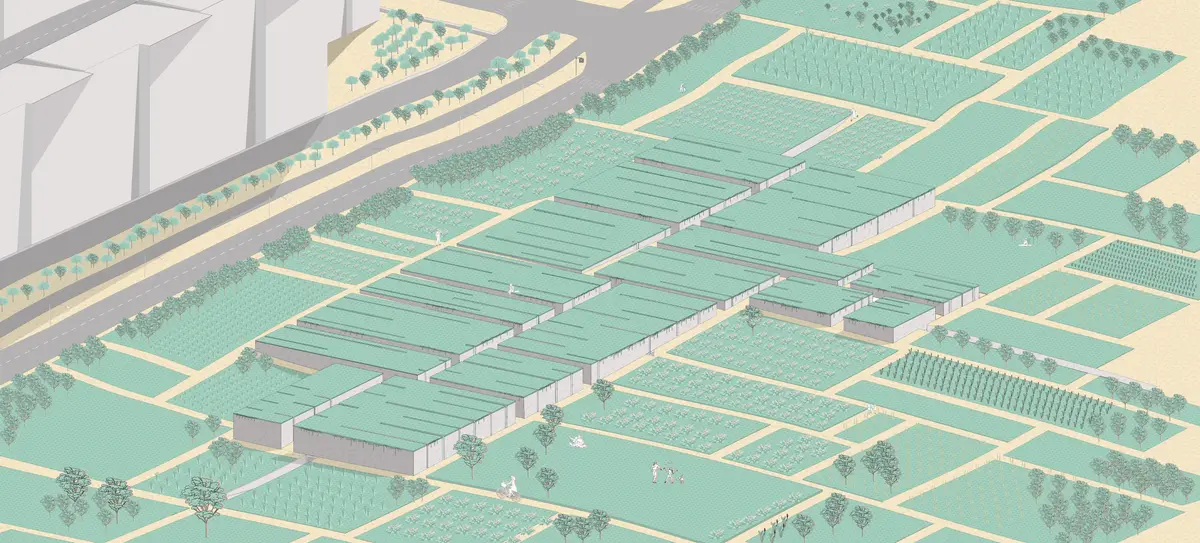
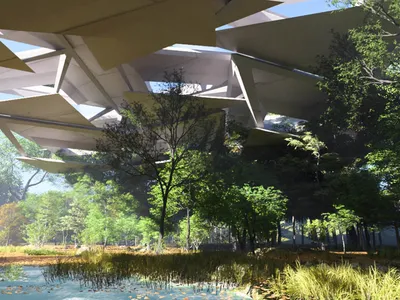
When we look at what the competition wants from us; it was expected for us to answer the question "What kind of place is the library of the future". Actually, we have reached such a discussion and question as a result of the concern created by the possibility of developing technologies replacing books and making some places dysfunctional. While we were making this design, we wanted to get away from the discussion that first came to people's minds, such as whether the library will consist only of books, or will it include only areas where artificial intelligence will be used in the future. Therefore, we started discussing how else a person can learn. These discussions have raised some questions in our minds."What is our other reason for learning." "What can we learn using other than books and computers." and "Without the current learning tools, what would we learn from?" were some of the first questions that came to our mind, and these questions guided our design. We first started this study by examining life in Poland- Lublin, the culture and the material existence of the city. We started this by conducting a city survey from an upper scale. At this time, we realized that we could examine the city within the framework of three different regions. The first of these is the place we call the "historic district" or the "city centre" we have seen that the old architectural structures and the population density are high here. The other region is the region above on the map, where the agricultural land is dense and the population is low. The last region is the region where we will work, we can describe this region as the region between the agricultural areas and the city centre, therefore, the settlement is expanding there. After this upper-scale reading, the thing that attracted our most attention was the green continuity in Lublin. This green continuity made us think about the idea of learning in nature. When we examined these areas a little more, we came across "the allotment garden". These were the gardens that brought the people and the city together with agriculture, located in different parts of the city. There were many remarkable things about these gardens, one of them was that the gardens were a very strong proposal in an ecological sense. This was an area that cities and people will need today and in the future, where we are getting away from nature and the soil, where we are experiencing climate problems. The fact that there is a social interaction environment here was another remarkable point. Here we saw that people come together and create an interactive environment through various activities other than dealing with agriculture. Finally, the point that attracted attention was the educational and instructive area formed here. Here they created an educational environment by seeing and telling each other about the vegetables and fruits they planted. in short, "the allotment garden" allows both learnings from nature and people to learn through each other. we dreamed that the library of the future would be such a place. we think that the transfer of information will not be made from books or artificial intelligence. We think that information should be transferred in its purest form. Therefore, this transfer will take place from human to human, from nature to human, and from human to nature. Human-to-human learning, agriculture or workshops on various subjects, conferences or simply sitting and chatting. Nature-to-human learning will be through interaction with plants, trees and soil. Human-to-nature learning will be done by preserving the genes of living things and providing new inventions for the future. Based on this idea, we aimed to ensure that the green area we are located in remains green. By integrating the traces of agriculture in Lublin into our area, we created an agricultural land appearance in our own area. We have increased the agricultural areas in the section where we can build our space without disturbing this agricultural trace and placed our spaces under it. Our Design is divided into two as public and private spaces. There are places where the gene is stored, sold and discovered in particular areas. The main principle of our design is gene storage areas. That is the Gene Library. Gene libraries are stored to preserve genetic diversity and prepare for future needs. These genes prevent the loss of genetic diversity in living species such as plants, animals, and microorganisms. future natural disasters, they can be used for commercial purposes and medical research. In addition, gene libraries are a strong recommendation for the protection and restoration of species under threat due to environmental factors and human activities. Increasing urbanization and decreasing agricultural areas in Lublin are both sociological and economic so that agriculture and animal husbandry, which are in the public memory for the future, do not pose a future threat to the public. As a design that will strengthen the relationship of the people with each other. If people are going to buy genes related to agriculture, sales areas, labs where they can work on genes, conference rooms, kitchens and public areas where they can socialize are part of our design.

Popular Articles
Popular articles from the community

Extended Shell: Retrofitting Kolkata's Balconies as Living Urban Thresholds
A modular retrofit system recovers the social and environmental intelligence of Kolkata's historic verandas for contemporary Park Street residents.
Tsunami Convergenics: Turning Catastrophic Ocean Forces into Underwater Housing Infrastructure
A speculative underwater settlement off the coast of Onagawa, Japan, treats tsunamis and typhoons as energy sources rather than threats.
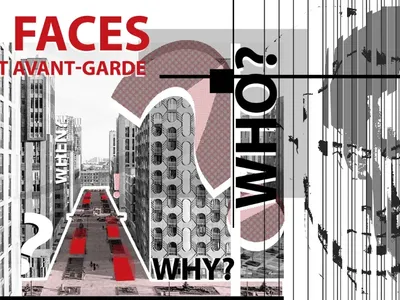
Faces of the Soviet Avant-Garde: Turning Moscow's Street Names into an Open-Air Museum
A network of sculptural installations across a Moscow residential district transforms forgotten architect names into spatial encounters with cultural memor

Singing Woman: Contemporary Architecture Inspired by Estonia’s Voice and the Sea
Singing Woman turns Estonia’s song culture into flowing opera house architecture, blending public life, landscape, sea, and national memory.

Similar Reads
You might also enjoy these articles
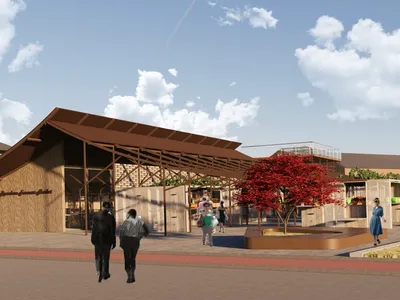
The Rhythm of Seasons
A Farmers' Market Connecting Nature and the City

More Than a Building-Designing a Living System
More Than a Building-Designing a Living System
Base Beyond
DESERT COMPOUND ARID: TOURISM OF ABSENCE AND ABUNDANCE

Explore 3D Visualization Competitions
Discover active competitions in this discipline


Challenge to visualize a collision of the future and past

Challenge to visualize future spaces of waste

Challenge to visualize slums of 2080

Challenge to illustrate the ruins of Petra
Comments (0)
Please login or sign up to add comments
No comments yet. Be the first to comment!