
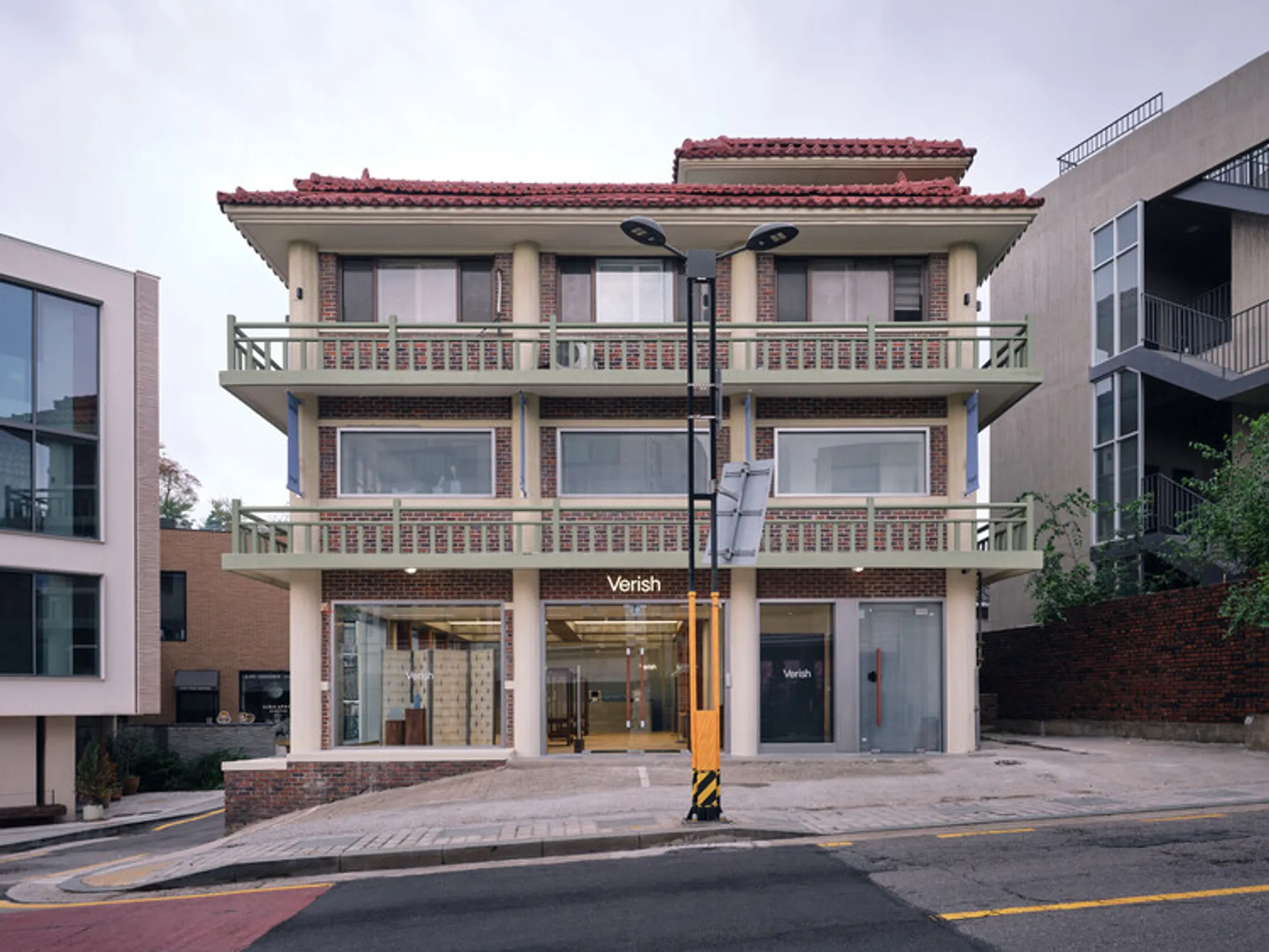
Verish Anguk Flagship Store: A Contemporary Reimagining of Korean Heritage in Retail Design
Contemporary Seoul lingerie store reinterprets Korean Hanok heritage through natural materials, sculptural displays, and intimate spatial design inspired by blue smoke.


Introduction: Where Tradition Meets Modern Sensibility
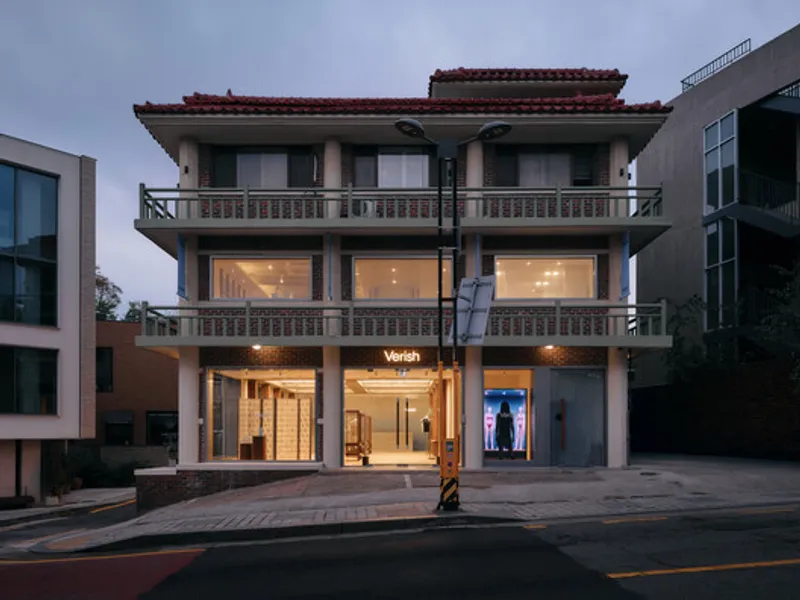
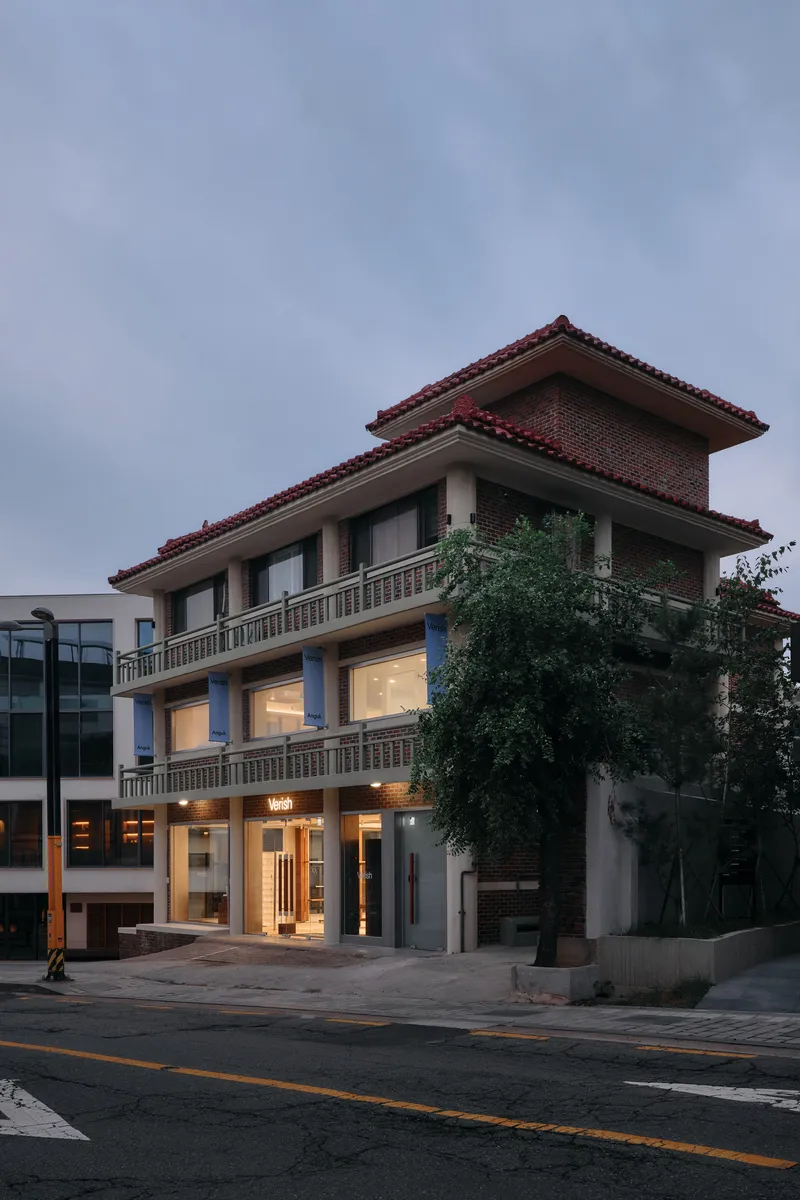
Nestled at the threshold of Seoul's historic Bukchon Hanok Village, the Verish Anguk Flagship Store emerges as a masterful dialogue between heritage and contemporary design. Created by Studio Tama and completed in 2025, this 220-square-meter retail space transcends conventional lingerie store design, offering instead a meditative journey through space, material, and emotion. Through the guiding philosophy of Cheong-yeon—the blue-tinted smoke that softly spreads and dissipates—the store embodies the brand's intimate sensibility while honoring the architectural legacy of its surroundings.
Design Philosophy: The Poetry of Blue Smoke
The conceptual foundation of the Verish Anguk Flagship Store rests on the evocative imagery of Cheong-yeon, a Korean term describing the ethereal quality of blue-tinted smoke as it gradually disperses through space. This metaphor perfectly captures the essence of lingerie itself—intimate, delicate, and softly present. Studio Tama has translated this poetic concept into architectural form, creating a retail environment where gradual spatial immersion replaces abrupt transitions, and where the experience of the space unfolds like smoke slowly filling a room.
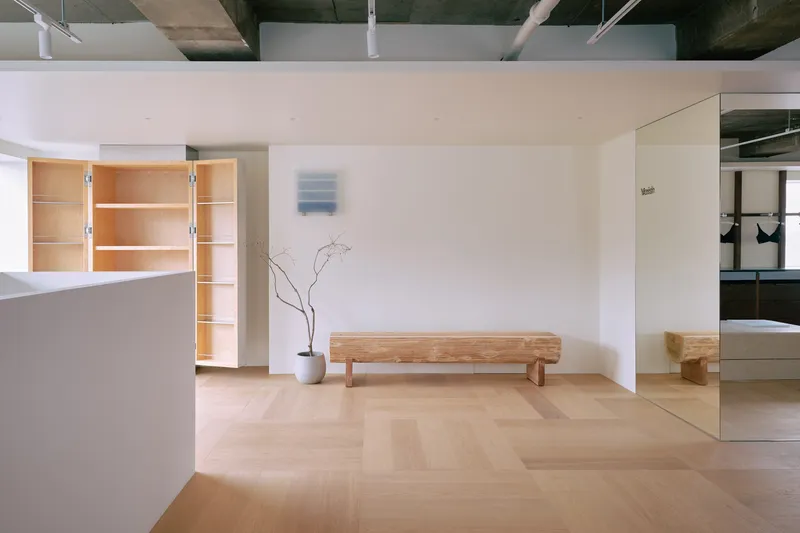
This approach reflects a deeper understanding of how lingerie, as a product category, requires a fundamentally different presentation strategy. Rather than the bold, attention-grabbing displays common in fashion retail, lingerie demands subtlety, privacy, and a sense of sanctuary. The design team recognized that the act of shopping for intimate apparel is itself an intimate act, one that deserves an environment of calm reflection and personal space.
Architectural Heritage: Reinterpreting the Hanok
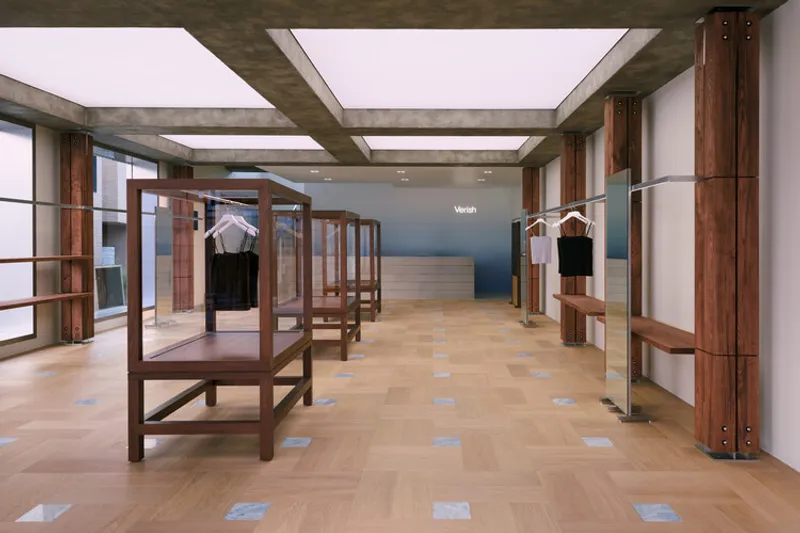
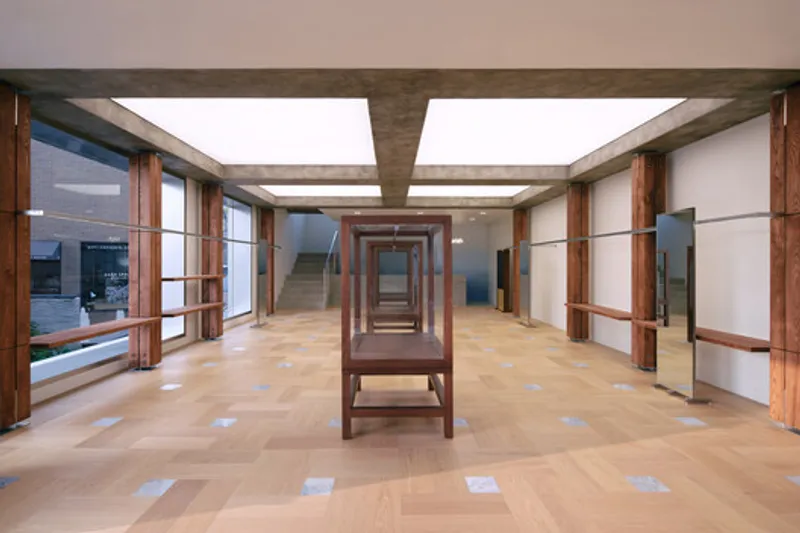
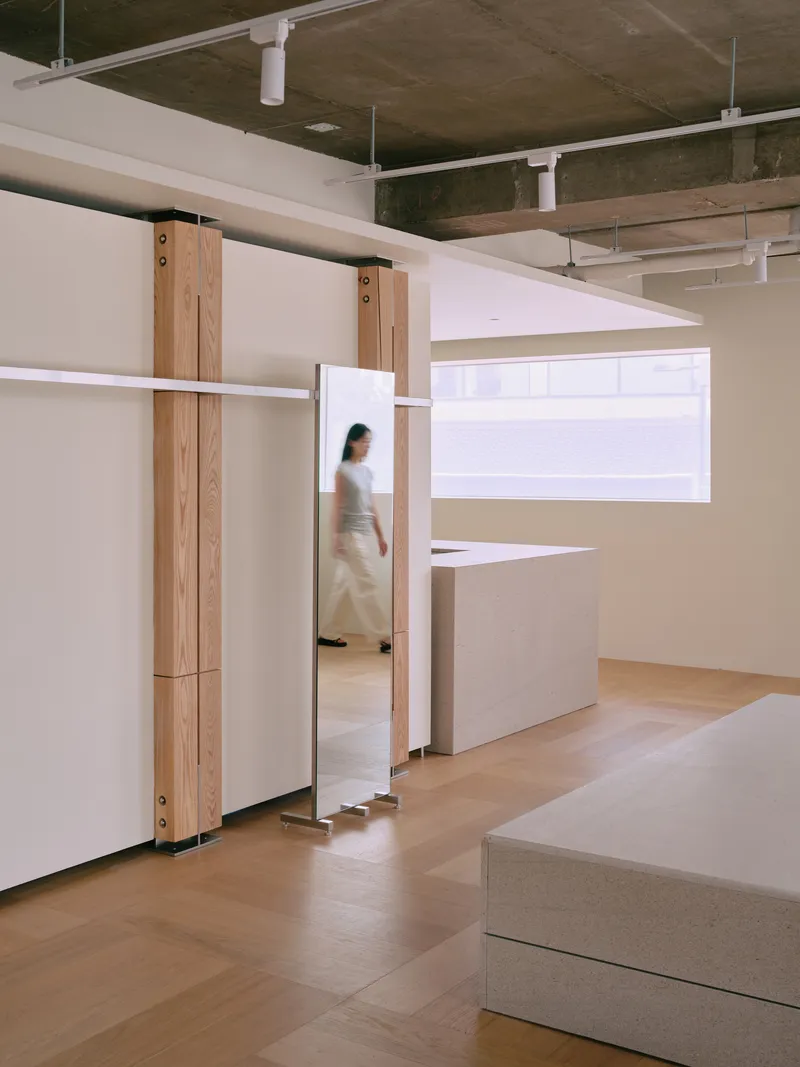
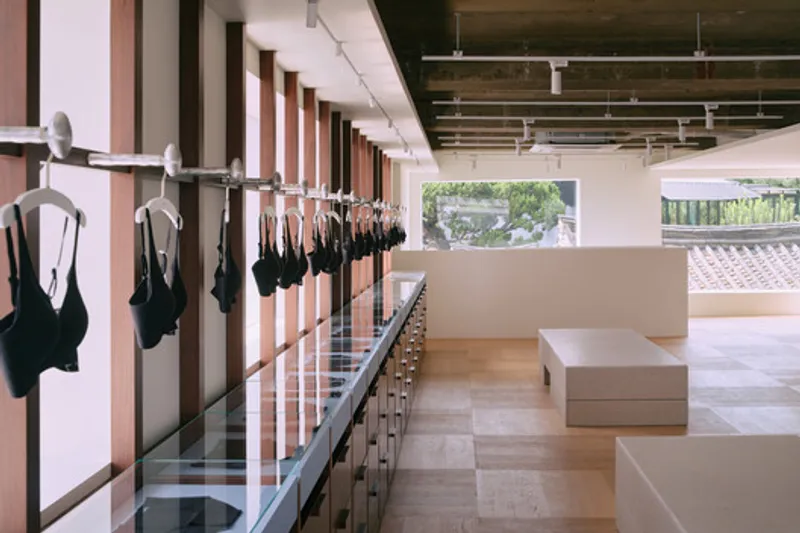
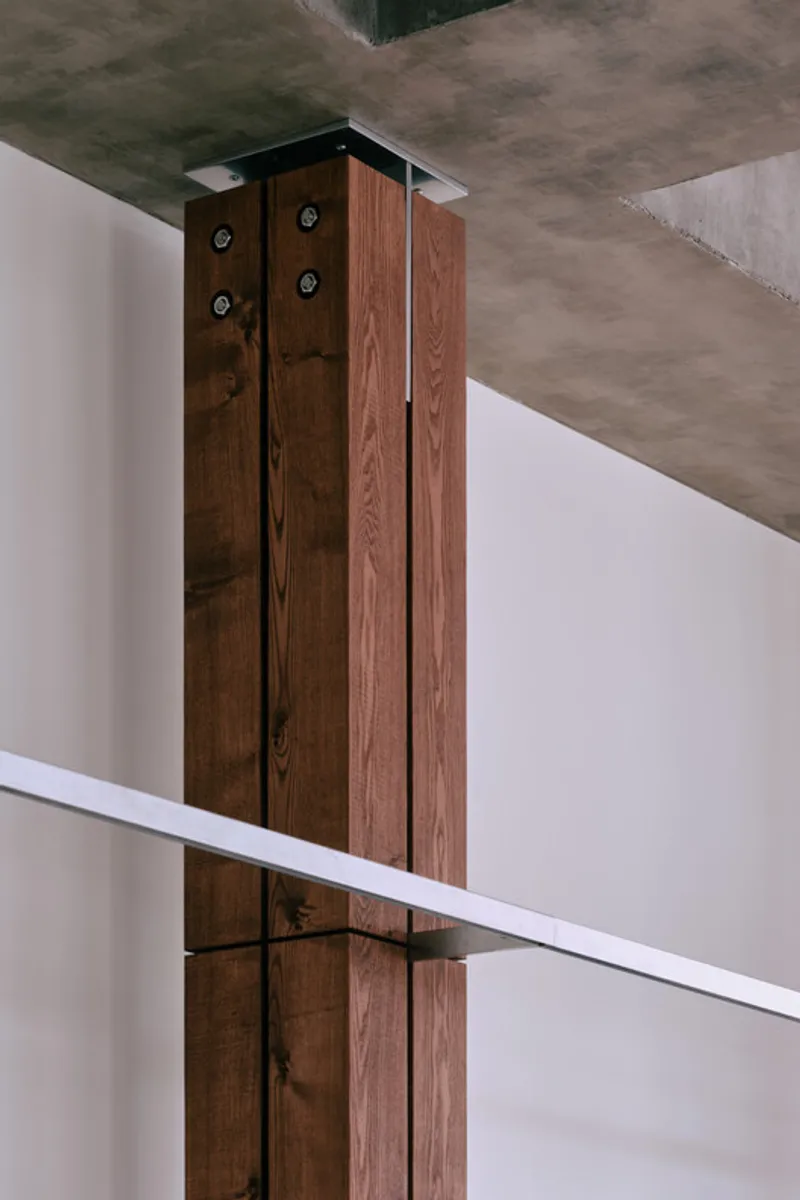
The project's most striking architectural gesture lies in its contemporary reinterpretation of traditional Korean Hanok structures. The distinctive wooden pillar system that defines Hanok architecture—with its emphasis on vertical elements and modular organization—has been abstracted and reimagined to serve multiple contemporary functions. These reinterpreted columns are not merely decorative references to the past; they are highly functional elements that integrate hangers, mirrors, lighting fixtures, and spatial partitions into a unified system.
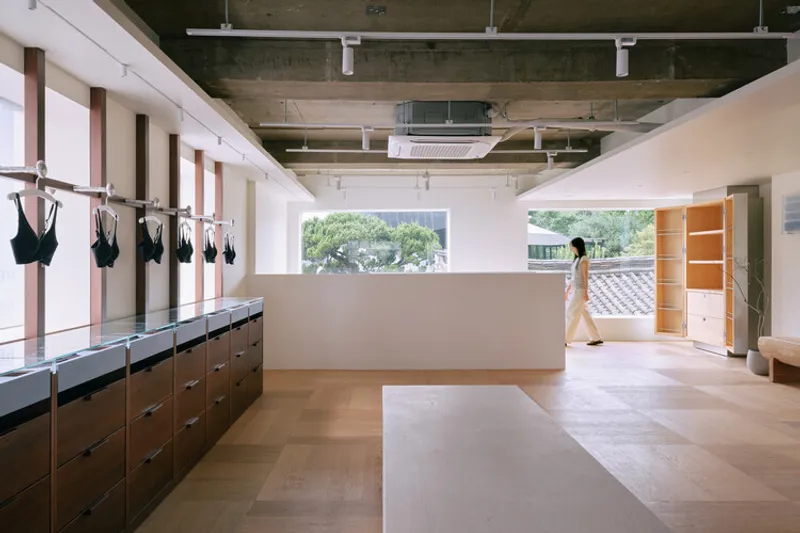
This column structure extends through both floors of the store, creating a consistent architectural rhythm that guides visitors through the space. The verticality of these elements draws the eye upward, creating a sense of spaciousness despite the relatively compact footprint. More importantly, this structural continuity establishes a visual language that speaks to the surrounding Hanok architecture while remaining unmistakably modern in its execution and purpose.
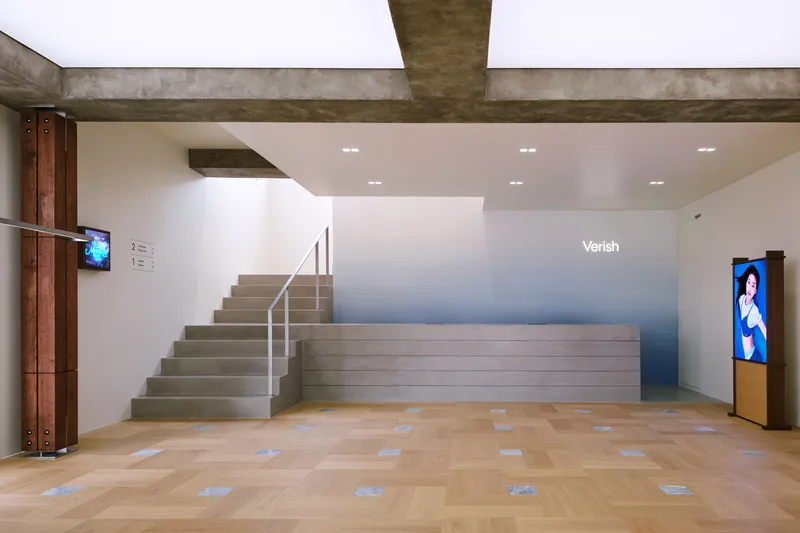
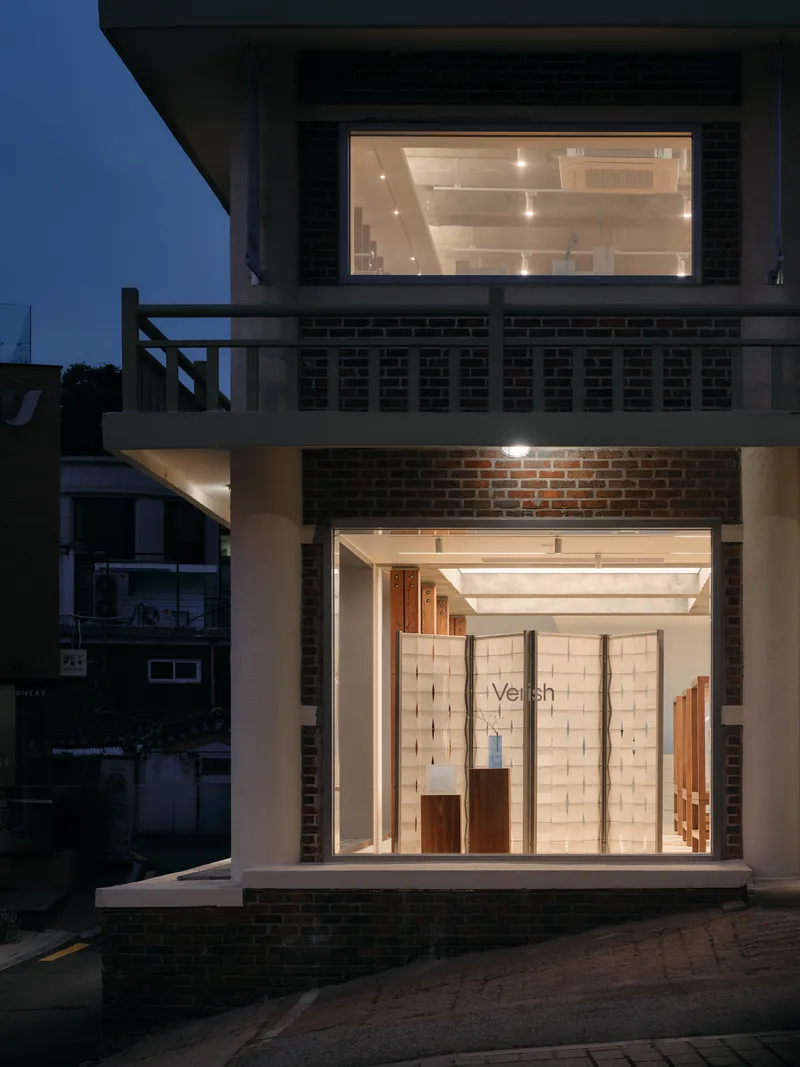
The decision to preserve and adapt the existing structure rather than demolish and rebuild reflects a sustainable approach that is both environmentally responsible and culturally sensitive. In a neighborhood where layers of history are visible in every alleyway, the design team chose to add another layer rather than erase what came before. This philosophy of adaptive reuse extends the life of the building while maintaining the accumulated memory and character of Bukchon.
Cultural Context: Respecting Bukchon's Legacy
The Verish Anguk Flagship Store's location at the edge of Bukchon Hanok Village carries significant cultural weight. Bukchon, with its concentration of traditional Korean houses, represents one of Seoul's most important historic neighborhoods—a living museum where contemporary life continues within historical architectural frameworks.
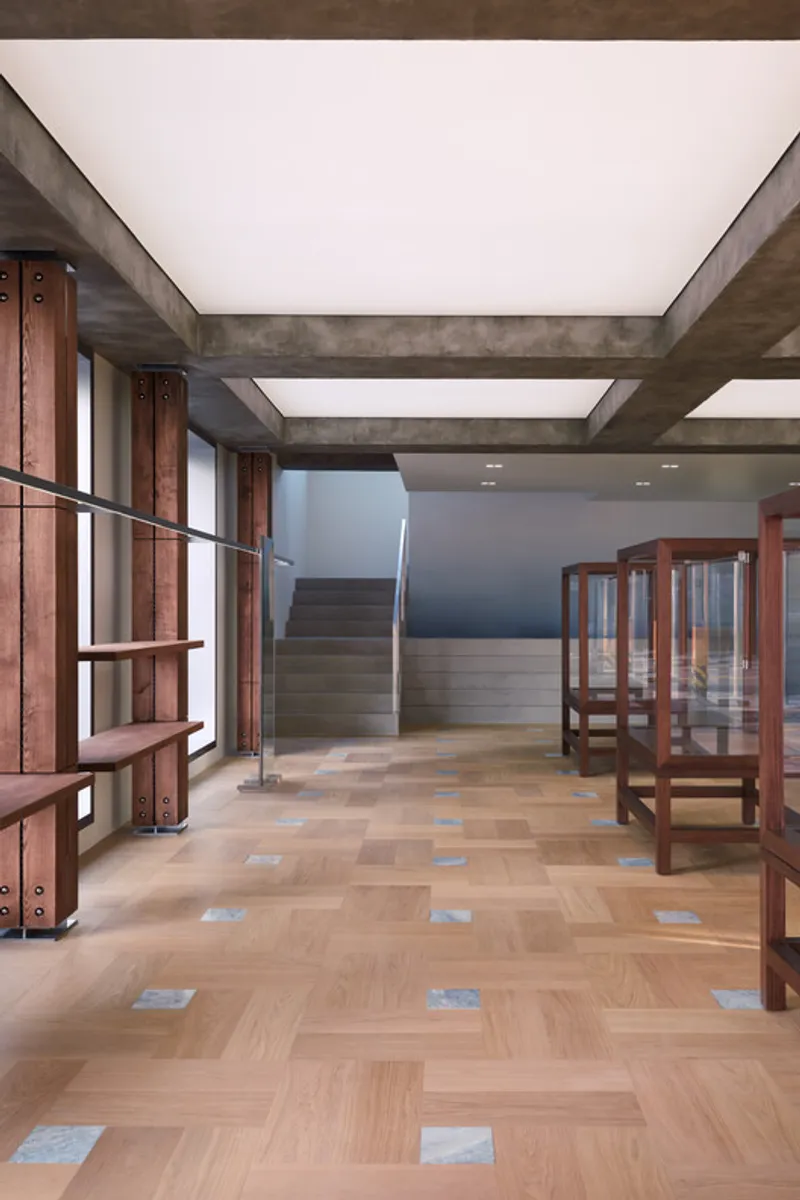
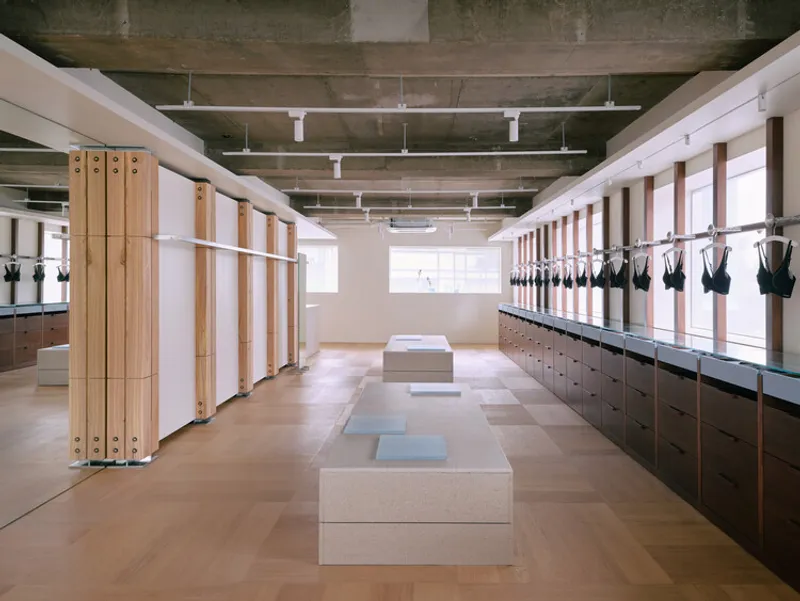
Studio Tama's design acknowledges this context without resorting to pastiche or superficial historical references. The reinterpretation of Hanok structural elements demonstrates genuine engagement with traditional architecture's underlying principles rather than mere aesthetic borrowing. The decision to preserve and adapt the existing structure rather than demolish it shows respect for the accumulated layers of history that give Bukchon its character.

This approach to contextual design offers a model for how contemporary commercial spaces can exist within historic districts without either compromising their modernity or disrespecting their surroundings. The result is a building that feels simultaneously of its time and of its place—a rare achievement in contemporary retail architecture.
Sustainability Through Longevity
The project's sustainable credentials extend beyond the preservation of the existing structure. By selecting materials that age gracefully rather than deteriorate, Studio Tama has designed for longevity rather than obsolescence. The oak flooring will develop a patina that enriches its appearance; the concrete will weather and subtly change color; the cork will compress slightly but maintain its functional properties.
This approach to sustainability recognizes that the greenest building is often the one that lasts the longest. By creating a space with timeless rather than trendy qualities, and by using materials that improve rather than degrade with use, the design ensures that the store won't require frequent renovation to maintain its appeal. This is particularly important in retail, where short-term trends often drive frequent and wasteful redesigns.
Emotional Architecture: Creating Atmosphere
Beyond its functional and aesthetic achievements, the Verish Anguk Flagship Store succeeds most profoundly in creating an atmosphere appropriate to its purpose. Shopping for lingerie requires a environment that feels safe, private, and unhurried—qualities increasingly rare in contemporary retail spaces designed to maximize throughput and impulse purchases.

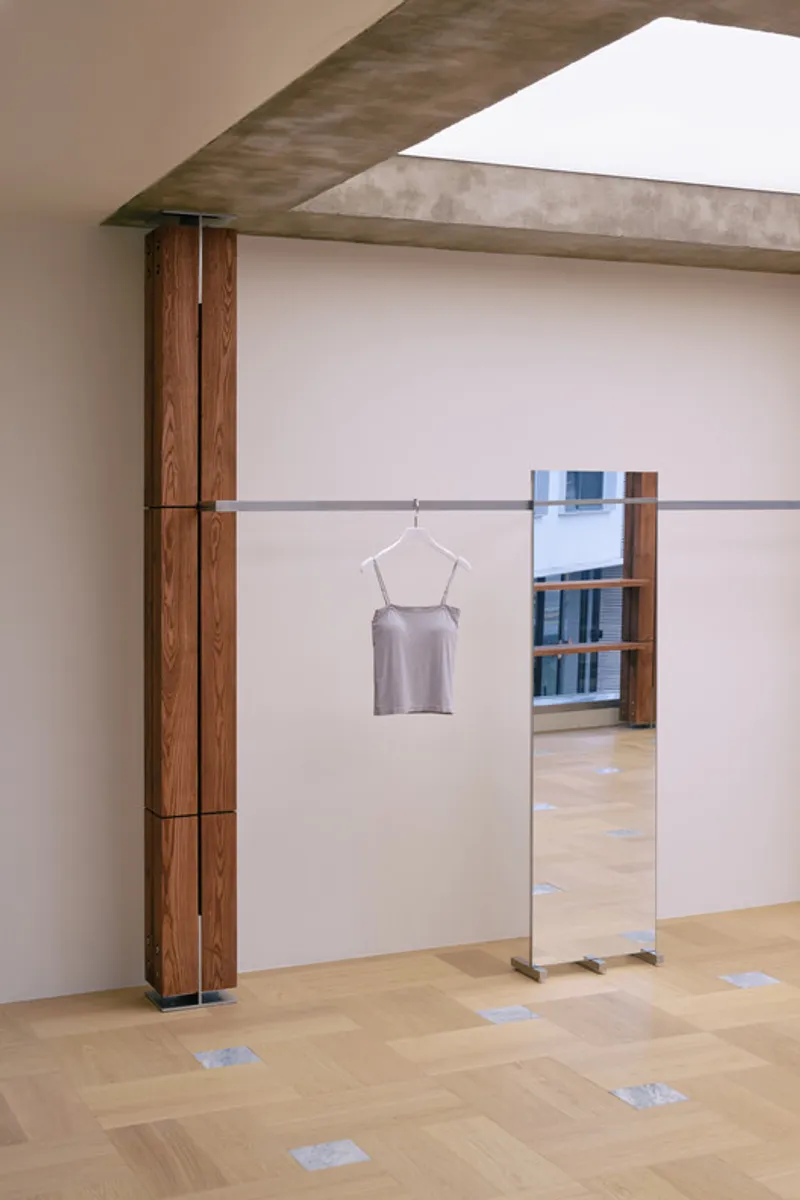
The store's calm architectural expression, achieved through material honesty, restrained detailing, and thoughtful spatial organization, creates exactly this atmosphere. The softness of the cork, the warmth of the wood, the coolness of the marble—these material qualities combine to create a multisensory environment that engages customers on an emotional level.
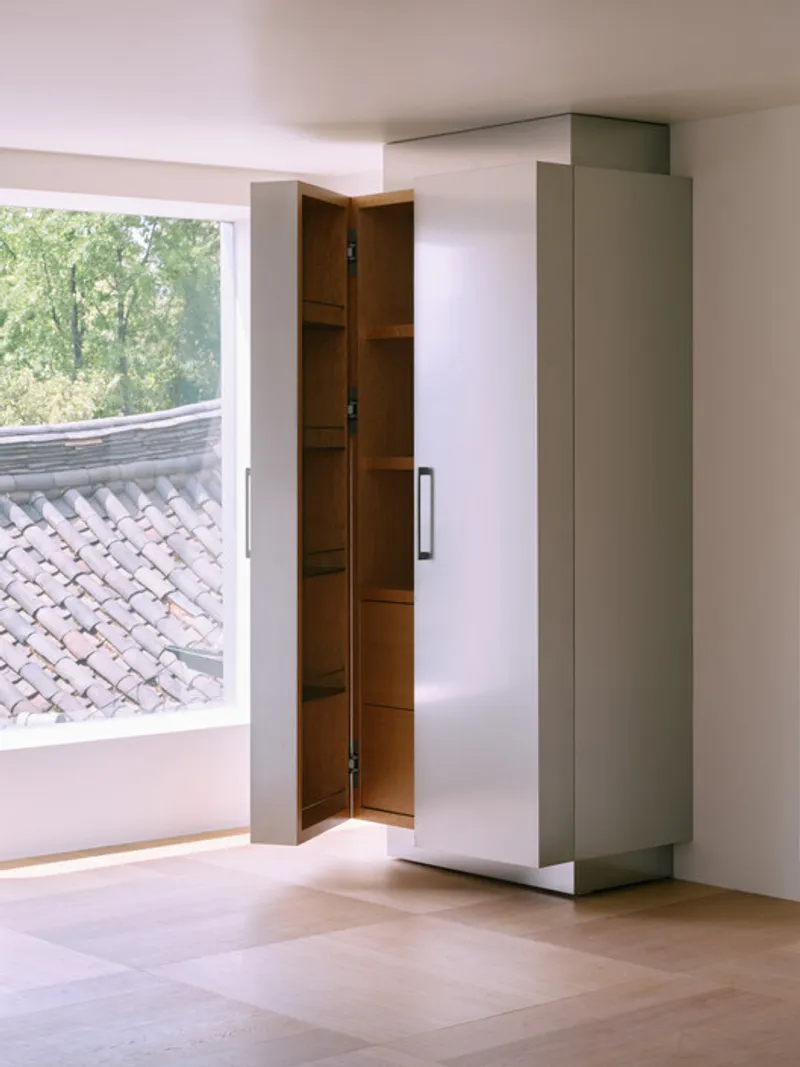
The Cheong-yeon concept manifests not just in the blue marble inlays but in the entire spatial experience. Like smoke gradually filling a room, the design's impact is cumulative rather than immediate. Details reveal themselves slowly; the space rewards extended engagement rather than quick scanning. This aligns perfectly with the nature of the products being sold and the type of shopping experience appropriate to them.
All the Photographs are works of Donggyu Kim




Popular Articles
Popular articles from the community


Conexión: Biophilic Design Reimagines High-Rise Living in Hong Kong
Conexión reimagines high-rise living in Hong Kong through biophilic design, green facades, shared spaces, daylight, water and nature within.

The Musturak Paradise: Senior Living Architecture for a Connected Future in Temara, Morocco
The Musturak Paradise reimagines senior living architecture in Temara via private homes, social spaces, culture, community, and shared care.

The Earth Pod: 3D Printed Homes for Resilient Refugee Communities
The Earth Pod reimagines refugee housing through 3D printed homes made from clay, combining resilience, self-sufficiency, and rapid shelter.

Co-Life: Senior Housing Design That Reconnects Older Adults With the City
Co-Life reimagines senior housing design through healing gardens, shared streets, workshops, and a sustainable community across generations.


Similar Reads
You might also enjoy these articles


Hodi-Mandai Geram
Project Function: Preservation and revitalization of the Intangible heritage and socio-spatial identity of the Hodi by Housing, Cultural Memory Center, Sacred Grove, landscape, local tourism economy


Olio Towers: A Mid-Rise for Performers That Fuses Housing, Rehearsal, and Stage
Located blocks from Houston's Theater District, this modular tower stacks living units around a central performance atrium.

Oasis: Modular Green Housing Carved into Dhaka's Urban Fabric
A shortlisted Plugin Housing entry reclaims unauthorized settlements in Dhaka with stepped concrete volumes, green roofs, and ventilation-driven design.

Black Hole: A Floating Megastructure for the Post-Physical Era
Emiliano Mazzarotto envisions a spherical, self-scaling arena where e-sports, digital hotels, and holographic stadiums replace traditional public space.


Explore Architecture Competitions
Discover active competitions in this discipline



Challenge to reimagine the Iron Throne


Photograph architecture without architects


Illustrate the lost glory of Angkor Wat - Render Challenge


Design challenge to reuse E-waste
Comments (0)
Please login or sign up to add comments
No comments yet. Be the first to comment!