
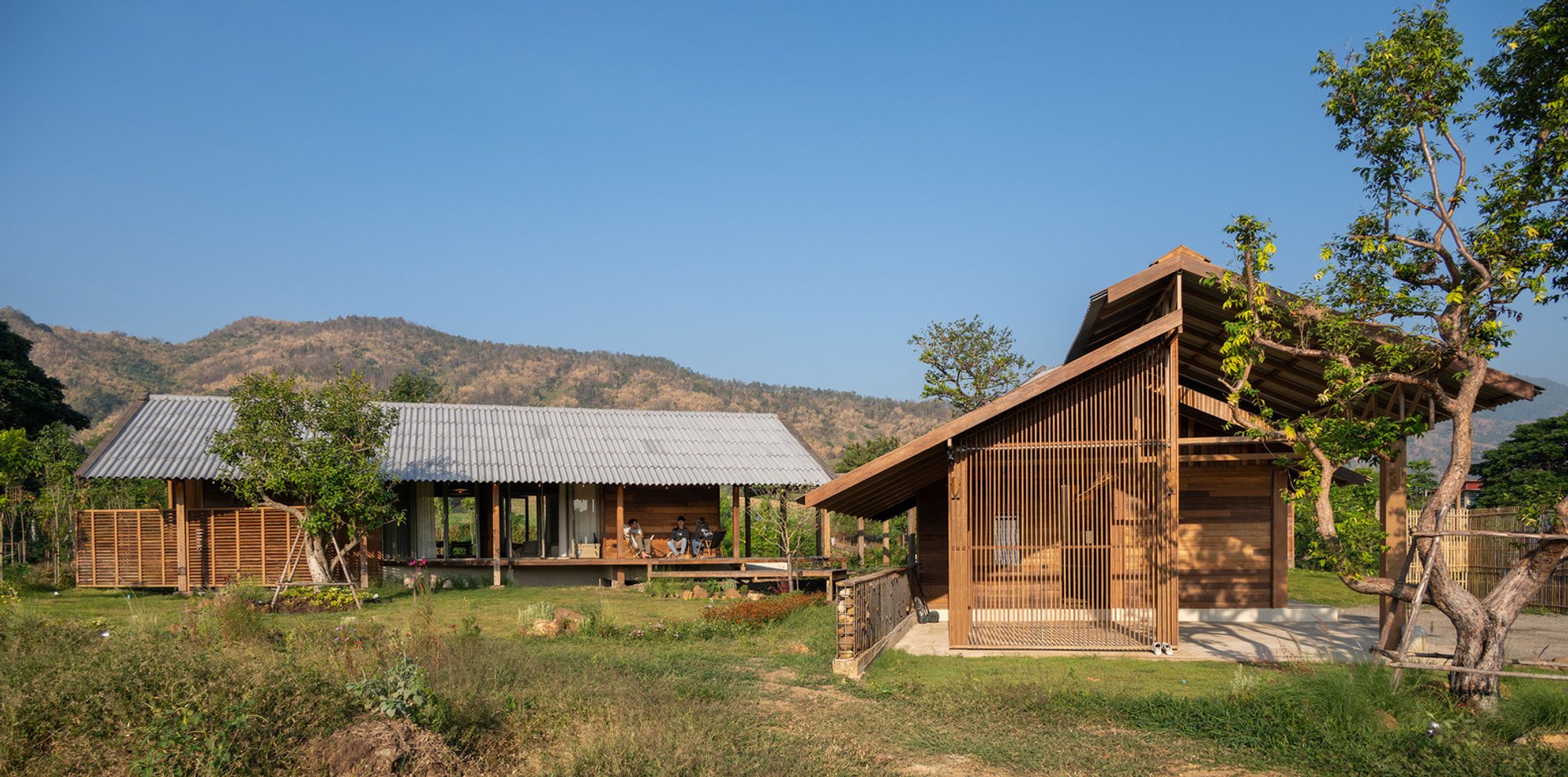
Housescape Design Lab Rebuilds Three Dismantled Houses into a Stone-Footed Compound in Phetchabun
Reclaimed timber from Chiang Mai and excavated site stones converge in a 300-square-meter residence shaped by Lanna building traditions and downslope winds

There is a particular kind of ambition that has nothing to do with scale. Baan Sao Yong Hin, completed in 2025 by Housescape Design Lab in Lom Sak District, Phetchabun Province, Thailand, is a 300-square-meter house built almost entirely by hand from materials sourced within a ten-kilometer radius of the site, plus reclaimed wood trucked in from three dismantled dwellings in Chiang Mai's Phrao and Mae Taeng districts. The project is named after the Sao Yong Hin technique, a construction method documented among the Tai Lom people of the Phetchabun Basin, in which wooden columns are set atop stones rather than buried in the earth. That single decision, stone under wood rather than wood in ground, becomes the conceptual and structural spine of the entire residence.
What makes this project worth studying is the rigor behind its apparent looseness. The architects grounded their design in published academic research by Kanittha Pansri and Professor Dr. Veera Inpantang on the historic dwellings of the region. They catalogued every salvaged timber piece, reassembled door frames and glass panels bearing dok pikul floral patterns, and excavated site stones only as far as necessary to keep geological balance intact. The result is not a nostalgic reproduction of a Lanna house. It is a compound of three pavilion volumes, organized across three levels, that uses reinforced concrete and steel where tradition alone would not hold up to contemporary climate uncertainty, while letting reclaimed wood and handcraft set the tone everywhere else.
A Compound on a Mountain's Breath
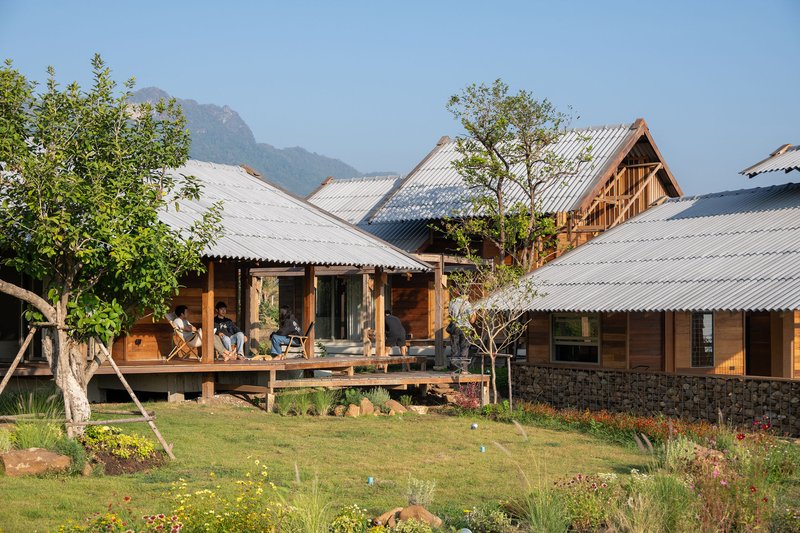
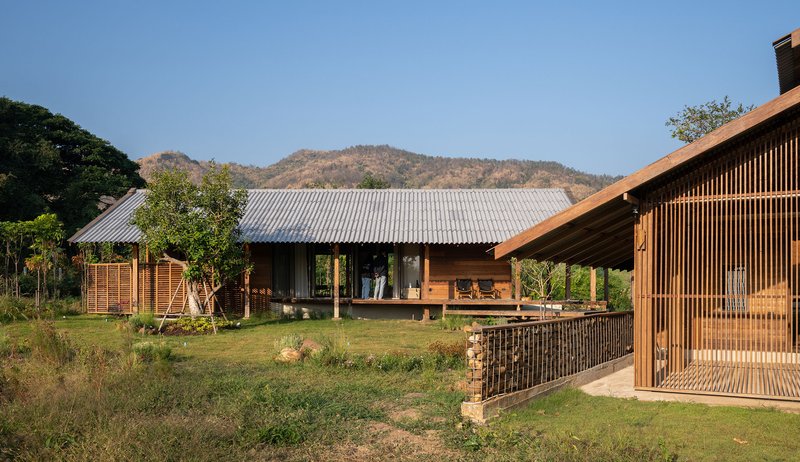
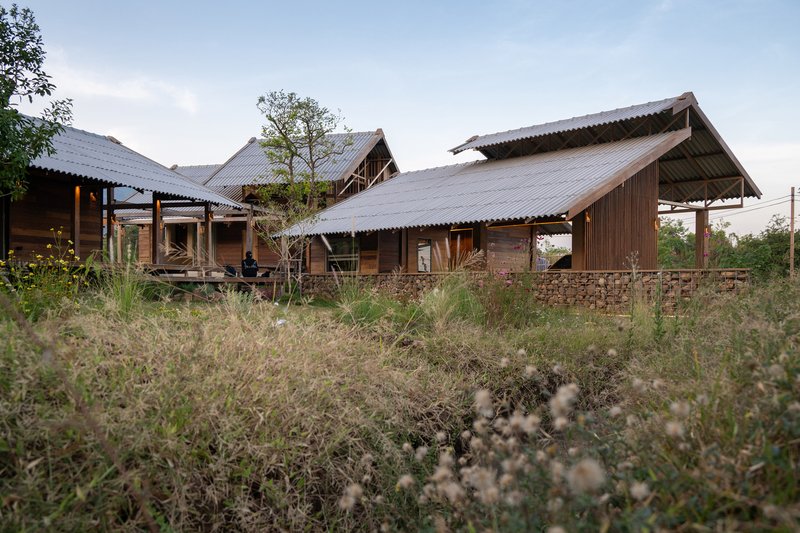
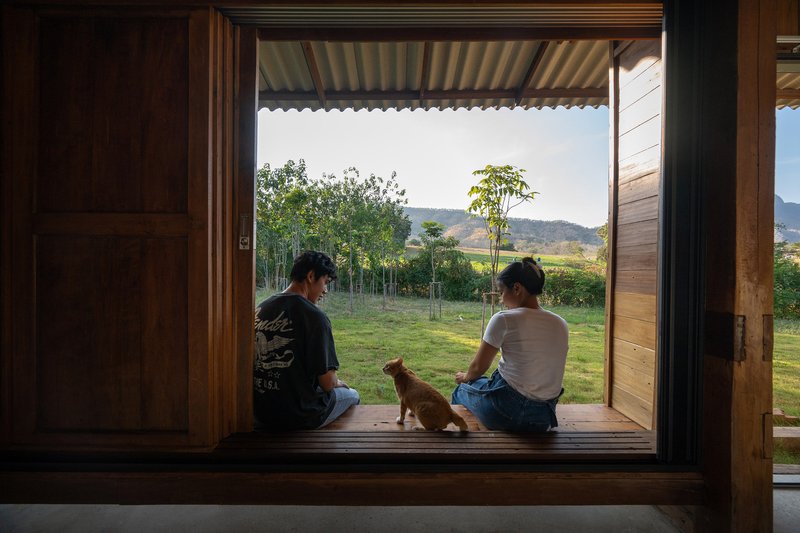
The site sits in the shadow of Khao Nam Ko Yai, the mountain whose mass generates a recurring downslope wind that the architects treat as a design partner rather than a nuisance. The three gabled pavilions are oriented and spaced to funnel this airflow through living areas, creating a passive thermal buffer that reduces reliance on mechanical cooling. Extended eaves, a staple of regional building, do double duty: they shade the walls from direct sun and create deep covered porches that blur the line between interior and exterior.
From a distance, the clustered corrugated metal roofs read as a small settlement. The material choice is pragmatic; corrugated steel is light, locally available, and sheds monsoon rain efficiently. But the massing underneath, timber volumes clad in vertical slats and plaster panels, carries a quieter register. The house does not shout against its grassy clearing. It sits low and wide, calibrated to the horizon line of the mountains behind it.
Stones from Beneath, Timber from Elsewhere
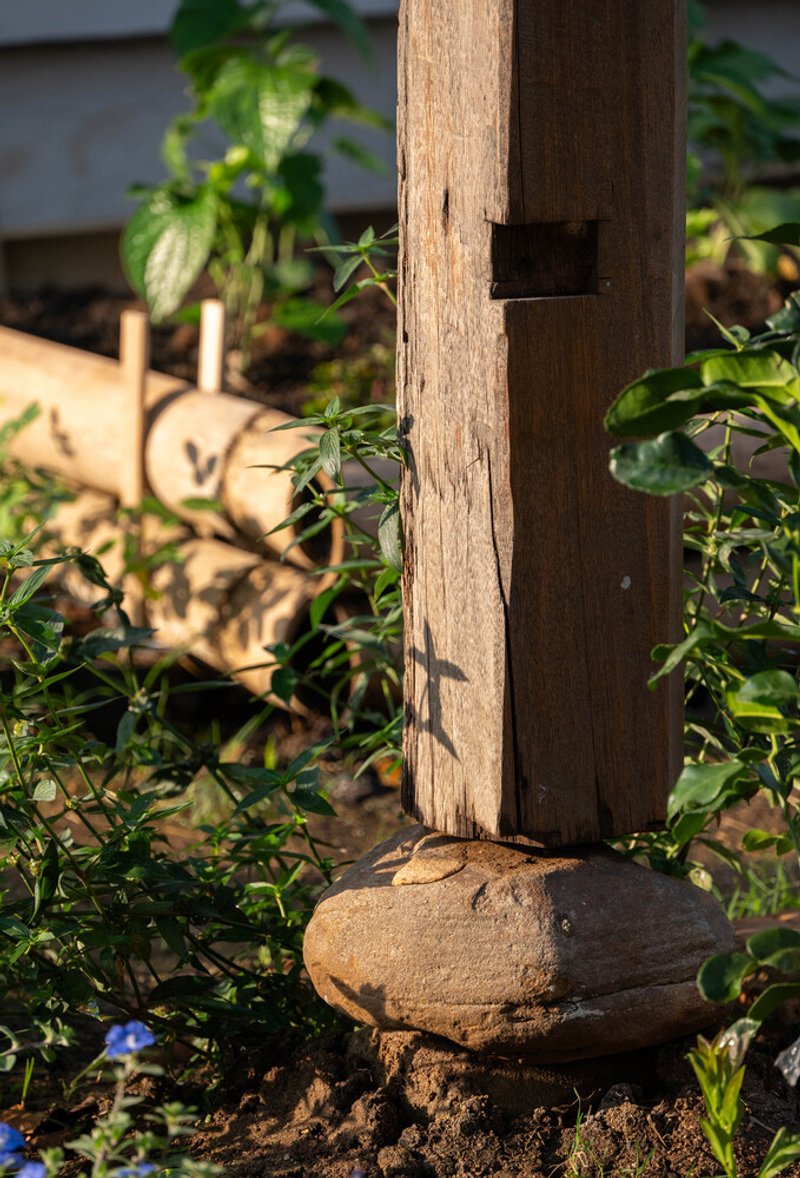
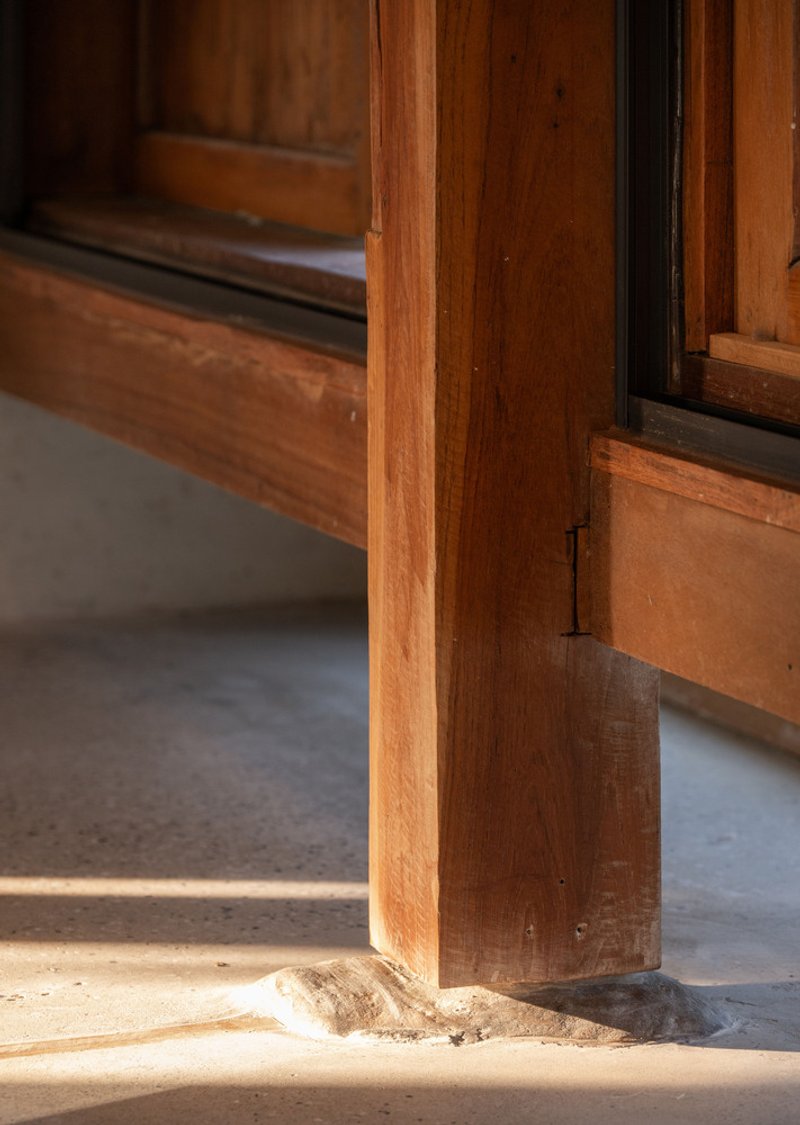
The defining structural detail is visible at the base of every wooden column. Rounded stones, excavated from the sedimentary gravel layer beneath the site, serve as pedestals for the timber posts. This is the Sao Yong Hin method: rather than sinking a column into the ground where moisture would rot it, you lift it onto stone. The technique is elegant in its logic and deeply specific to the Phetchabun Basin's geology. What the architects added is a hidden layer of reinforced concrete with 20-millimeter steel L-bolts anchoring each column to its stone base, an insurance policy against seismic or flood loads that the original vernacular builders never had to consider at this frequency.
The timber itself traveled roughly 300 kilometers from Chiang Mai. Each piece of reclaimed wood was documented before dismantling, its surface texture and proportions recorded so that the reassembly could respect the material's history. Doors, frames, handles, and even salvaged glass panels were reused. Roughly 90 percent of the construction was carried out by hand, a figure that speaks not only to craft ambition but to the practical reality that machine precision would have been wasted on members that are each slightly different in dimension.
Three Zones, Three Levels
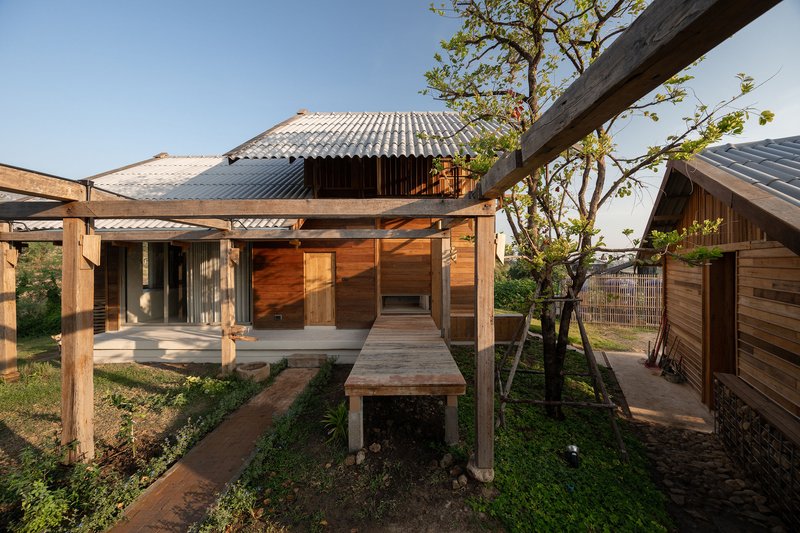
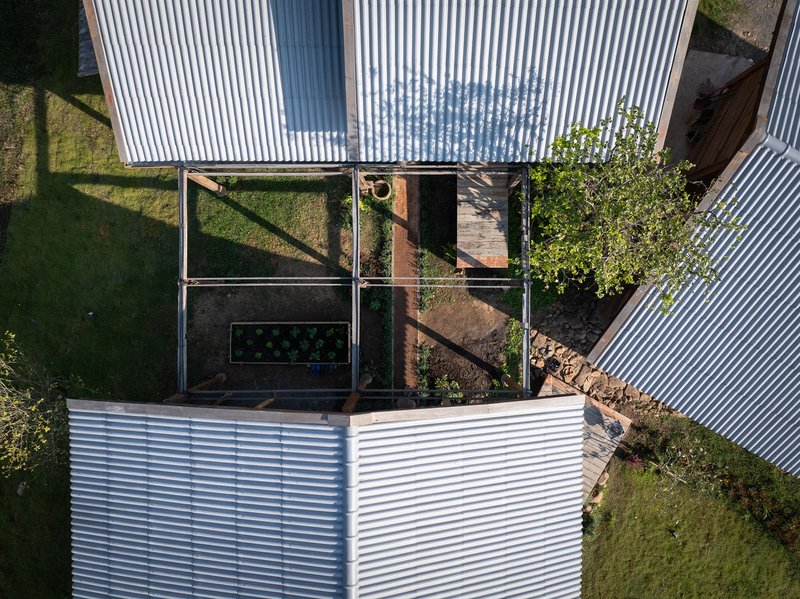
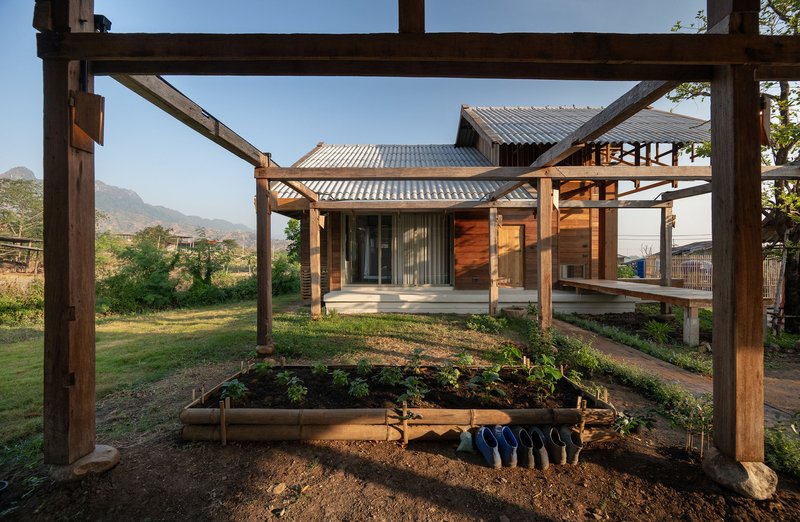
The spatial hierarchy follows a public, semi-public, private gradient distributed across the three pavilion volumes. A covered timber walkway stitches them together, creating a procession that moves from open social spaces toward increasingly sheltered bedrooms. The courtyard at the center acts as the communal anchor, with planted beds and timber decking providing a middle ground between the built volumes. This is a Lanna spatial principle: the house is not a single container but a collection of rooms organized around shared outdoor space.
The elevated structure, another vernacular inheritance, lifts living spaces above grade for both flood protection and ventilation. Air moves freely beneath the floors, and the stilted configuration allows the serpentine water channel, the Sai Kai, to pass through the landscape without obstruction. The channel is not decorative. It facilitates natural bioremediation, filtering runoff through planted zones before it reaches the broader site.
Interior Craft and the Case Against Perfection
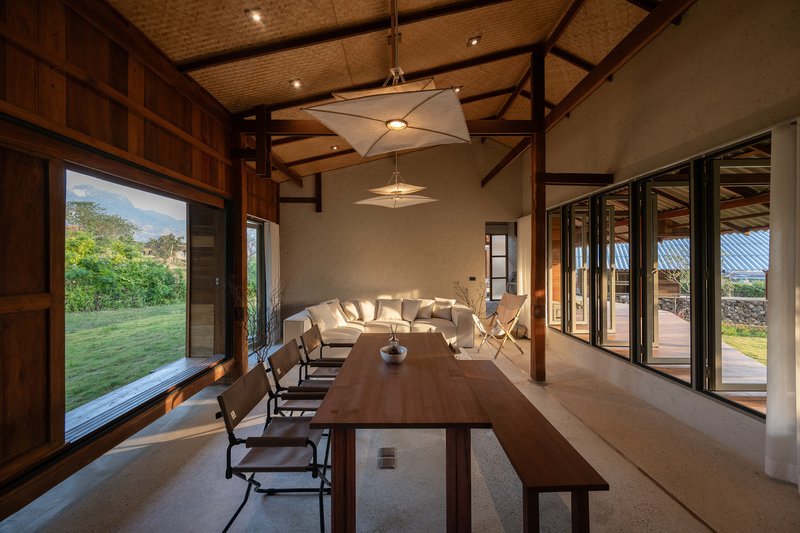
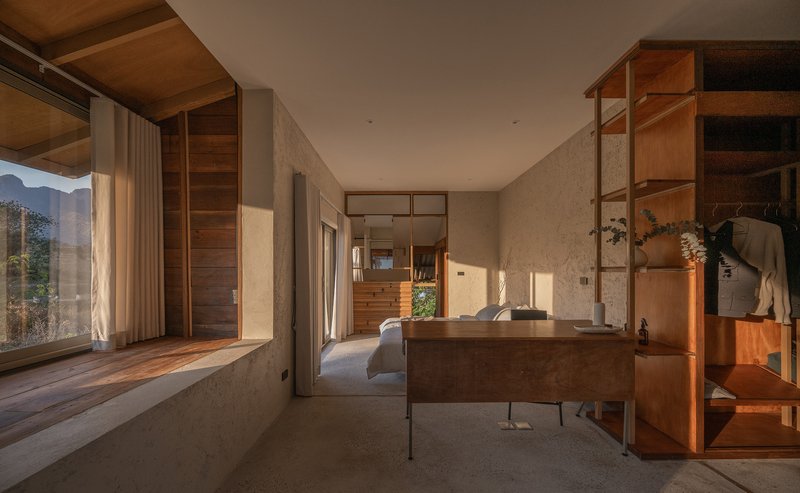
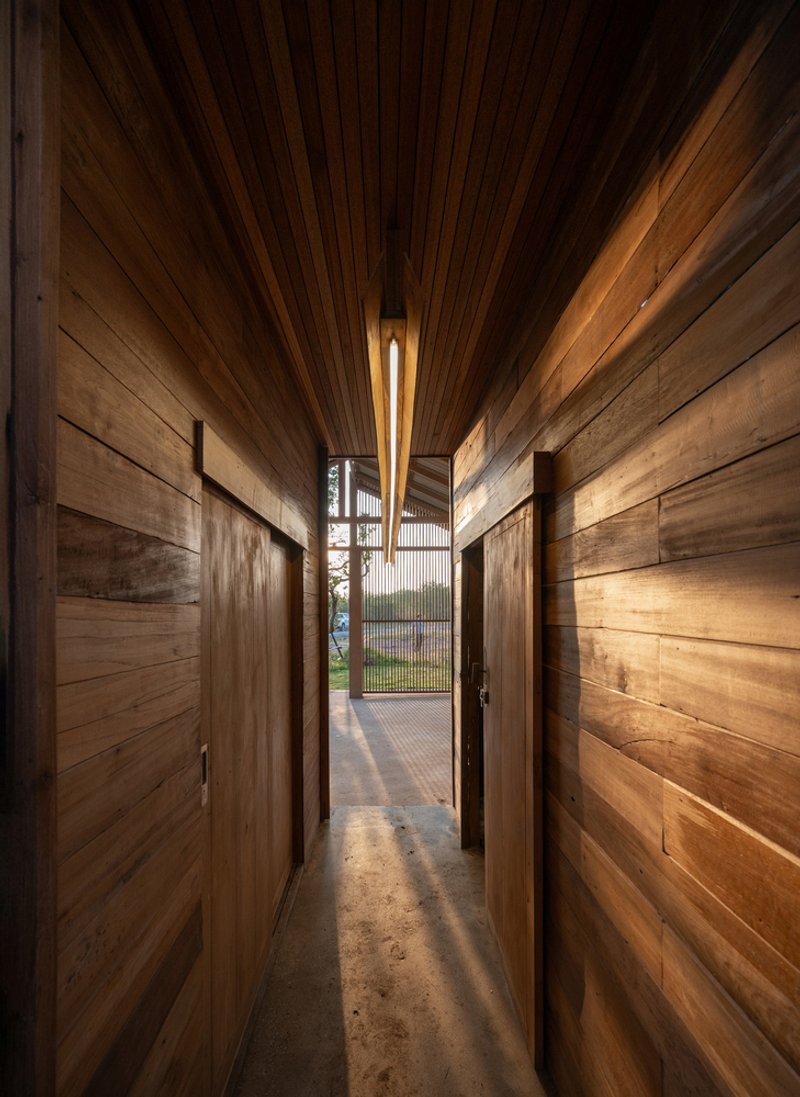
Inside, the house makes no effort to disguise the age of its materials. Timber surfaces show their grain, their stains, their previous nail holes. The concrete platform bed in the bedroom is blunt and monolithic, a counterpoint to the warm irregularity of the wood around it. Afternoon light entering through carefully placed openings illuminates these textures in a way that polished finishes could never replicate. The narrow corridor with its skylight slot is a moment of restrained choreography: light falls on a concrete floor flanked by timber-clad walls, guiding you toward the courtyard beyond.
Furniture and lighting fixtures were designed and fabricated within the studio, continuing the logic of material control from structure down to the smallest scale. This is where the project's commitment becomes most legible. When every handle and lamp has been prototyped by the same team that detailed the foundations, the house achieves a coherence that no specification schedule alone can deliver.
Living Between Indoors and Out
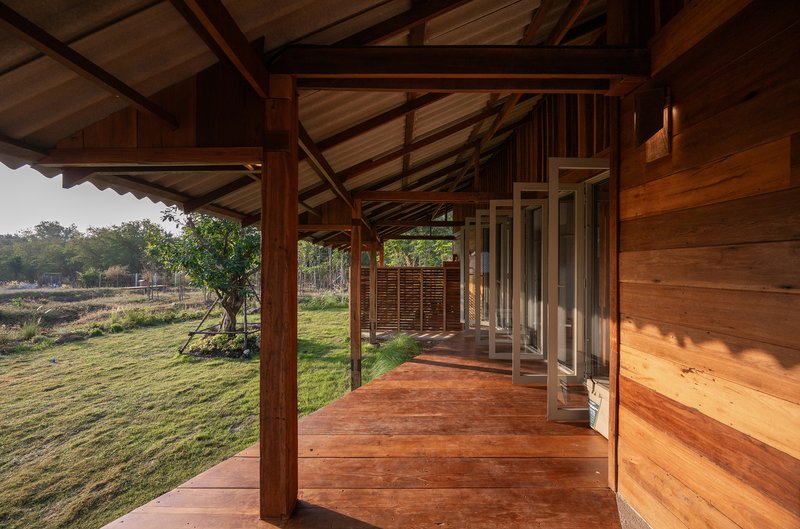
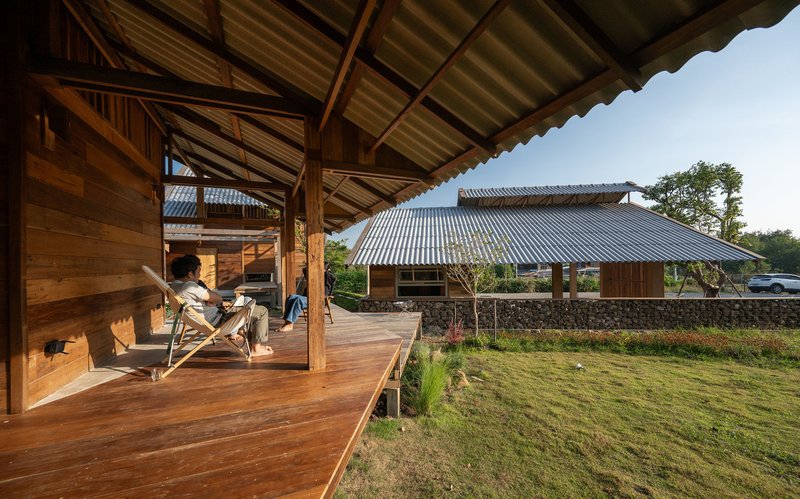
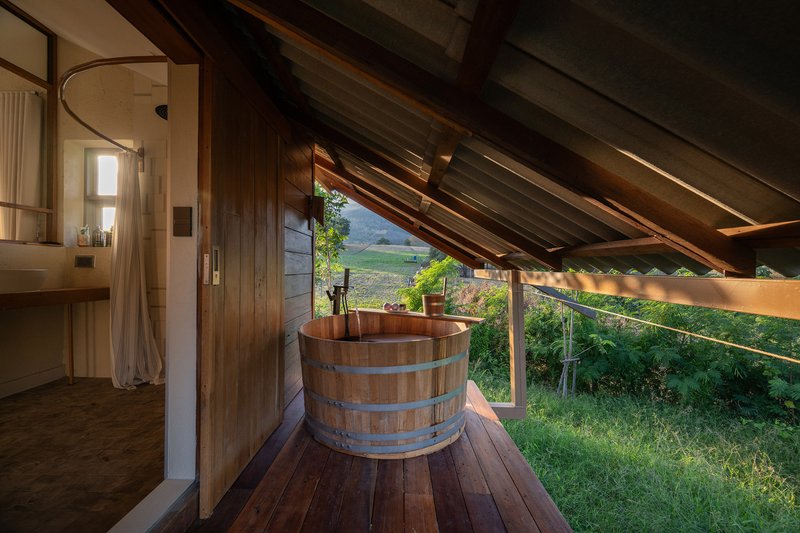
The most inhabited spaces in this house are arguably not rooms at all. The covered timber deck overlooking the courtyard, the veranda with its truss structure and deck chairs, the private balcony with a wooden soaking tub framed by sloped rafters: these are the spaces that earn the house its character. Folding glass doors allow the living and dining areas to dissolve into the lawn, and the pergola structures multiply the number of shaded, open-air zones available throughout the day.
Thermal insulation is applied selectively, concentrated beneath the roof where heat gain is most aggressive. Everywhere else, the architects trust airflow, shade, and mass to do the work. It is a calculated bet on the microclimate created by Khao Nam Ko Yai's winds, one that would fail in a different context but is precisely calibrated here.
Landscape as Ecology, Not Decoration
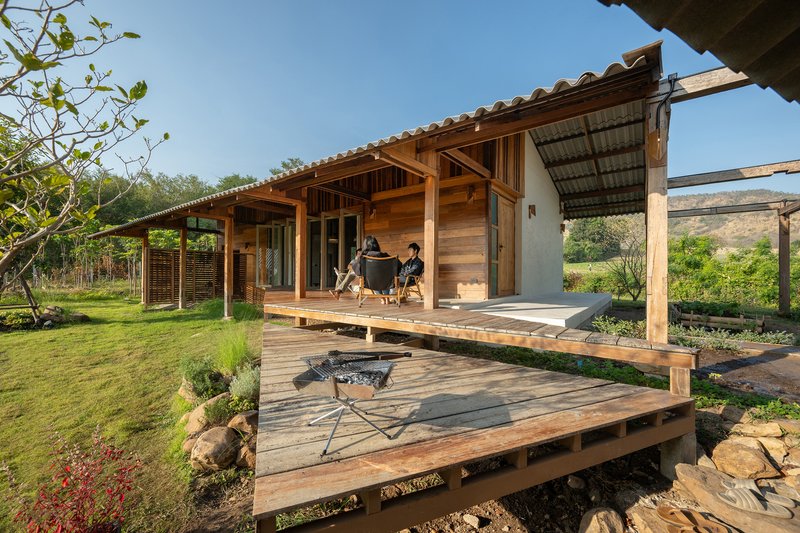
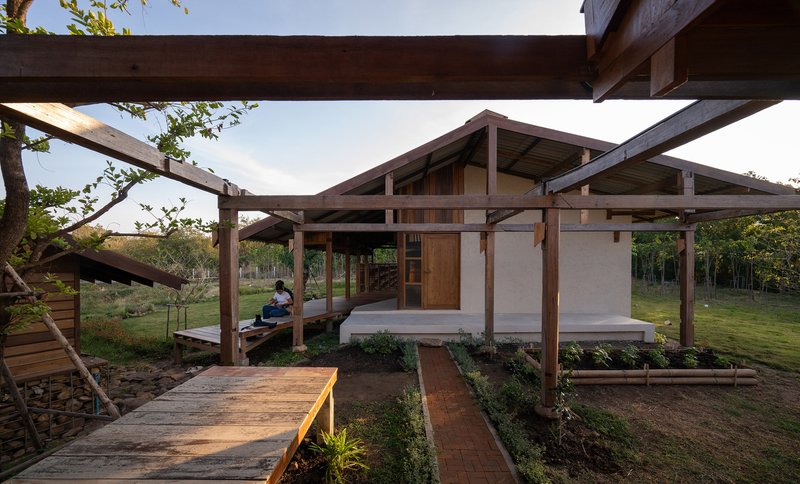
The planting strategy rejects the manicured lawn in favor of a mixed-species approach that builds biodiversity over time. Gabion stone walls at the compound's edge use the same excavated material that supports the columns, tying landscape and structure together materially. The Sai Kai serpentine channel weaves through planted beds, slowing water velocity and allowing natural filtration. This is landscape as infrastructure, not scenery.
The strict ten-kilometer sourcing radius for nearly all materials (the Chiang Mai timber being the notable exception) establishes a supply chain ethic that most projects only gesture toward. It forces the design to negotiate with what is available rather than specifying what is ideal. That negotiation is visible in the slight mismatches of stone size, in the varying tones of reclaimed wood, in the plants that were chosen because they were already growing nearby. The imperfection is the point.
Plans and Drawings
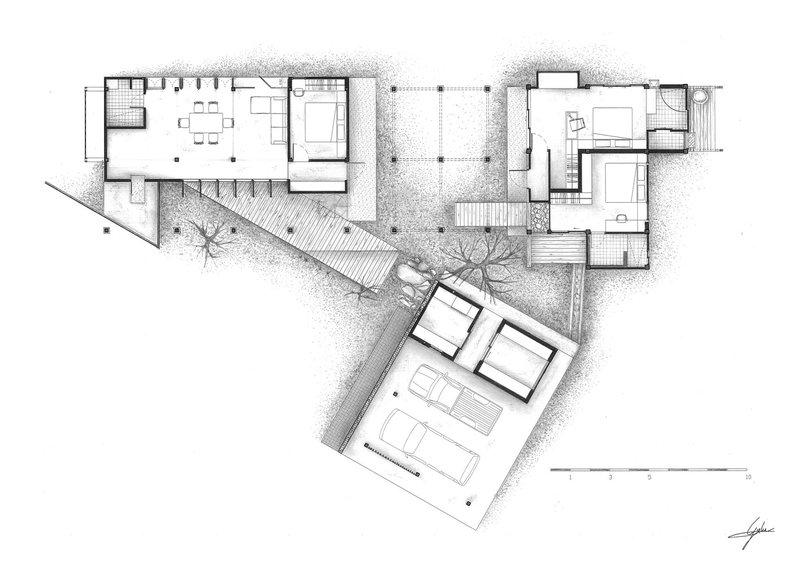
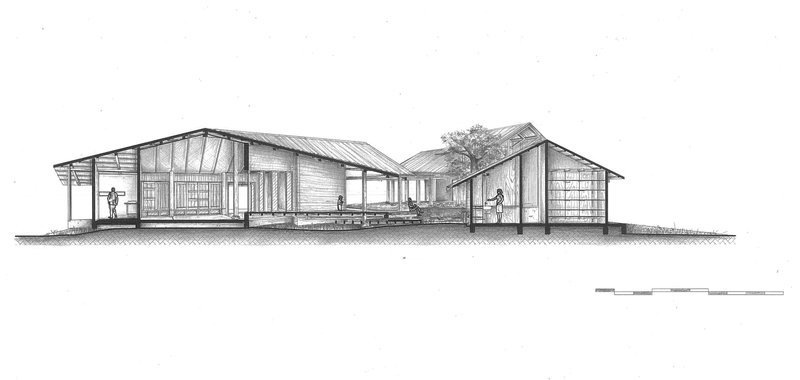
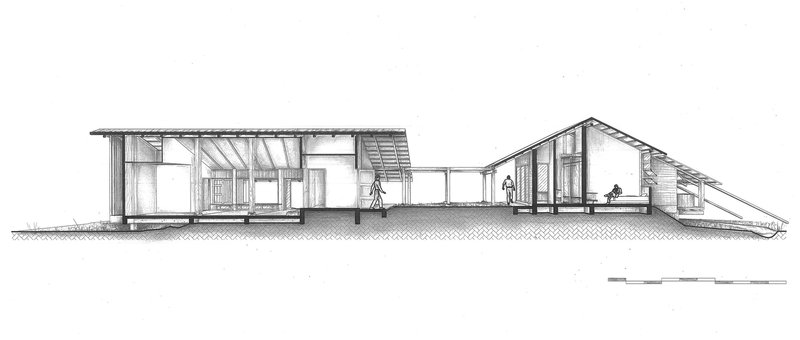
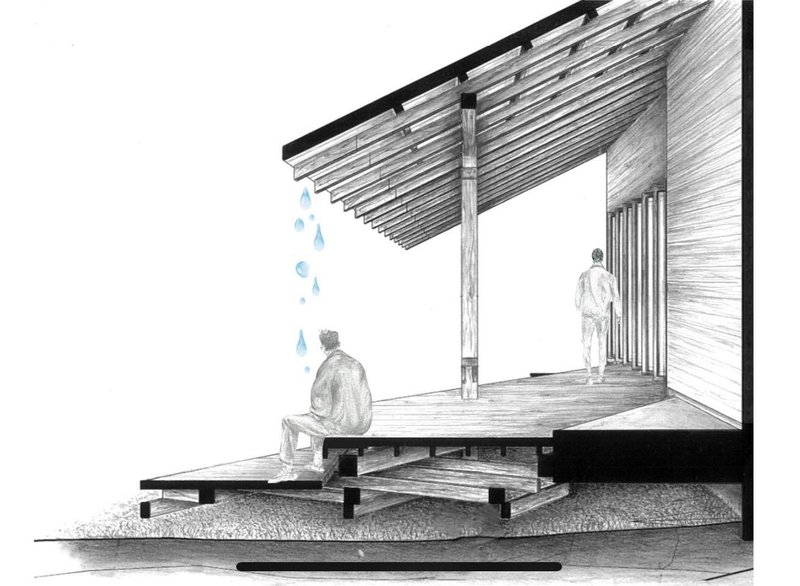
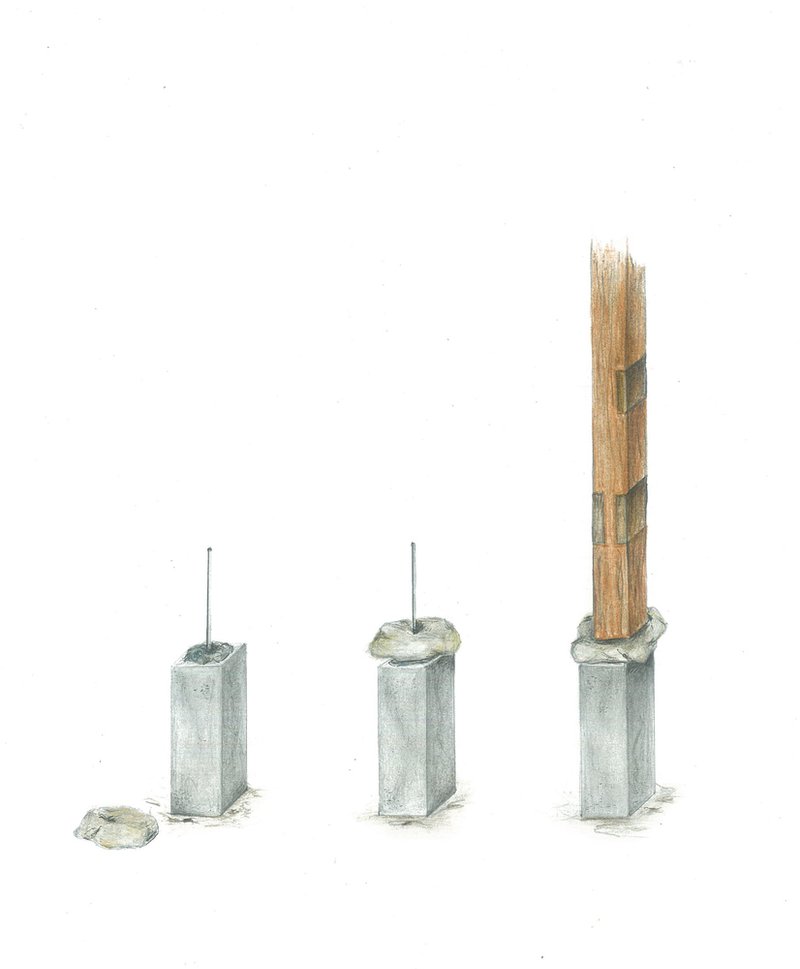
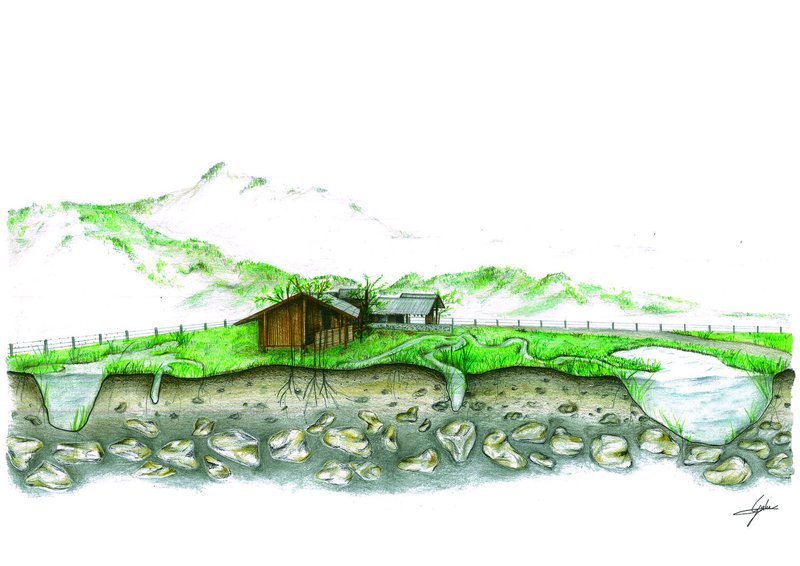
The floor plan reveals the angular relationship between the two primary volumes, connected by the covered walkway and wrapped around landscaped courtyards. Elevations show the rhythm of gabled roofs stepping down with the terrain, while section drawings expose the full depth of the structural logic: timber framing above, concrete footings below, stone at the critical interface. The axonometric watercolor drawing is particularly instructive, illustrating in three stages how a timber post is anchored into its concrete footing and seated on a stone base. The hillside section makes the subgrade condition legible, showing the rocky substrate that provided both the foundation stones and the geological rationale for the Sao Yong Hin technique.
Why This Project Matters
Baan Sao Yong Hin matters because it demonstrates that vernacular intelligence and structural engineering are not opposing forces. The reinforced concrete hidden inside each stone base is not a betrayal of tradition; it is an honest acknowledgment that climate conditions have changed and that buildings must answer to forces the original builders could not have predicted. The house holds both realities at once, stone and steel, salvaged glass and contemporary insulation, without pretending one negates the other.
More broadly, the project offers a working model for material sourcing that takes locality seriously. A ten-kilometer radius is not a marketing slogan here; it is a constraint that shaped every design decision from landscape to lighting. In a global discourse that increasingly valorizes local materials while continuing to ship them across continents, Housescape Design Lab has produced a building that actually lives by the principle. The fact that it also happens to be beautiful, in the unselfconscious way that well-made things tend to be, is almost secondary.
Baan Sao Yong Hin by Housescape Design Lab. Lom Sak District, Phetchabun Province, Thailand. 300 m². 2025. Photography by Rungkit Charoenwat.
About the Studio
Share Your Own Work on uni.xyz
If projects like this are the kind of work you want to make, uni.xyz is a place to publish your own, find collaborators, and enter design competitions.




Popular Articles
Popular articles from the community

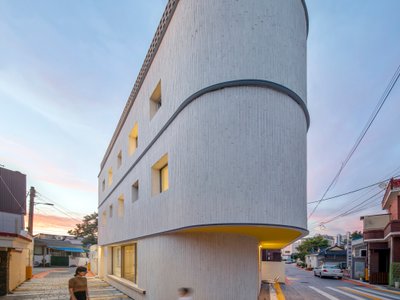
YOAP Architects Round a Corner in Yeongcheon with a Cylindrical Community Hub
A 197-square-meter brick and ribbed-clad tower turns a forgotten alley corner in South Korea into a public garden with a low threshold.
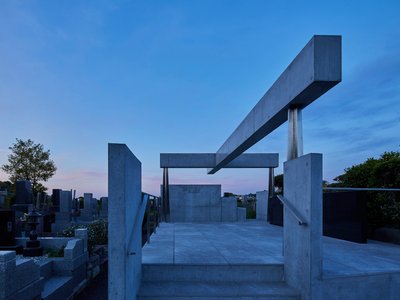
Takeshi Hosaka Architects Suspends a Concrete Cross Above a Yokohama Cemetery
A 28-square-meter burial renovation in Yokohama lifts the symbol of resurrection into the sky so mourners see it against heaven.
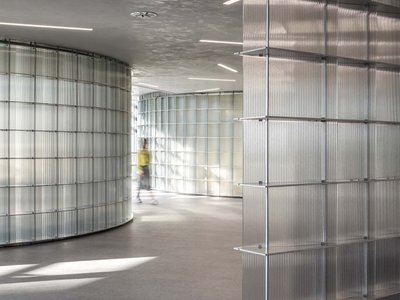
HCCH Studio Wraps a Shanghai High-Rise Office in Curved Walls of Translucent Glass
A 1,000 square meter fit-out in Lujiazui replaces the typical tech-office palette with layered glass, micro-cement, and quiet rigor.

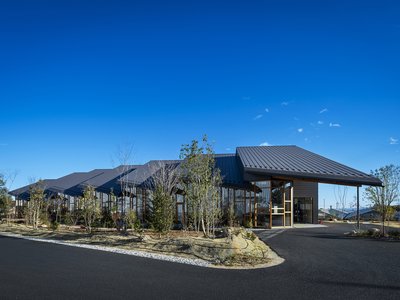
20 Most Popular Office Building Projects of 2025
From biophilic workspaces in India to net-positive energy offices in New Delhi, 20 office building projects that defined architecture in 2025.


Similar Reads
You might also enjoy these articles
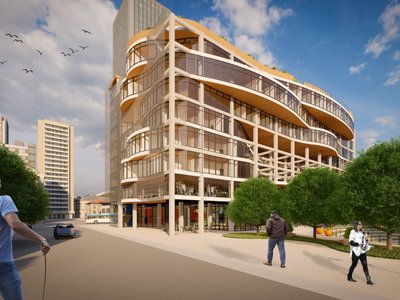
Olio Towers: A Mid-Rise for Performers That Fuses Housing, Rehearsal, and Stage
Located blocks from Houston's Theater District, this modular tower stacks living units around a central performance atrium.
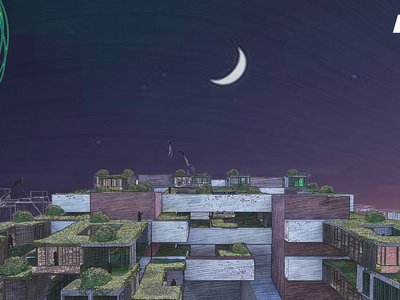
Oasis: Modular Green Housing Carved into Dhaka's Urban Fabric
A shortlisted Plugin Housing entry reclaims unauthorized settlements in Dhaka with stepped concrete volumes, green roofs, and ventilation-driven design.

Black Hole: A Floating Megastructure for the Post-Physical Era
Emiliano Mazzarotto envisions a spherical, self-scaling arena where e-sports, digital hotels, and holographic stadiums replace traditional public space.
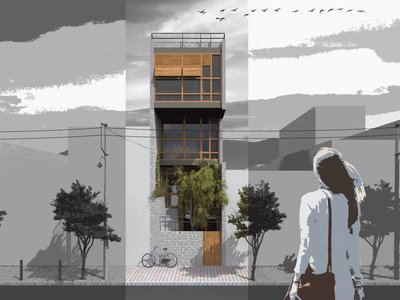
Compact & Sustainable Living in Piraeus: A Four-Level Family Home Built Around Light and Air
A narrow townhouse in one of Greece's densest port cities uses a central atrium and passive strategies to house three generations under one roof.


Explore Architecture Competitions
Discover active competitions in this discipline




The International Standard for Design Portfolios


The Global Benchmark for Architecture Dissertation Awards


The Global Benchmark for Graduation Excellence


Challenge to reimagine the Iron Throne
Comments (0)
Please login or sign up to add comments
No comments yet. Be the first to comment!