
Vertical Agricultural Community by Jyd Ivs: A Sustainable Vision for Duisburg
Revitalizing Urban Ruins into Sustainable Living and Farming Hubs


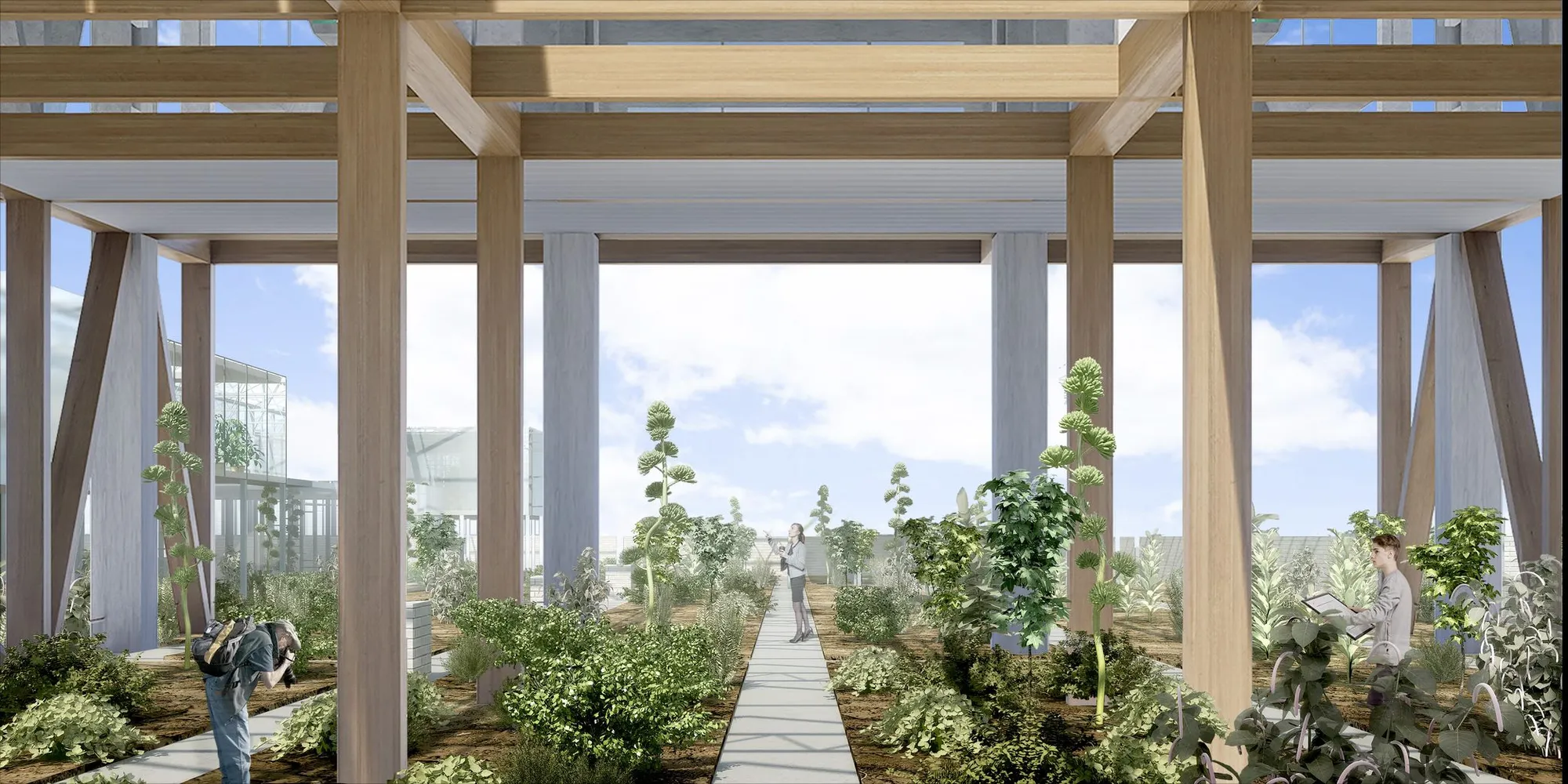
The Vertical Agricultural Community, designed by Jyd Ivs, stands as a beacon of innovation and sustainable urban regeneration. As the winning entry of the 2024 UnIATA and Sustainable & Regenerative Design Awards, this project reimagines how cities like Duisburg, once burdened by industrial decline, can rise again through architectural ingenuity and environmentally conscious development.

Duisburg's Industrial Legacy and Modern Challenges
Duisburg, located in Germany’s Ruhr region, was once a thriving industrial powerhouse, known for its coal and steel production. However, as these industries declined, so did the city's economy, leading to high unemployment rates, abandoned industrial buildings, and deteriorating urban infrastructure. The community now faces significant challenges, particularly in addressing housing shortages, food security, and the environmental impact of urban expansion. Jyd Ivs' project aims to address these critical issues by transforming abandoned structures into thriving vertical agricultural ecosystems.
Reimagining Abandoned Spaces
The core of the project is built upon the foundation of Duisburg's abandoned blast furnace towers in the North Duisburg Landscape Park. These structures, once symbols of industrial power, have been revitalized to serve a new purpose: sustainable urban farming. The decision to renovate existing industrial ruins rather than demolish them not only preserves the city's architectural heritage but also cuts down on the high costs of demolition and construction.
This adaptive reuse reduces waste and aligns with the broader global movement towards circular economies and sustainable design. It simultaneously tackles the twin problems of urban food scarcity and expensive housing by creating a space that offers affordable living while also producing fresh, local food.
Vertical Farming: A Technological Solution to Urban Food Insecurity
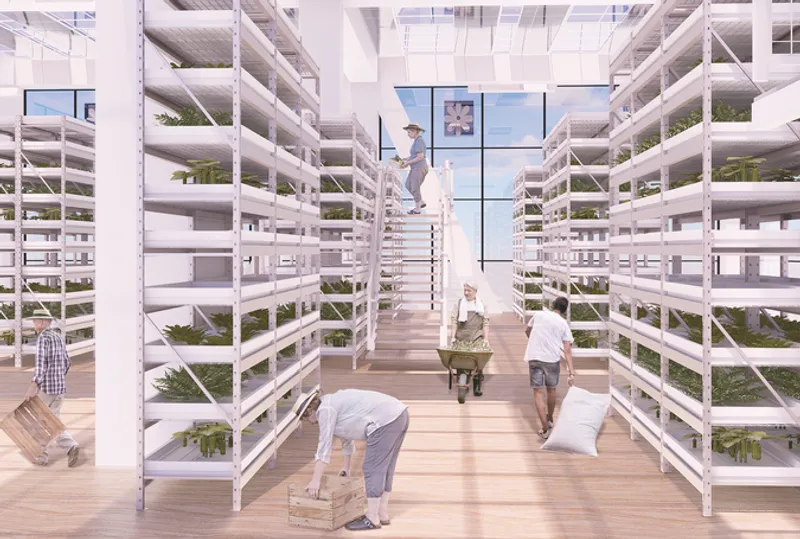
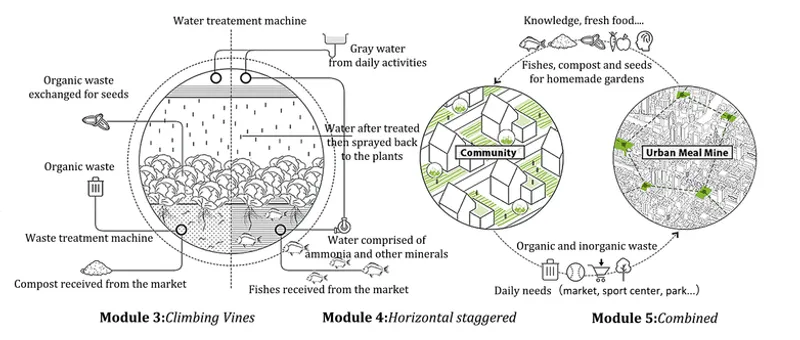
The project's innovative use of vertical farming allows for efficient use of space while maximizing agricultural output. Vertical farms can grow food with up to 90% less water compared to traditional methods, a critical consideration as agriculture is responsible for 70% of global water consumption. Indoor farming systems, such as hydroponics, aeroponics, and aquaponics, are employed to optimize growth conditions, reduce the need for harmful pesticides, and minimize the ecological footprint of food production.
Key advantages of this vertical farming system include:
Space Efficiency: A vertical farm can produce 1 ton of lettuce in just 17% of the land area required by conventional farming.
Water Conservation: By recirculating water, these farms significantly reduce the amount of water needed to grow crops.
Year-Round Production: Controlled environments allow for consistent, year-round food production, reducing the city's dependence on seasonal crops and long supply chains.
A Sustainable, Self-Sufficient Community
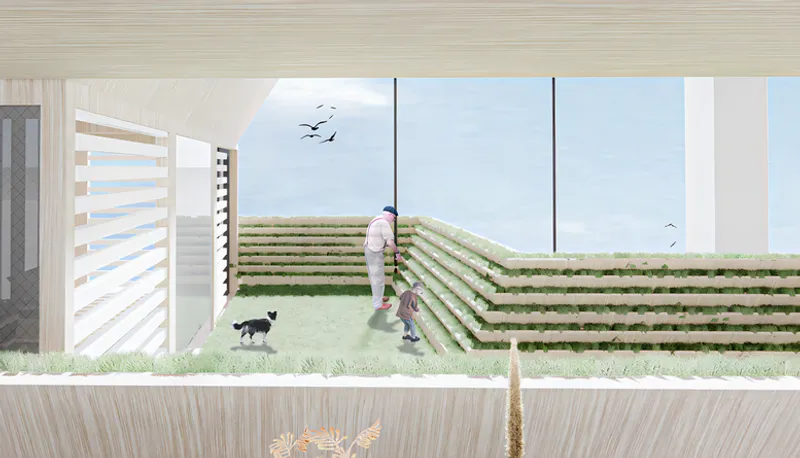
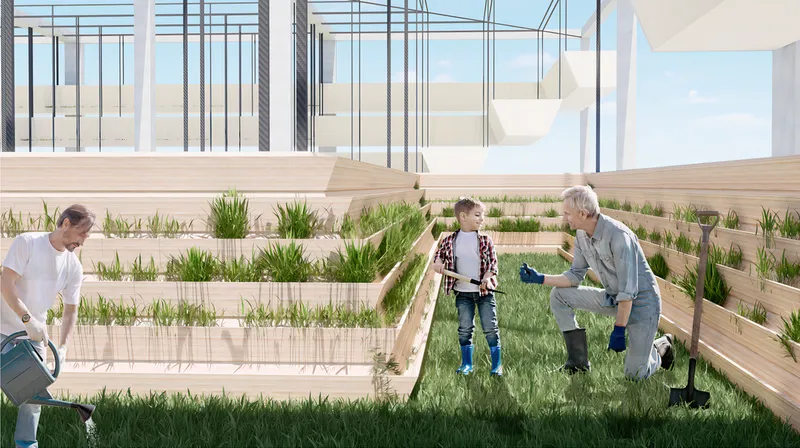
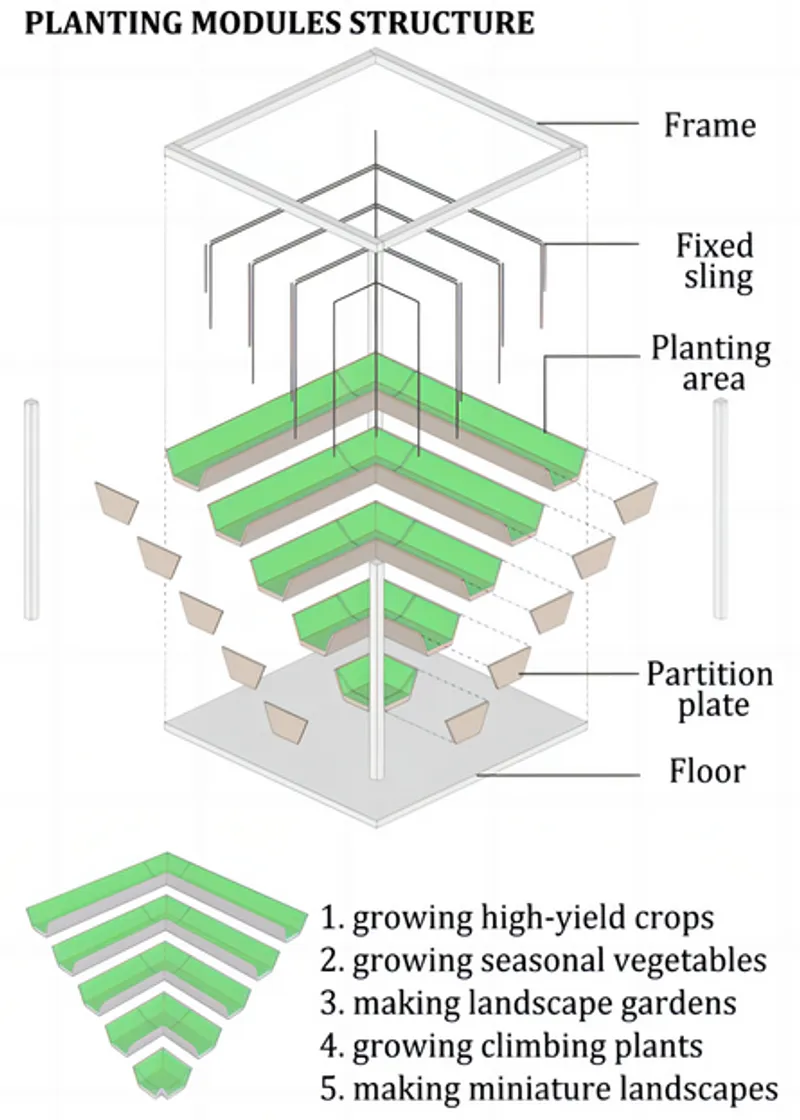
Jyd Ivs' vision goes beyond agriculture, creating a self-sufficient urban community where residents can live, work, and grow their own food. The project's design integrates residential, commercial, and agricultural zones within the same high-rise structures, fostering a symbiotic relationship between living spaces and food production.
The community is designed to alleviate residents' economic pressures by reducing their food expenses and providing affordable housing. Additionally, the vertical agricultural system offers job opportunities, allowing locals to work in urban farming and food processing within their community.
The design also includes:
Renewable Energy Systems: Solar panels, rainwater collectors, and natural ventilation systems are integrated into the structure, minimizing energy consumption and promoting sustainability.
Waste Management and Recycling: Organic waste is composted and used as fertilizer, while wastewater is treated and reused, contributing to the project’s goal of achieving near-zero waste.

Vertical Farming’s Environmental and Social Impact
Jyd Ivs' vertical farming community is not only an architectural achievement but also a model for addressing broader global issues such as climate change, food security, and urbanization. Farming accounts for 30% of all greenhouse gas emissions, and traditional methods often exacerbate land degradation and water scarcity. By moving food production into controlled environments within the city, the project reduces the carbon footprint of food transportation, cuts down on food waste, and mitigates environmental degradation.
Furthermore, the project addresses social sustainability by fostering a sense of community and well-being. Residents can engage directly in farming activities, which not only provides fresh food but also promotes mental health and social interaction. Public spaces within the community, such as gardens and recreational areas, are designed to be shared spaces that encourage cooperation and interaction among residents.
Architectural and Structural Innovation
From an architectural perspective, the Vertical Agricultural Community is a masterclass in blending the old with the new. The existing steel structure of the blast furnace towers is reinforced with concrete cores and columns to form a robust framework capable of supporting the various residential and agricultural modules. These modules can be reconfigured based on the community's needs, offering flexibility in both function and form.
The project’s structural innovation also includes the use of ring trusses to resist lateral forces, ensuring the building’s stability. This evolution of load-bearing systems allows the high-rise structures to combine the benefits of traditional farms with the efficiency of modern urban buildings.
A Model for Future Urban Development
Jyd Ivs' Vertical Agricultural Community is a forward-thinking solution that addresses many of the most pressing urban challenges of the 21st century. By combining sustainable architecture, vertical farming, and community living, this project provides a blueprint for how cities can repurpose their industrial pasts to create healthier, more resilient futures.
As urban populations continue to grow and climate change threatens traditional food systems, the need for innovative solutions like vertical farming becomes ever more urgent. Duisburg's transformation from an industrial relic to a hub of sustainable living and urban agriculture serves as a powerful example of how cities can evolve to meet the challenges of the future.


Popular Articles
Popular articles from the community


The Earth Pod: 3D Printed Homes for Resilient Refugee Communities
The Earth Pod reimagines refugee housing through 3D printed homes made from clay, combining resilience, self-sufficiency, and rapid shelter.

Conexión: Biophilic Design Reimagines High-Rise Living in Hong Kong
Conexión reimagines high-rise living in Hong Kong through biophilic design, green facades, shared spaces, daylight, water and nature within.

Hill & Cross Opera: Sculptural Opera House Architecture Shaped by Tallinn’s Landscape and Identity
Hill & Cross Opera reimagines opera house architecture in Tallinn through its sculptural hill, civic plaza, glass wave and a luminous cross.
EW PARK: Sustainable Architecture Reimagines the Future of Urban Parking
EW PARK reimagines city parking as a modular wooden tower combining automation, solar energy, electric mobility, and adaptable urban design.

Similar Reads
You might also enjoy these articles

Day and Night Park: A Time-Based Urban Newsstand in Beijing
A temporary urban newsstand in Beijing blending travel, light, and reading through poetic colors, compact form, and community-focused design.

Modernist Patio Renovation in El Masnou, Barcelona by Oliver Segura Arquitectura + Cebrià Arquitectura
Modernist patio renovation blending tradition and innovation with a movable pool, leveled floors, and Catalan materials in El Masnou.

Alto Residencial Coop: Cooperative Housing Development in Santiago de Compostela by Carbajo Barrios Arquitectos
A linear cooperative housing complex blending white volumes and perforated metal façades, enhancing community living, natural light, privacy, and urban integration.
Vil Genis School by BPA ARCHITECTURE – Massy, France
Vil Genis School in Massy, France, features sustainable design, south-facing classrooms, community integration, accessible spaces, and modern educational architecture.


Explore Urban Agriculture Competitions
Discover active competitions in this discipline



Challenge to reimagine the Iron Throne


Photograph architecture without architects


Illustrate the lost glory of Angkor Wat - Render Challenge


Design challenge to reuse E-waste
Comments (0)
Please login or sign up to add comments
No comments yet. Be the first to comment!