

Vertical Park with Iranian Garden Approach
A vertical green architecture concept that reimagines urban parks through Iranian garden principles in dense metropolitan environments.


Rapid urbanization, rising land values, and the continuous densification of metropolitan cities have significantly reduced the availability of land for public green spaces. Traditional horizontal parks, once integral to urban life, are increasingly difficult to accommodate within contemporary city fabrics. Vertical Park with Iranian Garden Approach responds to this challenge by proposing an innovative model of vertical green architecture that redefines the conventional infill typology found in dense urban contexts.
Designed by Pourya Meshkati, the project envisions a new architectural language where nature, culture, and social interaction coexist vertically, allowing green spaces to rise alongside the city rather than compete for scarce ground-level land.

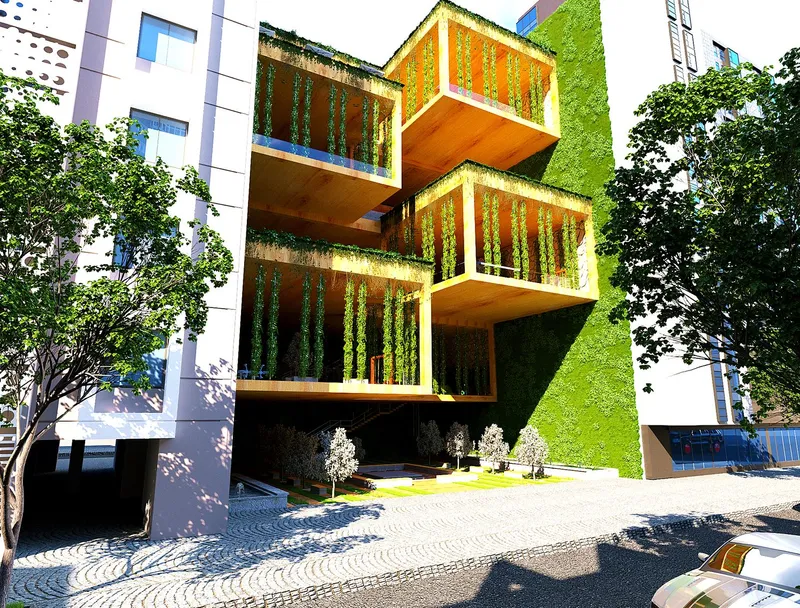
The Crisis of Urban Density and the Loss of Green Space
High-density cities today face multiple environmental and social challenges: air pollution, urban heat islands, lack of accessible parks, and diminishing opportunities for social interaction. As construction sites multiply and land prices escalate, allocating space for large-scale urban parks becomes economically and spatially unfeasible.
This project identifies these conditions as a starting point and proposes a shift in thinking, from horizontal expansion to vertical layering. By stacking public green spaces within the urban block, the project increases per-capita green area while maintaining economic viability and architectural efficiency.
Iranian Garden Principles as a Spatial Framework
At the core of the design lies the reinterpretation of traditional Iranian garden concepts. Historically, Iranian gardens were designed as controlled microclimates: spaces of reflection, balance, and harmony within harsh environmental conditions. Elements such as layered terraces, shaded walkways, water features, and framed views were used to create comfort, identity, and sensory richness.
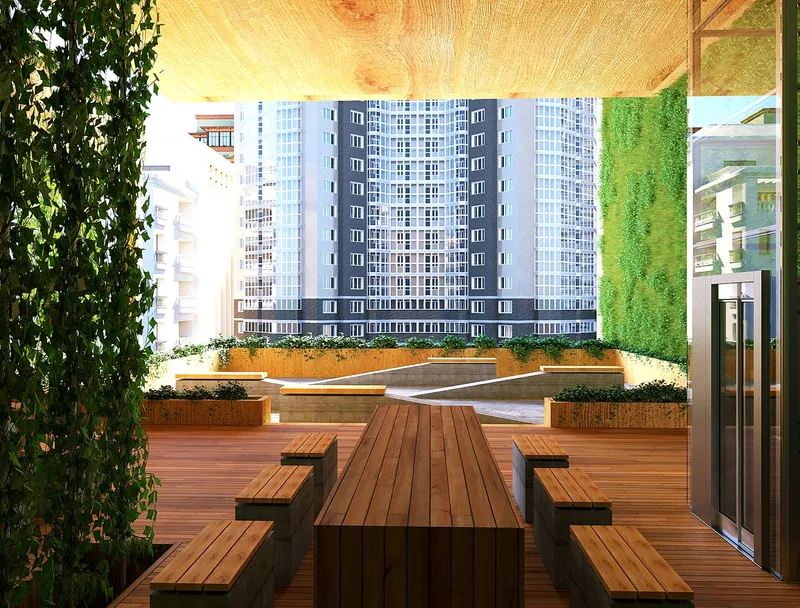
The Vertical Park with Iranian Garden Approach translates these principles into a contemporary architectural system. Terraced platforms function as elevated gardens, while vertical vegetation, water elements, and controlled daylight recreate the spatial experience of traditional gardens within a high-density urban setting.
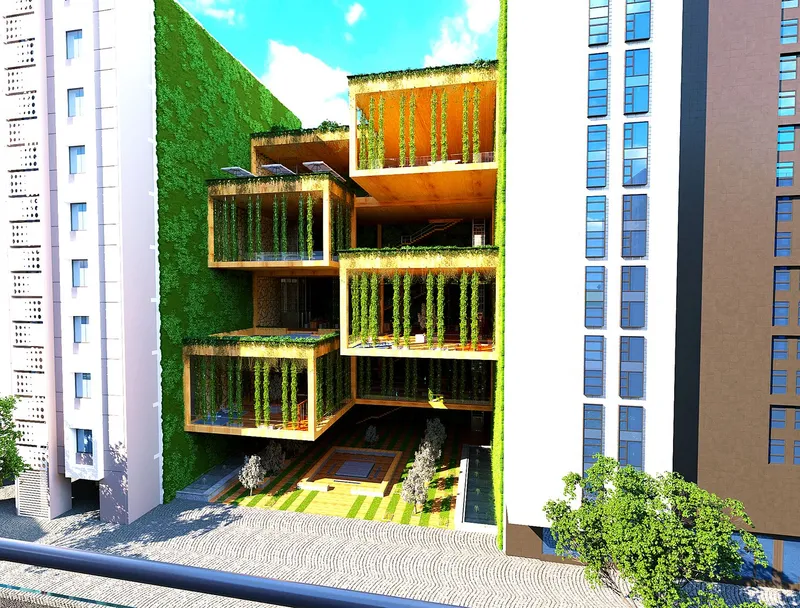
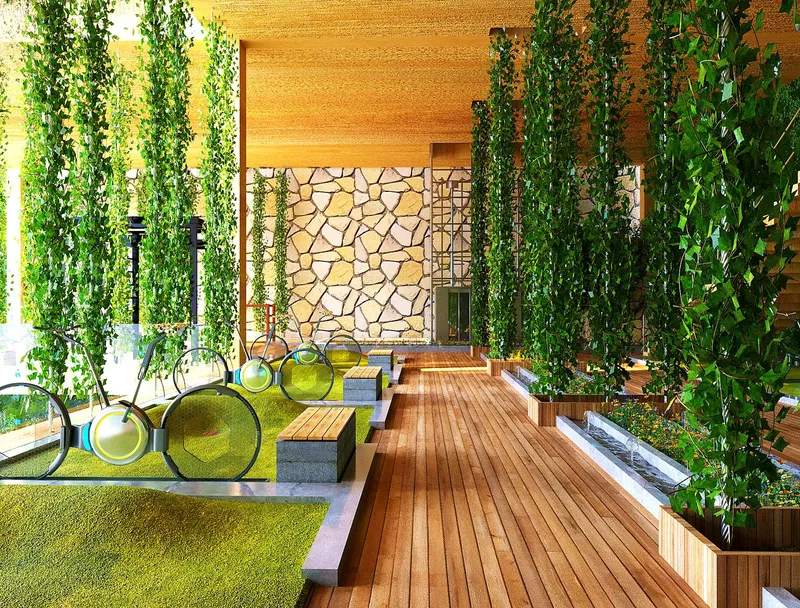
Vertical Park as an Urban Infill Strategy
Rather than treating infill plots as purely functional building masses, this project transforms them into active public landscapes. The vertical park is embedded within the urban block, acting as a porous interface between surrounding buildings and the city.
By carving out volumes and stacking garden platforms, the design introduces visual permeability, natural ventilation, and social spaces across multiple levels. These voids and terraces break away from the monotony of solid urban masses, replacing enclosed black-box buildings with open, breathable environments.
Social Interaction and Collective Urban Life
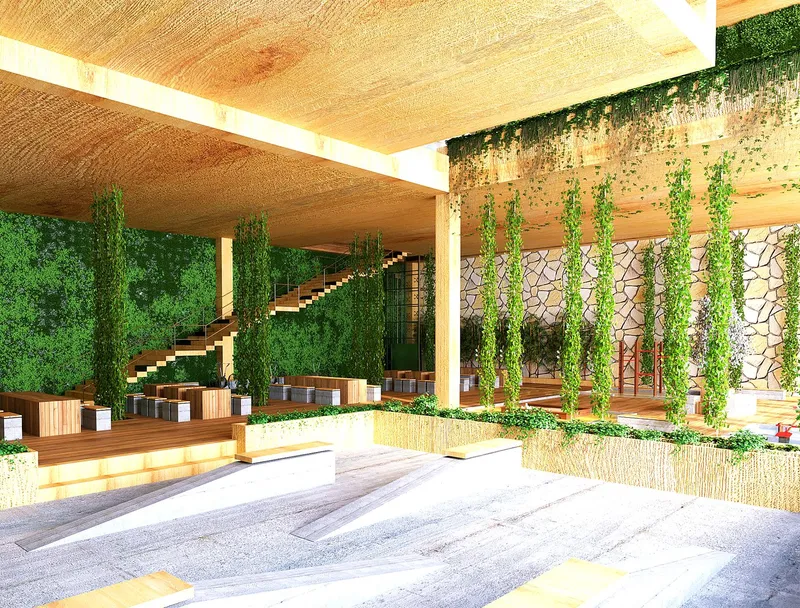
Beyond environmental performance, the project emphasizes the social role of architecture. Each vertical layer is conceived as a communal platform: spaces for gathering, resting, play, and contemplation. The vertical circulation system connects these layers, encouraging movement and interaction across different heights of the building.
This layered public realm redefines how people experience urban parks. Instead of isolated ground-level spaces, greenery becomes a continuous presence throughout the building, fostering a stronger sense of belonging and collective ownership within the city.
Sustainable Urban Architecture in the Vertical Dimension
The project demonstrates how sustainable urban architecture can be achieved through intelligent spatial organization rather than excessive land consumption. Vertical vegetation improves air quality, reduces heat gain, and enhances microclimatic comfort. Shaded terraces and green façades regulate daylight and temperature, minimizing energy demands.
By utilizing the third dimension of the city, the project offers a scalable solution for future urban development's facing land scarcity and environmental stress.
Vertical Park with Iranian Garden Approach presents a forward-looking architectural vision where cultural heritage and contemporary sustainability strategies intersect. By combining vertical green architecture with timeless Iranian garden principles, the project offers a replicable model for dense cities seeking to restore nature, identity, and social life within limited urban footprints.
This proposal challenges conventional urban development paradigms and positions architecture as a mediator between people, nature, and the evolving metropolis.


Popular Articles
Popular articles from the community


Tsunami Convergenics: Turning Catastrophic Ocean Forces into Underwater Housing Infrastructure
A speculative underwater settlement off the coast of Onagawa, Japan, treats tsunamis and typhoons as energy sources rather than threats.

Singing Woman: Contemporary Architecture Inspired by Estonia’s Voice and the Sea
Singing Woman turns Estonia’s song culture into flowing opera house architecture, blending public life, landscape, sea, and national memory.

Cloaked Colonization: A Mobile Underwater Habitat That Moves Like a Fish
Micah Abaya's shortlisted EHC Pacific entry reimagines ocean settlement as a dispersed network of self-sustaining architectural organisms.

Manzana Morphosis: Stretching Barcelona's Grid into a Living Landscape for 2050
A radical reworking of the Eixample manzana turns density into a tool for generous public space, vertical ecology, and environmental performance.

Similar Reads
You might also enjoy these articles

Maya Harvest: A Cacao Resort Village Rooted in Mayan Tradition and Local Craft
Situated within a Tabasco cacao plantation, this shortlisted resort proposal merges vernacular materials with hands-on cultural immersion.
Harmonia: A River-Shaped Community That Grows Over Decades in Boa Vista
Curved pathways and modular grid structures along the Branco River create a phased settlement designed to evolve from 2030 to 2050.
The Architecture of Bathing: A Mughal Hammam Reimagined Across the Yamuna
Charlotte May's honorable mention entry for The Black Taj reinterprets Agra's bathing rituals through red sandstone, water, and framed views of the Taj Mah
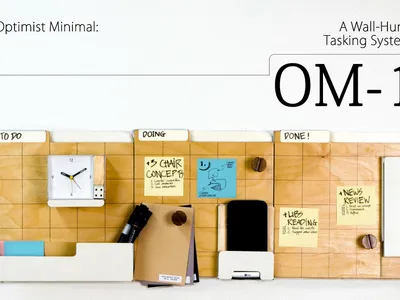
Om-1: A Wall-Hung System That Moves Your Workspace Off the Desk
Modular plywood boards, magnetic pegs, and utility elements migrate clutter from the horizontal surface to the vertical plane.


Comments (0)
Please login or sign up to add comments
No comments yet. Be the first to comment!