
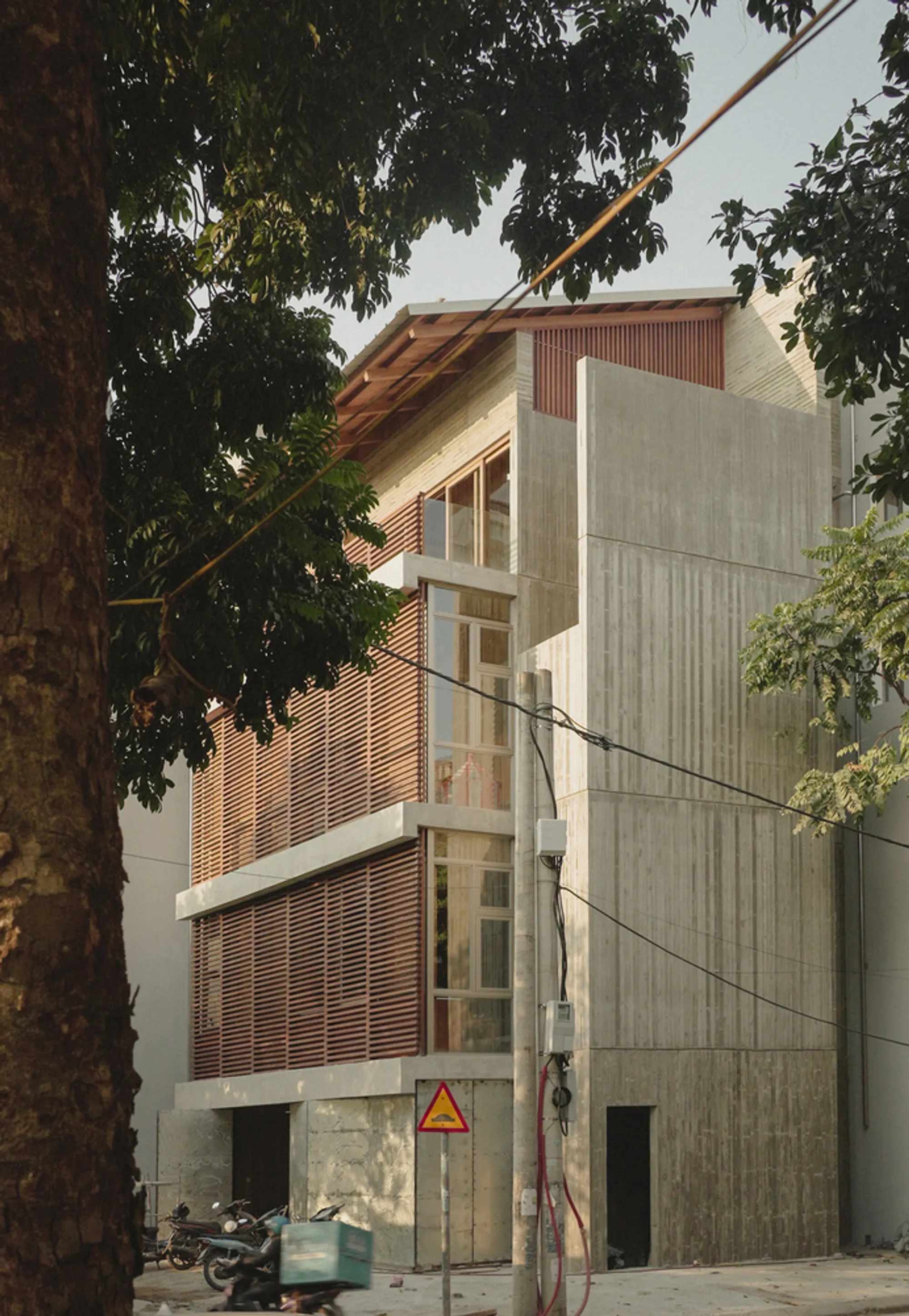
Vertical Tube House – Kam and Ly House: A Climate-Responsive Urban Retreat in Hanoi
Vertical tube house in Hanoi blending traditional tropical ventilation, vertical voids, and private yet connected spaces for a couple with contrasting daily rhythms.


A Vertical Home Balancing Tradition, Climate, and Modern Urban Life
Located in the dense urban fabric of Hanoi, the Vertical Tube House – Kam and Ly House by HGAA, Jieun Jun, naïve practice, and Taewon Park reimagines the traditional Vietnamese tube house as a climate-adaptive and emotionally attuned residence. Designed for a long-married couple with contrasting daily rhythms, this 320-square-meter residence rises vertically to maximize ventilation, daylight, and privacy within a compact footprint — a refined architectural response to both personal lifestyle needs and the tropical climate of Vietnam.
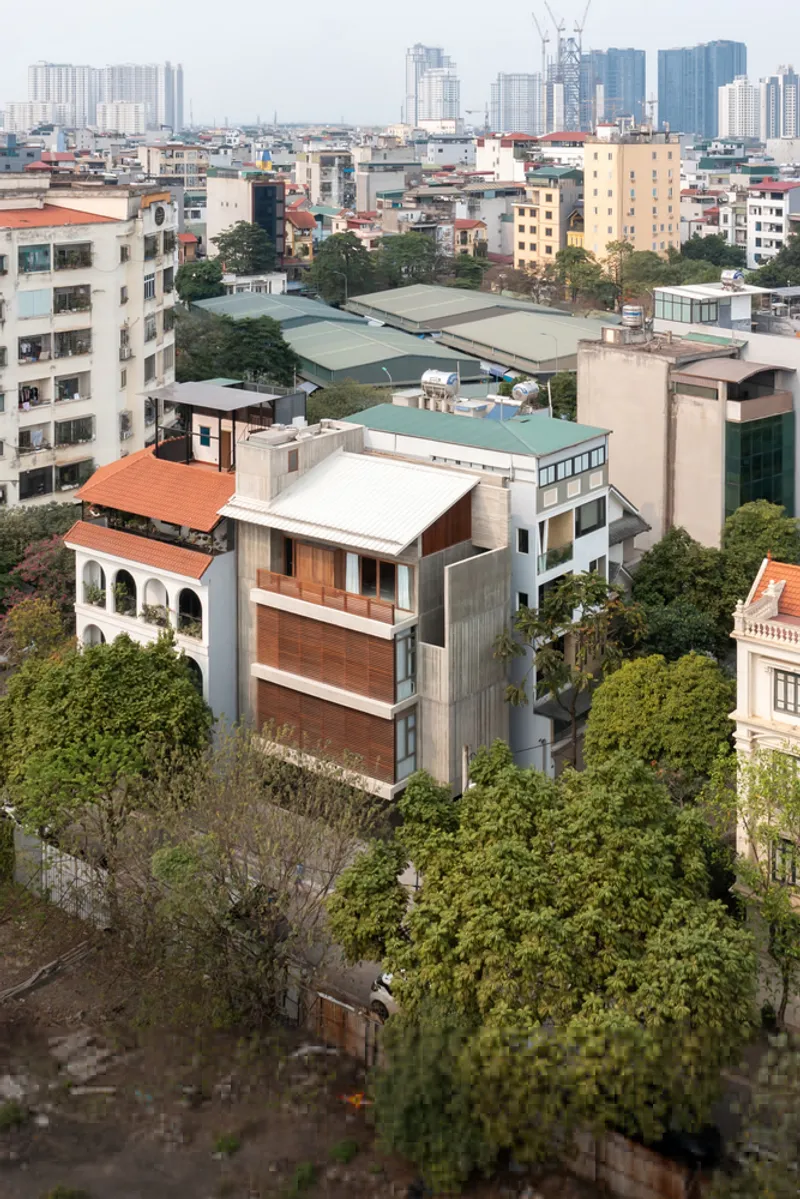
Reinterpreting Hanoi’s Climate-Driven Housing Heritage
Historically, Hanoi’s homes have responded to heat and humidity through porous layouts, deep shading, and green buffers. Drawing inspiration from a 19th-century climatic dwelling diagram — where building mass opens and expands in tropical zones — the house honors vernacular strategies while adapting them to high-density living.
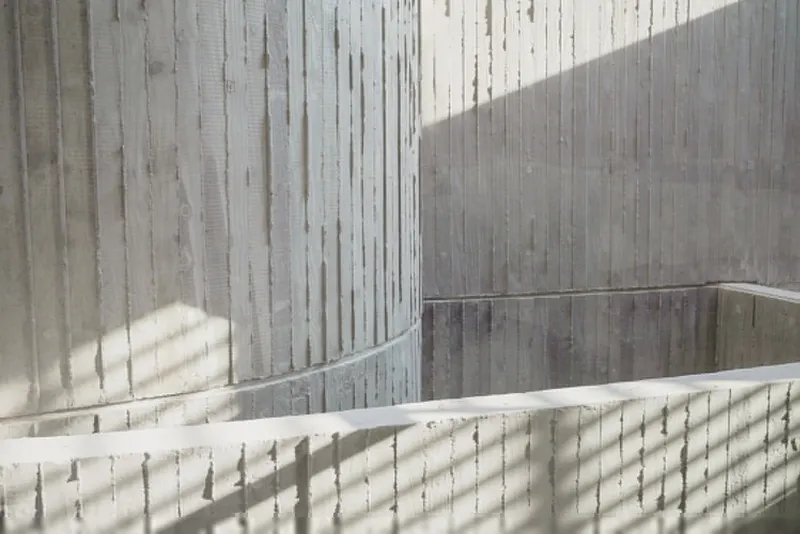
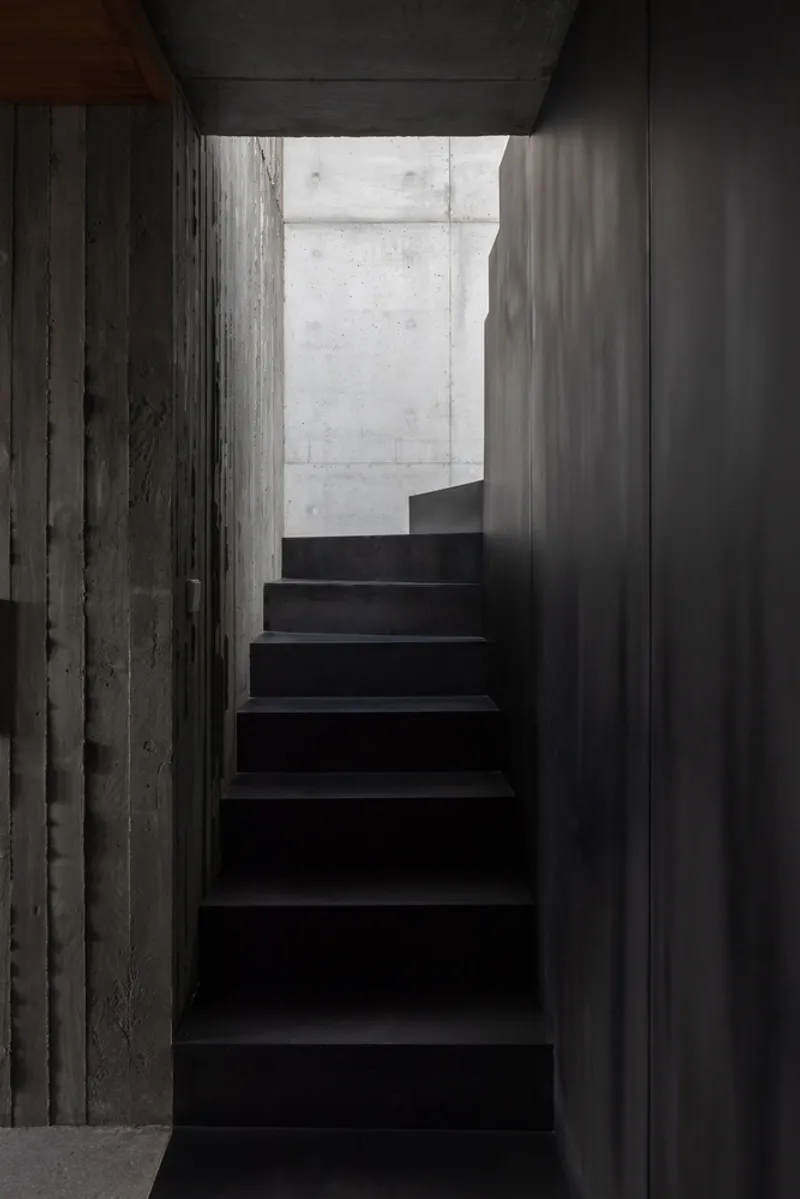
Towering vertical voids serve as passive ventilation corridors, channeling airflow from shaded ground-level gardens upward through an open concrete tube. These voids, paired with semi-outdoor courtyards, encourage natural ventilation and diffuse daylight throughout the interior, reducing reliance on artificial cooling despite the region’s humid subtropical climate.
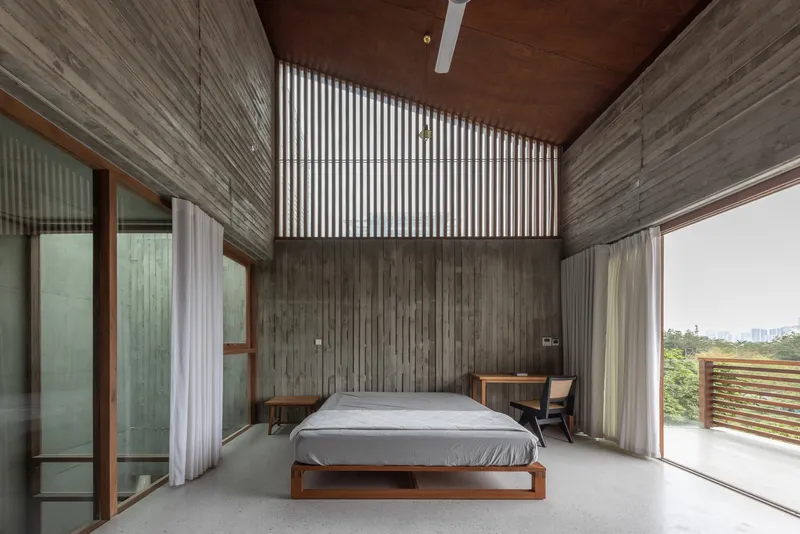
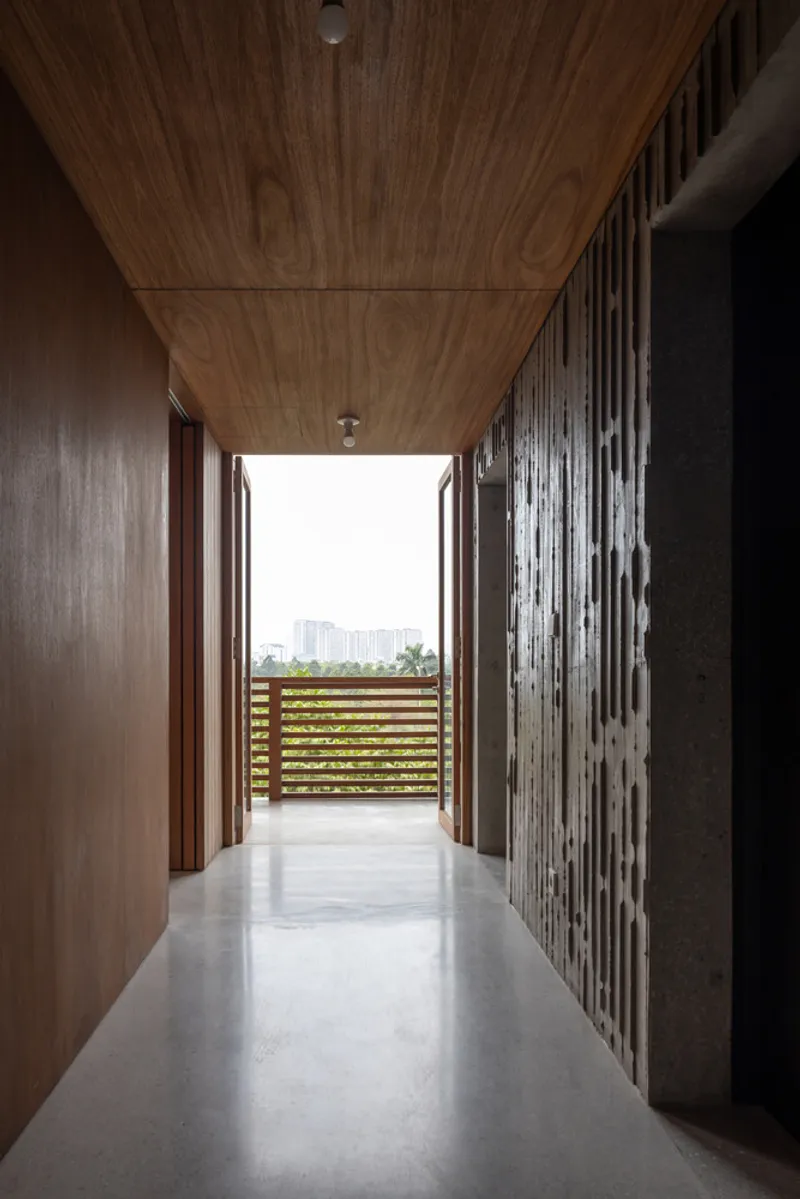
Passive Cooling and Light Filtration in an Urban Density Context
The design employs a dual-core system:
- One core houses vertical circulation for residents.
- The other core operates as a ventilation chimney, drawing fresh air through layers of space and filtering light through concrete voids.
Western sun is moderated through louvered facades and hollow-core sliding shutters, allowing residents to fine-tune exposure while opening the house fully during cooler hours. True to the spirit of Hanoi’s traditional homes, windows and façade systems invite cross-breezes, reinforcing breathable architecture in a city where sealed high-rise living has become the norm.
Rather than chasing a strict passive-house benchmark, the architects gracefully translate regional wisdom into a site-specific thermal comfort strategy, proving sustainable living remains attainable even in dense metropolitan conditions.
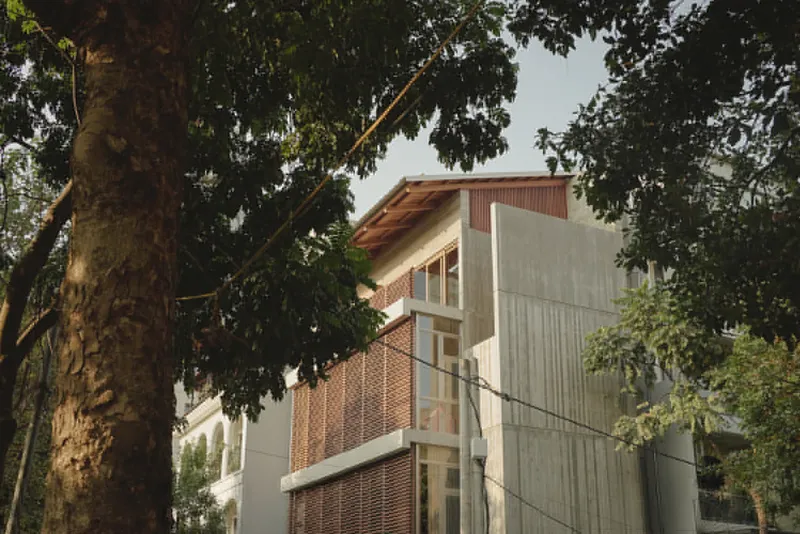
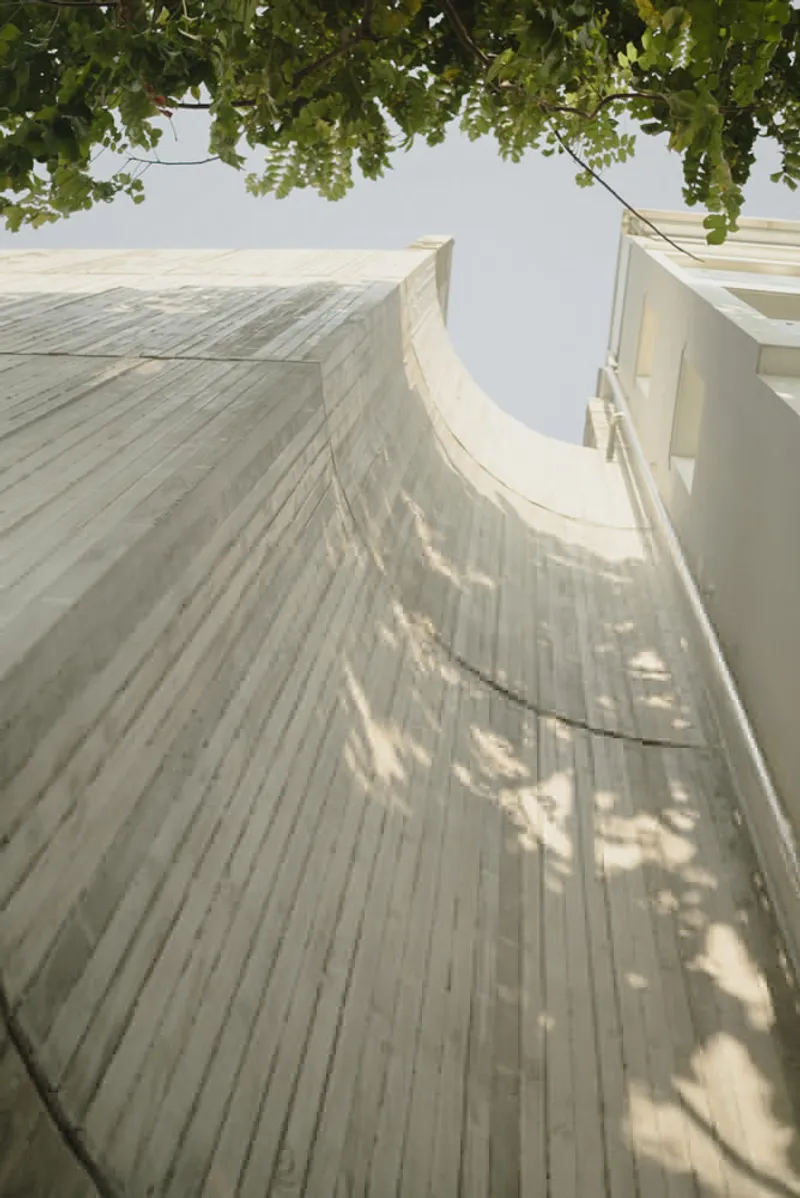
Spatial Design Rooted in Emotional Connection
Beyond climatic performance, the home is shaped by a deeply personal story. The clients — a couple with opposite waking rhythms — wished to maintain individuality while preserving emotional closeness. Instead of forcing routine alignment, the architects created “soft connectivity”:
- Private rooms are vertically separated, not adjacently stacked.
- Shared voids act as quiet communication channels where light, air, and gentle sounds travel.
- An interior balcony becomes a subtle meeting point — a suspended gesture for brief exchanges.
This layered spatial choreography cultivates a sense of presence without intrusion — a poetic architecture of independence and intimacy, where the couple remains connected through atmosphere and movement.
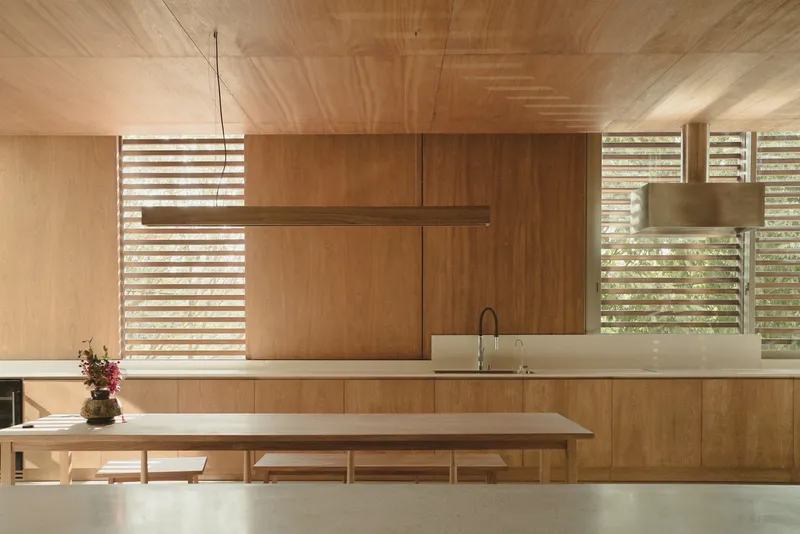
Elevating the Tube House Typology for Contemporary Vietnam
Kam and Ly House stands as an evolved tube house prototype — compact, vertical, and climate-sensitive. It merges architectural heritage with contemporary demands:
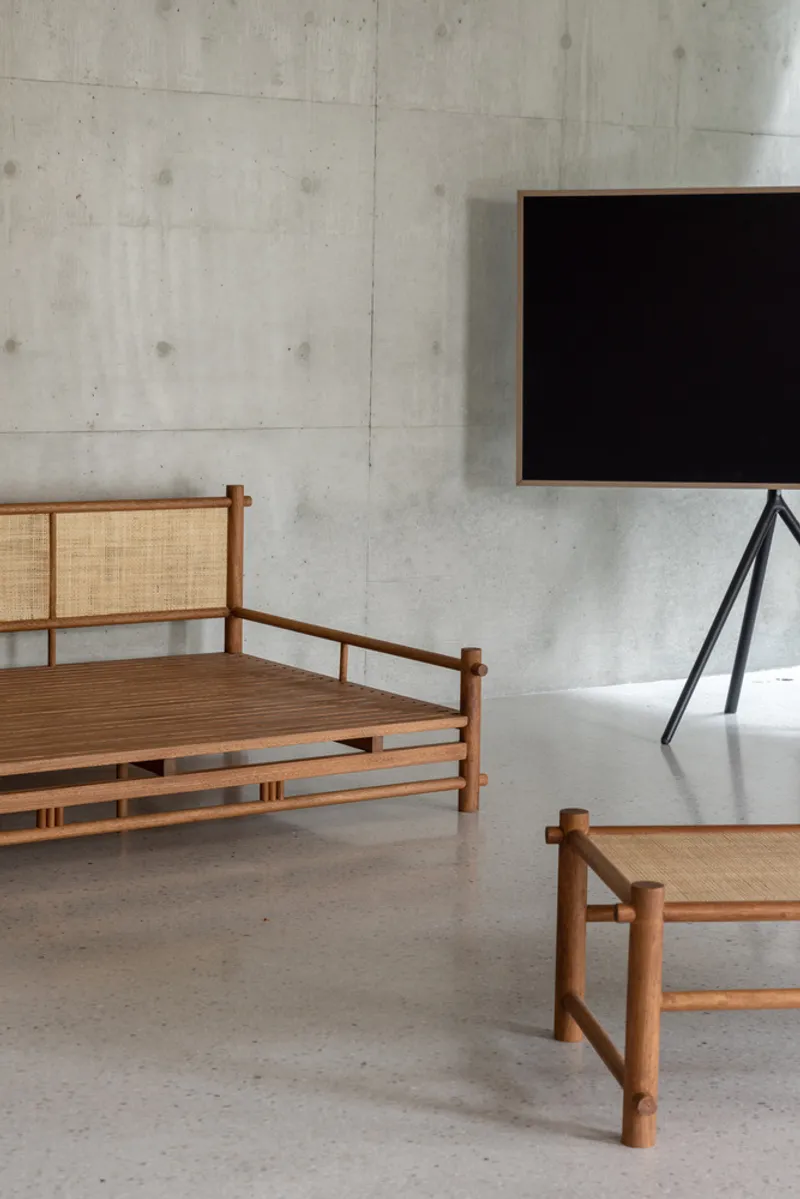
- Concrete and wood palette for warmth and durability
- Tree-lined terraces and shaded openings to soften urban edges
- Layered voids to cultivate air, light, and quiet interaction
- Dense-city livability enriched through bioclimatic strategy
All photographs are works of Daisy Ziyan Zhang, Hoang Le



Popular Articles
Popular articles from the community


Conexión: Biophilic Design Reimagines High-Rise Living in Hong Kong
Conexión reimagines high-rise living in Hong Kong through biophilic design, green facades, shared spaces, daylight, water and nature within.

The Ocean Hive: Sustainable Architecture for a Self-Sufficient Civilization at Sea
The Ocean Hive imagines sustainable architecture at sea, where modular habitats, algae, wave power and ocean waste sustain a growing colony.

Lunar Spiral: Space Architecture Shaped by the Mathematics of the Universe
Lunar Spiral reimagines space architecture through Fibonacci geometry, lunar regolith, levitating habitats, and self-sustaining Moon living.

Riyadh For All: Intergenerational Urban Design for Active Aging in Rabat
Riyadh For All reimagines urban design in Rabat with intergenerational co-living, adaptive courtyards, and Moroccan cultural exchange today.

Similar Reads
You might also enjoy these articles


Hodi-Mandai Geram
Project Function: Preservation and revitalization of the Intangible heritage and socio-spatial identity of the Hodi by Housing, Cultural Memory Center, Sacred Grove, landscape, local tourism economy


Olio Towers: A Mid-Rise for Performers That Fuses Housing, Rehearsal, and Stage
Located blocks from Houston's Theater District, this modular tower stacks living units around a central performance atrium.

Oasis: Modular Green Housing Carved into Dhaka's Urban Fabric
A shortlisted Plugin Housing entry reclaims unauthorized settlements in Dhaka with stepped concrete volumes, green roofs, and ventilation-driven design.

Black Hole: A Floating Megastructure for the Post-Physical Era
Emiliano Mazzarotto envisions a spherical, self-scaling arena where e-sports, digital hotels, and holographic stadiums replace traditional public space.


Explore Container House Competitions
Discover active competitions in this discipline



Challenge to reimagine the Iron Throne


Photograph architecture without architects


Illustrate the lost glory of Angkor Wat - Render Challenge


Design challenge to reuse E-waste
Comments (0)
Please login or sign up to add comments
No comments yet. Be the first to comment!